Kathmandu
Wednesday, July 15, 2026





As electric vehicle adoption accelerates, Nepal lacks the laws, infrastructure and recycling systems needed to manage discarded batteries and electronic components, raising concerns over a looming environmental crisis.
KATHMANDU: Currently, electric vehicles (EVs) are a common sight on the roads of Kathmandu and other urban areas. Having entered the country in limited numbers until the fiscal year (FY) 2019/20, EV imports have consistently grown at a significant rate over the past five years. According to the Department of Customs, a total of 2,940 two-wheeler and four-wheeler EVs were imported in FY 2019/20. In FY 2020/21, EV imports nearly tripled compared to the previous year, reaching 6,858 units. By FY 2024/25, customs records show that imports surged to 44,509 EVs.
According to a report titled “Opportunities, Challenges, and Prospects for EV Promotion in Nepal,” published on the Ministry of Infrastructure Development’s website on April 28, 2025, EVs accounted for 76 percent of all four-wheeled vehicles imported into Nepal up to August/September 2025. The government projects that within the next decade (by 2035), 90 percent of the vehicles operating on roads nationwide will be electric.
The government has been actively promoting EV adoption, citing benefits such as increased domestic electricity consumption, reduced imports of diesel and petrol, lower air pollution, and contributions to carbon trading.
While environmental and economic benefits have their place, the government has completely failed to address the management of electronic waste (e-waste) that will be generated in the future due to this sudden influx and growing use of EVs. EV batteries become useless after a certain period, and various components require replacement. The government remains focused on promoting EVs without formulating any strategy on how to discard these old batteries and parts.
Kalpana Khanal, a senior researcher at the Policy Research Institute (PRI), notes that the government seems solely focused on manipulating revenue rates to incentivize EVs. She states, “No attention has been paid to managing the useless parts and batteries of electric vehicles after they have been used for a certain duration.”
The Institute has drafted a policy paper on this issue titled “Policy Environment, Opportunities, and Implementation Challenges of Electric Vehicles in Nepal.” The paper concludes that the government has neglected electric vehicle safety, maintenance, and the resulting waste management.
Khanal emphasizes that the government must learn from the waste management challenges other countries face with electric vehicles and enact legislation in time. “If the government does not start enacting laws and monitoring right now, a dire situation could arise regarding the management of electric vehicle waste in the future,” she says. “We are compiling various recommendations in our draft policy paper and will submit it to the government soon.”
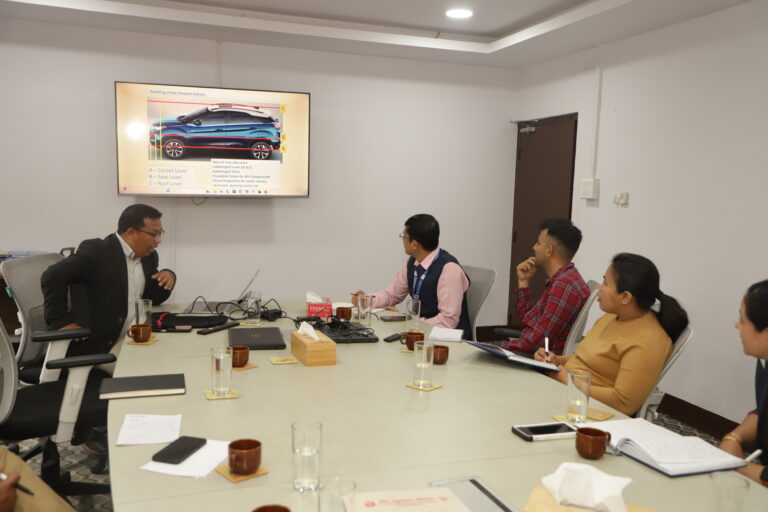
An event organized by the Policy Research Institute on April 6, 2026 on the topic ‘Opportunities and Challenges of Electric Vehicles in Nepal.’ Photo: PRI Website
Roshan Pandey, Chief of the Faculty of Technology at the Nepal Academy of Science and Technology (NAST), also agrees that while an e-waste policy was not formulated in the past because it was not needed, it has now become essential. According to him, the use of electronic boards and circuits alongside EVs has surged over the past decade, indicating that such waste will become a major problem for Nepal. Although this trend signals an improvement in citizens’ living standards, he warns that policy delays in managing electronic waste will invite serious risks. He adds, “The government must introduce an e-waste management policy and begin working by the fiscal year 2027/28.”
Smoldering embers
Electronic devices have a limited lifespan and must be discarded once they break down. However, when disposed of haphazardly, the chemicals they contain directly damage human health and the environment. For this reason, proper management and disposal of such electronic waste are vital.
E-waste is growing globally due to the expanding electronics market and consumers’ increasing preference for these products. The rapid development of information technology since the 1990s has fueled this global rise in electronic waste.
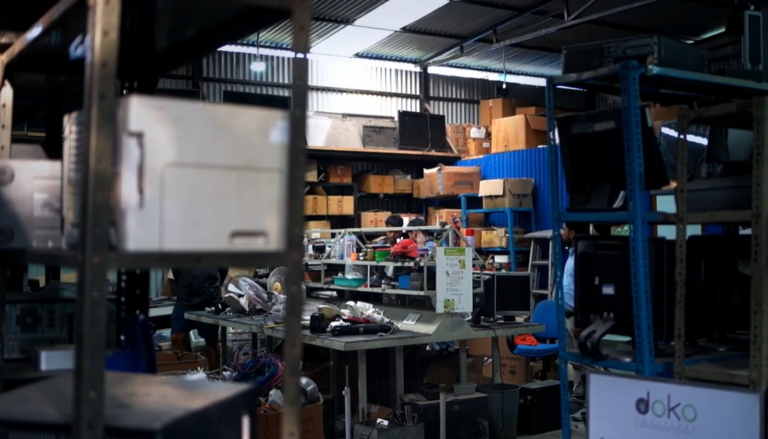
Bhuwan Chalise, E-waste Manager at Doko Recyclers—a company working in waste management and processing since 2017—states that the electronic waste problem in Nepal is spreading silently like smoldering embers. “Global studies show that electronic waste in Nepal is growing at a rate of about 18 percent annually,” he says. “Once EV waste starts being added to this in a few years, the overall e-waste is projected to accumulate at an annual rate of 23 percent.”
The Institute has drafted a policy paper on this issue titled “Policy Environment, Opportunities, and Implementation Challenges of Electric Vehicles in Nepal.” The paper concludes that the government has neglected electric vehicle safety, maintenance, and the resulting waste management.
Chalise notes that electronic waste began to accelerate after the government launched its digitization campaign by introducing the ‘Digital Nepal Framework’ in 2019. According to the UN Global E-waste Monitor 2024, Nepal generates 41.5 million kilograms of electronic waste every year.
However, Chalise clarifies that the waste volume mentioned in that monitor was based on 2023 data, and by 2025 alone, around 60 million kilograms of electronic waste had already been generated. He states that the problem is escalating due to the lack of scientific disposal methods resulting from the absence of a government management policy.
The Department of Environment’s E-waste Inventory 2017 showed that the Kathmandu Valley alone was producing about 18 million kilograms of electronic waste. Nepal lacks official centers for processing and recycling electronic waste. Many people sell broken devices to the informal sector—namely scrap (kabadi) collectors—or repair them to keep using them. “Scrap dealers extract valuable components from the devices and dump the rest at landfill sites, which damages public health and the environment,” Chalise explains.
Min Prasad Aryal, Director of the Nepal Telecommunications Authority (NTA), states that since no government mechanism has been established for collecting and disposing of electronic waste, the management of such waste relies entirely on the private and informal sectors.
In March/April 2017, the Authority introduced an Electronic Waste Management Framework to make producers, consumers, and recyclers of electronic equipment accountable.
“It is essential to introduce and implement a separate policy that covers everything from the procurement process of items to their use and disposal,” he says. He notes that if the government prioritizes this right now, the future problem of electronic waste can be mitigated.
The framework recommended that the government form a national-level task force to manage electronic waste. It also proposed analyzing international practices to formulate policies and action plans relevant to Nepal. However, subsequent governments did not implement it.
Since electronic devices have a limited lifespan, a continuous cycle of generating e-waste persists as consumers discard useless items and buy new ones. The UN Global E-waste Monitor 2024 shows that in Nepal, the average lifespan of a mobile phone is two years, a laptop is four years, televisions and computers are eight years, and refrigerators and washing machines are ten years. “Since the formal management of the electronic waste generated after these items break down is imperative, we urgently need relevant policies and regulations,” says NTA Director Aryal.
Lack of legislation
Nepal lacks a clear and separate law regarding electronic waste management. Existing laws, such as the Solid Waste Management Act 2011, Solid Waste Management Rules 2013, Environment Protection Act 2019, and the National Solid Waste Management Policy 2022, do not explicitly mention the management of the daily accumulating electronic waste.
However, the National Urban Policy 2024 appears to include some plans regarding the collection and recycling of used electronic materials. This policy states that policy reforms will be made to encourage the collection and management of recyclable waste and materials, and urban service centers will be developed to collect, sell, exchange, and reuse electronics that have been used once. Yet, its full implementation remains pending.
Ek Raj Adhikari, Deputy Director General of the Department of Urban Development and Building Construction, states that some local levels and organizations in the Valley have brought recycling service centers into operation. He adds, “Data on what kind of practices municipalities across the country are adopting regarding electronic waste processing and recycling has not yet arrived.”
Strategy 9 of the National Solid Waste Management Policy 2022 mentions preparing a legal basis for waste management by classifying it according to its nature, but it makes no mention of electronic waste. Similarly, the Solid Waste Management Act 2011 and its corresponding Rules 2013 do not explicitly address electronic waste management. Even the Environment Protection Act 2019, which serves as the primary environmental law, lacks any mention of electronic waste management.
In 2024, the then Ministry of Urban Development moved forward with a Solid Waste Management Bill. The bill, brought to replace the Solid Waste Management Act 2011, outlined electronic waste management and divided responsibilities among the federal, provincial, and local levels. However, while feedback on the provisions was being collected, the House of Representatives was dissolved following the Gen Z protests last year, causing the bill to become inactive.
Adhikari, Deputy Director General of the Department of Urban Development and Building Construction, states that after the RSP-led government came to power, the 2024 bill was amended and submitted to the Ministry of Law, Justice, and Parliamentary Affairs. “Work has progressed in line with the new government’s commitment in its 100-point governance reform agenda to table the urban development and solid waste management bills in parliament,” he says.
No reliable data
The United Nations has classified electronic waste as hazardous waste. E-waste includes discarded items such as mobiles, laptops, computer monitors and accessories, radios, TVs, washing machines, electric stoves, electric cookers, microwaves, heaters, irons, fans, refrigerators/freezers, solar panels, IT servers, inverters, and batteries.
The government does not possess official data on the total volume of electronic waste generated nationwide. The National Statistics Office, which serves as the central agency for nationwide data collection, processing, analysis, and publication, has not conducted studies centered on this type of waste either. According to Purna Bahadur Gharti Magar, Information Officer at the Statistics Office, there are no immediate plans to study this subject. However, according to a study released by the Statistics Office in 2022, an average municipality generated between 443 kg and 817 kg of electronic waste daily.
According to a study on electronic waste management presented at the 12th National Conference of Students of Architecture and Engineering at the Pulchowk Engineering Campus in Lalitpur in October 2022, televisions and mobile phones are the primary household sources of electronic waste in Kathmandu Metropolitan City, Ward 22. Televisions account for 28 percent and mobile phones make up 25 percent. Personal computers account for 21 percent. Laptops and washing machines account for 7 percent each, while irons, air conditioners, and refrigerators each account for 4 percent. Beyond this, decorative string lights used during festivals like Tihar, as well as weddings and celebrations, also contribute to the generation of electronic waste.
Key management challenges
According to Chalise, E-waste Manager at Doko Recyclers, there are three primary challenges to the scientific management of electronic waste in Nepal. First, awareness that electronic waste is hazardous is developing slowly. Most people still believe that once they sell it to a scrap dealer, the e-waste has been managed. Second, no clear and separate law has been enacted in Nepal for electronic waste management. Due to the lack of a specific law, it has to be managed under the prevailing provisions for general waste, which is not an effective solution.
The Institute has drafted a policy paper on this issue titled “Policy Environment, Opportunities, and Implementation Challenges of Electric Vehicles in Nepal.” The paper concludes that the government has neglected electric vehicle safety, maintenance, and the resulting waste management.
Third, the private sector lacks modern technological machinery for recycling. Chalise says, “The waste management laws we have do not even define electronic waste, which is why this waste is being disposed of in a haphazard manner.”
Pankaj Panjiyar, Chief Executive Officer of Doko Recyclers, points out that the failure to manage this waste scientifically adds to environmental challenges. “A single phone we use contains 17 types of metals that are extremely harmful to our health,” he mentioned in an interview with TechPana Online on June 5, 2024. “If a phone is not systematically disposed of after it becomes useless, it harms the air, water, the human body, and animals.”
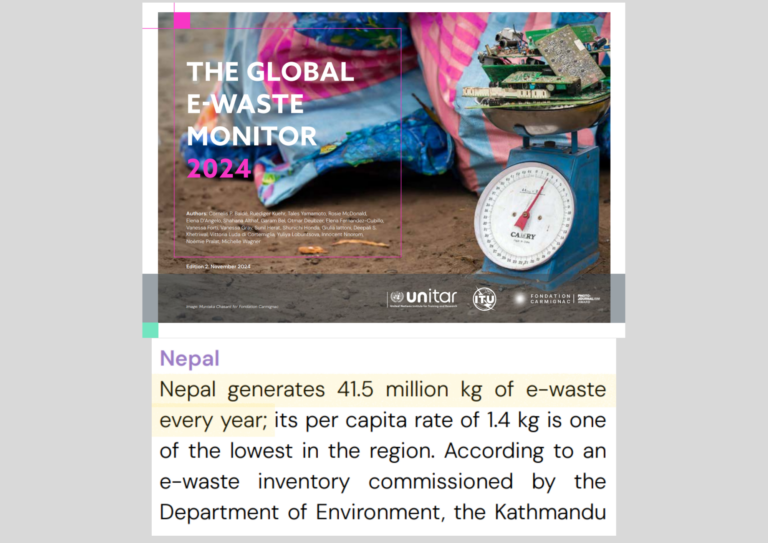
Similarly, the UN Global E-waste Monitor 2024 concluded that there is a lack of coordination and cooperation among stakeholders in the circular management and utilization of electronic waste. Being a landlocked country, it concluded that properly managing electronic waste that cannot be recycled or processed domestically remains challenging. Because these materials must be sent to other countries, the process is expensive and time-consuming.
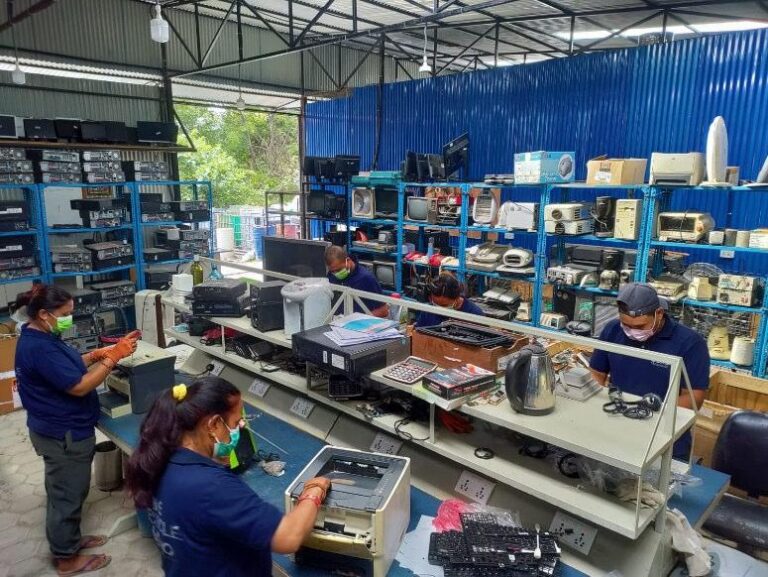
Doko Recyclers, which has its main office in Madhyapur Thimi, Bhaktapur, has been collecting and managing electronic waste in Kathmandu and Pokhara. The company processes 200 kg of electronic waste daily, with eight regular employees. They repair and sell items that can be reused and systematically dispose of those that cannot. Panjiyar states that they plan to expand this operation across the country.
The EV battery debate
The government’s declarations to promote EV use and operate large data centers indicate that electronic waste will increase even further in Nepal in the coming days. Chalise of Doko notes that managing EV batteries is more challenging than dealing with the electronic waste generated by data centers. “If we work by formulating an electronic waste management policy, destroying waste from data centers is not very difficult,” he says. “However, the entire world is looking for a solution to dispose of EV batteries. This is risky because once the battery swells, it bursts, and the substances released from it are extremely hazardous to health and the environment.”
Roshan Pandey, Chief of the Faculty of Technology at NAST, also states that discarding and managing EV batteries will be highly challenging in the future. “The government has been saying that EV manufacturers themselves must take back the batteries. Tomorrow, we might have to import only the batteries; at that time, we might have to dispose of the batteries right here in Nepal, and that is when the electronic waste will become even more visible,” he says.
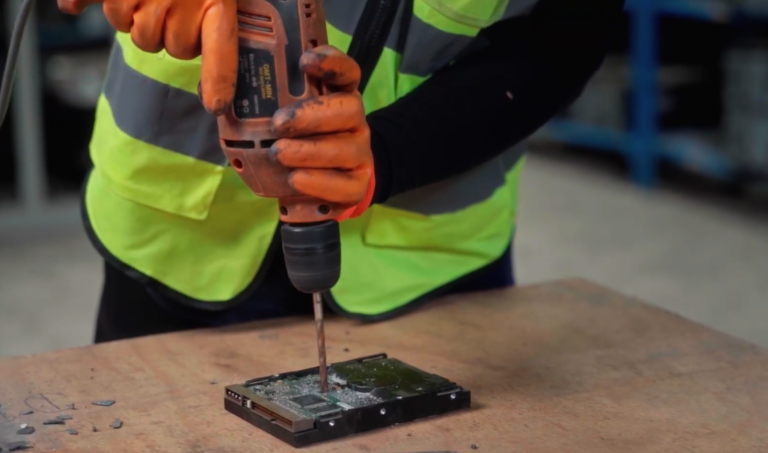
On September 15, 2025, the then Minister for Physical Infrastructure and Transport, Kulman Ghising, formed a task force to study the necessary policy, legal, and institutional frameworks, current status, opportunities, challenges, and prospects for promoting EVs in Nepal. The task force’s study also covered the issue of EV battery management. The report recommended that legal provisions for vehicle imports be made so that battery manufacturers/sellers/suppliers take back EV batteries once they become useless.
It also advised bringing in EV waste recycling and management technology through donor assistance, establishing an international-standard battery management, recycling, and production center, and creating standards that incentivize the private sector. Furthermore, it suggested preparing an environmentally friendly battery management system, procedure, and standard (clearly defining who will do it and how). The task force also recommended incentivizing the import of large public EVs and producing skilled manpower for regular EV monitoring and regulation.
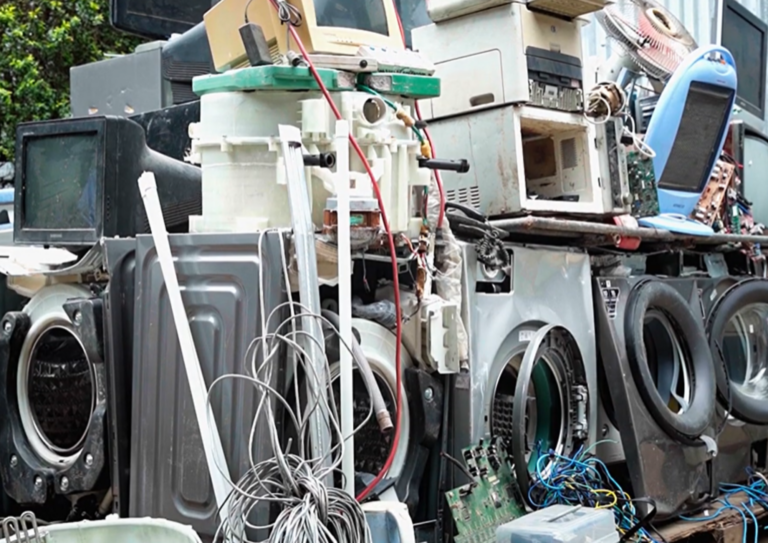
Pandey of NAST suggests that sectoral policies must be formulated to manage the electronic waste generated by EV batteries and the operation of large data centers. “It is essential to introduce and implement a separate policy that covers everything from the procurement process of items to their use and disposal,” he says. He notes that if the government prioritizes this right now, the future problem of electronic waste can be mitigated.
Gyan Raj Subedi, Director General of the Department of Environment, states that preparations are underway to introduce standards for EV battery management in the upcoming fiscal year. “Discussions have taken place at various stages regarding which modality to adopt. The battery management standard is being drafted after requesting import data from EV sellers and distributors,” he says. “The new standard will be created in the coming year.”
Meanwhile, the government is set to levy a new tax on EVs starting from the upcoming FY 2026/27 for EV battery management. A clean infrastructure investment fee will be charged at the import point for the domestic production of electric vehicles, construction of charging stations, and battery management. This fee will range from 2.5 to 130 percent based on passenger capacity and vehicle value. Previously, an excise duty ranging from 5 to 50 percent was levied based on the kilowatts of the electric vehicle.
India’s practice
India has implemented necessary legal and policy frameworks to ensure the safe collection, processing, and management of electronic waste. It has been collecting, recycling, and managing electronic waste by enacting separate rules under the Environment Protection Act 1986.
India first introduced electronic waste management rules in 2011, which were subsequently amended twice, in 2016 and 2022. According to the currently enforced E-Waste (Management) Rules 2022, the primary responsibility for monitoring and regulation is assigned to the central and state-level pollution control boards. Developing enterprises based on the recycling and reuse of electronic waste is actively encouraged. Similarly, rules have been established for managing all types of batteries, including those used in electric vehicles. Under the ‘Battery Waste Management Rules 2022,’ battery producers themselves are assigned the responsibility of collecting and processing old batteries. Provisions even include imposing fines on those who violate the rules and harm the environment.
China and Japan have also emphasized the recycling of electronic waste. China has incentivized recycling by providing subsidies to recycling centers.