Kathmandu
Wednesday, July 15, 2026





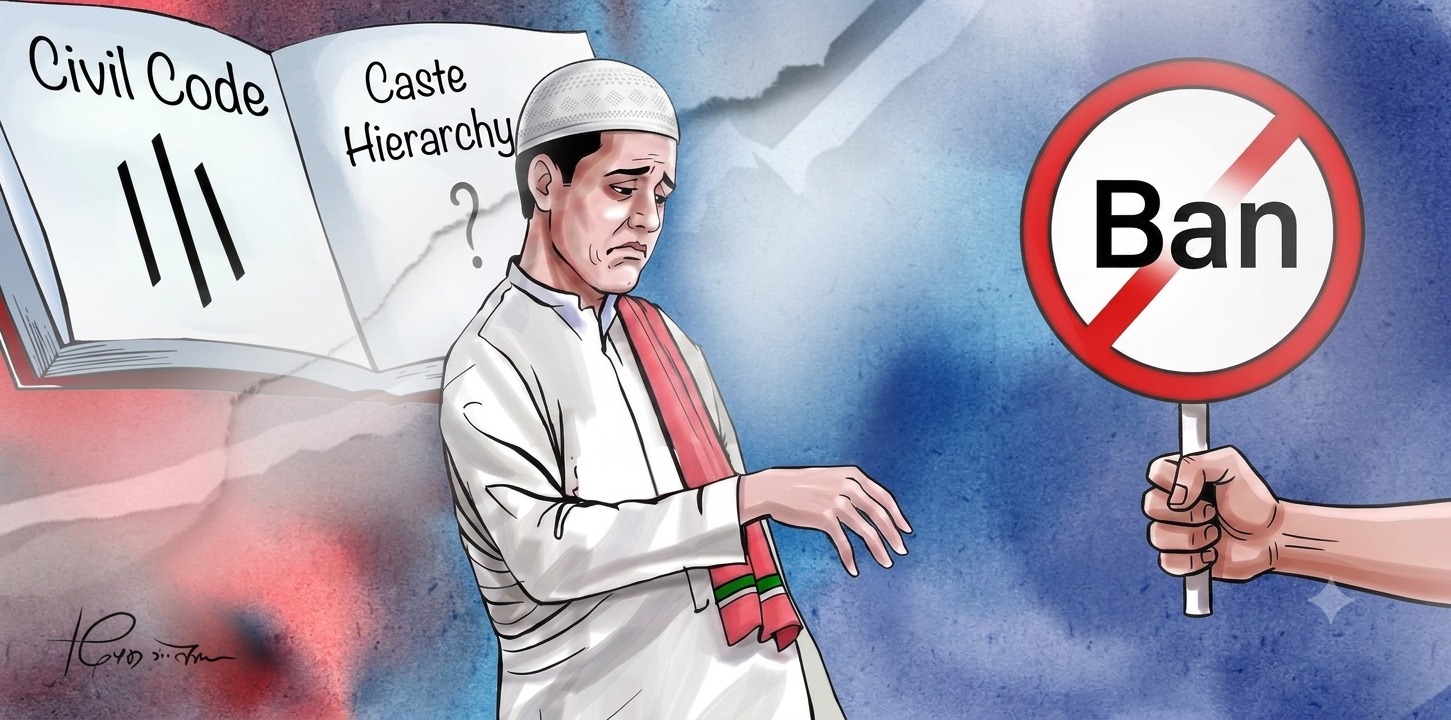
The government came to power promising change, but its first 100 days have been marked by forced evictions, suspicious deaths, and growing frustration among Dalits, raising questions about whether political transformation has translated into justice for Nepal's most marginalized community.
KATHMANDU: I am a resident of Kathmandu Constituency No. 6. During the elections on March 5, even though leaders from the old political parties visited my home repeatedly to talk with me, I did not vote for them. Instead, I voted for Shisir Khanal, the candidate from the Rastriya Swatantra Party (RSP), who had not visited my home even once. Today, he serves as the Minister for Foreign Affairs.
Fed up with the parties that had dominated power for so long, many people like me voted for the RSP’s election symbol, the bell. Backed by this wave of support, the RSP formed a government with nearly a two-thirds majority. Our expectation was that this new force would do something different and better than the old parties.
As of writing this piece, the government has passed its first 100 days in office. However, the public mood and atmosphere are nothing like they were before the elections. In fact, the self-immolation of Ganesh Nepali in Mugu has increasingly turned public sentiment against the government. This is because he was not just a Nepali citizen; he was also a representative of the oppressed and marginalized Dalit community.
The pain of Dalits in informal settlements
Less than 50 days after taking office, the government deployed a large number of security personnel to evict informal settlements along the banks of Kathmandu’s Bagmati, Manohara, Bishnumati, and Samakhusi rivers. The pain of those displaced flooded online portals and social media. Listening to the story of Som Bahadur Bishwakarma, in particular, left me deeply shaken.
Som Bahadur was originally from Nuwakot. He used to make a living as a blacksmith while also farming a few square meters of land. Later, a motorable road was built through his land. Normally, in such cases, landowners receive compensation from the government at determined rates. However, because the land he lived on and cultivated was unregistered public land, he received no compensation. Left with no way to survive in his village, he moved to Kathmandu and started running an iron smithy around Chabahil to make ends meet.
Later, through various middlemen, he secured a shanty on the banks of the Manohara River. Using the money his son earned and sent back from working abroad, he built a small concrete house there. However, during the demolition of the Manohara settlement, his house was also razed. Sorting through the bricks of his ruined home, he lamented, “People of upper castes get government jobs, but where are we Dalits supposed to get them? First, the government ruined my life in Nuwakot, and now they have ruined it again in Kathmandu.”
I am not aware of any media outlet following up on his current situation. But it is not hard to guess—he is likely stranded and struggling just like the other displaced families. There is no exact data on how many Dalits lived in those informal settlements, but their numbers among the displaced are significant. In fact, even a woman from the Pode community—an indigenous Newar Dalit community native to the Kathmandu Valley—was found taking shelter at the Kirtipur holding center.
Silence of the Dalit lawmaker
Khagendra Sunar, a lawmaker elected from the Dalit community, began his political journey at Maitighar Mandala, demanding, “Where is the space for Dalits?” He had even chained himself during his protest. At that time, KP Sharma Oli was the Prime Minister and Ramesh Lekhak was the Home Minister.
On the 42nd day of Sunar’s hunger strike, Home Minister Ramesh Lekhak called him to his office for talks. The negotiations went on until midnight. It was rumored that the government assured him they would address his demands to the best of their ability and even offered him a cabinet minister post for six months. However, Sunar left the meeting without a conclusion, stating he needed to consult with his colleagues.
On the 45th day, coinciding with Constitution Day on September 19, he organized a massive assembly that included Dalits who had traveled from as far as India. Through that gathering, he demonstrated his political strength and charted his political path.
Currently, Deepa Nepali is staging a satyagraha (hunger strike) at Maitighar Mandala, asking, “Where is our housing, Government?” Alongside her, other Gen Z Dalit youths have been protesting with various demands for nearly three months. Her movement has received solidarity not only from across the country but also from various international communities.
Although the Prime Minister has not paid direct attention to these issues, Sudhan Gurung, upon assuming office as Home Minister for a second term, met with the protesters and assured them of a solution. He stated he would invite them to the ministry and assign Khagendra Sunar to coordinate the meeting. However, a month has passed since that assurance.
According to public chatter, when journalists visiting the protest site ask about Khagendra Sunar, the protesters give a single response: “He traded the Dalit movement for his seat in parliament. Dalits can no longer expect anything from him.”
Since the government was formed under the leadership of Balendra Shah, there have been not only rising atrocities against Dalits but also suspicious deaths and severe crimes. The death of Shri Krishna Bishwakarma in police custody in Sindhuli, and the collective violence faced earlier by Inisha BK of Surkhet, are among the most widely discussed incidents.
Shri Krishna BK’s death in police custody occurred under highly suspicious circumstances, raising questions of state responsibility, negligence, or weakness. Yet, instead of offering condolences to the victim’s family in parliament, the Home Minister claimed it was a suicide. Meanwhile, Shri Krishna’s mother sat in protest at Maitighar, demanding justice while keeping her son’s body in the hospital.
Unable to watch this ordeal, Dalit journalists took personal initiatives to help secure some compensation for the grieving mother. She finally cremated her son on the condition that her fight for justice would continue. The state’s supportive role, however, was nowhere to be seen.
Inisha BK’s mother has also accumulated massive debts while fighting for justice. Although these are state-prosecuted cases, relying solely on the government attorney makes securing justice incredibly difficult. Consequently, families are forced to seek outside legal aid, adding to their financial burden.
Dalits have been murdered in the past as well. Manveer Sunar was killed in Kalikot simply for touching a kitchen stove. Sete Damai was murdered in Dailekh because his son entered an inter-caste marriage. Laxmi Pariyar was killed in Kavre over allegations of witchcraft. Ajit Mijar lost his life due to an inter-caste relationship, and Nabaraj BK along with his five friends were murdered in Rukum for attempting an inter-caste marriage.
Following those past tragedies, we organized protests on three fronts: Dalit lawmakers from both the ruling and opposition parties, Dalit political sister organizations, and Dalit civil society. These three groups consistently raised their voices in government, in parliament, and in international forums.
Whether it was during Madhav Kumar Nepal’s premiership when the army killed three Dalit women in Bardiya under the pretext of illegal poaching, during Baburam Bhattarai’s tenure, or under Prachanda, Sher Bahadur Deuba, or even KP Sharma Oli—whom we often viewed as unsympathetic to Dalit issues—the victims’ families received immediate state relief of Rs 1 million, even if complete justice remained elusive.
Laxmi Pariyar, Sete Damai, and Manveer Sunar were not killed by the state. Yet, their families received government relief, and they obtained some measure of justice from the courts as government attorneys fought their cases.
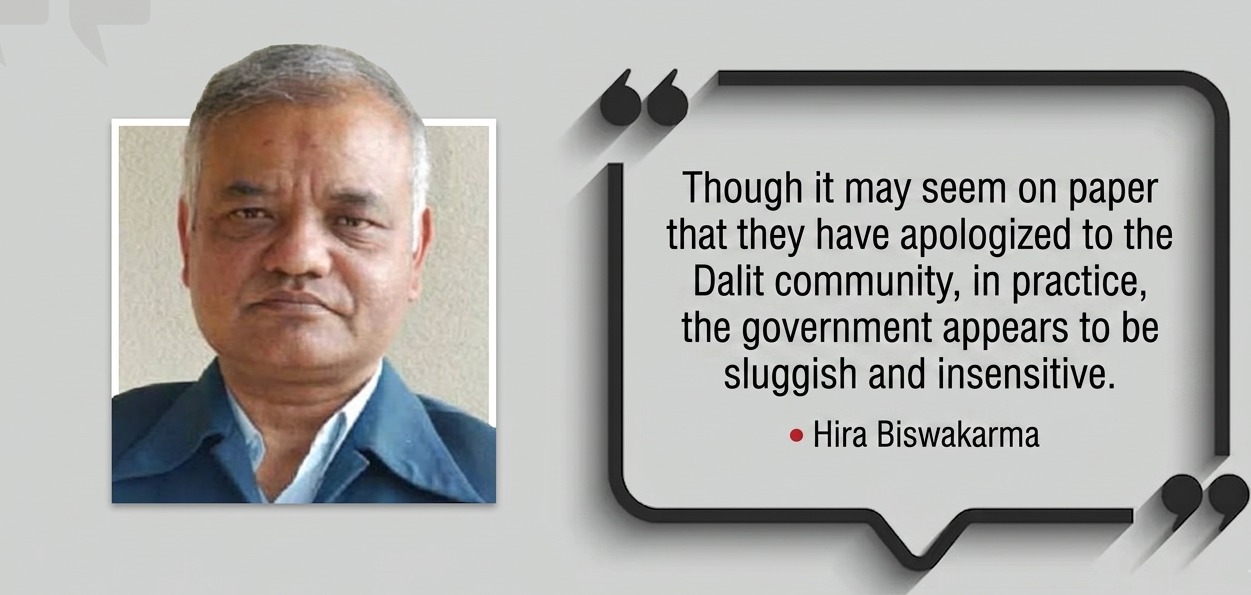
Today, however, we have a powerful government with nearly a two-thirds majority. While it may occasionally offer written apologies to the Dalit community, in practice, the government appears slow and unsympathetic. Despite repeated pleas from the Dalit community, it remains in a deep slumber.
To make matters worse, Khagendra Sunar, who became a lawmaker on the slogan of “Where is the space for Dalits?”, had personally traveled to Sindhuli to sit in an all-night protest for Shri Krishna’s mother. Yet today, he himself seems to have fallen silent.
The solution to the “Where is our housing, Government?” campaign is not overly complex. The Ministries of Home Affairs and Law can review the implementation of existing laws regarding caste discrimination and house rentals, introduce bills for necessary amendments, and assign clear monitoring responsibilities to local governments.
The state has historically provided relief to Dalit families who lost members to social violence or other tragic circumstances. Continuing this practice and actively enforcing laws on behalf of the victims would make solving these issues entirely possible.
Ironically, while the government publicizes the achievements of its first 100 days, the Dalit community continues to suffer through dark times. For this seemingly new government, this is not just a political issue—it is a moral test of the state’s commitment to equality and justice.