Kathmandu
Saturday, July 11, 2026





A nation like Nepal faces constant threats.
For example, the heating of the planet does pose clear dangers to this highly climate vulnerable country.
But are these threats also stemming from the possibility of a war?
No one is planning to invade the country and, certainly, no other nation is at risk of being invaded by Nepal.
As reported by Nepal News, ”the new National Cadet Corps (NCC) Bill, registered in the Federal Parliament by Prime Minister and Defence Minister Balendra Shah, proposes a major expansion and modernization of Nepal’s youth cadet programme by replacing the existing National Service Corps Act, 1970 Under the proposed law, students from Class 8 to Class 12 would be eligible to join the NCC, with participation requiring written consent from parents or guardians and the student’s school”
Yet if you go through the recently proposed reform of the National Cadet Corps Act, 1970, you also read that a new expanded Cadet Corps would also have to deal with situations of conflict.
It would envision an army controlled body, what would resemble a semi-military force composed of young citizens who would formally remain civilians. It makes absolute sense having a civilian corps dealing with disaster preparedness, national emergencies, including those of natural nature or even human made.
Around the world, there are examples of civilian led volunteering corps that are trained to step in in specific situations, mostly assisting citizens in preventive measures, evacuation or post disasters situations. In Europe there are special corps totally run on voluntary basis whose service is highly appreciated.
For example, in Italy it is called National Civil Protection Service and it is not administered by the Minister of Defense but directly by the Office of the Prime Minister and despite the name, has nothing to do with security or defense matters.
The bill recently tabled refers to the creation of a National Service Corps but the remit of such a body is very broad and includes also security. It seems like the government is intended to create what would resemble a civilian led “semi para military” service to be administered by the Ministry of Defense.
Concerning is the fact that one of the primary targets of this new initiative are students from community schools that, as we know, happen to be among the most vulnerable members of the society.
The fact that these boys and girls do lack a good education and other opportunities normally available to their peers from more solid economic and social backgrounds, should not imply, tacitly or explicitly, that they are going to be more inclined (or pressurized) to join the proposed transformed Cadet Corps.
It is fair to explain that the proposed legislation clarifies that the overall intent of this new initiative is not to open to the recruitment of a new manpower for the army but it is about leadership.
But there are also many other ways to teach leadership among young people, including those from vulnerable backgrounds. Yet the most worrying aspect of the new proposal is the inclusion of war or conflict situations among the task of the new corps.
Is this really necessary or is it sheer scaremongering?
Let’s not forget the targeted groups are not even mature citizens, they would be children and adolescents and at the most very young adults. How can we expect them to carry out vital tasks in the field of emergencies and even in the field of security? Can leadership be taught and applied through risky, sensitive emergency situations involving minors?
At this point, would not be better to directly introducing a voluntary military draft with of age young citizens? It makes sense for the country to have a Cadet Corps for youngsters who might be attracted to the military. Such an initiative offers an entry door to the Army for those cadets who, after having had a “taste” of military life, want to pursue the noble mission of serving the nation through the army.
Other members of the current Cadet Corps might instead decide to have an entirely different career but their professional trajectory will permanently marked by their experiences with a service closely associated to the National Army and shaped by its culture.
This is a good thing.
But why is there a need to militarize a service that makes absolute sense for a country prone to natural disasters and other non-conflict emergencies?
Imagine the many road accidents that occur throughout the country or the accentuated risk of forest fire or flooding or landslides. On one hand, there is a huge scope to prevent and create awareness on this type of hazards and there is even greater scope for rapid interventions in a complementary fashion with law enforcement forces.
A National Civil Emergency Corps, made up by of age citizens, including those in their still young age but above 18, could support the National Police or the future Provincial Polices if they will ever materialize or back the work of the National Army.
In this scenario, there must be a detailed “playbook” that clarifies and defines roles and responsibilities of each player throughout each phase of an emergency but, there is no doubt, that civilians can assume an important role in such situations.
Maybe, indirectly, the intent of the proposed legislation is to really bring a system of a voluntary draft without out rightly and clearly naming it because doing so might create controversy and can be, practically speaking, including financially, impractical.
It is a political question if the country needs such a voluntary draft that would enlist eligible citizens for a predetermined amount of time. In terms of this type of service, it could be six months, it could be ten months, 12 months or even more.
How such a military draft would support the security of the nation and, at the same time, complement and strengthen the regular army? This is a question that the senior leadership of the National Army can answer and offer options and propositions to the civilian Federal Government.
Avoiding such a complex discussion could be a convenient expedient for the government, basically “eating the cake and having it too”. The fact that the proposed new service is going to be voluntary is a good thing but, after all, isn’t this inevitable? Moreover, what is troubling is the Federal Government’s understanding of “national service”.
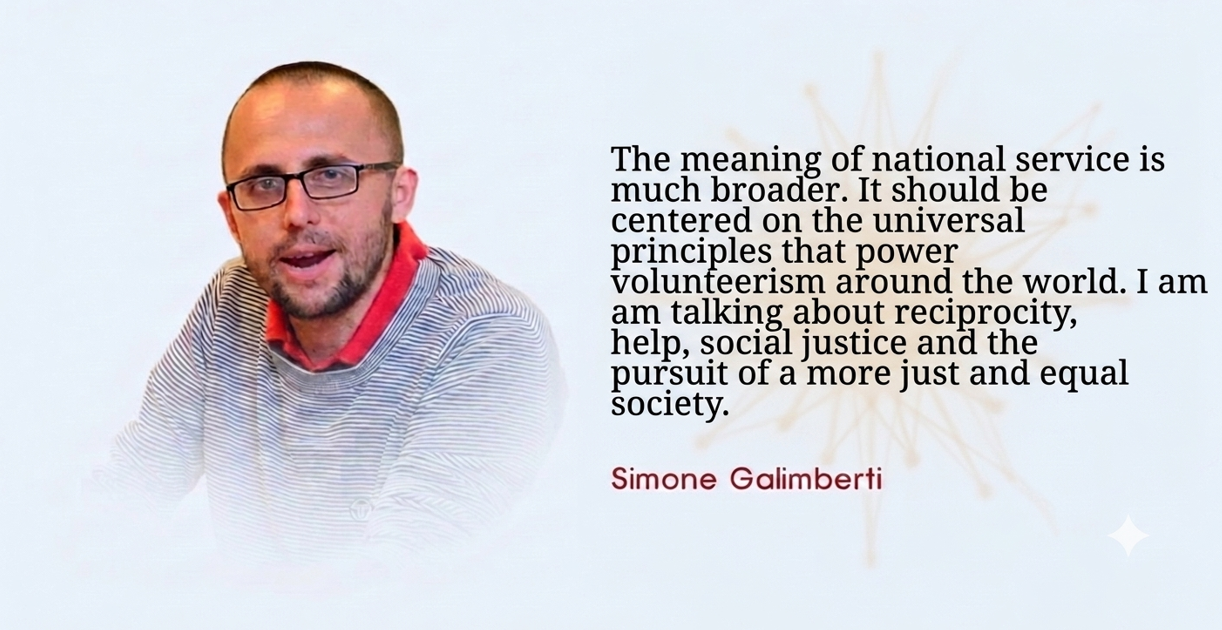
There are many instances, especially in the Asia Pacific, (look at Malaysia or Singapore) where the concept of national service is intrinsically linked to the military. Yet the meaning of national service is much broader and it should be centered on the universal principles that power volunteerism around the world.
I am talking about reciprocity, solidarity, help, social justice and the pursuit of a more just and equal society. The military, unquestionably, plays a vital role in a nation like Nepal. It is consistently regarded as one of the most trusted public institutions.
It offers a unique organizational culture based on discipline, patriotism and professionalism that can certainly serve the nation through a unique way of provision of military inspired educational leadership to a restrict number of young citizens.
This was the purpose of the current Cadet Corps that the administration of Prime Minister Balen Shah wants to scrap. Why not, instead, strengthen the existing model of youths centered learning experience inspired by and centered on the National Army’s overall culture of service? Meanwhile, the idea of having a civilian led emergency and humanitarian volunteering service corps can be one of the best ideas that the new Federal Government might come up with.
This would be a great way to promote and strengthen civic engagement in a very practical way, a way that truly matters and can truly make, literally, a lifesaving difference to millions of citizens.
The bill presented could offer a door to such a possibility when it says, according to NepalNews that “beyond school-based training, the bill would also create a legal framework allowing the government, through a Cabinet decision, to mobilize trained volunteers during national emergencies, including natural disasters, war, or internal conflict”.
Again, the inclusion of war or internal conflicts is troubling but overall, this aspect could become the central tenet of a national emergency corps where the National Army might have a contributing role but, would be, overall, shaped by a civilian perspective.
Instead, the National Army should be able to expand its tightly controlled Cadet Corps as it is now and truly make it a national model more focused on security even if, let’s not forget, we would still be talking of underage youths. Mixing up emergency, disaster preparedness and management with security related tasks does not offer a potent recipe.
Instead, it can sow confusion and become a missed opportunity to reinvigorate the nation by involving and engaging millions of youths through very different models of service that can coexist and contribute, differently to the development of Nepal.
![Ganesh Nepali’s family, supporters stage protest outside Bir Hospital [photo feature]](https://english.nepalnews.com/wp-content/uploads/2026/07/Ganesh-Nepali-10-768x512-1.jpeg)