Kathmandu
Thursday, July 16, 2026





The regulator's 10-year roadmap sets bold targets for market size, liquidity and new investment products. But turning those ambitions into reality will require reforms and structural changes that extend far beyond SEBON's control

KATHMANDU: Nepal’s capital market regulator has just done something regulators in frontier markets rarely do cleanly: put a number on its own ambition. A market capitalization-to-GDP ratio above 150 percent by 2036. Daily turnover nearly quadrupled to Rs 30 billion. More than 500 listed companies, up from 297. Twelve million demat accounts. A fifth of the market in corporate bonds.
As a piece of central planning, the Capital Market Development Blueprint 2026 is unusually specific, and specificity is a double-edged instrument for a regulator: it invites accountability but it also invites the market to check the arithmetic. It’s worth doing that checking, because the numbers tell two different stories depending on which part of the blueprint you’re looking at: one story where Nepal has already quietly delivered something remarkable and another where the targets are running well ahead of what market mechanics alone can produce.
Start with what has actually already happened, because it’s easy to lose this in a document full of forward-looking targets. Nepal’s demat account base has gone from roughly 1.7 million to close to 8 million in five years — more than a quarter of the entire population now holds one. Mero Share accounts have gone from 700,000 to over 7 million in the same window. For context, India — a market fifteen times Nepal’s population and immeasurably deeper in absolute terms — took about twenty-five years to cross 110 million demat accounts by the end of 2022, before a post-pandemic surge pushed the number past 210 million by late 2025.
As a share of population, India’s demat penetration sits somewhere around 15 percent even after that surge. Nepal, on a much smaller and more concentrated base, is already past a quarter of its population. That is a genuinely fast build-out of market access infrastructure, and it did not happen by accident — Mero Share’s online IPO application system and a broker network willing to open accounts cheaply did the heavy lifting. Whatever skepticism is warranted about the blueprint’s headline targets, the “onboarding” side of the plan is not starting from zero; it’s building on a base that has already proven Nepal can scale participation quickly when the friction to open an account is low.
The trouble starts when you move from account numbers to capital numbers, because those don’t scale the same way. A demat account costs a broker a few minutes of paperwork to open; a listed company with a credible balance sheet, audited financials and enough free float to matter takes years to produce, and no regulatory blueprint can conjure one into existence. This is the gap between the 150-percent-of-GDP target and the 74-percent starting point. To put that ratio in perspective: the current global average market cap-to-GDP ratio sits somewhere around 70 percent, meaning Nepal, at 74 percent, is already sitting roughly at the world average — a fact the blueprint doesn’t dwell on, probably because “we’re average” doesn’t make for a compelling ten-year vision.
India, held up implicitly as the regional benchmark Nepal is chasing, has a ratio in the 119 to 131 percent range as of 2023-24, built over three decades of privatisation, IPO waves and one of the largest emerging-market investor bases in the world. Only a handful of markets globally — Taiwan at roughly 325 percent, the United States above 220 percent — sit meaningfully above the 150 percent mark the blueprint has set as Nepal’s ten-year target, and in both cases that ratio is inflated by a small number of globally dominant technology and semiconductor companies whose market value has almost nothing to do with the size of their home economy.
Nepal doesn’t have, and the blueprint doesn’t claim it will have, companies of that character. Which means hitting 150 percent of GDP would require something closer to the India path: broad-based listing of real industrial and services companies, not a handful of outsized winners. That is a much harder, slower kind of growth to engineer, and it depends on variables SEBON doesn’t control — private-sector willingness to go public, state enterprise privatization, and the pace of GDP growth itself, which is the denominator working against the market cap numerator throughout this whole exercise.
The daily turnover target has a similar shape. Rs 8 billion to Rs 30 billion is not, on its face, an unreasonable multiple for a market this size to eventually reach — it’s the credibility of the path that’s in question, given the market context this blueprint was published into. Capital gains tax collections, which are a fairly direct proxy for how much real profit-taking is happening in the secondary market, fell 37.5 percent this fiscal year against a record prior year, and the government’s own attempt to fix this through the May 2026 budget — making the tax a final withholding tax while simultaneously raising both the long- and short-term rates — has so far failed to move either the index or collections in a positive direction. This matters for the blueprint’s institutional-investor target specifically.
Nepal doesn’t have, and the blueprint doesn’t claim it will have, companies of that character. Which means hitting 150 percent of GDP would require something closer to the India path: broad-based listing of real industrial and services companies, not a handful of outsized winners.
SEBON wants institutions to go from a minor share of turnover today to over 40 percent by 2036. Institutional money — pension funds, insurers, mutual funds — is disproportionately sensitive to exactly the kind of policy uncertainty Nepal’s market has just displayed: a tax regime that changed direction (simpler rules, but a higher bill) within the same budget cycle the blueprint was drafted alongside. Institutions that allocate for the long haul want predictability more than they want low rates per se, and a market that revises its capital gains framework while simultaneously promising foreign institutional investors it will open up within five years is sending a slightly mixed signal about how settled its rules of the game actually are.
On new instruments, the blueprint’s own timeline is worth stress-testing against comparable markets, because gestation lags for these products tend to run longer than regulators expect. Take REITs, one of the five-year targets. India’s regulator, SEBI, first floated the idea of REITs in 2007. The global financial crisis and years of unresolved tax ambiguity meant the actual regulatory framework wasn’t finalised until 2014, and the first REIT — Embassy Office Parks — didn’t list until April 2019. That’s twelve years from first proposal to first listing, and seven years from framework to listing, in a market with vastly deeper institutional and legal capacity than Nepal’s.
Nepal is compressing an equivalent REIT, ETF and InvIT rollout into a five-year window that starts from a Securities Act that hasn’t even been rewritten yet. That doesn’t make it impossible — Nepal can borrow India’s finished rulebook rather than inventing its own from scratch, which should save time — but it does suggest the five-year marker is the most optimistic point on the entire roadmap, and the one most likely to slip into the following phase if legal reform itself runs late.
Short selling deserves separate scrutiny, because it’s the instrument SEBON’s own chairman has spoken about most directly, and it’s also the one with the most obvious operational prerequisites that Nepal’s market doesn’t yet have. Short selling only functions if there is a liquid pool of shares available to borrow — which means securities lending and borrowing infrastructure has to exist and actually be used, not just be legal — and if there’s enough free float and institutional participation that borrowing doesn’t simply dry up the moment sentiment turns negative, which is exactly when short sellers want to borrow the most.

This AI-generated image illustrates potential share market manipulation in Nepal
In markets historically dominated by retail investors holding for the long term, as Nepal’s is, the pool of genuinely lendable shares tends to be thin, and thin lending pools mean either the mechanism doesn’t get used much or it gets concentrated in a handful of the most liquid names, doing little for the “two-sided market” effect Bhatta has described.
China’s own experience is instructive here: it introduced a pilot short-selling and margin-trading programme in 2010, restricted initially to a small list of approved blue-chip stocks precisely because regulators didn’t trust the mechanism to behave safely across the broader, more speculative end of the market — and it took years of gradual list expansion before short selling became a meaningful share of turnover. Nepal, whose market is arguably more retail-dominated and less liquid than China’s was in 2010, should probably expect a similarly cautious, gradual rollout rather than a clean switch-on, regardless of how the blueprint’s timeline reads.
There’s also a foreign-investment dimension worth flagging honestly. The blueprint’s third phase leans heavily on attracting qualified foreign institutional investors and phasing in foreign portfolio investment as the route to international integration. That ambition runs into Nepal’s broader standing on financial-integrity metrics that foreign allocators screen for before committing capital, independent of anything SEBON does on its own turf — a country’s anti-money-laundering compliance status is one of the first things institutional compliance desks check. This is a variable that sits with the National Coordination Committee and the Finance Ministry more than with SEBON, but it directly affects whether Phase Three’s foreign-investor targets are reachable on the blueprint’s own schedule, and it’s the kind of cross-institutional dependency the “five bodies must align” framing in the blueprint understates by treating it as a coordination problem rather than a set of separate national-level fixes each with their own timeline.
None of this is an argument that the blueprint is wrong to exist, or that its direction is mistaken — quite the opposite. A market that is 297 companies deep, overwhelmingly retail, heavily concentrated in banking and hydropower, and structurally dependent on transaction-tax revenue that swings 37.5 percent in a single year genuinely does need the kind of instrument diversification, institutional deepening and legal modernisation the blueprint describes.
There’s also a foreign-investment dimension worth flagging honestly. The blueprint’s third phase leans heavily on attracting qualified foreign institutional investors and phasing in foreign portfolio investment as the route to international integration.
The seven-pillar structure is sound in substance: better law, more instruments, more institutional money, more technology, better investor protection, foreign participation, and a wider net of listed companies are the correct ingredients for any market trying to grow up. The demat and Mero Share numbers prove Nepal can execute quickly on the parts of this agenda that depend on digital access and low friction. What the numbers above suggest is that the parts of the plan requiring deep structural change — legislative overhaul of an act that has stood since 2006, institutional restructuring of three separate bodies, a fourfold jump in daily liquidity, and instruments that took other markets a decade or more to properly bed in — are unlikely to move on the tidy 100-day, 2-year, 5-year, 10-year clock the document lays out, and the 2036 headline numbers should be read as a directional aspiration rather than a forecast.
For anyone actually positioned in NEPSE today, the practical takeaway is to watch execution milestones rather than the 2036 target itself. The first genuinely testable marker is whether the Securities Act amendment process, promised within 100 days, produces an actual bill moving through Parliament rather than a drafting committee still meeting a year from now — Nepal’s legislative history on financial-sector reform bills is not one of fast turnarounds, and coalition politics can stall even uncontroversial technical legislation for years.
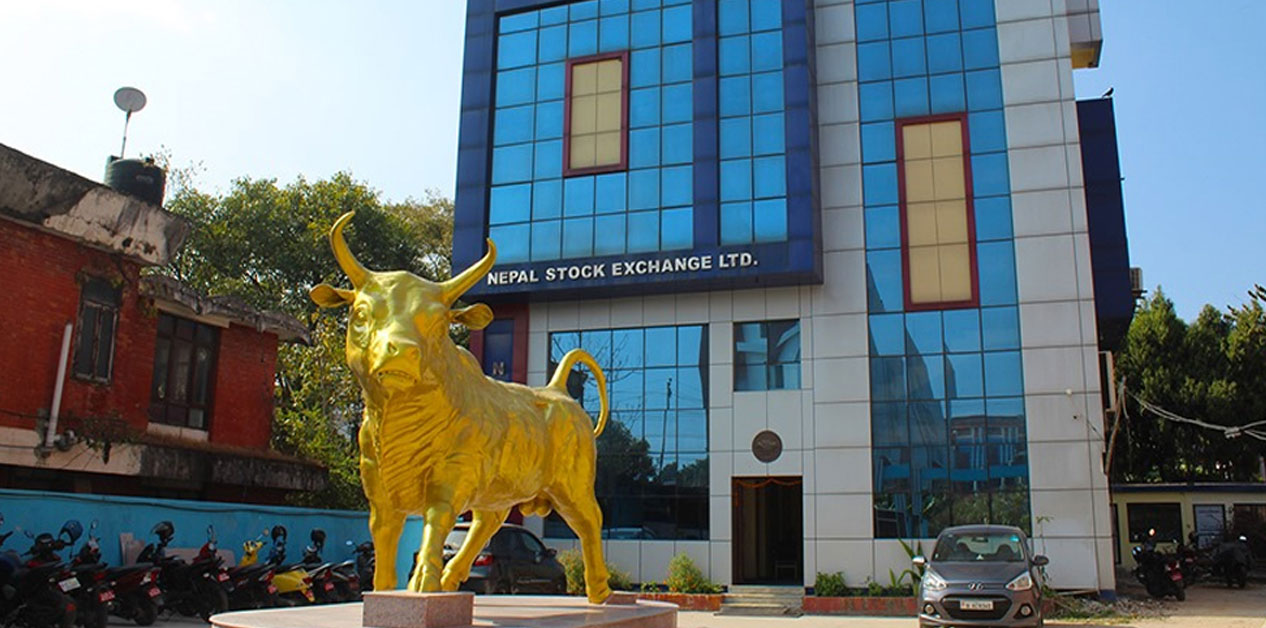
Nepal Stock Exchange
The second marker is whether the corporate bond market and SME exchange, both two-year targets, actually list their first instruments on schedule, since these are the least structurally demanding of the new products and the ones most likely to reveal whether SEBON’s implementation capacity matches its drafting ambition.
If those two markers slip, the five-year REIT and ETF targets and the ten-year 150-percent-of-GDP target should be discounted accordingly — not because the blueprint’s vision is flawed, but because in capital market reform, as in most public policy, the gap between an announced roadmap and its delivery date is almost always measured in the early milestones, long before anyone reaches the horizon year printed on the cover.