Kathmandu
Thursday, July 23, 2026





Nepal’s annual public debt growth was fueled more by exchange rate swings than new budget spending, exposing major risks in managing foreign liabilities and capital projects
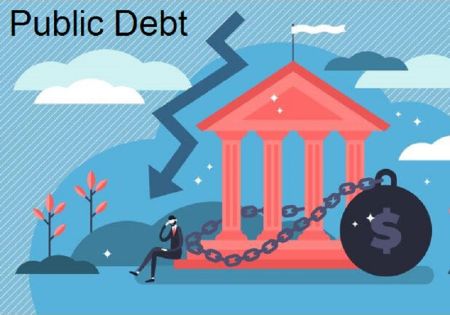
KATHMANDU: Nepal’s public debt report for the fiscal year that closed on July 16, 2026 tells a story that, on its surface, looks unremarkable. A debt to GDP ratio of 45.07 percent sits comfortably within the range most international financial institutions consider sustainable for a developing economy, well short of the 60 to 70 percent thresholds that typically trigger serious sustainability warnings in standard debt frameworks used by the IMF and World Bank. Read at that level alone, there is little cause for alarm. But debt reports rarely reward a single glance at the headline ratio, and this one is no exception.
Inside the tables of the Public Debt Management Office’s year end report are several threads that, pulled together, describe an economy leaning more heavily than usual on borrowed money, a currency that quietly did much of the heavy lifting in inflating that debt burden, and a government whose external financing ambitions ran up hard against the practical limits of donor disbursement schedules and project execution capacity.
Start with the basic arithmetic. Nepal’s total public debt rose from Rs 2.674 trillion to Rs 2.975 trillion over the twelve months from July 17, 2025 to July 16, 2026, a jump of roughly Rs 300.85 billion, or 11.25 percent. That is a meaningfully fast pace of debt accumulation for any economy, and it is worth putting into context. Nepal’s nominal GDP growth for the same period, even under generous assumptions, would struggle to match an 11 percent expansion given the structural growth rates the Nepali economy has posted in recent years, typically in the mid single digits in real terms and somewhat higher in nominal terms once inflation is added.
When debt grows faster than the economy underpinning it, the debt to GDP ratio drifts upward over time even if the absolute debt level still looks manageable in any single year. This report captures one year of that drift, not the full multi-year trend, but the direction is unmistakable: Nepal added debt faster than its economy could plausibly have expanded to absorb it, and the 45.07 percent figure, while moderate, is the product of that accumulating pressure playing out year after year rather than a single isolated event.
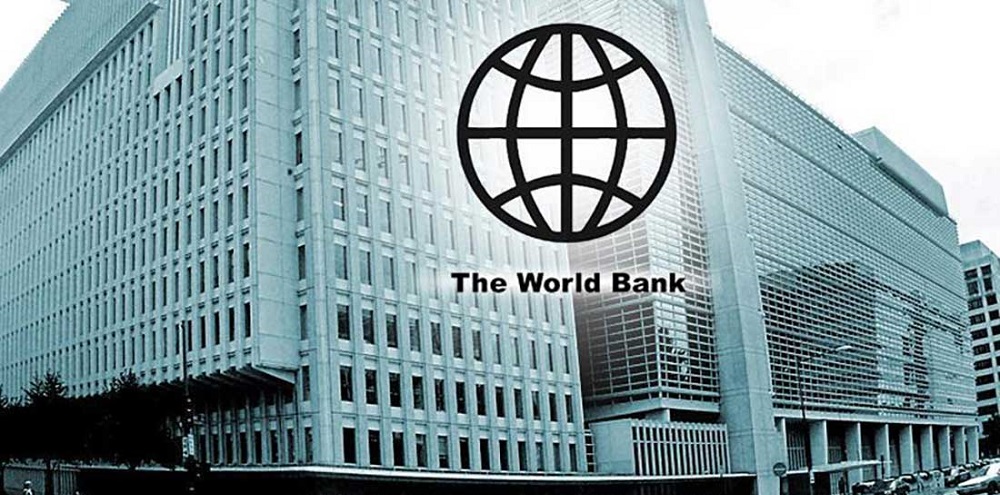
World Bank headquarters in Washington D.C.
The most important analytical finding in this entire report, however, is not the size of the debt increase but its composition. Of the roughly Rs 300.85 billion added to Nepal’s debt stock this year, only about Rs 133.85 billion, or 44.49 percent, represents money the government actually chose to borrow beyond what it repaid. The remaining 55.51 percent, close to Rs 167 billion, is an artifact of exchange rate depreciation revaluing Nepal’s existing foreign currency loans upward in rupee terms. This is a critical distinction that separates fiscal policy from currency dynamics, and conflating the two would badly misread what actually happened to Nepal’s finances this year.
The government’s own deliberate borrowing decisions, net of everything it repaid, added just over one percent of GDP worth of new debt burden. The rupee’s weakness against the currencies in which Nepal’s external loans are denominated added nearly as much again, without a single new loan agreement being signed or a single additional rupee of government spending being financed. More than half of the headline debt growth this year, in other words, came from currency markets rather than budget decisions.
IMF headquarters in Washington D.C.
This currency effect deserves closer scrutiny because of what it implies about Nepal’s external vulnerability. A country whose external debt is priced in dollars, yen, and special drawing rights is exposed to currency risk regardless of whether its own fiscal decisions are prudent or reckless. Nepal could hold its net external borrowing completely flat, repaying exactly what it draws each year, and still see its rupee-denominated external debt balloon simply because the rupee weakens against a basket of stronger currencies. That is close to precisely what happened this year: net external debt mobilization was a modest Rs 26.66 billion, just 13.77 percent of the total external debt increase of roughly Rs 193.66 billion, while currency depreciation accounted for the remaining 86.23 percent.
Put differently, for every rupee of new external debt burden reported this year, roughly seven came from currency movements and only one came from actual net new borrowing. This detail rarely makes headlines, but it matters enormously for anyone assessing whether Nepal’s debt trajectory reflects fiscal choices or currency market forces largely outside the government’s direct control.
There is a policy implication buried in this pattern. Nepal’s foreign exchange reserves, its trade balance, and the currency management practiced by Nepal Rastra Bank all become, indirectly, debt management tools whether policymakers frame them that way or not. A stronger, more stable rupee would do more to contain the rupee cost of Nepal’s external debt over coming years than almost any conceivable fiscal tightening on new external borrowing, simply because the currency effect this year outweighed the net new borrowing effect by more than six to one. This does not mean fiscal discipline is unimportant, but it does mean that debt sustainability analysis for Nepal has to sit alongside exchange rate analysis, remittance inflows, the trade deficit, and reserve adequacy, rather than being treated as a purely fiscal question answered by looking at budget deficits alone.
Turn next to the split between domestic and external borrowing performance against targets, which reveals a second important story about capacity rather than currency. The government set itself an ambitious external borrowing target of Rs 233.66 billion for the year and managed to draw down only Rs 88.50 billion, an achievement rate of 37.88 percent. Domestic borrowing, by contrast, came in at 99.08 percent of its Rs 362.00 billion target. This nearly forty-point gap in execution rates between the two financing channels is too large to be incidental, and it points toward a familiar pattern in Nepal’s public financial management: donor-funded and multilateral project loans are tied to implementation milestones, procurement completion, and disbursement conditions that Nepal’s implementing agencies have historically struggled to clear on schedule.
When externally-funded infrastructure or program spending moves slowly, the associated loan disbursement simply does not happen, regardless of how much the government wanted or needed that money. Domestic borrowing through treasury bills and development bonds faces no such implementation bottleneck. The government can issue securities to domestic banks and institutional investors essentially on its own schedule, subject only to market appetite and the central bank’s monetary stance, which explains why domestic issuance came in almost exactly on target while external disbursement fell dramatically short.
This has a compounding effect worth flagging. Because external financing underperformed so badly, Nepal ended the year having met only 75.07 percent of its overall borrowing target, even though domestic borrowing alone nearly hit its own mark. If the government’s spending plans for the year assumed that Rs 233.66 billion of external financing would materialize to fund specific capital projects, and only Rs 88.50 billion actually arrived, the shortfall of roughly Rs 145.16 billion in external receipts either had to be absorbed through project delays, substituted with additional domestic borrowing beyond what was already near its own ceiling, or covered by underspending on the very capital projects those external loans were meant to finance. None of these outcomes are particularly encouraging from a development finance perspective.
Persistent under-execution of concessional external financing, which is typically cheaper and longer-tenor than domestic market borrowing, effectively pushes Nepal toward relatively more expensive domestic debt instruments to fill financing gaps, or toward delayed infrastructure and development spending, both of which carry real economic costs even though neither shows up directly in the debt stock figures presented in this report.
The debt servicing figures add another dimension to this picture. Total debt servicing came in at Rs 386.23 billion against a budget of Rs 411.01 billion, a 93.97 percent execution rate that looks reasonably strong at first glance. But disaggregating between principal and interest tells a more nuanced story. Principal repayment hit 99.66 percent of its budget, essentially fully executed, which makes sense given that principal repayment schedules on existing loans are largely fixed and contractually binding regardless of the government’s cash position in any given month. Interest payment execution, however, came in at just 75.67 percent, leaving about Rs 23.73 billion of budgeted interest payments unspent by year end.
Domestic interest payments were the primary driver of this shortfall, executed at only 73.65 percent against their budget. There are a few plausible explanations for this gap, though the report itself does not spell out the cause. One possibility is that some domestic interest obligations were budgeted conservatively at the start of the year and the actual interest cost came in lower than expected, perhaps reflecting either lower than budgeted domestic interest rates on government securities or a smaller than planned stock of domestic debt actually outstanding at points during the year.
Another possibility is that some scheduled interest payments fell just outside the reporting window captured by this year end cutoff. Whatever the precise mechanism, the pattern of near complete principal execution alongside partial interest execution suggests debt servicing operations in Nepal prioritize meeting hard repayment obligations first, with interest payment timing showing more flexibility or variance.
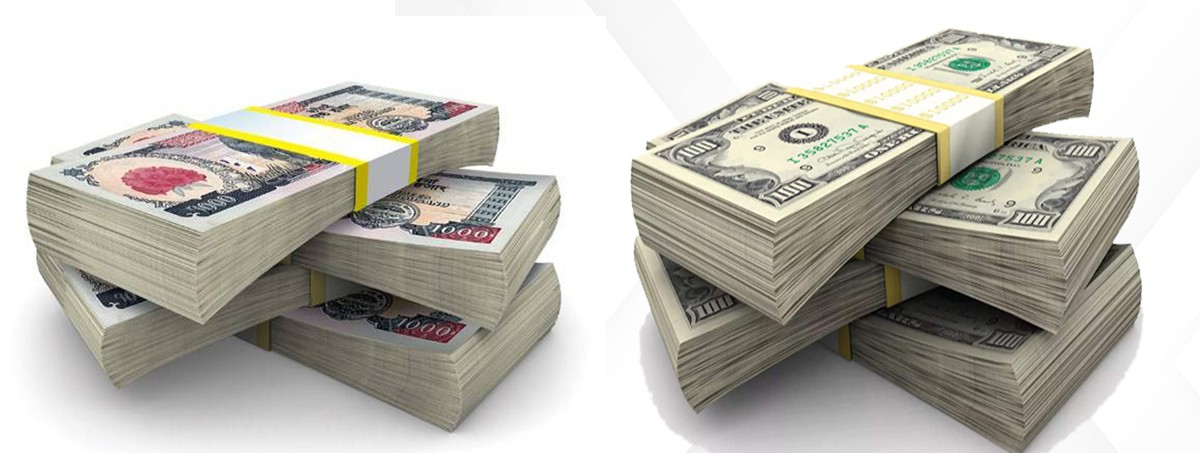
The debt service to GDP ratio of 5.85 percent is a figure worth sitting with for a moment, because it represents money that flows out of the government’s budget purely to service past borrowing rather than fund current spending on health, education, infrastructure, or any other public priority. Just under six percent of the entire size of Nepal’s economy went toward debt servicing this year. This is not an alarming figure by international standards, and many economies far more heavily indebted than Nepal carry debt service burdens well above ten percent of GDP.
But it does represent a fixed claim on government resources that grows in absolute terms each year as the debt stock itself grows, and if Nepal’s debt continues expanding at anything close to the 11.25 percent pace recorded this year, the debt servicing bill in absolute rupee terms will keep climbing in tandem, gradually eating into the fiscal space available for the kind of capital and development spending that a country at Nepal’s stage of development needs to prioritize.
The monthly disbursement and repayment data in the report reinforces the structural story told by the annual aggregates. Domestic debt issuance shows a fairly regular monthly rhythm, consistent with a predictable auction calendar for treasury bills and development bonds that the government and Nepal Rastra Bank manage jointly. External debt receipts, in sharp contrast, are erratic, with a single month capturing close to a fifth of the entire year’s external receipts while several other months recorded external inflows below Rs 3.5 billion. This lumpiness is the operational fingerprint of project-tied external financing: disbursements arrive in large, irregular tranches tied to specific project milestones or loan agreement conditions being satisfied, rather than flowing steadily like a scheduled bond auction.
For anyone managing Nepal’s cash flow and liquidity planning within the fiscal year, this unevenness in external receipts creates genuine operational complexity, since the government cannot rely on predictable foreign financing inflows to smooth its financing needs across the twelve months and must instead lean on domestic instruments, which the data shows it does consistently.
Stepping back to the wider macroeconomic canvas, this report needs to be read alongside what is already known about the broader pressures facing Nepal’s public finances heading into and through the fiscal year that closed in mid-July 2026. Revenue performance relative to spending ambitions, and profitability pressures within the domestic banking sector that absorbs much of the government’s domestic borrowing, have been recurring themes in Nepal’s fiscal commentary over the past several quarters. Against that backdrop, a government that sees its external financing plans undershoot by nearly two thirds, forcing either project delays or substitution toward domestic borrowing, is a government with fewer degrees of freedom than its budget documents might suggest at the start of the year.
The near total domestic borrowing execution combined with the external shortfall suggests Nepal financed its fiscal year largely by drawing as much as the domestic market would comfortably bear while foreign financed capital projects lagged behind schedule, a pattern that, if repeated across several years, risks crowding out domestic private sector access to bank credit and government securities markets even as it leaves planned infrastructure investment underdelivered.
There is also a longer-run structural point embedded in the currency dynamics discussed earlier. Nepal’s external debt, at Rs 1.599 trillion or 53.77 percent of the total debt stock, is large enough that continued rupee depreciation against major global currencies will keep functioning as an automatic, policy-independent driver of debt growth in rupee terms. This year’s experience, in which currency effects outweighed actual net new borrowing by more than six to one on the external side, is a useful illustration of how much Nepal’s debt sustainability narrative depends on factors well beyond the Ministry of Finance’s direct budgetary choices.
The Nepali rupee’s close relationship with the Indian rupee, combined with the Indian rupee’s own performance against the US dollar and other reserve currencies, effectively transmits global currency market conditions directly into Nepal’s public debt statistics. This is not a criticism of Nepal’s debt managers, who cannot control global currency markets, but it is a reminder that headline debt growth figures in any given year should always be decomposed into their currency and non-currency components before drawing conclusions about fiscal discipline, exactly as this report’s own net mobilization table does.
Looking ahead to the fiscal year that began on July 17, 2026, several threads from this report deserve continued attention.
First is whether external financing execution improves from this year’s weak 37.88 percent showing, which would require either faster project implementation on the Nepali side or smoother disbursement processes from development partners, or more realistically some combination of both.
Second is whether currency conditions stabilize, since a repeat of this year’s roughly Rs 167 billion currency-driven debt increase would again dwarf any deliberate fiscal borrowing decisions and continue pushing the debt to GDP ratio upward largely through forces outside the budget process.
Third is whether interest payment execution converges back toward the near complete rate seen in principal repayment, since a persistent gap there raises questions about whether interest budgeting assumptions need revision or whether there are underlying delays in interest disbursement that merit closer institutional attention.
Finally, given that domestic borrowing is now running close to its practical ceiling relative to target, at over 99 percent execution this year, there may be limited additional headroom to substitute further for external financing shortfalls through domestic markets alone without raising borrowing costs or crowding out private borrowers, meaning the external financing execution problem cannot simply be solved indefinitely by leaning harder on domestic debt issuance.
None of this amounts to a crisis narrative. Nepal’s debt to GDP ratio at 45.07 percent remains well within conventionally sustainable territory, and its principal repayment discipline, at nearly full execution, reflects a government meeting its hard obligations reliably. But a careful read of this report reveals an economy where roughly half of this year’s debt growth came from currency depreciation rather than deliberate borrowing, where external financing ambitions ran up against real implementation constraints, and where the resulting debt structure leaves Nepal more exposed to global currency conditions than a surface-level glance at the debt to GDP ratio would suggest.
The numbers in this single year end snapshot, covering the fiscal year that ran from July 17, 2025 to July 16, 2026, are moderate. The underlying dynamics they expose, about currency exposure, external financing execution capacity, and the gradual upward drift of debt relative to the size of the economy, are the details that deserve continued tracking as Nepal moves through the fiscal year 2026/27 that began this July.