Kathmandu
Thursday, July 23, 2026






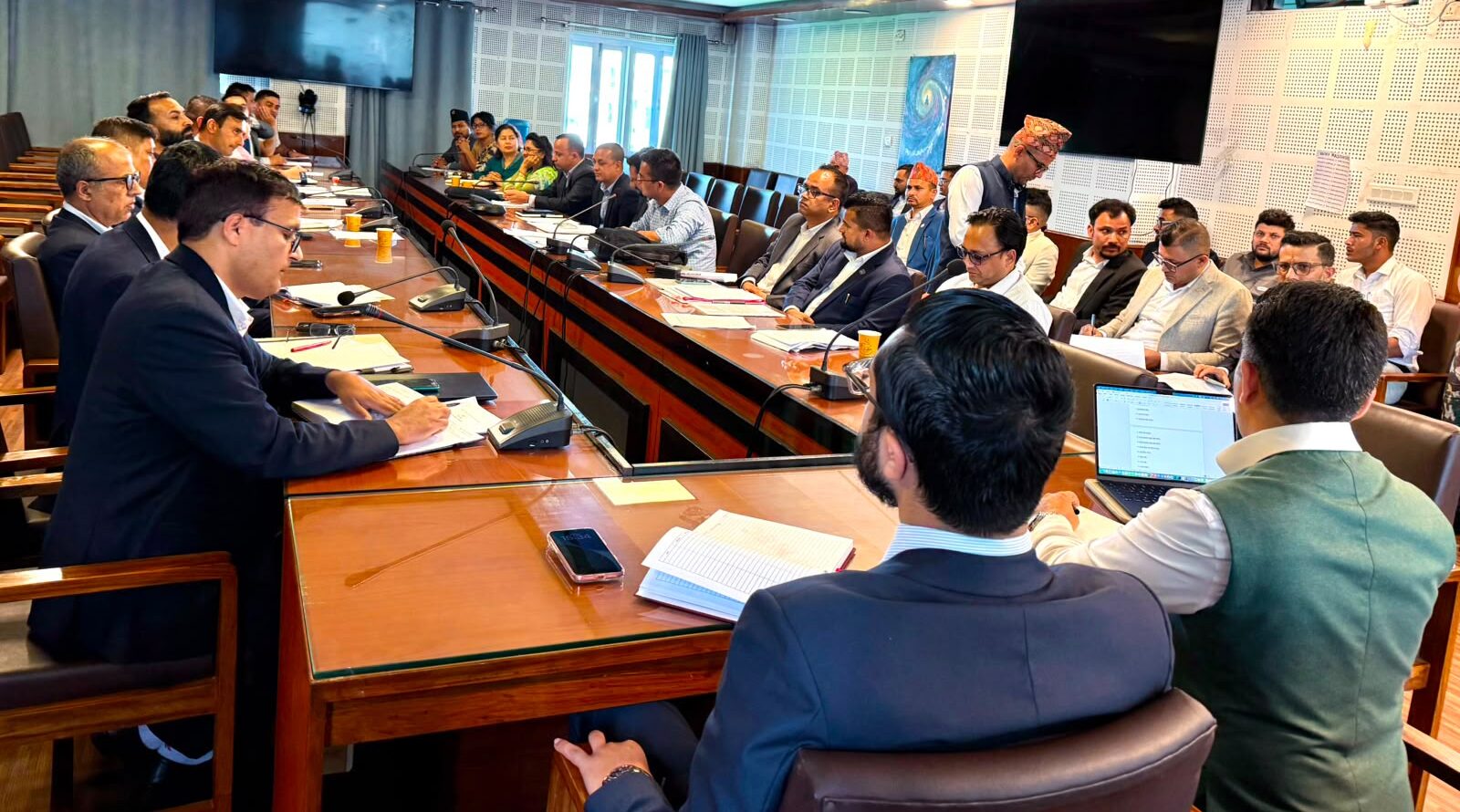
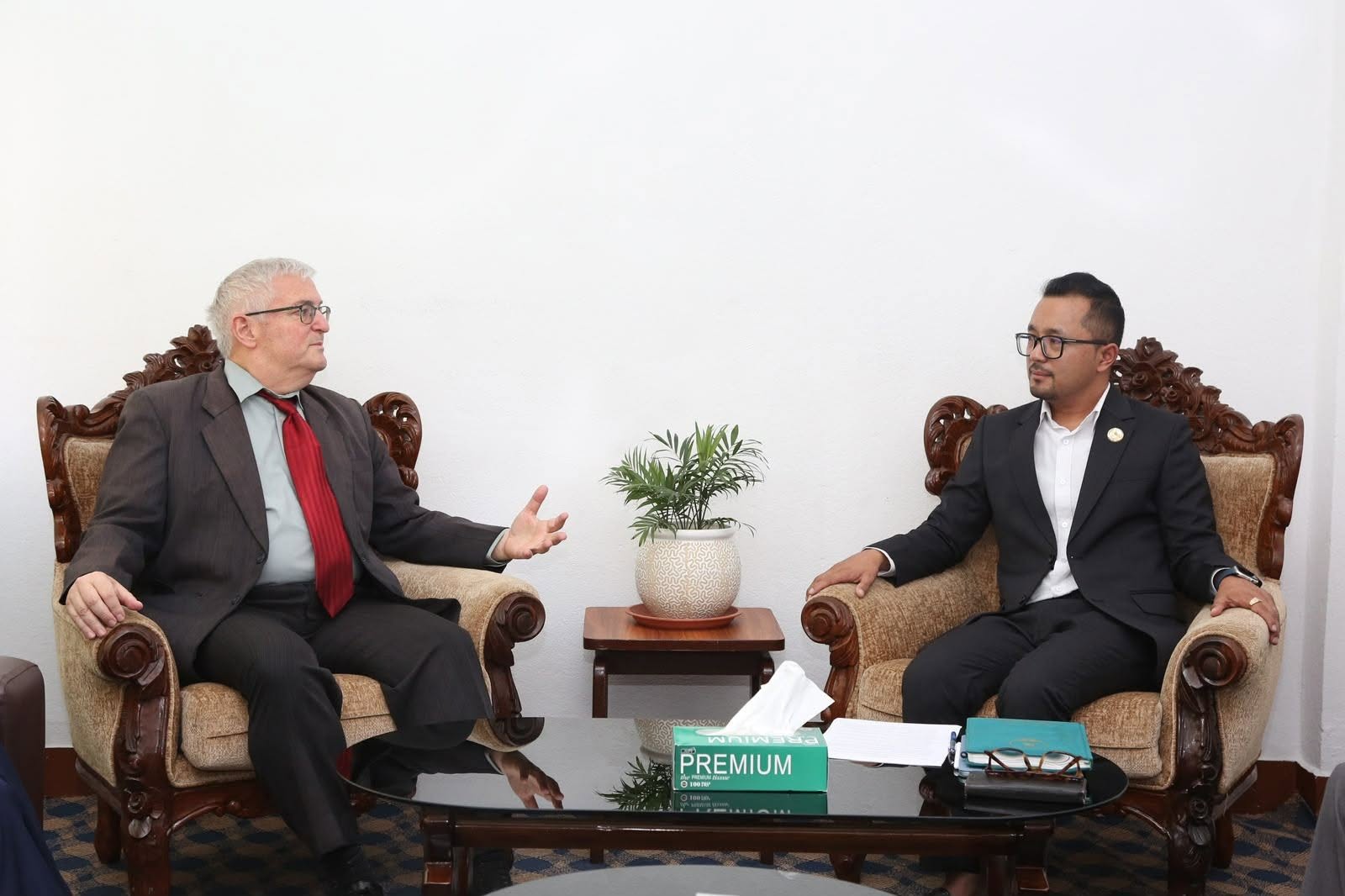
KATHMANDU: Finance Minister Swarnim Wagle has held a critical consultation with eight former finance ministers to collect crucial inputs for the upcoming fiscal year’s budget.
According to the Minister’s secretariat, the meeting focused on leveraging past administrative experiences to navigate the country’s current economic climate.
In his opening address, Minister Wagle acknowledged the diverse political circumstances his predecessors faced, noting that despite varying degrees of political favorability, their underlying objective was always the advancement of the nation and its citizens.
He expressed a firm intent to adopt and build upon the successful programs of the past to draft a new budget anchored securely in the principles of good governance and aimed at uplifting the living standards of ordinary Nepalis.
During the session, former Finance Minister Rameshore Khanal opened the recommendations by urging the immediate implementation of the High-Level Economic Reform Taskforce’s report.
He strongly advised against scattering national resources across unprepared, small-scale, and fragmented retail projects, while also cautioning the government against levying Value Added Tax (VAT) on electricity.
Echoing the call for historical structural reforms, Shankar Koirala suggested utilizing older economic blueprints, including Khanal’s previous reports.
Koirala recommended opening electricity trading to the private sector, easing forest-related clearance hurdles to accelerate infrastructure construction, and establishing new industrial zones.
He also pushed for advancing the hedging policy initiated during Janardan Sharma’s tenure and suggested exploring the practicality of running a new state-led garment industry.
Yuba Raj Khatiwada delivered a pragmatic critique of standard budgeting practices, warning Minister Wagle to remain strictly within realistic budgetary boundaries rather than succumbing to political pressures to overextend.
Khatiwada suggested capping revenue growth expectations at a realistic 10 to 12 percent, arguing against an overambitious 15 percent target or an unachievable 1,300 billion revenue threshold.
He recommended keeping the overall budget size around 2,050 billion, maintaining the lowest income tax slab, avoiding a dual-rate VAT system, and gradually phasing down forcefully imposed excise duties.
On development and diplomacy, Khatiwada advised halting federal development works executed through local user committees, addressing the declining agricultural yields in the Madhesh region with sustained subsidies, reorganizing National Pride Projects, and initiating diplomatic measures to remove Nepal from the international financial ‘grey list’ instead of relying solely on domestic arrests.
Prakash Chandra Lohani emphasized the necessity of a collaborative public-private ecosystem, advising the budget to include robust encouragement and incentive policies for small, medium, and large private enterprises alike.
Lohani also advocated for a strict, performance-based civil service framework that enforces a clear manifesto of rewards and punishments for government employees, while calling for greater transparency in private sector investments.
Furthermore, he urged the government to engage in active economic dialogues with India to secure reliable, structured export markets for Nepali agricultural products.
Surendra Pandey critiqued the current administrative approach, noting that the initial presentation mirrored the narrow scope of a line ministry rather than a comprehensive macroeconomic vision.
He recommended a drastic reduction in the sheer volume of large-scale ventures, suggesting that the list of National Pride Projects be trimmed to just four or five critical priorities.
Pandey heavily criticized lawmakers for turning major highways like the Mid-Hill Highway into localized roads to access their own properties, proposing instead that Nepal transition toward piercing mountains and building efficient tunnels.
He called for a complete overhaul of land-use laws to clearly categorize land into agricultural, industrial, residential, and commercial sectors, while also suggesting a 20 percent reduction in the civil service workforce, a ban on luxury goods procurement by government offices, and targeted strategies to attract Indian tourists.
Prakash Sharan Mahat urged the Finance Minister to utilize his current political opportunity to make bold, unpopular decisions, such as dismantling redundant administrative structures and eliminating social security allowances for well-off individuals.
Mahat recommended immediately transitioning Nepal Airlines toward a privatization model, stating that the government can no longer financially sustain its operations.
He proposed leasing out idle government-owned industries and land to the private sector under terms where all added assets revert to the state if the private entity fails.
To preserve financial health, Mahat advised reducing foreign loans to an absolute minimum, halting massive highway projects in the hills that serve contractor interests over public utility, breaking contracts worth over five billion into smaller tenders to prevent market collusion, ensuring agricultural subsidies are strictly tied to proven production, and building year-round operational roads in tourism corridors.
Barshaman Pun highlighted the difficult economic climate facing the current budget formulation, pointing out that while past administrations successfully built extensive connectivity infrastructure—such as the Postal, Mid-Hill, and Madan Bhandari highways—the actual economic returns have remained weak due to a lack of parallel market and commercial development.
To remedy this, Pun recommended focused investment in targeted tourism infrastructure, specifically suggesting the creation of 50 to 60 dedicated hill stations branded as premium holiday and wedding destinations for India’s expanding middle class.
He also pointed to rising economic activities in provincial capitals under the federal system as a positive indicator and advised using the successful turnaround models of state-owned banks and Janak Shikshha to revitalize failing public enterprises like the Nepal Airlines Corporation, while ensuring year-round road connectivity extends fully to all local municipal centers.
Bishnu Prasad Paudel focused on structural and behavioral corrections within the Ministry, noting that Minister Wagle possesses the distinct advantage of a strong public mandate and a supportive government to fully implement the administration’s commitment papers.
Paudel urged an immediate departure from the traditional practice of drafting budgets based on expenditure desires rather than realistic revenue source estimates.
He advised the Minister to disregard potential local and provincial electoral anxieties during the budgeting process, asserting that success at the federal level naturally translates down.
Paudel also called for the courage to extract and export mineral resources from sites identified by the Department of Mines, dismissing historical political pushback regarding the Chure conservation zone, and demanded that the government move past merely discussing “Game Changer Projects” hypothetically and begin actual physical construction on vital ventures like the Budhigandaki project.
Concluding the consultation, Janardan Sharma reminded the hall that while giving advice is pleasant, implementation remains the true challenge, defining the budget as a crucial vehicle for fulfilling political resolve.
Acknowledging that the global economy currently faces external pressures at bottlenecks like the Strait of Hormuz, Sharma noted that Wagle is uniquely unburdened by concerns over his tenure length or political intimidation from within his own coalition.
He encouraged the Minister to take bold risks regarding revenue generation and project selection, cut public expenditures ruthlessly, and prioritize budgets that actively implement federalism.
For targeted investments, Sharma recommended funding high-altitude sports infrastructure, opening domestic iron and copper mining, establishing a chemical fertilizer factory using native raw materials, and ensuring the state operates the pharmaceutical industry directly.
Finally, he called for a budget that pairs education with employment through “Earn While You Learn” models, transforms border-area markets into vibrant trading hubs, and funds a tunnel to Jumla to unlock the economic prosperity of the Karnali region.