Kathmandu
Sunday, July 26, 2026






KATHMANDU: Nepal News presents today’s snapshot of Nepal’s economic activities. Get quick updates on major market movements, policy shifts, and financial developments shaping the economy of Nepal. Here are the key economic highlights for today:
NRB Withdraws Rs 40 Billion Liquidity From Market
To manage excess liquidity in the banking system, Nepal Rastra Bank (NRB) collected Rs 40 billion from the market on Wednesday. The central bank utilized a deposit collection instrument with a maturity period of 56 days. Class ‘A’, ‘B’, and ‘C’ financial institutions participated in the online bidding process, which concluded at 3:00 PM. The interest rate for these deposits was determined through the bidding process, with a minimum investment requirement of Rs 100 million. The principal and interest for this transaction are scheduled for payment on June 10.
NEPSE Jumps 1.17 Percent as Turnover Crosses Rs 10.5 Billion
The Nepal Stock Exchange (NEPSE) surged by 33.27 points or 1.17 percent on Wednesday to close at 2,866.87. The Sensitive Index rose 1.09 percent to 481.87, with float and sensitive float indices also gaining. A total of 26.43 million shares of 344 companies were traded through 123,359 transactions, generating a turnover of Rs 10.537 billion, up from Rs 8.665 billion on Monday. Trading had paused Tuesday due to a public holiday. All 13 sector indices advanced, led by hotels and tourism and hydropower, while five companies hit the positive circuit breaker.
Govt. Launches 2nd ‘National Economic Census’ Nationwide
The National Statistics Office has officially commenced the Second National Economic Census to collect detailed data for national development planning. A total of 4,433 trained enumerators and supervisors have been deployed across 84 district offices. The census, which runs until June 21, covers 18 of the 21 major economic sectors, including industry, trade, and private businesses. While it excludes diplomatic missions and security forces, it utilizes an online E-Census platform and Geographic Information System (GIS) technology. All collected information will remain confidential under the Statistics Act 2022.
Capital Expenditure Reaches Only 23.58% in Nine Months
In the first nine months (July 17, 2025, to April 13, 2026) of the fiscal year 2025/26, the government spent only Rs 96.19 billion on capital projects, accounting for 23.58 percent of the Rs 407 billion annual target. This is lower than the previous year’s 29.2 percent expenditure during the same period. Political instability, including protests on September 8 and 9, 2025, and the subsequent elections on March 5, 2026, significantly hampered infrastructure work. Meanwhile, revenue collection reached Rs 886 billion, or 60 percent of the target, while current expenditure stood at Rs 747 billion.
Govt. Commits to Increasing Health Budget to 8 Percent by 2031
The government has pledged to increase the health sector’s budget share to 8 percent by mid-April 2031. While the World Health Organization (WHO) recommends 10 percent, the national commitment aims for steady growth over the next five years. Plans include a “One Citizen, One Digital Health Profile” system and expanding health insurance to all citizens. The government also promised free treatment for burn victims and mental health services. Future policies will ensure at least one MDGP doctor is stationed at every primary health center, alongside a focus on preventive healthcare and “wellness zones” in major tourist areas to promote active lifestyles.
Authorities Resume Labor Permits for 4 Middle Eastern Countries
The Department of Foreign Employment announced on Wednesday that it has resumed providing re-entry labor permits for Israel, Kuwait, Bahrain, and Lebanon. The decision follows a ministerial-level meeting held on April 13. Previously, the government had suspended both individual and institutional labor permits for the Middle East and Gulf regions on March 1 due to the escalating conflict between the USA and Iran. With this update, all major labor destinations in the region, including Saudi Arabia, the UAE, and Qatar, are now open for workers seeking to return to their jobs.
Over 1,000 Nepali Migrants Rescued from War-Torn West Asian Countries
The Ministry of Foreign Affairs has successfully repatriated 1,058 Nepali citizens from West Asia following escalations in the US-Israel-Iran conflict. Since April 2, rescue efforts coordinated by Foreign Minister Shishir Khanal have utilized Nepal Airlines and other carriers to bring citizens home. Of the total returnees, 709 arrived via the national flag carrier, while 251 were transported by Kuwait Airways. The ministry’s Emergency Operations Center and an online portal managed by the Department of Consular Services are currently tracking and recording the status of Nepalis worldwide to ensure prompt assistance for those in high-risk zones.
Telecommunications Authority Shuts Over 10,000 Betting Sites and Apps
The Nepal Telecommunications Authority (NTA) has blocked more than 10,000 online betting applications and websites as part of a government crackdown on illegal gambling. Deputy Director Surya Prasad Lamichhane reported that Nepal Telecom alone blocked over 21,000 URLs and apps. This action follows the Cabinet’s decision on March 27, which mandated the closure of betting platforms within 24 hours. Under the National Penal Code 2017, operating or participating in betting is punishable by up to one year in prison and a fine of Rs 10,000, with authorities warning of strict legal action against unauthorized digital gambling activities.
IMF Lowers 2026 Global Growth Forecast to 3.1% Amid War
The International Monetary Fund (IMF) has reduced its 2026 global economic growth forecast to 3.1 percent, down from the January estimate of 3.3 percent. This revision follows escalating conflict in the Middle East, involving US and Israeli strikes against Iran and subsequent retaliation. IMF Chief Economist Pierre-Olivier Gourinchas warned that the war has destabilized energy markets, with oil, gas, and fertilizer prices surging due to the blockade of the Strait of Hormuz. Global inflation is projected at 4.4 percent, while growth in emerging economies could be hit twice as hard as advanced nations.
Armed Police Force Intensifies Revenue Monitoring at Border Points
The Armed Police Force (APF) has tightened inspections at the Kakarbhitta eastern border and other crossings in Jhapa, including Bhadrapur and Gauriganj, to control revenue leakage. Authorities are now strictly enforcing mandatory customs duties on any goods valued over Rs 100 brought from India. This move follows complaints from local traders that cross-border shopping for household items was causing a decline in local markets and a loss of state revenue. Following Ministry of Home Affairs directives, APF units are conducting awareness programs and increasing surveillance to stop illegal imports and tax evasion across the country’s border points.
Sudurpaschim Drafts Second Five-Year Plan for Development Works
The Policy and Planning Commission of Sudurpaschim Province has prepared the preliminary draft for its Second Five-Year Plan, set to take effect on July 17, 2026, the first day of the fiscal year 2026/27. The plan focuses on increasing productivity, reducing poverty, and fostering a private-sector-friendly environment. Key objectives include establishing a “One-Door Service Center” for industry registration and creating a “Foreign Investment Facilitation Desk.” The province aims to prioritize investment in agriculture, tourism, herbs, energy, and mining. Plans also include the development of provincial brands, e-commerce promotion, and the modernization of infrastructure through public-private partnerships to improve the overall quality of life for residents.
Aviation Traffic on Simara-Kathmandu Route Drops by 65%
Flight occupancy on the Simara-Kathmandu route has plummeted by 65 percent following an increase in airfares due to rising fuel costs. Daily passengers have dropped from an average of 600 to just 200. Currently, a one-way ticket costs between Rs 5,150 and Rs 5,550. Buddha Air, the only remaining carrier on the route, reports that its ATR-72 aircraft are flying with an average occupancy of only 50 percent. Travelers from Bara, Parsa, and Makwanpur are increasingly opting for the 4 hours road journey to avoid the high cost of the 15 minutes flight.
Pokhara Metropolitan Opens Rs 52.1 Million Disaster Risk Reduction Center
The Pokhara Metropolitan City inaugurated its Disaster Risk Reduction Center (DRRC) at the fire brigade premises in Shanti Ban on Tuesday. Built at a cost of Rs 52.1 million, the facility also houses the Metropolitan Police. The center aims to coordinate fire, ambulance, and rescue services from a single hub to manage risks related to floods, landslides, and forest fires. Monitoring technology will be used to analyze high-risk areas like the Seti River and local caves. Additionally, disaster management committees have been formed across all 33 wards to train local communities as first responders.
Irrigation Projects in Parbat Face Budget Freeze Risk as Farmers Delay
Several vital irrigation projects in Parbat District are at risk of being cancelled as consumer committees have failed to sign agreements with three months left in the fiscal year. Out of 78 planned projects, 10 remain in limbo. Local farmers have shown hesitation due to legal requirements, such as a mandatory deposit of Rs 100 per ropani (1 ropani = 508.73 square meters) and the formal registration of committees. The projects, valued between Rs 500,000 and Rs 3.5 million, face challenges, including labor shortages and high inflation. Failure to finalize these agreements will result in the return of provincial development funds.
Local Bio-Embankments Protect Bhajani From Kandra River Erosion
Community-led bio-embankments have proven effective in controlling erosion by the Kandra River in Bhajani Municipality-4, Kailali. After initial success using labor and small donations of Rs 100 per household, the project has expanded with a Rs 2.5 million investment from the municipality and various NGOs. Previously, over Rs 6.5 had been spent on similar biological measures. Currently, 500 meters of the embankment are complete, protecting 435 households. The reclaimed riverbanks are now being used for community agroforestry and commercial riverbed farming to boost local income and prevent future displacement.
Nawalparasi Administration Office Moves to New Rs 7.87 Crore Building
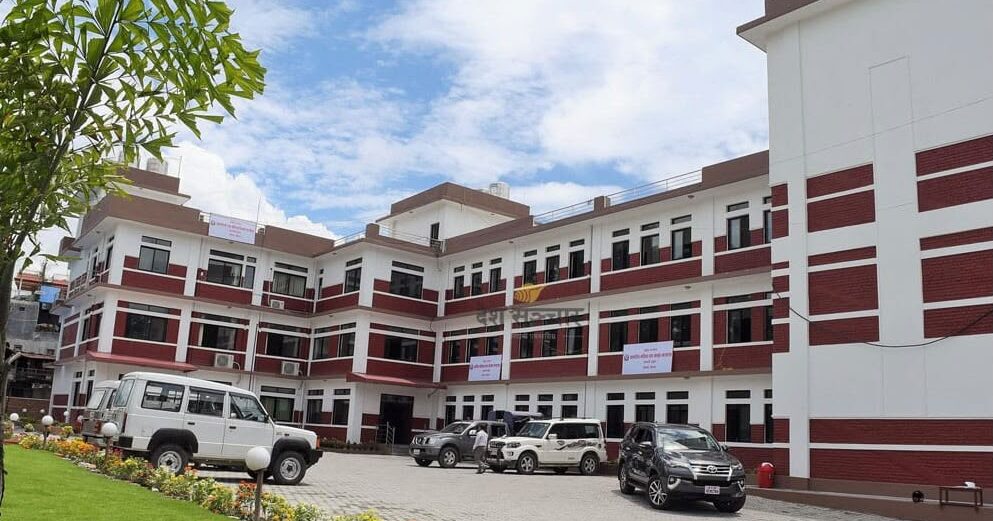
The District Administration Office of Nawalparasi (Bardaghat Susta Paschim) began operating from its newly constructed building on Wednesday. The three-story facility was built at a cost of Rs 78.7 million. Construction began in 2023 on the site of the old demolished building. During the construction period, the office had been providing services from the Nawalparasi Chamber of Commerce and Industry building. Although the project faced delays beyond its original mid-January 2025 deadline, the contractor formally handed over the completed structure on April 9.
Sauraha Hotels Record 70% Occupancy for New Year
The tourist hub of Sauraha in Chitwan saw a significant influx of visitors for the Nepali New Year, with hotel occupancy reaching over 70 percent by Monday evening. Business owners noted that the arrival of domestic tourists was much higher than last year, aided by improved road conditions from Pokhara and Bhairahawa. While large hotels catering to international guests saw slower growth, smaller hotels reported being fully booked. Approximately 90 percent of the visitors were domestic tourists. Local associations are planning to organize four to five major cultural events annually to sustain this momentum and attract more internal travelers to the region.
Hetauda Cement Industry Struggles to Reopen Amid Financial Crisis
The government-owned Hetauda Cement Industry remains largely shut down due to a severe financial crisis and a lack of raw materials. Despite a recent attempt to restart production, the factory operated for only five days in the current fiscal year, producing 2,500 tons of clinker and 30,000 bags of cement. The industry owes significant arrears to the Nepal Electricity Authority (NEA) and coal suppliers, preventing the purchase of the 120 tons of coal required daily for operation. Currently, 318 staff members remain employed while the plant faces equipment obsolescence and political interference.
Gold and Silver Prices Up
The price of gold and silver has gone up in the domestic market today. The price of the yellow metal has increased by Rs 6,000 and that of silver by Rs 320 per tola (11.66 grams). According to the Federation of Nepal Gold and Silver Dealers’ Association, the price of gold is set at Rs 302,700 per tola and the price of the same quantity of silver at Rs 5,220 today. The price of one tola of gold was Rs 296,700, and the same quantity of silver was traded at Rs 4,900 on Monday. On Sunday, the price of gold was Rs 297,100 per tola, and the same quantity of white metal was valued at Rs 4,975.