Kathmandu
Thursday, July 23, 2026






KATHMANDU: Nepal News presents today’s snapshot of Nepal’s economic activities. Get quick updates on major market movements, policy shifts, and financial developments shaping the economy of Nepal. Here are the key economic highlights for today:
NRB Tightens Accessibility Rules, Mandates Overtime Pay for Bank Staff
Nepal Rastra Bank (NRB) has amended its unified directives, requiring banks and financial institutions to improve accessibility services and strengthen labor protections for employees. Under the new rules, banks must jointly establish at least one disability-friendly branch and one accessible ATM in every local unit. ATMs must include braille signage, audio support, and accessible controls, while banking websites, mobile apps, and cards must also be made more accessible for visually impaired users. The NRB has additionally barred institutions from forcing employees to work beyond office hours without compensation. Banks must now provide overtime pay in line with existing labor laws for any extra working hours.
Nation Faces Trillion-Rupee Trade Deficit Across 120 Nations
The country faced an expanding trade deficit totaling Rs 1.443 trillion during the first 10 months of the fiscal year ending May 14, 2026. Data released by the Department of Customs showed total imports reached Rs 1.692 trillion while total export values stalled at Rs 248.962 billion. The country recorded positive trade balances with only 34 nations, including a Rs 63.2 million surplus with Denmark. India remained the largest trading partner, yielding a bilateral deficit of Rs 769.927 billion, followed by a Rs 335.015 billion deficit with China.
Real Estate Revenues Touch Rs 6.263 Billion in a Month
The government collected Rs 6.263 billion in real estate revenues from 169,538 property transactions during the month from April 14 to May 14. According to the Department of Land Management and Archive statistics, official property deed registrations reached 58,886 during the month. The Dillibazar Land Revenue Office in Kathmandu led national revenue generation by collecting Rs 599.1 million, followed closely by Lagankhel at Rs 529.6 million. The national revenue breakdown includes Rs 3.319 billion generated from registration fees and Rs 2.552 billion from capital gains taxes.
Sudurpashchim Capital Expenditure Hits Marginal 21% by Mid-May
The Sudurpashchim Province government recorded a sluggish 21 percent capital expenditure rate at the end of the tenth month (July 17, 2025, to May 14, 2026) of the current fiscal year 2025/26. Financial ledgers from the Provincial Comptroller Office showed that only Rs 4.177 billion was utilized out of a total Rs 19.838 billion development budget allocations, leaving Rs 15.661 billion untouched. Recurrent expenditure utilization fared slightly better at 37.92 percent, with Rs 5.16 billion spent out of a Rs 13.606 billion operational pool. The Ministry of Physical Infrastructure Development, which commands the largest capital share of Rs 14.716 billion, spent just 23 percent of its target.
National Rice Imports Fall to Rs 34 Billion Over 10 Months
The country imported paddy and finished rice shipments totaling Rs 34.07 billion during the first 10 months (July 17, 2025, to May 14, 2026) of the current fiscal year 2025/26, marking a noticeable decline from the previous year’s import values. The Department of Customs documented a monthly intake of Rs 2.24 billion for the period between April 14 and May 14, 2026. The cumulative imports include 449.6 million kilograms of unhusked paddy valued at Rs 16.747 billion, at least 63.9 million kilograms of premium Basmati rice worth Rs 7.33 billion, and 155.3 million kilograms of non-Basmati rice. Market analysts attributed the drop to rising procurement costs within India driven by Middle Eastern trade shocks.
Nepal Imports Rs 95 Billion in Raw Oils from Argentina
Bilateral trade statistics published by the Department of Customs for the current fiscal year’s 10-month period revealed that Argentina has become Nepal’s third-largest import trade partner. The landlocked country imported agricultural commodities worth Rs 95.27 billion from the South American nation, while exporting goods worth a nominal Rs 3.6 million. The primary trade drivers were bulk industrial materials imported for domestic value-addition and subsequent re-export to India. The bulk processing inputs included 503.1 million liters of crude soybean oil valued at Rs 81 billion and 82.9 million liters of crude sunflower oil costing Rs 13.36 billion.
Import Volumes via Birgunj Customs Surge by 15% in 10 Months
Total goods imported through the Birgunj customs checkpoint hit Rs 794.87 billion during the primary 10 months of the current fiscal year. Financial trade datasets show a 15 percent surge, equivalent to a Rs 102.44 billion increase, compared to the Rs 692.43 billion recorded during the same period last year. The import growth was driven heavily by industrial materials and energy products. Specific trade breakdowns include Rs 181.70 billion spent on five types of petroleum fuels, Rs 69.42 billion on iron and steel materials, and Rs 57.66 billion on machinery parts.
EV Imports Decline Through Belahiya Customs Office
The Bhairahawa Customs Office confirmed today that light electric vehicle (EV) imports dropped through the Belahiya border checkpoint during the first 10 months of the current fiscal year. A total of 2,019 electric jeeps, cars, and vans entered the terminal, marking a decline from the 2,270 units imported during the same timeframe in fiscal year 2024/25. Consequently, EV customs collections dropped to Rs 2.304 billion against the previous Rs 4.50 billion. Conversely, petroleum vehicle imports rose to 4,373 units, generating Rs 10.309 billion in state revenue, while motorcycle imports topped the terminal’s financial intake by bringing in Rs 18.113 billion.
Auditor General Directs Immediate Recovery of Rs 237 Million Mining Royalties
The Office of the Auditor General’s 63rd annual report directed the immediate collection of Rs 237.7 million in outstanding mining royalties and regulatory fines from non-compliant extraction firms. The federal audit revealed multiple companies extracted mineral volumes exceeding authorized limits and failed to clear dues within the mandatory seven-day post-month deadline. The directive enforces a standard royalty rate of Rs 25 per cubic meter for common stone, alongside a 30 percent late penalty and a 10 percent local development fee. Total mineral royalty collections managed by the Department of Mines and Geology reached Rs 1.594 billion.
Nepal Police Finalizes EIA for Rs 1.61 Biilion Secretariat
The Ministry of Environment moved the official Environmental Impact Assessment (EIA) report for the new Nepal Police Inspector General’s Secretariat building into its final approval stage today. The proposed infrastructure project, planned for construction in Naxal, Kathmandu, holds an estimated construction budget of Rs 1.61 billion. The architectural design specifies a 13-story structural layout featuring a dedicated multi-level basement parking facility with spaces for 27 four-wheelers and 152 motorcycles. The blueprints include two elevator lines, a command center, a multipurpose assembly hall, and legal branches. The construction contract mandates a strict three-year completion timeline, utilizing a daily workforce of 45 skilled and 136 unskilled laborers.
Nepal, China Move to Ease Border Trade in Rasuwa Talks
Nepal and China agreed to strengthen trade facilitation, border security, and cross-border coordination during a bilateral meeting held Saturday in Dhunche. The Nepali delegation was led by Rasuwa Chief District Officer Rajesh Panthi, while Chinese official Chu Jinsaon headed the Chinese side. Talks focused on easing trade and transportation through the northern border, including possible permission for Nepali drivers outside Rasuwa district to travel to Kerung after completing required procedures. Both sides also discussed tighter coordination against cross-border crime and improving support for Nepali workers in Kerung. Officials said the regular meetings aim to strengthen long-standing Nepal-China cooperation and improve border operations.
Flash Floods Shut Down 4 Border Hydropower Projects
Severe river flooding last Friday completely halted electricity production across four major hydropower projects located on the Kabeli and Indrawati rivers along the Taplejung-Panchthar border. High-velocity mudflows, logs, and boulder debris choked the water intakes and damaged structural pipelines, forcing the immediate shutdown of the 25 MW Kabeli ‘B-1’ facility and its 10 MW cascade plant operated by Arun Kabeli Power Limited. Repair works began today as river flows subsided, but engineers anticipate a two-week recovery timeline. Concurrently, Ridi Hydropower Limited’s 9.9 MW Inwa Khola project and Iwa Hydropower Limited’s 9.7 MW facility suffered extensive intake and powerhouse damage, with structural restoration expected to take months.
Department Details Strict 9-Point Asset Directive for Land Offices
The Department of Land Management and Archives issued a mandatory nine-point directive to land revenue offices today to streamline property freezing, release, and record-keeping processes linked to banking collaterals. Under the guidelines, land offices must strictly prioritize financial asset requests, resolving applications filed before 12:00 PM on the exact same working day. For requests submitted after 12:00 PM, clear processing notifications must be delivered before 12:00 PM on the following business morning. The directive enforces digital database integration across separate administrative offices and makes authorized corporate letters mandatory for asset releases to protect consumers from unnecessary bureaucratic delays while curbing unauthorized land transfers.
Krishi Samagri Initiates Chemical Fertilizer Distribution in Mahendranagar
The Mahendranagar branch of Krishi Samagri Company officially mobilized its stored chemical fertilizer reserves today to support farmers ahead of the primary paddy planting season. The regional branch office is dispatching 1,000 metric tons of urea, 500 metric tons of DAP, and 150 metric tons of potash directly through local cooperative networks. Administrative protocols mandate that participating cooperatives must collect their designated allocations within a 10-day operational window to prevent storage backlogs. The corporation has already distributed nine quotas of urea and seven quotas of DAP since mid-July 2025, with each distribution quota representing 500 metric tons of fertilizer.
Jumla Local Units Invest Rs 30 Million in Organic Fertilizer Industry Study
Chandannath Municipality, Tatopani Rural Municipality, and Patarasi Rural Municipality launched a joint technical feasibility study today to establish a Rs 30 million commercial organic fertilizer plant in Jumla District. The regional initiative aims to sustain the agricultural integrity of the district, which was declared Nepal’s first completely organic district in the fiscal year 2007/08 and strictly bans chemical weedicides and fertilizers. Backed by the REED project funded by Norway and the UNDP, the plant aims to cover the district’s annual demand of 400 metric tons of organic fertilizer, which currently suffers from a structural deficit since state subsidies deliver only 20 metric tons annually. Tatopani has offered 10 hectares of land within its industrial village to host the processing facility.
Damauli Merchants Shut Down Retail Shops in Parking Restriction Protest
Local business operators in the Safa Sarak shopping zone of Damauli launched an emergency strike today, shutting down retail storefronts to protest a new traffic restriction policy. The civic unrest followed an executive decision by Vyas Municipality to enforce an absolute parking ban alongside selective one-way traffic routing across the busy economic district to curb urban traffic congestion. Disgruntled business owners argued that the immediate prohibition on customer vehicle parking directly undermines commercial trade volumes and reduces daily foot traffic. The merchant unions stated that their coordinated shut-down protest will continue indefinitely until municipal authorities agree to reconsider the structural parking regulations and look for collaborative commercial alternatives.
Billionaire Binod Chaudhary Attends Rubio Reception in New Delhi
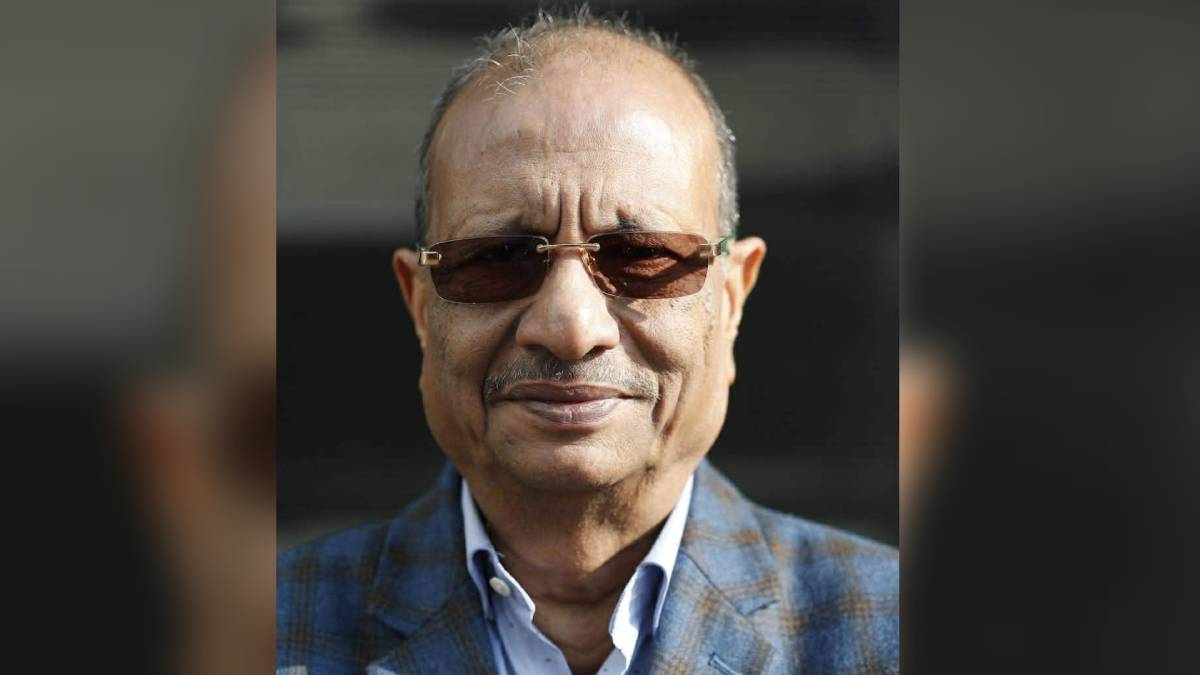
Nepal’s only dollar billionaire, Binod Chaudhary, along with his son Varun Chaudhary, attended the Roosevelt House reception at the U.S. Embassy in New Delhi as representatives of Nepal’s private sector. The reception was hosted by United States ambassador to India Sergio Gor in honor of Marco Rubio during Rubio’s visit to India. India’s External Affairs Minister S. Jaishankar was also present at the high-level diplomatic gathering, which brought together senior government officials, diplomats, and prominent private sector representatives. Rubio’s India visit has focused on strengthening India-U.S. relations through discussions on strategic cooperation, trade, technology, regional security, and economic partnership. The reception reflected the growing momentum in the expanding India-U.S. strategic relationship and the increasing role of the private sector in regional economic engagement.
Business Leaders Urge Funding to Revive Ailing Morang Industries
Industrial representatives from the Morang-Sunsari Industrial Corridor urged the Koshi Province government to launch targeted revitalization grants, tax exemptions, and structural technology funds in the upcoming 2026/27 budget to revive bankrupt manufacturing units today. Dozens of commercial plants, including the historic Biratnagar Jute Mill founded in 1936, are closed or under-capacity due to high energy rates and credit shortages. The private sector pushed for a provincial industrial rehabilitation fund to generate jobs and reverse export drops. This follows the federal finance ministry’s public-private partnership evaluation of seven key public entities, including the Gorakhkali Rubber Industry and Janakpur Cigarette Factory, whose strategic asset audits are reaching final planning stages.
Everest Color Company Announces IPO Launch
Everest Color Company secured official regulatory approval to float its initial public offering (IPO) on the open market beginning June 5. The commercial paint manufacturer is issuing 790,000 ordinary shares valued at Rs 79 million, which represents 26.33 percent of its total Rs 300 million authorized capital. The corporate allocation reserves 79,000 shares for migrant workers, 39,500 shares for mutual funds, and 15,800 shares for employees. The remaining 655,700 units will be sold to the general public at a face value of Rs 100 per share, with individual subscription limits capped between 10 and 10,000 shares until the close of the issue on June 10.
Gold Traded at Rs 290,900, Silver at Rs 5,010 Today
Gold and silver prices have decreased in the market today. According to the Federation of Nepal Gold and Silver Dealers’ Association, the price of gold today dropped by Rs 2,800 per tola (11.66 grams), fixing the price at Rs 290,900. Previously on Friday, gold was traded at Rs 293,700 per tola. Similarly, silver prices also witnessed a decline today. Silver, which was traded at Rs 5,115 per tola on Friday, decreased by Rs 105 per tola today to settle at Rs 5,010.