Kathmandu
Thursday, July 23, 2026






KATHMANDU: Nepal News presents today’s snapshot of Nepal’s economic activities. Get quick updates on major market movements, policy shifts, and financial developments shaping the economy of Nepal. Here are the key economic highlights for today:
NRB Overhauls Standing Deposit Facility to Initiate Daily Windows
The Nepal Rastra Bank (NRB) officially executed a strategic structural overhaul of its monetary policy framework today, Wednesday, upgrading the Standing Deposit Facility (SDF) into a continuous daily transactional window. The revised regulation replaces the previous system that restricted access to Sundays, Tuesdays, and Thursdays. Commercial banks can now offload surplus market liquidity into the central bank on every operational banking day. The apex monetary authority confirmed that accrued principal and interest payouts will be systematically credited back to respective institutional accounts on the following day after 3:00 PM.
NEPSE Rises by 4.99 Points with Rs 6.03 Billion
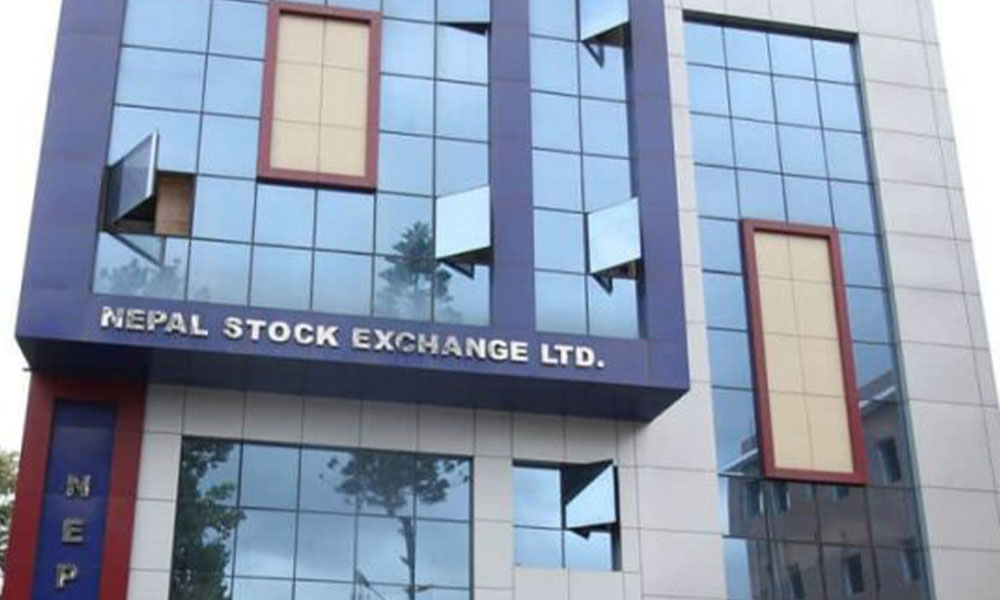
The Nepal Stock Exchange (NEPSE) posted a marginal gain of 4.99 points on Wednesday, closing at 2782.10, while trading volume also increased. The benchmark index rose 0.17 percent after a mixed performance earlier in the week, following a 9.24-point drop on Tuesday and a 28.85-point gain on Monday. A total turnover of Rs 6.03 billion was recorded from 15,249,712 shares traded across 354 companies in 60,562 transactions. Market breadth remained mixed, with 151 companies gaining, 105 declining, and 14 unchanged. Of the 13 sectoral indices, nine rose, led by investment and insurance groups, while finance and manufacturing sectors declined, reflecting a broadly stable but selective trading session.
Parliament Schedules Joint Session on Republic Day to Unveil National Budget
Speaker Dhol Prasad Aryal notified lawmakers today that a joint session of the House of Representatives and the National Assembly will convene on the coming Friday, May 29, at 4:00 PM to receive the federal budget. Under mandates in the Constitution of Nepal 2015, the national budget must be tabled annually on Republic Day. All members have been instructed to pass security clearance and be seated by 3:45 PM. Following the joint financial presentation, the lower house will reassemble separately at 5:30 PM to execute preliminary legislative protocols.
Cooperative Sector Savings Mobilization Exceeds Rs 1 Trillion
The national Economic Survey 2025/26 presented to parliament today revealed that cooperative institutions successfully mobilized Rs 1.29 trillion in member savings. Out of 32,325 active cooperative entities tracking 10,160,963 members, total outstanding credit disbursements reached Rs 905.48 billion against a share capital base of Rs 143.29 billion. Regarding asset liquidation, out of 23 distressed cooperative firms managed by the Problematic Cooperative Management Committee, only three have been fully cleared, leaving 20 units stuck with outstanding member deposit claims.
Investment Board and Industry Department Approve Billions in National Capital Blocks
The Economic Survey 2025/26 presented to federal parliament chambers today confirmed that collective industrial investments reached Rs 492 billion through mid-March 2026. The capital pool blends Rs 389.74 billion cleared by the Department of Industries with Rs 102.26 billion endorsed by the Investment Board Nepal. Bureaucrats logged 921 new manufacturing units, spiking cumulative enterprise registries to 11,140 units projected to generate 785,000 jobs. Concurrently, foreign direct investment allocations across 7,921 projects hit Rs 625.58 billion, heavily dominating service sectors at 28.3 percent.
Digital Transaction Volumes Explode Past Rs 125 Billion via QR Codes
The federal financial tracking data released today inside the Economic Survey revealed that QR-code-based merchant transactions skyrocketed past Rs 125 billion. The expansion pushed mobile banking users to 29.4 million and internet banking accounts to 2.37 million through mid-March 2026. The digital communications ecosystem registered a mobile customer density of 103.2 percent and internet customer penetration of 145.7 percent, while active 4G network architecture expanded to cover 89.6 percent of the population. Concurrently, digital land management initiatives scaled up, launching automated online processing modules across 135 Land Revenue Offices nationwide.
Rs 3.414 Trillion Foreign Exchange Reserves Mark Record Level
The latest economic survey for the fiscal year 2025/26 projects steady macroeconomic stability, driven largely by a strong external sector. Foreign exchange reserves have reached a record Rs 3.414 trillion, supported by a 37.7 percent surge in remittance inflows to Rs 1.45 trillion, ensuring import coverage of 18.5 months. Despite a widening trade deficit of Rs 1.098 trillion, external buffers remain strong, with low inflation at 2.13 percent and continued inflows sustaining balance-of-payments stability. QR-based digital transactions have also crossed Rs 125 billion, reflecting growing financial digitization alongside robust foreign exchange accumulation.
Economy Expands to Rs 6.6 Trillion
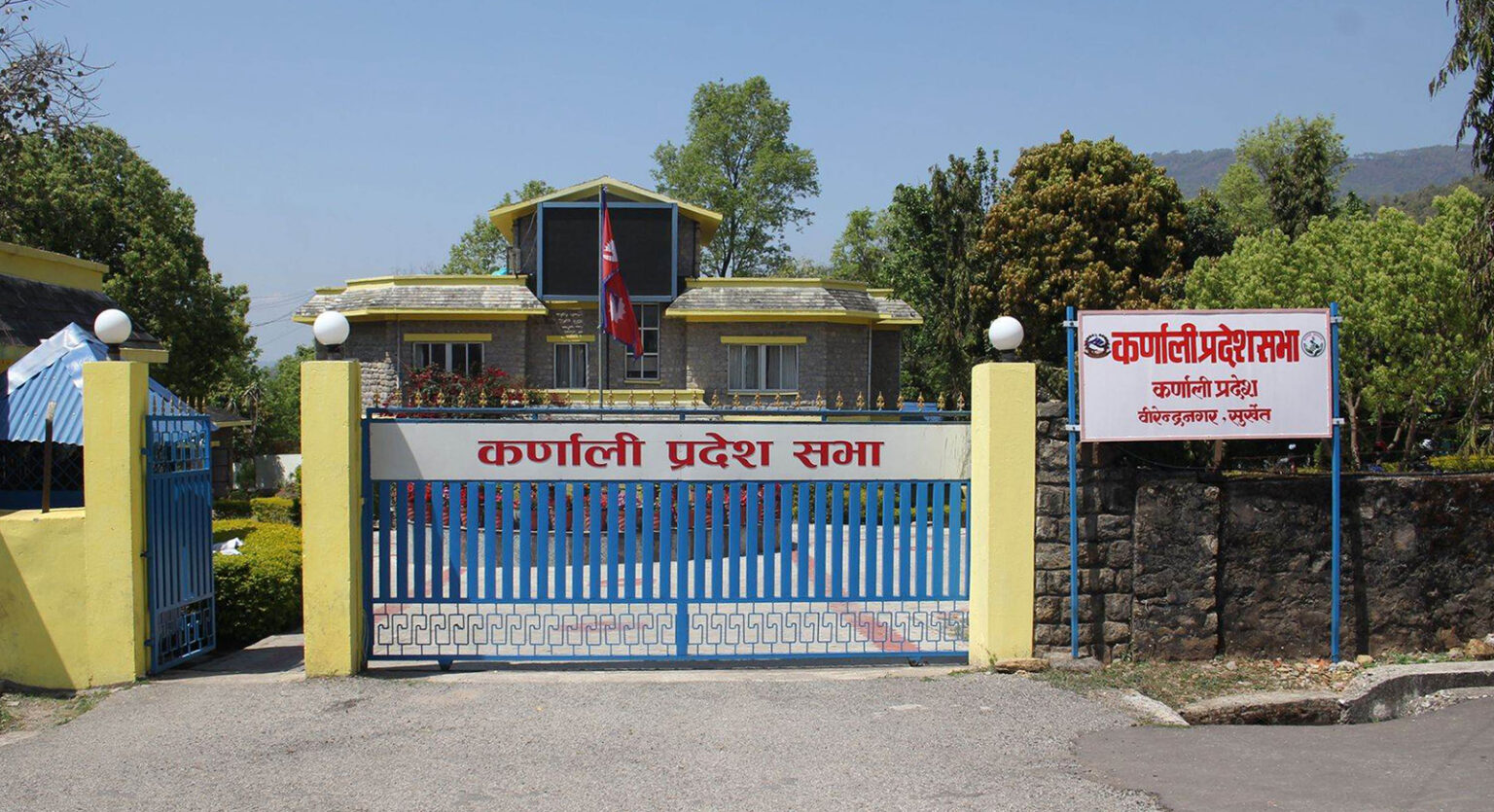
The country’s economy has expanded to Rs 6.6 trillion in the current fiscal year, according to the Economic Survey 2025/26 unveiled by Finance Minister Swarnim Wagle. The survey shows that Bagmati Province contributes the largest share to the national economy at 36.7 percent, while Karnali Province has the lowest contribution at 4.2 percent. The report also indicates that consumption continues to dominate the economy, with its share in Gross Domestic Product (GDP) estimated at 90.3 percent. According to the survey, per capita GDP is projected to reach USD 1,513 this fiscal year, while per capita national income is estimated at USD 1,535 and disposable income at USD 2,055.
International Carbon Offsetting Mechanism Injects Rs 5 Billion into Treasury
Finance Minister Swarnim Wagle informed parliament today that Nepal secured carbon trading revenues totaling USD 36 million (approximately Rs 5.5 billion) through mid-March 2026. The climate finance injection follows targeted project selections tracked under the National Adaptation Plan to monetize verified emission reductions. To further support global climate mitigation financing, international adaptation fund caps per nation were doubled from USD 20 million to USD 40 million. This adjustment gives the country expanded access to international funding pools to build high-altitude climate resilience infrastructure.
Motorcycle Imports Through Bhairahawa Customs Reach Rs 18.96 Billion
Motorcycle imports through the Bhairahawa Customs Office reached Rs 18.96 billion by May 14 of the current fiscal year, with revenue collection from the sector rising sharply. Customs data show that 148,852 motorcycles were imported during the review period, generating Rs 18.11 billion in revenue through customs duties, VAT, and road fees. In the same period last fiscal year, 114,522 motorcycles worth Rs 13.41 billion had been imported, generating Rs 13.76 billion in revenue. Imports of petrol-powered jeeps, cars, and vans also increased, with 4,373 units entering through the customs point, compared to 2,800 units a year earlier. However, imports of small electric vehicles declined. A total of 2,019 electric jeeps, cars, and vans were imported this fiscal year, lower than last year’s 2,270 units.
Nationwide Road Network Reaches 104,906 Km
The total length of roads has reached 104,906 kilometers, according to the Economic Survey 2025/26 presented by Finance Minister Swarnim Wagle. The report states that the density of blacktopped roads constructed by the federal government has reached 138.7 meters per square kilometer. In the communications sector, digital television access has reached 82 percent of households, while mobile telephone density stands at 103.2. The survey further shows that basic drinking water coverage has reached 97 percent of the population, whereas access to safe drinking water remains at 29 percent.
National Power Generation Grid Reaches 4,105 MW
The Economic Survey 2025/26 released today confirmed that Nepal’s total installed electricity generation capacity hit 4,105 MW by mid-March 2026. The state energy portfolio expanded its transmission infrastructure, growing the national grid network to a cumulative length of 7,280 circuit kilometers. Driven by aggressive high-voltage line construction and urban loop expansions, the electrification campaign achieved near-universal access, successfully connecting 99.1 percent of the country’s population to the electricity grid, marking an important step toward eliminating localized transmission constraints.
Petroleum Storage Repositories Expand Stocks to 16 Days
National Economic Survey data published today confirmed that Nepal’s aggregate petroleum storage infrastructure capacity reached 102,281 kiloliters through mid-July 2025. The emergency fuel grid maintains a baseline supply capable of matching average commercial consumer demand for 16 days. Structural mapping indicates severe geographic imbalance, with Gandaki Province holding a 37-day safety reserve, while Karnali Province risks immediate depletion with a one-day stock capacity. The Amlekhgunj Depot in Madhesh Province operates as the dominant logistical node, commanding 43.5 percent of total national storage space, followed by Kathmandu at 21.9 percent.
National Hydro Integration Triggers Decline in Fuel Import Volumes
The Economic Survey 2025/26 tabled before both parliamentary houses today confirmed that expanding domestic hydroelectric generation has successfully suppressed cross-border fossil fuel import metrics. Data covering the first eight months of the fiscal year through mid-March 2026 revealed that national petrol imports collapsed by exactly 10.0 percent compared to the corresponding review period last year. Concurrently, commercial diesel import shipments registered an aligned contraction of 9.9 percent, validating structural state shifts toward clean energy substitution as industrial grids reduce reliance on petroleum products.
Foreign Employment Data Tracks Decreased Initial Permits and Surging Renewals
Finance Minister Swarnim Wagle tabled the Economic Survey 2025/26 inside the House of Representatives today, revealing a 13.7 percent contraction in initial foreign employment approvals, which dropped to 273,530 workers. Conversely, returnee labor tracking ledgers logged a 15.9 percent expansion in re-entry work approvals, climbing to 251,983 permits. The aggregate dual-permit tracking pool reached 525,513 workers, comprising 12.1 percent female and 87.9 percent male labor, marking a marginal shrinkage from the 534,471 workers registered during the previous fiscal horizon.
DDC Pays Rs 120 Million to Dairy Farmers
The state-owned Dairy Development Corporation (DDC) has paid Rs 120 million to dairy farmers as a part of its effort to settle long-pending dues. According to the DDC, it has so far cleared Rs 120 million out of the outstanding liabilities of around Rs 580 million owed to dairy farmers over the past four months. The Ministry of Agriculture, Forest and Environment stated that the Corporation has been disbursing around Rs 10 million daily to farmers following the implementation of reform measures aimed at improving the DDC’s financial and operational performance. Despite the recent payments, the DDC still has around Rs 460 million in outstanding liabilities to dairy farmers. Meanwhile, the private dairy industries across the country are reported to owe farmers nearly Rs 3 billion, highlighting the continued payment crisis facing the dairy sector.
Monitoring Bureau Blacklists 11 Non-Compliant Procurement Contracting Firms
The Public Procurement Monitoring Office under the Office of the Prime Minister and Council of Ministers issued a mandatory regulatory decree today, Wednesday, blacklisting 11 construction companies and supply vendors. The administrative enforcement sweep was executed following formal written petitions submitted by multiple state enterprises detailing extensive execution defaults. Under Section 63, Sub-section (1) of the Public Procurement Act, 2007, the restrictive action takes absolute effect immediately, entirely barring the blacklisted commercial operators from competing in any public sector bidding or state procurement cycles throughout the duration of their penalty terms.
State Equity Ownership in Public Enterprises Scales Past Rs 4 Billion
The central Economic Survey 2025/26 released today confirmed that absolute state equity inside public enterprises grew by 2.38 percent to hit Rs 437.8 billion. Despite this nominal expansion, the government’s relative stake decreased by 0.29 percentage points to 91.68 percent, leaving private sector shares at 8.32 percent. Sectoral ownership maps show near-total state dominance, holding 100 percent in social sectors, 99.81 percent in trading, 99.54 percent in services, and 98.84 percent in public utilities, while financial sector public enterprises recorded the lowest government equity ratio at 64.41 percent.
5 High Deficit Public Enterprises Absorb Half of Cumulative Sector Losses
A fiscal structural report from the Ministry of Finance published today revealed that five severely distressed public enterprises generated a staggering 51.38 percent of all corporate losses across the state sector. Nepal Airlines Corporation ranked as the most financially toxic entity, plunging into a standalone net loss of Rs 1.233 billion alongside a negative net worth of Rs 7.934 billion. Additional high-deficit operational units driving systemic fiscal risk include the Nepal Water Supply Corporation at Rs 807.9 million, followed by the Dairy Development Corporation at Rs 402.1 million.
State Enterprise Network Reports Mixed Balances with Sinking Dividend Yields
Treasury financial tracking ledgers published inside the federal Economic Survey today showed state dividend receipts from public enterprises slipped to Rs 8.377 billion in the 2024/25 cycle, down from Rs 8.835 billion. The average yield dropped to 2.3 percent of total capital stock, even as collective assets grew 9.49 percent to Rs 3.206 trillion. Out of 43 operating enterprises, 27 reported cumulative net profits rising 12.03 percent to Rs 45.084 billion, while 16 entities suffered losses.
Gold Traded at Rs 290,500, Silver Rs 5,080 Today
In the market today, the price of gold has decreased, while the price of silver has gone up. According to the Federation of Nepal Gold and Silver Dealers’ Association, the price of gold dropped by Rs 1,000 per tola (11.66 grams) today and is currently being traded at Rs 290,500. On Tuesday, gold was traded at Rs 291,500 per tola. Meanwhile, silver prices have seen an increase. According to the Federation, silver rose by Rs 20 per tola today, reaching Rs 5,080.