Kathmandu
Thursday, July 23, 2026






KATHMANDU: Nepal News presents today’s snapshot of Nepal’s economic activities. Get quick updates on major market movements, policy shifts, and financial developments shaping the economy of Nepal. Here are the key economic highlights for today:
Finance Ministry Abolishes Excise Duties For 360 Product Categories
The Ministry of Finance structured extensive tax rate adjustments inside the Financial Bill, 2026, completely abolishing excise duties for 360 individual consumer product categories for the fiscal year 2026/27. Conversely, the department raised import duties on alcohol, tobacco, junk food, and synthetic paints. Sugar-coated confections saw tax brackets jump from 15 percent to 21 percent, while pasta duties climbed to Rs 35 per kilogram. Furthermore, snack tax brackets for potato chips rose to Rs 30 per kilo, and packaged cheese balls spiked from Rs 20 to Rs 75 per kilo. Alcohol-free beer tariffs doubled to Rs 90 per liter, while energy drinks climbed to Rs 120.
Short-Term Capital Gains Tax Bracket Rises From 7.5% To 10%
The Inland Revenue Department released clarifying tax guidelines today, confirming that the Financial Bill, 2026, does not treat capital gains tax as a final tax assessment for high-volume traders. Under the revised guidelines, individuals earning over Rs 4 million annually from stock investments or those maintaining secondary non-investment streams must file comprehensive income tax returns. To increase revenue from active financial portfolios, the government raised short-term capital gains tax brackets on stocks held for less than one year from 7.5 percent to 10 percent. Long-term gains on assets held for over a year also increased from 5 percent to 7.5 percent.
Private Schools to Collect 3% Education Equity Fee
The Ministry of Finance enacted a targeted educational revenue reform framework inside the Financial Bill, 2026, introducing a mandatory 3 percent structural tax titled the Education Equity Fee starting next fiscal year. The statutory revenue mandate states that all private and alternative institutional learning facilities operating nationwide must collect the fixed percentage surcharge on top of all cumulative tuition, institutional registration, and co-curricular service fees. Local governance oversight committees verified that the newly generated education fund will back public school system upgrades to minimize academic resource disparities between private learning academies and community facilities across all provinces.
Health Ministry Receives Rs 101 Billion to Scale Up Insurance Access
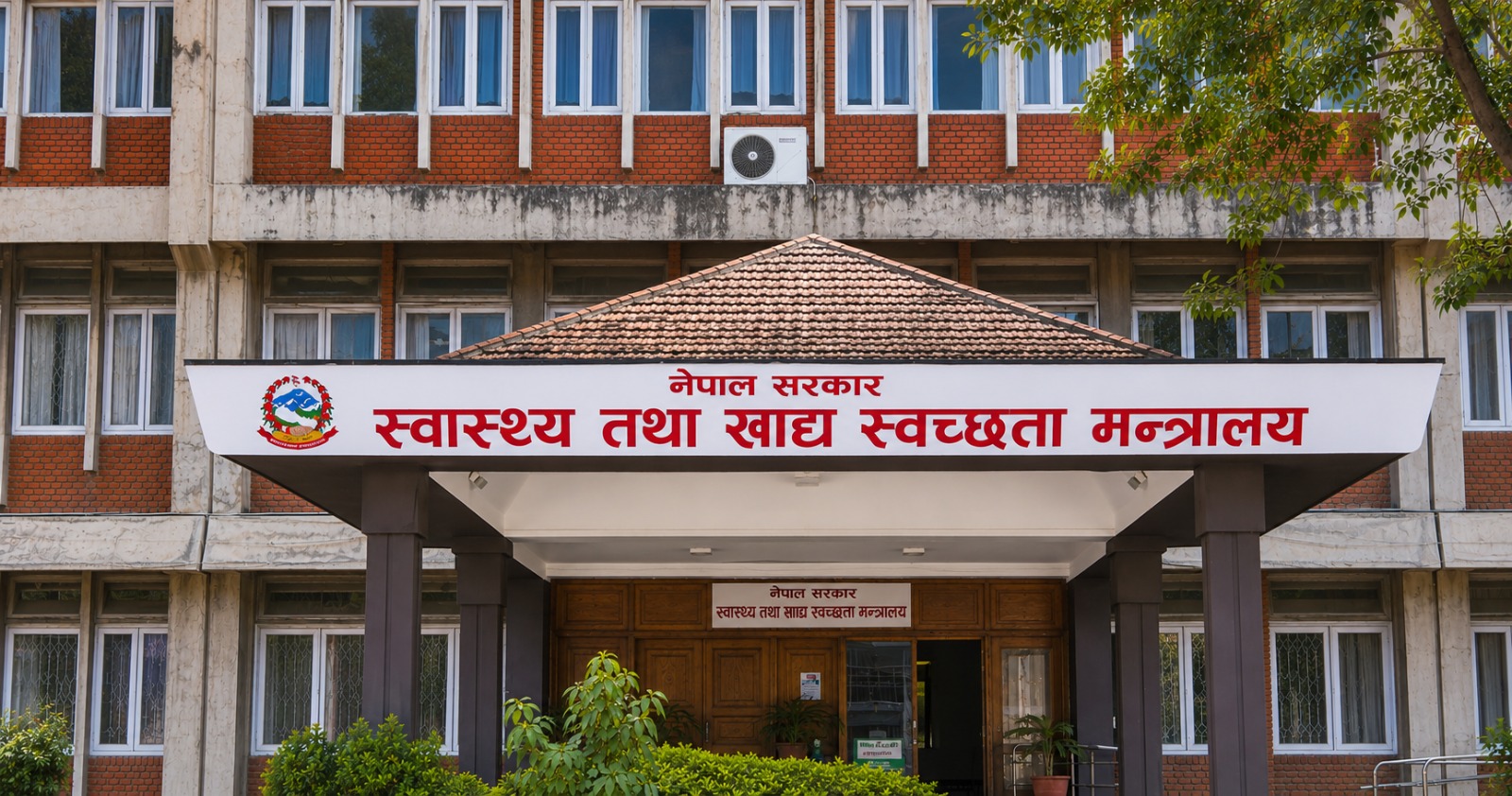
The government allocated a Rs 101.95 billion health service treasury budget today, prioritizing the structural expansion of medical facilities and universal insurance networks for fiscal year 2026/27. The ministry directed Rs 15 billion specifically into the National Health Insurance Program, aiming to enroll 90 percent of the country’s population by next year. Additionally, Rs 5.90 billion will go toward finishing 336 ongoing basic hospital builds. New healthcare initiatives include expanding telemedicine systems in Karnali and Sudurpashchim, launching the National Health Accreditation Center, building a specialized kidney trauma clinic in Madhesh, and providing free pediatric cancer treatments.
Enterprises Damaged in Gen Z Protests Receive 50% Tax Waiver
The government authorized urgent emergency tariff exemptions inside the Financial Bill, 2026, to accelerate infrastructure reconstruction for commercial businesses impacted by recent civil unrest. Statutory guidelines specify that registered enterprises, commercial warehouses, and retail factories damaged during the Gen Z protests on September 8 and 9, 2025, will receive a 50 percent customs duty and excise tax waiver on imported replacement machinery, building components, and office furniture. Relief allotments are verified using formal independent insurance surveyor damage statements, though luxury star hotels that already utilized previous import concessions are barred from receiving duplicate claims.
Ride-Sharing Platforms Face 1 Percent Advance Tax
The Government of Nepal officially launched a structural tax regulatory framework targeting urban transit applications today, Saturday, through the statutory implementation of the Financial Bill, 2026. By executing targeted legislative amendments inside Section 95 of the existing Income Tax Act, the revenue department mandated that all registered resident digital transportation operators enforce a mandatory 1 percent advance tax deduction at the source. Administrative operational logs clarify that the specialized flat tax rate applies to the total base compensation values allocated to individual service providers registered on mobile infrastructure networks, expanding tax compliance across alternative transport sectors.
Gandaki Capital Expenditure Slumps to 30%
The Provincial Treasury Controller Office in Pokhara released fiscal tracking statistics today, revealing that the Gandaki Province government spent only Rs 10.58 billion, just 33.09 percent of its Rs 31.979 billion total annual budget with less than 45 days remaining in the fiscal year. Capital infrastructure expenditure dropped to 30 percent, with only Rs 5.74 billion used out of Rs 19.108 billion. Department logs show the Ministry of Industry and Tourism registered the lowest budget usage at 15.24 percent, while the Ministry of Forest and Environment led at 44.36 percent. Internal tax collection centers missed targets heavily, bringing in only Rs 3.176 billion against a Rs 5.73 billion projection.
NRNA Welcomes Diaspora Reform Package in 2026/27 Budget
The Non-Resident Nepali Association (NRNA) issued an official global support decree today, welcoming the diaspora-focused policy reforms packaged within the Fiscal Year 2026/27 Budget Statement. Global leadership representatives thanked the finance ministry for advancing legal updates to streamline the dual citizenship clause under the Once a Nepali, Always a Nepali initiative. The state budget formally opens second-tier domestic secondary stock market trading to offshore citizens, creates targeted Diaspora Bonds, and sets up a Remittance-Investment Matching Fund to steer incoming capital into local startups. The government is also building technical infrastructure to guarantee voting rights for citizens living overseas.
FNCCI and CNI Praise Budget
The Federation of Nepalese Chambers of Commerce and Industry (FNCCI) alongside the Confederation of Nepalese Industries (CNI) released joint economic reviews today, praising the investment incentives packed inside the fiscal year 2026/27 budget. Private sector leaders stated the structural expansion of basic income tax brackets, the elimination of cumbersome regulatory hurdles, and the reduction of custom tiers from 11 to 7 will stabilize domestic trade markets. Business federations noted that the policy framework sets up a practical pathway to secure the government’s 7 percent macroeconomic growth goal, provided the central bank expands commercial credit limits by 20 percent to revitalize factories.
Nepal and China Finalize Commercial Petroleum Extraction Accords
The Department of Mines and Geology initiated final bureaucratic reviews today to execute a second-phase commercial production treaty alongside the China Geological Survey. The international development follows successful deep-drilling exploration operations inside Jaljale, located within Bhairabi Rural Municipality-1 in Dailekh. Project monitoring experts confirmed that joint scientific teams concluded a comprehensive grid of seismic, geological, magneto-telluric, and geochemical sampling surveys. Laboratory tests on localized geological core samples verified stable subterranean reserves of high-grade petroleum and natural gas, allowing the trade ministry to cut back massive annual oil import expenditures once commercial drilling platforms open.
KMC Cooperatives Vanish, Leaving Only 726 Active Units
The Kathmandu Metropolitan City (KMC) Cooperative Department launched an intense regulatory tracking campaign today after uncovering that 1,186 out of 1,912 registered financial cooperatives vanished from municipal monitoring systems. Asset tracking logs show only 726 active cooperatives submit accurate annual financial statements regularly. To locate missing capital and recover stuck assets, municipal authorities officially authorized Ward Women’s Networks to manage arbitration and settlement panels. The new ward units will gather transaction statements, coordinate online tracking, and accept joint repayment petitions from depositors, with default notifications threatening to freeze all basic municipal public services for non-compliant borrowers.
Energy Ministry Establishes 1% Custom Duty Bank Guarantee Facility
The Ministry of Energy, Water Resources and Irrigation implemented targeted structural relief measures for independent power producers inside the Financial Bill, 2026, establishing bank guarantee facilities for active projects executing design changes or capacity upgrades. Under the new rules, contractors importing industrial penstock pipes, steel plating, and essential blasting explosives can bypass immediate cash tariffs at border customs points via official Department of Electricity Development recommendation letters. Once engineering upgrades achieve certification, customs offices will release the bank guarantees after collecting a nominal 1 percent structural duty, granting full waivers on the remaining custom margins.
Treasury Allocates Budget for 670 Megawatt Hydro Project
The Ministry of Finance finalized structural fiscal blueprints today, incorporating the 670 MW Dudhkoshi Storage Hydroelectric Project into the central capital expenditure budget for the upcoming fiscal year 2026/27. Approved by the legislative assembly on May 29, the mega-infrastructure development project will construct a 220-meter-tall reservoir dam at Rabhuwaghat along the borders of Khotang and Okhaldhunga. Project planning records from the Nepal Electricity Authority confirm that land tracking teams initiated acquisition frameworks across 25,000 ropanis of private and state land. The project aims to generate 3.440 billion annual kilowatt-hours of electrical energy via diversion tunnels routed to Dhitung.
Irrigation Upgrades Receive Rs 440 Million Amid PPP Shifts
The government announced structural plans inside the fiscal year 2026/27 budget statement to transform extraction operations at the Hupsekot Iron Ore Mine by reducing direct state equity holdings to implement a public-private partnership model. In a parallel infrastructure upgrade covering Nawalparasi (Bardaghat Susta East) and Chitwan, the engineering department received Rs 440 million to reconstruct the Narayani Irrigation Project alongside the Gandak and Koshi pumping systems. Furthermore, transit development logs confirm that contractors must complete the slow-moving Narayanghat-Butwal section of the East-West Highway and the Muglin-Damauli-Pokhara track of the Prithvi Highway during the upcoming fiscal year.
Startup Loan Portals Open for 1K Youth Entrepreneurs
The government launched a dedicated youth entrepreneurship fund inside the fiscal year 2026/27 budget, allocating subsidized low-interest credit packages to support 1,000 selected agricultural and livestock startups. Under the newly established economic conversion guidelines, qualified young innovators can access up to Rs 2.5 million in concessionary developmental financing. To integrate small businesses into the central industrial pipeline, the government established the Nepal Enterprise Facility to coordinate technical skills training, digital registration, and incubation support. Additionally, the plan funds a new space observatory center at the Everest Base Camp to expand high-altitude astrotourism.
Government Hikes Annual Casino Royalties to Rs 55 Million
The government has raised operational overheads for the luxury leisure sector today by implementing statutory increases to casino licensing fees through the Financial Bill, 2026. Under the revised fiscal codes, fully licensed casino corporations operating within the country must pay an upgraded annual flat royalty fee of Rs 55 million, up from the previous Rs 50 million standard. Concurrently, specialized electronic gaming halls utilizing automated gaming machinery saw their fixed annual royalty fees double from Rs 15 million to Rs 30 million. However, facilities damaged during the Gen Z protests received temporary relief waivers covering missed operation intervals.