Kathmandu
Tuesday, July 14, 2026





As of the end of Ashar 2081 (mid-July 2024), the Nepal Railway Company’s debt stands at Rs 790.4 million, and it does not have a concrete operational business plan
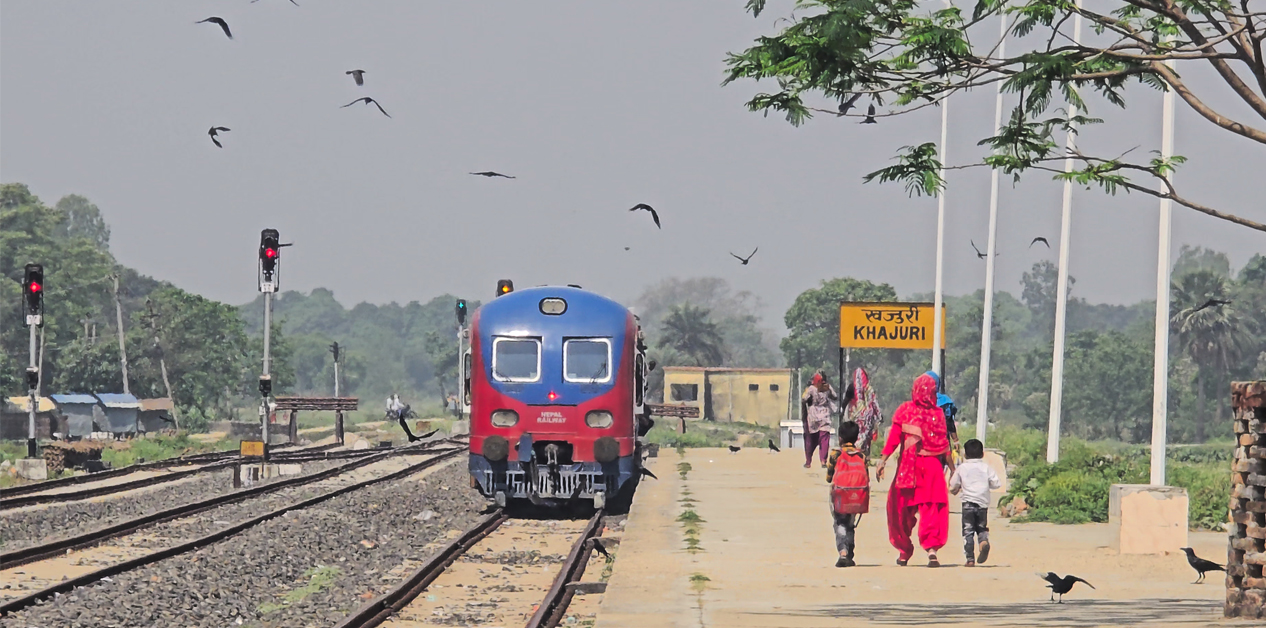
JANAKPURDHAM: On Friday (April 3), the red and blue train pulled into Khajuri in Mahottari at 10:22 in the morning, horn sounding. Ram Surat Mandal, 67, of Khajuri boarded with a bundle of gifts to visit his son, daughter-in-law, and young granddaughter in Janakpur. “When I miss my granddaughter, I just pack a few things and take the train to Janakpur,” he told Nepal News before boarding. “This time I’m taking rice and some fresh vegetables. It’s convenient to be able to send homegrown food sometimes.”
Getting from Khajuri village to Janakpurdham by motorbike takes an hour, but by train it takes just 15 minutes.
The rail service has made travel much easier for local residents in the surrounding area. The narrow-gauge railway that had operated from Jayanagar in India to Bijalpura in Mahottari since 1937 was shut down in 2014 to allow conversion to broad gauge. The 38-kilometre broad gauge line from Jayanagar to Kurtha in Janakpur was completed and began operating on 2 April 2022. From 16 July 2023, trains have run the full 52 kilometers from Bhangaha in Mahottari to Jayanagar in India.
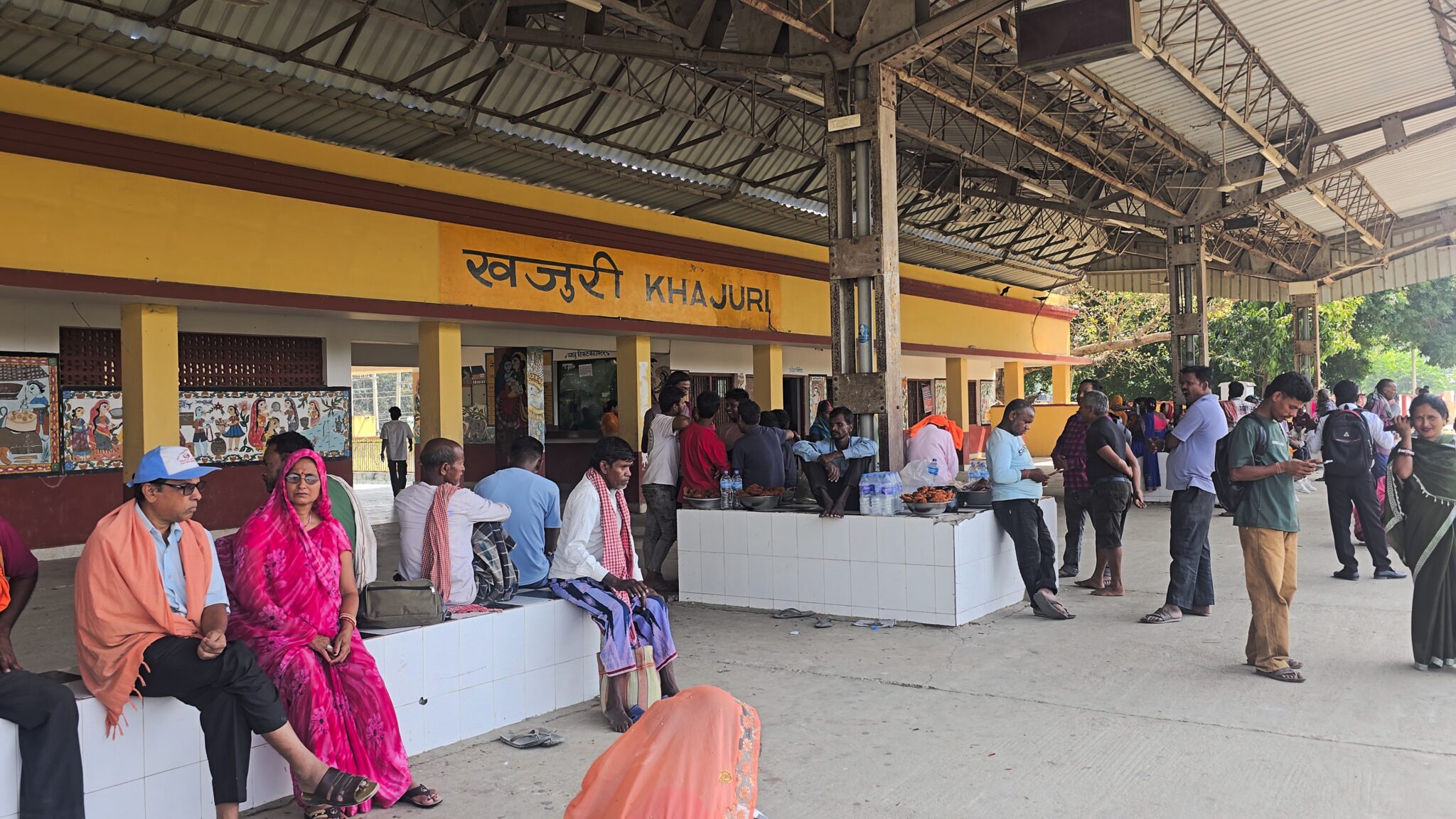
Stations are located at Bijalpura, Singyahi, Loharpatti, and Khutta Pipradhi in Mahottari; Kurtha, Janakpurdham, Parwaha, Vaidehi, Mahinathpur, and Inarwa in Dhanusha; and Jayanagar in India. The Nepali train runs three times daily and appears packed with passengers at first glance. But its operator, Nepal Railway Company Limited, has been running at a loss from the very beginning.
Expenditure exceeds revenue
According to the Nepal Railway Company Limited’s Business Action Plan 2082 BS (mid-April 2025 to mid-April 2026), over the five years from before the train began operating (FY 2019/20) to FY 2023/24, expenditure has been nearly three and a half times greater than revenue.
In FY 2019/20, revenue of Rs 3.97 million against expenditure of Rs 11.3 million produced a loss of Rs 7.3 million. In FY 2020/21, revenue of Rs 4.01 million against expenditure of Rs 19.8 million produced a loss of Rs 15.8 million. In FY 2021/22, revenue of Rs 25.4 million against expenditure of Rs 110 million produced a loss of Rs 84.6 million. In FY 2022/23, revenue of Rs 73.8 million against expenditure of Rs 269.9 million produced a loss of Rs 196.1 million. And in FY 2023/24, revenue of Rs 85 million against expenditure of Rs 262.7 produced a loss of Rs 177.6 million.
Over these five years, total revenue of Rs 192.1 million against total expenditure of Rs 673.7 million produced a cumulative loss of Rs 481.5 million.
The Nepal Railway Company earns Rs 7.5 million per month while expenditure reaches Rs 12.9 million.
The company’s income sources are ticket sales and the rent from land and a warehouse in Birgunj. Unable to cover expenses from revenue, the company has been taking loans at five percent interest with government guarantee since 14 February 2011. By mid-July 2024, the company’s total debt including principal and interest had reached over Rs 79.4 million.
In FY 2023/24, total revenue of Rs 85.04 million comprised Rs 77.9 million from ticket sales, Rs 2.954 million from land and warehouse rent in Birgunj, and Rs 4.12 million from shutter and vegetable market rent.
The company did not make available its revenue and expenditure figures for FY 2024/25.
The company’s losses are compounded by the salaries and allowances of staff brought from India. When the train first began operating, 26 key personnel were brought from India, of whom 17 are currently employed. For staff salaries, cleaning, and maintenance alone, the company pays the Indian Konkan company IRs 7 million (Indian currency) – approximately Rs 11.2 million – per month, while the combined monthly salary of 103 Nepali staff including the managing director is only Rs 1.7 million.
The company did attempt to recruit monthly wage staff, advertising for 129 positions, but the Public Service Commission blocked the process citing procedural deficiencies, and the company has not made another attempt. The company currently spends Rs 9.495 million per month on Indian personnel – a cost that would be covered by just Rs 1.02 million if the same workforce were Nepali, according to the company. Producing skilled staff would require providing technical education and vocational training to individuals who meet the minimum educational qualifications.
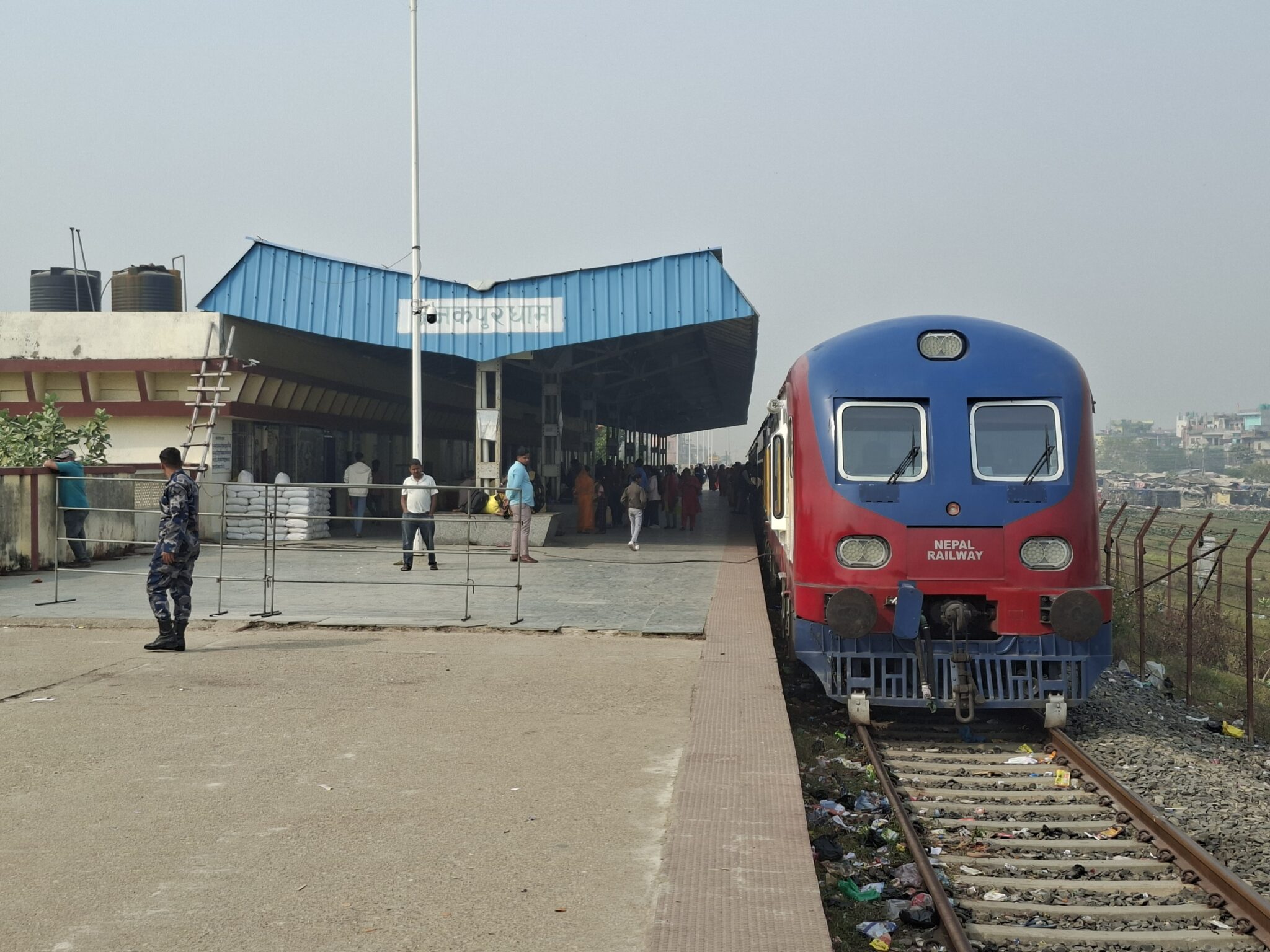
Railway Department information officer Bodh Bhandari says discussions have been held at various stages with various agencies on turning the railway from loss to profit. He says that since rising petroleum prices will push the railway further into deficit and ticket sales alone cannot reduce the losses, other options are being discussed and a conclusion is expected within a few days. “The Railway Company Limited has no general manager either. The institution is autonomous in its own right. Currently the department’s director general has been assigned the general manager’s responsibility. A middle path can be found by coordinating between both bodies,” he says.
With the expenditure seen to be more than double the revenue, various plans have been put forward to make the railway self-sustaining.
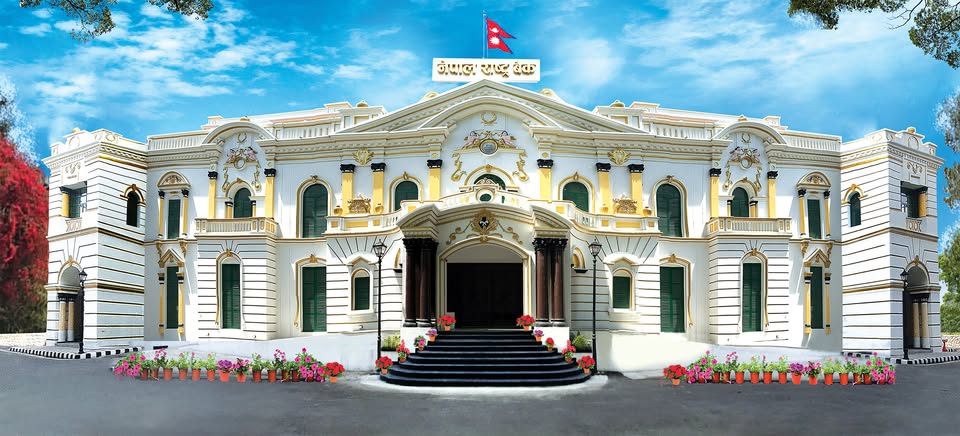
According to Nepal Rastra Bank’s Economic Activity Study Report on Madhesh Province 2024’25, the high costs stem from dependence on India in many aspects of railway operation. Without a section workshop built, maintenance requires relying on India. Trained domestic staff such as drivers and station masters do not exist in Nepal, requiring expensive Indian personnel. With no fueling service station, the service must be obtained from India at high fees, and fuel must even be brought in drums. The report states that these and other problems must be resolved to allow smooth rail service operation.
With a concrete action plan, it would not take long for the company to become profitable. The company says that leasing its 28 acres of land in Raxaul for commercial purposes could generate approximately Rs 80 million annually. Similarly, establishing a museum featuring a steam engine more than a hundred years old could generate income from ticket sales; the company estimates that rail-and-museum visitors alone could bring in Rs 6 million annually.
Janakpurdham local trader Jitendra Prasad Sah says the government has failed to produce a concrete plan for bringing tourists from India. “The railway will never be profitable carrying passengers alone; freight transport must also be emphasized,” he says.