Kathmandu
Sunday, July 26, 2026





World Bank has warned that Nepal’s flagship schemes risk another 41 years at current pace despite reforms
KATHMANDU: Nepal’s National Pride Projects, known locally as “Rashtriya Gaurabkaa Aayojana,” remain the government’s flagship infrastructure drive. First declared in fiscal year 2011/12, the initial 17 schemes were selected by the National Planning Commission for their scale and national impact.
The list has since expanded to 27, covering hydropower, irrigation, roads, airports, railways, drinking water, cultural heritage, and conservation. The vision was straightforward: prioritize these transformative initiatives with dedicated funding, streamlined approvals, and high-level oversight to deliver visible results instead of the usual decades-long drags.
Objectives center on energy security through clean hydropower, reliable irrigation to modernize farming, better connectivity via highways and airports to boost trade and tourism, safe drinking water for urban centers, and protection of cultural and natural assets.
Billions of rupees have been committed, yet delivery has been uneven—some projects now operational and improving lives, others slowed by familiar hurdles like land disputes, bureaucratic layers, contractor issues, and rugged terrain.
As of early April 2026, the picture is one of persistent challenges mixed with new hope. The World Bank’s March 2026 analysis still flags systemic bottlenecks, while the fresh Balen Shah government—sworn in just days ago on March 27 after a landslide victory—has rolled out a 100-point governance reform agenda that explicitly targets faster execution of stalled pride projects.
Beyond the numbers, these initiatives carry deep symbolic weight in a country still recovering from decades of political instability and natural disasters. They embody the collective aspiration for self-reliance in a geography that has historically isolated communities and limited economic potential.
Recent public discourse, amplified through social media and local media, reflects growing impatience with slow progress alongside cautious optimism fueled by Balen Shah’s track record of visible improvements during his tenure as mayor of Kathmandu.
The coming weeks are expected to reveal initial implementation steps of the new agenda, potentially reshaping how these projects are managed at both central and local levels.
Here’s an updated look at where things stand today, expanded with additional context on implementation challenges, regional impacts, and forward-looking indicators.
What exactly qualifies as a National Pride Project in Nepal?
These are the government’s handpicked “crown jewels”—large-scale initiatives chosen for their strategic importance, massive investment needs, and potential to benefit millions. Criteria focus on national-scale impact: generating thousands of megawatts of power, irrigating vast farmlands, linking remote regions with modern roads and airports, or preserving heritage sites.
Once tagged, they get priority in annual budgets, simplified procurement, and direct monitoring from the top. The list isn’t static; it grew as new needs emerged, now totaling 27.
The special status was designed to cut through ordinary red tape and create unifying symbols of progress that every Nepali could rally behind, turning ambitious blueprints into on-the-ground realities.
In practice, qualification also considers long-term sustainability, including climate resilience in a country highly vulnerable to glacial lake outbursts, landslides, and erratic monsoons.
Projects must demonstrate clear multiplier effects—such as job creation across supply chains or integration with regional trade corridors under initiatives like the Belt and Road or BBIN framework—to earn and retain the pride designation.
When were the projects first declared, and how has the list changed over time?
They launched formally in the fiscal year 2011/12 with 17 core schemes recommended by the National Planning Commission. Additional ones joined in subsequent years—four more around 2013/14 and others later, including irrigation diversions, strategic highways, and tourism-related works.
By 2026 the roster sits at 27. Earlier administrations reviewed and refined the list; the 2025 push under the previous government set a target of fiscal year 2025/26 for ongoing works.
The new Balen Shah government is already signaling a fresh review through its 100-point agenda, aiming to sharpen focus and delivery timelines.
This evolution reflects shifting national priorities: early emphasis on hydropower responded to chronic load-shedding crises, while later additions addressed post-earthquake reconstruction needs and growing climate adaptation demands.
Some proposals were deprioritized when they failed to meet feasibility thresholds or overlapped with provincial initiatives following federal restructuring.
What were the main objectives behind creating this special category?
The idea was to break Nepal’s cycle of slow, scattered development in a mountainous, landlocked country. By concentrating resources on a few high-impact schemes, planners hoped to end chronic power shortages with hydropower, turn rain-dependent farms into productive ones via irrigation, slash travel times with expressways and airports, and generate tourism revenue while protecting ecosystems and heritage.
The “pride” label was meant to inspire national unity, guarantee steady political backing, and create quick wins that reduce inequality between hills and plains. Economically, they were expected to spark jobs, curb youth migration, and position Nepal as a more self-reliant player in the region.
Additionally, the category aimed to attract foreign direct investment and development partner financing by signaling strong government commitment. It also sought to foster inter-ministerial coordination, reducing the silo mentality that often fragments project execution across different line ministries.
Which major projects have already been completed and are now delivering benefits?
Success stories include the 456 MW Upper Tamakoshi Hydropower Project, now fully online and helping stabilize the national grid despite earthquake setbacks.
Nepal’s newly built international airports may be considered a success in terms of construction, but they face a far more challenging reality in operation. Despite their “international” designation, both Gautam Buddha International Airport (GBIA) in Bhairahawa and Pokhara International Airport (PIA) largely operate as domestic hubs, with international flights remaining infrequent and irregular.
As of April 2026, GBIA continues to see only intermittent international activity—often limited to chartered flights or emergency arrivals like the recent Kuwait Airways landing—as regular commercial schedules struggle against diplomatic hurdles and low passenger demand.
Meanwhile, PIA remains almost entirely domestic, with international operations restricted to rare, non-scheduled flights from neighboring countries, leaving the vision of these airports as bustling global gateways yet to be realized.
The first phase of Melamchi Water Supply is supplying cleaner drinking water to Kathmandu Valley households, easing long-standing shortages even as network upgrades continue. These finished works show that focused execution can produce real, everyday improvements.
Upper Tamakoshi, in particular, has enabled Nepal to begin modest electricity exports during the wet season, marking a psychological shift from chronic importer to potential regional energy hub.
Where does the Sunkoshi-Marin Diversion Multipurpose Project stand today?
As of April 2026, the Sunkoshi-Marin Diversion Multipurpose Project presents a tale of two halves: a finished tunnel waiting for a dam that hasn’t been built. While the project achieved a historic milestone with the early completion of its 13.3 km headrace tunnel in May 2024, the civil works for the headworks and powerhouse are currently in a state of administrative reset.
The government officially terminated the Rs 14.08 billion contract with the Patel-Raman JV in late November 2024 due to chronic underperformance, as the contractor had achieved only 10% progress despite more than half the contract time elapsing. Following a period of legal disputes over bank guarantees, the project is now in an intensive “evaluation phase.”
Authorities are finalizing cost estimates for the remaining work and preparing new tender documents. The goal is to initiate a fresh bidding process by June 2026, ensuring that the completed tunnel can finally be utilized to irrigate 122,000 hectares of land in Madhesh Province and generate 31 MW of hydroelectricity.
How far along are the North-South road corridors like Koshi, Kaligandaki, and Karnali?
As of April 2026, Nepal’s three strategic North-South corridors have reached a significant milestone with tracks now technically connected from the Indian to the Chinese borders, though operational quality varies wildly across the routes.
The Koshi Corridor achieved a breakthrough in January 2025 after the Nepal Army completed the final 14 km Chyamptang-Ghongghoppa section, effectively linking Jogbani to Kimathanka; however, the route remains a rough track awaiting permanent bridges and blacktopping.
The Kaligandaki Corridor remains the most advanced, with the 445 km stretch from Sunauli to Korala largely trafficable and the final blacktopping of the high-altitude Jomsom-Korala section in Mustang nearing completion.
Meanwhile, the Karnali Corridor has finally achieved motorable connectivity to the Hilsa border, but it remains the most rugged of the three; while seasonal vehicle movement is now possible, major blacktopping projects in the Bajura and Humla sections only began in early 2026, meaning a fully paved “all-weather” highway through this corridor is still several years away.
These corridors promise better access to remote hills and mountains, supporting local economies and national integration once finished.
Beyond connectivity, these corridors facilitate cross-border trade with China and India, potentially unlocking new markets for Nepali products while improving emergency response capabilities in disaster-prone zones.
What is the current status of the Pushpalal (Mid-Hills) Highway and Postal (Hulaki) Highway?
The Pushpalal (Mid-Hill Highway), launched in 2007, is a 1,879-km national project stretching from Chiwa Bhajyaang in Panchthar to Jhulaghat in Baitadi. It is intended to benefit around 10 million people living in 26 districts along the route.
After 19 years, overall physical progress has reached 78.23%, with approximately 1,463 km of the road blacktopped. Financially, Rs. 65.97 billion has been spent out of the total estimated budget of Rs. 84.33 billion.
In the Baglung section, which covers 135 km, nearly 90% of construction has been completed. The remaining 13 km is still under construction and is expected to be finished within a year.
Despite measurable progress in several segments and continued budget expenditure, the project as a whole remains incomplete nearly two decades after it began, with a significant portion of work still pending across different sections.
Similarly, the Hulaki Rajmarga (Postal Highway), a national pride project conceptualized to connect Nepal’s southern plains from Jhapa to Kanchanpur, remains incomplete 16 years after construction began in FY 2009/10.
Despite being a central campaign promise in the 2013, 2017, 2022 and 2026 elections, the project has reached only 74.35% physical progress.
Efforts to benefit 10 million people across 21 districts have been stifled by chronic budget shortages and administrative delays, leading analysts to argue that while other national highways are prioritized as symbols of unity, the Postal Highway has been neglected by political leadership.
A major bottleneck is the stalled Kankai Bridge in Jhapa, where the contract with Pappu-Mahadev Khimti JV was finally terminated on November 26, 2024, after 14 years of stagnant progress.
Originally slated for completion by June 13, 2015, the bridge sits at just 60% completion despite five deadline extensions. Following a denied interim order from the Supreme Court, project officials are now struggling to re-tender the work, as new contractors are hesitant to assume the technical risks of existing underground structures.
Despite measurable progress in several segments and continued budget expenditure, the project as a whole remains incomplete nearly two decades after it began, with a significant portion of work still pending across different sections.
How are the cultural and tourism projects like Lumbini and Pashupati Area Development faring?
As of early 2026, the Lumbini Area Development Project stands out as one of Nepal’s top-performing national pride projects, boasting a physical progress rate of approximately 88%.
Operating under the Lumbini Development Trust Act of 1985, the initiative is centered on the comprehensive implementation of the Kenzo Tange Master Plan, which aims to preserve and promote the birthplace of Gautam Buddha through the systematic development of the Sacred Garden, the Monastic Zone, and the Cultural Center.
The project’s impact is further bolstered by improved regional connectivity, particularly via the now-completed Kaligandaki Corridor, which facilitates seamless tourist access between the spiritual hubs of Lumbini and Muktinath. However, despite reaching this advanced stage of construction, the project has not been entirely immune to the systemic bottlenecks that plague Nepal’s large-scale infrastructure sector.
Historical challenges—including complex land acquisition processes, inconsistent contractor performance, and bureaucratic hurdles—continue to be addressed as the Trust works toward the final completion of the master plan to solidify Lumbini’s status as a premier global tourism and pilgrimage destination.
The Pashupati Area Development Project, a cornerstone of Nepal’s national pride initiatives, has achieved significant momentum with reports indicating the project is now over 80% complete.
As a UNESCO World Heritage site, the project’s primary focus is the preservation of its historical integrity while simultaneously upgrading infrastructure to accommodate its status as a premier international pilgrimage destination.
Key physical milestones include the expansion of the electric crematorium’s capacity, the management of the Bagmati river banks, and the major upgrading of the Gaushala-Bhubaneshwari Darshan Marg.
Under the stewardship of the Pashupati Area Development Trust, the project has been recognized alongside the Lumbini Development Trust for its commendable progress compared to other national-scale endeavors.
The core objectives center on enhancing the overall pilgrim experience through improved sanitation, renovated temple premises, and modernized visitor facilities.
While the project remains a top-priority infrastructure effort in Nepal, it continues to navigate common systemic challenges, including infrastructure management hurdles and the complexities of timely implementation within a densely populated and religiously sensitive heritage zone.
Ongoing work on these projects includes eco-friendly visitor centers and improved waste management systems, ensuring sustainable growth in pilgrimage and leisure tourism without compromising the spiritual and ecological integrity of these sacred sites.
What’s happening with the remaining big hydropower projects like Budhigandaki and West Seti?
The 1,200 MW Budhigandaki Hydropower Project has reached a major milestone following the Cabinet’s formal approval of its investment modality, establishing a clear roadmap for construction to begin around January 2028.
The project, estimated at a total cost of approximately Rs 400 billion, is structured under a financing model of 30% equity and 70% loans, prioritizing domestic investment and concessional borrowing. Significant groundwork has already been laid, with the bulk of land acquisition and compensation payments completed for over 3,400 households across Gorkha and Dhading; as of 2019, over Rs 20 billion had already been disbursed, with settlement efforts continuing since then.
In preparation for the main works, the project is moving into the procurement phase, with tendering for Lot-1—which includes essential infrastructure like permanent camps, access roads, and a bridge—scheduled to commence within the current fiscal year 2025/26.
Once fully operational, this massive reservoir project is expected to generate 3,383 GWh of energy annually, representing a transformative boost to Nepal’s national electricity production and grid stability.
The 800 MW West Seti Hydropower Project has reached a pivotal development phase under the management of India’s NHPC Limited, following a 2022 Memorandum of Understanding with the Investment Board Nepal.
A significant recent update involves the project’s capacity being officially increased from 750 MW to 800 MW, a change that necessitated a one-year extension of the survey license to accommodate revised engineering designs.
As of late 2024, NHPC successfully submitted the draft Detailed Project Report (DPR) for the 800 MW configuration, which is currently undergoing a formal review process.
Parallel progress is visible on the ground, with land acquisition for essential substations—specifically near Shikhar Municipality in Doti District—now roughly 90% complete. The project is being strategically developed alongside the 308 MW Seti River 6 (SR6) project, which will bring their combined generating capacity to over 1,200 MW.
With the draft DPR under review, the next critical milestones toward breaking ground include the finalization of the technical design and the subsequent signing of the Project Development Agreement (PDA), which will officially greenlight the commencement of construction.
Why is the Nijgadh International Airport still at zero progress after years of planning?
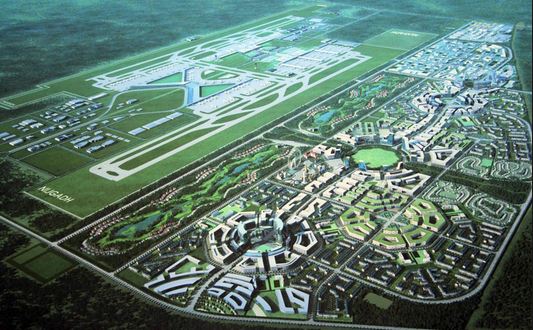
The Nijgadh International Airport project currently remains largely stalled due to significant legal and environmental hurdles. Following a definitive March 2022 Supreme Court ruling that questioned the project’s Environmental Impact Assessment (EIA), construction has been halted pending a comprehensive re-evaluation mandated by the state.
While the government continues to prioritize the airport as a necessary long-term alternative to the capacity constraints at Tribhuvan International Airport, progress remains sluggish; although symbolic annual budgets (such as Rs 350 million) are allocated, actual expenditure remains minimal.
The project continues to be mired in controversy, primarily centered on the massive scale of deforestation and potential ecological damage required for its completion.
Despite the gridlock at the airport site itself, construction of the Kathmandu-Terai Madhesh Fast Track (Expressway) is actively moving forward. This strategic road link is intended to ensure rapid access between the capital and Nijgadh, should the airport eventually clear its legal and environmental obstacles.
However, given the current requirement for new assessments and parliamentary oversight, a full-scale commencement of airport construction is expected to remain on hold for the foreseeable future.
What is the current status and major challenges of the East-West Railway (Mechi-Mahakali) project in Nepal?
As of early 2026, the East-West Railway project, a ambitious 945+ km electrified rail initiative designed to connect Kakarbhitta in the east to Gaddachauki in the west, continues to face stagnant progress.
Over the past decade, only a small fraction of the total project has been realized, with construction primarily concentrated on the 70 km Bardibas-Nijgadh section.
Within this segment, approximately 28 km of trackbed and two major bridges were completed by 2020, and a 30 km portion in the Sarlahi section has reported roughly 90% physical progress.
While Detailed Project Reports (DPRs) are largely finished for most of the corridor, the Nijgadh-Butwal segment remains in the study phase as environmental concerns regarding its alignment through Chitwan National Park necessitate an entirely new route.
The project is currently crippled by severe logistical and financial bottlenecks. With a total estimated cost of approximately $3 billion USD, acute budget shortages have halted expansion, while delayed land compensation for over 760 bighas of land in the eastern districts of Jhapa, Morang, and Sunsari has triggered disputes with local farmers.
Given these persistent funding gaps and environmental hurdles, experts suggest that while the vision for a national electrified rail network remains a priority, full completion could still be several decades away.
What is the current construction status and development plan for the Gautam Buddha International Cricket Stadium?
Gautam Buddha International Cricket Stadium in Bharatpur, Chitwan, has reached 40% physical completion under the management of Bharatpur Metropolitan City with tripartite support from the local, provincial, and federal governments.
Currently being executed by the Himalayan Kalinchok BBR JV under a Rs 785 million contract, the project is focused on the structural development of the parapets and the second floors of two major towers.
Although official reports from city engineers indicate the project is slightly behind its scheduled 48% milestone, work remains active with a dedicated workforce of over 120 laborers.
The project was notably transitioned to the metropolitan city after the Dhurmus-Suntali Foundation was unable to sustain construction, ensuring that the development of the 21-bigha site could continue toward its finalized deadline of January 6, 2027.
The first phase of the stadium is designed to meet international standards and includes seating for 15,000 spectators, two VIP towers, and five professional cricket pitches, complemented by a comprehensive drainage system, internal road networks, and parking facilities.
While the current focus is on completing these core elements, a second phase is already envisioned to further expand the seating capacity and amenities.
Once fully operational, the facility will serve as a premier venue for major international cricket tournaments, significantly boosting Nepal’s sports infrastructure and its capacity to host global sporting events outside of the capital.
How is the Kathmandu-Terai/Madhesh Expressway (Fast Track) progressing?
Army-led construction has kept this vital link moving, with physical progress now around 45 percent as of early 2026. Key tunnels have broken through, but land acquisition and design tweaks have pushed the latest target to 2027.
Once complete, the expressway will cut Kathmandu-to-plains travel from hours to under two, slashing costs and opening economic corridors. The new government’s reform push includes measures to speed up exactly these kinds of clearances.
Notably, the project incorporates seismic-resistant design features tailored to Nepal’s fault lines, and its completion is expected to ease pressure on the existing Prithvi Highway while facilitating faster movement of perishable agricultural goods from the Tarai to urban markets.
What’s the latest on Nepal’s big irrigation schemes like Sikta, Babai, and Rani Jamara Kulariya?
Progress varies but shows real gains in the west. Babai Irrigation in Bardiya has crossed 82 percent, already boosting crop yields for thousands of farmers. Rani Jamara Kulariya in Kailali sits at about 75 percent, while Sikta in Banke lags around 50 percent due to contractor and alignment issues.
Bheri Babai Diversion, with its tunnel component, is roughly 67 percent done. Together they aim to irrigate over 100,000 hectares, shifting western Tarai farming from uncertain rains to reliable harvests.
These schemes are particularly significant for climate adaptation, as they reduce vulnerability to increasingly unpredictable monsoon patterns and enable cultivation of high-value crops like vegetables and fruits for domestic and export markets.
What are the biggest obstacles slowing these pride projects overall?
Land acquisition, tree felling, and environmental approvals routinely take two years each because of compensation fights, outdated records, and layered bureaucracy.
Procurement is among South Asia’s slowest, funding arrives in erratic bursts, and political shifts often force redesigns. Mountainous terrain adds cost and risk. The March 2026 World Bank report called these out clearly, warning of decades-long timelines without fixes.
Additional emerging challenges include skilled labor shortages in specialized fields like tunneling and the impacts of climate-induced extreme weather events that damage ongoing worksites.
How much money has actually been spent, and why is budget utilization so low?
For FY 2025/26 the government set aside Rs 67.08 billion for 23 active projects. By mid-January 2026, only Rs 10.39 billion—15.49 percent—had been used. The pattern repeats yearly: high promises, low execution because of the very delays listed above. This creates a cycle where slow spending leads to future cuts, further stalling work.
Low utilization also stems from seasonal construction windows limited by monsoon rains and winter cold in high altitudes, underscoring the need for better advance planning and weather-resilient contracting models.
Why do these projects matter so much to ordinary Nepalis?
They touch daily realities: steady electricity powers homes and businesses, irrigation means farmers earn more instead of gambling on monsoons, new roads and airports create jobs and bring tourists whose spending lifts local incomes, clean water improves health.
In a nation with heavy youth out-migration, they signal that opportunity can exist at home. They also knit the country together—hills to plains, east to west—building shared pride and reducing regional divides.
For women and marginalized communities, improved infrastructure often translates into greater safety, easier access to markets, and participation in economic activities previously out of reach.
How have recent governments tried to accelerate progress?
Previous administrations reviewed lists and set deadlines, with the 2025 directive aiming for 2025/26 completion. Nepal Army involvement in roads helped some move faster. The new Balen Shah government has moved quickly with its 100-point agenda, promising digital procurement reforms within 30 days, a national priority project pipeline, and targeted fixes for land and clearance bottlenecks.
Performance monitoring units and stricter accountability are part of the shift toward results-oriented delivery.
Earlier efforts also included public-private partnership models and engagement with multilateral lenders for technical assistance, though results were mixed due to coordination gaps.
What does the future look like—will Nepal finally see these projects completed?
Cautious optimism is growing. Completed icons already deliver benefits, several roads and irrigation schemes are in the final stretches, and the World Bank warning has kept the issue alive in public debate.
If the new government’s reforms—streamlined approvals, better contractor accountability, consistent funding—take hold, many projects could finish within the next decade rather than the next generation. Nepal has the vision; sustained execution will decide whether these dreams become reality.
Longer-term scenarios also factor in technological advancements, such as drone surveying for remote sites and modular construction techniques, which could compress timelines if adopted effectively.
What policies has the new Balen Shah government announced specifically for the National Pride Projects?
Just days into office, Prime Minister Balendra Shah’s cabinet unveiled a detailed 100-point governance reform agenda that gives pride projects explicit attention. It calls for clear investment frameworks for national pride and strategic schemes, a fast-track mechanism to cut land acquisition, compensation, tree-cutting, and environmental clearances, and a national priority project list from the Planning Commission within two months.
Digital procurement reforms (targeted in 30 days), a PM Delivery Unit for monitoring, and zero-tolerance anti-corruption measures aim to break the old cycle of delays.
The plan also emphasizes faster completion of long-stalled roads and infrastructure. While it’s early days, the agenda signals a decisive shift toward measurable, time-bound delivery and could finally translate political will into on-ground speed.
Notable additions include proposals for outcome-based budgeting tied to physical milestones and enhanced provincial-local coordination to resolve ground-level disputes more swiftly.
How might Balen Shah’s urban governance experience influence national project delivery?
Having transformed aspects of Kathmandu through decisive action on waste management, road maintenance, and public spaces during his mayoral term, Shah is expected to apply similar hands-on, results-driven approaches at the national level.
This could mean greater emphasis on transparency via public dashboards, community engagement to preempt protests, and leveraging technology for real-time progress tracking—potentially setting a new benchmark for accountability in Nepal’s infrastructure sector.
These projects are far more than engineering feats—they represent Nepal’s bet on a better future. With the fresh government’s reforms just beginning, the coming months will test whether this momentum can turn persistent hurdles into completed milestones.
Early signals from the capital suggest a government intent on delivering tangible change, but success will ultimately hinge on translating policy announcements into accelerated fieldwork across Nepal’s diverse and challenging landscapes.
(All data in this explainer draws from the most recent official reviews and no major new completions or policy shifts have been omitted since the government is barely a week old.)