Kathmandu
Thursday, July 23, 2026





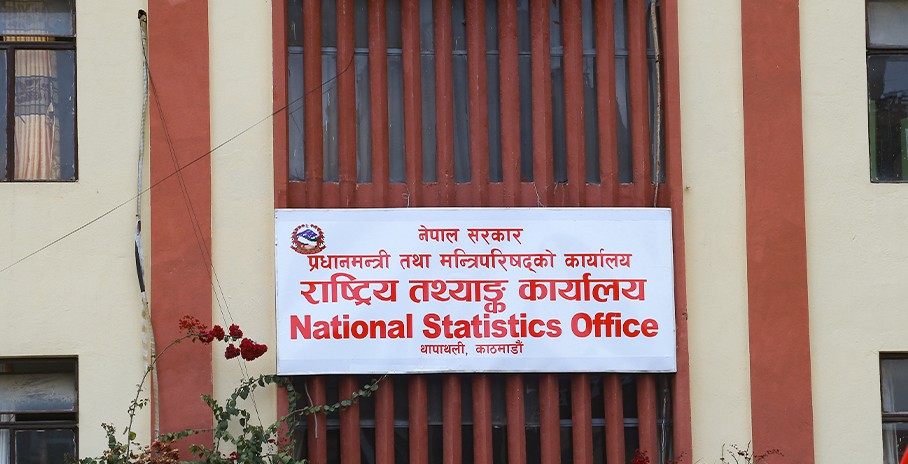
KATHMANDU: The National Statistics Office has collected economic details from 1,020,904 commercial establishments, aiming to cover around 1.4 million establishments under the second phase of the National Economic Census.
The census, which began on April 15 and will run until June 21, is gathering crucial data on income, expenses, employment, and registration status of businesses across the industry, trade, and service sectors to identify the true state of the economy.
Dr. Bed Prasad Dhakal, Director of the Economic Census Branch, informed that designated enumerators and supervisors are visiting wards nationwide to collect details through paper questionnaires.
Additionally, the office has introduced an online system allowing business owners to submit their details independently
As of May 27, financial details of 3,679 establishments were collected online, while another 7,453 businesses committed to self-submitting their data through the online platform.
The office reported around 70 percent overall progress against its set target. The ongoing census collects data from commercial agriculture, mining, manufacturing, trade, private businesses, banks, cooperatives, and other financial institutions.
This marks Nepal’s second economic census, following the first one conducted in 2018.
Primary objective of the census is to present a clear picture of the country’s economic activities and provide a solid foundation for formulation of national economic policies.
The collected data is expected to help the government formulate evidence-based industrial, commercial, and economic development plans.
A total of 3,906 enumerators and 526 supervisors have been deployed for the census, which covers all types of formal and informal industries, trade, and services.
The National Statistics Office has urged all economic entities to participate actively.
To ensure smooth operations and reliability, coordination committees have been formed at the provincial level under the chairmanship of Chief Secretaries, at the district level under Chief District Officers, and further sub-committees have been set up at the local ward level.