Kathmandu
Thursday, July 23, 2026





The backlash following the Special Court's release of Bishnu Paudel reflects a recurring pattern in Nepal's politics, where unfavorable rulings spark demands for judicial reform and questions about the courts' legitimacy.
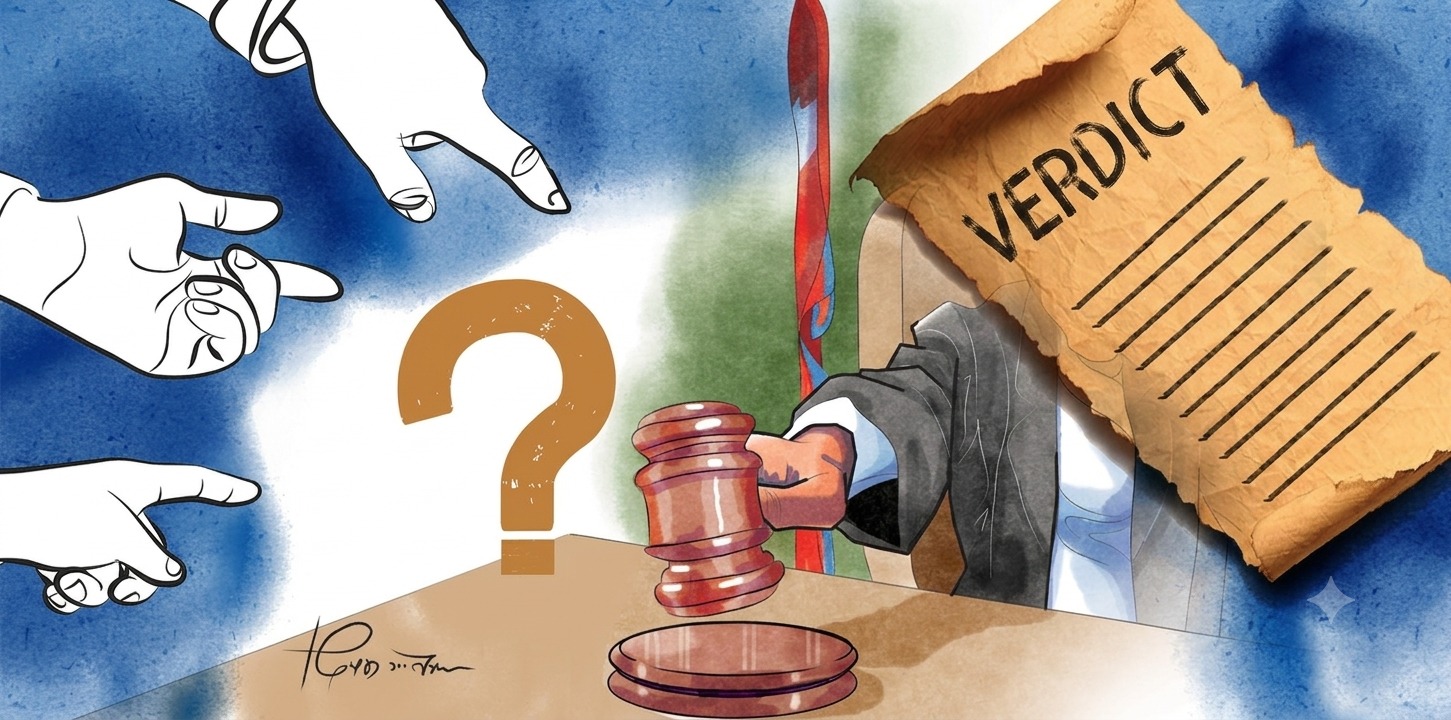
KATHMANDU: The Department of Money Laundering Investigation filed a case on July 16, against former Finance Minister and Vice Chairman of the CPN (UML), Bishnu Paudel, regarding money laundering charges. Paudel was arrested on charges of playing an accomplice role in the money laundering offense of businessman Deepak Bhatta, and the case was registered 24 days after his arrest. The department had claimed a fine amount of Rs 209 million, alleging that he assisted in hiding illegal wealth by undervaluing commercial shares in collusion with Bhatta and abused his position while serving as Finance Minister.
On July 17, the Special Court ordered the release of former Finance Minister and CPN (UML) Vice Chairman Bishnu Paudel on a general date in the money laundering case. After he was released on the grounds that no solid evidence was found to support the allegations in the charge sheet and no irregularities were seen, lawmakers from the ruling party, Rastriya Swatantra Party (RSP), raised questions about the judiciary.
Lawmaker Yagyamani Neupane questioned the judicial process and stated that a rigorous review of the judiciary should be conducted. On the morning of July 18, the day after Paudel’s order was issued, he wrote on his Facebook status that good governance is impossible without restructuring the judiciary, and ordinary citizens cannot be guaranteed justice. Neupane, who is also an advocate, wrote while challenging the principle of separation of powers: “All organs of the state must be able to assimilate change, and only then is it possible to transform the country.”
It is not difficult to understand the dissatisfaction of ruling party lawmakers after the court issued an order adverse to the government’s actions in the money laundering case involving UML leader Paudel. He has placed special emphasis on the restructuring and review of the judiciary. Before being elected as a member of the House of Representatives from Morang-1, he was a legal practitioner, and after reaching parliament, he has occasionally commented on judicial matters. When contacted multiple times to speak on this topic, he did not answer his phone.
Neupane is not the first person to make comments or raise the issue of restructuring when decisions and orders from the court do not favor them or match their desires. In the past as well, particularly in political circles, favorable orders and verdicts were welcomed, while adverse ones led to personal-level comments, dissatisfaction, and opposition regarding the judiciary and its role.
It is not only now that the regime has detained political figures in various cases; in the past too, the government would arrest individuals on various pretexts, and the court would release them. History shows that whenever the court overturned a government decision or issued an adverse order or verdict, the government side viewed the judiciary through a narrow lens.
Regarding lawmaker Neupane’s statement, senior advocate and constitutional expert Bipin Adhikari says that careless comments claiming the court deliberately released a particular leader because it represents the old regime should not be made. He states that the court is always independent and was not established to validate the government’s actions, making expectations and demands for it to act as a “rubber stamp” objectionable. “Comments made about the court by a person who has been a legal practitioner, and that too a lawmaker, were inappropriate; this is a matter that could attract contempt of court charges,” he says. “Threats from parliament and lawmakers will not affect the judicial process.”
Adhikari states that the court must look through the eyes of justice, not from the perspective of the state, and in doing so, the victory of justice is paramount rather than the victory of this or that side. “The state may lose or win in any case, but both that loss and victory belong to justice,” he says. “The court examines whether any matter goes against proper procedure and the law. If the legal grounds for a government decision are not clear, any court will release the detainee in such a case, and it ought to release them.”
Not only Neupane, but another RSP lawmaker, Govinda Panthi, also questioned the court’s decision to release UML leader Paudel on social media. Writing a Facebook status on July 19, Panthi raised the question of why prosecution took place if there was no strong evidence against Paudel. He questioned all aspects, including the investigation, the prosecuting body, and the quality of the judicial process.
“Was the investigation weak, was the prosecution done in haste, or did the court evaluate the evidence differently? An objective review of this must take place,” wrote Panthi, who is also a former Deputy Superintendent of Police (DSP).
Another senior advocate and constitutional expert, Chandra Kanta Gyawali, states that the lawmaker exceeded his jurisdiction by commenting on the judiciary. He argues that in the preliminary hearing, the court proceeds either by sending the accused to custody, releasing them on bail, or releasing them on a general date; raising questions about this process could diminish public trust and confidence in the judiciary. “Such comments help reduce public trust in the court, affect the independent judiciary, and weaken democracy,” Gyawali says. “To strengthen democracy, healthy criticism can be made. However, one should not applaud when a decision comes in their favor and criticize when it goes in favor of others.”
According to the fundamental principles of justice, he suggests that for democracy to be strong, the court must be strong, and the government must walk the path of constitutionalism.
Recently, the phrase “restructuring of the judiciary” has been heard quite frequently. Particularly since RSP formed a single-party government with nearly a two-thirds majority, voices demanding that the judiciary also align with the spirit of political change have grown louder. Such voices are being raised even by ruling party lawmakers.
Constitutional expert Adhikari states that talking about restructuring the court appears to mean removing old figures and bringing in one’s own people. If that is done, he says it would be called a “people’s court” rather than a court of law. Since the court makes decisions by looking at the constitution and the law in its method of justice, he says it is inappropriate to comment on decisions and sub-judice cases. “Policy matters can be discussed in parliament, but the government does not have the right to comment on decisions made by the court and sub-judice cases,” Adhikari says. He adds that actions aimed at intimidating the court should not be taken.
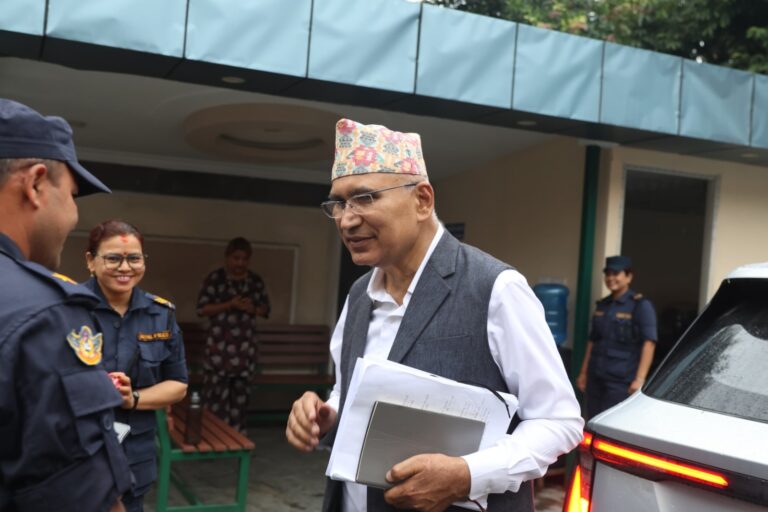
CPN (UML) Vice Chairman and former Finance Minister Bishnu Prasad Paudel heading for his statement before being released from the Special Court on July 17. Photo: Nepal Photo Library
Hemanta Rawal, a judge at the Special Court, stated that if the court becomes fearful, citizens cannot remain fearless. Speaking at an interaction organized with journalists at the Special Court on June 15, he said that the integrity of judges is not weak and does not waver under anyone’s pressure or influence. “We work in accordance with the right to freedom granted by the constitution and the law,” he had said. He also shared his experience that in certain cases, judges are viewed with suspicion and prejudice.
Challenge to separation of powers
The constitution outlines the structure of the state and the distribution of state powers. State power refers to executive, legislative, and judicial powers. Article 126(1) of the Constitution stipulates that Nepal’s judicial authority shall be exercised by courts and other judicial bodies in accordance with the constitution, other laws, and recognized principles of justice. Sub-article 2 of the same article states, “All shall abide by the orders or decisions given by the court in the course of hearing lawsuits.”
The principle of separation of powers is a concept that clearly divides authority and responsibility among the three organs of the state: the executive, the legislature, and the judiciary. The constitution clearly delineates the responsibilities and powers of these three organs. Executive power is provisioned in Part 7, Article 74, and legislative power in Part 8, Article 83 of the Constitution.
Under the principle of separation of powers, the judiciary interprets the law and delivers justice to the people. Constitutional expert Gyawali states that judicial actions are, and must always be, in accordance with the constitution, law, and recognized principles.
He argues that making negative comments about a sub-judice case where the court released an individual on a general date due to lack of evidence is an attempt to control the principle of separation of powers. Pointing fingers at the court out of dissatisfaction with an order or verdict also reflects an intent to keep the judiciary under a political shadow.
The function of the legislature, or parliament, is to enact laws. The government operates according to the law. If the government fails to act in accordance with the constitution and the law, the court performs a judicial and constitutional review. If the government is found to have acted according to the constitution and the law, the court validates it. Gyawali recalls several instances where the Constitutional Bench invalidated laws when parliament failed to enact them in accordance with the constitution. He notes that provisions exist to check and balance the court if it strays outside the constitution and the law. He says, “If the court fails to consider the law or perform constitutional checks, the constitution itself contains provisions to initiate impeachment; however, making personal comments against the court under constitutionalism is not considered dignified, as it can tarnish the independent and competent temple of justice.”
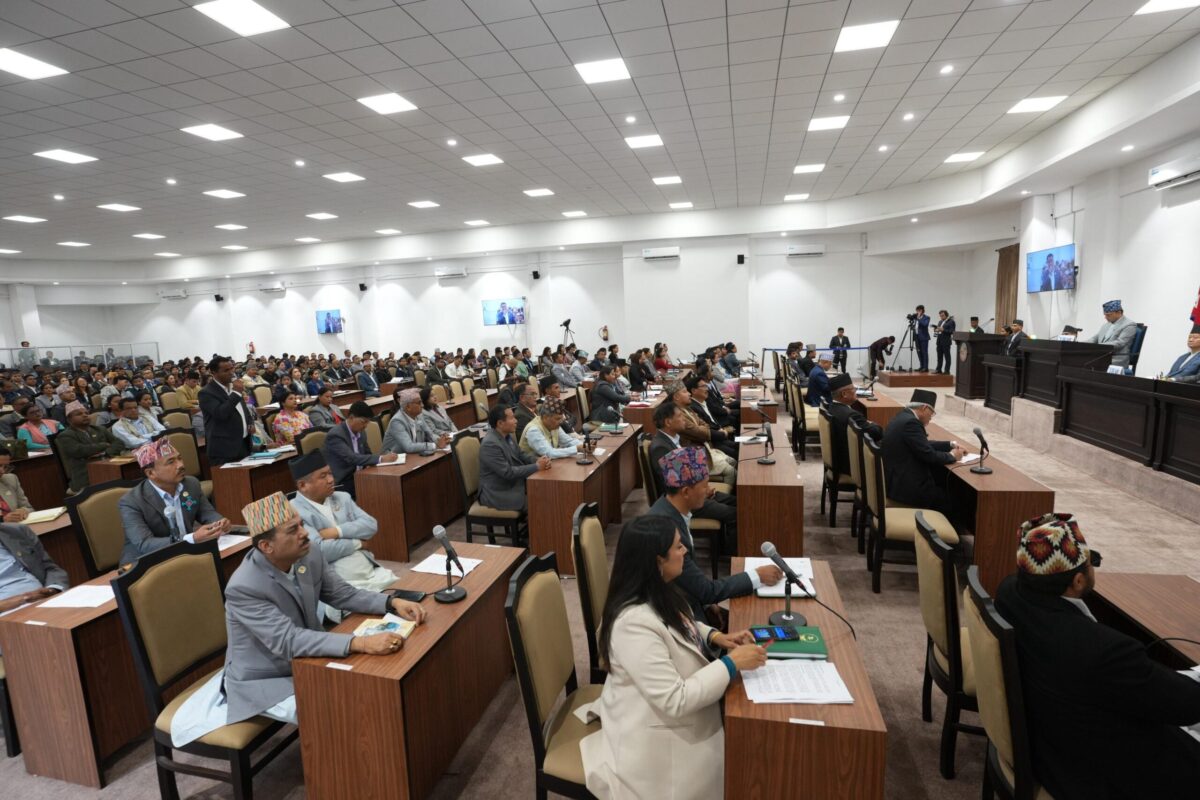
Parliament meeting. Photo: Nepal Photo Library
Constitutional expert Adhikari states that when the executive and legislature—which ought to perform their respective duties according to the separation of powers—make comments against the court, it should be understood that the government is not committed to its work and its operational capacity is declining. He suggests that the government should accept and execute court decisions, and if it is unsatisfied with the court’s work, it should pursue review through judicial channels. “Making petty comments from the parliamentary floor, where existing acts can be amended or new acts introduced, cannot be a democratic approach,” he says.
Former Supreme Court Justice Ishwar Khatiwada expressed concern on July 18, via Facebook regarding comments targeted at the court. He warned that if the judicial process starts being directed from the streets, unexpected accidents will occur.
“Lately, comments are frequently heard claiming that a commotion has broken out, a government versus court confrontation has begun, and the court needs to be restructured simply because a certain individual was released on a date, an offense was not established against a certain individual, or an order/decision adverse to the government’s action was issued in a certain matter,” he wrote.
Khatiwada stated that while timely reforms in all state organs should be welcomed, in the context of the court, the judicial process must be evaluated objectively. “Was an unbiased and objective search conducted for answers to questions such as why a certain individual was released on a date by the court, why the offense was not established, what the state of investigation and evidence collection was, whether the law was observed, and on what grounds and reasons an order or decision adverse to government actions was issued in a certain matter?” he questioned. “Is it that the court is expected to be a rubber stamp even in legally flawed, superficial, and prejudiced matters?”
He cautioned that reforms in the judicial system are necessary, but if under the guise of reform, established good practices are destroyed to champion the arbitrary and self-serving interests of a particular individual or group, serious unintended consequences will arise. He pointed out that if people get enticed by the phrase “restructuring of the court” and replace the separation of powers with the concentration of powers, the Nepali people will ultimately suffer.
Public trust and contempt of court
Concerns and anxiety regarding the dignity, credibility, and public trust of the court have been expressed repeatedly. The judiciary is considered an institution that thrives on the faith and trust of citizens. In the Supreme Court’s own words, easy access to justice, fair, impartial, swift, high-quality, and effective justice represent the general public’s expectations from the judiciary. The Supreme Court’s annual report for the fiscal year 2024/2025 mentions that public trust in the judiciary can be enhanced through solid, result-oriented performance while safeguarding judicial values and principles, including good governance, accountability, and responsibility.
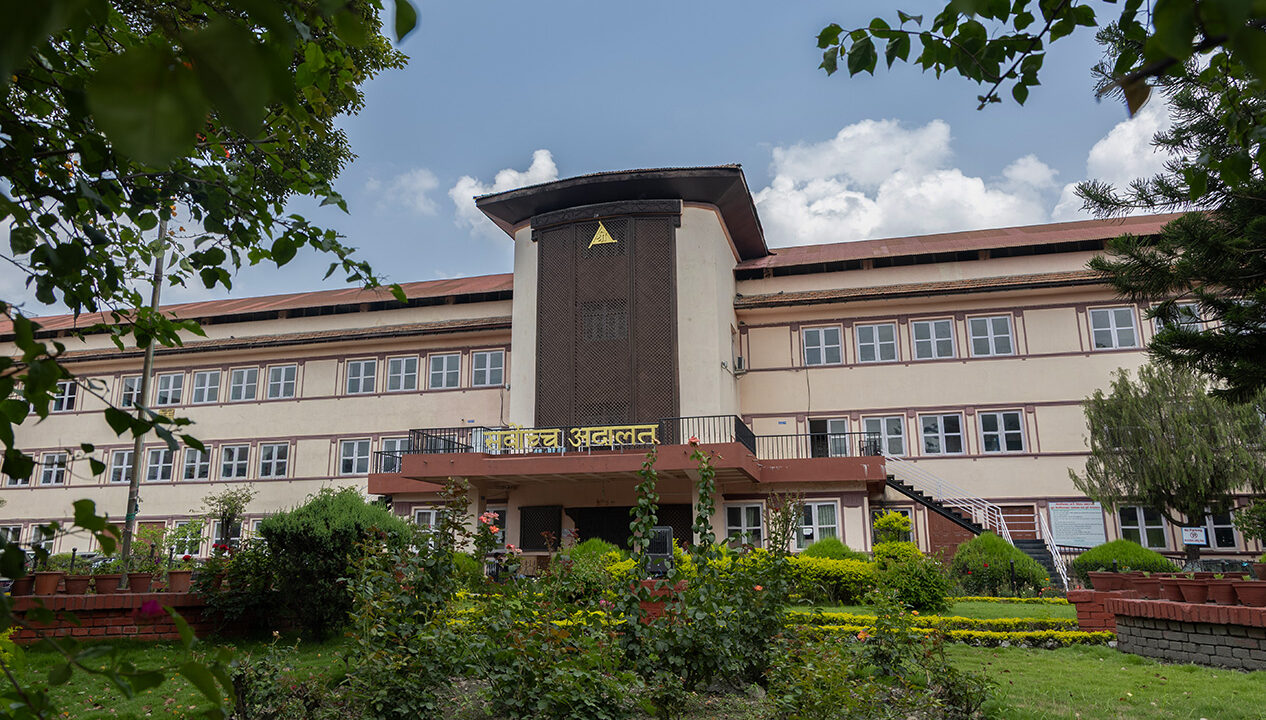
Supreme Court. Photo: Bikram Rai
The court cannot declare both parties in a lawsuit as winners. The losing side often makes comments against the court when the outcome does not match what they sought or desired. Recently, with the rapid expansion of information technology and social media, incomplete, misleading, and deliberately spread false information regarding the judiciary has been increasing. The Supreme Court’s annual report notes that such information—presented while disregarding the context of judicial verdicts, legal bases, and procedural limits—creates confusion among ordinary citizens regarding the court’s role and performance, thereby tarnishing public trust in the judiciary. In particular, trends such as circulating excerpts of verdicts out of context, presenting unverified claims as facts, and interpreting judicial processes in a biased manner have contributed to building negative perceptions of the judiciary.
Regarding comments made against the court, the court also has its own precedent. In a verdict delivered on December 21, 2022, the Supreme Court stated: “Regardless of whether a decision or order from the court comes in one’s favor or against it, making harsh comments that undermine the dignity, reputation, and public trust of the court is not dignified for the development of a healthy and orderly democratic society.” The joint bench of Justices Kumar Regmi and Nahakul Subedi observed in the verdict that a weakened court cannot effectively protect democratic governance or individual rights. “Making cheap and superficial comments to render the court untrustworthy in the eyes of the public makes the overall justice system of the state untrustworthy. The impact of such actions falls upon public faith in the constitutional system of governance,” the verdict stated.
In the past as well, political comments were made regarding the court and judicial processes at various times. On August 22, 2017, RPP lawmaker Kunti Shahi posted comments about the court and judges on social media. She wrote sentences on X (formerly Twitter) implying that “the poor cannot buy justice, the rich can; meaning whoever can afford it buys justice.”
A contempt of court case was filed, arguing that such comments challenged the court’s integrity, accessible justice, the constitutional provision that all are equal before the law, and the court itself. The court provided its interpretation within that case.
Not only Shahi, but RPP’s Rajendra Lingden also wrote a status on Facebook in August 2017 implying that justice was bought and sold in the Supreme Court. “The Supreme Court, the final bastion of justice, ran on money and foreign influence; if justice dies, the country will sooner or later face a rebellion,” he had written.
A case was filed alleging that Lingden had attacked the honor and dignity of the court and committed contempt of court. In this case, the Supreme Court did not find him guilty of contempt, noting that the opponent expressed a conditional opinion (“if justice dies”) and had also apologized for his actions.
Even though the court did not punish for contempt, it interpreted that making cheap comments weakens the overall justice system of the state.