Kathmandu
Wednesday, July 22, 2026





On the 44th death anniversary of BP Koirala, Nepali Congress observes his memory through separate podiums, while the ideals he died defending, land, dignity, dissent, and social equality, find almost no voice at either one.
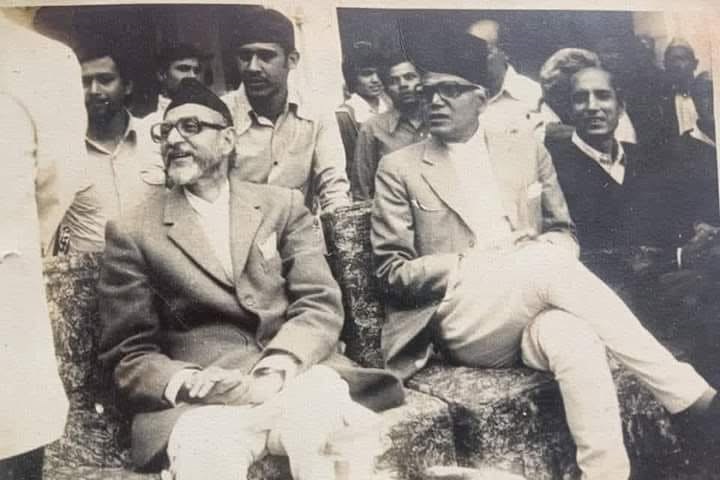
KATHMANDU: Kathmandu woke up today to a peculiar spectacle. Two sets of leaders, both claiming the same inheritance, both invoking the same man, gathered at different venues to remember Bishweshwar Prasad Koirala on the forty fourth anniversary of his death. One program carried the institutional weight of party president Gagan Kumar Thapa. The other belonged to the camp built around former president Sher Bahadur Deuba, now operating out of a separate liaison office in Chundevi that Deuba’s loyalists opened barely two weeks ago with a garland placed on BP’s portrait, a gesture heavy with irony given what unfolded afterward. Add to this the “Green Run” held in Lalitpur, a fitness event dressed up as tribute, where roughly fourteen hundred people jogged through the streets and prize money changed hands for the fastest finishers, and you get a fair sense of how thoroughly the day has been reduced to ritual. Somewhere in this arrangement of garlands, microphones and marathon bibs, the man being remembered would likely not recognize the party he built.

Participants in the “Green Run” organised by the Nepali Congress on Wednesday morning. Photo: Nepali Congress
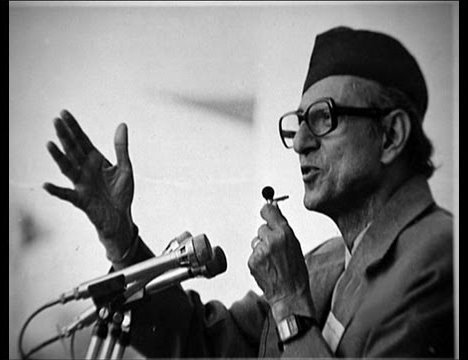
BP Koirala was never a leader who could be filed away as a founding father whose photograph gets dusted off once a year. He was Nepal’s first popularly elected prime minister, a novelist of considerable depth, a political prisoner for eight years, and the architect of an idea that he pushed until his final breath: national reconciliation. That idea was not a poetic flourish. It was a hard, costly, deliberate political choice. In 1976, when he returned from exile in India, he chose to work with King Birendra rather than continue an armed struggle against the Panchayat system, a decision that cost him support among his own comrades who saw it as capitulation. He believed that a nation exhausted by conflict between the monarchy and the democratic movement needed a bridge, not another round of vengeance. He called this reconciliation, and he meant something quite specific by it: that political rivals could disagree bitterly over ideology while still recognizing each other’s legitimate stake in the nation, and that no single faction, palace or party, communist or capitalist, should be allowed to claim ownership of Nepal’s future by force.
But reconciliation in BP’s vocabulary was never only about elite peace between the crown and the parties. It was inseparable from his second big idea, democratic socialism, a framework in which political freedom would be paired with economic redistribution, where the state would actively work to lift the peasant, the landless tiller, the laborer, and the socially excluded into genuine citizenship rather than leaving them as decorative beneficiaries of election season rhetoric. He wrote extensively about class, about the hollowness of a democracy that changes who sits in Singha Durbar without changing who owns the land or who gets to eat with dignity. His novels, including his prison writings, are soaked in this preoccupation with the gap between formal equality and lived inequality. Reconciliation, for BP, was a project of stitching together a fractured nation, not just at the level of palace and parties, but at the level of caste, class and geography.
Since January, the two camps have behaved less like factions within one organization and more like two parties awaiting a formal divorce.
Forty four years later, the party that carries his name cannot even stitch together its own leadership. The split that produced today’s two separate commemorations did not emerge overnight. It has been building since the aftermath of the Gen Z uprising of September 2025, when public fury over corruption and governance collapsed the old political order and forced Nepali Congress, like every legacy party, into a reckoning with its own irrelevance to a newly assertive, digitally organized, deeply impatient electorate. In that atmosphere, a faction led by then general secretaries Gagan Kumar Thapa and Bishwo Prakash Sharma pushed hard for a special general convention, arguing that generational renewal could not wait. Sher Bahadur Deuba, the sitting president, resisted, insisting instead on a regular convention timed after the March elections.
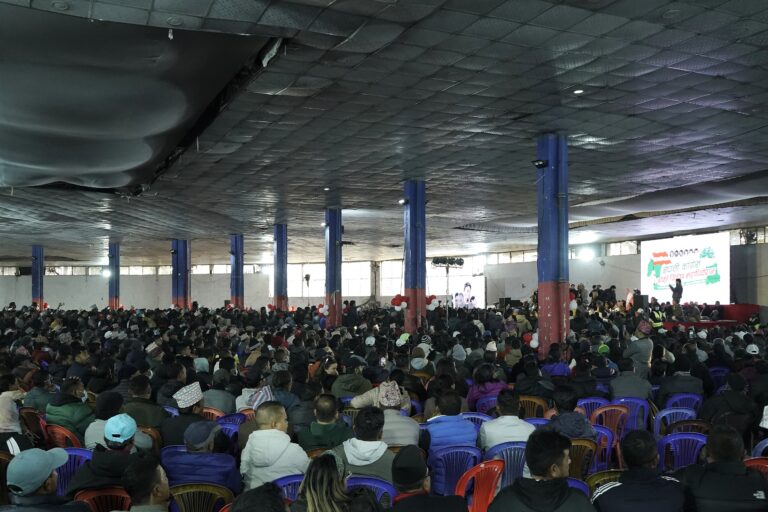
The special general convention of the Nepali Congress held at Bhrikutimandap in January, 2026. Photo: Bikram Rai/Nepal News
The disagreement hardened into confrontation. The Thapa camp went ahead and held a special convention at Bhrikutimandap in Kathmandu on January 14, 2026, where Thapa was elected party president. Deuba refused to attend. So did Shekhar Koirala, whose own ambitions for the top job have simmered for over a decade. What resulted was not a transfer of power but a fracture of it, two men and two camps each claiming to be the authentic Nepali Congress, each filing competing claims with the Election Commission, and eventually landing the dispute before the Supreme Court, which recognised the Gagan Thapa faction as the official Nepali Congress.
Since January, the two camps have behaved less like factions within one organization and more like two parties awaiting a formal divorce. The Deuba group boycotted the membership renewal process that the Thapa led establishment insists is essential ahead of the party’s fifteenth general convention. Deadline after deadline was extended and each time the estranged faction stayed away. In early July, the disagreement escalated further when Deuba loyalists, led by former acting president Purna Bahadur Khadka, opened their own contact office in Chundevi, explicitly framing it as infrastructure for an organized parallel political operation rather than a temporary protest gesture. Meetings have since been held at Khadka’s residence in Golfutar, coordinating a nationwide provincial mobilization independent of the party’s official channels.
Shekhar Koirala, for his part, has drifted in and out of alignment with the Deuba camp, joining a unity rally in Biratnagar with Deuba in June while skipping most other joint gatherings, suggesting that even the anti-establishment side of Nepali Congress cannot achieve internal coherence. Multiple commentators inside and outside the party have now openly used the word split rather than dispute, drawing explicit comparisons to 2002, when Deuba himself broke away to form Nepali Congress (Democratic) after being expelled by Girija Prasad Koirala, only to reunite five years later having contested no election as an independent outfit. The pattern is recurring almost exactly, except this time Deuba sits on the other side of the fracture line.
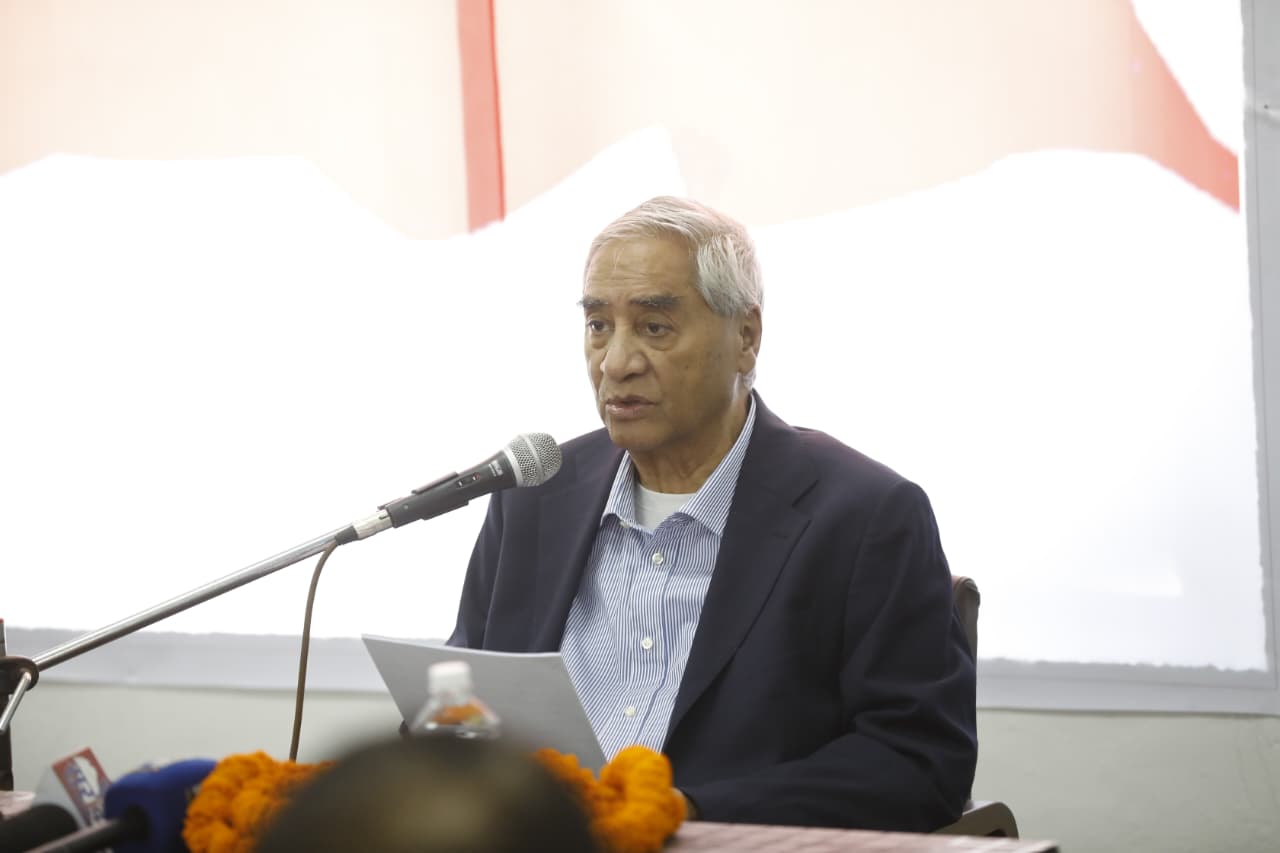
Sher Bahadur Deuba at central working committee meeting of Nepali Congress on October 14, 2026. Photo: Bikram Rai/Nepal News
It is against this backdrop that today’s dueling memorials must be read. When Gagan Thapa speaks at his program, he does so as the man the Election Commission and the Supreme Court currently recognize as party president, using the occasion, as he has done in past appearances this month, to accuse the state of authoritarian overreach and warn against attempts to intimidate citizens, journalists and business houses. When the Deuba camp gathers separately, they do so as a rival faction actively contesting that very verdict of the court. Both sides will speak of BP’s vision. Both will invoke reconciliation. Neither will acknowledge that the very act of holding separate programs on the day built to honor a man who nearly destroyed his political career trying to reconcile warring factions is itself the sharpest possible indictment of what Nepali Congress has become.
There is a deeper layer to this that goes beyond factional arithmetic, and it concerns who gets remembered alongside BP and who does not. Scan the speeches expected from both camps today and you will likely hear generous portions of nostalgia, invocations of democratic socialism as an abstract ideal, tributes to BP the writer and BP the prisoner of conscience. What you are far less likely to hear is a reckoning with the specific groups whose exclusion BP considered central to the unfinished business of the Nepali state: the landless, the indebted poor, the Dalit community, and now, increasingly, anyone who dissents against the current government’s growing appetite for control.
Consider the landless settler crisis that has convulsed the Kathmandu Valley since late April this year. Beginning on the twenty fifth of that month, the Balendra Shah government launched a sweeping eviction campaign against riverside and unmanaged settlements in Thapathali, Gairigaun, Manohara, Balkhu, Sinamangal, Jadibuti and beyond, demolishing well over a thousand homes and displacing thousands of families, some estimates from documented civil society sources placing the number above eleven thousand people affected within just the first two day sweep. Families, including some who by the government’s own narrow legal definition were genuinely landless with no property anywhere in the country, were herded into temporary shelters at Dashrath Stadium and elsewhere, given only days notice, with human rights defenders describing conditions in the holding centers as dire, particularly for women and children. The Supreme Court eventually stepped in with an interim order in May directing the state not to proceed with forced removals without due legal process, an order that itself testifies to how far the executive had already gone before any institutional check arrived.
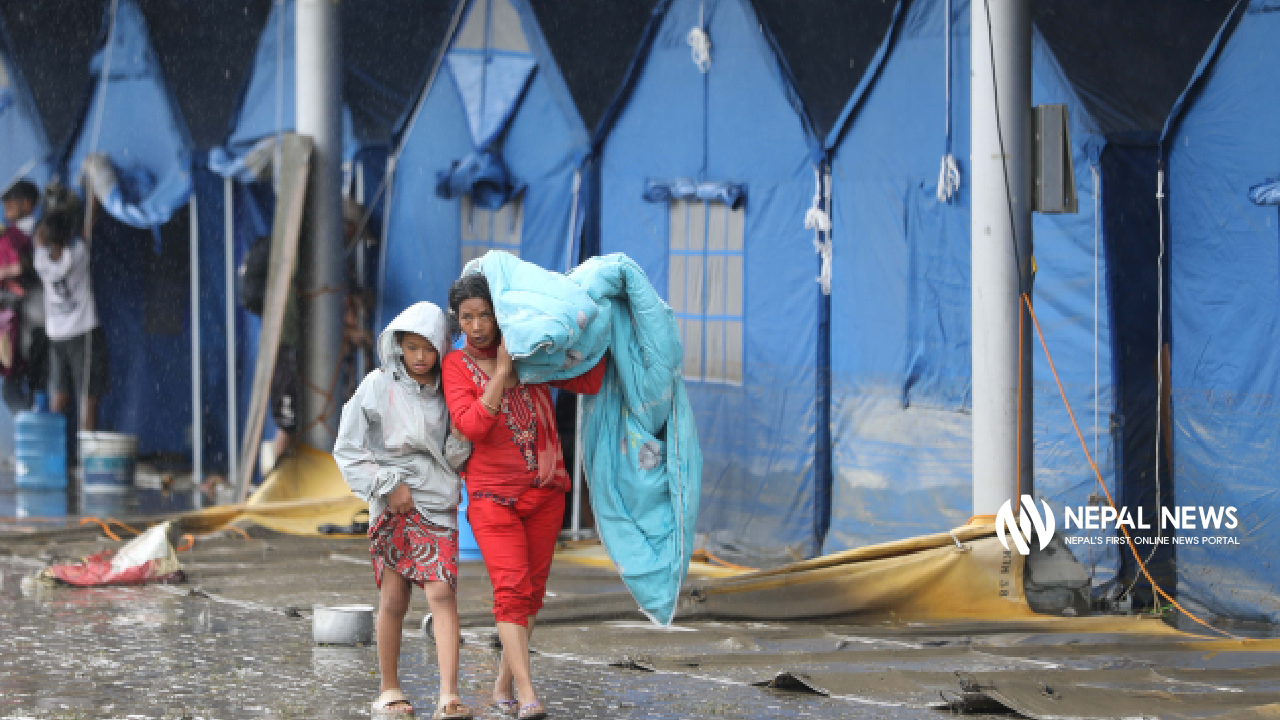
Floodwaters inundate the Kirtipur holding centre, where landless settlers displaced from Kathmandu’s riverbanks were relocated. Photo: Nepal Photo Library
Where was Nepali Congress, the party whose founder built his political identity partly on land reform and rural redistribution, during this unfolding humanitarian episode? The honest answer is scattered and reactive rather than organized and principled. Individual lawmakers, such as Basana Thapa, did raise pointed questions in parliament, asking pointedly why the state stayed silent while pushing landless settlers and economically desperate citizens toward the edge, particularly after a young motorcycle rider self immolated near the passport department in circumstances tied to exactly this climate of official indifference. But a scattered floor statement is not the same thing as a sustained campaign. There was no coordinated Nepali Congress mobilization to stand physically with displaced families the way BP might have demanded of his party. There was no sharp, unified parliamentary offensive comparable to the urgency BP once brought to the tenancy and land questions of the nineteen fifties. Instead, Congress allowed itself to be one lawmaker’s outrage here, a UML colleague’s condemnation there, a party otherwise consumed by its own leadership war and largely unable to convert public anger over evictions into organized political capital, even though the opportunity was sitting in plain sight.
The loan shark crisis tells a similarly damning story, perhaps even more so, because this is an issue with years of documented history rather than a sudden emergency. Farmers and laborers across the Tarai, trapped by predatory moneylenders who forge loan documents, inflate interest into fresh principal, and threaten families with land seizure and social humiliation, have marched on Kathmandu multiple times over the past several years demanding justice, most recently launching a fresh justice march from Janakpurdham in early July this year after the government failed to honor four previous written agreements. It took a grassroots foot march covering hundreds of kilometers, not sustained pressure from the party of national reconciliation, to finally force a resolution.

Victims from the Madhesh province’s usurious lending protest in Kathmandu demanding justice against predatory moneylenders. File photo
The government eventually agreed, in mid July, to criminalize loan sharking as a financial offense, nullify fraudulent bonds and forced property transfers, and draft dedicated legislation within three months. This is precisely the terrain BP would have made his own, the exploitation of the rural poor by informal capital in the absence of functioning financial institutions, yet the negotiating table that produced this agreement was occupied by government secretaries and a minister who traveled personally to sit among the victims in Nijgadh, not by opposition leaders demanding structural reform of Nepal’s collapsed cooperative and microfinance sector. Nepali Congress, again, offered commentary from the sidelines rather than sustained advocacy from the front.
Then there is the Dalit question, which arguably exposes the widest gap between BP’s stated ideals and his party’s practiced politics. Nepal’s fourth cycle Universal Periodic Review at the United Nations in January this year produced at least sixteen distinct recommendations urging Kathmandu to strengthen enforcement against caste based discrimination and untouchability, a stark diplomatic signal that more than a decade after the Caste Based Discrimination and Untouchability Act was passed, the gap between paper protection and lived reality remains wide. The UN Special Rapporteur on minority issues, following his country visit in December last year, published findings in March describing continued impunity for caste based violence, weak police investigation, high acquittal rates in cases involving violence against Dalits, and persistent underrepresentation of Dalits in the judiciary and civil service.
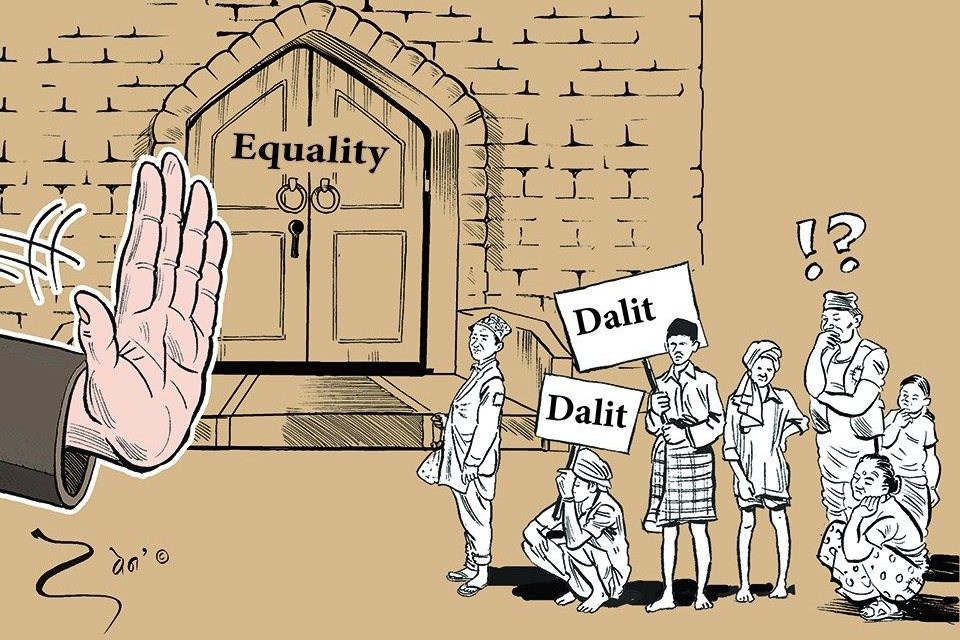
None of this is new information to anyone who has followed Nepali politics closely, yet it barely registers as a live political issue inside Nepali Congress today, let alone as a rallying point tied to BP’s memory. A party that wants to claim BP’s legacy with any seriousness would treat Dalit exclusion as a permanent emergency requiring constant legislative pressure. Instead it treats it, at best, as a subject for token statements around symbolic dates, which is precisely the kind of politics BP spent his life trying to move Nepal beyond.
The fourth thread running through all of this, and perhaps the most urgent, is the visible narrowing of democratic space itself under the current government, an irony almost too sharp to need pointing out on a day meant to honor a man who spent years in prison for demanding exactly the freedoms now under quiet erosion. CIVICUS Monitor currently rates Nepal’s civic space as obstructed, citing arbitrary arrests, excessive force against protesters, and mounting pressure on journalists in the months following Balendra Shah’s ascension to the premiership after his party’s decisive electoral win in March. Home Minister Sudan Gurung’s suggestion that his ministry, rather than the constitutionally mandated Press Council, would handle complaints against media outlets alarmed press freedom advocates, who saw it as an attempt to bypass independent regulatory mechanisms altogether. A government policy restricting public advertising revenue to state-owned outlets squeezed independent media financially, prompting journalist federations to describe it as an economic blockade in all but name. The Supreme Court later halted the policy.
Reporters covering the landless settler evictions have reported being blocked from interviewing displaced families and, in some cases, forced to delete footage under claimed orders from above. Three Gen Z activists were arrested after visiting flood affected settlers in Kirtipur simply to express solidarity, an episode that drew comparisons to the exact kind of state overreach BP resisted for most of his political life. Nepal’s press freedom ranking has technically improved by a few places globally this year, yet the on ground condition for journalists has been formally downgraded from problematic to difficult, a contradiction that speaks to how thin any improvement actually is.
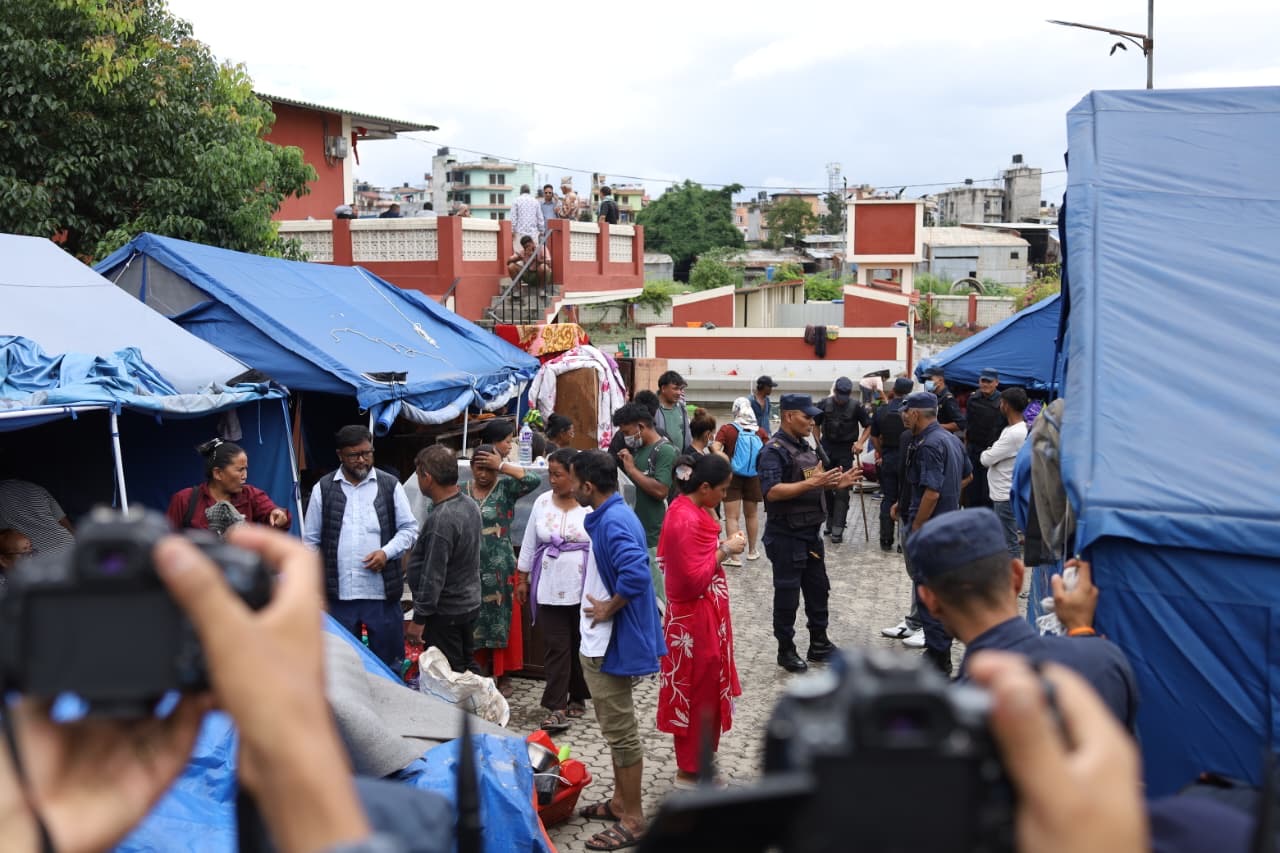
The landless settlers holding center in Kirtipur. Photo: Nepal Photo Library
Gagan Thapa, to his credit, has occasionally used the BP memorial platform itself to call out this authoritarian drift, accusing the government in one recent appearance of overreach for obstructing access to the homes of political leaders and media houses. That is a fair and necessary criticism. But criticism voiced once a year from a podium is not the same as sustained parliamentary confrontation, and here the record of Nepali Congress as the main opposition party is genuinely weak. When the government moved to govern by ordinance, bypassing parliamentary scrutiny earlier this year, opposition parties including Nepali Congress were openly criticized for failing to exercise their constitutional right to demand a special session, with Congress’s own chief whip conceding that internal preoccupation with selecting a parliamentary leader had distracted the party from its watchdog function. This is not a small admission. It is an acknowledgment, from inside the party itself, that factional politics has directly crowded out the exercise of democratic oversight that BP considered the entire point of having an opposition in the first place.
Step back and a wider pattern becomes visible, one that goes beyond any single issue and speaks to something closer to an existential crisis of identity. Balendra Shah’s meteoric rise, first as an independent mayor riding social media fame, then as prime minister commanding a majority unprecedented in Nepal’s fractured parliamentary history, has exposed how thoroughly the traditional parties, Congress chief among them, have lost their ideological anchor. Commentators have described Nepali Congress’s response to Shah’s governing style as a mixture of support in some places, criticism in others, and silence in between, precisely the kind of incoherence that signals a party unsure whether it wants to be principled opposition, tactical ally, or simply quiet. A party built on democratic socialism should have found it easy to challenge a government whose signature moves include ordinance rule, media intimidation, and forced evictions carried out with almost no consultation. Instead Congress has spent its energy on an internal power contest so bitter that even a shared memorial day cannot survive it intact.
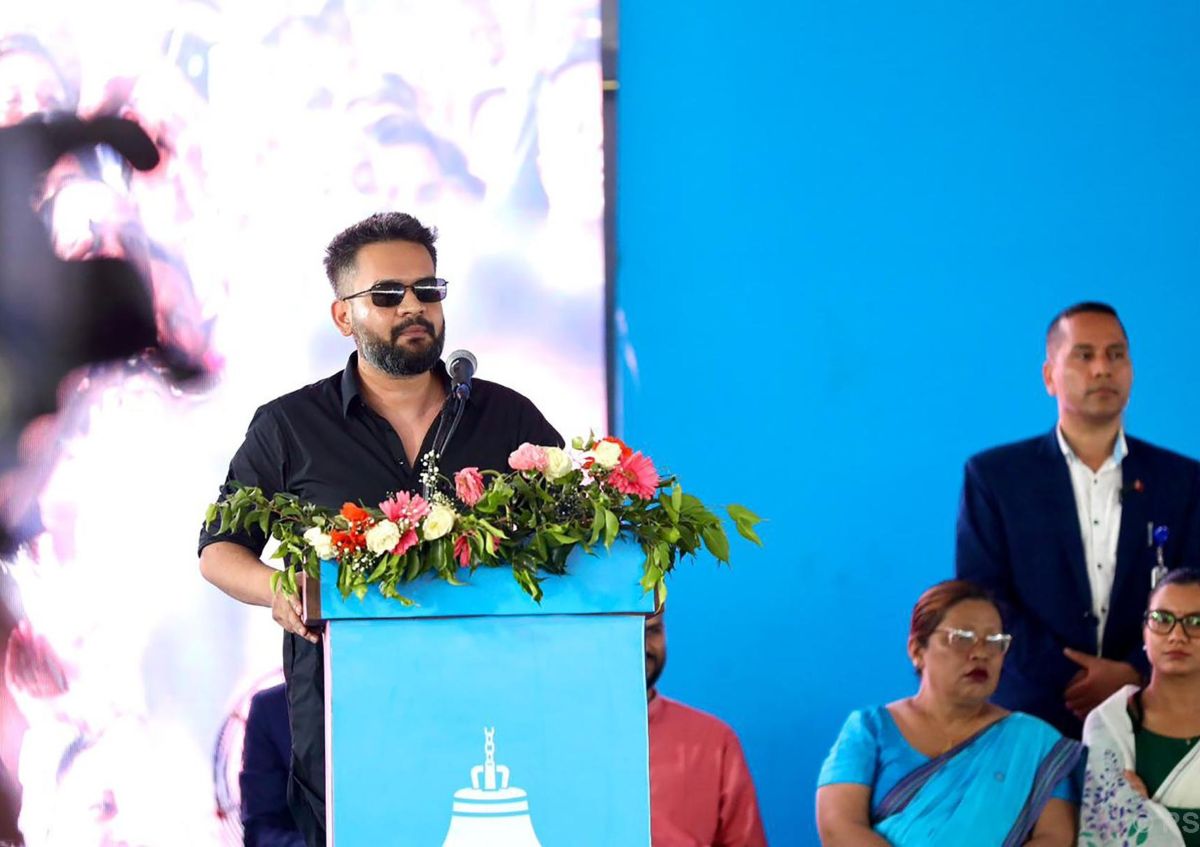
Prime Minister Balen Shah. File photo
There is also a symbolic dimension worth dwelling on, because symbols matter enormously in a country where politics is performed as much through ritual as through policy. The “Green Run,” however well intentioned as a climate, health and fitness initiative, represents a particular kind of sanitized commemoration, cash prizes for fast runners, prominent photo opportunities for the president handing out awards, media coverage centered on race times rather than on the substance of BP’s economic thought. There is nothing wrong with encouraging fitness, but framing it as the day’s primary public facing tribute, while the party’s actual political energy is consumed by a factional rivalry, tells its own story about priorities. BP’s own preferred form of remembrance in his lifetime, insofar as one can extrapolate from his writing, was argument, debate and confrontation with power, not branded five kilometer races.
None of this is to say the individuals involved are without their own reasonable grievances or political logic. Gagan Thapa’s push for generational renewal reflects genuine and long overdue frustration with a gerontocratic leadership structure that has repeatedly failed to read the country’s changing political mood, most dramatically in its slow and uneven response to the Gen Z uprising. Deuba’s insistence on procedural regularity, whatever one thinks of his motives, is not without institutional merit, and centrist figures like Shekhar Koirala have legitimate long standing claims to leadership that predate this particular fight.
Reasonable people within Nepali Congress can disagree, as BP himself would surely have expected them to. The problem is not disagreement itself. The problem is that this disagreement has completely displaced the party’s outward facing responsibilities, its duty to the landless, the indebted, the Dalit citizen still waiting for the promise of the 2011 anti discrimination law to mean something in his own village, and the journalist or activist increasingly worried about arbitrary arrest.
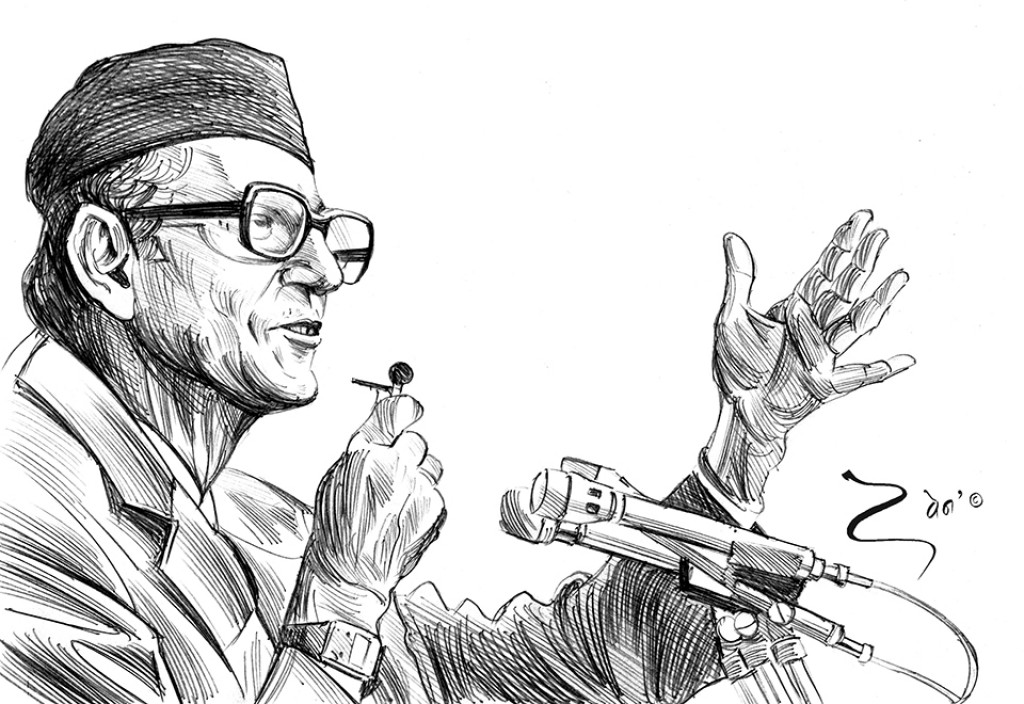
BP Koirala’s national reconciliation was never meant to be a comfortable slogan trotted out once a year while the substance of politics moves in the opposite direction. It was a demanding, difficult political discipline that asked leaders to subordinate personal and factional ambition to a larger national project, precisely the discipline that seems entirely absent from the party today. Two separate memorial programs on the same death anniversary, run by men who cannot yet agree on who legally leads their own party, gathered to praise a leader whose entire later life was a testament to the discipline of unity over ego, is not a minor irony. It is close to a confession.
If Nepali Congress genuinely wants to inherit BP’s legacy rather than simply recite it, the test will not be found in how eloquently either faction speaks about him today. It will be found in whether the party can summon, toward its own poorest and most marginalized citizens and toward the shrinking space for dissent in the country, even a fraction of the reconciling instinct it currently cannot summon for itself.