Kathmandu
Wednesday, July 22, 2026





Behind rising cases of suicide and self-immolation lie unemployment, financial stress, social stigma, and inadequate mental health care—pressures that experts say demand an urgent national response.
KATHMANDU: Following the tragic death of 25-year-old Ganesh Nepali—who set himself on fire in front of the Department of Passports in Tripureshwar, Kathmandu, on July 9—mental health has once again become a subject of intense debate and reflection across Nepal.
Having moved to Kathmandu from Mugu’s Soru Rural Municipality, Nepali was struggling to support his wife and three-year-old daughter. While preparing for the Public Service Commission examination, he decided to seek employment abroad after finding no viable means of making a living in the country. To sustain himself in the interim, he bought a motorcycle by mortgaging his ancestral land in his village to offer ride-sharing services. He had to pay monthly installments, yet even working day and night on his motorcycle left him struggling to make ends meet.
On the afternoon of July 9, after dropping off a passenger in Tripureshwar, he parked his motorcycle in front of Gate No. 3 of the Department of Passports. When he returned a short while later, Kathmandu Metropolitan City police had already placed a wheel lock on his bike. He repeatedly pleaded with the municipal police to remove the lock, but they refused, maintaining that it could not be unlocked without paying a fine of Rs 1,000. A heated argument ensued between the two sides.
Just nine days earlier, the municipal police had locked his wheel and forced him to pay a fine of Rs 1,000. Finding himself trapped by yet another fine just a week later, along with the intense altercation with the municipal police, he acted on impulse. Meanwhile, a municipal truck was loading his motorcycle to haul it away. Desperate, he doused himself with gasoline and committed self-immolation. A parking dispute ultimately cost a young man his life.
Political analyst CK Lal described the incident as the product of a state-created hardship under the guise of enforcing traffic violations. “…If someone’s mistake is treated like a crime, it creates psychological shame and a sense of humiliation far greater than the financial loss,” he stated in an interview published on July 13 on Himalkhabar.com.
According to mental health counselor Sudipa Dhungana, the conflict with the municipal police served as a critical trigger point for Ganesh Nepali, who was already overwhelmed by family responsibilities, financial hardship, and future uncertainty. “A person can be under prolonged mental, social, financial, and familial pressure, and an abrupt incident can lead them to harm themselves. Looking at Ganesh Nepali’s background, this seems to be precisely what happened,” she says.
The incident highlights the severe toll that economic insecurity, despair, and humiliation take on an individual’s mental health.
Alarmingly high statistics
According to the results of the National Mental Health Survey 2020/2021 conducted by the Nepal Health Research Council, 10% of adults aged 18 and older in Nepal experience some form of mental health issue during their lifetime.
Similarly, the Nepal Multiple Indicator Cluster Survey 2024/2025, made public on February 9, by the National Statistics Office, reveals that 9.3% of adolescents and youth aged 15 to 24 nationwide suffer from depression and anxiety. Among them, the number of females affected is double that of males. Regionally, youth with depression and anxiety are most prevalent in Sudurpashchim Province at 13.4%.
Psychiatrists and psychosocial counselors emphasize that mental health issues and illnesses can be identified early and treated, preventing severe harm such as self-immolation or suicide. According to psychiatrist Dr. Ritesh Thapa, depression and anxiety are symptoms of mental illness. He explains that emotional or psychological difficulties represent mental health issues, which can be managed and resolved through stress management and counseling. However, when mental distress overwhelms a person and impairs their daily functioning, it becomes a mental illness.
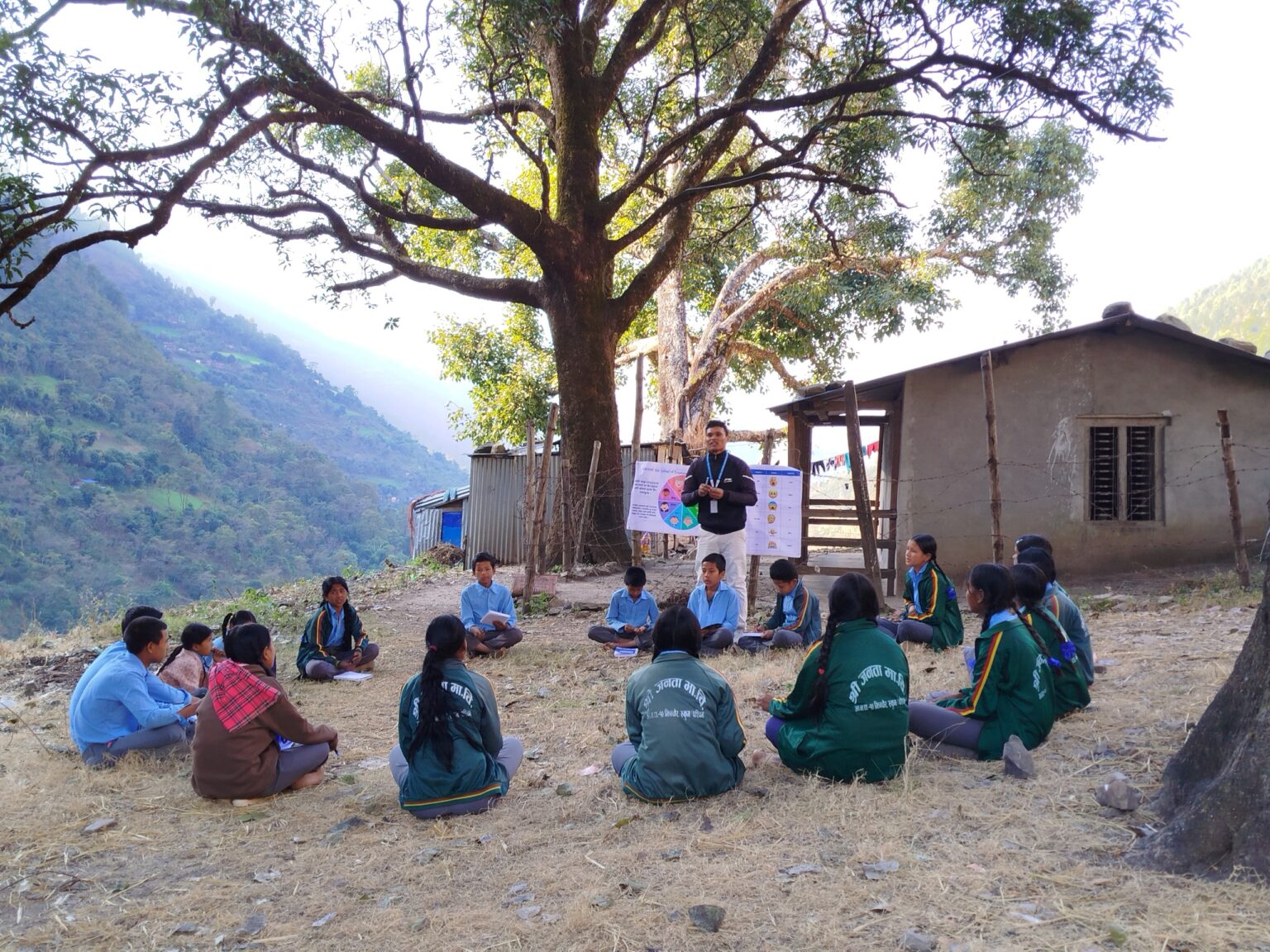
Government mental health awareness program conducted for students in collaboration with development partners following the Jajarkot earthquake. Photo: Bidhya Rai
Symptoms such as preferring solitude, losing interest in previously enjoyed activities, suffering from insomnia, experiencing a lack of vitality, and feeling constantly annoyed or irritable for two consecutive weeks indicate depression. Similarly, feeling continuously panicked, restless, experiencing an elevated heart rate, difficulty breathing, profuse sweating, or trembling hands and feet for two consecutive weeks are signs of anxiety. “With anxiety, a person fears they might die immediately; with depression, they feel their life is ruined and wish they were dead,” Dr. Thapa explains.
Studies show that such mental stress and distress drive individuals to choose self-immolation and suicide. According to the Nepal Police Headquarters’ Nationwide Study on Suicide Reduction and Management, 2024, psychiatric illness and mental stress are the primary drivers of suicide. Financial burdens, failed romantic relationships, domestic violence, substance abuse, alcohol consumption, and family conflicts frequently induce mental illness and psychological distress.
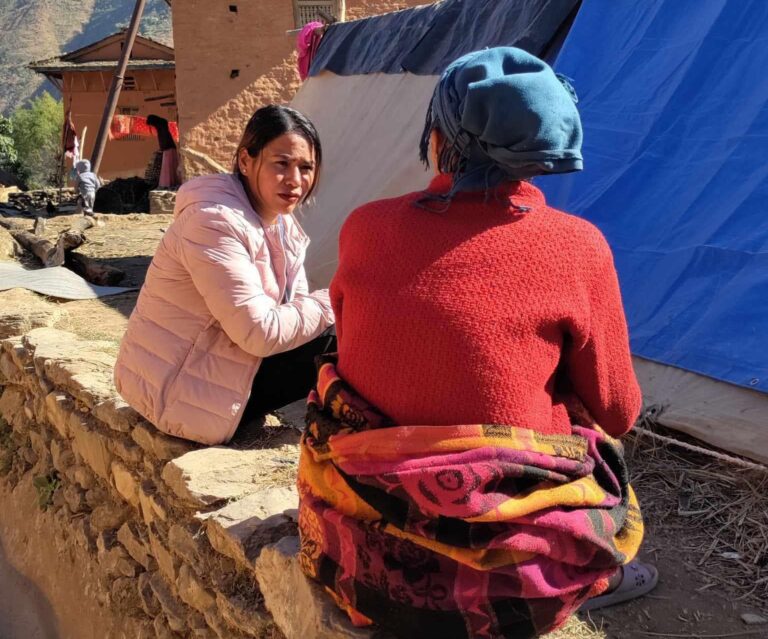
Individual psychological counseling session in progress. Photo: CMC Nepal Facebook
The study reveals that approximately 67% of people died by suicide due to mental stress and mental illness. Additionally, 8.2% attributed it to romance-related causes, 8% to financial reasons, 7.5% to chronic illness, 4.7% to illicit drug use, 2.8% to alcohol consumption, and the remainder to other factors (physical disability, extramarital affairs, domestic violence, familial conflicts, impulse, unemployment, and sexual violence).
When compared by age group and gender, females under 25 and males over 25 represent the higher demographics. Furthermore, those most affected by suicide belong predominantly to low-income and middle-income classes, accounting for 85% of cases.
Mental health issues disproportionately impact youth and child psychology, severely affecting children’s education. Likewise, these events deeply affect surviving family members. According to the World Health Organization (WHO), a suicide attempt occurs every 3 seconds globally, and one person dies by suicide every 40 seconds. Police Headquarters data from the past decade shows that an average of 18 people die by suicide every day in Nepal.
The consequences of mental stress, anxiety, emotional turmoil, and despair extend beyond individual and familial loss. A report titled Prevention and Management of Mental Health Conditions in Nepal: The Economic Case, 2025, prepared by agencies including the Ministry of Health and Population and the WHO, shows that mental ill-health causes annual losses exceeding Rs 18 billion in Nepal. This total includes Rs 4.2 billion spent directly on mental health treatment and Rs 14.3 billion lost due to reduced workplace performance and productivity.
Multifactorial causes of mental illness
According to Dr. Thapa, the causes of mental stress and illness vary significantly depending on the individual and their circumstances. Mental health professionals and stakeholders categorize these causes into three dimensions: biological, psychological, and social. “Mental illness can be hereditary, which is why we ask patients whether previous generations experienced similar issues,” Dr. Thapa notes. “A person’s cognitive style and stress management abilities influence their mind, while circumstances such as poverty, unemployment, discrimination, violence, abuse, and natural disasters generate stress.”
Dr. Thapa identifies political instability, rising unemployment, inflation, and the ongoing uncertainty created by natural disasters in Nepal as major causes of mental stress and distress. Prolonged distress eventually manifests as mental illness.
“There was the Panchayat era, then multiparty democracy arrived, a decade-long armed conflict took place, a mass movement occurred, followed by earthquakes, the economic blockade, the COVID pandemic, and later the Gen Z protest, alongside recurring fears and impacts of floods and landslides,” he says. “Ultimately, when a country lacks political stability, its citizens fall into despair, anxiety, and deep insecurity.”
According to the Ministry of Health and Population, a 2008 study among women of reproductive age revealed that suicide was the leading cause of death in this demographic. Following the 2015 earthquake, among those who experienced direct trauma or lost family members and property, 34.2% suffered from depression, 33.8% from anxiety, 20.4% from alcohol abuse, and 5.2% from post-traumatic stress.
Causes of mental health issues also vary across age groups and generations. A lack of parental love and care, exposure to violence, abuse, a toxic school environment, and academic pressure drive mental health problems in children and adolescents. According to Shiksha Risal, who works at Kathmandu University’s Guidance and Counseling Cell, mental health problems among adolescents and youth must be examined through emotional, social, and physical dimensions. She notes that excessive parental expectations and pressure, domestic strife, and an environment where open communication is restricted within the family leave deep scars on young minds. “Pressure to achieve top grades, attend prestigious colleges, and earn large sums of money, combined with employment uncertainty and fear of the future, make mental health issues increasingly complex,” she says.
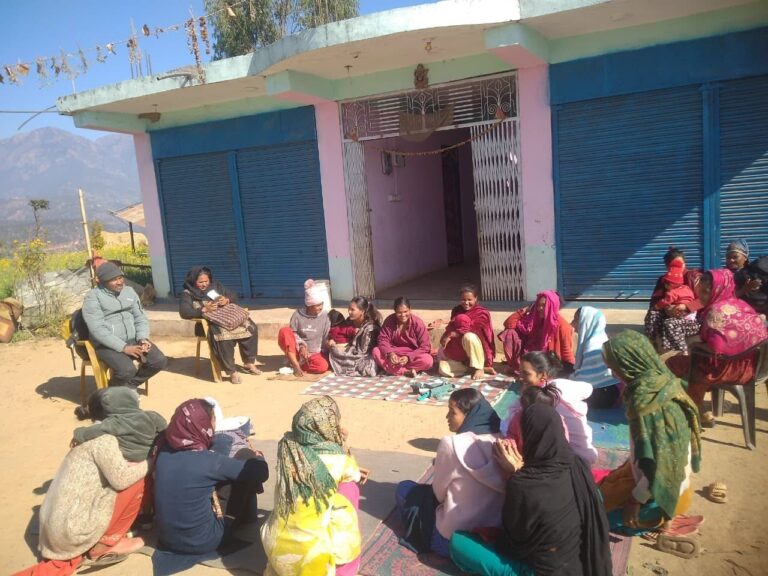
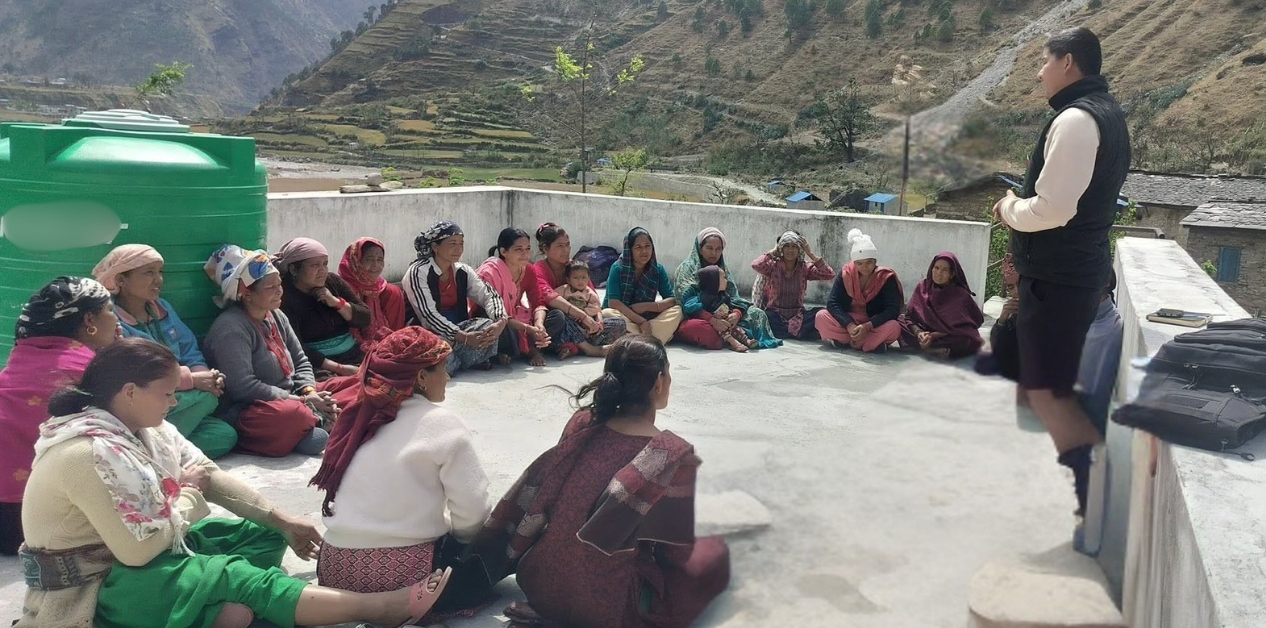
Orientation program on the causes, management, and treatment of mental health. Photo: CMC Nepal
Children growing up in environments marked by poverty, domestic conflict, and oppression face even more severe mental health challenges. Peer pressure and an inability to distinguish right from wrong can lead to mistakes that cause lasting psychological trauma. Furthermore, bodily changes during adolescent growth spark fear, anxiety, and self-consciousness.
Among the younger generation, anxiety, depression, and mental stress are rising sharply. According to Dr. Thapa, because Gen Z is exposed to the wider world through the internet, their expectations of family, society, and the government are high. “A youth who sees rapid development and seamless services in other countries becomes deeply stressed when forced to stand in a long queue at a government office at home,” he says. “This new generation didn’t experience or witness the hardships and struggles of their parents or grandparents; even if they understand it intellectually, they lack patience and demand immediate results, compounding the problem.” Career anxieties, unemployment, the pressure to migrate abroad for work, and the pervasive influence of social media have disrupted the mental health of young people.
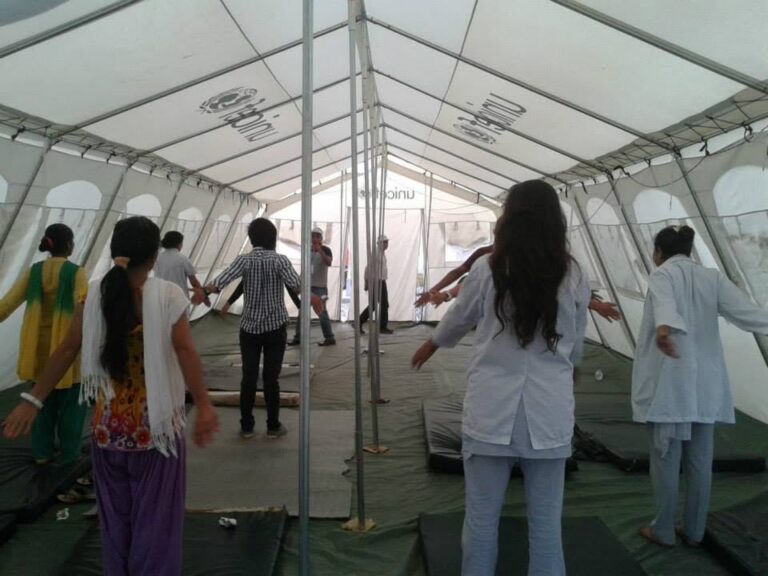
Healthcare workers conducting physical exercise sessions at the Mental Hospital. Photo: Mental Hospital Facebook Page
For adults, practical, professional, and financial burdens drive mental health issues. Unemployment, job instability, delayed wages, future insecurity, and rising inflation further escalate these pressures. Meanwhile, senior citizens face mental health challenges fueled by chronic illnesses, loneliness, and memory decline. According to a study on the psychological health of senior citizens in Kathmandu published in the PLOS ONE journal on July 16, 50.3% of elderly individuals attending day care centers exhibited weak mental health. ‘Senior citizens receiving elderly allowances were found to have poor mental health, indicating that financial support alone does not guarantee peace of mind,’ the study noted.
Psychiatrist Dr. Rishabh Koirala points out that society’s narrow and negative perception of mental health issues adds another layer of complexity. “It was only after COVID-19 that conversations about mental health truly began in Nepal; even within the health sector itself, adequate awareness is still lacking,” he explains.
A neglected issue
Following Ganesh’s death by self-immolation, a series of self-immolations and suicides have continued to make headlines across the country. The tragic incident triggered outcry from the streets to Parliament, condemning the state for pushing working-class citizens to despair through punitive laws and steep fines on financially distressed individuals struggling to make a living.
Speaking at a House of Representatives meeting on July 10, opposition lawmaker and former Finance Minister Barshaman Pun stated, “…Is this a signal that the poor, underprivileged, impoverished, and landless settlers cannot live or earn an honest living in this federal capital or across the country? The government must pay attention to this.”
“Mental health education should be mandatory from school through university levels, enabling people to identify mental health issues from a young age,” she suggests.
Lawmakers from the ruling party, Rastriya Swatantra Party (RSP), called on the government to establish legal protections for mental health, highlighting that suicides driven by mental illness are on the rise. Speaking in the House of Representatives on July 15, MP KP Khanal demanded the formation of a Mental Health Council. “Rising depression and self-immolation incidents have made our society increasingly fragile. We must unite immediately to amend existing mental health policies and formulate innovative new frameworks,” he urged. He also called for the delivery of mental health services by qualified, licensed, and skilled psychologists, backed by effective regulatory monitoring.
While ruling party lawmakers connected the self-immolation incident to mental health and called for urgent action, the reality is that the budget for FY 2026/27 presented by the RSP-inclusive government failed to explicitly outline measures for mental health. Despite police statistics showing an average of 18 suicides per day, the government continues to neglect the need for accessible mental health services. To date, Nepal lacks a dedicated mental health law.
Policy on paper, lack of public awareness
The Constitution guarantees every citizen the right to live with dignity and access basic healthcare free of charge. The Public Health Service Act 2018 includes mental health services within the scope of basic health care. The National Health Policy 2019 aims to expand access to mental health treatment and eliminate social stigma attached to mental illness.
The National Mental Health Strategy and Action Plan 2020 is considered the primary guiding document for mental health in Nepal. Its objectives include ensuring equal access to mental health services for all citizens, developing necessary resources, workforce, and institutional capacity, and raising public awareness to dispel myths and superstitions.
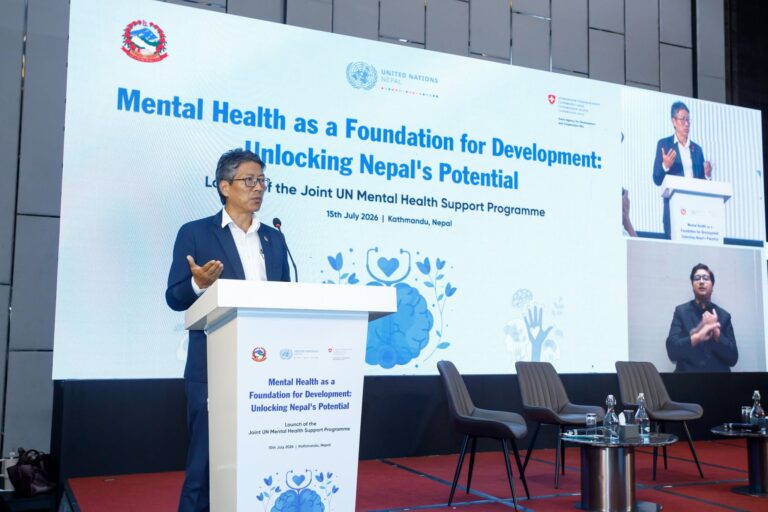
United Nations Mental Health Support Program organized under the leadership of the Government of Nepal in collaboration with the United Nations. Photo: Epidemiology and Disease Control Division Facebook
Although the government introduced a national mental health policy three decades ago, 66% of citizens still lack basic awareness about mental health. According to the police study, awareness programs on suicide prevention have reached only 34% of the population nationwide.
In November 2024, the Supreme Court issued a writ of mandamus ordering the government to effectively implement mental health services. The court directed authorities to establish necessary structures at the federal, provincial, and local levels to deliver mental health services. Although these responsibilities were also mapped out in the National Mental Health Strategy and Action Plan 2020, they remain largely unimplemented.
Government Initiatives
Mental health services in Nepal began 65 years ago. In 1961, outpatient mental health services were introduced at Bir Hospital. This service was subsequently expanded to the Military Hospital, Tribhuvan University Teaching Hospital, and gradually to other facilities. Currently, a dedicated Mental Hospital operates in Lalitpur. Additionally, a free government helpline (1166) is available for individuals experiencing psychological distress. However, these measures fall far short of addressing the escalating mental health crisis.
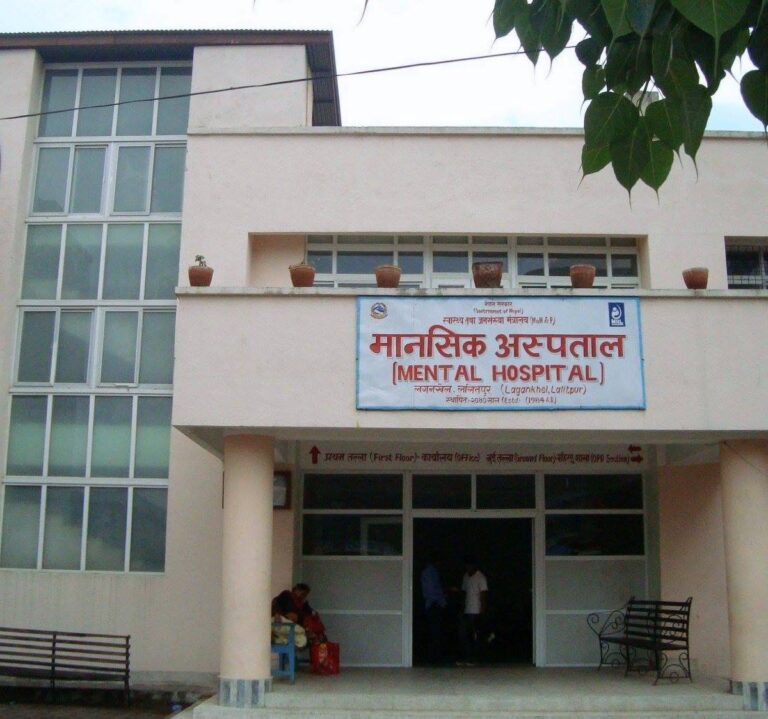
Mental Hospital located in Lagankhel. Photo Source: Hospital Facebook Page
The Epidemiology and Disease Control Division (EDCD) under the Department of Health Services is responsible for formulating national mental health laws, policies, and strategies; preparing standards, protocols, and guidelines for counseling and treatment; conducting monitoring and evaluation; and coordinating with provincial and local levels to prevent, treat, and manage mental health conditions. However, comprehensive standards, protocols, and implementation guidelines have yet to be finalized.
Psychiatrist Dr. Thapa emphasizes the severe shortage of required healthcare personnel, including psychiatrists, clinical psychologists, counselors, psychiatric nurses, and occupational therapists. “This is the dire situation even in Kathmandu; in rural districts and villages, mental health services in hospitals are virtually non-existent,” he says. “Where they do exist, they are primarily supported by donor agencies.” He argues that relying on foreign aid alone will not solve or reduce the burden of mental illness.
Dr. Anuj Bhattachan, Officiating Director General of the Department of Health Services, states that the EDCD is actively addressing mental health under its non-communicable diseases program as a priority.
“Since mental health is a matter of major public importance and concern, we are striving to expand services by maximizing our available resources,” he says, adding that a bill on mental health is currently being drafted.
Dr. Bhattachan stresses that because mental health conditions stem from social, economic, and political factors, they must be prioritized across all government bodies, stakeholders, and citizens alike. On July 15, the Government of Nepal, in partnership with the United Nations, launched the UN Joint Mental Health Support Program. Running through 2028, this policy and service reform program is expected to benefit local communities in Karnali, Lumbini, and Madhesh provinces, according to a press release issued by the UN.
Meanwhile, university counselor Shiksha Risal advises the government to integrate mental health education into the school curriculum to foster early awareness. “Mental health education should be mandatory from school through university levels, enabling people to identify mental health issues from a young age,” she suggests.
She also advocates for establishing and effectively running psychosocial counseling units across educational institutions nationwide. For example, Kathmandu University operates its own counseling cell, where students seek help for stress, anxiety, depression, low self-esteem, and loneliness. Counselors assess students’ circumstances and provide tailored guidance. “When counseling alone isn’t enough, we connect students with psychiatrists, helping them understand that seeking help is a sign of strength, not weakness,” says Risal.
The report Prevention and Management of Mental Health Conditions in Nepal: The Economic Case, 2025 highlights the urgent need for adequate investment in mental health reform. It concludes that investing Rs 39.58 billion over the next 20 years in the prevention and treatment of mental health conditions would yield an estimated return of Rs 232 billion over the same period.