Kathmandu
Sunday, July 5, 2026





Led by five passionate young entrepreneurs, this community-connected dairy business showcases how strategic planning and local resource utilization can unlock significant commercial possibilities in rural areas
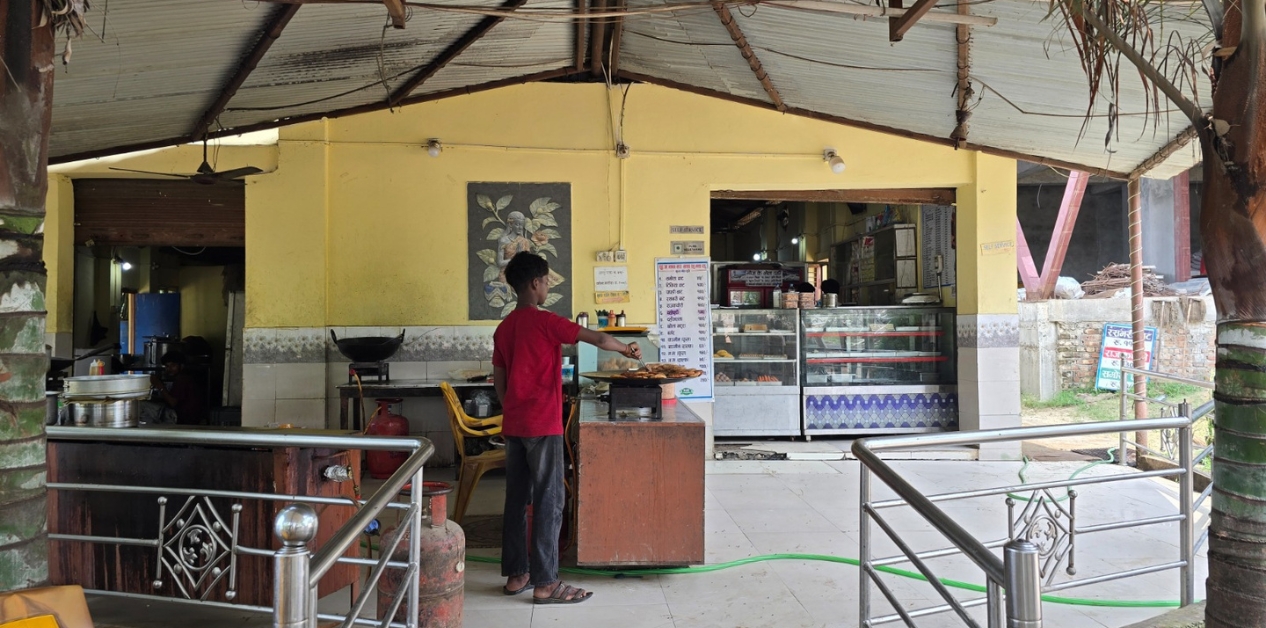
DHANUSHA: Nandani Dairy Industry, located on the border of Janakpurdham Sub-Metropolitan City-23 and Pipra Rural Municipality in Mahottari, draws a steady stream of customers from morning until evening. Some go to buy milk, yogurt, and paneer (a fresh, non-aged, non-melting soft cheese common in South Asia), while others reach there for snacks and sweets.
Started about 13 years ago by five youth, the dairy is now well-known in the local market due to its milk and dairy products. After the opening of the dairy in a place that at one time had only cultivable land, houses and shops have also started to be added in the surroundings.
The start of Nandani Dairy, however, did not happen only from a plan to do business. 43-year-old Ajit Kumar Karna of Siraha used to work in a non-governmental organization. He used to earn about Rs 50,000 monthly. Influenced by the ‘Osho ideology,’ he, along with some friends, was planning to build an ashram in Siraha. However, the necessary expenses for the construction of the ashram could not be gathered. Amidst that confusion, his meeting took place with Rakesh Kumar Jha of Pipra Rural Municipality-7, Manoj Kumar Yadav of Sukhipur Municipality-2, Ramrijhan Yadav, and Indira Das. Rakesh used to teach in a private school, while Manoj did marketing of medicines. Ramrijhan and Indira had completed their studies and were in search of a ‘career.’
In the meantime, they decided to do an agricultural enterprise. Rakesh Kumar Jha had some land on the Jaleshwar-Janakpur road section. Utilizing that very land, they made a plan to start farming and animal husbandry. They had no experience, but they had the belief that something could be done. While searching for an area where an income could be made quickly by investing immediately, they turned toward cow farming. They bought and brought a cow from Gamhariya of Mahottari for Rs 10,000. They named the cow Nandani. From the name of that very cow, the Nandani Dairy Industry started.
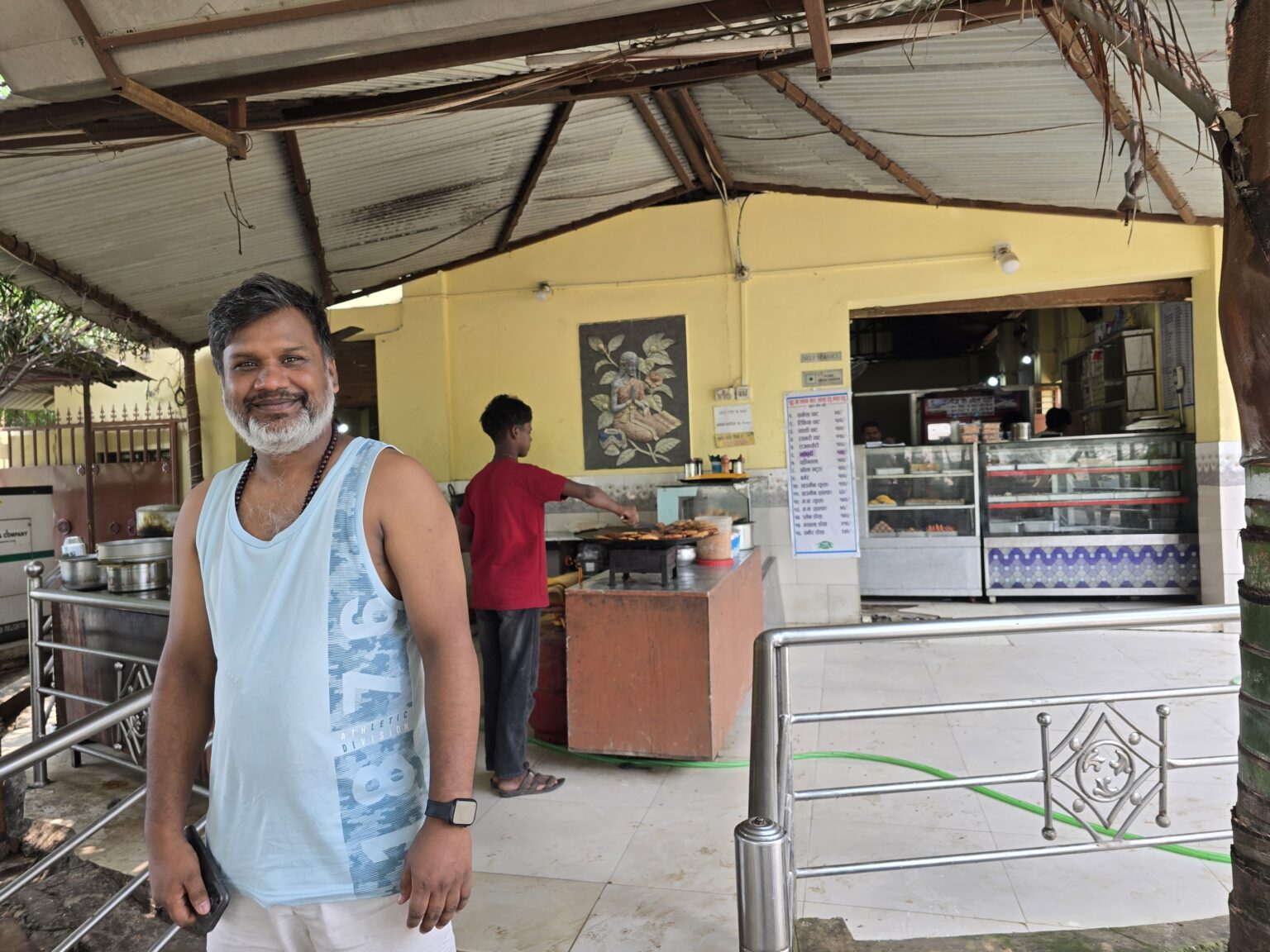
43-year-old Ajit Kumar Karna, the owner of Nandani Dairy
The dairy started from early 2012. In the beginning, they themselves engaged in the care of cows, grass fodder, water, and the sale of milk. They started selling the cow’s milk in the Janakpur market. Due to their commercial commitment to selling pure milk, as the demand kept increasing, they say they added cows and reached up to 34.
Later, they started selling not only milk but also sweets and snacks. Currently, about 28 types of sweets, including milk, yogurt, paneer, ghee (a type of clarified butter), rasbari (a popular South Asian and Nepali milk-based dessert), lalmohan (a highly popular, melt-in-the-mouth milk-based sweet), peda (a popular, traditional South Asian sweet made from thickened condensed milk solids), and barfi (a milk-based sweet from the Indian subcontinent with a fudge-like consistency), are produced in the dairy. Dishes like dosa (a popular, thin, and crispy South Indian savory crepe), chowmein, and chaat (a popular category of savory street food snacks) are also sold. Because it falls on the Jaleshwar-Janakpur road section, commuting passengers and local consumers have become regular customers.
According to proprietor Ajit Kumar Karna, the dairy was brought into operation by adding a Rs 1 million grant received from the then Directorate of Market Promotion, Kathmandu, their own investment, and about a Rs 1.8 million loan.
“From the very beginning, we had decided not to compromise on quality,” Karna says, “Even if it was a little expensive, our thinking was to sell pure and good goods. The trust of the customers increased because of that.”
Farmers from Banauli, Danauli, Sahorwa, Bindhi, Aawar, and up to Parbata of Dhanusha reach Nandani Dairy to sell milk, the proprietors say. During marriages and festivals, when the demand for sweets increases, there is a situation where milk has to be brought even from Siraha and Saptari, they say.
Landowner Rakesh Kumar Jha also says that the decision to engage in the dairy changed the very direction of their lives. According to him, on his land, sometimes farming would happen and sometimes it would remain barren. After all five people made a mindset that they should do something together, he says that the idea of utilizing the land for the dairy gave good results.
“If agriculture can be systematically made a profession, it can become a good medium of income,” Jha says, “Among us, three are postgraduates and two are graduates. We tried to give an example that educated youth can also do agriculture and enterprise.”
Currently, they have made some changes in the framework of the business. After seeing that additional manpower would be required in cow farming and that local farmers would face problems in selling milk, they sold their cows and started purchasing milk from farmers.
Farmers from Banauli, Danauli, Sahorwa, Bindhi, Awar, and up to Parbata of Dhanusha reach Nandani Dairy to sell milk, the proprietors say. During marriages and festivals, when the demand for sweets increases, there is a situation where milk has to be brought even from Siraha and Saptari, they say.
The business that started in the beginning with the hard work of all five people has now reached a state of giving employment to 23 people. Proprietor Ajit Karna says that about Rs 500,000 monthly is spent on the salary of employees alone.
“When keeping many cows, laborers had to be added. On the other hand, there was a problem for the village farmers to sell milk,” Karna says, “Therefore, we went to the model of buying milk from farmers and delivering it to the market. This benefited the farmers too, and it became easy for us to work.”
Farmer Bindeshwar Yadav of Pipra Rural Municipality-7 says that it became easy to sell milk after the dairy opened. “Previously, there used to be a problem because milk was not sold,” Yadav says, “Now, milk is sold near the house. Money is also received on time.” According to the proprietors, about 70,000 liters of milk are sold annually from the dairy.
The business that started in the beginning with the hard work of all five people has now reached a state of giving employment to 23 people. Proprietor Ajit Karna says that about Rs 500,000 monthly is spent on the salary of employees alone.
“I feel satisfied to be able to give employment to locals,” he says, “Farmers have received the price of their production. We have also received moral strength in the transaction.”
Currently, the business is being operated in an area of about 8127.09 square meters, including 338.63 square meters taken on rent. While doing cow farming, however, they had also used a separate 13545.25 square meters of land for grass cultivation.
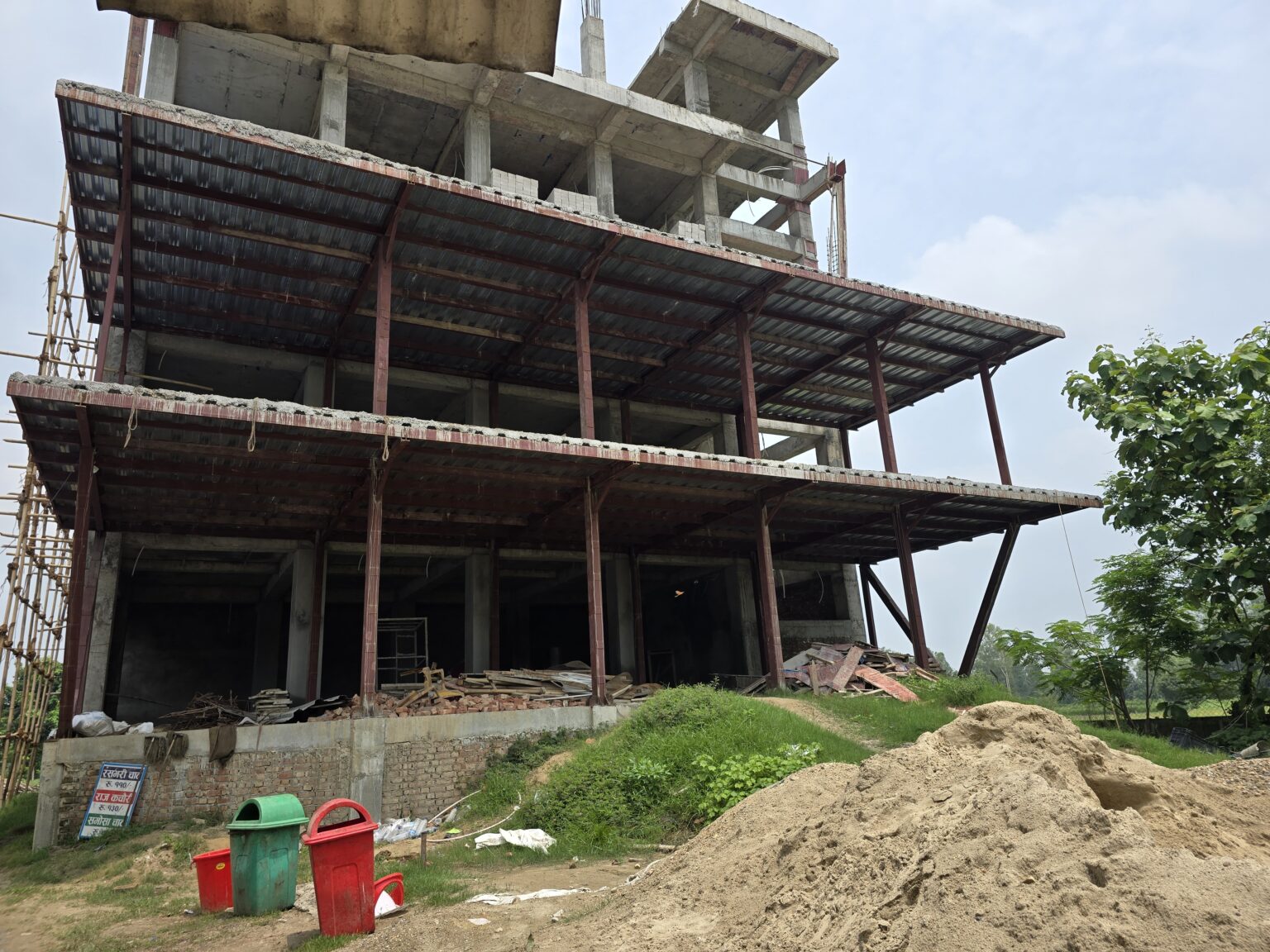
The under-construction hotel and restaurant
The proprietors claim that the annual turnover of the dairy has reached around Rs 10 million. Although they started the enterprise after registering with the concerned bodies, they say there is no formal written agreement regarding ownership and transaction among the five proprietors. Mutual trust itself is the basis of their business success, they say.
“The trust between us itself has brought us this far,” Karna says, “In the coming days too, there is a thought to move forward with this very trust.”
They are also moving forward with a plan for business expansion. Karna says that the work of building a systematic hotel and two restaurants on the empty land around the dairy is underway. According to him, preparations are being made to bring a hotel with five to 10 rooms and a restaurant into operation in a short time.
Nandani Dairy is not only an enterprise of five youth but has also become a small but effective commercial model connected with local farmers. It has given a market to the farmers’ milk, given employment to locals, and started to change a place on the roadside into a commercial destination.
The effort of the youth has shown that if there is a plan, continuity, and trust, an enterprise can be done even by staying in the village.