Kathmandu
Tuesday, July 14, 2026





With over 60% of Nepal's foreign labor force concentrated in the Gulf, mass downsizing across the service and construction sectors puts families and remittance dependent incomes at immediate risk.

KATHMANDU: Rakesh Singh (name changed) from Mahottari, who has been working at ‘Ajman Saray’, a resort in Ajman, United Arab Emirates (UAE), has been sent on a 10-day unpaid leave by the hotel. “The resort, which used to be packed before the war started, now gets only sporadic customers,” Singh says. “Starting this month, the resort has put not just me, but everyone, on 10 days of unpaid leave.”
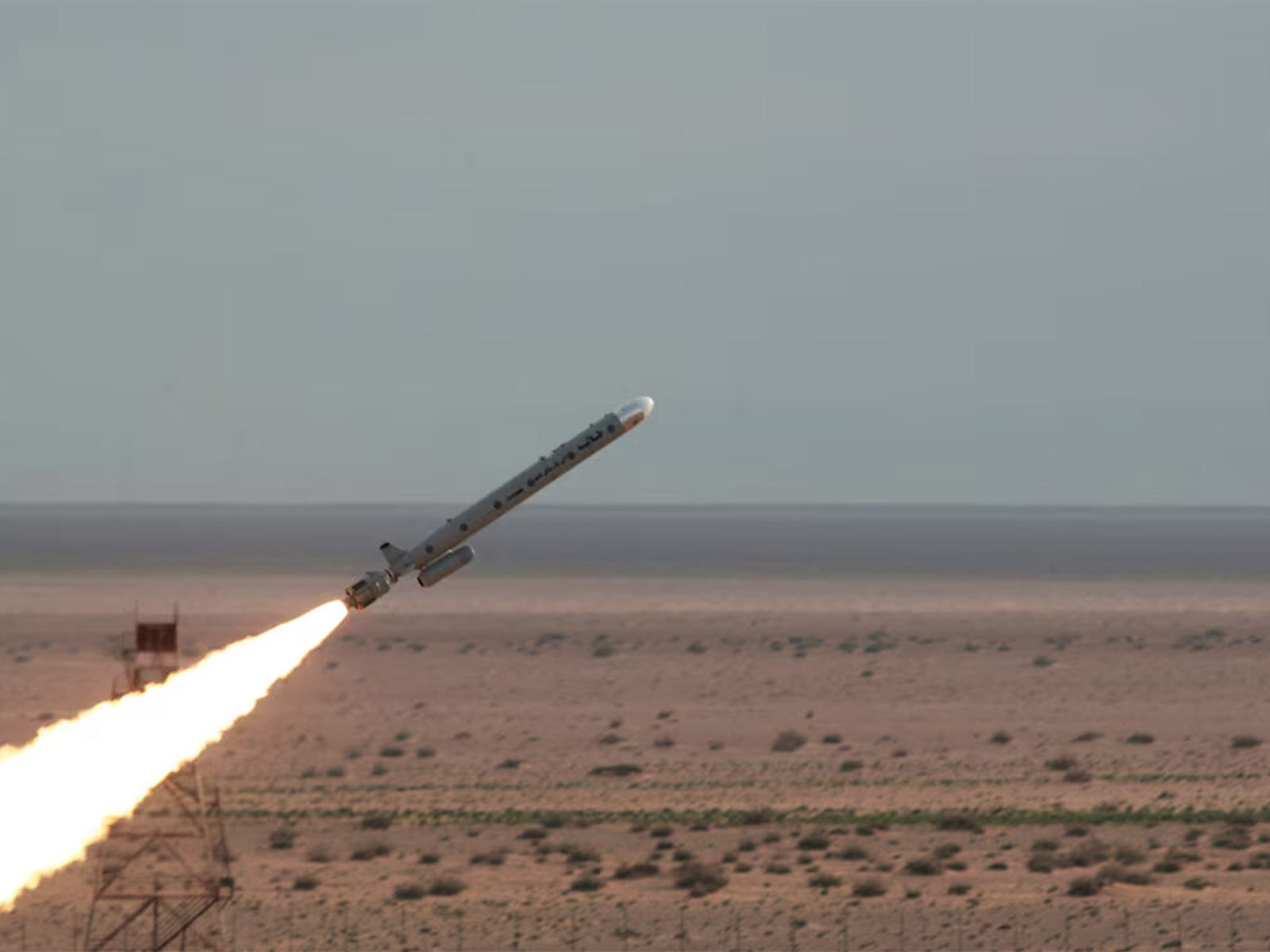
The war in West Asia began on February 28 after the United States and Israel launched a joint attack against Iran. Although a ceasefire was reached between the US and Iran, the risk of war remains high as no consensus has been achieved yet. The US has been warning that it will launch another attack against Iran if its demands are not met. Iran has been targeting and attacking US military camps and companies located in various Gulf countries.
The United Arab Emirates (UAE) has suffered the most damage from the attacks. The impact of this has hit Nepalis who went to Gulf countries for employment, like Singh. Singh’s friends working in Dubai have already returned to the country. “The hotels there have sent workers back home on unpaid leave for up to three to four months,” he says, “They haven’t sent us home yet.” He requested anonymity, fearing interrogation by hotel and government officials if his name were made public.
The Gulf region, including the UAE, is a major employment destination for Nepalis. Around 1.8 million Nepalis have gone to various Gulf countries for work. Rajendra Bhandari, former president of the Nepal Association of Foreign Employment Agencies, says that due to the Gulf war, the new demand for workers has decreased and employers have started putting existing workers on ‘unpaid leave’.
“The destination for more than 60 percent of those going for foreign employment is the Gulf region. Currently, there is no new demand there, and those who went are also returning,” Bhandari says. “Even though there is a ceasefire situation, airports are not able to operate at full capacity. Even after the war ends, the Gulf labor destination will not be like before.”
He states that the demand for new workers has dropped by 50 percent. “Those who came home on vacation have not returned,” Bhandari says.
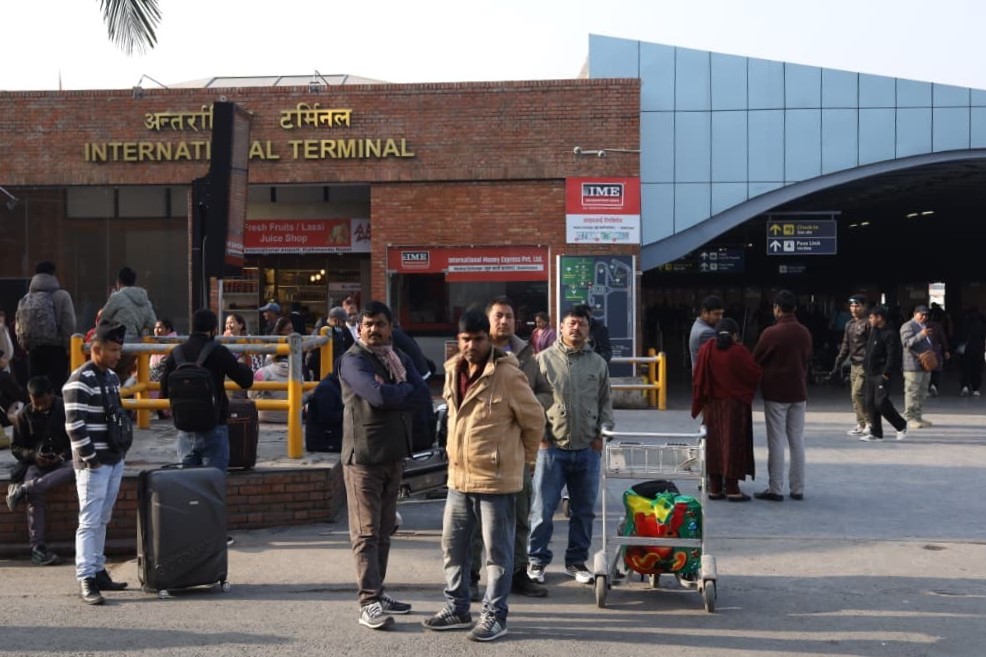
Passengers waiting at Tribhuvan International Airport after flights to Middle Eastern countries were canceled following attacks on Iran by the United States and Israel. Photo: Nepal Photo Library
The number of people going for foreign employment from Nepal decreased by 45 percent in February and March, and by 47 percent in April. Keshav Bashyal, a migration researcher teaching at the Department of International Relations and Diplomacy at Tribhuvan University, says that after the war, Gulf countries are in a ‘wait and watch’ situation regarding investment.
Bashyal says, “The service and construction sectors are heavily affected due to the war. This has directly impacted Nepali workers.”
According to Bashyal, even if only 20 percent of the Nepalis currently in the Gulf lose their jobs, a large number of people will become unemployed. “The alternative labor destination for this workforce is Europe. It is facing its own problems,” Bashyal says. “Europe itself has reached saturation. Therefore, there is no room for Nepal.”
He mentions that although some efforts were made regarding employment in Germany, they could not gain momentum. He says that even before the war started, the Kuwaiti market for foreign employment was already shrinking.
“Most Nepalis go to the Gulf to work in the construction and service sectors,” Bashyal says. “The service sector gets affected by small incidents. It happened this time too.” Dubai was recently developing as the economic hub of the Gulf region. Similarly, it was in the process of developing as a hub for global air passengers. “Most Nepalis go to Dubai for the service sector. Multinational companies there are on the verge of closing down,” Bashyal says.
Construction projects that were being pushed forward in the Gulf are now in a difficult situation. Saudi Arabia’s ruler Mohammed bin Salman has also started ‘downsizing’ the ambitious NEOM project. Under this, 80,000 Nepalis are working in the city construction project.
In a report released by the International Labour Organization (ILO) regarding the war in West Asia, it is mentioned that jobs worth 1.2 trillion US dollars will be lost in 2026 alone. The report states that employment in the Asia-Pacific region will be worst hit by the war, which will also affect Nepal. The report titled Employment and Social Trends 2026 mentions that even if the war stops now, it has already impacted the global labor market.
‘The crisis generated by the war has created problems such as a rise in energy prices, disruption in transport routes, supply chain issues, a decline in tourism, a drop in investor confidence, and disruption in migration and remittance flows,’ the report states.
The report projects that if the war stops, the initial shock of the crisis will gradually ease, and economic activities will start normalizing throughout the year. It states, ‘If fuel prices do not return to the pre-war state, labor equivalent to 14 million full-time jobs in 2026 and 38 million full-time jobs in 2027 will be lost worldwide.’ Due to this, the unemployment rate may increase by 0.1 percent in 2026 and by 0.5 percent in 2027. Based on this, 5 million people are at risk of becoming unemployed in 2026 and an additional 20 million people in 2027. Its economic cost will be around 1.1 trillion US dollars in 2026 and around 3 trillion US dollars in 2027. This economic damage is double that of the COVID period.
The Asia-Pacific region will be the most affected by this. The report says, ‘In the Asia-Pacific region, working hours could decrease by 1.5 percent and real labor income by 4.3 percent by 2027. This decline represents a loss equivalent to about 30.7 million full-time jobs and 1.9 trillion dollars in income in this region alone.’
The report mentions that these impacts will not appear immediately but will manifest gradually over time, posing a major challenge especially for countries dependent on energy imports.
The report states, ‘Many households in Nepal depend on remittances coming from Gulf countries. When the demand for labor in the West Asia decreases or employment is disrupted, there is a risk that the remittance flow will weaken, directly hitting the income and purchasing power of Nepali households.’