Kathmandu
Thursday, July 9, 2026





To solve the chronic crisis of teacher shortages, local governments have launched a strategic practice of pooling qualified educators to ensure learning remains uninterrupted in community schools
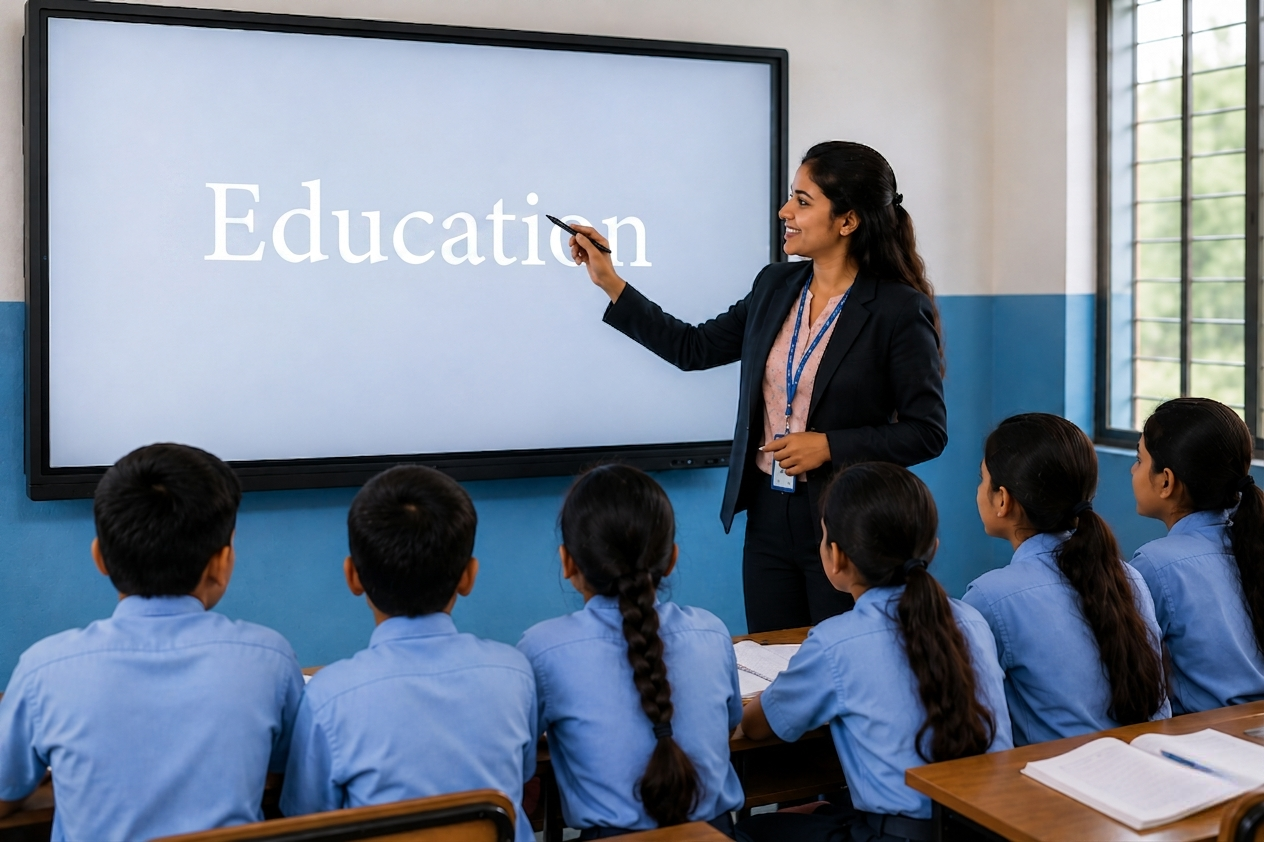
KATHMANDU: Until two years ago, the Education Branch of Kageshwori Manohara Municipality in Kathmandu faced a persistent outcry from community school principals over a chronic shortage of math and science teachers. However, since the launch of the 2024-25 academic session, these complaints have vanished. The implementation of a strategic teacher bank system has successfully bridged the gap, ensuring that classrooms remain staffed and learning remains uninterrupted across the municipality.
Complaints regarding teacher shortages from community schools stopped after the municipality implemented the Teacher Bank system. Pushpa Raj Dhakal, chief of the Education Branch, says, “Previously, there were always complaints about teacher shortages; now, they have stopped.”
Dhakal explains that the concept of a teacher bank was initiated after teaching and learning began to be affected due to a shortage of teachers in proportion to the number of students in community schools. For this purpose, the municipality has formulated and implemented the ‘Teacher Bank (Establishment and Management) Procedure, 2024.’
According to the procedure, the municipality issues a public notice inviting interested and qualified individuals to be listed in the Teacher Bank. The municipality had issued the notice for the first time on October 20, 2024. Through repeated notices, 125 people have already been listed in the bank. Among them, 30 individuals are currently teaching in various community schools, according to branch chief Dhakal.
The municipality has listed teachers for all classes and subjects at the school level. In schools where level-wise and subject-wise positions are vacant, or where teachers are few compared to the student ratio, teachers listed in the bank are mobilized on a part-time or substitute basis based on merit. “We are deploying them by placing those with high qualifications as the first priority after conducting interviews and classroom teaching evaluations,” he says.
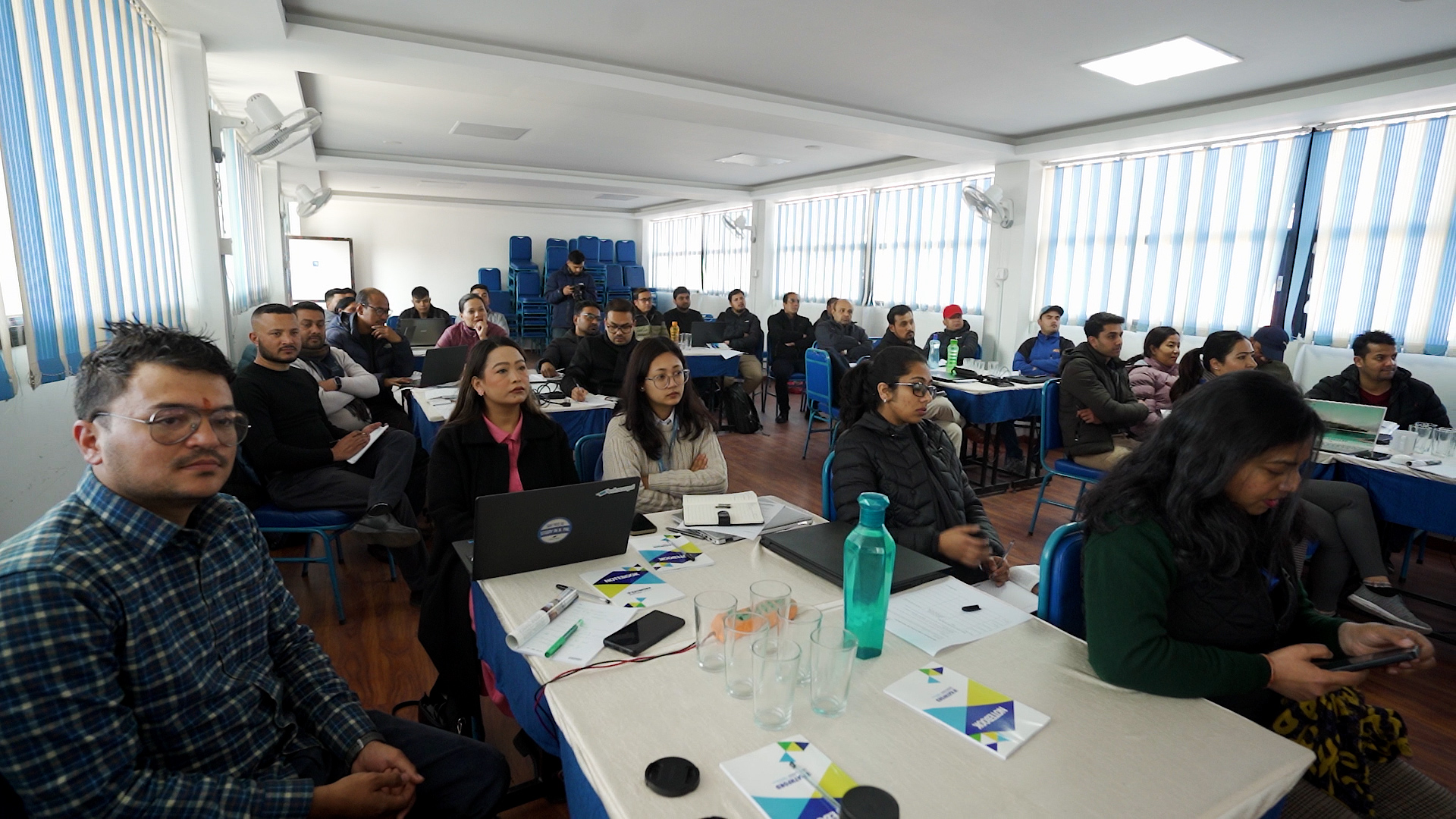
Participants during the first Teacher Reinvented training organized by Edusanjal. Photo courtesy: Edusanjal’s Facebook
Similarly, Budhanilkantha Municipality, also in Kathmandu, is implementing the Teacher Bank system. Nabaraj Bhattarai, spokesperson for Budhanilkantha, states that while implementing such a system fulfills the teacher shortage, it has also changed the learning methodology. “All those listed with us are freshers; students are happy to learn from them according to new technology and learning methods,” he says. “It is understood that the newcomers are also happy to gain teaching experience as well as earn an income.”
Budhanilkantha is fulfilling teacher shortages through the bank in both private and community schools. The criteria are specified in the ‘Teacher Bank Management Procedure, 2023,’ published in the local gazette on August 29, 2023.
Candidates who do not have a teaching license in subjects like mathematics, science, accounts, and sociology can also be listed in the bank. There is a provision that the candidate’s age must be at least 18 years and not exceed 60 years.
Listed teachers are deployed for a specified period based on the school’s demand, the permission of the municipality’s Education, Youth, and Sports Division, and the consent of the respective school management committee. According to Bhattarai, the candidate’s priority is determined based on merit. Teachers are also mobilized from the bank for specified periods as mobile teachers in subjects like songs, music, sports, yoga, English, Nepali, mathematics, and science.
Like Kageshwori Manohara and Budhanilkantha, some other local levels are also adopting the concept of a teacher bank to provide teachers immediately in the event of a shortage in schools. They have implemented the Teacher Bank system in accordance with the provisions regarding basic and secondary education management under Section 11(2)(j) of the ‘Local Government Operation Act, 2017.’
Listed teachers are deployed for a specified period based on the school’s demand, the permission of the municipality’s Education, Youth, and Sports Division, and the consent of the respective school management committee.
Those listed in the Teacher Bank are sent to schools when there is a shortage of teachers in remote areas during the permanent recruitment process and when additional classes need to be operated. To ensure the ‘credit hour’ of elective and technical subjects, or to prevent the interruption of students’ studies when a teacher is on leave or during emergencies, teachers are immediately deployed from the Teacher Bank.
The federal government has included this system, which local levels started implementing from their own resources, in the annual policy, program, and budget for the current fiscal year 2025/26 to implement it in a more effective and organized manner. The government announced the policy to establish a Teacher Bank, stating that the unequal distribution of teachers, shortage of subject teachers, and temporary management have directly impacted the quality of school education.
The government policy mentions establishing a Teacher Bank in collaboration with universities to prevent teacher shortages in core subjects like English, science, and mathematics and mobilizing graduate students in the role of volunteer teachers. The government has expressed confidence that this will ensure teacher management and supply, learning assurance, reduction of educational loss, and enhancement of educational quality.
The Center for Education and Human Resource Development under the Ministry of Education has already prepared and made public a concept paper regarding the establishment and mobilization of the Teacher Bank on December 22, 2024. However, it has not been able to come into implementation, citing a lack of budget.
Like Kageshwori Manohara and Budhanilkantha, some other local levels are also adopting the concept of a teacher bank to provide teachers immediately in the event of a shortage in schools.
“Implementation of the concept is from the local level itself, but there is no budget this year. It will be implemented from the first month of the next fiscal year, 2026/27, after managing the budget,” says Mahendra Parajuli, Deputy Director General and spokesperson for the Center for Education and Human Resource Development.
According to the concept prepared by the center, local levels can establish a teacher bank with merit lists to appoint on contract for approved vacant posts, relief grants, teaching-learning grants, village/municipal volunteer teachers, facilitators of early childhood development centers, and school staff positions in community schools within their area.
Teacher banks must be established at the local and district levels for the primary level (grades 1 to 5) and at the provincial level for the lower secondary level (grades 6 to 8) and secondary level (grades 9 to 12). The concept paper mentions that when a working teacher stays on maternity leave, extraordinary leave, unpaid or study leave for at least one month, or long sick leave or faces suspension, classes can be managed immediately from the Teacher Bank with the approval of the local level.
The process for a new appointment from the bank can be started before a teacher receives mandatory retirement, but such an appointment will be effective only from the day after the retirement.
Although such a practice of a teacher bank is new for Nepal, it has been considered successful for a long time in countries like the United States, the United Kingdom, Canada, Japan, and India. Those countries mobilize retired teachers, subject experts, professional technicians, and social activists into classrooms as needed by creating a ‘roster’ at the local level.