Kathmandu
Thursday, July 9, 2026





The party that promised merit-based governance is facing criticism for appointing relatives, political loyalists, and close associates to influential public posts within its first 100 days in office.
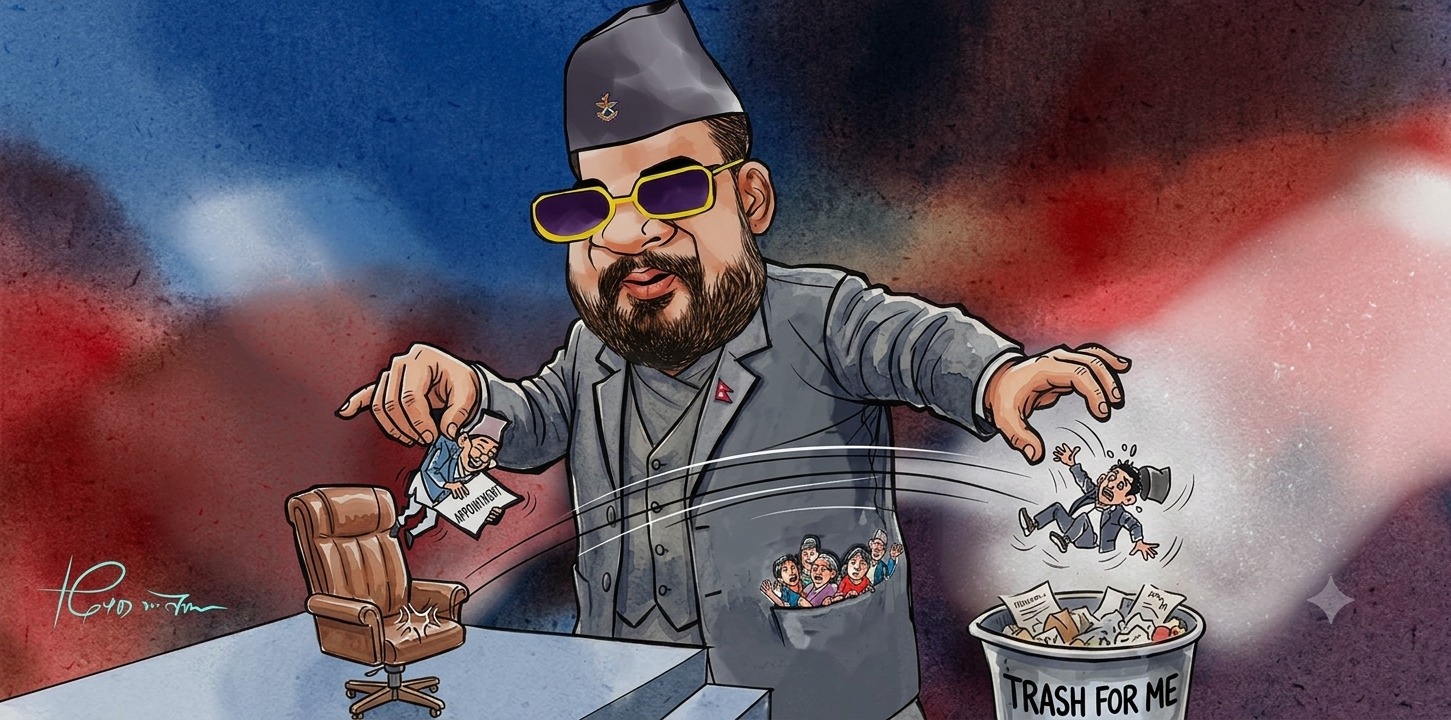
KATHMANDU: The first general convention of the Rastriya Swatantra Party (RSP), held in Chitwan from June 21–26, 2026, amended the party’s constitution and passed a resolution completely banning nepotism and favoritism. Many praised this decision. However, within just a week of the convention’s conclusion, political appointments made by the government tore that idealistic policy to shreds.
On July 1 and 2, 2026, Khadkaraj Paudel (Ganes), the Minister for Culture, Tourism, and Civil Aviation, appointed officials to various development committees and councils. Among them was 52-year-old Siddhi Laxmi Byanjankar from Lalitpur Metropolitan City-10, who was appointed as a member of the Nepal Panchanga Nirnayak Bikas Samiti (Calendar Determination Development Committee).
Siddhi Laxmi is the biological elder sister of Kumar Byanjankar (also known as Kumar Ben), the chief advisor to Prime Minister Balendra Shah. Prior to this, on April 1, 2026, Kumar’s biological elder brother, 55-year-old Siddhi Byanjankar, had been appointed as the chief advisor to Sasmit Pokharel, the Minister for Education and Sports.
Moreover, Kumar himself was appointed directly as the chief advisor solely due to his close ties with Balen. Kumar, Siddhi, and Siddhi Laxmi are all children of Narsingh Byanjankar, the former ward chairman of Lalitpur-10, and Nani Chhori Byanjankar. Balen considers Narsingh to be his political mentor.
On March 27, a government was formed under the leadership of RSP senior leader Shah. During the cabinet meeting held on that very day, a 100-point agenda related to governance reform was approved. The agenda heavily emphasized good governance.
However, on the exact day this agenda, adorned with talk of good governance, was introduced, Prime Minister Shah appointed his inner circle to his secretariat. Shah completely transferred the team that served in his secretariat during his tenure as the Mayor of Kathmandu Metropolitan City to the Prime Minister’s Office.
Kumar Byanjankar was not the only one appointed this way. Bibek Mishra, who served as an IT expert at the metropolis, was appointed as the Information, Communication, and Technology Coordinator of the Prime Minister’s Secretariat. Pradeep Pariyar, a Joint Secretary who was the Chief Administrative Officer at the metropolis, was made the head of the private secretariat. Similarly, Surendra Bajgain, who was a press facilitator at the metropolis, and photographer Binay Shakya were also appointed to the secretariat. Subas Sharma, who was on the RSP’s proportional representation list but missed out on becoming a lawmaker, was appointed as the Chief Personal Secretary, while Asim Shah, who played a role in bridging the alliance between Shah and the RSP, was appointed as the political advisor.
From its inception, the RSP had put forward attractive slogans such as hiring through open competition and implementing meritocracy. RSP lawmakers elected to the House of Representatives in 2022 had selected their personal secretaries through open competition. For instance, the then RSP lawmaker Nisha Dangi had called for applications for the position of personal secretary, requiring a bachelor’s degree in law or political science. Out of 116 applicants, 35 were shortlisted initially, and 19 participated in the written exam and interview. They were evaluated based on computer skills, academic background, knowledge of law and contemporary issues, leadership capacity, and creativity.
RSP leaders, who had arranged open competitions even for selecting lawmakers’ personal secretaries, completely abandoned this method once they reached power.
They did not adopt such procedures when selecting advisors and secretariats for the Prime Minister and ministers, whose salaries and benefits are funded by the state treasury. Instead, they neatly adopted the style of the old political parties. Despite preaching “choose the capable” (Janne lai Chhanne) in speeches and documents, they are ultimately choosing relatives or those close to the party.
By doing so, the government—built on the foundation of the Gen Z protest that championed the cause of good governance—has mocked the spirit and sentiments of that generation. During the protests, the youth fought against the appointment of political cronies to state bodies and started the “Nepo Baby” trend to expose the luxurious lifestyles of the children of politicians and high-ranking officials. As the government born from that very movement crosses its first 100 days in office, commentators are noting that it is beginning to display the “same old habits.”
Civil activist and writer JB Biswokarma states that the problem with the government’s appointments starts right from the secretariat level. He says, “Even in appointments to other bodies, we see relatives of secretariat members, party affiliates, or people close to them. This means that although the party constitution bans nepotism, the reality in practice is completely the opposite. This exposes the hypocritical character of the RSP.”
On July 1, Tourism Minister Paudel appointed poet Tirtha Shrestha, from his own hometown of Pokhara, as the member-secretary of the Pashupati Area Development Trust (PADT). The move has drawn criticism, with opponents arguing that a person close to the minister, lacking experience in managing a World Heritage site like Pashupati, was selected. Shrestha has, however, previously served as the senior vice-chairman of the Bindhyabasini Religious Area Development Committee in Pokhara. He is also a former member-secretary of the Nepal Academy of Music and Drama and a former Pradhan Pancha (mayor) of Pokhara.
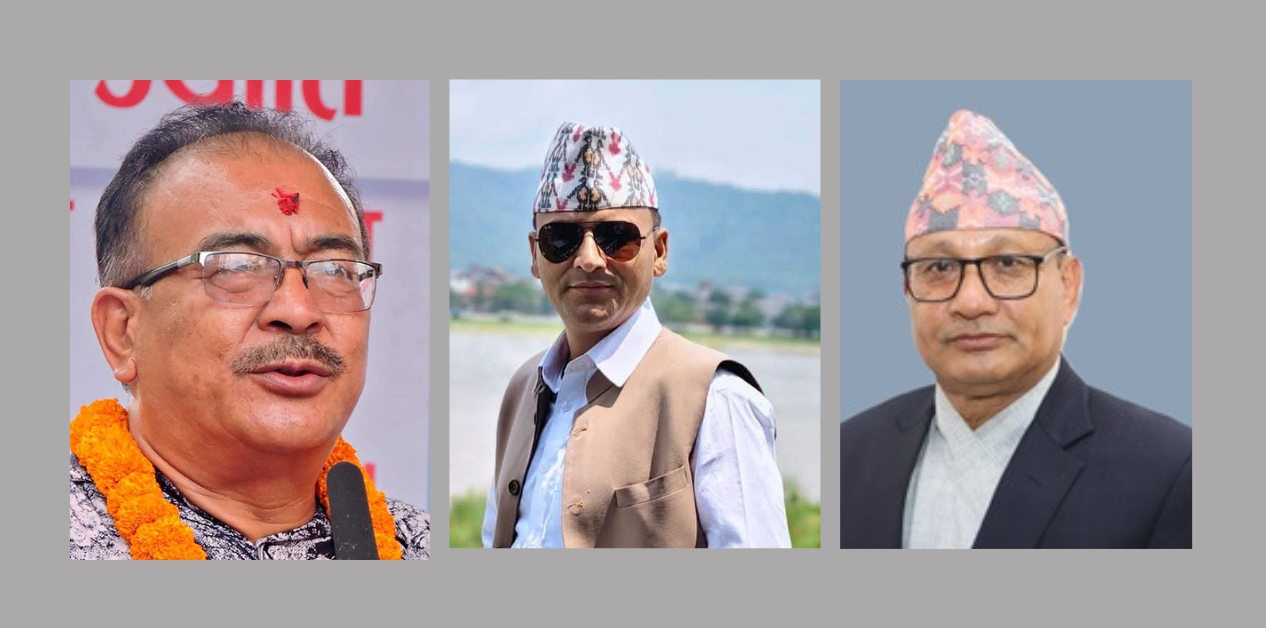
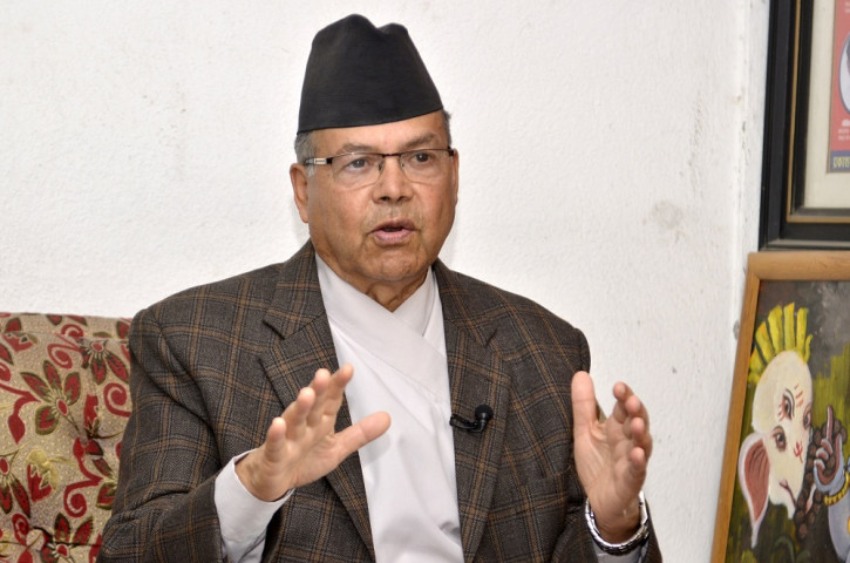
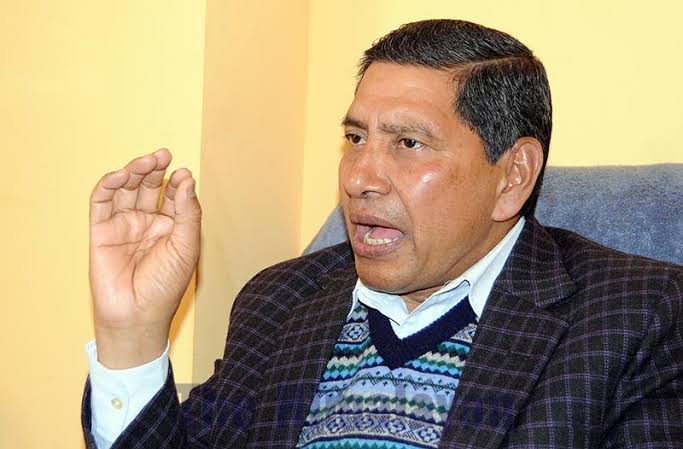
Newly appointed Member-Secretary of the Pashupati Area Development Trust Tirtha Shrestha, newly appointed General Manager of Gorkhapatra Corporation Hikmat Rawal, and Chief Election Commissioner nominee Man Bahadur Karki.
According to Govinda Tandan, a culture expert and former member-secretary of the PADT, the person holding the member-secretary position must have a clear vision for preserving the archaeological artifacts of the Pashupati area, managing pilgrims arriving from various countries, and executing a comprehensive master plan. He notes that the newly appointed Shrestha lacks this experience. He adds that when individuals without comprehensive knowledge enter the Trust, they end up lost and unable to perform, just like in the past. “Previous governments also brought in people from unrelated fields in this manner, which bred anomalies instead of yielding good results. I don’t see the current ones doing any better,” he states.
Minister Paudel has also appointed Meena Kumari Shrestha as the treasurer of the Trust. Those familiar with the matter state that she is an employee at Patan Engineering College and does not possess relevant expertise or background in the field.
Culture expert Tandan mentions that since citizens pinned high hopes on this government, it should have functioned with prudence. However, looking at the government’s actions, the situation does not seem promising. “I thought the new government would do something different, but looking at the recent appointments, it appears they are bringing in their own people rather than those with expertise in the relevant fields. Hopes have died with these actions too,” he says.
Former leaders’ appointment without competition
For the House of Representatives elections held on March 5, 2026, the RSP had released a commitment paper containing a list of 100 tasks, pledging that the party would prioritize good governance if it reached power. Point number 61 of the manifesto explicitly stated: ‘We will free universities and schools from being playgrounds for party politics. We will completely ban the political affiliation of teachers and professors…’
Voters handed the RSP a near two-thirds majority of seats. Yet, on July 1, three days before the government completed its 100 days in office, Kishore Thapa was appointed as the Chairman of the Tribhuvan University (TU) Service Commission. While the government had created a massive buzz by conducting a competitive process and publishing a shortlist to select the university’s Vice-Chancellor, it quietly appointed the Service Commission Chairman. A TU professor remarks, “There was no prior notice; suddenly, we found out about the appointment. We were all stunned.”
Commission member Subba is a former DIG of the Nepal Police and a cyber security expert. The other member, Wagle, is a retired Deputy Government Attorney from the Commission itself. Inclusivity has been ignored in the Commission’s appointments as well.
Previously, the Commission’s chairman used to be selected from among professors. This time, for the first time, Thapa was brought in from outside, that too without any competition. Had there been an open competition for the chairmanship, Thapa’s chances of becoming chairman would have been slim. Firstly, he lacked management experience within a university. Secondly, such competitive processes allocate eight points to PhD holders, alongside additional points for publishing books and writing articles in journals. In that regard, other competing professors or PhD holders would likely have outscored him.
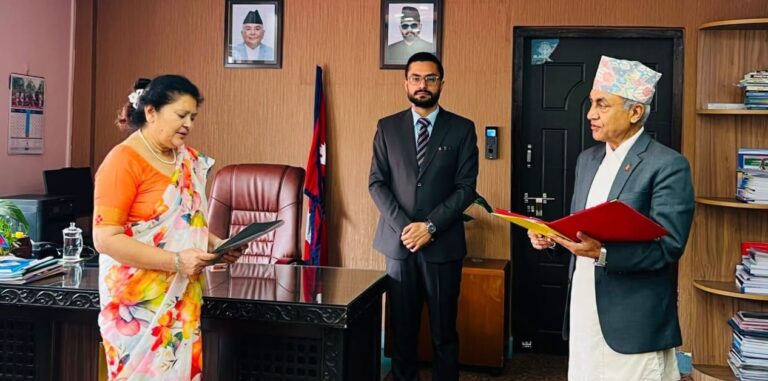
Newly appointed Chairman of the TU Service Commission Kishor Thapa taking his oath of office and secrecy. Photo: RSS
Section 15 of the Tribhuvan University Act, 1992, stipulates that the Chancellor shall appoint one Chairman and one member from among the professors to the TU Service Commission. Another member is sent by the Public Service Commission.
Section 15(2) states that the Chancellor shall appoint the Chairman and one member of the Commission upon the recommendation of a committee chaired by the Pro-Chancellor. Accordingly, on the recommendation of the committee led by Pro-Chancellor and Education Minister Sasmit Pokharel, Prime Minister and TU Chancellor Shah appointed Thapa, a former secretary of the Government of Nepal and an urban planner. Shockingly, the RSP government, which had promised not to let the university become a political playground, shattered its own vows of good governance by appointing Thapa—someone with zero university management experience who was once an active leader of a political party.
Thapa was a mayoral candidate for Kathmandu Metropolitan City in the 2017 local elections. He was a leader of the Sajha Party led by Rabindra Mishra, but since the Sajha Party was not registered with the Election Commission at the time, he ran as an independent candidate. He lost that election after securing 18,496 votes. Bidya Sundar Shakya of the CPN (UML) was elected mayor back then.
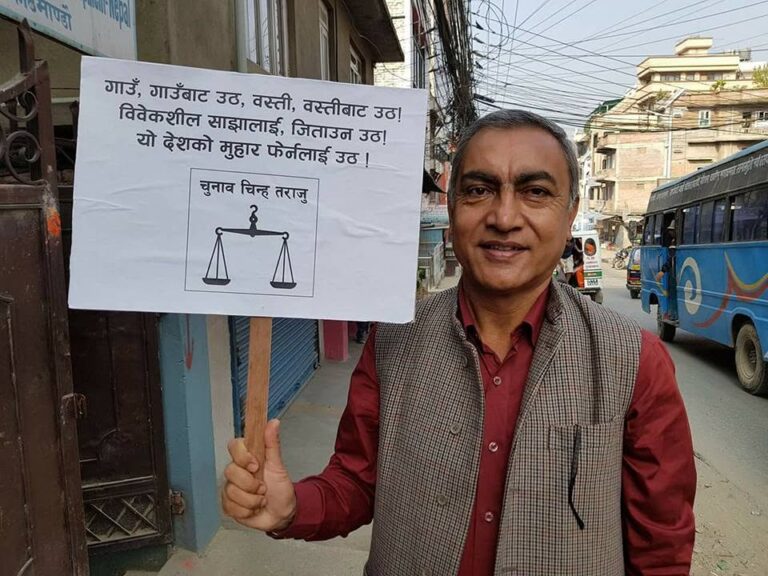
Kishore Thapa campaigning for votes for the Bibeksheel Sajha Party. File Photo
Later, after Sajha Party merged with Bibeksheel Nepali Dal to form the Bibeksheel Sajha Party, Thapa served on its central committee. After Rabindra Mishra entered the RPP with a faction, Thapa resigned from the party on September 20, 2022. Currently, a faction of Bibeksheel has integrated into the RSP.
According to Election Commission records, Thapa was 59 years old when he ran for Kathmandu’s mayor in 2017. By this count, he has now reached 68 years of age.
Legal provisions in Nepal dictate that individuals appointed to constitutional bodies and most public enterprises must not exceed 65 years of age. The law mandates that TU teachers and staff retire upon reaching 63 years of age. On March 30, 2024, the procedure regarding the recommendation of TU Service Commission members was amended for the first time, stipulating that the person appointed as a member must not exceed 65 years of age. Although the same committee recommends both the chairman and the member, the Act does not seem to explicitly define an age limit for the chairman.
Point number 12 of the ‘100 Agendas for Government Governance Reform’ brought by the Balendra Shah-led RSP government states: ‘Public administration shall be completely freed from political interference, making it impartial, neutral, and accountable to citizens. To achieve this objective, it will be mandatory for civil servants, teachers, professors, and all public servants to perform their duties free from any direct or indirect affiliation with any party, group, or interest center, and strict departmental action will be taken in accordance with prevailing laws in case of violation.’ However, even in the appointment of Service Commission Chairman Thapa, the government failed to uphold its own commitment.
Professor Arjun Karki, Vice-Chancellor of Nepal University, notes that the current appointments appear transparent on the surface since they are framed around hiring experts and presenting concept papers. He says, “From the outside, it looks like transparency is being practiced, but what the internal reality is, remains difficult to understand.”
On July 3, the government appointed the Vice-Chancellors of seven universities. However, these appointments have triggered questions for violating the principle of inclusivity enshrined in the Constitution. The government appointed Professor Bhola Thapa as the Vice-Chancellor of Tribhuvan University, Kisan Datta Bhatta at Far-Western University, Rajan Suwal at Mid-Western University, Rishi Ram Kattel at Agriculture and Forestry University, and Shyam Narayan Labh at Rajarshi Janak University. Similarly, Devendra Adhikari was appointed as the Vice-Chancellor of Pokhara University and Sujan Babu Marahatta at Purbanchal University. The government has not yet published the presentations delivered or the marks scored by them during the competition.
Civil activist Biswokarma points out that the appointments made by the government are not inclusive in terms of gender or other demographic clusters. He says, “Even in the shortlists prepared for appointing university officials, the majority were men from the same dominant community. In this manner, under the guise of meritocracy, the government has brought in its own people and the dominant class.”
On June 12, RSP General Secretary Kabindra Burlakoti, speaking at the party’s provincial convention, stated that an extra point would be added to the evaluations of those who go out to villages and inspire people to vote, ensuring that the RSP wins in government appointments. This statement has recently been mocked on social media as the “+1” trend. Civil activist Biswokarma says, “The RSP General Secretary’s speech makes their intentions crystal clear. Their policy is to voice the slogan of ‘choosing the capable’ while selecting their own people. This shows that the current government is even worse than previous ones.”
The same story everywhere
The Constitutional Council meeting held on July 3, recommended Man Bahadur Karki as the Chief Election Commissioner, and IT expert Rajiv Subba and Guru Wagle as Commissioners of the Election Commission. Karki is currently still serving as the Registrar of the Supreme Court.
Last year, during the drafting of the Federal Civil Service Bill, a heated debate took place regarding a “cooling period” for civil servants. A provision was drafted stating that retired or resigned government employees must wait two years before being appointed to another political, constitutional, or position of profit. This timeframe was introduced to prevent retired employees from abusing their access and influence. However, following last year’s Gen Z protest, the bill put forward by the government became inactive when the House of Representatives was dissolved.
Despite the legislative debate favoring a cooling period for retired employees, the RSP government—built on the platform of good governance—has recommended a sitting employee for another high-profile appointment.
According to sources, sitting Registrar Karki was recommended as the Chief Election Commissioner by the Council at the behest of Chief Justice Manoj Kumar Sharma, who is also a member of the Constitutional Council. If one traces the timeline of the appointment of Sharma, whom the RSP “favored,” and the subsequent appointment of Karki, whom Sharma favored, their power dynamic becomes obvious.
In 2019, while KP Sharma Oli was Prime Minister, Sharma was appointed as a Supreme Court Justice before he had even become a senior advocate. A controversy arose at the time, with critics noting that a junior advocate had been appointed as a judge. Sharma, who was originally appointed by a UML government, has now been made Chief Justice by the current RSP government, which simultaneously campaigned on the narrative that it had “cleared out party-affiliated judges.”
This statement has recently been mocked on social media as the “+1” trend. Civil activist Biswokarma says, “The RSP General Secretary’s speech makes their intentions crystal clear. Their policy is to voice the slogan of ‘choosing the capable’ while selecting their own people. This shows that the current government is even worse than previous ones.”
On May 7, the Constitutional Council meeting led by Prime Minister Balendra Shah bypassed senior-most justices Sapana Pradhan Malla, Kumar Regmi, and Hari Prasad Phuyal to recommend the fourth-ranked judge, Sharma, as the Chief Justice. Against the Council’s decision, senior advocate Dinesh Tripathi and advocates Prem Raj Silwal and Gita Thapa filed a writ petition in the Supreme Court on May 8. However, the court administration refused to register the petition—meaning it quashed it. They then filed an application against the quashing. The Supreme Court Rules, 2017, mandate that such an application must be registered and presented to the bench, which then decides whether the Registrar’s decision was right or wrong. However, the Supreme Court held onto the application for a long time without registering it. The applications were sent to Supreme Court Chief Registrar Bimal Paudel and Registrar Man Bahadur Karki for study.
Although the then Acting Chief Justice Sapana Pradhan Malla directed the administration to register the applications against the quashing, the court administration defied the order and refused to register them. During the parliamentary hearing of the proposed Chief Justice, Sharma was explicitly questioned about whether he himself had ordered the administration not to register the applications against the quashing.
Following his parliamentary hearing on May 19, Sharma was confirmed as Chief Justice. It was only on the next day, May 20, that those applications were finally registered. A single bench of the Supreme Court then forwarded that case against Chief Justice Sharma to the Constitutional Bench, which was headed by none other than Sharma himself.
Sharma presided over the case against himself. On June 24, a bench comprising Chief Justice Sharma and justices Kumar Regmi, Binod Sharma, Abdul Azeez Musalman, and Mahesh Sharma Paudel upheld the court administration’s order to quash the writ.
Thus, rumors are rife that Registrar Karki, who put off and refused to register the applications against the quashing of the writ targeting the Chief Justice’s recommendation, secured his appointment as Chief Election Commissioner via Sharma’s proposal.
Furthermore, after the government banned social media, petitions filed against the move in the Supreme Court were quashed by the court on September 7, 2025—exactly one day before the Gen Z protest erupted. The Registrar who quashed the petitions was the very same Karki. Because the court administration blocked even a debate on the government’s move, public outrage intensified. The very next day, on September 8, the Gen-Z movement took off.
Commission member Subba is a former DIG of the Nepal Police and a cyber security expert. The other member, Wagle, is a retired Deputy Government Attorney from the Commission itself. Inclusivity has been ignored in the Commission’s appointments as well.
Defense Bam, a leader of the Gen Z protest, states that the current government appointments are being carried out in the exact style of previous governments. She says, “There is no trace of inclusivity in the current appointments. The new appointments, made after dismissing the choices of the previous government, are filled with their own people. The current government is proving to be even more authoritarian and is moving in the wrong direction compared to the past.”
Former colleague appointed to Gorkhapatra corporation
On July 2, the government appointed Hikmat Bahadur Rawal as the General Manager of Gorkhapatra Corporation. The government had issued an open call for applications, claiming appointments would be based on merit and capability. The Ministry of Information and Communications published a shortlist of 10 applicants. Along with Rawal, the list included Narayan Prasad Sapkota, Bhesh Raj Pandey, Rajan Nepal, Ramchandra Aryal, Rudra Bahadur Khadka, Laxman Karki, Bishwa Raj Khanal, Shantaram Bidari, and Shiva Kumar Bhattarai.
Ultimately, the government appointed Rawal, who was a colleague of RSP Chairman Rabi Lamichhane when he worked at Galaxy Television. Following his appointment, criticism erupted on social media, pointing out that Rawal, who had worked alongside Lamichhane, was hired based on familiarity.
On June 1, the government appointed the former goalkeeper of the Nepali national football team, Bishal Shrestha, as the Vice-Chairman of the National Sports Council (NSC). Similarly, Sikka Suwal Shrestha, Shakti Gauchan, Pawan Shahi, and Monalisa Khambu were appointed as members. The majority of the appointed members, including the Vice-Chairman, lack experience in sports management. Among them, Pawan Shahi is an individual who was injured during the Gen Z protest.
Thus, in almost every appointment, proximity appears to have taken precedence over merit and competence. While widespread questions are being raised, RSP lawmaker Ganesh Karki defended the government during a program, claiming these appointments were made based on contribution and capability rather than nepotism. However, he maintained that the party had never promised to apply meritocracy to secretariats and advisor roles.
During the ‘Prashta Prashna’ show on the Nepal Lead Channel, host Rajendra Baniya questioned lawmaker Karki: ‘Didn’t the RSP promise to bring people through meritocracy?’
Lawmaker Karki replied, “Who said advisors are brought in on merit? Who said secretariats are staffed based on merit?”
Gen Z activist Bam concludes that looking at the appointments and actions of the current government, it appears no different from its predecessors. She states that although the Gen Z protest fought for change, no sign of that transformation is visible as the government crosses its 100-day mark. “Looking at the current state of affairs, one does not feel a sense of change in any way. Squatters have been evicted without a plan, leaving them in misery. Even after coming to power through such a massive uprising, we did not get a government that is sensitive to its citizens,” she says.