Kathmandu
Sunday, June 28, 2026





Driven by desperate needs for healthcare, family expenses, and business survival, low-income citizens borrow small amounts only to find their property confiscated and their lives cut short by the devastating cycle of loan sharking
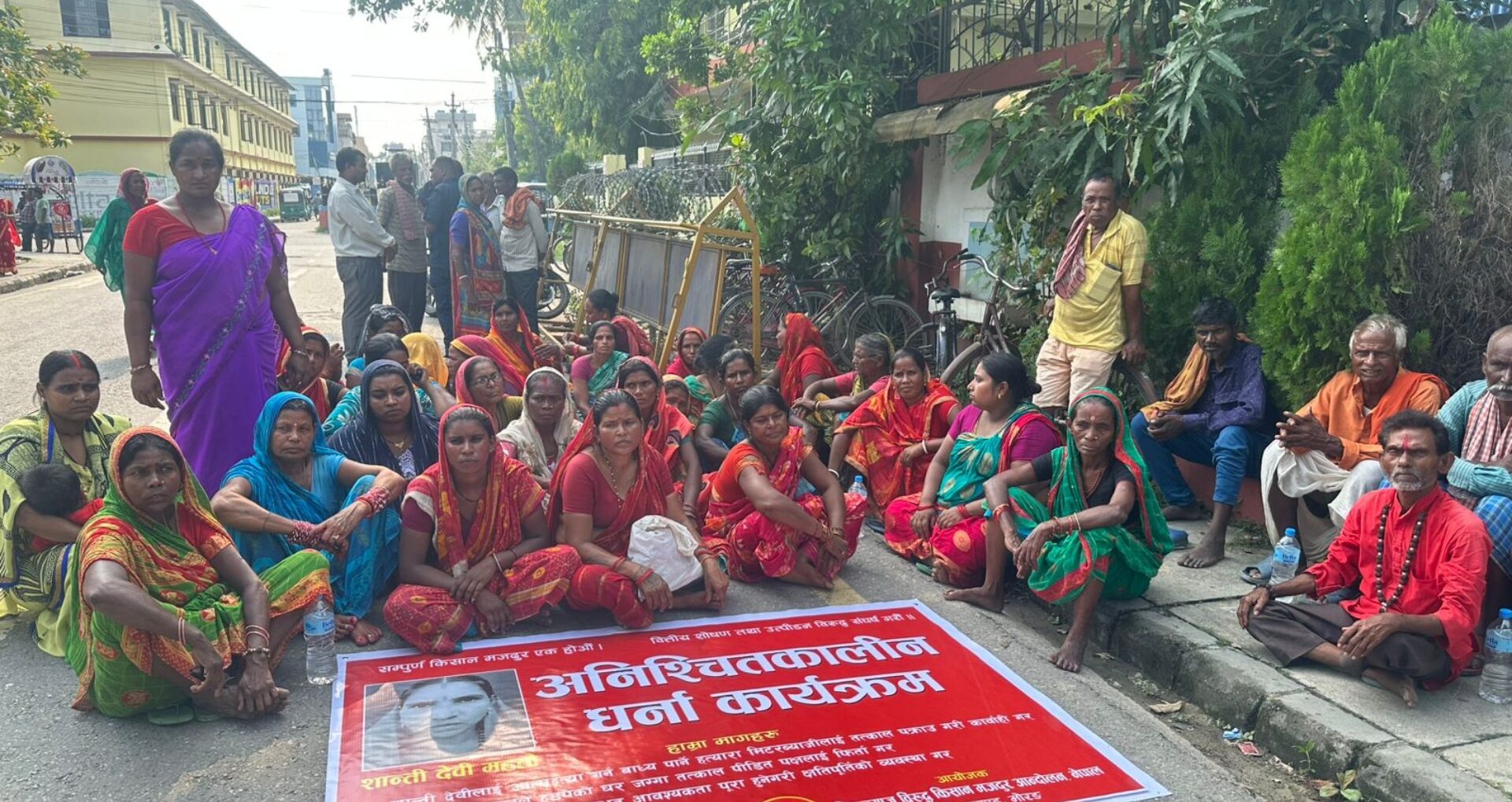
MORANG: Shanti Devi Mahato of the Mahat settlement in Ward 14 of Biratnagar Sub-Metropolitan City borrowed Rs 150,000 from a local moneylender 11 years ago for her daughter’s broken leg treatment. Because of that very debt, the family’s homestead fell into extreme jeopardy, leading 53-year-old Shanti Devi to end her own life.
She had taken the Rs 150,000 on September 28, 2015, at a monthly interest rate of 5 percent from Ambika Kumari Raya, of the same locality. When providing the loan, Ambika laid down a condition: the land had to be transferred. Under the immense stress of needing immediate treatment for her daughter, Shanti Devi passed the 10-dhur (approximately 169.31 square meters) land under plot number 3446, registered in her name, over to Ambika.
Over time, she paid Rs 90,000 in interest. However, claiming that the principal amount could not be paid, Ambika sold Shanti Devi’s land on June 28, 2016, for Rs 150,000 to Sundari Devi Gupta, the wife of Shri Narayan Gupta of Biratnagar-14.
Upon discovering that the land containing her own house had slipped from her hands, Shanti Devi panicked. She started seeking loans from various cooperatives to pay the Gupta family. According to Shanti Devi’s family, because they had to pay loan-shark interest rates to the Gupta family, they were unable to redeem their land even after paying Rs 465,000.
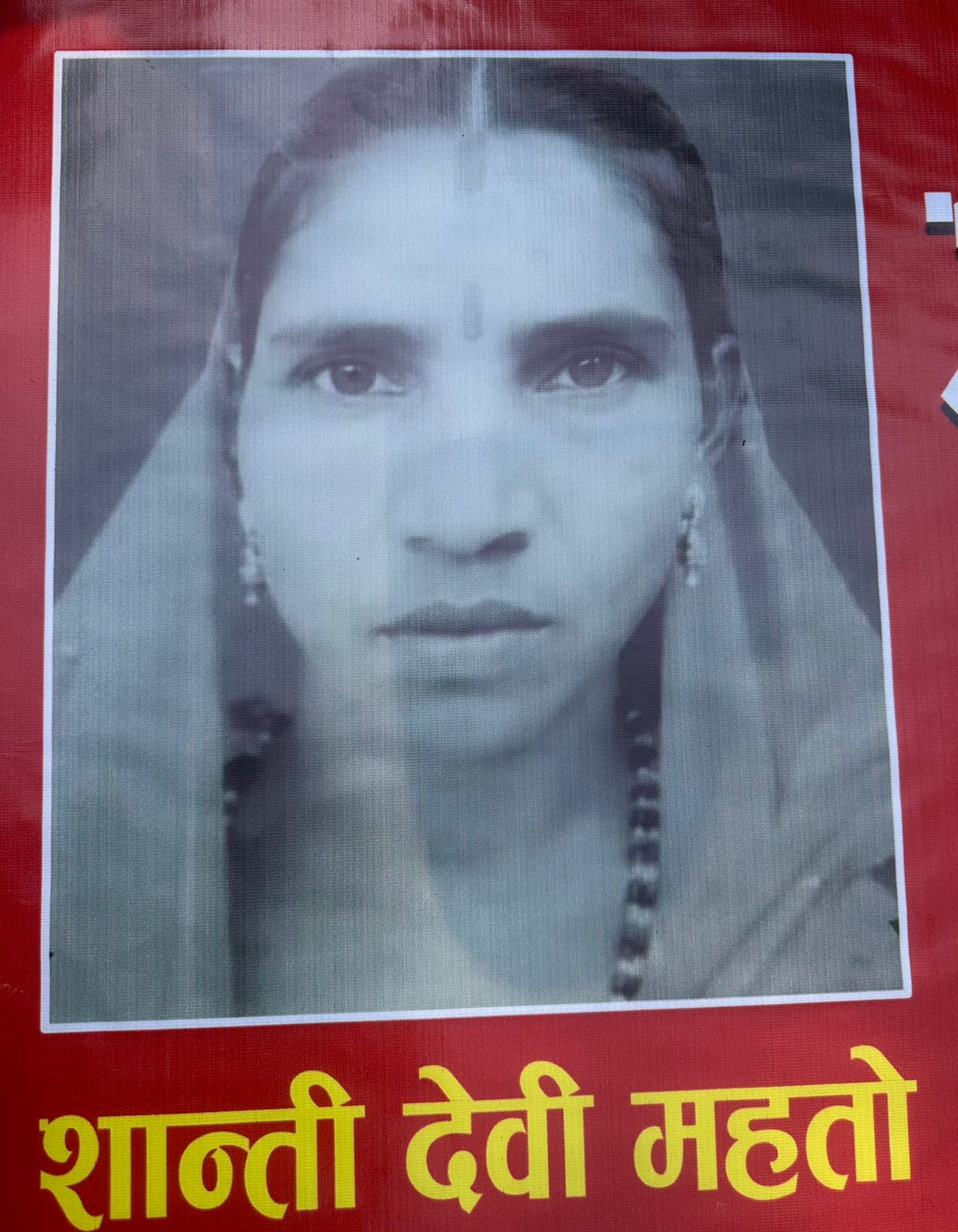
Shanti Devi Mahato
“Through hard labor, we have already paid over Rs 450,000, including principal and interest across multiple installments,” says Shanti Devi’s husband, Bhoma Mahato, with his eyes filled with tears. “But even after receiving the money, Narayan refused to return the land. Instead, he harassed us by filing a case against us in court.”
According to the family, on the afternoon of June 20 this month, Shri Narayan, his wife Sundari Devi, and son Aman Gupta reached Shanti Devi’s house and pressured her to vacate the land. The next day, Shanti Devi was found dead, hanging inside that very house.
Struggle for justice
Following Shanti Devi’s death, relatives and neighbors launched protests starting June 22. They demanded justice, claiming that Shanti Devi committed suicide due to loan-sharking harassment. They staged a sit-in at the main gate of the District Administration Office, Morang, demanding action against the loan shark and the return of the seized land. On June 23, a five-point agreement was reached between the victim’s family and the District Administration Office. The protest was suspended following the agreement.
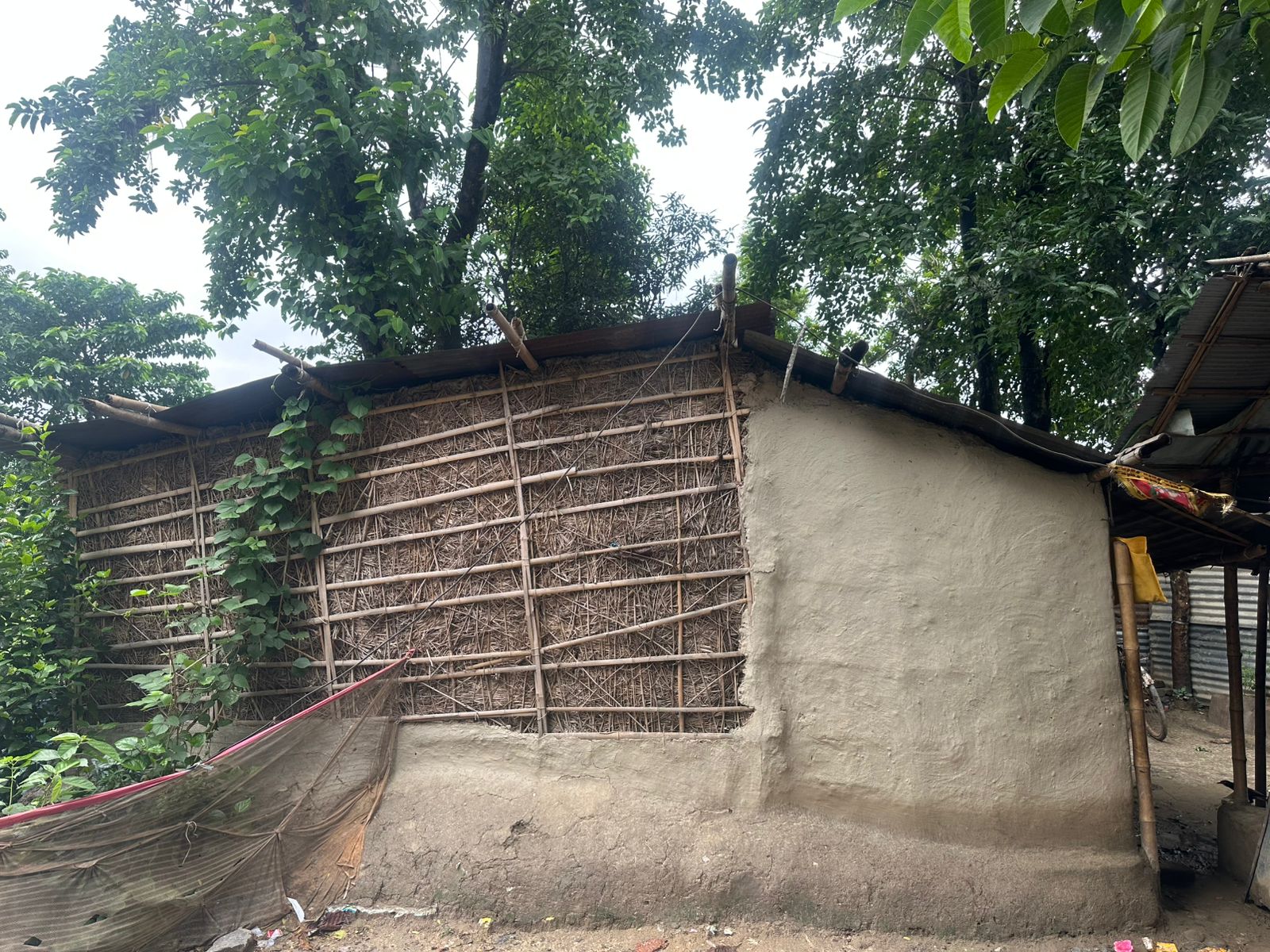
The house of Shanti Devi Mahato of Mahat settlement in ward 14 of Biratnagar Sub-Metropolitan City
The agreement reached between Assistant Chief District Officer Saroj Koirala and the victim’s side mentions conducting an impartial investigation into the incident, providing justice to the victim’s family, and pushing forward legal action against the accused. Similarly, it was agreed to initiate coordination with the Chamber of Commerce and Industry, Morang, to secure employment for Shanti Devi’s husband,
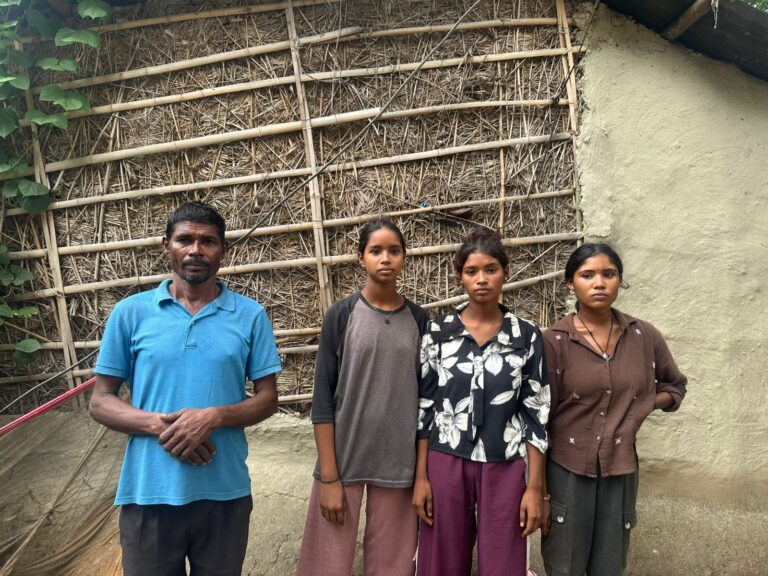
Bhoma Mahato and his daughters
, based on his qualifications and to arrange scholarships through PABSON Morang for the secondary-level education of the deceased’s two daughters. During that process, agreements were also made to recommend the two daughters to the Ministry of Home Affairs for higher education and to take initiatives to untangle legal complexities related to loan sharking.
According to the Ward Chairman of Biratnagar-14, Surya Narayan Mahato, locals had repeatedly advised the Gupta family not to commit injustice against the victim’s family. “We said many times such tyranny should not be inflicted on the poor,” Mahato says. “But our words went unheeded. Now, a destitute family has had to suffer such trauma.”
Following Shanti Devi’s death, the victim’s family filed a first information report regarding abetment of suicide at the Area Police Office in Rani, Biratnagar. Immediately after, the police arrested Shri Narayan and his son Aman, remanded them in judicial custody after presenting them at the Morang District Court on June 22, and moved the investigation forward, as stated by the Morang police chief, Superintendent of Police Kabit Katawal. The police stated that Sundari was released on a recognizance bond due to health reasons.
Although the hope for justice has grown after the agreement with the administration, relatives remain deeply pained that the loss of life cannot be compensated. Neighbor Bindhu Mahato says, “What kind of justice is it that despite paying Rs 450,000 for a loan of Rs 150,000, the land is still not returned? Out of the deceased’s six daughters, three remain unmarried; what will be their future now that their mother is gone?”
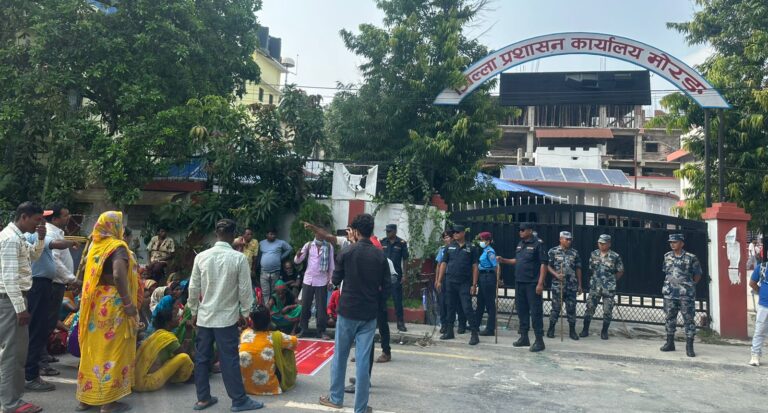
Relatives of the deceased sit on a sit-in in front of the District Administration Office, Morang
Justice post-death
The reality of 58-year-old Mahesh Lal Mandal of Biratnagar-18, Lawaghat, is similarly tragic. In around 2011, he borrowed Rs 160,000 from local Sunil Sah by mortgaging 4 Kattha (approximately 1015.89 square meters) of land. However, even after Mandal paid Rs 470,000, Sah did not return the land. Claiming that an additional nearly Rs 2 million was still outstanding, he continued to occupy the land.

Mahesh Lal Mandal
According to the family, Mahesh Lal frequented various government agencies for one year to get his land back. Leading other loan-sharking victims, he also reached the District Administration Office, Morang. Discussions took place multiple times at the administration, which also became news. After pressure mounted, Sah signed an agreement on August 8, 2024, to return the land of six victims, including Mahesh Lal. The land ownership certificate was also issued.
However, Mahesh Lal never got to see the land ownership certificate. He had already passed away on July 29, 2024.
“The lost land came back, and it was his greatest wish to see the ownership certificate before dying,” says his wife, Sumitra Devi. “But that wish remained unfulfilled.”
On the other hand, 65-year-old Laxmi Sah of the same village received her 17 Dhur of land back after eight years. She states that when she took a loan of Rs 100,000, the lender created a non-possessory promissory note worth Rs 900,000. Now that the land ownership certificate is in her hands, she looks relieved, but she has not found the answer to her question: “Why was it so difficult to get my own land back?”
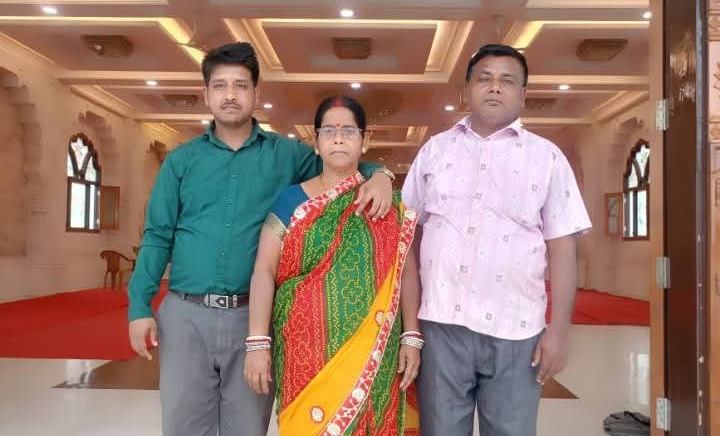
Loan sharks
Lives lost due to delayed justice
The 32-year-old Binit Sonar of Katahari-3, Morang, had borrowed Rs 700,000 for business. However, even after he paid Rs 1.5 million, the lender showed an outstanding balance of Rs 1.2 million, according to the family. When a complaint was lodged regarding this, the administration gave them time, telling them to ‘come back after settling it mutually.’ While exiting the District Administration Office on July 22, 2024, Sonar consumed poison right at the gate. He passed away during treatment at Nobel Hospital, Biratnagar.
Raju Kebat of Biratnagar also ended his life due to an Rs 500,000 loan taken to manage household expenses, as claimed by his family. He had already paid Rs 1.2 million in the name of interest. Nevertheless, after the lender kept demanding more money, Kebat approached the police. However, the family complains that no hearing took place regarding the application submitted to the police. He ended his own life on July 23, 2025.
Terrifying Consequences
These are merely representative incidents of individuals forced to end their lives helplessly while continuously paying loan-shark interest rates on debts taken for medical treatment, household expenses, and business. The number of complaints registered at the District Administration Office, Morang, indicates that the consequences produced by loan sharking are terrifying. In the current fiscal year up to June 11 this month, at least 224 new complaints have been registered at the District Administration Office, Morang. Among them, settlements have been reached in 80 cases, while agreements have not yet been reached in 144 petitions. According to the administration’s records, following the settlements, approximately 74312.08 square meters of land have been returned to the victim families. In terms of cash, more than Rs 93.1 million has been refunded.
Insufficient state initiatives
After victims began protesting, the government initiated steps in 2022 to solve problems related to loan sharking. During that process, through a decision at the then home minister level, a task force was formed on August 12, 2022, under the coordinator joint secretary Bhishma Kumar Bhusal of the Ministry of Home Affairs to recommend measures to control loan-sharking crimes. The task force submitted a report to the government showing that by September 11, 2022, at least 2,289 complaints had been lodged at district administration offices and district police offices across the country. Among them, 59 complaints were settled, seven complaints were undergoing court cases, and seven complaints were under police investigation.
However, because the problem was not solved, the victims launched protests once again. Following this, the government formed an inquiry commission on unauthorized transactions in the first quarter of 2023, led by the former chairperson of the Special Court, Gauri Bahadur Karki. When the commission collected victim applications from April 30 to May 29, 2023, around 24,000 applications were received. Victim assistance desks were placed in all 77 District Administration Offices to collect applications, and arrangements were also made to fill out forms online.
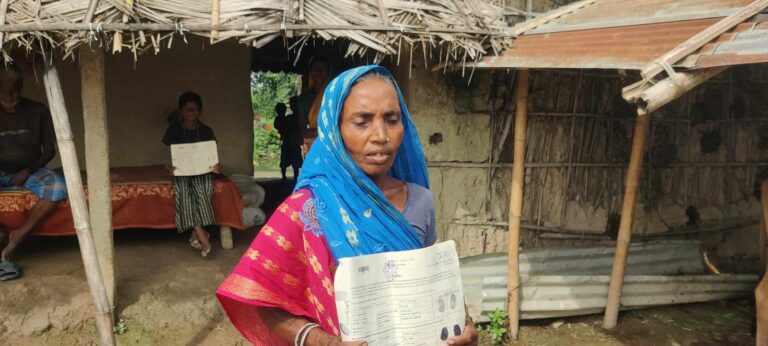
After a long struggle to retrieve her property, Laxmi Sah of Biratnagar-18 presents her newly recovered land ownership certificate
The details from the first commission showed that the hotspots of loan sharking were Madhesh Province and Paschim Nawalparasi. Out of just nine districts, more than 20,245 applications were filed, including 18,356 from the eight districts of Madhesh and 1,889 from Paschim Nawalparasi. The progress report of the commission mentioned that 199 applications were filed from Morang at that time.
Since the problem persisted even after that phase, the government formed another commission on March 28, 2024, led by the former High Court judge, Tej Bahadur Karki. In that commission, 29,878 complaints regarding unauthorized transactions were registered from across the country. Following that, to settle the remaining complaints and resolve legal complexities, another commission was formed on March 10, 2025, under the chairmanship of Baburam Regmi.
Despite gathering complaints through various commissions in this manner, cases related to loan sharking have recently been resolved at the district level itself. For this purpose, mechanisms under the coordination of the Assistant Chief District Officer conduct discussions and settlements and initiate legal actions if necessary by bringing lenders and victims together. However, due to a high volume of complaints, weak evidence, legal documents available with the lender’s side, and a lack of coordination between the administration and courts, victims are not receiving justice on time.
Sheltering behind legal complexities
The Chief District Officer of the District Administration Office, Morang, Yubraj Katel, states that legal complexities are the main obstacle to controlling loan sharking.
“There is a lack of coordination between the administration and the judiciary,” Katel says. “Loan sharks commit fraud by perfectly arranging all paperwork. Victims have the facts, but they do not have the evidence. When we issue arrest warrants, they come back with stay orders from the court. This gap between the executive and the judiciary has made work difficult.”
According to Katel, the administration has currently placed 100 complaints under high priority. “If someone has reached a state of committing suicide or someone is about to become completely landless, we have given priority to such cases,” he says.
The Morang Police Chief, Superintendent of Police Kabit Katuwal, states that strict action will be taken against those engaging in unauthorized transactions. “We are looking at these incidents with high seriousness,” Katuwal says. “If it is found that a suicide occurred due to someone’s harassment, we are filing abetment of suicide cases.”
Experts emphasize eradicating the root cause
According to Sunil Kumar Bhagat of Biratnagar, who has been fighting on behalf of loan-sharking victims, the web of loan sharking has affected not only low-income citizens but also middle-class entrepreneurs. He states that although mortgaged land has recently begun to be returned after significant struggles, situations where individuals lose their lives due to loan-sharking stress have not stopped. He says, “Until the laws regarding unauthorized transactions are fully implemented and lenders stop using courts as a shield, loan sharking will remain a lifelong trap for the poor.”
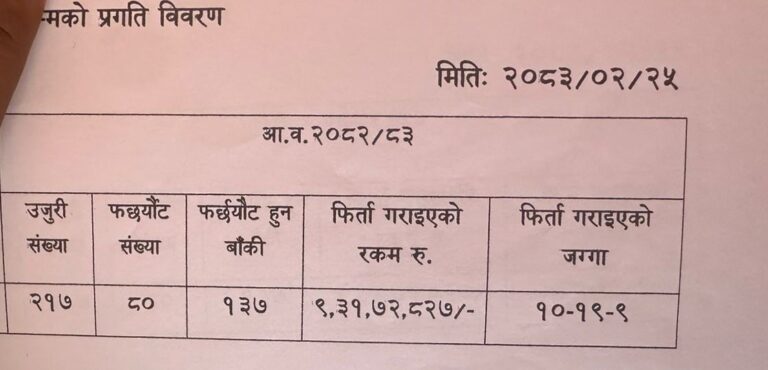
Documented complaints concerning loan-sharking activities submitted by residents to the District Administration Office, Morang, up to June 8
Economist Professor Ramesh Adhikari considers the tendency of seizing common people’s land and collecting exorbitant interest in the name of personal transactions a crime. “Due to the tedious procedures of banks and their tendency to not trust the general public, people are forced to take personal loans. Taking advantage of necessity to turn 100 into a thousand and a thousand into 20,000 to devour the assets of the destitute is a major crime,” Adhikari says. “Those who take advantage of situations to enforce loan sharking on less literate people and plot to seize land must be punished like criminals.”
He explains that destitute citizens from villages, rather than cities, are falling into such nets of exploitation. “The government must formulate a strong policy to bring such exploiters to the court of law,” he says. “Conscious citizens must also raise their voices against such malpractices.”
Sociologist and Assistant Professor at Degree Campus, Biratnagar, Ram Prasad Pokharel states that loan sharking should not be considered merely a personal transaction between a lender and a borrower. “When people fall into the vicious cycle of poverty and unemployment, they find themselves forced to seek money to get past immediate problems,” Pokharel says. “Taking advantage of that very necessity creates an environment for exploitation.” Therefore, he opines that punishing the lender is not sufficient to control loan sharking.
He mentions that because poverty, unemployment, lack of access to formal banking, and weaknesses in law enforcement push destitute families toward lender loans, arrangements providing easy credit, economic security, and legal protection to destitute citizens must be strengthened. “Punishing the criminal is necessary,” Pokharel says. “But a long-term solution to the problem will happen only if the state works to discover the cause behind the crime and eradicate it.”