Kathmandu
Tuesday, June 30, 2026





Nepali travelers heading to Australia must follow strict visa, customs, and biosecurity rules, where even undeclared food or small mistakes can lead to fines, confiscation, or visa problems

KATHMANDU: Nepali citizens planning trips to Australia for tourism, study, work, or family visits must navigate strict immigration, customs, and biosecurity requirements. As of May 2026, Australia maintains some of the world’s toughest border protections to safeguard its unique environment from pests and diseases.
All travelers complete an incoming passenger card and declare items honestly. Nepalis typically need a visitor visa (Subclass 600) or appropriate student/work visa, with genuine temporary intent and financial proof required.
Violations, especially undeclared food or biosecurity risks, can lead to fines, item seizure, visa cancellation, or future entry bans. Understanding these rules helps ensure smooth arrival and avoids costly mistakes at Australian airports.
What visa options do Nepali citizens need to enter Australia?
Nepali passport holders require a valid Australian visa before travel since they are not eligible for visa-on-arrival or electronic travel authority like some nationalities.
The most common choice for short tourism or business visits is the visitor visa (Subclass 600) in the tourist or business stream, which can allow stays of three months, six months, or up to twelve months depending on the stream and the officer’s assessment. Applicants must show strong ties to Nepal, sufficient funds, and the intention to return after the visit.
For longer stays, student visas demand confirmation of enrollment and overseas student health cover, while skilled work or family visas have separate pathways with points tests or sponsorship.
As of 2026, applications are mostly online through the Department of Home Affairs, with health and character checks mandatory. Processing times vary, so Nepalis should apply well in advance and provide clear documents like bank statements, employment letters, and property proofs to demonstrate temporary intent.
Failure to meet these can result in refusal, affecting future applications. Nepali student applicants should also note that as of January 8, 2026, Australia moved Nepal back to Assessment Level 3 from Assessment Level 2 under the Simplified Student Visa Framework, meaning student visa applications from Nepal now face more rigorous scrutiny and require stronger, clearer documentation. Always check the official Department of Home Affairs website for updates before submitting.
What food items are allowed or prohibited when flying from Nepal to Australia?
Australia’s biosecurity rules are extremely tight to protect agriculture and native species. Fresh fruits, vegetables, meat, dairy products, eggs, seeds, live plants, and most homemade or unpackaged foods from Nepal are generally prohibited and must not be brought. Even packaged items like spices, dried herbs, pickles, nuts, or traditional Nepali snacks such as beaten rice (chiura) or sweets often require declaration and may be confiscated if they pose risks.
Commercially sealed, commercially manufactured items like chocolates, biscuits, or coffee in original packaging have a better chance if declared. Travellers should dispose of any risky food in airport bins before reaching customs.
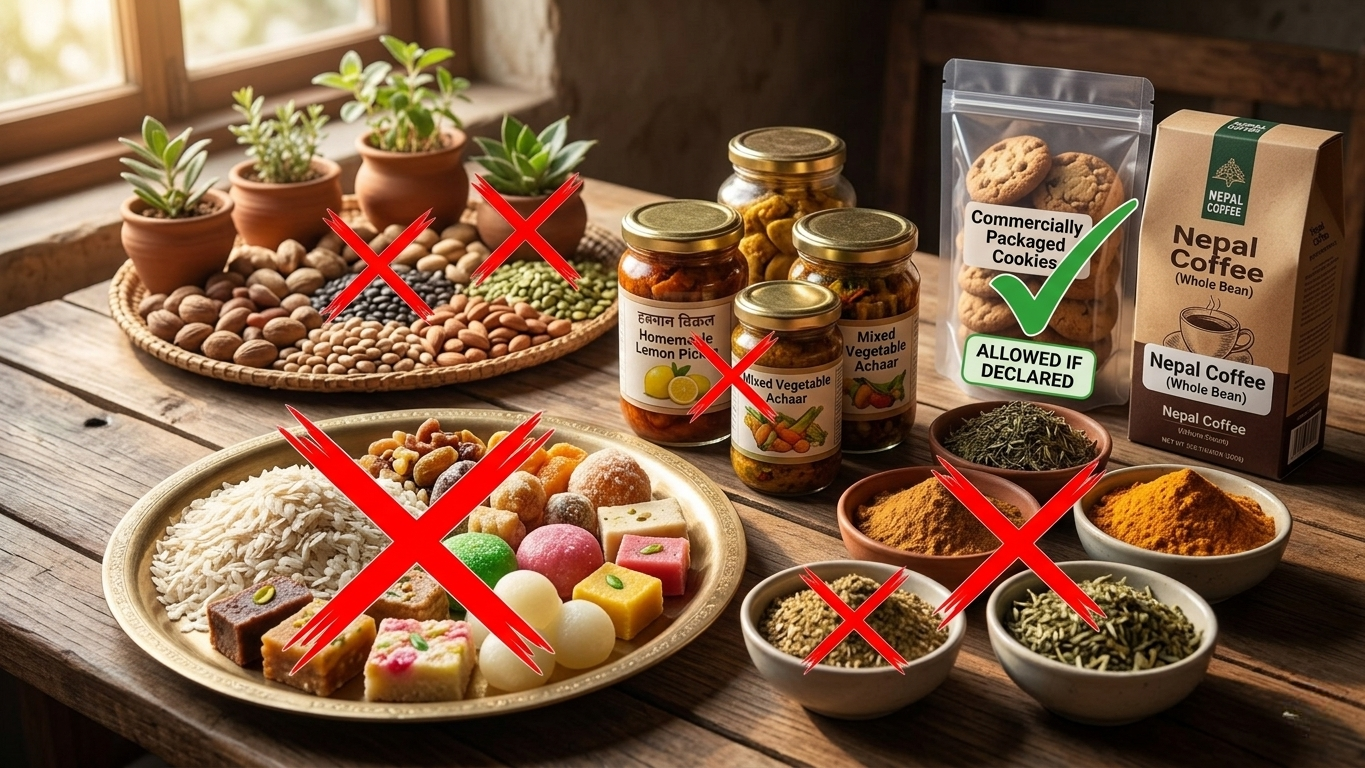
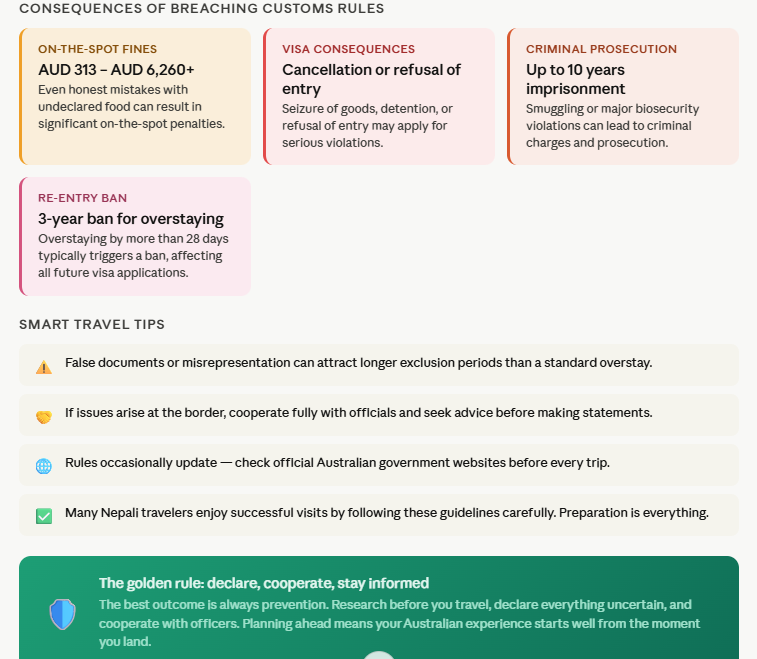
Undeclared food can attract on-the-spot fines starting from around AUD 313 and reaching up to AUD 6,260 depending on severity, along with item seizure and potential visa cancellation. Nepali travelers are advised to enjoy local Australian food or buy permitted items after clearance rather than risk bringing favorites from home. Always declare everything doubtful on the Incoming Passenger Card.
What medicines and personal health items can Nepalis carry into Australia?
You can bring personal prescription medicines for your own use, but strict limits apply. Carry them in original packaging with a doctor’s prescription or letter explaining the condition, name of the medicine, and dosage. Quantities should not exceed a three-month supply unless special permission is obtained through the Therapeutic Goods Administration’s Special Access Scheme.
Herbal remedies, Ayurvedic medicines, vitamins, or supplements containing animal or plant extracts must be declared, as they can fall under biosecurity rules. Over-the-counter painkillers or common tablets are usually fine in reasonable amounts. Prohibited substances include steroids, certain performance-enhancing drugs, or anything without proper documentation.
Nepali travellers often bring traditional medicines, so checking the Therapeutic Goods Administration guidelines beforehand is wise. Undeclared or suspicious medicines can lead to inspection, delays, or legal trouble. Keep all items in hand luggage for easy access during screening and prepare supporting documents to speed up the process.
How much cash or valuables can you bring, and what needs declaration?
You may carry any amount of cash, but amounts of AUD 10,000 or more (or foreign equivalent) must be declared on the Incoming Passenger Card to comply with anti-money laundering rules. This includes currency, traveler’s checks, or money orders.
There is no limit on personal jewelry or electronics for your use, but new or expensive items exceeding the duty-free allowance of AUD 900 per adult (or AUD 450 for children under 18) may attract customs duty and goods and services tax. Importantly, if the total value of goods of a particular type exceeds your allowance, duty applies to all items of that type, not just the amount over the limit.
Nepali travellers should carry proof of purchase for valuables to avoid questions on return or during inspection. Debit or credit cards do not need declarations. It is smart to use a mix of cards and limited cash for safety. Failure to declare large cash sums can result in seizure and penalties.
For most tourists from Nepal, staying under the threshold while having access to funds via banking apps avoids complications.
What are the biosecurity rules for clothing, shoes, and outdoor gear?
Australia pays special attention to items that might carry soil, seeds, or pests. Hiking boots, sports shoes, camping equipment, or any clothing used in rural areas or near animals in Nepal must be thoroughly cleaned and declared. Even small traces of dirt can lead to inspection, cleaning at your expense, or destruction.
Wooden souvenirs, handicrafts, or untreated items may also need treatment or be refused. Nepali travellers bringing traditional items or trekking gear should clean them meticulously before packing and declare them honestly. This rule protects Australia’s environment from invasive species.

Declaring does not usually incur fines if you are cooperative, but hiding such items can result in heavy penalties. Pack these in easily accessible luggage to facilitate quick checks at the border.
Are there restrictions on alcohol, tobacco, and duty-free goods for Nepali arrivals?
Adults over 18 can bring limited duty-free alcohol (up to 2.25 liters) and tobacco (one unopened packet of up to 25 cigarettes or 25 grams of tobacco, plus one open packet of cigarettes) without paying extra duty, provided it is for personal use. These must be declared if exceeding allowances. Excess quantities may attract taxes or seizure.
Nepali travellers often buy these at departure airports, but they must stay within limits upon Australian arrival. Electronic cigarettes and vaping devices are allowed but with nicotine restrictions in some cases. Always check current allowances, as they can change.
Undeclared excess can lead to penalties. For most short trips, buying small amounts locally in Australia after arrival is simpler and avoids border hassles.
What prohibited items should Nepali travelers avoid bringing entirely?
Strictly prohibited items include illegal drugs, weapons, firearms, ammunition, endangered wildlife products, counterfeit goods, and certain cultural artifacts. Fresh or preserved meat products, soil, live animals or plants, and pornographic material are also banned.
Australia protects its ecosystem and society rigorously. Nepalis should avoid bringing any animal horns, feathers, shells, or traditional medicines with unclear ingredients without checking.
Even gifts like wooden carvings may need permits if from protected species. Attempting to bring prohibited goods can result in immediate seizure, fines, visa cancellation, or criminal charges in serious cases. Research using official biosecurity tools before packing and err on the side of caution by leaving doubtful items behind.
What immigration and character requirements apply specifically to Nepali applicants?
Australian authorities assess all applicants for genuine temporary stay, good character, and health standards. Nepali applicants must provide police clearance certificates, health examinations if required, and evidence of ties to Nepal such as family, property, or employment.
Overstaying or previous visa violations anywhere can affect approval. As of 2026, student applications from Nepal face extra scrutiny under Assessment Level 3, which requires stronger documentation including a well-structured Genuine Student statement, proof of funds, and verifiable academic records. Provide truthful information and complete financial proofs showing you can support yourself without working illegally. Genuine students need confirmation of enrollment and adequate funds.
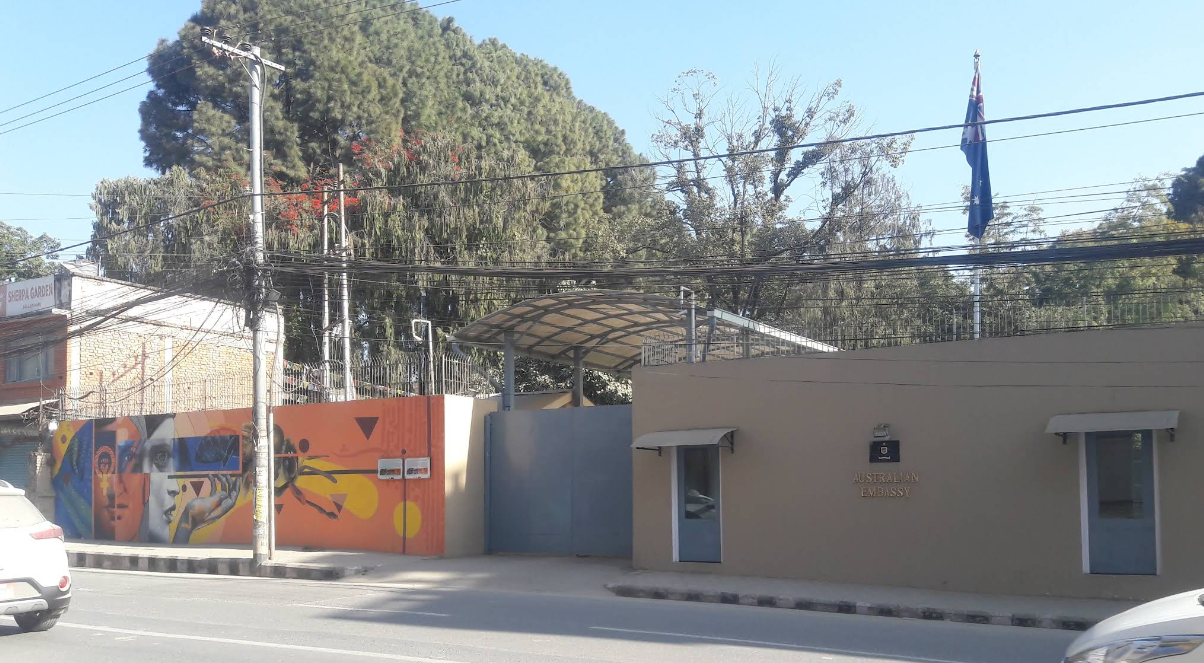
Australian Embassy in Kathmandu. File photo
Misrepresentation can lead to permanent bans. Consulting registered migration agents or applying through the official Department of Home Affairs online portal helps Nepalis prepare stronger applications.
How should Nepali travelers prepare for arrival and customs inspection?
Complete the Incoming Passenger Card honestly on the flight. Have your passport, visa approval, and supporting documents ready. Be polite and cooperative with officers and biosecurity staff who use X-rays, dogs, and questions. If you declared items, follow their instructions.
Download the Australian apps or check official sites for latest alerts. Pack smartly by separating potential declaration items. Nepalis flying via transit countries should ensure no prohibited items remain in luggage.
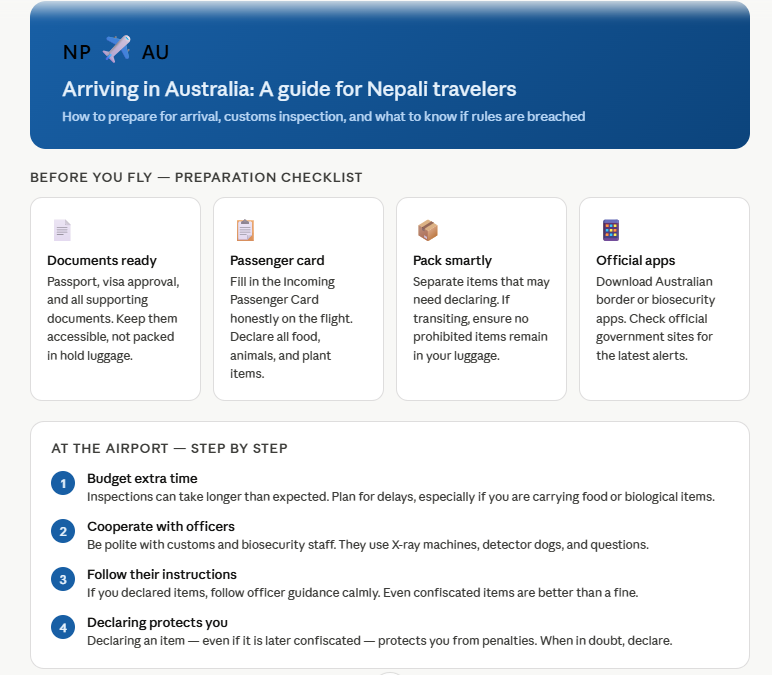
Budget extra time at arrival for possible inspections. Planning ahead reduces stress and helps enjoy your Australian experience from the start. Remember, declaring protects you from penalties even if items are later confiscated.
What happens if you breach Australian customs or biosecurity rules?
Breaches can lead to on-the-spot fines ranging from AUD 313 to over AUD 6,260, seizure of goods, visa cancellation, detention, or refusal of entry. Serious offenses such as smuggling or major biosecurity violations can lead to criminal prosecution and up to ten years imprisonment.
Overstaying a visa by more than 28 days typically triggers a three-year re-entry ban from Australia, which affects future visa applications. Misrepresentation or providing false documents can attract longer exclusion periods.
Even honest mistakes with undeclared food can delay you significantly. Authorities prioritize education but enforce rules firmly to protect the country. The best outcome is prevention through research and declaration. If issues arise, cooperate fully and seek advice from officials.
Many Nepali travelers enjoy successful visits by following these guidelines carefully. Staying informed via official government websites ensures compliance as rules occasionally update.