Kathmandu
Wednesday, June 17, 2026





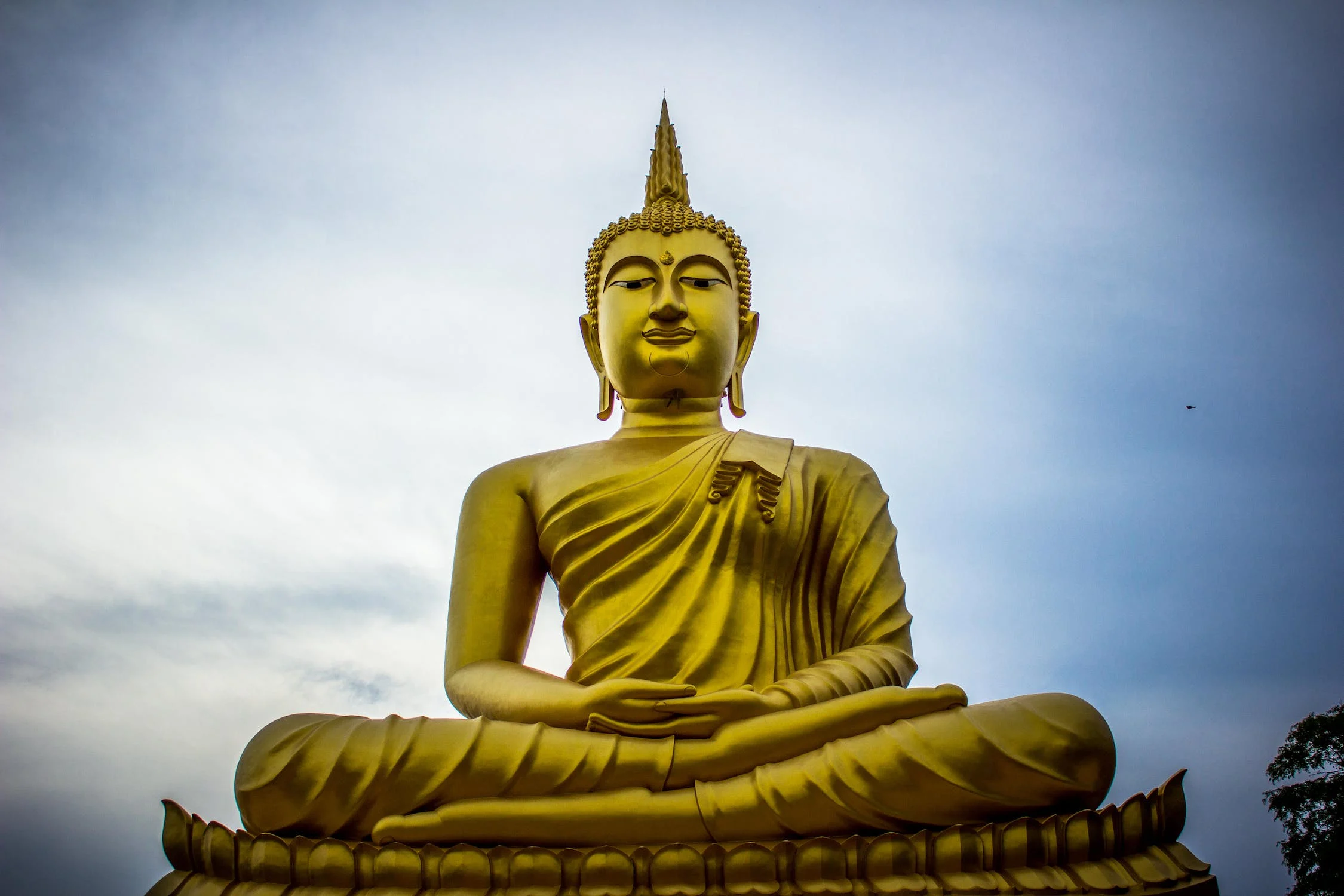
KATHMANDU: Today, Friday, May 1, 2026, Buddhists across Nepal, India, and the wider world observe Buddha Jayanti, also known as Buddha Purnima. This is the 2570th birth anniversary of Siddhartha Gautama, the founder of Buddhism.
The day is sacred not for one reason but three: it marks the birth, enlightenment, and final passing of the Buddha, all believed to have fallen on the same full moon. It is a day of prayer, compassion, and quiet reflection.
Who was the Buddha and where was he born?
The Buddha was born Siddhartha Gautama around 563 BCE in Lumbini, in what is now southern Nepal. He was the son of King Suddhodana, ruler of the Shakya clan, and Queen Maya Devi, who gave birth to him while traveling through a garden grove. His name, Siddhartha, means “one who achieves his goal” in Sanskrit.
The word ‘Buddha’ itself is not a personal name but a title, coming from the Sanskrit root “budh,” meaning to awaken or to know. It is given to those who attain enlightenment. He was a historical human being, not a god, born into royal luxury at a time when the Indian subcontinent was alive with philosophical and spiritual seeking.
From the very beginning of his life, a sage predicted he would either become a great king or a great spiritual teacher. His father, anxious for his son to rule, shielded the young prince from every form of suffering, surrounding him with comfort, beauty, and pleasure within the palace walls. That sheltered world would not hold him for long.
What was his early life like inside the palace?
Prince Siddhartha grew up surrounded by extraordinary luxury. His father ensured that old age, illness, and death were kept far from his son’s sight. The prince was given the finest education, married a princess named Yasodhara, and they had a son together named Rahula, meaning “fetter.”
By every outward measure, his life was perfect. Yet even within those gilded walls, a deep and quiet restlessness grew in him. He was, by nature, a deeply thoughtful and compassionate child, often found lost in meditation even as a young boy. The pleasures of palace life never fully satisfied him.
Accounts describe him wandering the palace late one night, seeing musicians and dancing girls fallen asleep and realizing that all of it, the music, the beauty, and the laughter, would one day turn to dust.
That awareness of impermanence quietly accumulated inside him, preparing him for the turning point that was about to come when he stepped beyond the palace gates and saw the world as it actually was.
What were the Four Sights that changed everything?
At the age of 29, Siddhartha left the palace on four separate excursions. What he saw on those journeys shattered the sheltered world his father had built around him.
On the first trip, he saw an old man, bent and weak, and understood that aging was the fate of all living beings. On the second, he encountered a person suffering from severe illness. On the third, he saw a corpse being carried for cremation, confronting the reality of death for the first time. On the fourth and final journey, he saw a wandering holy man, serene and calm despite having nothing, and understood that there was a path beyond suffering.
These four encounters, known as the Four Sights, broke open his understanding of human existence. He could no longer live as though suffering did not exist. The question of why beings suffer, and whether there is a way out of that suffering, became the burning question of his life. That very night, he quietly left the palace, his wife, and his child, shaving his head and putting on the robes of a wanderer.
How did he search for truth and what was the Middle Way?
After leaving the palace, Siddhartha spent years seeking answers from the greatest teachers of his time. He mastered the teachings of two renowned yoga masters, Alara Kalama and Uddaka Ramaputta, but found that their paths did not take him all the way to liberation.
He then joined a group of five ascetics and subjected his body to extreme self-denial, fasting so severely that his ribs could be seen through his skin and he was near death.
After years of this, he accepted a bowl of milk and rice from a young woman named Sujata and realized that torturing the body was no more a path to truth than indulging it. This was the birth of what he called the Middle Way, the principle that liberation lies not in extremes of pleasure or pain but in a balanced path of wisdom, ethical conduct, and mental discipline.
His five companions, seeing him eat, thought he had given up the spiritual quest and abandoned him in disgust. He continued alone, sitting beneath a fig tree in Bodh Gaya, vowing not to rise until he had found the truth.
What happened under the Bodhi tree at Bodh Gaya?
Seated beneath the sacred fig tree, later known as the Bodhi Tree or Tree of Awakening, Siddhartha entered deep meditation. The tradition describes a great inner battle with Mara, the personification of delusion, craving, and the forces that bind beings to suffering. Mara sent temptations, fear, and doubt.
At one point, Mara challenged Siddhartha, claiming that the seat of enlightenment was his. Siddhartha reached down and touched the earth, and the earth itself bore witness to his worthiness. Mara and his forces dissolved.
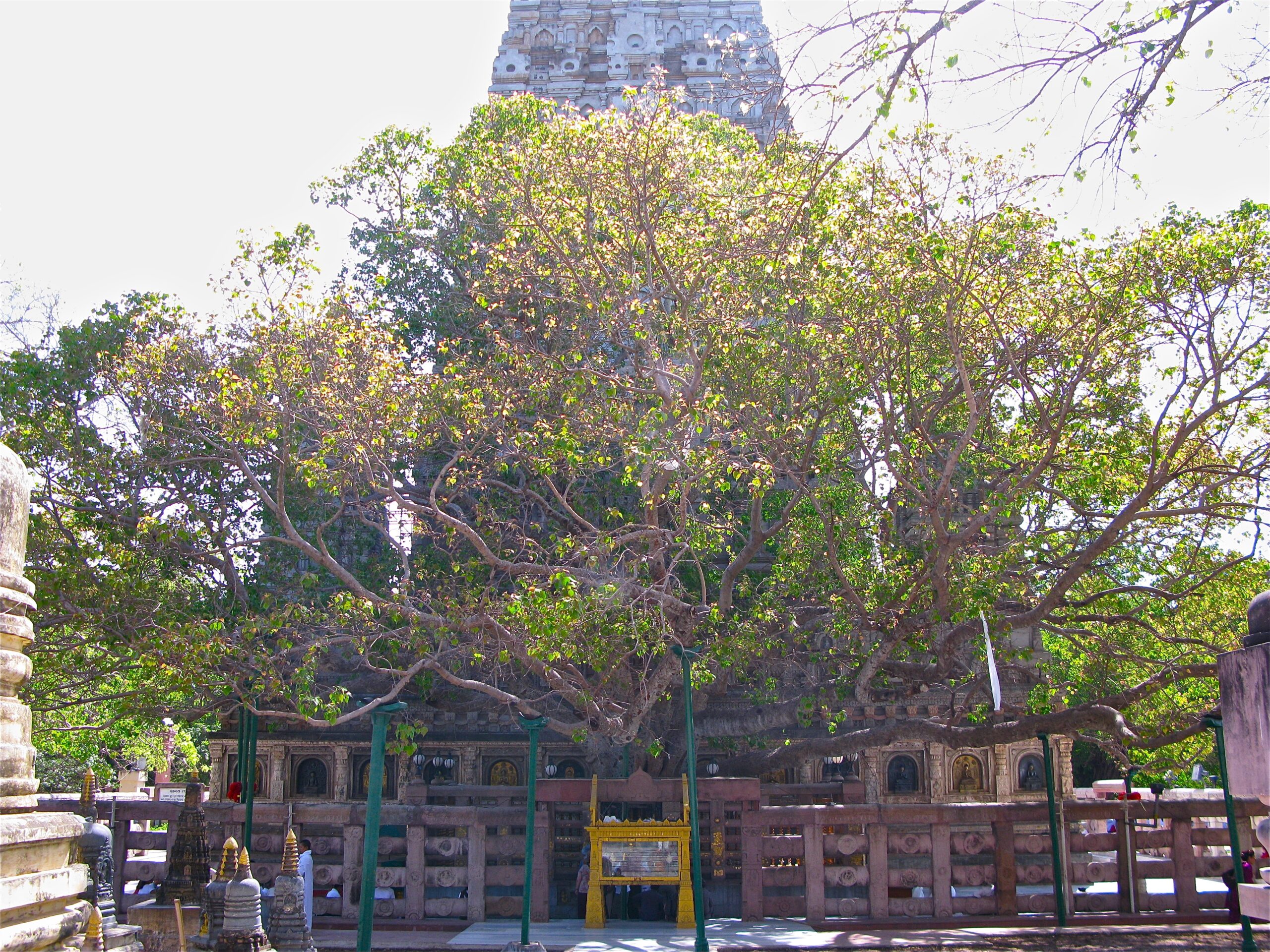
The Mahabodhi Tree in Bodh Gaya. Photo courtesy: WikiMedia
As the morning star appeared in the predawn sky, Siddhartha Gautama experienced complete awakening. He understood the nature of suffering, its causes, and the path to its cessation. He saw the chain of dependent origination, the law of karma, and the cycle of rebirth in their full clarity. He was 35 years old.
From that moment, he was no longer Siddhartha the prince or Siddhartha the ascetic. He was the Buddha, the Awakened One. The Bodhi tree in Bodh Gaya, in what is now the Indian state of Bihar, remains one of the most sacred sites in the world.
What are the Four Noble Truths that he taught?
After his enlightenment, the Buddha walked to a deer park in Sarnath, near the ancient city of Varanasi, where he found his five former companions and gave his first teaching. This sermon is known as Setting the Wheel of Dharma in Motion.
At its heart were the Four Noble Truths, the foundation of everything Buddhism teaches. The first truth is that life involves suffering or dissatisfaction, known as dukkha. Birth, aging, illness, death, separation from what we love, and being bound to what we dislike are all forms of suffering.
The second truth is that suffering arises from craving and attachment, a relentless grasping for sensory pleasure, for existence itself, or for things to be other than they are.
The third truth is that this suffering can end. When craving ceases, suffering ceases, and what remains is nirvana, a state of complete peace and freedom.
The fourth truth is that there is a path that leads to this end, the Noble Eightfold Path. The Buddha did not offer these as philosophical theories but as practical diagnoses of the human condition, the way a skilled doctor identifies an illness, its cause, the possibility of a cure, and the treatment that brings about that cure.
What is the Noble Eightfold Path and how does it work?
The Noble Eightfold Path is the practical road the Buddha laid out for moving from suffering toward liberation. It is not a linear checklist but an interconnected, holistic way of living, with all eight elements supporting and deepening one another simultaneously.
The eight elements are Right View, Right Intention, Right Speech, Right Action, Right Livelihood, Right Effort, Right Mindfulness, and Right Concentration. They can be grouped into three areas of training. Wisdom includes Right View, which means understanding the Four Noble Truths and the nature of existence, and Right Intention, which means cultivating thoughts of compassion and non-harm.
Ethical Conduct covers Right Speech, meaning truthful and kind words that bring people together, Right Action, meaning refraining from killing, stealing, and harmful behavior, and Right Livelihood, meaning earning one’s living in a way that does not cause harm to others.
Mental discipline covers right effort, right mindfulness, and right concentration, all of which together develop a stable and clear mind capable of seeing reality as it is. The path is considered both the way toward liberation and a description of what a life rooted in wisdom and compassion actually looks like.
What did the Buddha teach about compassion and non-violence?
Compassion, known in Pali as karuna, and loving kindness, known as metta, were central to the Buddha’s vision of a good human life. He taught that every sentient being, without exception, wishes to be free from suffering and to experience happiness.
Recognizing this shared reality is the foundation of compassion. He extended this concern equally to all living beings, not just humans, which led Buddhism to be one of the earliest traditions to advocate consistently for non-violence toward animals.
The practice of metta meditation, in which a practitioner deliberately cultivates warmth and goodwill first toward themselves, then toward loved ones, then toward neutral people, and finally toward difficult or hostile people, is one of the most well-known contributions of Buddhist practice to the world.
The Buddha taught that hatred cannot be ended by more hatred, only by love. He also taught that true generosity, or dana, was one of the most important qualities to cultivate and encouraged monks and laypeople alike to share freely what they had. This teaching has shaped the traditions of charitable giving, community kitchens, and care for the sick that have been associated with Buddhist festivals for over two thousand years.
What is ‘Nirvana’ and what did the Buddha say about it?
Nirvana is one of the most frequently misunderstood ideas in Buddhism. The word comes from the Sanskrit root meaning to extinguish or to blow out, like blowing out a flame. But what is blown out is not the person. What is extinguished is craving, hatred, and delusion, the three fires that the Buddha said keep beings trapped in the cycle of suffering and rebirth, known as samsara.
Nirvana is not nothingness and it is not a place like heaven. It is a state of complete freedom, peace, and clarity, experienced right here in this life by those who walk the path fully. A Thai master once described it simply as the cool state of mind, free from the fires of craving.
The Buddha himself attained nirvana under the Bodhi tree at Bodh Gaya. When he passed away at the age of 80, he entered what is called Parinirvana, or final nirvana, a complete release from the cycle of conditioned existence with no return.
The Buddha was careful not to make grand metaphysical claims about what Parinirvana ultimately is, saying that it was beyond the categories of language and ordinary thought and that the important thing was to walk the path.
Who was the Buddha and was he a god?
The Buddha was not a god and never claimed to be one. He was a human being who, through his own effort, discipline, and insight, freed himself from the causes of suffering. He did not receive divine revelation or grace from an external power.
He found the truth through his own sustained looking, and this is precisely what gives his teaching its particular quality: he said that any being, human or otherwise, who makes the right effort can attain what he attained.
When asked whether he was a god, a spirit, or an ordinary man, he replied that he was none of these things. He was awake. He walked for 45 years across the plains of northeastern India, teaching whoever came to him, from kings to farmers, from learned priests to outcasts.
His community of followers, the Sangha, included men and women of all castes and backgrounds, which was itself radical in the deeply caste-stratified society of ancient India. He passed away at the age of 80 in Kushinagar, having eaten a meal that caused him severe illness, surrounded by his disciples, giving his final instruction: all conditioned things are impermanent. Work out your liberation with diligence.
Why does Buddha Jayanti fall on a full moon and why does the date change each year?
Buddha Jayanti is observed on the full moon day of the month of Vaisakha, the first month of the Buddhist and Hindu lunar calendar. In Nepal, this month is called Baisakh. The full moon is called Purnima, which is why the festival is also called Buddha Purnima.
Buddhist tradition holds that three of the most important moments in the Buddha’s life, his birth, his enlightenment, and his Parinirvana, all occurred on this same full moon day, which is why it is called the Thrice Blessed Festival. Because the lunar calendar does not align perfectly with the Gregorian calendar, the date shifts from year to year.
In 2026, the full moon of Vaisakha falls on Friday, May 1, making today Buddha Jayanti. This year it also coincides with International Labour Day, adding another layer of significance to the date.
The festival is recognized internationally as Vesak, and the United Nations officially acknowledges it as an international day, reflecting its importance to the hundreds of millions of Buddhists around the world.
How is Buddha Jayanti celebrated in Nepal and around the world?
Nepal holds a special place in Buddha Jayanti celebrations because Lumbini, the birthplace of the Buddha, is located in the country’s southern plains. Thousands of pilgrims from Nepal and across the world gather at the Mayadevi Temple in Lumbini, the site traditionally identified as the exact location of the birth, for prayers, processions, and ceremonies.
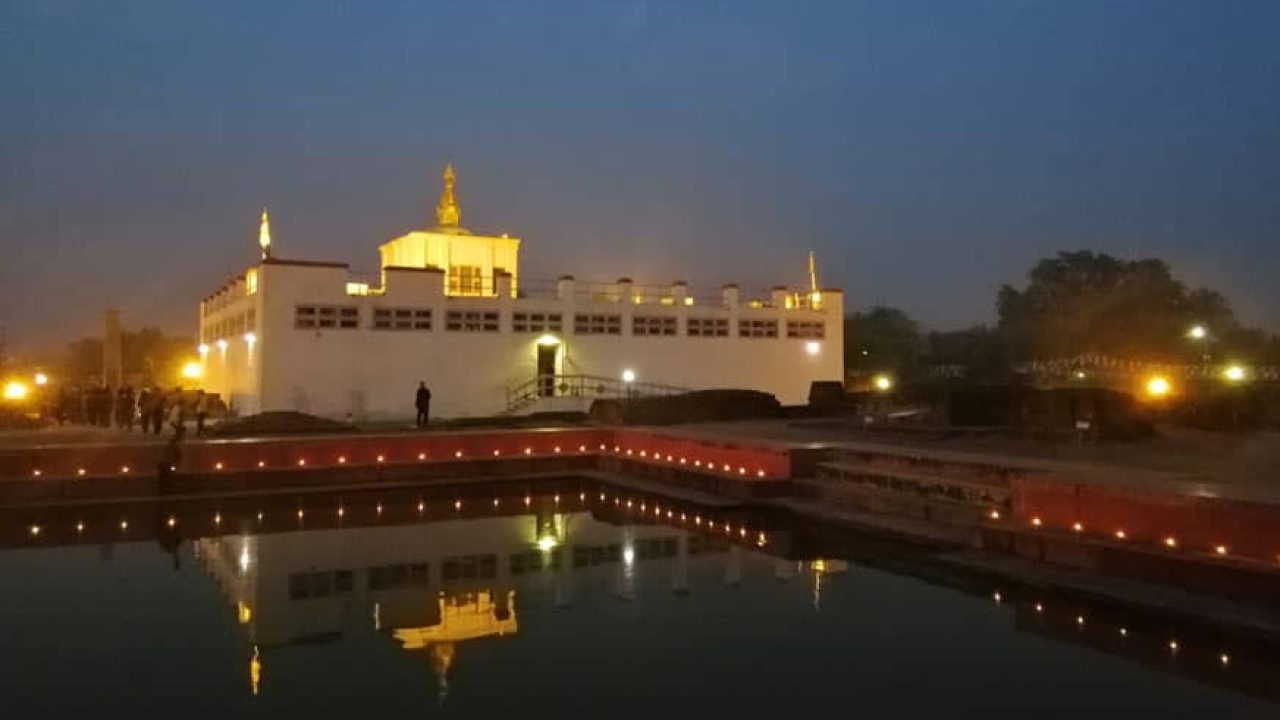
Maya Devi Temple during Buddha Purnima. File photo
In the Kathmandu Valley, the great stupas of Swayambhunath and Boudhanath become centers of quiet but deeply felt celebration. Common practices across Buddhist traditions include visiting temples and monasteries, lighting butter lamps and incense as symbols of wisdom and the dispelling of ignorance, ceremonial bathing of Buddha statues representing purification, recitation of scripture and chanting, acts of charity and generous giving, releasing captive animals as a gesture of compassion, and observing the five precepts of ethical conduct with renewed commitment.
In Sri Lanka, streets are strung with elaborate Vesak lanterns. In South Korea, the Lotus Lantern Festival fills the streets with color. In Thailand, devotees carry candles and flowers in candlelight processions around temples. In India, pilgrims travel to Bodh Gaya, Sarnath, and Kushinagar. The spirit across all these traditions is the same: reflection, gratitude, and recommitment to the path.
What is the significance of Lumbini and why does it matter today?
Lumbini is a small town in the Rupandehi district of Nepal, just north of the border with India, and it is one of the most sacred places on earth for Buddhists. Archaeological evidence confirms it as the birthplace of the Buddha, including the Mayadevi Temple and an Ashoka Pillar erected in 249 BCE by the great Emperor Ashoka, who visited the site in person.
The pillar inscription explicitly identifies the location as the birthplace of Shakyamuni, the sage of the Shakyas. Lumbini is a UNESCO World Heritage Site. In recent years there has been significant international investment in developing Lumbini as a global pilgrimage and peace destination.
For Nepal, Lumbini carries immense national and cultural pride, representing the country’s most significant contribution to world civilization. On Buddha Jayanti, Lumbini transforms into a gathering point for pilgrims from dozens of countries, wearing white, carrying offerings, walking in peaceful procession, meditating in the garden zone, and sitting in silence around the sacred pool and the ancient temples.
The site embodies the living continuity between a birth that happened 2570 years ago and the faith of millions who still walk that same path today.
What is the concept of the Three Jewels in Buddhism?
The three Jewels, also called the Triple Gem, are the three foundations to which a person formally commits when taking refuge in Buddhism. They are the Buddha, the Dharma, and the Sangha.
Taking refuge in the Buddha means taking inspiration from the historical Gautama Buddha as a model of what is possible for a human being, proof that awakening is achievable. Taking refuge in the Dharma means committing to the body of teachings the Buddha left behind, including the Four Noble Truths, the Eightfold Path, and the vast literature of commentary and practice that has grown around them over 25 centuries.
Taking refuge in the Sangha means committing to the community of practitioners, both the ordained monastic community and the broader community of all who walk the path together.
The traditional chant is “Buddham Saranam Gacchami, Dhammam Saranam Gacchami, Sangham Saranam Gacchami,” meaning “I go to the Buddha for refuge, I go to the Dharma for refuge, I go to the Sangha for refuge.” On Buddha Jayanti, this chant rises from temples and monastery courtyards across the Buddhist world as one of the most recognizable expressions of belonging to this ancient tradition.
What is the relevance of the Buddha’s teachings in the world today?
The Buddha’s teachings have never been more widely studied than they are today, and their relevance extends far beyond Buddhist religious communities.
The practice of mindfulness, rooted directly in the Buddha’s instruction on Right Mindfulness from the Eightfold Path, is now used in hospitals, schools, prisons, and corporate settings across the world as a tool for reducing stress, managing pain, and cultivating emotional clarity.
The insight that suffering arises from craving and the relentless pursuit of things we believe will make us happy resonates deeply in a world driven by consumerism and digital distraction.
The Buddha’s emphasis on compassion and non-violence has influenced peace movements, environmental ethics, and the rights of animals. His insistence that each individual must walk the path themselves, that no external authority can do it for you, appeals to a modern instinct for personal inquiry over blind belief.
Buddhism today is practiced by an estimated 500 to 600 million people and continues to grow in the West. On Buddha Jayanti, all of this comes together not as a commemoration of something finished and past but as a living reminder that the question the young prince carried out of the palace gates 2570 years ago, “How do we live well and be free from suffering?” remains the most important question of every human life.