Kathmandu
Monday, July 13, 2026





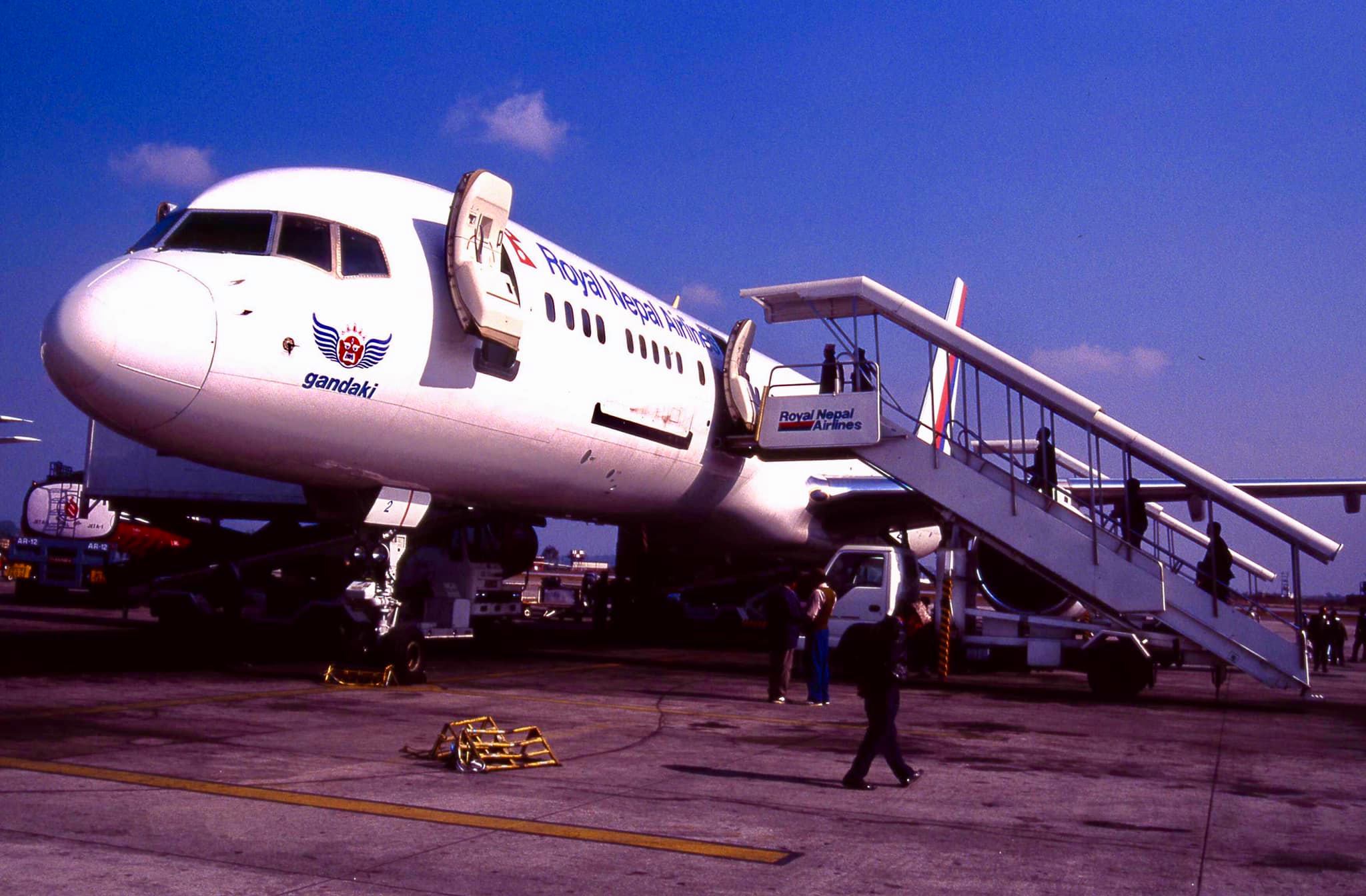
KATHMANDU: The Dhamija scandal centers on the early-1990s appointment of British-Indian businessman Dinesh Dhamija (linked to Fair Company UK) as general sales agent for Royal Nepal Airlines Corporation’s (RNAC, now Nepal Airlines Corporation) European ticket sales. Critics alleged then-Prime Minister Girija Prasad Koirala exerted undue pressure on airline management, leading to irregularities.
A 1993 parliamentary probe, 1995 Gajendra Mani Pradhan Commission, and Supreme Court cases followed. Dhamija won a substantial court settlement after the deal was scrapped.
The scandal was revived by authorities in November 2025, reigniting debate over political interference in public enterprises.
What exactly was the Dhamija scandal involving Royal Nepal Airlines?
The Dhamija scandal refers to allegations of irregularities in the appointment of a General Sales Agent (GSA) for Europe by Royal Nepal Airlines Corporation (RNAC, now NAC) in April 1993. The Fair Company of Britain was selected as the agent, with Dinesh Dhamija serving as the key ticket seller and representative.
The case involved claims of political favoritism and pressure on RNAC management. The scandal gained prominence due to internal Nepali Congress party tensions and became emblematic of cronyism in state-owned enterprises during Nepal’s post-democracy period.
Investigations highlighted how the arrangement allegedly allowed ticket sales revenue from European routes to be handled through Dhamija’s accounts rather than direct remittance to Nepal, raising transparency concerns.
Multiple parliamentary committees and a dedicated commission later examined the matter. The case led to a court battle where Dhamija prevailed, receiving a settlement from RNAC.
It remains one of the earliest high-profile corruption allegations against RNAC after the restoration of multiparty democracy in 1990, contributing to the airline’s long-term reputational damage. Even three decades later, the episode is cited in media as a textbook example of alleged political interference in public sector commercial decisions.
Investigations highlighted how the arrangement allegedly allowed ticket sales revenue from European routes to be handled through Dhamija’s accounts rather than direct remittance to Nepal
As of the November 2025 revival, the scandal continues to symbolize systemic issues in Nepal’s aviation governance without resolution on accountability.
Who is Dinesh Dhamija, and what was his connection to Nepal Airlines?
Dinesh Dhamija is a British-Indian entrepreneur born in 1950, best known as the founder of the online travel agency Ebookers. His company was appointed General Sales Agent for Royal Nepal Airlines in the United Kingdom and Ireland in 1987, later expanding to broader European operations.
In the context of the scandal, Dhamija was associated with Fair Company UK and became the focal point of the 1993 GSA appointment for RNAC’s European ticket sales. He was described as having close relations with then-Prime Minister Girija Prasad Koirala. This personal connection formed the basis of cronyism allegations.
Dhamija was not a Nepali national but operated as an international businessman handling sales, marketing, and ticketing for RNAC routes out of major European hubs. After the controversy, he successfully built a multinational travel business but faced legal proceedings in Nepal that ultimately ended in his favor with a court-ordered settlement.
His involvement is documented in RNAC’s historical records and 1995 investigative panel findings. The case did not involve any criminal conviction against him; instead, it highlighted debates over procurement processes in state airlines.
Dhamija’s later success in the global travel sector contrasts with the lasting shadow the RNAC episode cast on Nepal’s flag carrier.
When and how did the alleged appointment of Dhamija occur?
The key appointment occurred around the early 1990s, with the formal investigation into the GSA decision launched in April 1993. ‘The Fair Company’ of Britain was appointed to sell tickets for Europe, with Dinesh Dhamija acting as the primary agent.
Internal airline documents reportedly directed European ticket revenue into Dhamija-linked accounts initially.
Sources indicate the process began post-1990 democracy restoration under the Nepali Congress government led by Girija Prasad Koirala. The arrangement allegedly bypassed standard competitive bidding, leading to direct selection based on personal ties.
UPI’s 1995 report and subsequent Nepali media confirm the deal granted monopoly-like rights for European sales. Internal airline documents reportedly directed European ticket revenue into Dhamija-linked accounts initially.
The controversy escalated when a change in government triggered scrutiny. By 1995, the UML-led administration had scrapped the arrangement and formed a formal commission. Court records from Supreme Court writ petitions filed around April 1995 further document the timeline.
The appointment itself was not declared illegal in final rulings, but the process was criticized as lacking transparency. Dhamija ultimately secured a settlement after arbitration proceedings. The events occurred between 1987 (initial UK/Ireland GSA) and the 1993 Europe-wide expansion that sparked the scandal.
Which political figures were directly linked to the Dhamija scandal?
The central figure was then-Prime Minister Girija Prasad Koirala, accused of exerting pressure on RNAC management to favor Dinesh Dhamija. Media reports quote aviation experts noting the decision came “under pressure from Baluwatar” (PM’s official residence).
Former Tourism Minister Ramhari Joshi, who held the portfolio during the appointment, faced scrutiny and filed a Supreme Court writ in 1995 challenging the Gajendra Mani Pradhan Commission, claiming it aimed to defame him.
Koirala himself provided a written statement to the commission admitting “political bias” in his involvement. Other figures included UML leaders during the mid-1990s who pushed the probe, such as Prime Minister Manmohan Adhikari and Tourism Minister Bhim Rawal in the Supreme Court proceedings.
Then-MP Kuber Sharma from Nepali Congress also called for investigation into Koirala. General Manager Kalyandev Bhattarai of RNAC was named in court notices. Later, when Koirala returned to power, then-Tourism Minister Chakra Bastola was reported to have authorized payment of Dhamija’s claimed dues.
RNAC’s official court reply consistently denied any direct ministerial role in the operational decision. These links are verified through 1995 UPI dispatches and parliamentary records referenced in 2025 revival media coverage. No convictions resulted, but the case underscored how political influence allegedly affected public enterprise decisions in the 1990s.
What were the primary allegations of irregularities in the Dhamija case?
Allegations centered on undue political pressure, lack of transparent procurement, and potential financial harm to RNAC. The GSA appointment for Europe was made without a proper competitive process due to Koirala’s intervention.
Then-MP Kuber Sharma from Nepali Congress also called for investigation into Koirala. General Manager Kalyandev Bhattarai of RNAC was named in court notices.
A key claim was that ticket sale proceeds from European routes were deposited directly into Dhamija’s bank account rather than remitted promptly to Nepal, allegedly causing cash-flow issues for the airline.
Critics argued the contract terms favored the agent excessively, leading to monopoly rights over sales in multiple countries. The 1995 UPI report cited a claimed USD 20 million loss to the airline from the ‘flawed deal.’
Later expert commentary referenced an agreement structure that ensured losses for the corporation. Internal party rivalries within Nepali Congress amplified the issue, with some leaders using it to target Koirala.
Parliamentary inquiries and the Pradhan Commission examined whether the decision violated norms for state enterprises. RNAC management maintained in court that no prime minister or minister directly interfered in operational matters.
The scandal also raised questions about conflict of interest given Dhamija’s personal ties to Koirala. These allegations were never proven as criminal fraud in court; instead, they resulted in civil arbitration and a settlement. The case remains a benchmark for discussions on governance failures in Nepal’s public sector aviation history.
What financial losses were claimed in the Dhamija scandal?
Multiple figures have been cited in verified reports, though exact audited amounts remain disputed. The 1995 UPI coverage of the Pradhan Commission stated the communist government alleged a USD 20 million loss to RNAC from the GSA deal. A 2025 expert interview (Maheshwar Bhakta Shrestha, retired RNAC director) referenced a Rs 1.3 billion loss, claiming that after Koirala returned to power, Tourism Minister Chakra Bastola authorized payment of Dhamija’s bill via cheque in Europe.
An academic case study on Nepal Airlines lists the Dhamija scandal (1995) with an estimated Rs 400 million loss. These claims arose because revenue from European ticket sales allegedly remained in Dhamija’s accounts without immediate transfer to RNAC’s coffers, combined with disputed commission structures. The deal was eventually scrapped, triggering arbitration.
Dhamija won a substantial settlement from the airline rather than the airline recovering funds. No independent forensic audit figure has been publicly confirmed as final. The varying estimates reflect different investigative phases and political narratives.
The financial controversy contributed to RNAC’s broader debt problems documented in later media analyses. The scandal’s economic impact is cited as symbolic of how alleged irregularities compounded the airline’s operational challenges in the 1990s.
What investigations and commissions examined the Dhamija scandal?
A parliamentary inquiry began in April 1993 immediately after the GSA appointment. Following the midterm elections, the UML government in 1994-95 formed the three-member Gajendra Mani Pradhan Commission specifically to probe the RNAC European sales deal and other irregularities.
The commission faced controversy when its head and a member resigned in May 1995, citing impartiality concerns, as reported by UPI. Former Tourism Minister Ramhari Joshi filed a Supreme Court writ petition on 15 April 1995 seeking to quash the commission, arguing it violated the Commissions of Inquiry Act and was politically motivated.
The Supreme Court issued show-cause notices to the government, ministers, and RNAC officials. Advocate Balkrishna Neupane filed another petition seeking involvement of the Commission for the Investigation of Abuse of Authority.
RNAC’s institutional position was that the matter could be resolved through arbitration rather than national courts. These probes are fully documented in various media archival reports and contemporary news.
The investigations highlighted procedural lapses but did not produce criminal convictions. The Pradhan Commission’s preliminary findings warned of RNAC’s potential collapse without corrective action on irregularities. This multi-layered scrutiny remains the most extensive official examination of the case.
What was the legal outcome of the Dhamija Scandal court battles?
Dinesh Dhamija ultimately prevailed in the legal proceedings. After the GSA agreement was terminated, arbitration and court cases ensued. Reliable sources including FundingUniverse company history confirm Dhamija won a substantial settlement with Nepal Airlines following a bitter court battle.
The Supreme Court handled writ petitions related to the Pradhan Commission but did not rule against the appointment itself as illegal. RNAC’s official submissions to the court stated that no prime minister or minister was directly involved in the operational decision.
The dispute was reportedly resolved through arbitration rather than full litigation in national or international courts, as per RNAC’s position.
Dhamija received compensation, and the airline absorbed the financial impact. No criminal charges against any party were upheld. The outcome is described as a victory for Dhamija in business media of the era.
Reliable sources including FundingUniverse company history confirm Dhamija won a substantial settlement with Nepal Airlines following a bitter court battle.
This legal resolution occurred in the late 1990s to early 2000s. The case did not result in contract cancellation penalties against RNAC beyond the settlement paid. It set a precedent in Nepali jurisprudence regarding state enterprise contracts with foreign agents.
How did the Dhamija scandal impact Nepal Airlines’ reputation?
The scandal significantly tainted RNAC’s image as one of the earliest post-1990 democracy-era controversies involving political interference. It became a recurring reference in discussions of RNAC’s chronic problems, including later scandals like Lauda Air and wide-body aircraft procurement.
Public perception linked the case to crony capitalism, eroding trust in the national carrier’s management. Academic case studies on Nepal Airlines list it among factors contributing to financial crises and operational decline.
The controversy highlighted how alleged favoritism could harm a public enterprise’s commercial viability. Even in 2024-2025 media coverage, the Dhamija episode is invoked as a cautionary tale of governance failures.
It damaged international business confidence in RNAC’s contracting processes. Domestically, it fuelled parliamentary debates and media scrutiny that persisted for decades. The November 2025 revival further reinforced its symbolic status as an unresolved stain on the airline’s history.
Overall, the scandal contributed to RNAC’s narrative of mismanagement, political meddling, and lost public faith.)
Why and when was the Dhamija scandal investigation revived in 2025?
The investigation was formally revived on 30 November 2025. The revival occurred amid renewed public and political scrutiny of RNAC’s historical and ongoing irregularities.
It formed part of broader efforts to examine past corruption cases in the national airline, including long-standing scandals. The Dhamija case had remained a topic of discussion at political and legal levels for 32 years.
The timing coincided with increased calls for accountability in state enterprises and fresh petitions regarding aviation governance. No specific new evidence is detailed in available reports, but the move sparked public interest and debate. The revival does not indicate fresh charges; it reflects continued institutional interest in reviewing historical files.
This development aligns with periodic government initiatives to address RNAC’s legacy issues. As of early 2026, no major outcomes or arrests have been publicly announced from the revived probe. The event underscores how the scandal retains relevance in Nepal’s political discourse on transparency and anti-corruption.
What is the current status of the Dhamija scandal as of 2026?
As of April 2026, the investigation revived in November 2025 remains active but without reported major breakthroughs or new charges. Nepali media coverage indicates renewed public and political debate, yet RNAC’s position has historically been that the matter was resolved through arbitration and court settlement.
No convictions or further financial recoveries have been confirmed in recent reports. The case continues to be referenced in media analyses of Nepal Airlines’ challenges but has not led to high-profile legal actions against surviving figures. It serves primarily as historical context in discussions of institutional reform.
The Commission for the Investigation of Abuse of Authority had previously placed related files on hold. Current status reflects ongoing symbolic importance rather than active prosecution.
As of April 2026, the investigation revived in November 2025 remains active but without reported major breakthroughs
Broader RNAC probes into other matters (aircraft procurement, etc.) sometimes mention the Dhamija episode for context. No official closure statement has been issued post-revival. The scandal’s legacy persists in public memory as an example of alleged 1990s-era irregularities.
How does the Dhamija scandal compare to other RNAC corruption cases?
The Dhamija Scandal is frequently listed among RNAC’s early major controversies, alongside the 1997 Chase Air leasing scam, 2001 Lauda Air leasing issues, and later wide-body aircraft procurement allegations.
Unlike some later cases involving aircraft leases worth hundreds of millions, the Dhamija case focused on sales agency contracts rather than capital assets. It shares common themes of alleged political pressure and lack of transparency.
Academic studies and media round-ups consistently group it with post-1990 democracy-era scandals that contributed to RNAC’s financial woes. However, it stands out because the primary beneficiary was an international agent who successfully litigated and received a settlement, whereas other cases often involved domestic actors or aircraft deals.
The Dhamija episode is older and resolved through courts, while newer probes (e.g., 2025 aircraft committees) remain ongoing. Its revival in 2025 highlights how historical cases continue to influence current accountability demands. All verified sources position it as a foundational example of cronyism claims in Nepal’s aviation sector.
Did Dinesh Dhamija personally benefit from the RNAC contract?
Verified business histories and Dhamija’s own documented career show he gained commercial experience and revenue streams from the RNAC GSA role, which helped expand his European travel agency network.
He ultimately received a substantial court-ordered settlement from the airline after the contract dispute. However, no verified evidence establishes personal enrichment beyond legitimate contractual entitlements.
The allegations focused on the appointment process rather than proven embezzlement by Dhamija. He won the legal battle, indicating the courts viewed the termination as warranting compensation.
Dhamija went on to found Ebookers, a major success story unrelated to the Nepal controversy. Sources do not report any criminal findings against him. The financial benefit narrative remains tied to the disputed GSA commissions and the final settlement amount, which was not publicly quantified in detail.
His involvement is presented as a legitimate early contract that became politically controversial.
What role did internal Nepali Congress party politics play in the scandal?
Internal Nepali Congress rivalries significantly amplified the Dhamija scandal. Party infighting contributed to the issue’s prominence. Kuber Sharma, then an MP from Nepali Congress, publicly suggested investigating Koirala.
The timing of the 1993-1995 probes coincided with leadership struggles within the party. When the UML formed a minority government after midterm elections, the commission was viewed by some Congress leaders, including Ramhari Joshi, as a tool for political vendetta.
Koirala himself described the 1995 panel as biased. Joshi’s Supreme Court petition argued the commission aimed to defame him as the responsible tourism minister.
Koirala’s written admission of “political bias” in his involvement further highlighted intra-party dynamics. These elements transformed a commercial contract issue into a high-stakes political battle.
The scandal thus reflected broader post-1990 democratic transition tensions where public enterprises became arenas for factional score-settling.
What lessons, if any, did Nepal Airlines or the government claim to learn from the Dhamija case?
Official statements from RNAC during court proceedings emphasized that future GSA appointments would follow proper arbitration and transparent processes. However, no comprehensive public reform document specifically tied to the Dhamija scandal has been cited in verified sources.
Subsequent scandals suggest limited systemic change, as RNAC continued facing similar allegations of political interference in later decades. Parliamentary committees and aviation experts still reference the case as evidence of persistent governance gaps.
The airline’s historical analyses acknowledge that such episodes damaged credibility and contributed to financial strain. Government responses in the 1990s focused on scrapping the deal rather than broad procurement overhaul.
The 2025 revival indicates ongoing recognition of the need for accountability, but concrete lessons remain unquantified in public records.
The case is now used rhetorically in calls for stronger anti-corruption mechanisms in state enterprises.
How was the Dhamija scandal covered in Nepali and international media?
Nepali outlets provided detailed archival reporting, including timelines, court proceedings, and expert quotes.
UPI’s 1995 dispatch offered international coverage, focusing on the commission resignations and USD 20 million loss claims. Business publications covered Dhamija’s settlement and his later eBooking success.
The scandal appears in media case studies on both Dhamija and Nepal Airlines. Coverage emphasized political angles and airline mismanagement.
In 2025, media’s revival report reignited domestic interest. Media treatment evolved from real-time political controversy in the 1990s to historical context in modern analyses.
How has the Dhamija scandal influenced public trust in Nepal’s public enterprises?
The case became a symbol of alleged cronyism, reducing public confidence in RNAC and similar state bodies. Repeated media references in corruption round-ups reinforced perceptions of political meddling.
Academic studies link such scandals to RNAC’s financial decline and operational failures. The 2025 revival further highlights lingering distrust.
Citizens and analysts cite it as evidence that accountability mechanisms remain weak decades later. It contributed to broader cynicism about governance in Nepal’s transition to democracy.
What statements did key figures make about the Dhamija scandal?
Girija Prasad Koirala admitted in a commission statement to involvement “with political bias.” RNAC consistently told courts “no prime minister or minister was involved.”
Aviation expert Maheshwar Bhakta Shrestha described the agreement as structured to cause corporate losses under Baluwatar pressure.
Ramhari Joshi challenged the commission legally, claiming defamation motives. The Pradhan Commission warned of RNAC’s potential collapse without reforms.
Why does the Dhamija scandal still matter in Nepal’s aviation sector today?
Its 2025 revival demonstrates unfinished accountability in public institutions. It serves as a historical benchmark for evaluating current RNAC governance reforms. The case illustrates long-term consequences of alleged political interference on a national flag carrier’s finances and reputation.
Ongoing references in media and expert commentary underscore the need for transparent procurement. It reminds stakeholders that early democratic-era controversies continue shaping debates on anti-corruption and institutional integrity in Nepal’s aviation industry.