Kathmandu
Saturday, July 25, 2026





Why has Nepal, after ending a decade-long brutal civil conflict and adopting a new constitution, still failed to account for the tortured, dead, and disappeared?
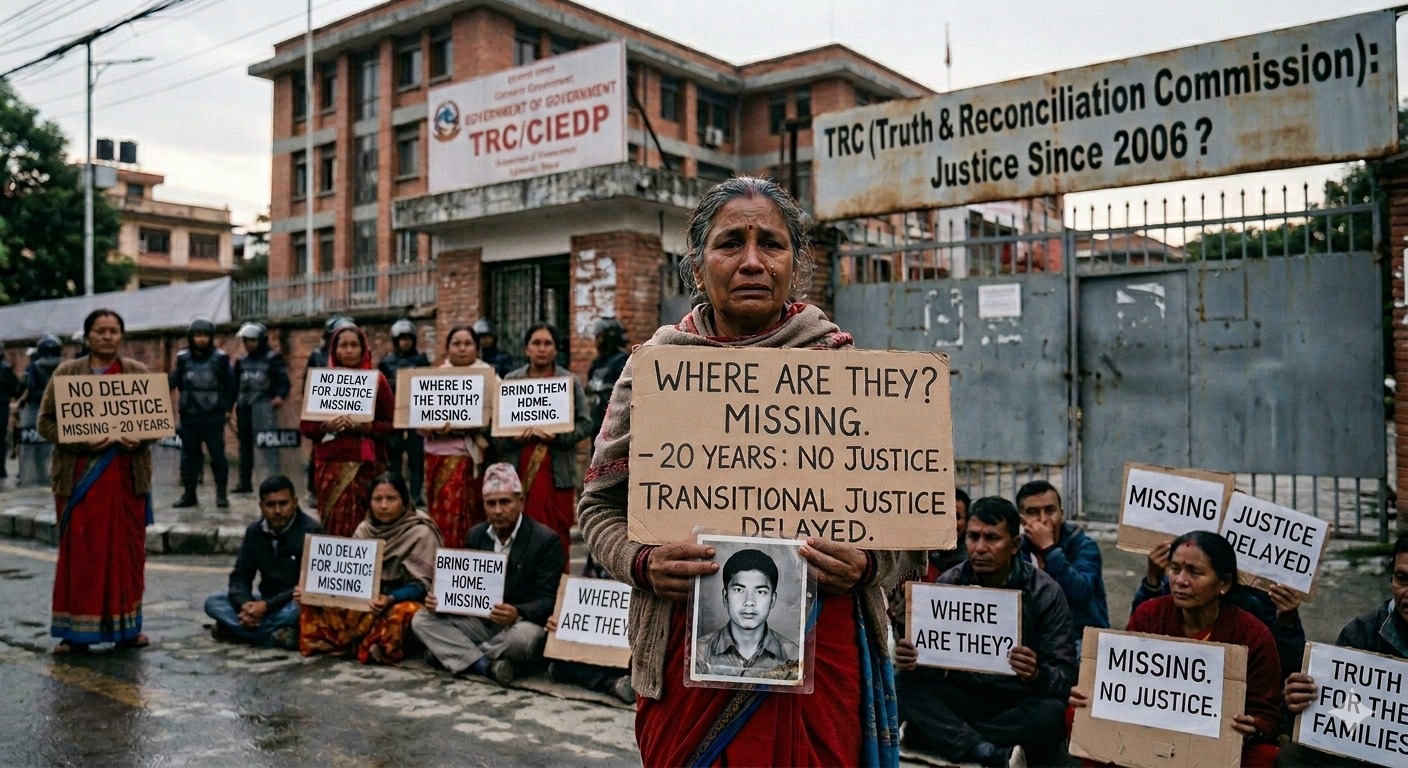
KATHMANDU: Nepal’s civil war ran from February 1996 to November 2006, pitting the then Communist Party of Nepal (Maoist) against the state in a conflict that killed at least 13,000 people and caused over 1,300 enforced disappearances, with some estimates placing the death toll closer to 17,000.
The fighting spread across most of the country’s districts, with atrocities committed by both the Maoist People’s Liberation Army and state security forces, including extrajudicial killings, torture, sexual violence, and the recruitment of child combatants.
The Comprehensive Peace Accord of November 2006 ended the shooting, but the deeper question of how to deliver justice, truth, and reparations to survivors has remained unanswered ever since.
This Nepal News explainer will unpack how the peace accord, political bargains, and institutional paralysis have together shaped Nepal’s stalled transitional justice process.
What was Nepal’s civil war, and why did it begin?
Nepal’s civil war, which the Maoist movement called the People’s War, officially started on February 13, 1996, when the Communist Party of Nepal (Maoist), led by Pushpa Kamal Dahal known as Prachanda and ideologue Baburam Bhattarai, launched coordinated attacks on police posts in several districts.

Pushpa Kamal Dahal ‘Prachanda’ (left) and Baburam Bhattarai (right)
The movement drew its fuel from deep structural grievances: extreme rural poverty, a feudal landholding system that dispossessed hill farmers and indigenous communities, the exclusion of lower castes and women from political life, and a monarchy that treated state power as inherited property.
The Maoists organized along Maoist-Leninist lines, establishing parallel governments in villages, running people’s courts, and extracting taxes from local communities. What began as a policing problem quickly outgrew the capacity of the Nepal Police, and by 2001 the then Royal Nepal Army was formally drawn into the conflict after attacks on army barracks escalated the violence dramatically.
The conflict reached its most lethal phase around 2002 and 2003, with hundreds of people dying each month. By 2005, the Maoists controlled an estimated 60 percent of Nepal’s rural territory, effectively surrounding the towns and cutting supply lines. The war was as much about who would govern Nepal as it was about ideology.
How did the conflict end, and what did the peace accord promise?
A combination of factors forced both the Maoist insurgency and King Gyanendra’s government into negotiations. The king’s decision to seize direct power in February 2005, dismissing elected politicians and suspending civil liberties, pushed Nepal’s mainstream political parties into an unexpected alliance with the Maoists through a 12-point understanding signed in November 2005.
A mass pro-democracy uprising known as Jana Andolan II in April 2006 forced the king to restore parliament and effectively ended his political authority. With the monarchy sidelined, the Seven Party Alliance and the Maoist leadership signed the Comprehensive Peace Accord (CPA) on November 21, 2006.
The CPA was a detailed document that promised, among other things, to confine both armies to their respective positions under UN monitoring, to disarm and manage Maoist combatants in cantonments, to hold a Constituent Assembly election, to abolish the monarchy through a democratic vote, and crucially, to set up a Truth and Reconciliation Commission and a Commission of Investigation on Enforced Disappearances within six months.
Both sides also pledged to reveal, within 60 days, the real names and whereabouts of people who had been disappeared or killed. That disclosure deadline passed without compliance from either side, and the six-month deadline for the commissions stretched into years, then into nearly two decades.
What happened to Maoist combatants after the peace accord?
After the CPA was signed, approximately 32,000 Maoist fighters registered with the United Nations Mission in Nepal (UNMIN), which was tasked with verifying and monitoring both armies. UNMIN set up seven main cantonments and 21 sub-cantonments across the country to house the fighters and their weapons.
A verification process then established that roughly 19,600 of those fighters were legitimate adult combatants eligible for consideration, while approximately 4,000 were disqualified, mostly because they were minors at the time of recruitment or had joined too late to qualify. The fate of the remaining eligible fighters was debated for years, with the Maoists pushing for full merger into the Nepali Army and the army resisting any large-scale integration.
A November 2011 seven-point deal finally broke the deadlock by offering three options: integration into the Nepal Army, a voluntary retirement package, or a rehabilitation program. Of the eligible combatants, only 1,460 were eventually integrated into the Nepali Army, a number far below the originally discussed ceiling of 6,500.
Around 6,576 chose voluntary retirement, receiving cash packages ranging from roughly Rs 500,000 to 800,000 depending on rank. The remainder opted for rehabilitation. The Nepali Army formally took control of the 15 PLA cantonments on April 10, 2012, completing the disarmament phase.
The integration process was widely seen as more symbolic than substantive, and thousands of former fighters drifted into migration, informal labor, or political party work.
Why did transitional justice stall for so many years despite being promised in the peace accord?
The stalling of transitional justice was not an accident but rather the predictable result of the two most powerful parties to the conflict, the Maoist movement and the Nepali Army, both wanting to avoid accountability.
Rights organizations documented serious abuses on both sides: extrajudicial killings, torture of detainees, enforced disappearances, sexual violence, and the use of child soldiers. For the Maoist leadership, which had transitioned into electoral politics and reached the prime ministership, war-crimes prosecutions were an existential political threat.
For the Nepali Army, whose ranks doubled during the conflict and whose officers held enormous institutional power in postwar Nepal, accountability meant career destruction and possible imprisonment for senior figures. Together, these two forces successfully lobbied for delay after delay, dressing up inaction as complexity and national reconciliation.
Successive coalition governments, most of which included either Maoist leaders or depended on army acquiescence, had no political incentive to push the process forward. Bills were drafted, challenged in court, withdrawn, redrafted, and allowed to lapse. The commissions that were eventually formed lacked adequate staff, funding, and political backing.
The 2015 earthquake served as one pretext for delay, and the COVID-19 pandemic served as another. Victims found that the state repeatedly told them their cases would be addressed by transitional justice bodies, while those bodies sat idle and their perpetrators rose to ministerial and parliamentary positions.
What are the Truth and Reconciliation Commission (TRC) and the Commission of Investigation on Enforced Disappeared Persons (CIEDP)?
The TRC and the CIEDP are the two bodies specifically established by Nepal to handle conflict-era human rights violations. They were provided for in the Comprehensive Peace Accord and were supposed to be operational within six months of the accord’s signing, but were not actually formed until 2015, nine years later, after parliament passed the Enforced Disappearances Enquiry, Truth and Reconciliation Commission Act, 2014.
The TRC’s mandate covers the broader universe of wartime abuses: killings, torture, sexual violence, displacement, and other serious violations. It is tasked with investigating complaints, documenting the truth, facilitating reconciliation between victims and perpetrators where appropriate, and recommending reparations.
The CIEDP has a narrower but equally urgent mandate: investigating the cases of people who were disappeared during the conflict and determining their fate and whereabouts. Neither body has completed a single investigation since their formation.
The TRC alone received roughly 63,700 to 80,000 complaints depending on the counting period, while the CIEDP has received over 3,000 cases. The commissions have operated in fits and starts, seen their commissioners’ contracts lapse, sat vacant for extended periods, and been repeatedly accused of political bias in their appointments. Not one family has received a legally resolved answer to what happened to their disappeared relative.
What is the Third Amendment to the TRC Act, and why does it matter?
For years, the Supreme Court and human rights groups criticized the original 2014 TRC Act for containing amnesty provisions that shielded perpetrators of grave abuses from prosecution. The court struck down those provisions in 2015, but parliament took nearly a decade to pass replacement legislation.
After prolonged political negotiations and the formation of a cross-party task force in mid-2024, parliament adopted a third amendment to the act, which was signed into law on August 29, 2024. United Nations High Commissioner for Human Rights Volker Turk called it an important step forward, noting that victims were now closer to knowing the truth and obtaining reparations.
The amendment introduced a clearer classification between human rights violations and serious violations, established a Special Court to handle the most egregious cases, and addressed several of the Supreme Court’s earlier objections.
However, human rights organizations including the International Commission of Jurists identified significant remaining gaps, particularly around provisions that critics argue are still designed to reduce sentencing for serious offenders, ambiguities in the definition of crimes that could exclude certain categories of abuse, and limitations on the prosecutor’s ability to conduct independent investigations beyond what the commissions recommend.
Victim groups were divided, with some welcoming the reform and others warning it still offered perpetrators too much shelter.
Who were appointed to the TRC and CIEDP in May 2024, why did victims reject them, and why were they dismissed later?
Following the passage of the 2024 amendment, the government faced the task of appointing a fresh set of commissioners for both bodies. On May 15, 2025, the Cabinet appointed former High Court judge Mahesh Thapa as the TRC chairperson and former Chief Secretary Lila Devi Gadtaula as the CIEDP chair, along with multiple members for each body.
Victim organizations had repeatedly warned both the prime minister and the major party leaders not to proceed with appointments without genuine consultation and a transparent process. Their warnings were ignored. A coalition of 47 victim groups and 26 civil society organizations condemned the appointments as arbitrary and insulting, saying they were distributed among major political parties through standard power-sharing arrangements rather than selected on the basis of competence and independence.
Ram Bhandari, coordinator of the National Network of the Victims of Serious Human Rights Violations, said families did not want favors from the government but a respectful and lasting resolution to their cases. Victim organizations demanded the government reconvene with stakeholders and redo the process.
Following the issuance of the Special Provision Ordinance on the Dismissal of Public Officials, 2026 on May 5, the officials of these two commissions were relieved of their posts.
Who is Agni Sapkota, and what is the case against him?
Agni Prasad Sapkota is a senior leader of the then CPN (Maoist Centre), now part of the unified Nepali Communist Party formed through the merger of various communist factions, and a key figure from the party that led the People’s War.
He served as Speaker of the House of Representatives from January 2020 to January 2023, having previously held a cabinet post as minister of information and communications in 2011. He is currently the party’s secretariat member.
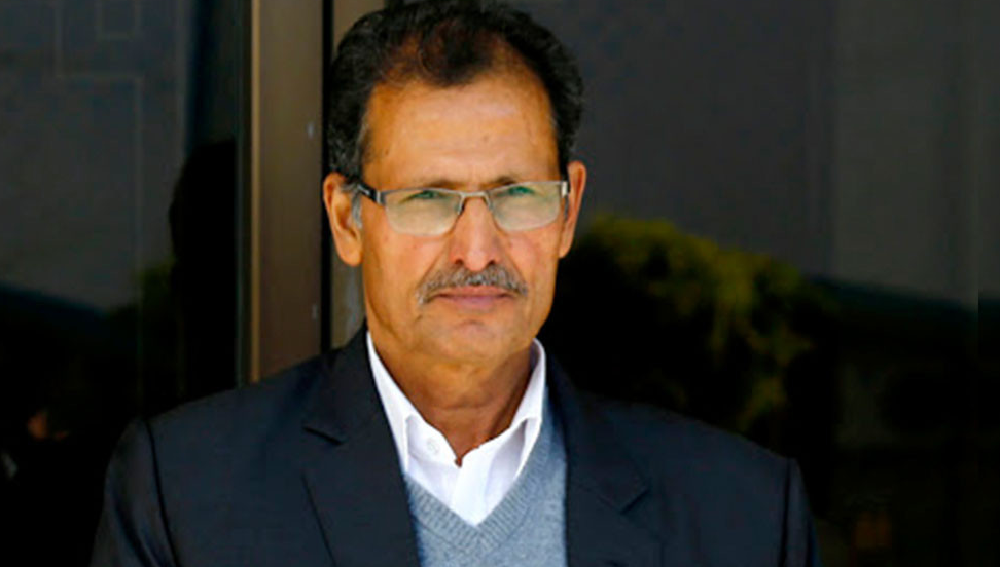
Agni Prasad Sapkota. File photo
Throughout his political career, he has faced a murder allegation rooted in the conflict. On April 29, 2005, a 45-year-old man named Arjun Bahadur Lama, a local community figure and a member of the rival CPN (UML) party, was abducted from a school premises in Dapcha, Kavrepalanchok, by Maoist cadres. He was never seen alive again. His body was later exhumed.
The National Human Rights Commission investigated the incident and concluded that Lama had been killed after abduction, implicating Maoist commanders in the area, including Sapkota, who commanded the guerrilla unit in Kavre district at the time. Lama’s widow, Purnimaya Lama, tried to file a complaint at the district police office in 2007. Police refused to register it, claiming the case should go to the TRC.
She then went to the Supreme Court, which in 2008 ordered police to register the case. After an arrest warrant was issued and an investigation started, the Cabinet under then Prime Minister Baburam Bhattarai issued a directive in 2012 shelving the case entirely. The Supreme Court later nullified that directive. The case has been sub-judice for over a decade.
What did the Supreme Court decide about Sapkota in June 2025?
After more than 60 deferments, a five-member constitutional bench of the Supreme Court, led by then Chief Justice Prakash Man Singh Raut, issued a landmark ruling on June 4, 2025. The bench ordered authorities to initiate a formal criminal investigation against Agni Sapkota in connection with the abduction and killing of Arjun Lama, directing the Kavre District Police Office to proceed on the basis of Purnimaya Lama’s original registered complaint.
The court issued a writ of certiorari, meaning it reviewed and overruled the government’s earlier decision to halt the investigation, rather than a writ of mandamus that would have demanded immediate prosecution.
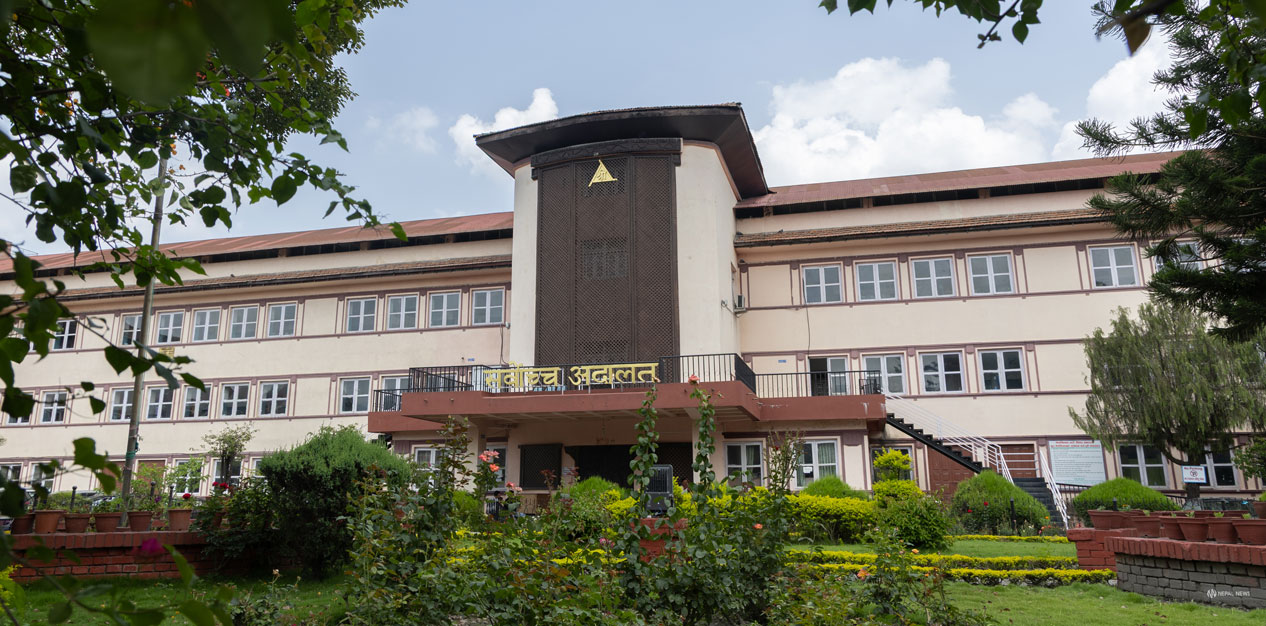
The Supreme Court of Nepal. File photo
Maoist leaders and party officials argued that the ruling only required a review of the investigative process and that the case could still flow through transitional justice mechanisms.
Legal analysts, however, saw the ruling as a clear signal that the Supreme Court would no longer allow political positions and party alignments to stand as permanent shields against accountability for conflict-era crimes. The case is now regarded as a potential precedent for dozens of similar cases involving senior political figures from both sides.
What is the “war crimes” case against Prachanda and Baburam Bhattarai?
In June 2023, former Maoist child combatants led by Lenin Bista, founding chairperson of the Discharged People’s Liberation Army, filed a writ petition in the Supreme Court against then Prime Minister Pushpa Kamal Dahal ‘Prachanda’ and former Prime Minister Baburam Bhattarai.
Supported by nine former child fighters, the 14-page petition accused both leaders of war crimes under international human rights law for allegedly forcing minors to participate in military activities during the insurgency.
The case highlighted former child combatants—many from poor rural backgrounds—who were recruited into the Maoist army and later disqualified from integration benefits after UNMIN verification found they were underage at the time of recruitment. Nearly 4,000 fighters were excluded on this basis, leaving many in prolonged uncertainty with minimal compensation while former commanders rose to senior political positions.
The petition initially faced procedural hurdles when the Supreme Court administration refused to register it, but a single bench later ordered its registration in June 2023, allowing hearings to proceed. The court subsequently began hearing arguments, in a context where Nepal cannot be taken before the International Criminal Court due to its non-ratification of the Rome Statute, and where ICC jurisdiction would not apply retroactively.
On May 14, 2026, the Supreme Court deferred the announcement of its final verdict in the case, which concerns the alleged recruitment and use of child soldiers during the Maoist insurgency. The matter had been placed in the reserved-for-judgment category after months of deliberation by a full bench, but the decision was postponed again, extending uncertainty over the legal and political implications for the former Maoist leadership.
What is the Kumar Lama case and its significance to Nepal’s accountability landscape?
Colonel Kumar Lama was a former Royal Nepal Army commander who had served during the conflict period. On January 3, 2013, he was arrested in the United Kingdom on charges that he had participated in the torture of two Nepali detainees in 2005, with UK prosecutors pursuing the case under the principle of universal jurisdiction, which holds that certain crimes, including torture and war crimes, are so grave that any state may prosecute their perpetrators regardless of where the crimes were committed.
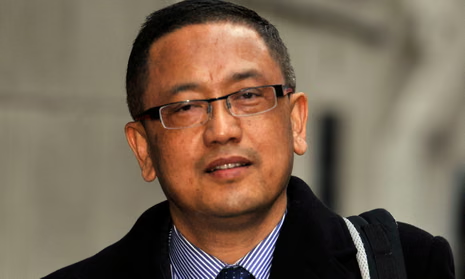
Kumar Lama
The case shook Nepal’s political establishment and demonstrated that former security force members who traveled or migrated abroad could face legal consequences that Nepal’s own justice system had refused to impose. After a prolonged trial at the Old Bailey, in which proceedings were significantly hampered by a shortage of court interpreters, Lama was acquitted on September 6, 2016, due to insufficient evidence.
Despite the acquittal, the case established a template and a warning. Rights organizations noted that dozens of other former army officers and Maoist commanders potentially face similar exposure in the UK, Australia, the United States, and other jurisdictions that have incorporated universal jurisdiction into their domestic law. The threat of arrest abroad has reportedly made some conflict-era officials cautious about international travel.
What role has the Nepali Army played in shaping or obstructing transitional justice?
The Nepali Army emerged from the conflict as the most powerful institution in the country, having doubled in size over the course of the war and having repelled the Maoist insurgency in the end. Rights documentation was particularly detailed about army abuses: disappearances and torture of suspected Maoist sympathizers in detention, extrajudicial killings framed as armed encounters, and systematic suppression of communities in conflict zones.
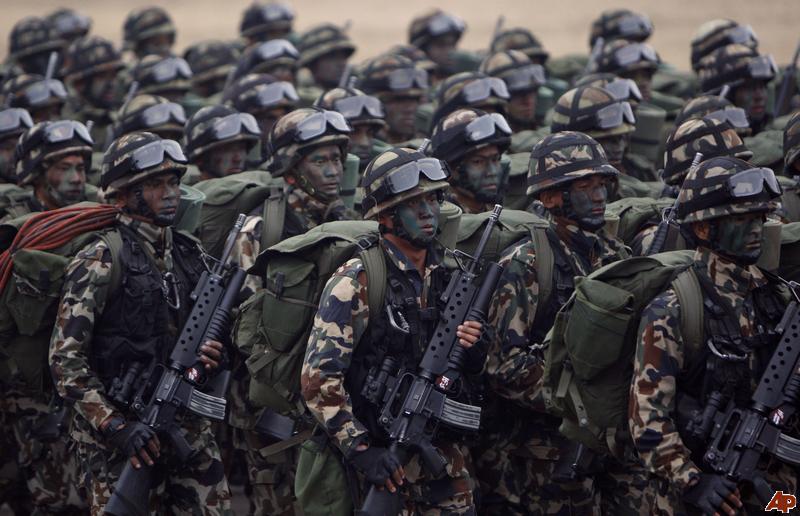
Nepal Army. File photo
The army’s position in the postwar period was that it had fought a legitimate counterinsurgency and that prosecuting soldiers would demoralize the institution, discourage future service, and undermine national security. It pushed hard for broad amnesty and for cases to be handled by the TRC rather than criminal courts, knowing the TRC had never completed a single investigation.
The army did hold a small number of internal military court proceedings during the conflict years, but these dealt with minor disciplinary charges rather than the gravity of the underlying abuses. The institution also wielded considerable political weight during the negotiation of the TRC Act, influencing the amnesty provisions that the Supreme Court later struck down.
The army’s insistence on institutional protection from accountability has been one of the most consistent forces slowing Nepal’s transitional justice process, matched only by the former Maoist leadership’s equal determination to avoid prosecution.
What has happened to victims in the two decades since the peace accord?
The approximately 63,700 families who filed complaints with the TRC and the more than 3,000 who registered disappearance cases with the CIEDP have spent nearly two decades cycling through bureaucratic processes, political promises, and institutional collapse.
For the families of the disappeared, there has been no systematic effort to locate remains, conduct DNA identification, or even formally confirm deaths, leaving them in a legal limbo that prevents inheritance, remarriage, or any form of official closure. Victims who sought justice through the regular criminal justice system were routinely told their cases belonged to the TRC, while the TRC received their complaints and did nothing with them.
Interim relief payments, a limited government program, provided small amounts to some families but were administered inconsistently and fell far short of meaningful reparations. Women who survived sexual violence during the conflict faced additional barriers, as the statute of limitations was long set from the date of the incident rather than from the issuance of a notification, effectively barring many from registering at all.
A coalition of 47 victim organizations and 26 civil society groups submitted a shadow report to the UN Human Rights Council in July 2025 describing the ongoing situation as a political debacle and warning of a deepening legitimacy crisis. Many survivors, they said, feel a sense of profound deception after years of assurances that yielded nothing.
What is the status of reparations and the transitional justice fund?
Reparations for conflict victims require both a legal framework and actual financial resources. The 2024 amendment to the TRC Act included provisions for a formal reparations fund, and the then Pushpa Kamal Dahal government allocated Rs one billion to it in the 2024-25 fiscal year. However, the fund was not actually established for some time, meaning that allocation sat frozen.
By late 2025, the fund had been set up and there were assurances that the billion rupees would be transferred. Even that sum, however, is a fraction of what is needed. A rough estimate by Nepal’s law ministry indicated that comprehensively concluding the peace process, including reparations, investigations, and institutional support, would require at least Rs 40 billion.
The government also sought contributions from bilateral and multilateral international partners at a meeting in Kathmandu. International donors, including diplomatic missions and the UN Resident Coordinator’s office, offered technical assistance and capacity-building support for the commissions.
But the broader geopolitical environment has also shifted: rights organizations have noted that Western governments, historically the most vocal advocates for transitional justice in Nepal, have been distracted by domestic concerns and the Russia-Ukraine war, reducing the international pressure that had previously nudged Nepal toward compliance.
Why has it been so difficult to distinguish between reconciliation and impunity in Nepal’s process?
The central tension in Nepal’s transitional justice debate has been whether the goal is healing and societal reconciliation or legal accountability for those responsible for grave crimes. The Maoist leadership and the army both argued, in different contexts, that prosecuting individuals would reopen wounds, destabilize the peace, and punish people for acts committed in the specific context of war.
These arguments found some political resonance in a country exhausted by conflict and eager for stability. International human rights law, however, draws a firm distinction between crimes that may be addressed through truth-telling, apology, and reparations, and crimes so grave, including enforced disappearance, systematic torture, and sexual violence, that they require prosecution regardless of political circumstance.
The Supreme Court of Nepal endorsed this distinction in multiple rulings, including a 2015 decision striking down amnesty provisions and a 2020 ruling that confirmed there can be no blanket amnesty for serious crimes like torture and enforced disappearances under international law.
The problem is that acknowledging this legal standard in court opinions is easier than implementing it when the perpetrators sit in parliament and cabinet, control party machinery, and have the leverage to stall legislation, veto appointments, and direct government allocations.
What have Nepal’s courts and the Supreme Court contributed to accountability?
The Supreme Court has been the most active institutional force pushing against impunity, though its rulings have not always been implemented. In 2014, the court struck down an ordinance that would have allowed the TRC to recommend amnesty without regard for international standards, and it directed parliament to criminalize enforced disappearances, torture, and crimes against humanity in domestic law.
In 2015, it struck down specific amnesty provisions in the TRC Act. In 2020, it ruled that serious crimes cannot be amnestied under international law. In June 2025, it ordered criminal investigation into Agni Sapkota’s alleged role in the killing of Arjun Lama. These rulings have established clear legal principles, but enforcement has been another matter entirely.
The Baburam Bhattarai Cabinet’s 2012 directive shelving the Sapkota investigation was itself a direct defiance of previous court orders, and it took thirteen more years before the court finally forced the issue. The Kumar Lama arrest in the UK demonstrated that international courts can step in when domestic systems fail.
Victims and rights groups have used Supreme Court writ petitions as a tool for forcing at least nominal compliance, and the June 2025 Sapkota ruling was celebrated partly because it came despite the fact that the hearing had been deferred over 60 times, suggesting the court was no longer willing to allow indefinite delay.
Where does Nepal’s transitional justice process stand as of May 2026, and what are the prospects?
As of May 2026, Nepal’s transitional justice process is at a critical and contested juncture. The legal framework has improved significantly with the 2024 amendment. However, the TRC and CIEDP currently have no commissioners after they were removed from office under the new ordinance.
The transitional justice fund has been established and the first government allocation is expected to be transferred. The Supreme Court’s June 2025 ruling on Agni Sapkota has signaled that the courts will no longer tolerate indefinite obstruction. However, victim groups have rejected the current commissioners as politically compromised.
Not a single one of the more than 67,000 registered cases has been resolved. The commissions have yet to begin substantive investigations. TRC regulations remain incomplete. Staffing and physical infrastructure are still inadequate.
The geopolitical environment that once generated external pressure on Nepal for accountability has become less favorable. And the former Maoist leadership and the Nepal Army continue to wield sufficient political influence to shape the pace and nature of any process. Rights organizations warn that at the current rate, full resolution of all registered cases could take decades, long after many survivors and key witnesses are dead.
The families of the disappeared in particular face an urgent clock: every year that passes without DNA testing, exhumation, or formal identification is another year of unresolved grief.
For Nepal’s peace to be genuinely durable, the victims who were promised justice in 2006 will need to see something more than commission buildings and appointment announcements.