Kathmandu
Saturday, July 25, 2026






KATHMANDU: The Good Governance Roadmap is a comprehensive reform blueprint prepared by the Office of the Prime Minister and Council of Ministers in Nepal. It emerged from the Gen Z youth protests that erupted on September 8-9, 2025, against systemic corruption, unemployment, poor service delivery, and political interference.
Following the December 11, 2025 agreement between the interim government led by Prime Minister Sushila Karki and Gen Z representatives, a high-level committee was formed to draft an actionable plan for transparent, accountable, citizen-centric, and technology-driven governance across federal, provincial, and local levels, as well as constitutional bodies and the judiciary.
The 15-member committee submitted its report in early March 2026. On March 25, 2026, Prime Minister Sushila Karki decided to publicly release the document and initiate its implementation.
The roadmap contains 1765 activities across 14 thematic clusters and 198 key reform points, serving as a ready-to-implement framework for the new government.
What is the Good Governance Blueprint and its overall purpose?
The Good Governance Blueprint is a detailed 1765-activity reform document divided into 14 thematic clusters that proposes structural, legal, policy, technological, and behavioral changes to overhaul Nepal’s public governance system.
Its primary purpose is to address the deep-rooted issues of corruption, inefficiency, and lack of accountability highlighted by the Gen Z protests of September 2025.
The roadmap aims to create a transparent, merit-based, and citizen-friendly administration by promoting e-governance, reducing political interference, simplifying service delivery, and establishing strong monitoring mechanisms.
It covers the executive, legislature, judiciary, and all three tiers of government. Designed as a practical blueprint, it includes time-bound actions and performance indicators to rebuild public trust and transform Nepal into a more efficient and corruption-free state within the coming years.
What is the background of the Gen Z movement that led to this roadmap?
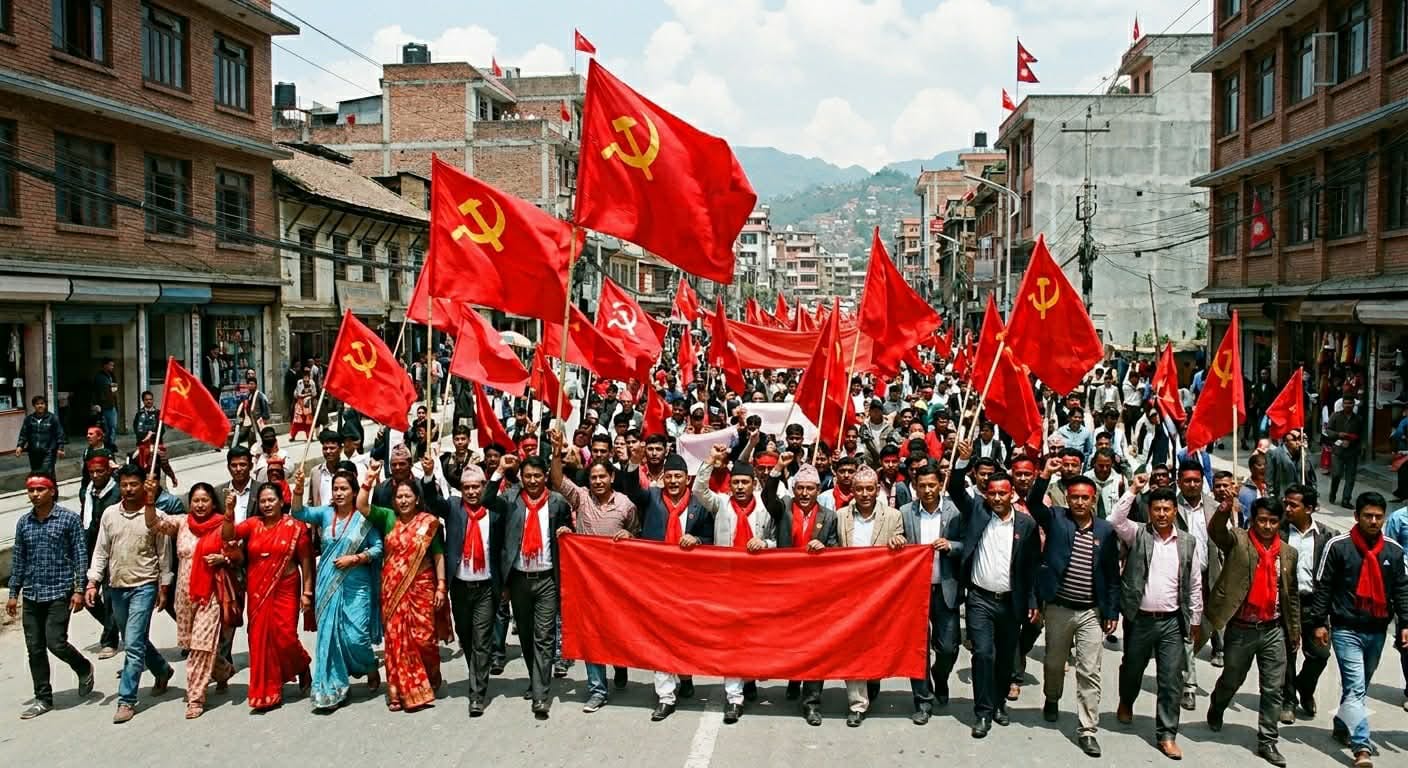
The Gen Z movement began on September 8, 2025, when thousands of young Nepalis, including school and college students, protested in Kathmandu and other cities against a government ban on 26 social media platforms and broader issues of corruption, nepotism, unemployment, and poor governance.
The protests, initially peaceful, turned violent in some areas, resulting in clashes with security forces and significant public outrage.
Demonstrators demanded an end to elite impunity, better service delivery, and systemic reforms. The unrest contributed to the resignation of the previous government. In response, the interim administration under Prime Minister Sushila Karki engaged with youth leaders and signed a 10-point agreement on December 11, 2025, committing to governance overhaul.
This agreement directly led to the preparation of the Good Governance Blueprint as a concrete follow-up to channel the movement’s aspirations into institutional change.
Who formed the committee and when?
The 15-member high-level committee for the Good Governance Blueprint was constituted by a decision of the secretaries’ meeting chaired by the Chief Secretary at the Office of the Prime Minister and Council of Ministers in late December 2025, following the December 11, 2025 agreement with Gen Z representatives.
The interim government under Prime Minister Sushila Karki directed the PMO to lead the reform exercise.
The committee formally began intensive work in late December 2025, conducted nationwide consultations with stakeholders, and completed its task within the tight two-month deadline.
It submitted the final report to the Chief Secretary in the first week of March 2026. The entire process was fast-tracked to deliver a practical reform document ahead of the March 5, 2026 general elections.
Who was the coordinator and who were the other members of the committee?
Secretary Gobinda Bahadur Karki, heading the Administrative Affairs Division at the Office of the Prime Minister and Council of Ministers, served as the Coordinator of the 15-member committee.
Joint Secretary Bhishma Kumar Bhusal acted as Member-Secretary. Other members included senior secretaries and joint secretaries from key ministries such as Finance and Federal Affairs and General Administration, along with legal experts, e-governance specialists from the National Information Technology Centre, and technical professionals with expertise in public administration, anti-corruption, and federalism.
The committee was selected for its collective experience and conducted broad consultations with civil society, private sector, and youth groups under direct guidance from the Prime Minister’s Office.
What was the mandate given to the committee?
The committee was given a clear six-point mandate: to diagnose the systemic governance failures exposed by the September 2025 Gen Z protests; to recommend structural changes that minimise political interference in bureaucracy, judiciary, and anti-corruption institutions; to propose technology-based solutions for transparent and efficient service delivery; to suggest merit-based systems for recruitment, promotion, and performance evaluation; to identify necessary legal and policy reforms applicable at federal, provincial, and local levels; and to prepare a detailed, time-bound implementation roadmap with robust monitoring and evaluation mechanisms.
The committee was required to deliver a practical, actionable report within two months that could be directly adopted by the incoming government after the March 2026 elections.
What are the main structural and administrative reforms recommended?
The roadmap recommends a major overhaul of the civil service by reducing unnecessary bureaucratic layers, merging overlapping departments, and creating specialized agencies for better efficiency.
It proposes abolishing the mandatory labor permit and No Objection Certificate requirements for foreign employment and higher studies to eliminate red tape for citizens.
Other key suggestions include introducing performance-based contracts for senior officials, fixed tenures for secretaries, and a new Public Service Delivery Act that enforces time-bound services with penalties for delays.
The document also calls for real-time digital dashboards to monitor all government projects and services, ensuring greater accountability and faster decision-making across the administration.
What recommendations does the report make for anti-corruption and transparency?
The report strongly recommends insulating anti-corruption bodies and the judiciary from political influence through constitutional amendments that ensure merit- and competition-based appointments.
It proposes mandatory public asset declaration for all public officials, AI-supported monitoring of financial transactions, and fast-track special courts for corruption cases with a zero-tolerance policy.
Additional measures include stronger whistle-blower protection laws, fully digital public procurement systems, mandatory third-party audits of development projects, and the establishment of an independent Governance Commission to oversee progress and publish annual reports on corruption indicators.
These steps aim to create systemic barriers against graft and enhance overall transparency in public institutions.
How does the roadmap propose to improve public service delivery and e-governance?
The roadmap envisions a fully paperless government by 2028 through a unified National Digital Identity system and a single mobile application integrating all citizen services.
It calls for 100 percent online delivery of key services such as passports, driving licences, land registration, tax filing, and various permits within two years.
Every ministry must adopt e-office software, while local governments will receive dedicated grants for digital infrastructure.
The plan also includes AI-powered grievance redressal systems with real-time tracking and blockchain technology for select transparent processes, allowing citizens to monitor service requests and provide instant feedback to improve accountability and user experience.
What changes are suggested for civil service recruitment, promotion, and management?
The report demands full depoliticization of the civil service via a revised Civil Service Act that mandates strictly merit- and competition-based appointments, including for senior positions like secretaries.
It recommends ending any political quota systems, introducing psychometric and leadership assessments, and linking all promotions exclusively to performance scores, training completion, and objective evaluations.
Fixed tenures, transparent transfer policies, and annual performance audits are proposed to reduce arbitrary decisions.
The roadmap further suggests establishing specialized training academies and requiring compulsory digital literacy certification for all government officials to build a modern, competent bureaucracy.
What reforms are proposed for federal, provincial, and local government structures?
The document advocates clearer role delineation among the three tiers of government to eliminate duplication and overlap. It proposes downsizing certain provincial ministries, granting greater fiscal autonomy to local governments, and creating inter-governmental coordination councils for smoother collaboration.
Performance-based fiscal transfers and digital budget monitoring tools are emphasized to improve resource use. The roadmap also recommends targeted capacity-building programs for elected representatives and officials at the provincial and local levels, aiming to strengthen grassroots service delivery and reduce opportunities for corruption in day-to-day administration.
Does the report address reforms in Parliament, Judiciary, and public enterprises?
Yes, the roadmap includes specific proposals for these institutions. For Parliament, it suggests reducing the size of the House, preventing Members of Parliament from simultaneously serving as ministers, and enforcing a strict code of conduct with mandatory asset disclosure.
For the judiciary, recommendations include competitive selection processes for judges, digital case management systems, and strict timelines for delivering judgments. Public enterprises are to be reviewed for corporatization or privatization unless they serve critical national strategic interests.
An independent oversight body is proposed to monitor constitutional commissions and state-owned enterprises, ensuring higher standards of accountability and operational efficiency across these entities.
What is the current status of the report and plans for its implementation?
The committee submitted the final Good Governance Blueprint report to the Chief Secretary in early March 2026.
On March 25, 2026, then-Prime Minister Sushila Karki decided to make the full document public through the Prime Minister’s Office and directed immediate steps toward implementation.
The current government led by Balendra Shah, expected to reflect the aspirations raised during the Gen Z movement, has indicated it will adopt the roadmap as a core part of its governance agenda.
An implementation cell is being established within the Prime Minister’s Office, with provisions for quarterly progress reviews. Several quick-win recommendations, such as simplifying labor permits and No Objection Certificates, are already under active consideration for early rollout.
The document is positioned as Nepal’s long-term guiding framework for governance reforms over the next decade.