Kathmandu
Sunday, July 26, 2026





Narendra Modi surpasses Jawaharlal Nehru’s record tenure to become India’s longest-serving elected Prime Minister. Here’s a detailed look at his political journey and milestone
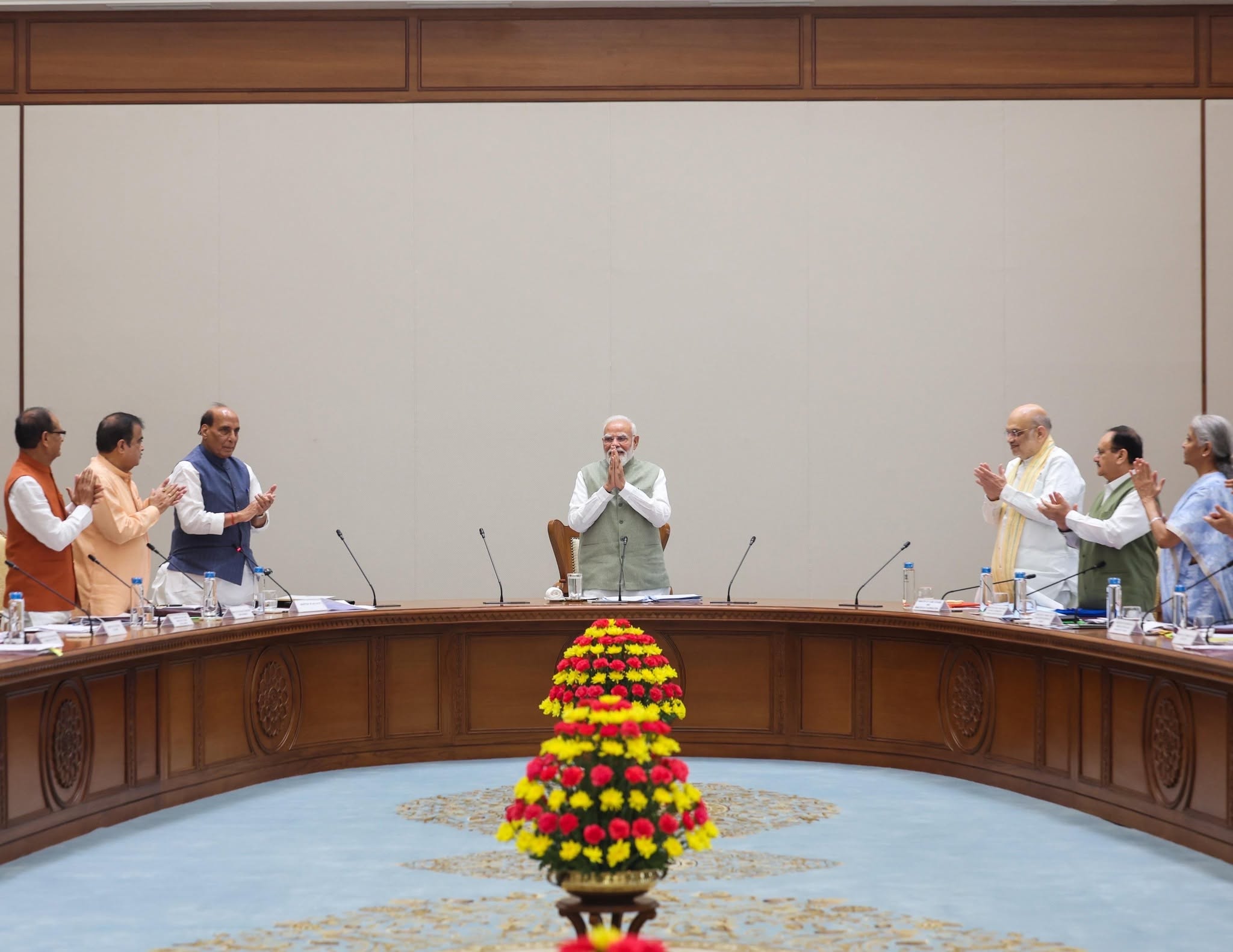
Narendra Modi became India’s longest continuously serving elected Prime Minister on June 10, 2026, completing 4,399 consecutive days in office and surpassing Jawaharlal Nehru’s record of 4,398 days as an elected leader.
First sworn in on May 26, 2014, he has since won three successive general elections. Modi remains among the most consequential and contested leaders in India’s post-independence history, celebrated by millions as a transformative force and deeply criticised by others as divisive.
Where does Narendra Modi come from, and what was his early life like?
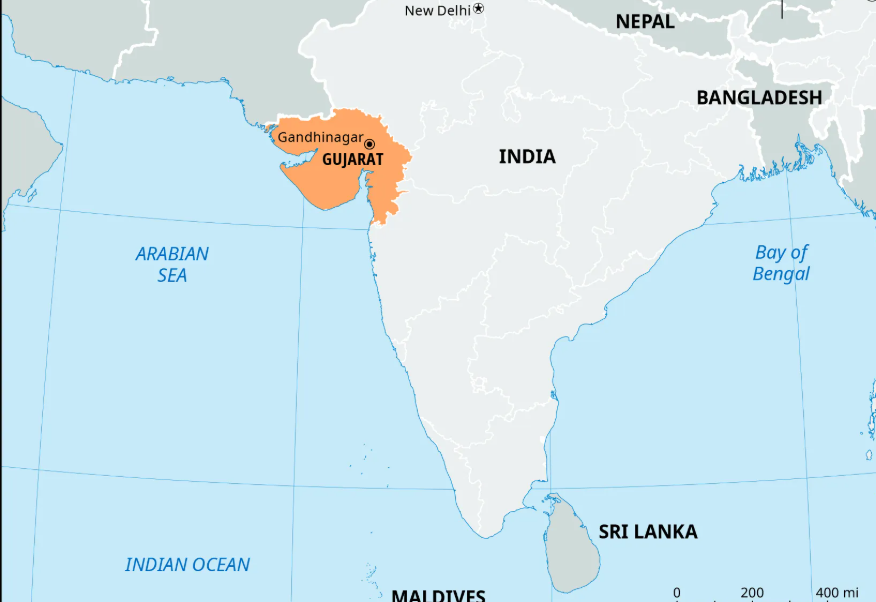
Narendra Damodardas Modi was born on September 17, 1950, in Vadnagar, a small town in what was then Bombay State and is now Gujarat. His family belonged to the Other Backward Class community, one of the more economically and socially marginalised sections of Indian society.
His father ran a tea stall, and as a child, Modi himself helped sell tea at a railway station, a detail he has often recalled publicly and that became central to the political image his supporters built around him. Financial hardship was a constant in his early years.
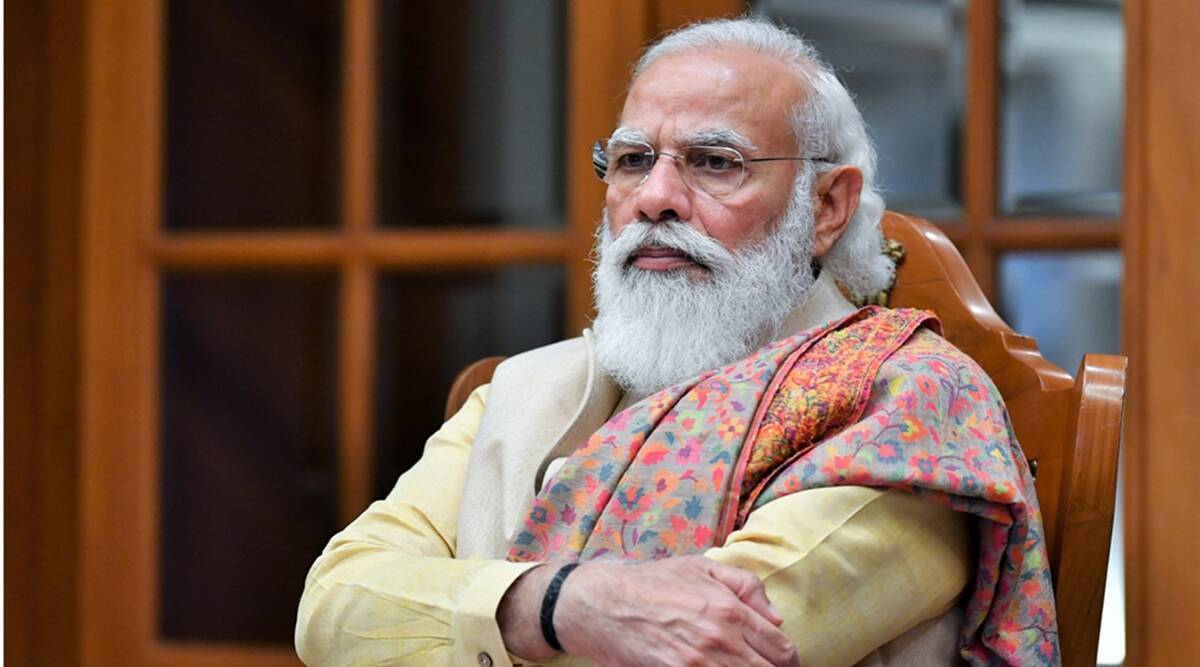
Modi showed an early interest in politics and ideology rather than business or academics. At around the age of eight, he was introduced to the Rashtriya Swayamsevak Sangh (RSS), the Hindu nationalist volunteer organisation. By 1971, he had become a full-time pracharak, a dedicated worker who foregoes personal life in service to the organisation. He did not pursue a conventional career path. It is claimed that he later obtained a degree in political science from Gujarat University and a master’s degree from the same institution, though the specifics of his academic record have occasionally been a subject of political dispute in India.
How did Modi rise through the ranks of Indian politics?
Modi’s political journey began within the organisational machinery of the RSS rather than through electoral politics. After spending years as a pracharak, the RSS assigned him to work with the Bharatiya Janata Party (BJP) in 1985. He proved to be an exceptionally capable organiser. He rose steadily through party ranks, managing state-level campaigns and later becoming the BJP’s general secretary in 1998. His organisational skill was widely credited with helping the BJP win that year’s Lok Sabha elections under Atal Bihari Vajpayee.
His transition from party functionary to elected officeholder came rather late. In October 2001, when Gujarat’s incumbent Chief Minister Keshubhai Patel struggled with criticism over the state government’s handling of the devastating Bhuj earthquake earlier that year, the BJP’s national leadership replaced Patel with Modi.
Modi subsequently contested and won a seat in the state assembly in February 2002, formally entering electoral politics for the first time in his fifties. That late start makes his subsequent political dominance even more remarkable.
He won successive assembly elections in Gujarat in 2002, 2007, and 2012, accumulating the longest tenure of any Chief Minister in Gujarat’s history before stepping onto the national stage.
What were the 2002 Gujarat riots, and how did they define Modi’s legacy?
In February 2002, a train carrying Hindu pilgrims returning from Ayodhya caught fire near the Godhra railway station, killing 59 people. The cause of the fire became deeply contested, with Modi attributing it to deliberate Muslim violence, a claim disputed in subsequent investigations.
What followed the Godhra incident was widespread communal violence across Gujarat that continued for weeks. By most accounts, including official Indian government figures, over a thousand people were killed, with Muslims constituting the large majority of the victims. Hundreds of thousands were displaced.
Modi was Gujarat’s Chief Minister at the time and bore responsibility for the state’s law enforcement response. His critics, including human rights organisations, former police officers, and foreign governments, accused him of failing to prevent the violence or, in some accounts, of actively encouraging the police to stand aside.
In 2005, the United States denied him a visa on these grounds. The BBC later produced a documentary examining the evidence of his conduct during the riots, which the Indian government condemned as propaganda and blocked within India. A Special Investigation Team appointed by the Supreme Court of India later found no prosecutable evidence against Modi personally, and courts eventually closed the case against him.
However, the riots remain the most contested chapter in his biography. Supporters argue he was cleared; critics argue the investigation itself was inadequate.
How did Modi win the 2014 general election and take power nationally?
By the early 2010s, the Congress-led UPA government of Manmohan Singh was badly weakened by corruption scandals, slowing economic growth, and public disenchantment. Modi had positioned himself as Gujarat’s development icon, promoting the state’s economic growth record under the phrase “Gujarat model.” The BJP named him its prime ministerial candidate in 2013, making the election explicitly about him rather than the party in the traditional sense.
Modi ran an intensely personal and technologically sophisticated campaign. He used holograms to address rallies simultaneously in multiple states, deployed social media at a scale Indian politics had not seen before, and crafted a message centred on economic aspiration, anti-incumbency against Congress, and strong governance. The BJP won 282 seats in the 543-member Lok Sabha, the first outright majority for a single party since 1984.
The National Democratic Alliance as a whole won 336 seats. Modi was sworn in as Prime Minister on May 26, 2014. He was the first Indian Prime Minister born after independence and the first from Gujarat to lead the country.
What were the major policy decisions of Modi’s first two terms?
Modi’s first term between 2014 and 2019 was defined by a series of high-visibility economic and social programmes. He launched Make in India to attract manufacturing investment, Digital India to expand internet access and digital services, and Swachh Bharat, a sanitation campaign that built tens of millions of household toilets.
Jan Dhan Yojana opened bank accounts for hundreds of millions of previously unbanked citizens. In 2016, his government implemented demonetisation, abruptly withdrawing 500 and 1,000-rupee notes from circulation, an unprecedented step that caused severe short-term economic disruption and deeply divided opinion on its long-term impact.
In 2017, his government rolled out the Goods and Services Tax, replacing a fragmented system of state and central taxes with a unified national framework.
His second term from 2019 onwards saw more constitutionally and symbolically charged decisions. In August 2019, his government revoked Article 370, which had granted Jammu and Kashmir a degree of autonomy, and reorganised the region into two Union Territories administered directly by the central government.
In January 2024, Modi personally consecrated the Ram Mandir in Ayodhya, a temple built on the site of the demolished Babri Masjid, fulfilling a decades-old Hindu nationalist objective.
The Citizenship Amendment Act of 2019 provided a fast track to citizenship for non-Muslim religious minorities from Pakistan, Bangladesh and Afghanistan, drawing large protests across India and sharp international criticism.
What has been the state of the Indian economy under Modi?
When Modi took office in 2014, India was the eleventh-largest economy in the world. By 2025, it had risen to become the fourth-largest in nominal GDP terms, surpassing the United Kingdom and Japan. India’s nominal GDP grew from roughly USD 2.03 trillion in 2014-15 to an estimated USD 3.87 trillion in 2024-25, a huge increase over a decade.
Real GDP growth averaged around six percent annually over the period, which was impressive relative to many global peers but slightly below the average of roughly seven percent under the preceding Manmohan Singh government.
The achievements are real and significant. UPI, India’s digital payments platform, processed over 100 billion transactions in 2024 alone and became a globally admired model of financial technology. Infrastructure spending on roads, railways, airports and ports expanded substantially. Renewable energy capacity grew rapidly, and India reached fifty percent of its electricity generation from renewable sources ahead of its 2030 target.
At the same time, unemployment, particularly among the young, has been a persistent weakness. Critics argue that growth has been concentrated at the top and that the agricultural sector and informal economy have not benefited proportionately.
The job creation record has not matched the pace of economic expansion, and this dissatisfaction was visible in the 2024 election results, when the BJP lost its outright majority.
What are the main criticisms of Modi’s leadership and governance style?
Modi’s government has faced criticism across multiple fronts throughout his tenure. On civil liberties, journalists, activists and academics critical of the government have faced legal action under laws such as the Unlawful Activities Prevention Act, leading press freedom organisations to rank India poorly in their indices.
The Citizenship Amendment Act was seen by many constitutional scholars and minority rights groups as introducing religion into the basis of citizenship for the first time in independent India’s history, which critics argued was incompatible with the country’s secular constitution.
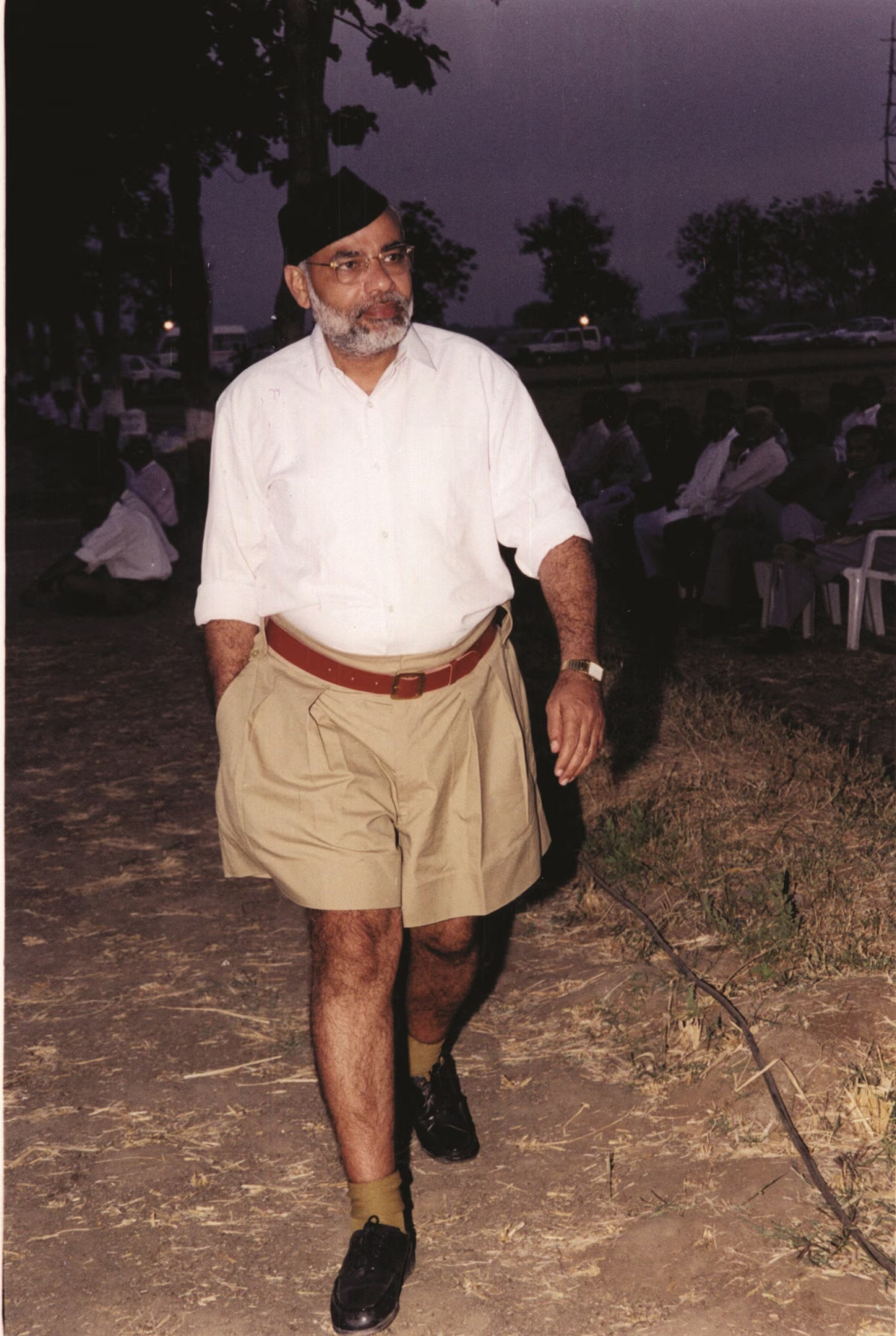
Indian PM Modi in ‘Rashtriya Swayamsevak Sangh’ dress, popularly known as RSS in India
His personal governance style has also attracted comment. Modi has concentrated power significantly, with key decisions flowing through the Prime Minister’s Office and his close confidant and Home Minister Amit Shah. The institutional independence of the judiciary, electoral commission, and investigative agencies has been questioned by opposition parties and civil society groups.
His relationship with large corporate interests, particularly the Adani and Ambani conglomerates, has been a recurring opposition talking point. In the 2024 elections, the BJP fell below a majority and had to rely on coalition partners to form a government, which many analysts interpreted as a partial voter verdict on these concerns even as the party remained the single largest force by a wide margin.
Why is Modi described as a polarising personality, and how do his supporters and critics diverge?
Few Indian leaders since independence have generated the kind of visceral loyalty and equally intense opposition that Modi has. His supporters see him as a self-made leader from a humble background who broke the hold of dynastic politics, delivered genuine economic progress, restored India’s national pride, and gave the Hindu cultural majority a political voice. They credit him with bringing welfare schemes to previously excluded populations and raising India’s stature internationally.
For millions of Indians, particularly from non-elite and non-urban backgrounds, he represents a validation of their identity and aspirations.
His critics, particularly from Muslim communities, liberal intellectuals, and opposition parties, see a different picture. They argue that his decade in power accelerated the erosion of India’s secular foundations, emboldened communal violence and vigilantism, weakened institutional checks on executive power, and created an atmosphere in which dissent is increasingly risky.
The disagreement is not merely political but cuts to fundamental questions about what kind of country India is and aspires to be.
International human rights organisations and Western governments have voiced similar concerns, though Modi has managed India’s foreign policy adeptly enough to maintain strong relations with most major powers regardless.
How has Modi approached foreign policy, and what has been India’s global standing?
Modi has been an unusually active foreign policy Prime Minister. He initiated the Neighbourhood First policy, prioritising relations with South Asian neighbours, and the Act East policy, deepening engagement with Southeast Asia.
He cultivated personal relationships with major leaders across ideological lines, from Donald Trump to Vladimir Putin to Barack Obama. India under Modi walked a careful path of strategic autonomy, maintaining close ties with the United States and its allies while preserving its historic relationship with Russia and deepening economic and diplomatic engagement with the Gulf states.
India hosted the G20 presidency in 2023 and used it to successfully build consensus on a range of issues, which the government highlighted as a symbol of India’s growing global weight.
Modi secured the adoption of the International Day of Yoga at the United Nations, with 177 nations voting in favour, a diplomatic achievement that also had cultural resonance.
However, this assertive posture faces significant strategic challenges, particularly in India’s immediate neighborhood. Despite the “Neighborhood First” policy, China’s aggressive financial footprint through the Belt and Road Initiative has pulled nations like Sri Lanka and the Maldives into Beijing’s orbit, while persistent border incursions and a widening trade deficit with China remain unresolved.
Furthermore, India’s push to isolate Pakistan has paralyzed SAARC (the South Asian regional bloc), leaving South Asia fractured and limiting sub-regional integration. Critics also point out that an over-centralization of diplomatic decision-making within the Prime Minister’s Office and occasional international blowback from domestic political rhetoric have forced India into defensive “damage control” diplomacy, highlighting the tension between its global ambitions and regional realities.
The tension in India’s approach has been managing its democratic identity abroad while its democratic institutions face pressure at home, a contradiction that has not gone unnoticed by Western governments.
What has been Modi’s relationship with Nepal, and how many times has he visited?
Modi has visited Nepal more times than any previous Indian Prime Minister in a comparable period. His first visit came in August 2014, just months after taking office, breaking a 17-year gap since an Indian Prime Minister had visited the country.

Indian PM Narendra Modi at the inaugural session of the 18th SAARC Summit, in Kathmandu, Nepal, on November 26, 2014. File photo
He delivered a speech to Nepal’s parliament in Nepali language, which was received warmly.
He returned in November 2014 for the SAARC summit in Kathmandu. His third visit in May 2018 was politically significant in a different way. He flew first to Janakpur, where he offered prayers at the Janaki Temple, announced a grant of USD 10.51 million for the development of the city, and jointly inaugurated a direct bus service between Janakpur and Ayodhya as part of a Ramayana Circuit initiative.
He then travelled to Muktinath in Mustang before proceeding to Kathmandu for bilateral talks with then-Prime Minister KP Sharma Oli.
The 2018 visit was widely seen as an attempt to rebuild goodwill after the India-Nepal relationship had been significantly damaged by an unofficial Indian economic blockade following Nepal’s new constitution in 2015.
What created the diplomatic strain between India and Nepal during Modi’s tenure?
The worst period in India-Nepal relations during Modi’s years in power came in 2015 and 2016. After Nepal promulgated its new constitution in September 2015, India expressed displeasure with provisions that Madhesi groups in the Tarai plains found exclusionary.
India publicly supported Madhesi demands for constitutional amendments, and a prolonged blockade of goods at the Nepal-India border followed, lasting roughly six months. Nepal’s fuel and supply shortages became acute.
While India denied officially ordering the blockade, the Nepali side held India responsible, and the episode produced a sharp nationalist backlash in Nepal, driving Kathmandu temporarily closer to China.
The relationship remained complicated even after the immediate crisis passed. Nepal’s parliament in 2020 endorsed a revised national map that included Kalapani, Lipulekh and Limpiyadhura, territories over which India and Nepal have a longstanding dispute and which India administers.

India rejected the map revision as artificial and not based on historical facts. The Lipulekh issue resurfaced again more recently when India and China announced resumption of trade through the Lipulekh pass, prompting Nepal to formally protest to both countries.
These territorial and sovereignty disputes have periodically strained a relationship that is otherwise defined by deep economic, cultural and civilisational ties.
What was the significance of Modi’s meeting with Rabi Lamichhane in New Delhi in June 2026?
In early June 2026, Rabi Lamichhane, chairman of Nepal’s Rastriya Swatantra Party (RSP), made a five-day visit to India at the invitation of the BJP. The visit carried weight because it was the first high-level political engagement between India and the new RSP-led government that had come to power under Prime Minister Balendra Shah following the RSP’s sweeping victory in Nepal’s March 2026 general election.
Lamichhane held meetings with Home Minister Amit Shah and External Affairs Minister S. Jaishankar before meeting Prime Minister Modi for over an hour, with India’s National Security Advisor Ajit Doval and Foreign Secretary Vikram Misri also present.
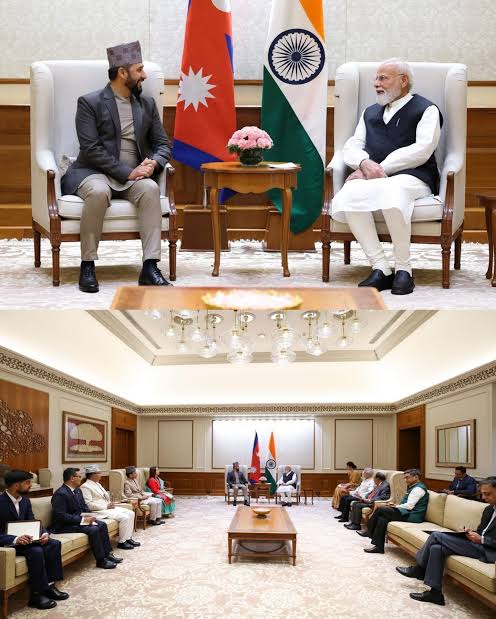
The meeting was symbolically and diplomatically significant. Modi described Nepal as a priority partner under India’s Neighbourhood First policy and expressed eagerness to work with the new political leadership.
Lamichhane told Modi that his party carried no political baggage from past disputes and wanted to build relations with India in a fresh direction. Both sides emphasised digital connectivity, shared civilisational bonds and development cooperation.
For Lamichhane, the meeting raised his stature as a statesman acceptable to India. For Modi, it represented an opportunity to reset ties at a moment when Prime Minister Shah had been relatively inaccessible to foreign dignitaries, including the Indian foreign secretary whose planned Kathmandu visit had been postponed.
The visit also came amid ongoing tensions over the Lipulekh border dispute.
What is the record Modi broke on June 10, 2026, and how significant is it historically?
On June 10, 2026, Modi completed 4,399 consecutive days as Prime Minister since his first oath on May 26, 2014, surpassing Jawaharlal Nehru’s record of 4,398 days as an elected prime minister.
The distinction matters because Nehru’s total time as Prime Minister from August 1947 until his death in May 1964 was longer overall, but the first four and a half years of that tenure preceded India’s first general election in 1952.
Modi’s entire tenure has been backed by successive electoral mandates, making him the longest continuously serving elected Prime Minister in India’s history.
The milestone arrives after a series of records in the years before it. In July 2025, Modi had already surpassed Indira Gandhi’s consecutive tenure of around 11 years to become second on that list. In March 2026, combining his years as Gujarat Chief Minister from October 2001 with his time as Prime Minister, he surpassed former Sikkim Chief Minister Pawan Kumar Chamling to become the longest-serving elected head of government in India at any level, completing 8,931 days in public office.
The June 2026 milestone specifically concerns the Prime Ministership alone. His supporters have welcomed it as validation of consistent public trust. Critics point out that records of longevity are measures of political survival rather than quality of governance.
How has Modi fared in his third term after the 2024 election, and what does the result reveal?
The 2024 Lok Sabha election was considerably tighter than 2019 or 2014. The BJP won 240 seats, falling short of the 272 needed for an outright majority in the 543-seat house.
The National Democratic Alliance as a whole secured around 293 seats, enough to form a government, but Modi entered his third term in a meaningfully weaker position than before, dependent on coalition partners in a way he had not been during his first two terms. He was sworn in for the third time on June 9, 2024.
The result was widely analysed as reflecting voter anxiety over unemployment, agrarian distress, and concerns about the direction of the country among certain communities, even as Modi himself remained the dominant political personality with no credible national rival from the opposition.
The Congress-led INDIA alliance performed better than most polls had predicted, winning 234 seats. The outcome complicated the BJP’s legislative agenda but did not fundamentally alter Modi’s hold on the executive. His government has continued its infrastructure and welfare programmes into the third term, while managing coalition arithmetic more carefully than before.
The question of succession within the BJP has become more openly discussed than it was during his first two terms when his dominance appeared more absolute.
How does history likely assess Modi, and what is his enduring political significance?
Narendra Modi’s place in Indian history is almost certain to be both substantial and contested. On the one side of the ledger, he presided over India’s rise from the eleventh-largest to the fourth-largest economy in the world, led a decade of expanded infrastructure and digital transformation, won three successive general elections by substantial margins, and raised India’s profile on the world stage in ways that cut across conventional geopolitical alignments.
He broke the post-independence dominance of the Congress party and the Nehru-Gandhi dynasty over Indian national politics, something that had seemed almost structurally impossible to earlier observers.
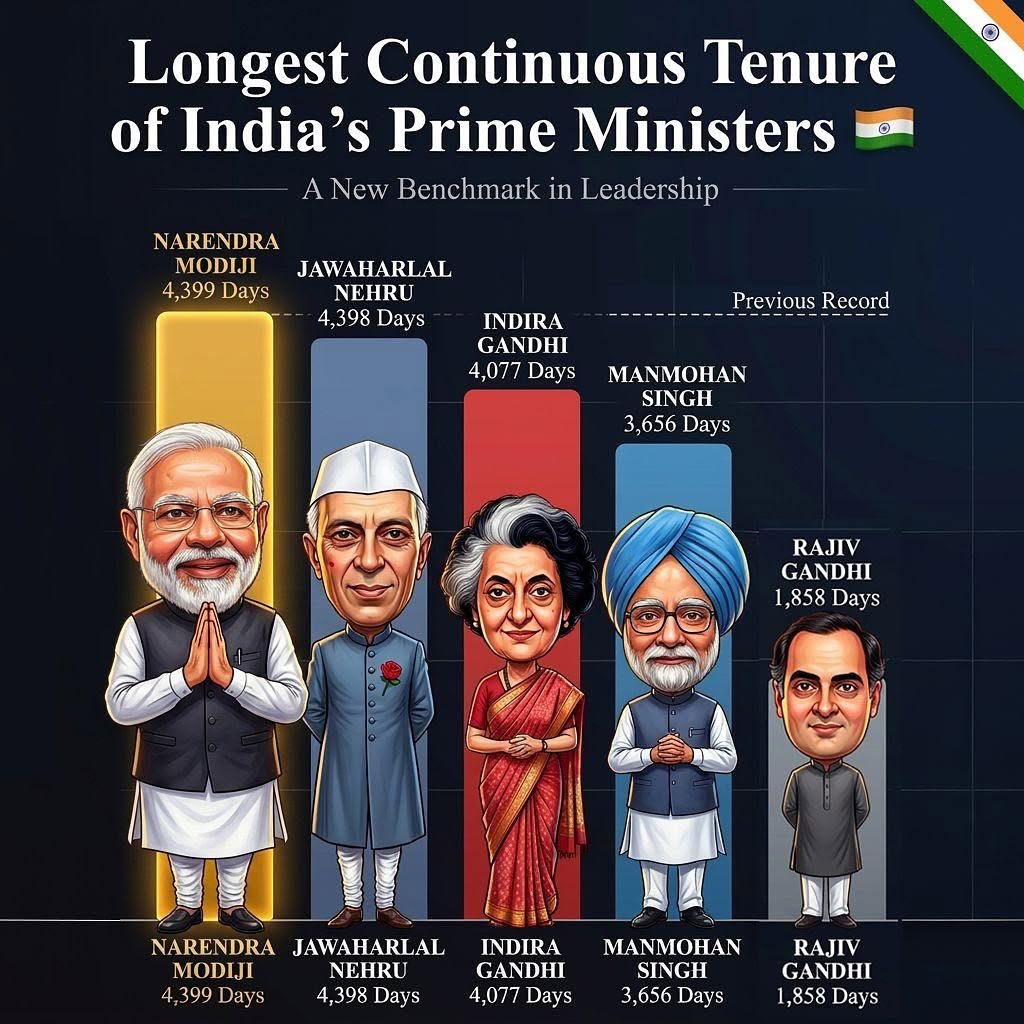
Infographic courtesy: BJP
On the other side, his tenure will be equally remembered for the polarisation of Indian society along religious lines, the controversies around the 2002 Gujarat riots that marked the beginning of his rise, the rollback of Kashmir’s special status, the citizenship law that critics say redefined who belongs in India, and a documented narrowing of civic space for dissent and press freedom.
The argument over his legacy is in many ways an argument about India’s identity itself.
His rise as India’s longest-serving elected Prime Minister and his engagement with Nepal’s most prominent new political figure highlight a shared recognition among both supporters and critics: regardless of opinion about him, he has remained the central and unavoidable force in South Asian politics for over a decade.