Kathmandu
Friday, June 19, 2026





As Rastriya Swatantra Party prepares for its first general convention from June 21, cooperative fraud remains the sole charge against its chair, opening a clearer political and legal path for Rabi Lamichhane.

KATHMANDU: Rastriya Swatantra Party chair Rabi Lamichhane has been cleared of organized crime and money laundering charges by district courts in Kathmandu, Kaski, Parsa and Rupandehi, leaving cooperative fraud as the only criminal case still pending against him.
The clearances follow a contested decision by former Attorney General Sabita Bhandari to amend the charge sheets, a move that was challenged at the Supreme Court but ultimately allowed to stand in the district courts.
The timing places Lamichhane in his strongest legal position in over a year, just as RSP gathers in Chitwan for a convention where he is expected to be reelected unopposed.
Who is Rabi Lamichhane and how did he rise to prominence in Nepal?
Rabi Lamichhane built his public profile as a television journalist long before he entered politics. He hosted a popular investigative talk show that aired grievances of ordinary citizens against government offices, banks, police stations and local administrations, often confronting officials live on camera over corruption and negligence. This format made him a household name across Nepal, particularly among younger and middle class viewers frustrated with bureaucratic apathy.
He spent years living and working in the United States before returning to Nepal and entering broadcast journalism, eventually becoming the face of a media outlet co founded with business partners. His on screen persona as a relentless questioner of authority translated into a reservoir of public trust that traditional politicians lacked.
When he abandoned journalism to form a political party in mid 2022, that accumulated credibility became the foundation of an unusually rapid and successful entry into electoral politics.
What is the background of the Rastriya Swatantra Party and how quickly did it grow?
Lamichhane announced the formation of the Rastriya Swatantra Party on June 21, 2022, with an initial twenty one member central committee built around the promise of clean, alternative politics outside the traditional party establishment.
Within roughly five months, the party contested the November 2022 general election and won twenty one seats with more than 1.13 million votes, an extraordinary debut that made it the fourth largest force in parliament. The party then joined the ruling coalition, with Lamichhane becoming deputy prime minister and home minister.
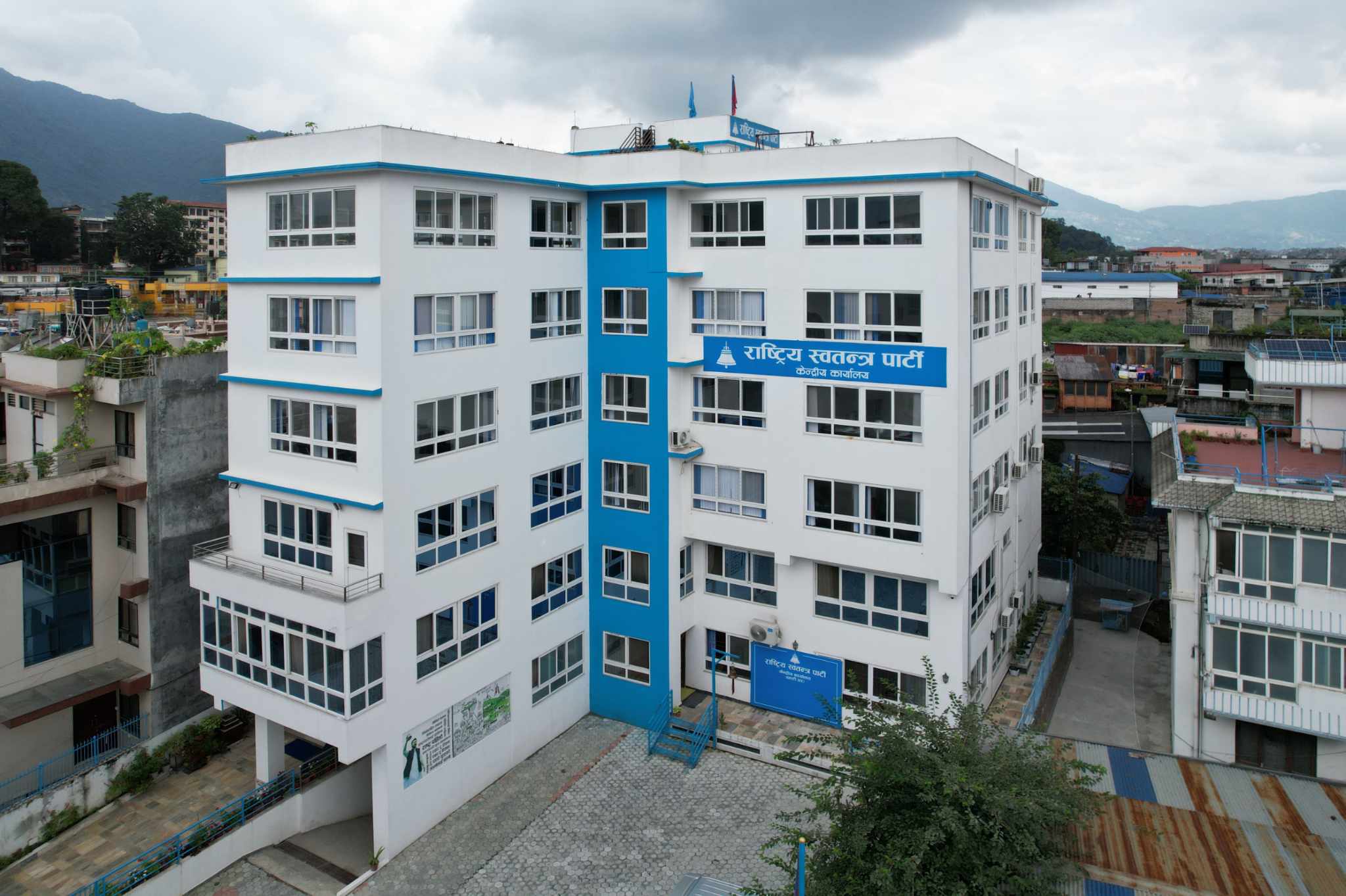
Central Office of Rastriya Swatantra Party (RSP)
Its growth did not stop there. In the general election held on March 5, RSP secured over 5.1 million votes and 182 seats out of 275, making it the largest party in the House of Representatives and pushing it close to a two thirds majority, an outcome that followed the political upheaval after last September’s Gen Z led protests that brought down the previous government.
Why do some Nepalis admire Lamichhane while others distrust him deeply?
His supporters see him as a rare political figure who built a movement from nothing, channeling years of frustration with entrenched parties into a genuine alternative that delivered electoral results almost nobody predicted. Many young and urban voters credit him with giving them a reason to vote at all, after decades of disillusionment with the same revolving cast of leaders.
His critics, however, point to a long trail of legal and ethical controversies, including disputes over his citizenship status, allegations connected to a journalist’s death, and now serious financial fraud allegations involving ordinary savers’ deposits in cooperative institutions.
They argue that his anti corruption image sits uneasily alongside accusations that he personally benefited from diverted public savings. This split between enthusiastic loyalty and deep suspicion has defined nearly every phase of his political career, making him simultaneously one of Nepal’s most popular and most polarising figures.
What happened with his US citizenship and why did it become controversial?
Lamichhane acquired American citizenship in 2014 while living in the United States, and Nepali law does not permit dual citizenship with a country like the US under ordinary circumstances. After returning to Nepal and becoming a prominent broadcaster, questions arose about whether he had properly renounced either citizenship when required.
Facing mounting public scrutiny, he formally gave up his American citizenship in 2018, presenting documentation of this at Nepal’s immigration department. However, this came after he had already obtained a Nepali passport in 2015 while still holding US citizenship and using a Nepali citizenship certificate that had technically become void the moment he became American.
This sequence meant he held two countries’ travel documents simultaneously for a period, which directly contradicted constitutional and legal requirements and later became central to challenges against his eligibility to hold elected office.
What did the Supreme Court rule regarding his parliamentary seat over the citizenship issue?
In January 2023, the Supreme Court’s constitutional bench ruled that Lamichhane’s candidacy and election to the House of Representatives were void because he lacked valid Nepali citizenship at the time he contested the 2022 election. The court found that after renouncing his American citizenship in 2018, he had never properly reapplied for Nepali citizenship through the required legal process, meaning he was not actually a Nepali citizen when he stood for office, served as a lawmaker, or held the posts of deputy prime minister and home minister. This forced him out of all three positions immediately.
He responded by applying for and receiving fresh Nepali citizenship through due process within days of the ruling, allowing him to remain politically active, though the episode cost him his ministerial career at that time and exposed him to further scrutiny.
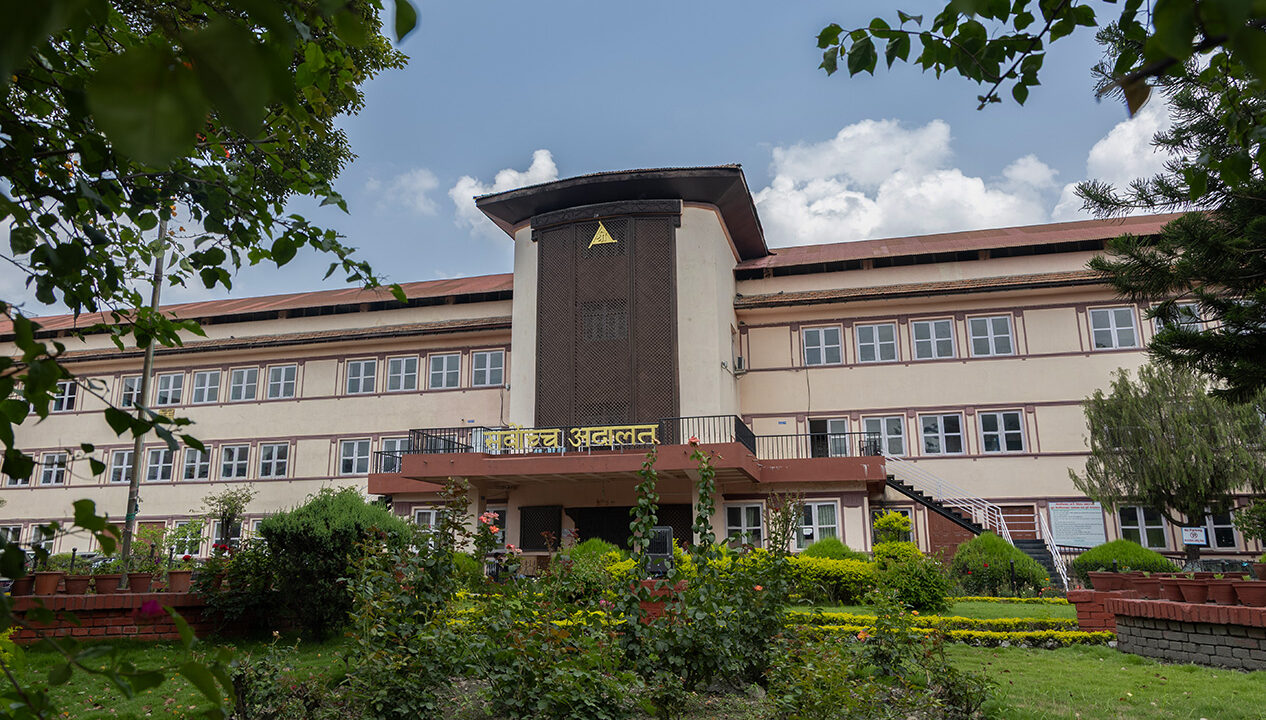
Supreme Court. Photo: Bikram Rai
What is the passport case and where does it currently stand?
Separate from the citizenship ruling, Lamichhane faced allegations that he illegally obtained a Nepali passport from the Nepali embassy in Washington in 2015 by presenting a citizenship certificate that had already become invalid once he acquired American citizenship the previous year.
Under the Passport Act, obtaining travel documents through false information is a punishable offence carrying potential fines and imprisonment. The Supreme Court at one point issued a show cause notice to the Attorney General’s Office for failing to file a case over this alleged passport misuse, and the court said in its detailed citizenship verdict that the matter would need to be resolved separately under the Citizenship Act and Passport Act.
The case has moved slowly through administrative and investigative channels since then, and unlike the cooperative fraud cases it has not produced a major court decision recently, leaving its final resolution still pending.
Who was Shalikram Pudasaini and what was that controversy about?
Shalikram Pudasaini was a journalist who had worked at News 24, the media outlet associated with Lamichhane. Pudasaini died by suicide, and in a video he recorded before his death, he made allegations implicating Lamichhane and accusing him of pressuring or mistreating him in ways that contributed to his decision to take his own life.
The case triggered a major public and legal reaction, with police arresting Lamichhane in connection with the matter on August 15, 2019, marking one of the most damaging episodes of his political career. He was acquitted by the Chitwan District Court in January 2020 due to the lack of sufficient evidences.
The controversy fed directly into the broader narrative used by critics that behind his anti corruption public image lay a pattern of alleged mistreatment of subordinates and association with troubling business and media practices, even though this case did not result in lasting criminal liability against him.
What exactly are the cooperative fraud charges against Lamichhane?
The core allegation is that Lamichhane, along with cooperative operator Gitendra Babu Rai, known as GB Rai, and former deputy inspector general Chhabilal Joshi, was involved in diverting depositors’ savings from several savings and credit cooperatives into Gorkha Media Network, a media company Lamichhane co founded before entering politics.
The cooperatives named include the Supreme Savings and Credit Cooperative in Butwal, Suryadarshan Cooperative in Kaski, Swarnalaxmi Cooperative in Kathmandu, and Sano Paila Cooperative in Parsa, all of which allegedly funneled members’ deposits toward the media venture rather than using them for legitimate cooperative purposes.
Investigators argued that ordinary savers, many from modest financial backgrounds, lost access to their deposits as a result.
His critics have described Lamichhane as the mastermind of the scheme, claiming he was actively involved in the company’s financial and operational management from its inception despite his denials.
How and when was Lamichhane first arrested in the cooperative fraud case, and what led up to it?
Lamichhane was first taken into custody on November 2, 2024, in Kathmandu and subsequently transferred to the Kaski District Police Office for questioning, marking the formal start of his legal troubles over cooperative fund misuse.
The arrest followed the work of a special parliamentary probe committee that had investigated irregularities at several savings and credit cooperatives and concluded that Lamichhane, in his earlier role as managing director of Gorkha Media Network, bore responsibility for funds illegally diverted from institutions including Suryadarshan and Swarnalaxmi cooperatives.
Investigators found that dozens of checks had been issued to pay interest amounting to crores of rupees to depositors of at least three cooperatives, which they argued pointed to a deliberate pattern of using cooperative savings to sustain the media company rather than legitimate financial operations.
His custody, bail, and rearrest over the following months set the stage for the wider organised crime and money laundering charges that followed, and which have only recently been narrowed back down to the original cooperative fraud allegation.
How did former Attorney General Sabita Bhandari’s decision to withdraw charges come about?
Former Attorney General Sabita Bhandari approved a decision, formalised in a seven page note and order, directing district government attorney offices in Kaski, Kathmandu, Rupandehi and Parsa to amend their charge sheets against Lamichhane by removing the organised crime and money laundering allegations while keeping the cooperative fraud charge intact.
The decision relied on Section 36 of the Criminal Procedure Code of 2017, a provision that allows charge sheets to be amended with the attorney general’s approval when new or stronger evidence justifies revising the case while it remains under judicial consideration.
The Attorney General’s Office said the change applied not only to Lamichhane but, to avoid discrimination, also extended to co accused individuals including GB Rai.
Critics noted the decision came shortly before national elections, raising suspicions about its timing and motivation.
How was the then Attorney General’s decision challenged in court, and by whom?
The decision faced immediate legal challenge through a writ petition filed at the Supreme Court by senior advocate Dinesh Tripathi along with law student Ayush Badal and advocate Yuvraj Paudel, who argued that the Attorney General had no constitutional authority to effectively withdraw serious charges like organised crime and money laundering once a case was already before the courts.
They described the decision as prima facie unlawful, made in bad faith, and arbitrary, naming the Attorney General’s Office, various government prosecutor offices, and the Prime Minister’s Office as respondents.
The case moved through several benches, with one panel asking the Attorney General’s Office to produce original documents justifying the amendment, and another eventually referring the matter to a full bench for final determination given its significance and the constitutional questions raised about prosecutorial power.
What did the courts ultimately say when ruling on the amendment requests?
District courts that approved the amendments generally reasoned that balancing the rights and interests of both the complainants and the defendants justified narrowing the charges, given that the cooperative fraud allegation, the most directly evidence based charge, would continue to be prosecuted regardless.
The Kaski District Court, for instance, endorsed the earlier attorney general’s decision and allowed the original and supplementary charge sheets to be amended under Section 36 of the Criminal Procedure Code, finding the request reasonable considering both sides’ circumstances.
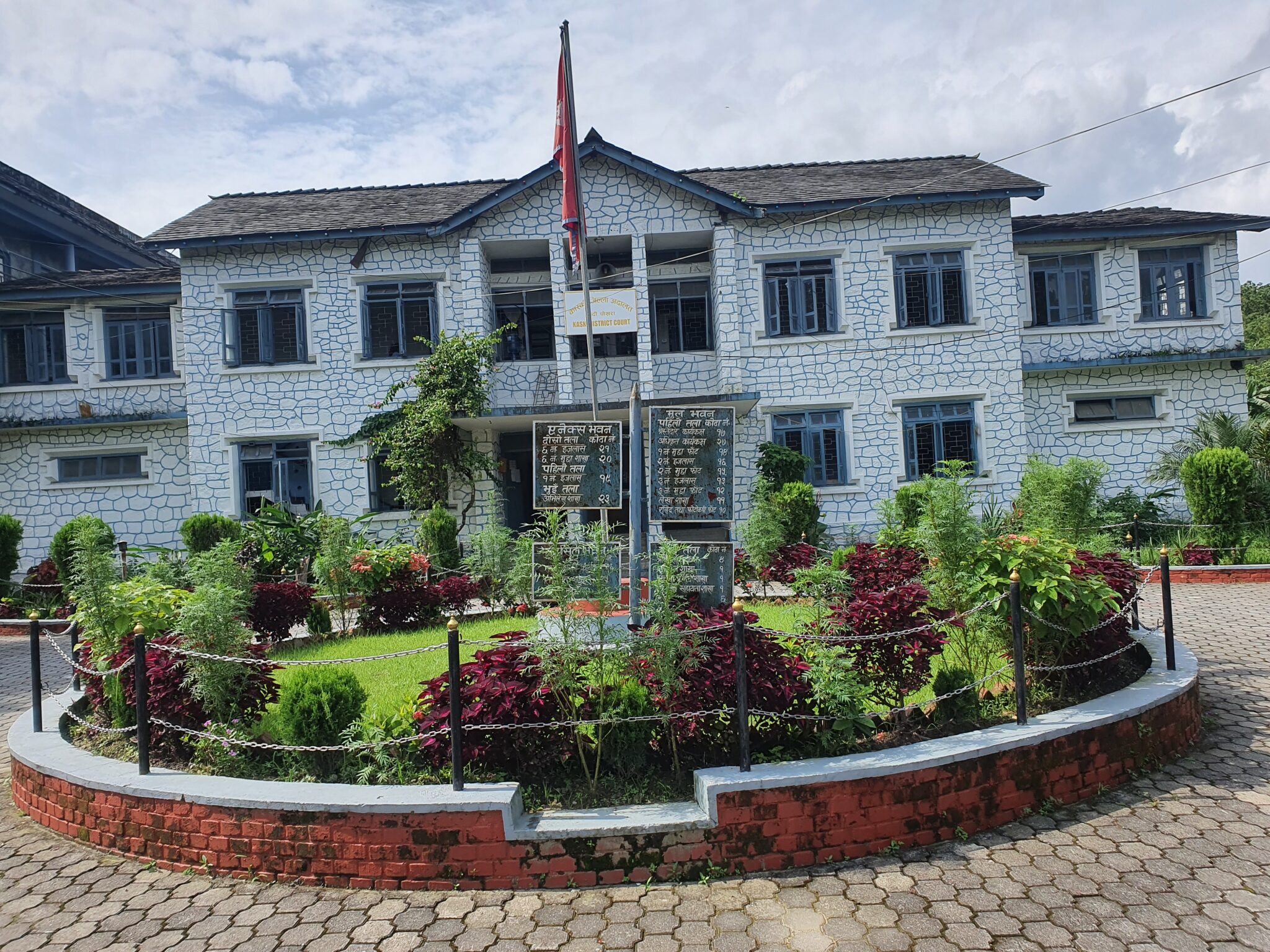
Kaski District Court. Photo source: Court’s website
Some courts initially paused proceedings to await the Supreme Court’s verdict on the constitutional challenge before acting, but as that challenge failed to produce a definitive block, individual district courts proceeded to approve the amendments one after another, culminating in the Kathmandu District Court’s recent order removing the organized crime charge there as well.
What is the very latest status of the case as of this week?
As things stand now, courts in Kaski, Parsa, Rupandehi and most recently Kathmandu have all approved the withdrawal of organized crime charges against Lamichhane, while Kaski had earlier also dropped the money laundering charge specifically filed there.
This leaves cooperative fraud as the only active charge remaining against him in each of these jurisdictions. The same relief has been extended to his co accused, including GB Rai, to avoid unequal treatment among defendants in identical circumstances.
The cooperative fraud cases themselves have not been resolved and continue moving through trial proceedings, meaning Lamichhane is not yet cleared of wrongdoing altogether.
However, the removal of the two more serious charges, which under law could have barred him from holding parliamentary or executive office even if convicted only on settlement linked terms, substantially eases the legal cloud that has hung over his political career for more than a year.
How does this legal development affect Lamichhane’s political prospects going forward?
The narrowing of charges removes what had been the most serious obstacle to his continued political ascent, since organized crime and money laundering convictions would have carried far harsher consequences for his eligibility to hold public office compared to a cooperative fraud charge, which under Nepali law allows for settlement with affected depositors in many circumstances.
With only the fraud charge remaining, and given that his legal team has already offered substantial bank guarantees toward settlement with cooperative victims, Lamichhane’s path toward eventually contesting for the prime ministership or other senior executive roles looks considerably smoother than it did when the heavier charges were active.
This timing is widely seen as deliberate by his critics, who argue the changes were engineered to clear obstacles ahead of his party’s organisational milestone (general convention) this year.
What economic and reputational benefits could Lamichhane gain from this legal relief?
Beyond politics, the narrowing of charges allows Lamichhane to step back from the defensive legal posture that has consumed much of his time and resources over the past year, freeing him to focus on party leadership and governance matters without the looming threat of organized crime related restrictions on his assets and movements.
It also helps rehabilitate his public image among voters who may have been wavering due to the seriousness of the dropped allegations, since cooperative fraud, while still damaging, is often perceived by the public as a lesser offence than organized criminal enterprise or money laundering.
His legal team’s emphasis on offering settlement guarantees worth hundreds of millions of rupees to affected cooperative depositors also presents an opportunity to publicly demonstrate accountability while simultaneously working to close out the remaining charge through negotiated resolution rather than prolonged trial.
What is happening at the RSP’s first general convention starting June 21, and why does it matter?
The Rastriya Swatantra Party is holding its first ever general convention in Chitwan from June 21 to 23, timed to coincide with the party’s fourth anniversary since its founding on the same date in 2022.
Around 2,400 representatives are expected to attend, with the central committee being expanded and elected first before office bearers and the secretariat are chosen through what party leaders describe as a largely consensus driven process, supplemented by electronic voting where contests arise.
The convention is particularly significant because it follows the party’s transformation from a minor opposition force into the largest party in parliament after the March election, and because it will formally establish the position of senior leader to recognize Prime Minister Balendra Shah’s role within the party structure alongside Lamichhane.
Is Lamichhane expected to be reelected as party chair, and what would that mean?
Party leaders across factions have repeatedly said there is no real alternative to Lamichhane for the top post, with senior figures predicting he will be elected unanimously or near unanimously as party chairman at the convention.
This expected reelection, arriving just as the legal pressure against him eases substantially, would hand him renewed political legitimacy at a moment when his public standing might otherwise have been vulnerable to the unresolved fraud allegations.
It would also formally cement the working arrangement under which Lamichhane leads the party organization while Balendra Shah, recognized as ‘senior leader,’ continues running the government as prime minister.
Together, the convention outcome and the narrowing of his legal troubles are likely to reinforce each other, giving Lamichhane both the institutional authority within his party and the reduced legal vulnerability needed to pursue more ambitious national roles in the future.