Kathmandu
Wednesday, July 22, 2026





On June 1, 2001, nine members of Nepal's Shah dynasty were shot dead inside the Narayanhiti Palace in Kathmandu. The alleged killer was the Crown Prince himself. The nation never fully recovered and the full truth, many believe, was never fully told
KATHMANDU: For over two centuries, Nepal’s Shah dynasty ruled as living gods. Nepali Hindus revered their monarch as an earthly incarnation of Lord Vishnu, not merely a head of state but a sacred institution. By 2001, the kingdom was already under pressure from a gathering Maoist insurgency in the countryside and political friction in the capital. Into this fragile landscape, a single violent evening inside the palace walls ignited consequences that would ultimately end the world’s last Hindu monarchy and transform Nepal into a republic.
When and where exactly did the massacre take place?
The massacre took place on the night of June 1, 2001, which corresponded to the 19th of Jestha, 2058 in Nepal’s Bikram Sambat calendar, inside the Tribhuvan Sadan, a residential building within the sprawling Narayanhiti Royal Palace compound in central Kathmandu.
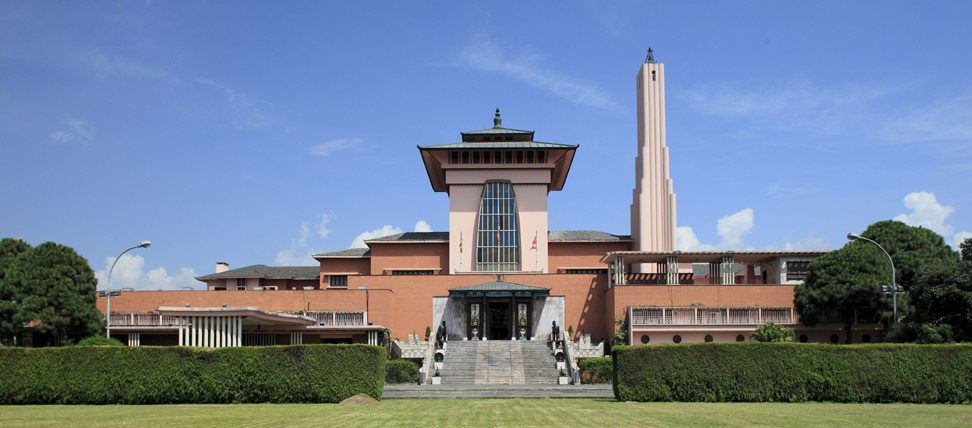
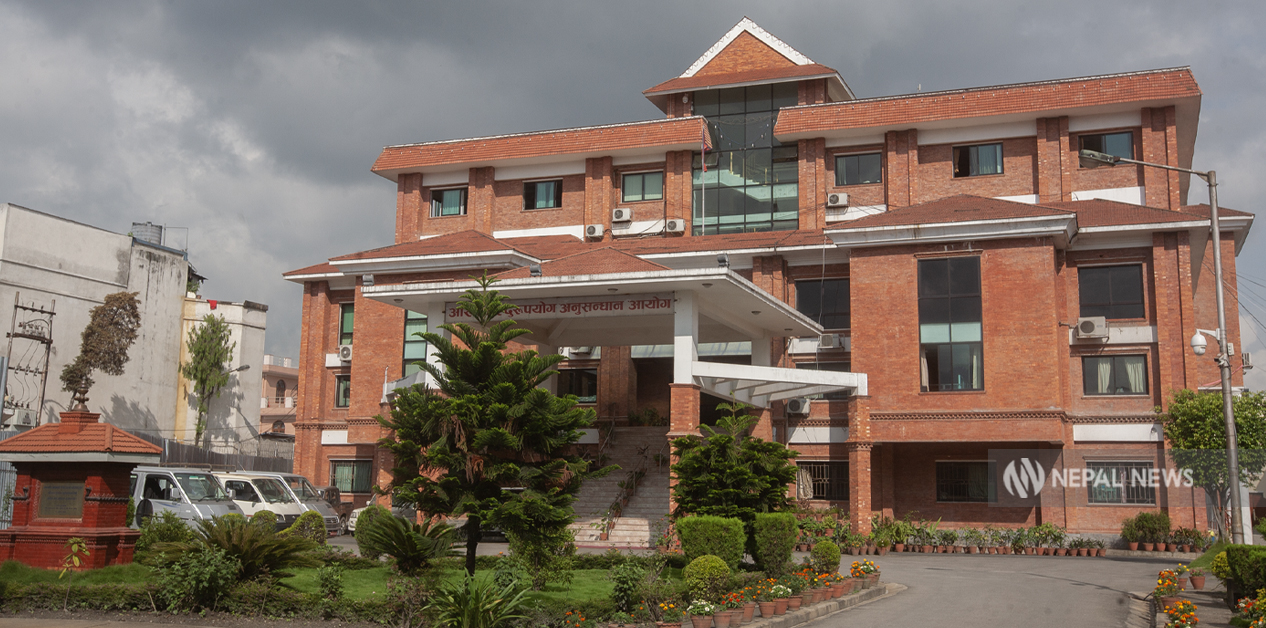
Narayanhiti Palace. File photo
The Narayanhiti Palace was not just the official home of the royal family but a symbol of Nepal’s centuries-old monarchy. The evening began as a routine monthly gathering: an informal dinner that the royal family held regularly. Crown Prince Dipendra, the eldest son of King Birendra, was the host for that night’s event. The gathering was confined to core family members; no outsiders, diplomats, or government officials were invited.
Palace guards were stationed at the outer perimeter but were not present inside the building where the family had assembled. The compound’s relative informality that evening; no security inside, no protocols, just family, would prove catastrophically fatal.
Who were the victims, and how many people died?
A total of ten people died as a result of the massacre, including the perpetrator himself. The dead included King Birendra Bir Bikram Shah Dev, the reigning monarch; Queen Aishwarya Rajya Lakshmi Devi Shah; Prince Nirajan, the younger son; Princess Shruti, the king’s daughter and her husband Kumar Gorakh; Prince Dhirendra, King Birendra’s brother; Princess Shova, one of the king’s sisters; Princess Jayanti, another royal relative; and Sharada Shah, the wife of Kumar Khadga Bikram Shah.
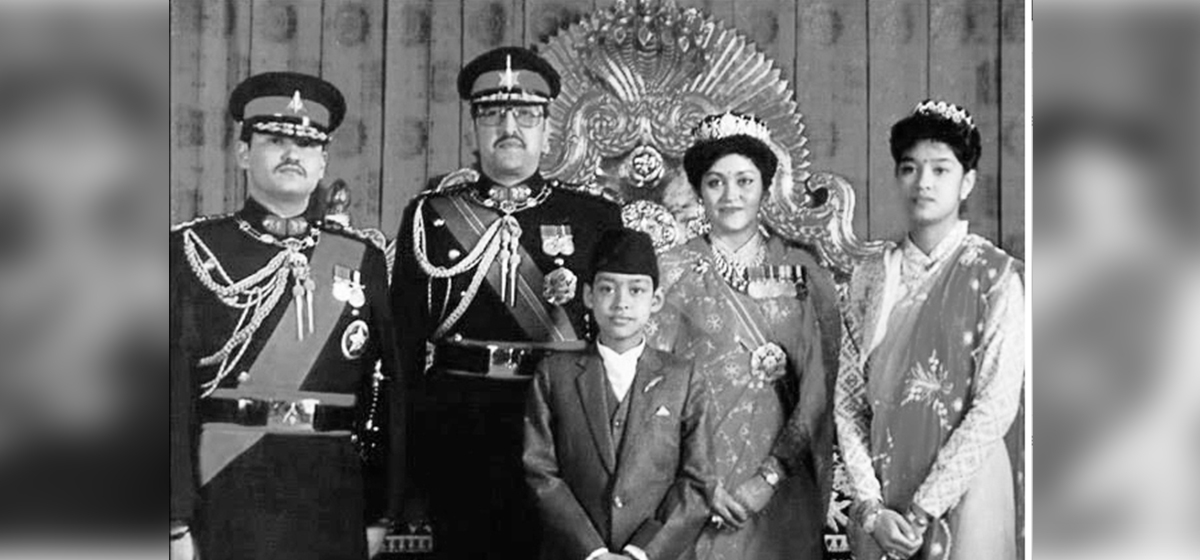
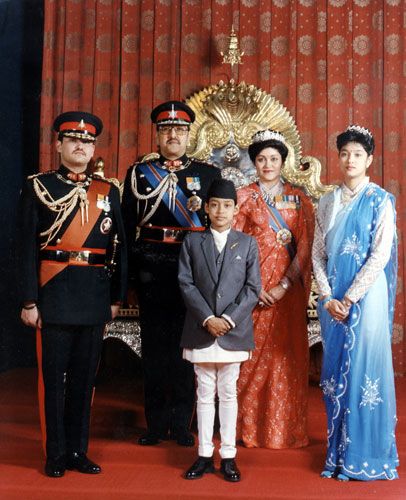
Prince Dipendra, King Birendra Bir Bikram Shah Dev, Queen Aishwarya Rajya Lakshmi Devi Shah, Princess Shruti and Prince Nirajan
Crown Prince Dipendra himself died three days after the shooting, on June 4, from the self-inflicted head wound that left him in a coma. Five other royals were wounded but survived, including Prince Paras, the son of Gyanendra.
The massacre was described by multiple historians as the worst mass killing of a royal family since the Romanov dynasty of Russia was executed in 1918.
What led up to the shooting that evening? What was the trigger?
The immediate trigger was a long-festering dispute over Crown Prince Dipendra’s choice of a life partner. Dipendra had fallen in love with Devyani Rana, a Nepali woman from a powerful aristocratic family whom he had known since his student years in Britain. However, Queen Aishwarya consistently blocked the union.
The queen’s principal objections reportedly centered on Devyani’s lineage, which the queen deemed unacceptable for a future queen of Nepal. There were also reported concerns about family rivalries between the Shah and Rana clans.
On the night of June 1, the conflict reportedly reached a breaking point. Palace sources indicated that Dipendra and his mother exchanged sharp words during the gathering over the marriage issue.
According to accounts from the State Council, the king and queen had proposed a compromise: that Dipendra could marry Devyani only if he agreed to relinquish his position as Crown Prince and cede the succession to his younger brother Nirajan. It was after this confrontation that events rapidly deteriorated.
What exactly happened inside the palace during the shooting?
According to eyewitness accounts compiled by the investigation committee and survivor testimonies given to the media, Dipendra arrived at the gathering in a severely intoxicated state, having reportedly consumed large quantities of alcohol and smoked hashish-laced cigarettes.
Around 9 p.m., he was escorted away to his quarters by Prince Paras, acting on the king’s instruction that Dipendra’s behavior was inappropriate for the gathering. Shortly afterward, Dipendra returned. This time, he was dressed in military camouflage fatigues and was armed with multiple weapons — an M16 assault rifle, an MP5 submachine gun, and a Glock pistol.

Representational collage of the weapons
He entered the billiards room where the family had gathered and opened fire. He reportedly left the room, re-entered, and fired again in multiple bursts over approximately 15 minutes. Queen Aishwarya and Prince Nirajan tried to flee toward the garden and were shot there.
Prince Dhirendra attempted to physically restrain Dipendra and was shot in the chest. According to Dr. Rajiv Shahi, a royal family physician who witnessed the events, Prince Paras managed to pull a sofa over several younger family members to shield them, potentially saving lives.
Dipendra then walked to a small footbridge near Tribhuvan Sadan and shot himself in the head.
What happened to Dipendra after he shot himself?
Dipendra was found critically wounded with a gunshot wound to the head. He was rushed to the Nepal Army’s Birendra Military Hospital in Chhauni. Physicians who attended to him, including neurosurgeon Dr. Upendra Devkota, described the scene as chaotic — the prince arrived in a state that suggested he was already clinically unresponsive.
Despite the gravity of his condition, Nepali constitutional law required the line of succession to continue. Since King Birendra was dead and Dipendra was the Crown Prince, he was formally proclaimed King of Nepal even while lying unconscious on a hospital bed.

Dipendra Bir Bikram Shah Dev
He technically reigned for three days as King Dipendra Bir Bikram Shah Dev — the only monarch in recorded history to rule an entire country while in a coma. He never regained consciousness.
He was declared brain dead and died on June 4, 2001. His uncle, Gyanendra, who had been absent from the palace that night, was then crowned King of Nepal.
How did Nepal and the world react in the immediate aftermath?
The reaction inside Nepal was one of profound shock, grief, and then rage. For ordinary Nepalis, King Birendra had been far more than a political figure — he was regarded as the earthly manifestation of Lord Vishnu, a living deity whose person was considered sacred.
The news was initially suppressed and then released in confused, contradictory fragments by state media, which deepened public suspicion. When the official announcement finally came, crowds flooded the streets of Kathmandu. Riots broke out.
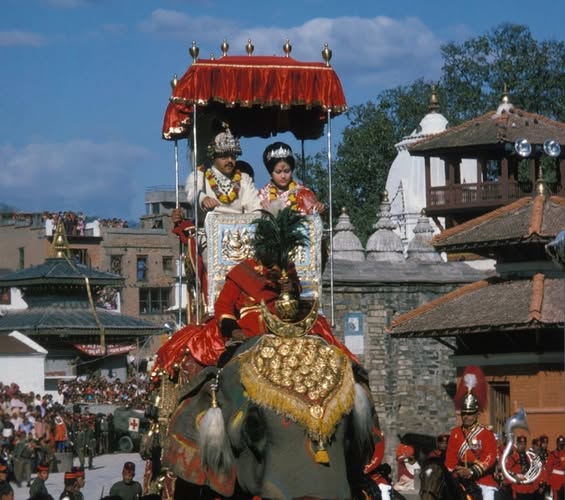
Coronation of King Birendra at Hanuman Dhoka in 1975. Photo credit: Jean Pierre Laffont
Protesters attacked the vehicles of Gyanendra’s family members. Across the country, Nepalis wept publicly in scenes of mass mourning.
Internationally, the story stunned diplomatic circles. Larry Dinger, the senior American diplomat stationed in Nepal at the time, later described the near-religious reverence ordinary Nepalis held for the king.
Foreign governments offered condolences but watched carefully, aware that Nepal’s already fragile political situation had just become dramatically more volatile.
What was the official investigation, and who conducted it?
The then King Gyanendra, days after his coronation, ordered the formation of a high-level committee to investigate the massacre. The committee was chaired by then-Chief Justice Keshav Prasad Upadhyaya of the Supreme Court, with then-Speaker of the House of Representatives Taranath Ranabhat as the second member.
The then opposition leader Madhav Kumar Nepal of the Communist Party of Nepal (Unified Marxist-Leninist) was also appointed to the committee but resigned almost immediately, stating that the committee had been constituted by the palace rather than by Parliament, making it unconstitutional in his view. His withdrawal left the committee with only two members and significantly damaged public confidence in its credibility.
The committee began its investigation on June 8 and completed its work in six days. It interviewed approximately 110 people — eyewitnesses, surviving royals, palace staff, guards, and officials. The panel submitted a report on June 14, 2001 — just 13 days after the massacre.
The report ran to several hundred pages and consisted primarily of verbatim transcripts of witness interviews rather than independent forensic analysis.
What did the investigation report conclude?
The commission’s report concluded that Crown Prince Dipendra was solely responsible for the killings and that his self-inflicted head wound was the cause of his subsequent death and coma.
According to the panel’s findings, Dipendra had arrived at the gathering intoxicated, was removed to his quarters, returned armed in military uniform, and opened fire on the assembled family members. The report stated that he used an M16 rifle, an MP5 submachine gun, and a Glock pistol, and that the shooting lasted approximately 15 minutes.
The committee identified his personal conflict over his choice of bride as the likely motivating factor, though it stopped short of making a definitive psychological determination.
Critically, the investigation was conducted without a formal police investigation, without independent forensic examination of the weapons or crime scene, and without publicly released autopsy reports.
Shree Prasad Pandit, a former Supreme Court registrar who worked closely with the committee, later stated publicly that the commission had no legal mandate to identify a murderer — it was constituted only to document what occurred, not to conduct a criminal investigation in the legal sense.
What did the survivors say publicly?
The first and most significant public eyewitness account came from Dr. Rajiv Shahi, a physician and son-in-law of Prince Dhirendra, one of the victims. Speaking at a press conference on June 7, 2001, Shahi stated unequivocally: “It was the then Crown Prince Dipendra who carried out the murders. He was just a murderer.”
Shahi described the sequence of events and credited Prince Paras with shielding some of the younger family members. Ravi Shumsher Rana, Maheshwar Kumar Singh, and other surviving royals also gave on-the-record accounts consistent with Shahi’s version — describing Dipendra reentering the room repeatedly, shooting at close range, and wearing a blank, expressionless face throughout.
All twelve survivors whose accounts were gathered by investigators confirmed the same core sequence of events. Suraj Shumsher Rana, the maternal uncle of Dipendra, confirmed to media that the dispute over Devyani Rana’s marriage was at the center of the crisis.
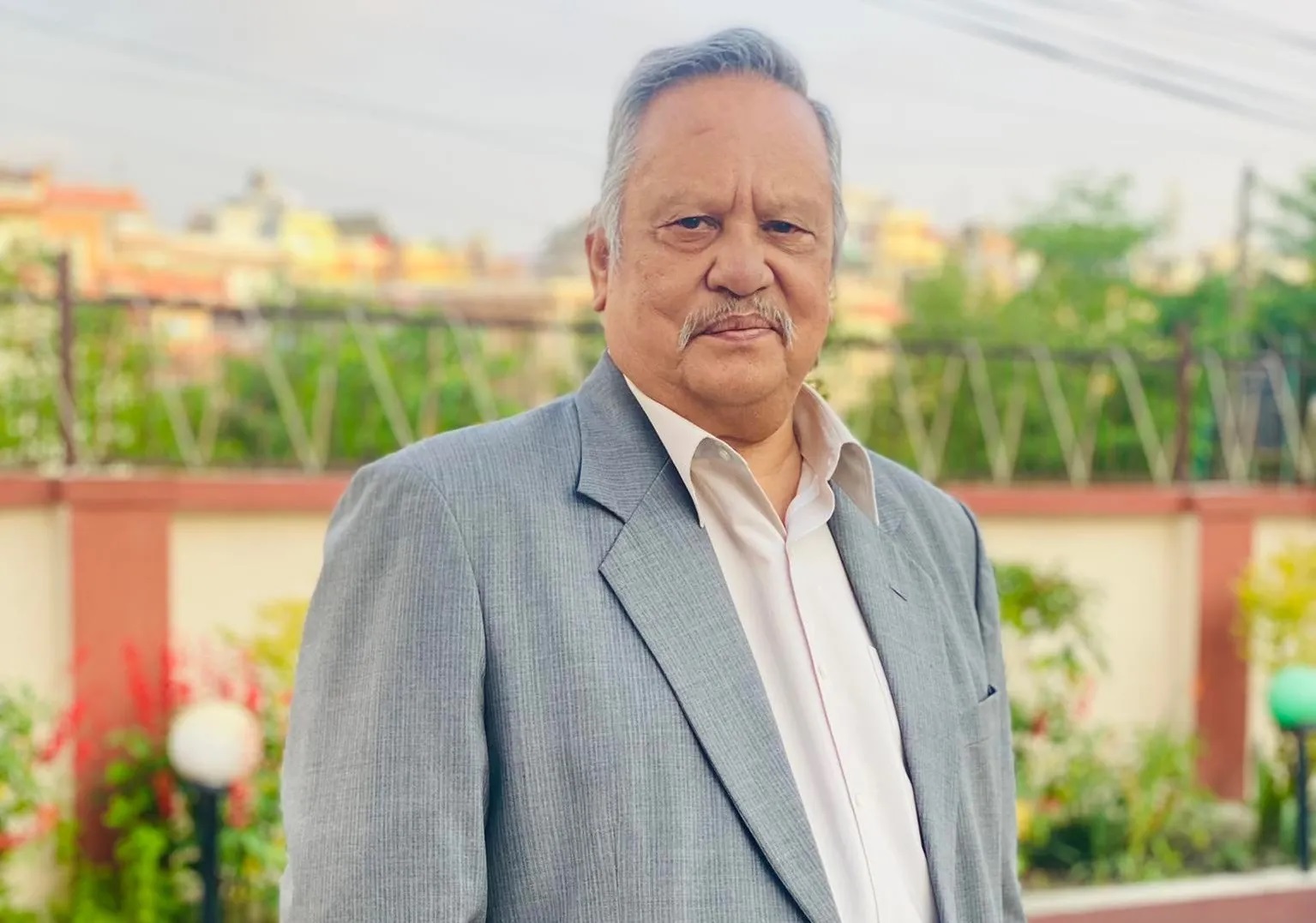
Actor and filmmaker Nir Shah. File photo
Actor and filmmaker Nir Shah, whose brother and sister-in-law were killed that night, told Indian television that there was no doubt in his mind — Dipendra was responsible.
Why did so many Nepalis refuse to believe the official account?
Several factors combined to make the official account deeply unconvincing to a large segment of the Nepali population. The most immediate was the sheer speed of the investigation — six days to close one of the most consequential crimes in the nation’s history, without a police probe, without forensic science, and without autopsies made public.
Bodies were cremated according to Hindu rites rapidly, before any independent examination could be conducted. The palace was cleaned before any comprehensive crime scene documentation had been shared publicly.
Additionally, many Nepalis simply could not psychologically reconcile the idea that the Crown Prince — a product of the royal institution they revered — could destroy his own family. The investigation committee was seen as having been assembled by the palace itself to investigate the palace, raising obvious questions about impartiality.
The opposition leader’s dramatic exit further poisoned public trust. And the fact that Gyanendra — the sole adult male from the wider royal family who was not present that night — immediately became king struck many as too convenient to be coincidental.
What are the main conspiracy theories that have circulated over the years?
The most persistent conspiracy theory implicates Gyanendra and his son Paras in orchestrating the massacre in order to seize the throne. Proponents point to Gyanendra’s convenient absence from Kathmandu that night and the fact that his immediate family was largely unharmed.
A second theory suggests involvement of foreign intelligence agencies — specifically India’s Research and Analysis Wing and the American CIA — on the grounds that King Birendra had reportedly been resistant to certain geopolitical pressures and external strategic interests in the region.
Former Prime Minister Madhav Kumar Nepal reportedly alleged in 2010 that external forces conspired to remove King Birendra.
A third theory, articulated by Shree Prasad Pandit decades later, holds that the massacre was a “grand design” by foreign powers specifically aimed at destabilizing Nepal’s powerful monarchy.
Even former Prime Minister Girija Prasad Koirala repeatedly referenced a “grand design” without ever publicly explaining what he meant. None of these theories has been supported by documentary evidence, intercepted communications, or verifiable testimony from operatives or insiders.
What specific forensic inconsistencies have fueled doubts?
Several physical details of the crime have been repeatedly cited as unexplained anomalies.
First, Dipendra was right-handed, yet the self-inflicted head wound was found at his left temple — raising questions about whether a person shooting himself would naturally choose the non-dominant side.
Second, reports indicated that two bullet fragments were recovered from the single entry wound, which some found inconsistent with a single self-inflicted shot.
Third, the royal aide-de-camp Gajendra Bohara gave testimony in the official report stating that shots were still being fired after Dipendra had already fallen — yet investigators reportedly never followed up on who might have fired those additional rounds.
Fourth, despite being described as heavily intoxicated and drugged, Dipendra reportedly demonstrated the accuracy and tactical discipline of a trained military shooter during the attack — moving in and out of rooms, targeting individuals, and managing multiple weapons.
The absence of independent ballistics testing, publicly released autopsy reports, or photographic evidence of the crime scene means these questions have never been authoritatively answered.
What happened to Nepal’s monarchy in the years following the massacre?
The massacre fundamentally shattered the sacred aura surrounding the Nepali monarchy. Gyanendra ascended the throne carrying a cloud of public suspicion that he was never able to dispel. His reign grew increasingly authoritarian.
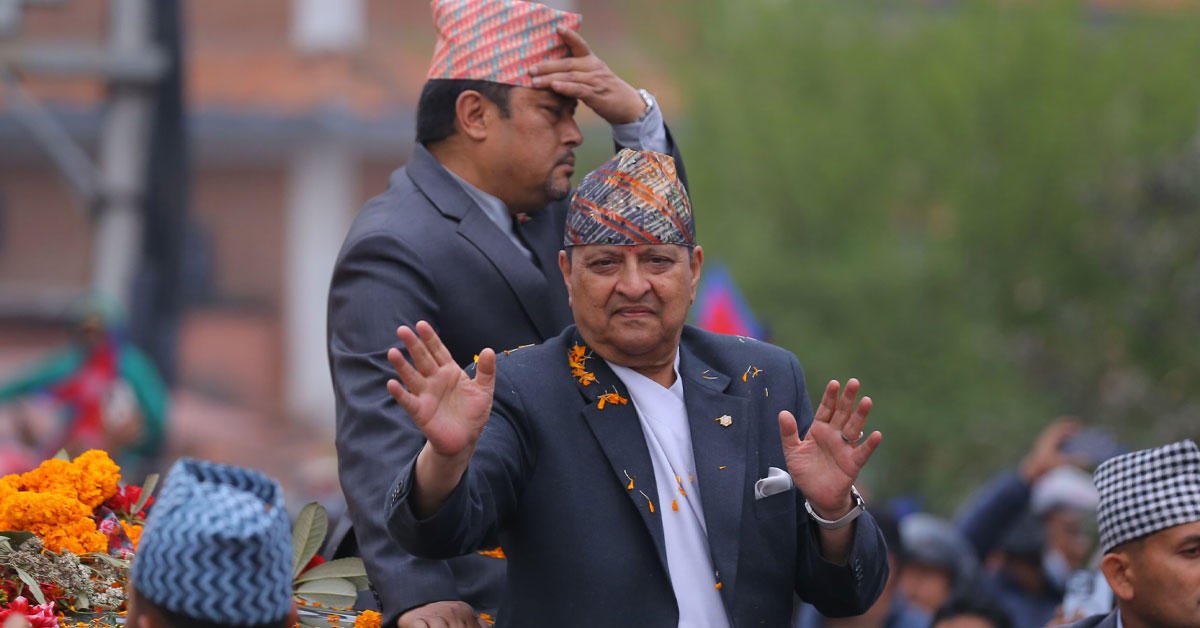
Former King Gyanendra Shah/File photo
In February 2005, he dissolved the government and declared a state of emergency, assuming direct personal rule over the country — an act he justified as necessary to defeat the Maoist insurgency. Instead, it united the Maoist rebels with mainstream political parties against him, accelerating the very collapse he had sought to prevent.
Mass pro-democracy protests in April 2006 forced him to restore Parliament. The Maoists signed a peace agreement and entered the political mainstream. In May 2008, a newly elected Constituent Assembly voted 560 to 4 to abolish the monarchy and declare Nepal a federal democratic republic.
Gyanendra became the last Shah king, ending a royal lineage stretching back 239 years to the unification of Nepal under Prithvi Narayan Shah. He quietly vacated the Narayanhiti Palace, which was subsequently converted into a public museum.
What role did the Maoist insurgency play as the broader political backdrop?
Nepal in 2001 was already deeply destabilized by an ongoing Maoist insurgency that had begun in 1996 under the leadership of Pushpa Kamal Dahal, known as Prachanda. The Communist Party of Nepal (Maoist) had launched a people’s war aimed at abolishing the monarchy and establishing a communist republic, and by 2001 the conflict had already claimed thousands of lives across Nepal’s rural districts.
The royal family had existed in this environment of escalating violence but had assumed, perhaps naively, that the threat was external — from the countryside, not from within palace walls. The massacre accelerated the political unraveling that the insurgency had already begun.
King Gyanendra’s subsequent authoritarian overreach galvanized public opposition in ways that directly benefited the Maoists and mainstream parties alike. The insurgency formally ended with the Comprehensive Peace Agreement of 2006, and the Maoists won the largest share of seats in the 2008 constituent assembly elections, becoming the primary architects of Nepal’s transition to a republic.
In a profound historical irony, the massacre that was ostensibly triggered by a personal family dispute became the hinge event in Nepal’s transformation from a Hindu kingdom into a secular democratic republic.
What is the current status of the case — has anyone called for reinvestigation?
Multiple political leaders and governments have at various points called for a fresh investigation into the massacre, but none has resulted in action.
In 2009, Madhav Kumar Nepal — the same man who had resigned from the original investigation committee — visited the Narayanhiti Palace, now a museum, and stated publicly that a new inquiry should be conducted to uncover the real causes of the incident.
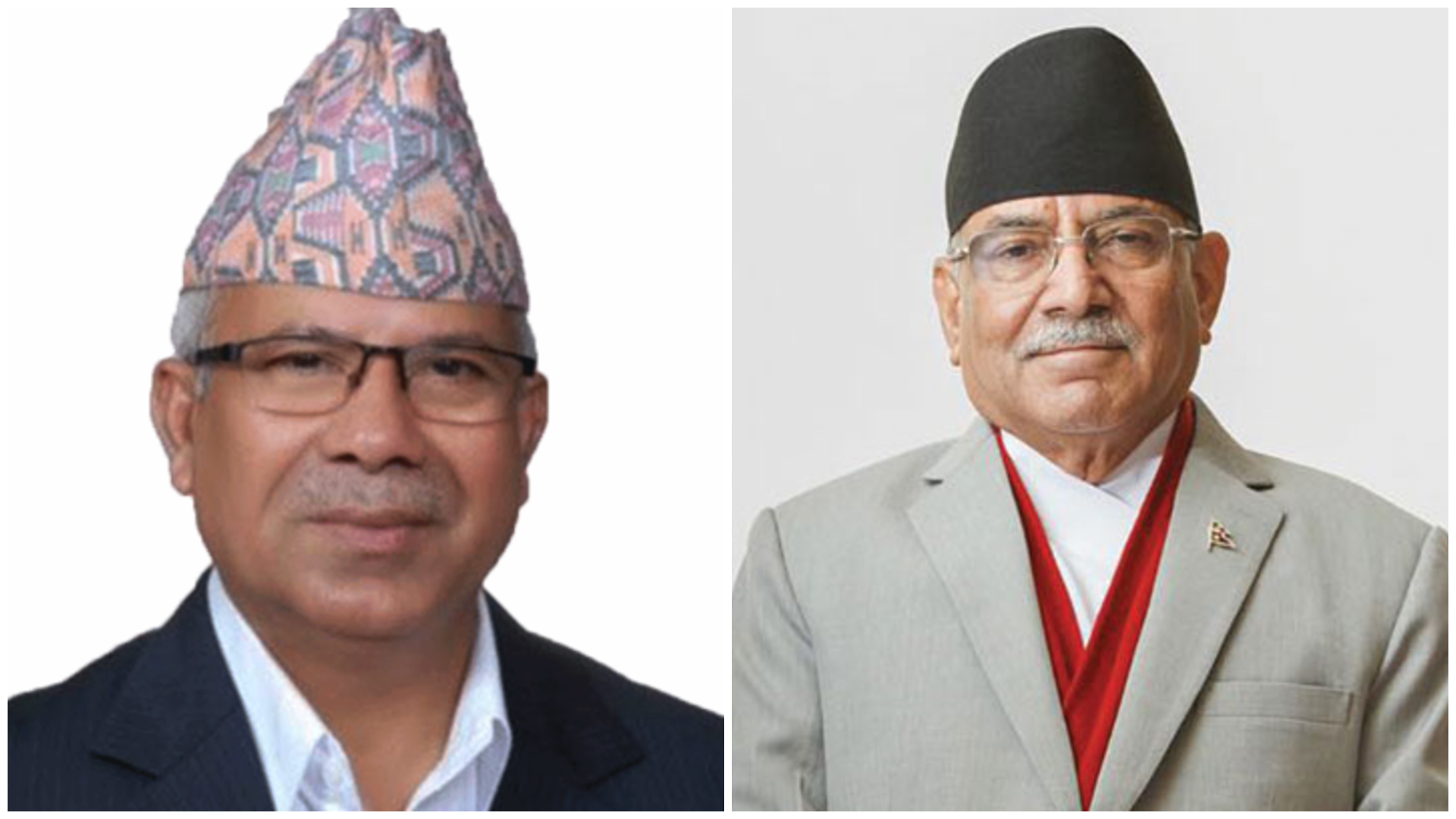
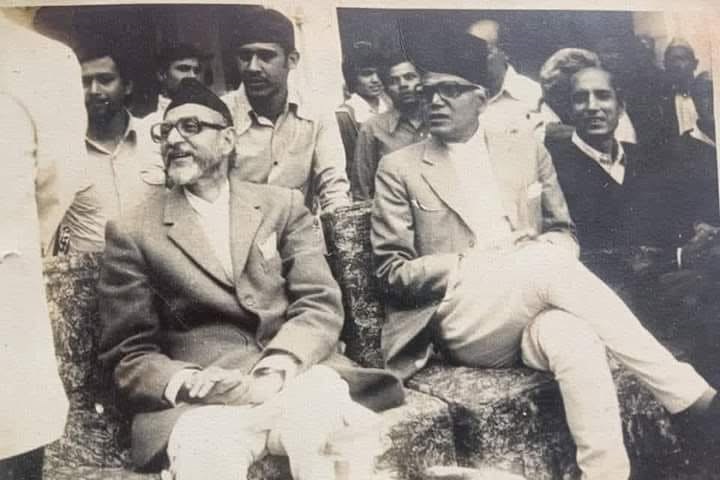
Madhav Kumar Nepal (left) and Pushpa Kamal Dahal (right)
The first prime minister of the federal democratic republic, Pushpa Kamal Dahal Prachanda, pledged during his tenure to reopen the investigation and bring clarity to the public, though no formal inquiry was launched.
In early 2024, former King Gyanendra himself broke his long silence on the matter at a public function, saying that suspicion had been manufactured through “political manipulation” and that witnesses were still alive who could speak to the truth — while declining to name those witnesses or explain what truth he meant.
His cryptic remarks reignited public debate and prompted then-Prime Minister Prachanda to announce yet another promise of reinvestigation. As of mid-2026, no independent commission with genuine forensic and legal authority has been constituted.
Why does the royal massacre remain a mystery even after more than two decades?
The massacre endures as an unresolved mystery for a convergence of reasons that are as much structural as they are evidentiary. The original investigation was rushed, legally limited in mandate, and politically compromised before it even began.
No autopsies were released publicly. No independent ballistics or forensic analysis was conducted. The crime scene was cleaned before comprehensive documentation was shared with the public. The bodies were cremated according to Hindu rites, eliminating the physical evidence that any future forensic reinvestigation would require.
The inquiry was conducted by a body appointed by the very institution whose survival stood to benefit from a particular outcome. The principal alleged perpetrator was dead and could neither confirm nor deny anything. Every survivor spoke from within the palace ecosystem and had personal stakes in how the narrative was shaped.
The broader political context — a nation in the middle of an armed insurgency, a public conditioned to see its king as divine, and a new monarch dogged by suspicion — made a transparent and credible investigation politically inconvenient for nearly every actor involved.
What remains is a verified set of facts about who died and a disputed set of conclusions about exactly how and why — and the physical evidence needed to answer the harder questions no longer exists.