Kathmandu
Saturday, June 13, 2026





Sixty days after the outbreak of the US–Iran war, shifting military pauses, economic blockades, and failed diplomacy continue to reshape global security and energy systems.
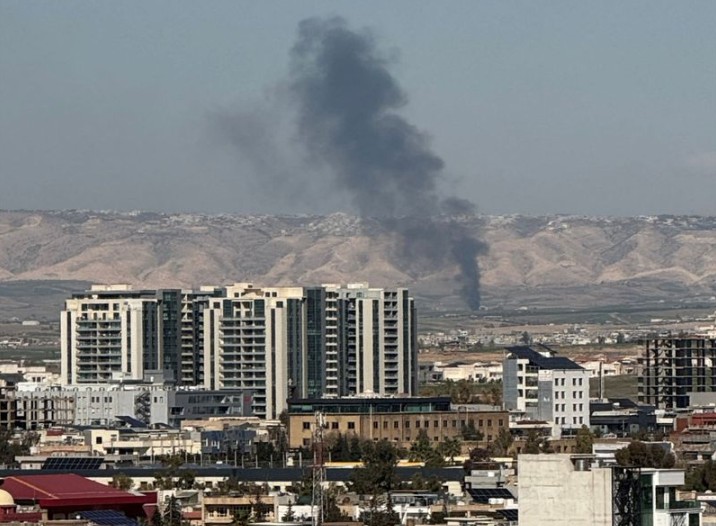
KATHMANDU: On February 28, 2026, the United States and Israel launched coordinated military strikes against Iran, killing its Supreme Leader and triggering the most disruptive conflict the Middle East has seen in decades.
Sixty days later, a fragile ceasefire holds, two blockades strangle global trade, and peace talks remain deadlocked over Iran’s nuclear future. Here is a full breakdown of what happened, what is happening right now, and what comes next.
What caused this war and how did it start?
The roots of this conflict stretch back decades, but the immediate trigger was a combination of Iran’s rapidly advancing nuclear programme and a breakdown in diplomatic negotiations. In early February 2026, indirect talks between the US and Iran collapsed in Oman, and the Trump administration concluded that diplomacy had run its course.
On February 28, the United States launched Operation Epic Fury and Israel simultaneously launched Operation Roaring Lion.
The two allies conducted close to 900 strikes in roughly 12 hours, targeting Iranian missile sites, air defence systems, nuclear infrastructure, and government buildings.
Officials in Washington and Jerusalem said the goals were to prevent Iran from ever acquiring a nuclear weapon, dismantle its ballistic missile programme, and push for a change in Iran’s government.
A critical element of the operation’s success was months of deliberate strategic deception, including leaking false information about US aircraft deployments and keeping secret the calls between Trump and Israeli Prime Minister Benjamin Netanyahu, ensuring that Iranian leadership would not anticipate the strike and scatter before it landed.
What happened to Iran’s Supreme Leader Ali Khamenei?
Ali Khamenei, who had ruled Iran for more than three decades, was killed in the very first wave of Israeli airstrikes on February 28. Israeli aircraft carried out what military analysts called a decapitation strike, targeting gatherings of senior Iranian officials at Khamenei’s residential compound.
Three separate meetings of regime officials were struck within half a minute of each other. Khamenei, several family members including his daughter and grandchild, Iran’s Defence Minister Aziz Nasirzadeh, and at least four senior intelligence officials were all killed in those opening moments.
The Iranian government declared 40 days of national mourning. Despite the shock, the establishment moved quickly to prevent a power vacuum.
Mojtaba Khamenei, the late Supreme Leader’s son and a figure considered more hardline than his father, was appointed as the new Supreme Leader in early March. The swift transition signalled that Iran’s ruling structure intended to fight on rather than negotiate from a position of collapse.
How did Iran respond to the strikes?
Iran’s response was immediate, widespread, and severe. Within hours of the opening strikes, the Islamic Revolutionary Guard Corps launched hundreds of ballistic missiles and drones at Israel, US military bases across the Gulf, and civilian and military infrastructure in Arab states.
American facilities in Bahrain, Qatar, Kuwait, Saudi Arabia, and the United Arab Emirates were all targeted. An Iranian ballistic missile entered Turkish airspace and was intercepted by NATO air defences, marking a significant geographic escalation.
A British military base in Cyprus was struck by a drone, and the RAF was deployed in a defensive role. At sea, the US Navy sank an Iranian frigate and Iran attacked commercial vessels near the Strait of Hormuz.
Perhaps most consequentially, Iran announced the closure of the Strait of Hormuz to ships serving enemy nations, a move that instantly sent shockwaves through global energy and commodity markets. The UAE alone absorbed more than 550 ballistic and cruise missiles and over 2,200 drones during the conflict, more than even Israel received.
What is the Strait of Hormuz and why does its closure matter so much?
The Strait of Hormuz is a narrow waterway between Iran and the Arabian Peninsula connecting the Persian Gulf to the Gulf of Oman and the wider Indian Ocean. Before the war, roughly a quarter of the world’s seaborne oil trade and about a fifth of all liquefied natural gas moved through it daily. Around 130 ships crossed it every single day.
After Iran’s closure, tanker traffic collapsed by more than 70 percent almost immediately and then fell close to zero. The closure did not only affect oil and gas. About one third of the world’s seaborne fertilizer trade also passes through this narrow channel, including ammonia and nitrogen compounds essential for crop farming around the world.
The International Maritime Organization says roughly 2,000 vessels carrying as many as 20,000 sailors remain trapped inside the Gulf right now. The strait has also been mined by the IRGC, meaning that even a future diplomatic reopening would be physically slow and hazardous. As of this morning, only six ships were attempting to cross the strait compared to more than 130 per day before the war began.
What ceasefire was agreed, and has it held?
After approximately 40 days of direct military hostilities, a conditional ceasefire was declared on April 8, 2026. It came after intense back-channel diplomacy and repeated ultimatums from Trump, who had set and then extended multiple deadlines demanding Iran agree to terms. The ceasefire was fragile from the moment it was announced.
Trump made clear that the pause on US strikes was conditional on Iran fully reopening the Strait of Hormuz. Iran did not comply unconditionally. Instead, the IRGC began controlling traffic through the strait, requiring ships to obtain clearance and in some cases charging tolls of over one million dollars per transit, effectively converting a critical international waterway into a toll booth.
Iran continued attacking Israel-linked vessels and maintained restrictions on US-allied shipping. Israel, for its part, kept striking across Lebanon despite the ceasefire, drawing sharp condemnation from Lebanese authorities. Iran’s army spokesman said as recently as this week that Iran does not consider the war to be over.
What happened at the peace talks in Pakistan?
Pakistan emerged as the key mediator in negotiations between Washington and Tehran. Two rounds of proximity talks were held in Islamabad, with Iranian Foreign Minister Abbas Araghchi travelling to Pakistan multiple times. However, the fundamental disagreements proved impossible to bridge.
Iran proposed a framework where the Strait of Hormuz would reopen and military hostilities would formally end first, with the nuclear programme left for separate, later negotiations.
Trump rejected this approach entirely, insisting that Iran’s nuclear ambitions had to be part of any deal, not an afterthought.
After the Islamabad talks failed on April 13, the US launched its own counter-blockade of Iranian ports the same day. Trump then cancelled a planned visit by his envoys to Pakistan on April 25, saying Iran could simply call if it wanted to talk. Araghchi then flew to Russia to meet President Putin.
Sources close to the mediation process now say Iran is working on a revised proposal, but the two sides remain separated by a wide gulf on the nuclear question specifically.
What is the US naval blockade of Iranian ports?
After the Islamabad talks collapsed, the United States launched a naval blockade on April 13 targeting all ships seeking to enter or leave Iranian ports. This created what observers now call a dual blockade, with the US Navy stopping vessels trying to reach Iran while Iran’s IRGC controls what passes through the Strait of Hormuz going the other direction. US Central Command says it has redirected at least 39 Iranian-linked vessels in the Gulf of Oman since the blockade began.
The US has also seized at least three vessels outright, including tankers it says were carrying Iranian oil in violation of existing sanctions. One ship, the MV Blue Star III, was boarded and searched in the Arabian Sea this week but released after its crew confirmed it was not heading to an Iranian port.
Treasury Secretary Scott Bessent says the blockade is costing Iran approximately 170 million dollars per day in lost oil revenue, and that Iran’s main export terminal at Kharg Island is approaching storage capacity. Iran’s UN ambassador formally described the seizures as piracy in a letter to the UN Secretary-General.
Why did the UAE leave OPEC and what does it mean?
The United Arab Emirates announced on April 28 that it would withdraw from OPEC effective May 1, ending nearly 60 years of membership in the oil-producing cartel. The UAE is the third largest producer within OPEC and the seventh largest in the world, currently producing around 3.6 million barrels per day. The country has long been frustrated by OPEC production quotas that capped its output far below its actual capacity, limiting it to roughly 3.2 million barrels per day.
UAE officials said the country plans to gradually increase production toward 5 million barrels per day by 2027. The timing is deliberately chosen because the Strait of Hormuz closure limits the immediate market impact of the exit, since the UAE cannot fully export additional oil while the waterway remains blocked.
Energy analysts say the move could prompt other dissatisfied OPEC members, particularly Kazakhstan, to follow suit. Trump had long accused OPEC of artificially inflating oil prices. Brent crude currently trades around 111 dollars a barrel, up dramatically since the war began, and has risen for eight consecutive days.
What has been the economic impact on the world?
The International Energy Agency has described the Strait of Hormuz closure as the largest supply disruption in the history of the global oil market. Brent crude surged past 120 dollars a barrel in March before partially pulling back. Gulf state oil production fell by more than 10 million barrels per day at the peak of disruptions.
Qatar declared force majeure on all natural gas exports after Iranian drones hit Qatari energy facilities, cutting off a critical supply source for Europe. European natural gas benchmark prices nearly doubled.
The World Bank now projects global energy prices will surge 24 percent this year. In the United States, rising diesel costs pushed up prices of transported goods across the economy, contributing to cost of living pressures that have hurt Trump politically, with his approval rating falling to a new second-term low.
Airlines rerouted flights to avoid closed Middle East airspace, adding fuel costs and journey times globally. The Panama Canal has seen roughly 300 additional ships since October as freight traffic reroutes to avoid the Gulf, with some ships paying up to 425,000 dollars in extra fees for emergency passage.
What is the threat to global food security?
The threat to global food security may prove to be the most lasting damage from this conflict. The Strait of Hormuz is not only a corridor for oil and gas. About one third of the world’s seaborne fertilizer trade passes through it, including the ammonia and nitrogen compounds that farmers worldwide depend on to grow staple crops.
The UN Food and Agriculture Organization warned that the world has only a narrow window before global planting decisions for 2026 and beyond are permanently affected. Urea fertilizer prices surged 47 percent in a single month, the largest monthly increase ever recorded. In the United States, 70 percent of farmers surveyed by the American Farm Bureau said they cannot afford the fertilizer they need for the 2026 planting season.
In Bangladesh, state-run fertilizer plants shut down entirely due to the lack of inputs. The UN estimates that 9.1 million additional people in Asia alone could face acute food insecurity if the crisis continues.
Countries across Africa, South Asia, and Latin America are considered most vulnerable. Experts warn that even if the strait reopened tomorrow, it would take four to six weeks for supply chains to begin stabilising and up to three months to return to normal.
What is happening in Lebanon and how is it connected?
The war with Iran significantly escalated the existing conflict between Israel and Hezbollah in Lebanon. Israel launched its largest single wave of strikes on Lebanon on April 8, the same day the US-Iran ceasefire was declared, killing more than 350 people and injuring over 1,000 in one day.
Israel says it is targeting Hezbollah tunnels, weapon stores, and command infrastructure throughout southern Lebanon. Israeli Defence Minister Israel Katz explicitly said that southern Lebanon will face the same fate as Gaza. This week, the Israeli military destroyed two large Hezbollah underground tunnel systems in the Qantara area, using what witnesses described as massive explosions.
In a widely condemned incident, Israeli forces struck a building in the town of Majdal Zoun and then hit the exact same location again while civil defence workers were attempting to rescue survivors, killing three of those emergency workers. Lebanese President Joseph Aoun called it a war crime.
Two French UNIFIL peacekeepers were also killed in an ambush in Lebanon earlier this month, prompting a national tribute in France. Since March 2, more than 2,500 people have been killed in Lebanon and over 7,800 have been injured.
What does Iran want, and what does the US demand?
The two sides remain deeply divided on the fundamental questions. Iran has proposed ending the active military phase of the war first, reopening the Strait of Hormuz, and then negotiating the nuclear question separately, with internationally recognised guarantees against future attacks from outside powers including China, Russia, Pakistan, and Turkey.
Iran insists it must retain the right to enrich uranium, though it has indicated that the level and quantity of enrichment is open to discussion. It also wants Lebanon included as part of any comprehensive deal.
The United States has made clear that Iran’s nuclear programme is not a matter for later and must be resolved as part of any agreement.
Trump has said repeatedly that Iran will never be allowed to possess a nuclear weapon, and that this line is absolute. The US also demands the full, unconditional reopening of the Strait of Hormuz as a precondition for further concessions, not as a reward for reaching a deal. The gap between these two positions is precisely what caused the Islamabad talks to fail.
What is the US Congress saying about the war?
The war has now reached its 60th day, which carries serious legal significance. Under the War Powers Act, a US president must obtain congressional authorisation within 60 days of beginning combat operations, or Congress may move to end the conflict.
Republican Senator Susan Collins, who chairs the Senate Appropriations Committee, said plainly this week that after the 60-day mark the president must either obtain approval from Congress or Congress can block continuation of the war.
Republican Senator Thom Tillis argued that the administration would actually benefit from seeking a formal Authorization for the Use of Military Force, since it would send a clear signal to Tehran that the US political system is united behind the long-term effort.
Senator Mike Rounds said he expects Trump to request the additional 30-day extension permitted under the law if US forces cannot be safely drawn down. The Senate has already voted five times on Democrat-led war powers resolutions demanding congressional authorisation for the conflict, and all five failed along party lines. Republicans say that if authorisation happens, it must come from their side and must explicitly endorse the ongoing military mission rather than limit it.
How have Gulf Arab states and the broader region reacted?
The Arab world’s reaction has been layered and complicated. Gulf states including Saudi Arabia, the UAE, Kuwait, Qatar, and Bahrain all suffered Iranian missile and drone attacks during the conflict. The UAE absorbed more than 550 ballistic missiles and over 2,200 drones, more than any other country in the region.
Israel secretly deployed an Iron Dome air defence battery to the UAE during the fighting, marking an unprecedented level of military cooperation between the two countries under the Abraham Accords. Gulf leaders gathered in an extraordinary GCC summit in Jeddah on April 28, their first in-person meeting since the war began, where they condemned Iran’s attacks on the region as treacherous and called on Tehran to make serious efforts to rebuild confidence.
Qatar publicly said it was unacceptable to use the Strait of Hormuz as a political weapon. Oman, which had been quietly mediating between the US and Iran and had held its own meetings with Iranian officials, conspicuously sent no delegation to the Jeddah summit.
Yemen’s Houthi movement declared it is not neutral and reaffirmed support for Iran, while warning it could also close the Bab al-Mandeb Strait and Red Sea if the conflict continues.
Where does the conflict stand today, and what happens next?
As of April 29, 2026, the conflict sits in a state of tense, fragile suspension. The direct military exchange between the US, Israel, and Iran has paused under the April 8 ceasefire, but neither side considers the matter settled. Iran’s army has publicly stated it does not consider the war over.
The Strait of Hormuz remains effectively closed to normal commercial traffic. Trump posted on Tuesday that Iran had told Washington it is in a state of collapse and wants the blockade lifted, though Iran has not confirmed that characterisation and its military maintains a posture of ongoing readiness.
Iran is expected to submit a revised peace proposal within days, but the core standoff over the nuclear programme has not changed. Oil prices have risen for eight consecutive trading days, Brent crude is near 111 dollars a barrel, and the global economy continues to absorb the consequences of the worst maritime trade disruption in modern history.
The fundamental question now is whether economic pain on both sides, particularly the cost Iran is paying under the dual blockade and the cost the rest of the world is paying in food and energy prices, will eventually force a compromise that neither side has yet been willing to make at the negotiating table.