Kathmandu
Thursday, June 18, 2026





At a time when indigenous culture is fading in the name of modernity, the Limbu community is taking the lead in the revival of language and culture.
KATHMANDU: “Sewaro, anga aming Ingsum Serma ro.” (Greetings, my name is Ingsum Serma.)
Ingsum, the 9-year-old daughter of Bhima Khajum who lives in Lalitpur, introduces herself in her own language like this whenever a guest comes home or when she visits someone else’s house.
Her 13-year-old son, Suyemhang, also converses in Yakthung Pan (Limbu language) at home. When they go to sleep at night, instead of “Good night,” they say “Imsi ro.”
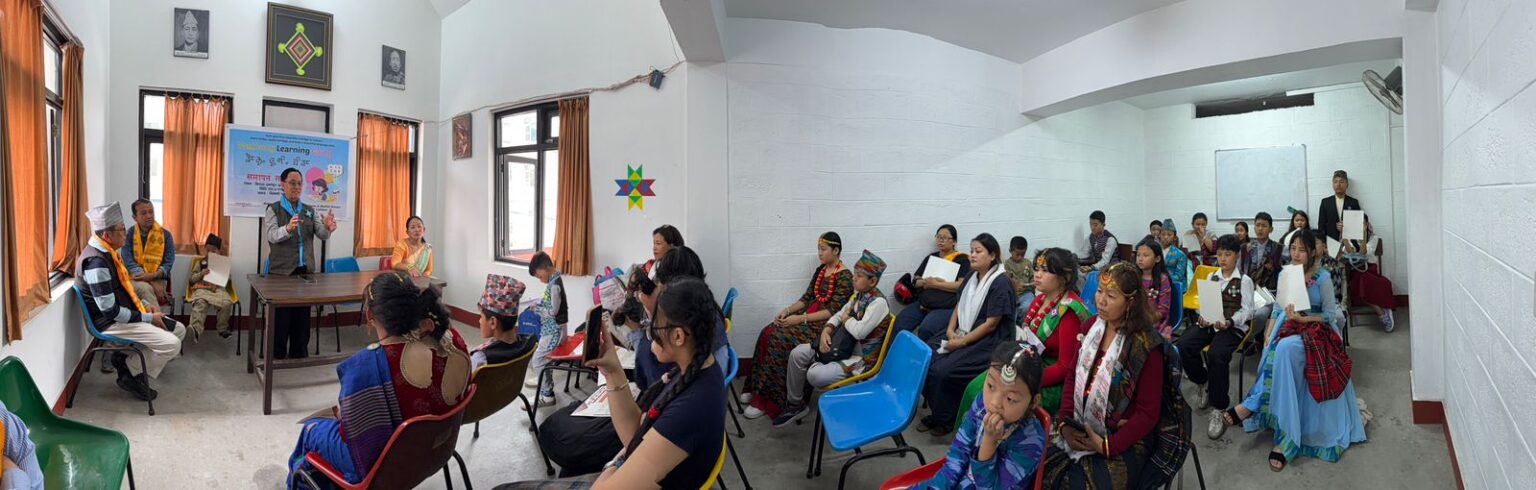
Training being conducted on Limbu language and culture for the new generation.
Bhima, who has worked in the preservation of her language and culture, even gave her children Limbu names. At home, she encourages them to speak in their mother tongue as much as possible. However, the environment in the school where they study is not conducive to learning or understanding their language and culture. Schools do not grant holidays for Limbu festivals like Chasok Tangnam , and the children don’t get the opportunity to understand them.
It is not easy to teach the language at home to children who speak English at school and Nepali in society. Bhima was worried that her children would spend this school vacation busy with mobile games. However, she found out that classes were being conducted to teach children about language and culture. Although six days of the ten-day class had already passed, she still enrolled her children.
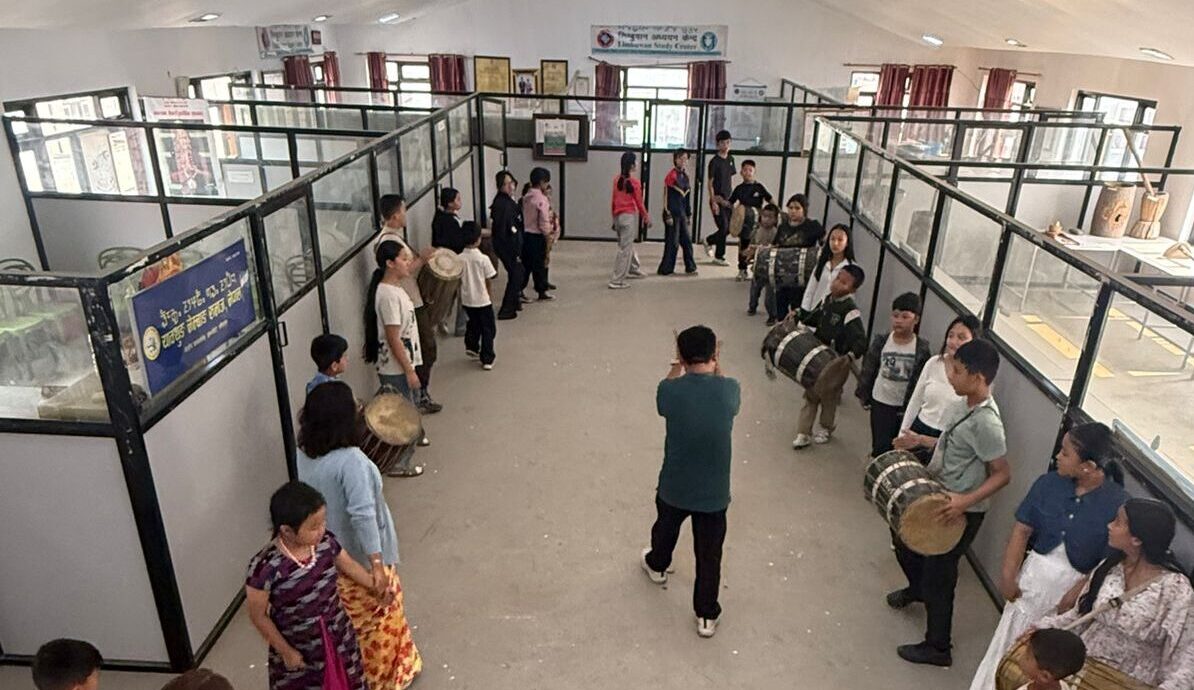
Chyabrung dance being taught to the new generation.
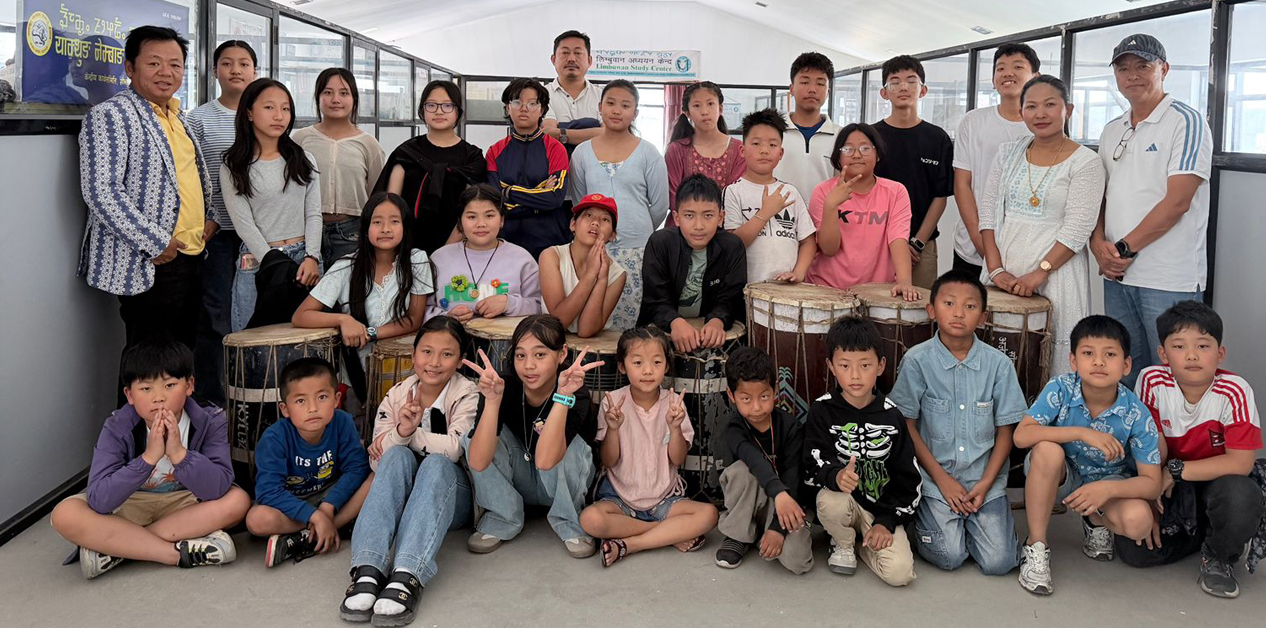
Having learned a few Yakthung words at home, they learned a great deal more in four days. They learned not just the language, but also how to play the Ke/Kay (Chyabrung drum) and how to make Silam Sakma (sacred, star-shaped cultural emblem of the Limbu community). Bhima says, “In class, they learned how to count from one to ten million in their own language and got the chance to understand their festivals. They are happy to learn new things, and we are happy to be able to pass down our language and culture.”
Punam Devi Serma, also from Lalitpur, is happy that her son Suyem Thalang, who studies in grade 2, learned many words of his language in just ten days.
Although she is proficient in the Limbu language, her husband does not know it. Therefore, they do not converse in Limbu at home. In such a situation, there was no way for the children to learn. Furthermore, she was stressed about how to teach her language and culture to children studying in ‘boarding schools.’ She says, “This time, my son got to understand his language and culture. If there were online classes on weekends, I would have him learn then too.”
Kirat Yakthung Chumlung, the ethnic organization of the Limbu community, has been providing training in the Limbu language, Kelang (Chyabrung dance), Yalang (Paddy dance), and other rituals and culture to the younger generation. However, there were no training opportunities for small school-age children.
During this school vacation, Mundhum Mibhak Limbu (Munu), the proprietor of Mundhum Boutique and Mekhli House in Lalitpur, came up with a new idea to utilize the children’s vacation time: providing training on language, Kelang, and Silam Sakma. She shared her plan with Kirat Yakthung Chumlung.
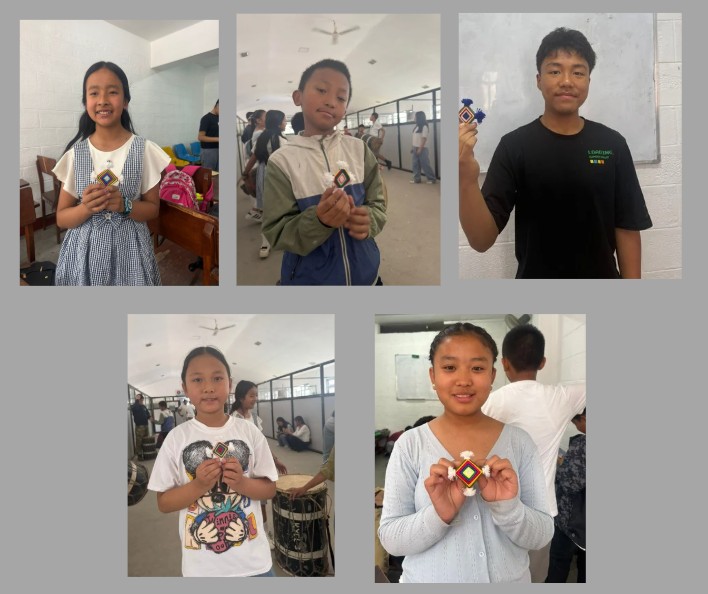
Participants showcasing the Silam Sakma they have made themselves during the training session.
Govinda Angbung, the central chairperson of Chumlung, also liked the plan Mundhum brought forward personally. Kirat Yakthung Chumlung Lalitpur provided the building and the Chyabrung drums for the training. Instructors were then immediately sought out. Within two days, 31 children gathered to learn the language and culture. They were trained by Bhima Khajum, cultural expert Yaseli Yonghang, Nishes Angdembe, and even former Inspector General of Police Chandra Kuber Khapung. Coordinator Mundhum Mibhak Limbu says, “The thought to run this class came with the primary objective that if we can increase the interest of the new generation in their language-script, rituals, and culture, they can learn more through various mediums in this age of technology.”
A wave of teaching language and culture to the new generation has recently swept through the Limbu community. First, the practice of naming newborn babies in their own language has become widespread. This trend of giving original names became popular two decades ago. All those who took the 10-day training this time had names in their own language. To facilitate the naming of original names, author D.B. Angbung and Bishnu Datta Angbuhang have even written name dictionaries.
In the Mundhum (Limbu oral tradition), the tradition of weaving on a loom is mentioned. Even now, the practice of weaving Dhaka cloth on looms to wear and trade continues in the Limbu community. There is a tradition of dressing Limbu children in original Dhaka outfits like Tagawa and Mekhli .
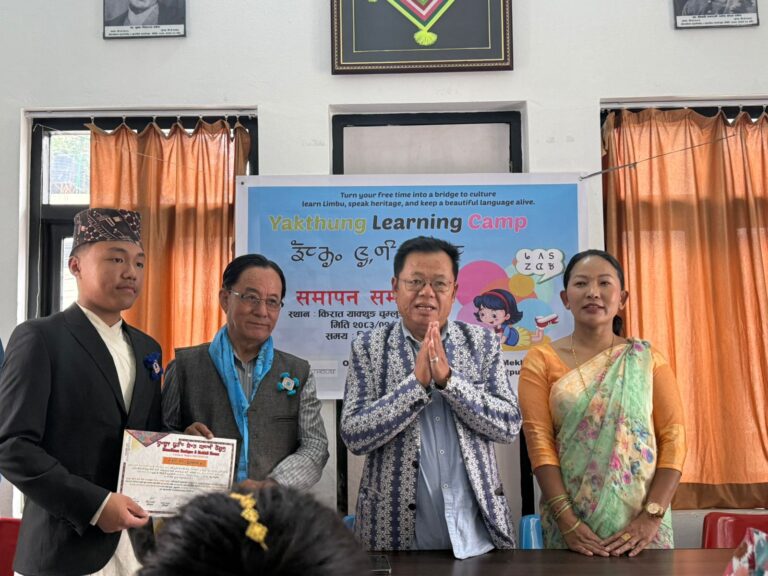
Closing ceremony of language and culture training program.
Chumlung has been training the youth of the Limbu community in language, rituals, and culture for a long time. Similarly, to teach the language and culture to the new generation in a modern way, Chumlung has created mobile apps and Unicode fonts. Former Chumlung chairperson Prem Yekten says, “The new generation is accustomed to technology; Unicode was created so they can easily learn the language and script. This is also attracting them.”
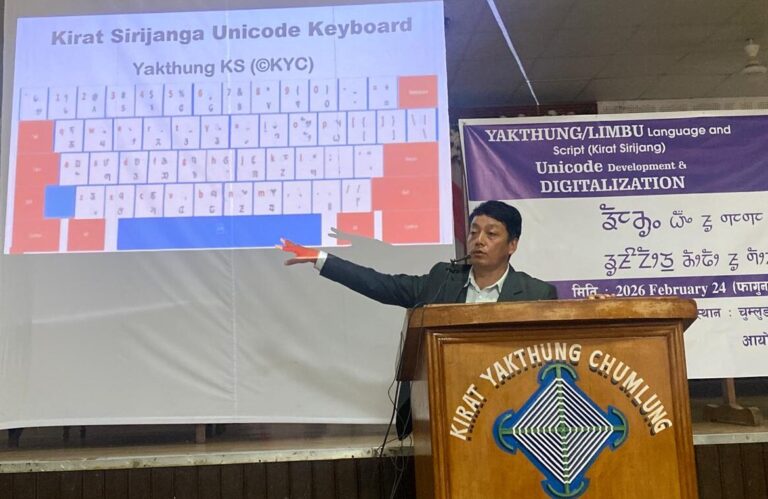
Former Chumlung president Prem Yekten launching the Kirat Sirijanga Unicode keyboard. Photo: Gopal Dahal
Although it is the government’s policy to provide education to children in their mother tongue, effective implementation has not occurred. Author D.B. Angbung states that although there are arrangements for teaching the Limbu language in schools in Limbu-majority areas, there are problems because the government has not managed teachers to teach the language. He says, “Even if the government’s plan is not effective, we are teaching the language, culture, and original things to the new generation through individual and institutional initiatives.”
Former Inspector General of Police Chandra Kuber Khapung, who also provided training to the children, suggests moving forward by creating a short-term course to give children such knowledge. He says, “From this training, we experienced that children’s screen time can be reduced and knowledge of their language and culture can be taught quickly. This needs to be systematized.”
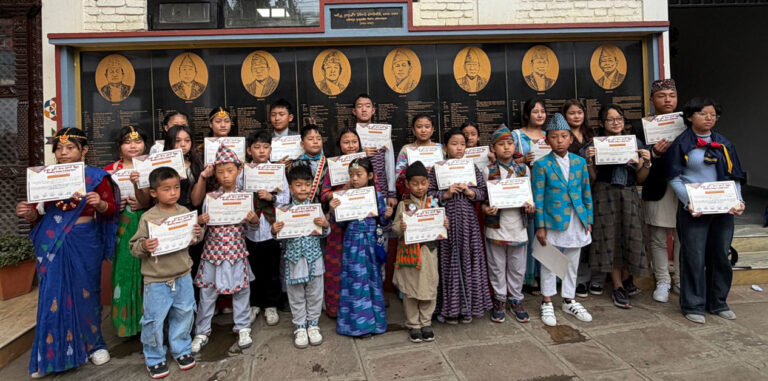
Participants receiving certificates after the training session.
Govinda Angbung, federal chairperson of Chumlung, is excited to see the awareness regarding language and cultural renaissance in the Limbu community. Expressing happiness that even his 5-year-old child has started taking interest in language and culture, he says, “We have been hearing and saying from the beginning that there is knowledge and science in the mother tongue. Seeing interest in the current generation gives us hope.”
Yakthung cultural expert Yaseli Yonghang says it is not easy to teach and explain old things to the new generation because the infatuation with English is increasing even among parents. He says, “The community is doing its part. When language and culture are on the verge of disappearing, it is also the state’s responsibility to protect them.”