Kathmandu
Sunday, July 12, 2026





How a pandemic-born farm stay in Namobuddha is serving up authentic eastern hill flavors alongside a deep dive into indigenous literature and culture

KATHMANDU: As soon as we stepped out of the vehicle, we were greeted by various types of fruit trees, countless flowers blooming all around, lush seasonal vegetables on one side, and a beautiful view of Dhulikhel, Paanchkhal Valley, and the hills toward Palanchowk Bhagwati temple in front. Before we could finish soaking in the priceless essence of this natural beauty, a young man arrived to welcome us carrying ‘herbal tea’ prepared by dipping/boiling holy basil and mint leaves in hot water for a few moments. That was the ‘welcome drink’ of the place. While I was wondering why they called this ‘tisane’—which is older than traditional tea—’tea’, our host Ramesh Rai arrived to welcome us.
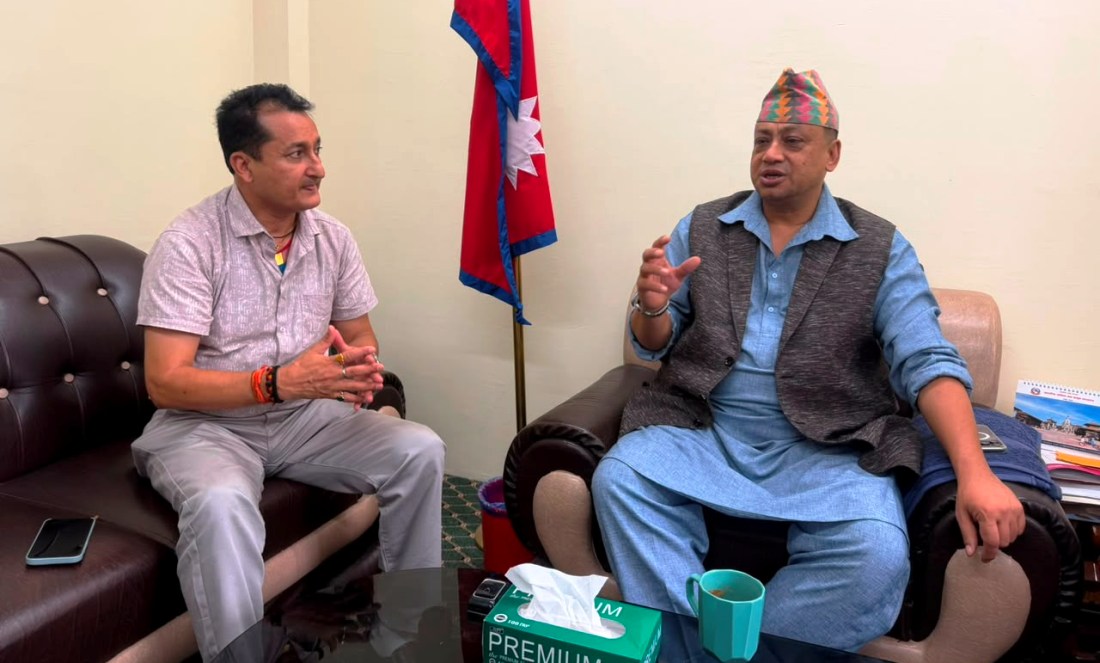
We had arrived at Mundhum Farm Stay, located in Namobuddha Phulbari of Kavrepalanchowk, about 40 kilometers away from Kathmandu. Accompanying me were Dr. Man Bahadur Bishwakarma, a former secretary of the Government of Nepal and an activist for indigenous universities, and researcher Yagya Bikram Shahi. Our host Ramesh Rai was our resource person for a research project. The purpose of this visit was to engage in a deep conversation about the flavors of Maajh Kirat (Central Kirat or Khambuwan) alongside an intellectual whose ancestral roots trace back to Palpa, and another individual with royal lineage from Jajarkot.
The tisane made of holy basil and mint leaves was refreshing, and another cup was added for each of us. Although tables and chairs were arranged for us to sit and discuss, my mind wished to sit cross-legged comfortably on the meadow that spread out like a green carpet. However, the many remaining formalities forced us to settle into the chairs. The formal conversation progressed as we chewed on roasted corn and soybeans served on a plate. On the other hand, my nose could sense that food was being cooked continuously in the kitchen. The aroma coming from the kitchen was inspiring us to finish the business matters quickly.
As soon as the business talk concluded, the roasted nose and ears of a pig arrived on the table. It was accompanied by coriander and tomato chutney. The chutney added to the delight of the delicious taste that entered the mouth along with the crunchy sound made while chewing the roasted ears. And then, the conversation began. Since both Dr. Bishwakarma and researcher Yagya Bikram are poets and litterateurs, literature and poetry began to overshadow other topics of conversation. Amidst all this, Ramesh Rai was educating this writer about Kirati culture and food like a dedicated guru, and I was continuously asking questions like a curious student.
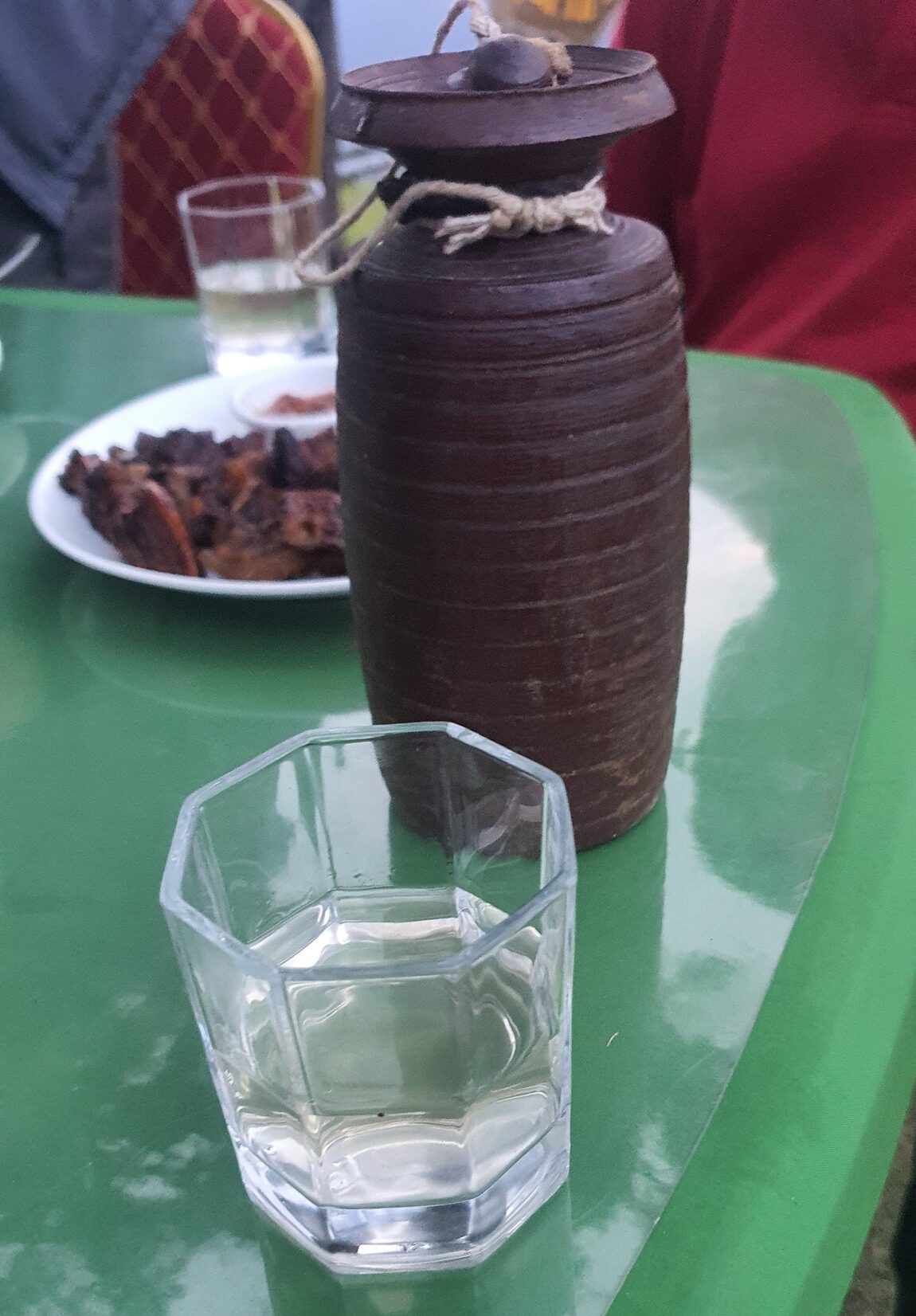
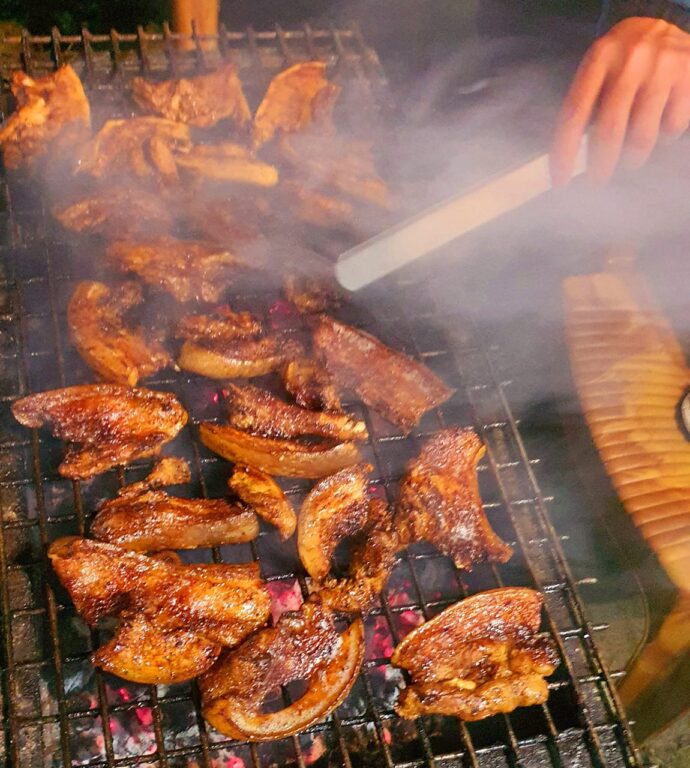
While enjoying the snacks, pure araakha (millet alcohol) brought all the way from Khotang dominated the table to accompany the fading evening. In between, radishes and carrots grown in the garden of Mundhum Farm Stay also started to arrive. At one moment lettuce, which we call Chinese greens, would arrive, and at another, marinated radish ( sandheko mula ). To accompany them, the young men just brought pork sekuwa (skewered grilled meat) that they had freshly roasted. While a conversation was going on about whether or not to eat ‘pork’, the work of convincing and explaining was also happening with statements like, “Let’s eat this considering it as wild boar, it won’t be a sin.” Indeed, the only difference between the black pig from Dharan and a wild boar is perhaps the firmness of the fat and the meat.
Mundhum Farm Stay was started with the goal of making the excellent cuisine of the Kirati people popular among ordinary Nepalis. Moreover, Ramesh Rai, who writes ‘Gaunle’ (Villager) as his surname, is himself an activist of the Mundhum Trail. The Mundhum Trail, which initially started at 107 kilometers, has now expanded from Koshi Tappu (80 meters) to the base of Mount Everest and is called the ‘Greater Mundhum Trail’. It passes through seven districts: Sunsari, Udayapur, Dhankuta, Bhojpur, Khotang, Solukhumbu, and Sankhuwasabha. The Mundhum Trail is becoming a medium for an unprecedented experience of Kirat civilization and Mundhumi philosophy.
While eating the pork sekuwa dipped in Sichuan pepper and tomato chutney, Ramesh Rai said, “When we started the exploration work of the Mundhum Trail around the year 2018, we had three main goals. Its first objective is to bring economic prosperity by connecting the products of the farmers of the overshadowed mid-hill region with the market, while also making it a tourist attraction by reviving our ancient Kirat civilization and Mundhumi philosophy which were falling into the shadows. Along with that, it is also to protect the sustainable environment by saving the unique biodiversity and natural heritage of this place, which is being destroyed in the name of rapid physical development, from destruction.”
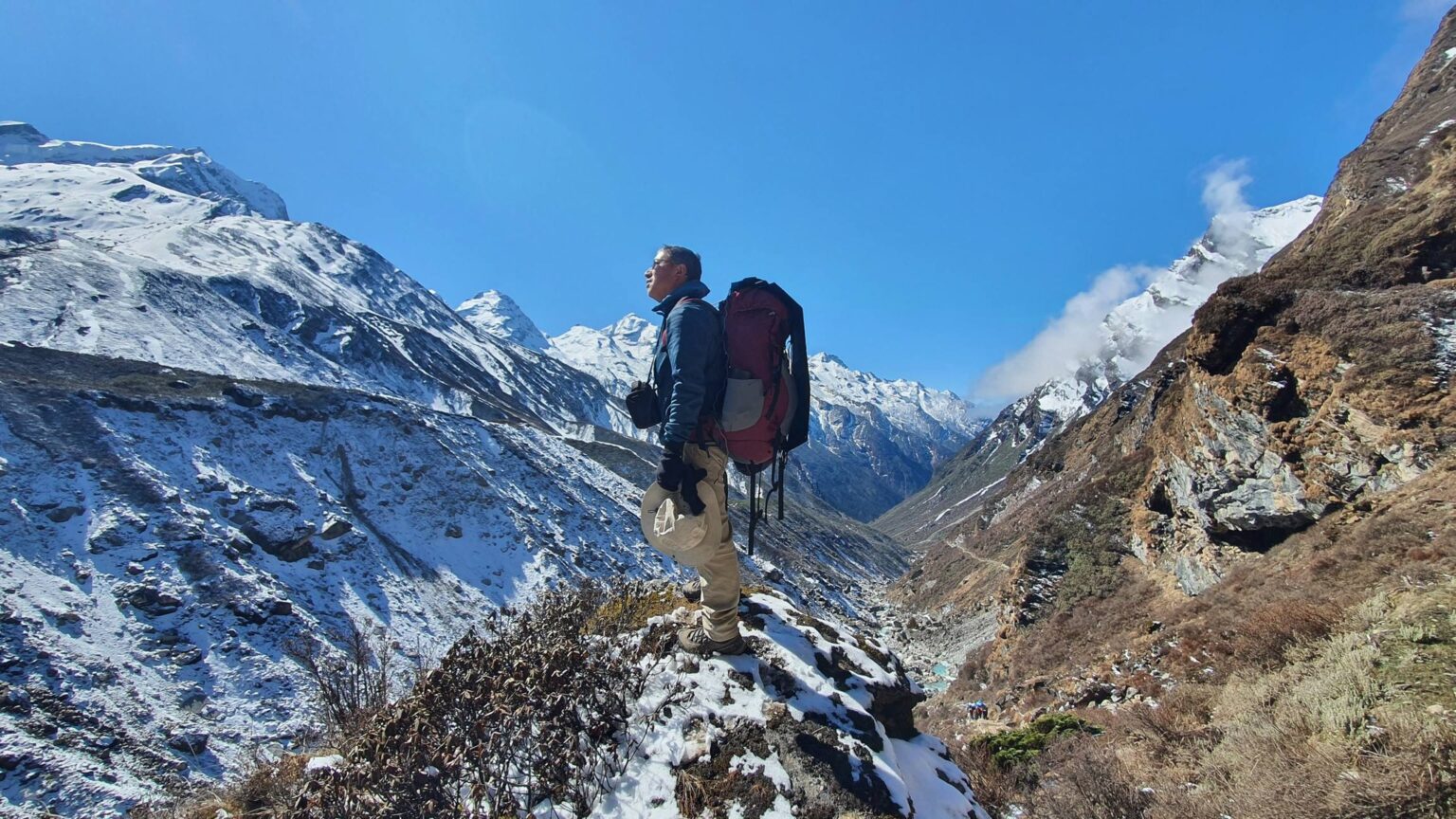
After traveling to almost all tourism areas of Nepal as a tourism entrepreneur, Ramesh Rai, whose ancestral home is Bhojpur, felt that his own village and region are no less than any other place and have immense potential for tourism, which led to the beginning of this campaign. And it is true, if the income starts to be good, perhaps the thinning population in the hills can be retained? If one gets a good reward for their hard work, why would anyone wander aimlessly in the city?
Mundhum Farm Stay, however, turns out to be a fruit of the COVID pandemic. While running a hotel in Dhulikhel, Ramesh had bought and kept land in Phulbari. Suddenly, everything came to a standstill due to Corona. Ramesh felt that depending on just one thing would not work. Then, the concept of this farm emerged to connect tourism with agriculture. Spread over 13,726 square meters, the farm now has all facilities for lodging and food. Comfortable stay, high-quality scenic views, and excellent food. The food cooked here is either grown on the farm itself or sent directly by the farmers of the eastern hills who are in contact with Ramesh.
“What sells the most at our place are the roasted pork items. It is basically Kirati food, along with millet alcohol, strained millet beer, tongba Himalayan hot beer) in winter, and wachipa (burnt chicken),” Ramesh Rai explained while describing his dishes, and just then, wachipa arrived on the table. A priceless gift given by the Kiratis to the enrichment of Nepali cuisine. This dish, made by chopping chicken giblets and meat into small pieces, cooking them with rice, and mixing in roasted chicken feathers/fluff, is loved at the very first bite by those who like it. As for those who don’t like it, what is there to say.
The evening grew more intoxicating, the snacks kept being added, the stomachs kept getting full, but at the end of the evening, neither the guest would be satisfied nor the host without eating rice or dhido (thick porridge). Then, the mouth was stopped with a well-stirred buckwheat dhido set, and praises were sung for the farm stay. Speaking in the old geographical terms, this Mundhum Farm Stay falls under Wallo Kirat (westernmost territory of Kirat region). Today, however, it stands as an artistic gateway to enter the world of Kirati culture, tradition, and excellent culinary experiences.