Kathmandu
Monday, June 15, 2026





Authorities ask people to avoid burning plastic, control dust during construction, and comply with pollution control standards

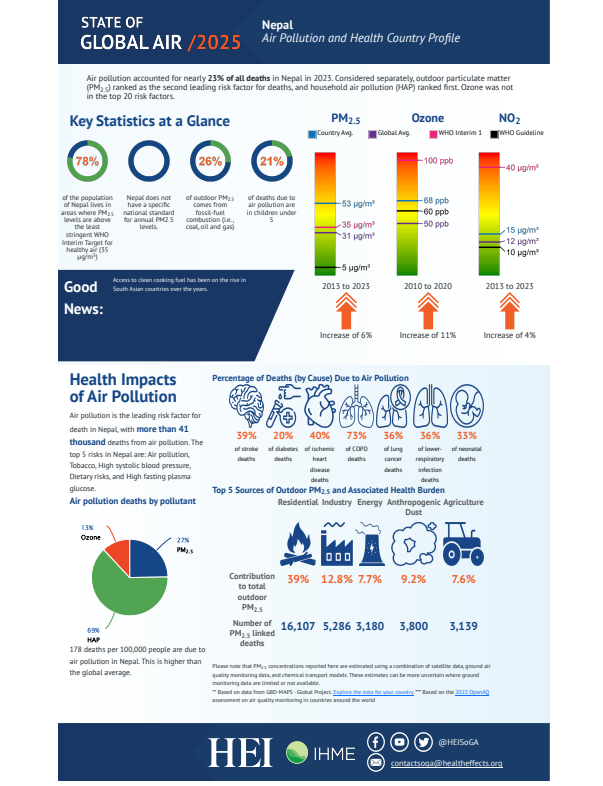
KATHMANDU: Air pollution has increased across the country over the past week. Data from the air quality monitoring stations and dashboard of the Department of Environment under the Ministry of Forests and Environment show that the level of polluted air particles or liquid droplets, particulate matter measuring 2.5 micrometers or less in diameter (PM 2.5), has risen in the atmosphere of major cities such as Kathmandu and Pokhara, as well as most locations across the Terai.
Air pollution has reached high levels because polluted air remains trapped in the sky due to cold conditions, said Govinda Prasad Lamichhane, an environmental inspector at the Department of Environment. The impact of air pollution is greater in the Kathmandu Valley because its bowl-shaped geography prevents polluted air from dispersing easily.
“Because the Valley is bowl-shaped, polluted air cannot easily disperse. Toxic air is trapped in the atmosphere as if a lid has been placed over it,” said Lamichhane. “For this reason, the sky over Kathmandu has remained completely murky since March 5.” Strong winds or sufficient rainfall are required to improve the Valley’s air quality, he added.
The air may remain polluted for a few more days, as there is no immediate possibility of heavy rainfall in the Valley, said Bibhuti Pokharel, spokesperson and senior meteorologist at the Meteorological Forecasting Division of the Department of Hydrology and Meteorology.
“In the coming days, weather changes are expected across the country. There is a possibility of light rain in some places of Koshi, Bagmati, Madhesh, and Lumbini provinces,” Pokharel said.
The Department of Environment said air pollution has increased due to rising incidents of forest fires across the country, along with the burning of paper and plastic waste and crop residues, emissions from brick kilns, industries, and vehicles, and polluted air entering from neighboring India.
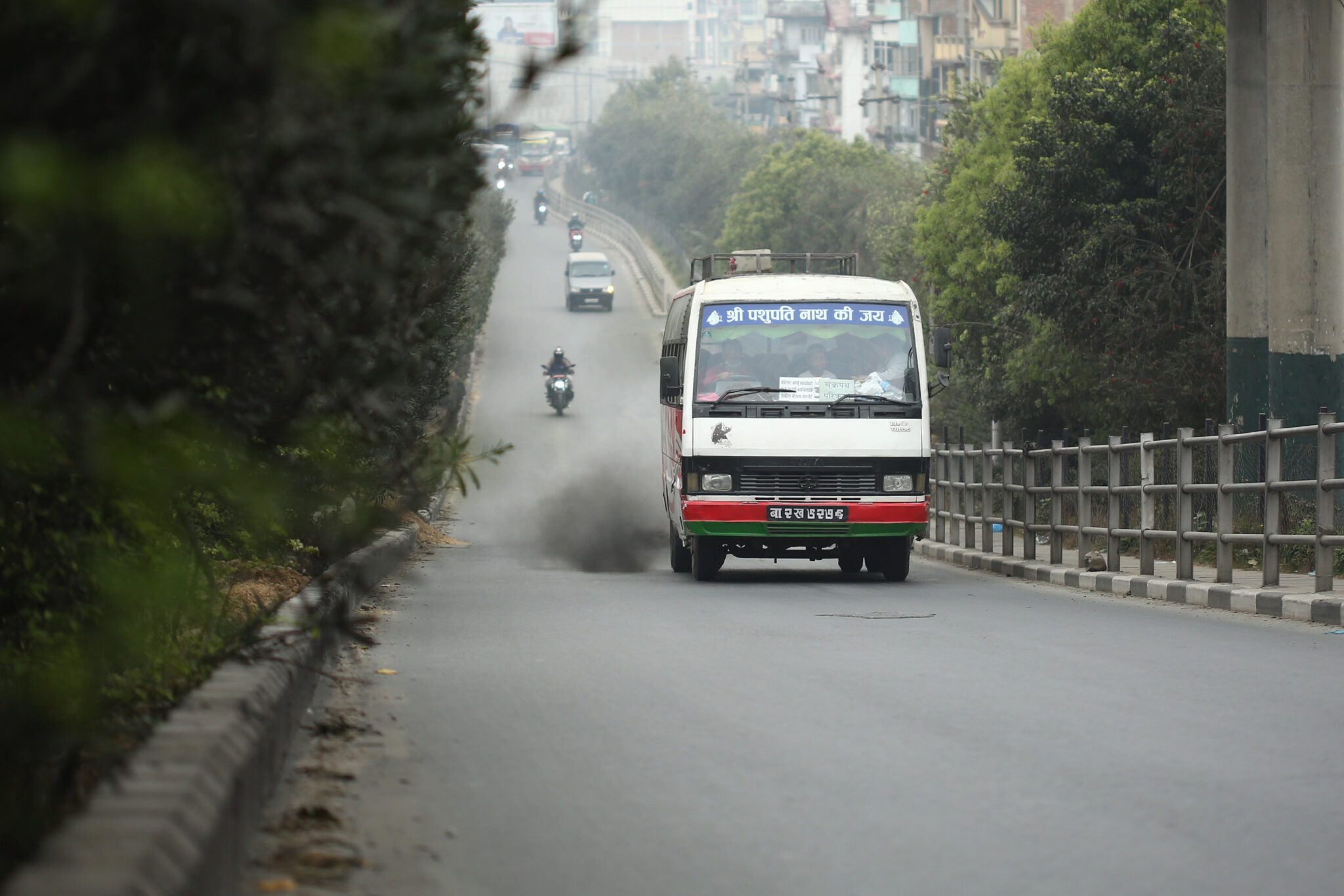
Public transport vehicles spewing black smoke across the Kathmandu Valley. Photo courtesy: Nepal Photo Library
Records from NASA’s Fire Information for Resource Management System show that fires and forest blazes were detected in 70 locations across the country on March 4. From March 4 over the past week, fires and forest blazes have spread to more than 250 locations nationwide. Similarly, the number of fires and forest blazes has increased in the northern and northwestern regions of India. Pollution levels have risen as air carrying polluted particles has moved from west to east.
According to the regular bulletin of the Meteorological Forecasting Division, Nepal is currently experiencing the partial influence of a high-pressure system in the upper atmosphere linked to western winds and a low-pressure area in the lower atmosphere near the eastern part of the country. Air pollution levels typically remain high for about one month starting from the last week of February each year, Lamichhane said.
PM consists of microscopic particles about 10 times smaller than the width of a human hair and is harmful to human health. PM 2.5 particles are extremely small and can only be seen with a microscope. These particles are emitted from vehicles, industries, smoke from brick kilns, and the burning of agricultural residues such as firewood, dung cakes, coal, and straw, as well as from forest fires. When inhaled, these particles enter the lungs and bloodstream directly.
“Exposure to such particles can cause serious health problems such as lung cancer, heart disease, and stroke,” said air quality expert Rejina Maskey. According to the report State of Global Air 2025, more than 41,000 people die every year in Nepal due to air pollution.
The current air pollution particularly affects high-risk groups, including people with chronic respiratory diseases such as asthma and persistent cough, children under five years of age, pregnant women, senior citizens, and vulnerable individuals, said Dr. Prakash Budhathoki, spokesperson for the Ministry of Health and Population.
“Since the concentration of harmful air is extremely high in the morning and evening, we have issued a circular advising people to avoid going outside if possible. If they must go out, they should wear clothes that cover the body and use masks that cover the nose and mouth,” Budhathoki said.
The Department of Environment also issued a notice on March 9 urging the public to help reduce air pollution and take precautions. The department requested regular maintenance of vehicles, avoiding the burning of paper and plastic waste or crop residues, preventing forest fires and extinguishing them immediately if they occur, controlling dust and smoke during construction work, and operating industries in full compliance with government-mandated standards.
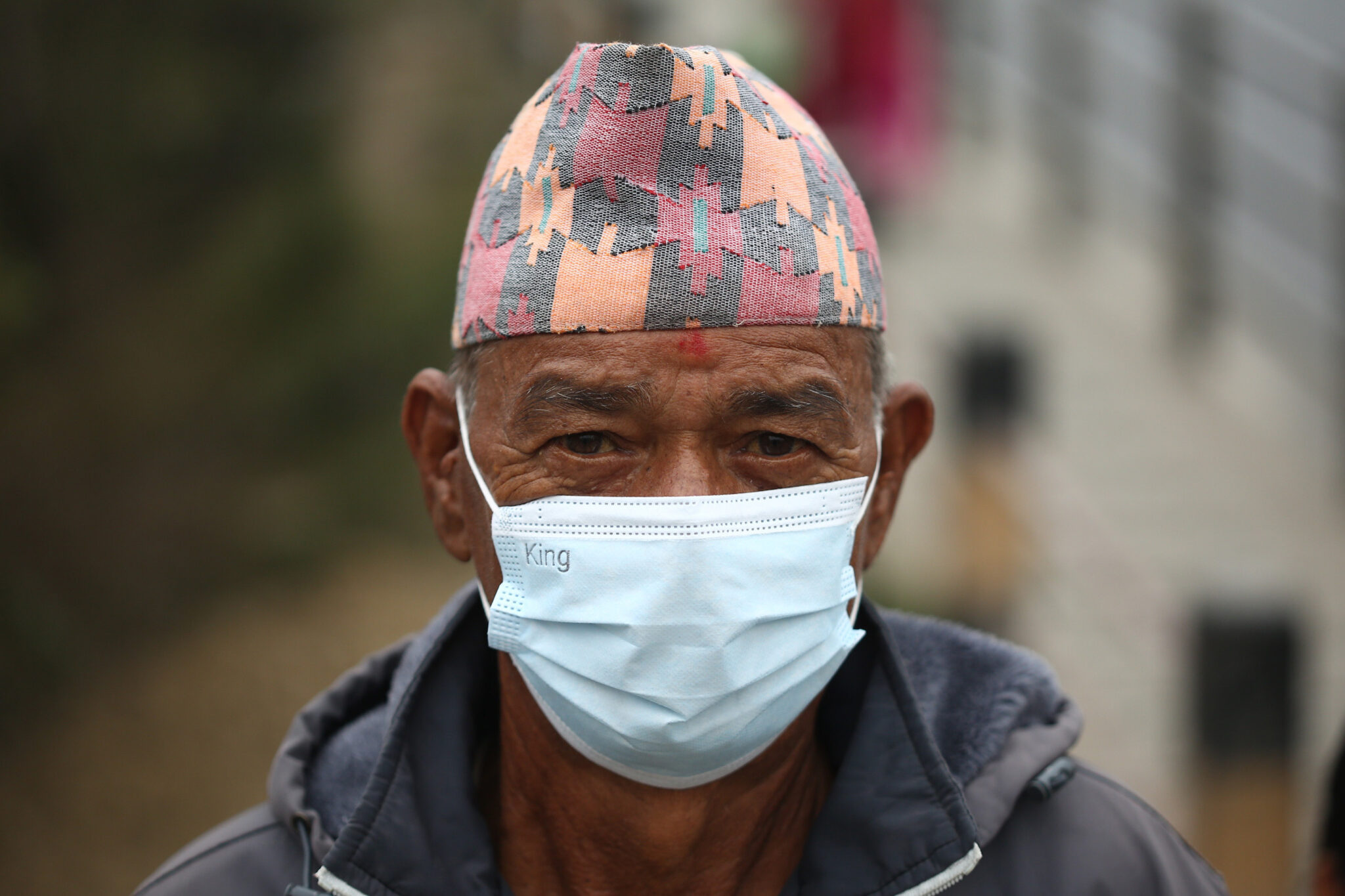
Pedestrians wearing face masks as a precaution against rising air pollution. Photo courtesy: Nepal Photo Library
Monitoring site readings
Air pollution in the eastern hill district of Ilam remained the highest in the country over the past week. According to the air quality monitoring station in Ilam, the daily average level of fine particles and gas, PM 2.5, was measured at 145.53 micrograms per cubic meter on March 8. This is nearly 10 times higher than the limit set by the World Health Organization. The WHO has set the daily average limit at 15 micrograms per cubic meter. By 4:00 PM today, the daily average level had declined slightly but still stood at 109.50 micrograms per cubic meter.
Similarly, the highest air pollution in the Kathmandu Valley was recorded in Bhaktapur. Air pollution, which began rising on March 4, has continued to increase. On March 4, the PM 2.5 level at the Bhaktapur monitoring station was 79.83 micrograms per cubic meter, while by 4:00 PM today the daily average level had reached 105.69 micrograms per cubic meter.
At the Deukhuri monitoring station in Dang, air pollution reached its highest level within the past week yesterday, Monday, since March 4. On March 9, the daily average level rose to 94.40 micrograms per cubic meter.
According to the monitoring station in Achham, air pollution has been rising continuously since March 7. On that day, the daily average level of PM 2.5 at the Achham station was 51.28 micrograms per cubic meter, while by 4:00 PM today it had climbed to 77.15 micrograms per cubic meter.