Kathmandu
Sunday, June 14, 2026





If electricity is to drive the country's economic development and prosperity, its domestic consumption in industries and factories must be increased; relying solely on exports will not suffice.
KATHMANDU: Nepal has achieved unprecedented progress in electricity generation over the past decade. Cross-border electricity trade has also expanded. According to recent statistics, in just the first five months of the current fiscal year 2025/26, Nepal exported electricity worth Rs 18 billion 267 million to India and Bangladesh. This amount exceeds the total export revenue generated during the entire preceding fiscal year (Rs 17 billion 450 million). The total installed capacity connected to the national transmission grid has reached 3,602 megawatts. If the electricity generated from projects currently undergoing testing is included, this capacity could be even higher. Looking at electricity exports and trade, a sense of enthusiasm is visible from the rulers down to the general public.
On one hand, there is such an encouraging growth in electricity, but on the other hand, our situation in terms of industry is deteriorating. According to the Economic Activities Study recently released by Nepal Rastra Bank, the country’s industrial capacity utilization rate has dropped from 48.3% to 44.5% and down to 38.7% over a three-year period. This directly means that industries have already lost nearly 10% of their production capacity. Electricity generation is becoming abundant, but its utilization in the country’s factories has not been able to increase. When the generated electricity cannot be consumed domestically in large-scale industrial production, aspects such as job creation, goods production, and commodity exports all decline. What kind of development is this where the lightbulbs turn on, but the industrial furnaces fail to ignite?
Looking deeply, this is a symptom of a significant structural problem that we have not yet been able to dissect properly. Our electricity generation is seasonal, there is no storage, there is no demand from industry, policies are unstable, and the debt burden has already reached Rs 448 billion. All these factors have combined to birth a paradox. If a solution to this is not sought, building the country by selling electricity will remain confined to a dream.
Both seller and buyer
The story of Nepal’s electricity trade is quite peculiar. We both sell and buy electricity within the exact same year. In just the first five months of the fiscal year 2025/26, electricity worth Rs 18 billion 260 million had already been exported to India and Bangladesh. Breaking the old annual record for electricity exports within just five months is certainly welcoming. However, during the winter—which is the dry season—Nepal is forced to import around 800 megawatts of electricity daily from India. Selling cheap, buying dear. In reality, this is not trade; it is a fatal cycle.
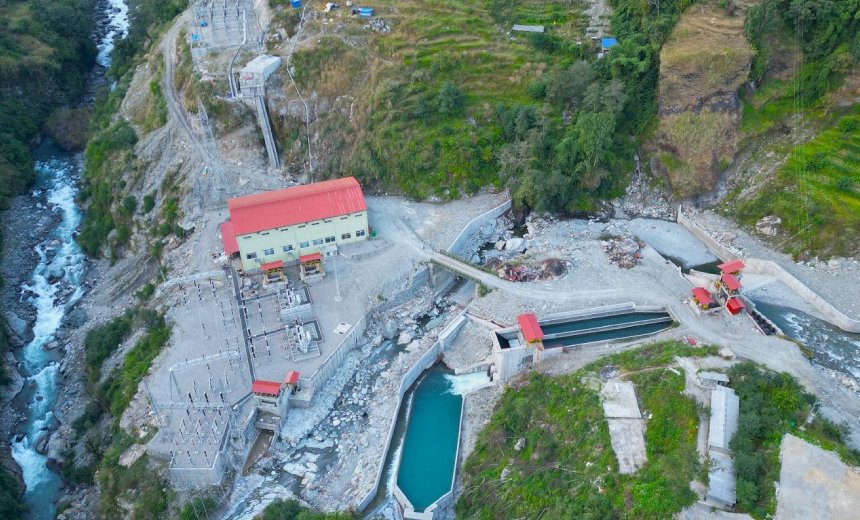
Rahughat Hydropower Project. File Photo
Why does this happen? It is because most of our hydropower projects are of the ‘Run-of-River’ type, meaning electricity is generated by directly utilizing the natural flow of the river. Electricity is produced as long as there is water in the river; as the water decreases or dries up, production shrinks in the same proportion. During the monsoon season, rivers swell, and production crosses ,2500 megawatts. In winter, the water level drops, and production falls below 1,500 megawatts. Therefore, in winter, we are forced to extend our hands to India for electricity. Even if the electricity trade agreement with India is flexible, this seasonal production can never lead to true self-reliance.
Industries have had to pay the highest price for this instability. Industries that melt steel, manufacture cement, produce fertilizer, or operate data centers require electricity 24 hours a day, 365 days a year. How can a factory be run in a country where electricity is abundant for six months and scarce for the other six months? According to an industrialist, running a factory in Nepal means keeping a diesel generator as a mandatory requirement. That adds more than 30% to the production cost. This is why despite the increase in installed electricity capacity, industries and businesses could not expand in the country. Foreign investors are also in a ‘wait and watch’ state.
Where is the electricity used?
If someone looks at the statistics of Nepal’s electricity sector success and industrial decline at the same time, they might not believe it. According to Nepal Rastra Bank’s Economic Activities Study 2024/25, the industrial capacity utilization rate over a three-year period dropped from 48.3% (Fiscal Year 2022/23) to 44.5% (2023/24) and down to 38.7% (2024/25). This means that industries are producing 10% less today compared to three years ago. Electricity kept increasing, while production kept decreasing. Such a paradox is rarely seen in the world.
There are multiple reasons for this, rather than a single one.
The first reason is the high interest rates of banks. Over the past two years, the base rate of banks increased from 7%–8% to 10%–11%. Industrial loans became expensive, and new investments became risky.
The second reason is the import cost of raw materials. Most of Nepal’s industries rely on imported raw materials. The depreciation of the rupee and price hikes in the international market caused production costs to skyrocket.
The third and perhaps most serious reason is policy confusion. The ‘Take and Pay’ policy was introduced abruptly. Signals appeared indicating the removal of tax incentives. Rumors spread regarding a review of PPA (Power Purchase Agreement) rates. All these things made industrialists afraid to make new investments.
Another interesting fact is visible in electric vehicles (EVs). In the fiscal year 2024/25, 13,604 EVs were imported. This was termed a ‘green revolution’. However, petroleum consumption increased by 6% in the exact same year. Despite the remarkable influx of EVs, the demand for petrol did not decrease. This is because the EV is in Kathmandu, while the diesel generator is in the village. While 35% to 40% of our electricity consumption goes to domestic usage, the share of industry is only 20% to 25%. In other words, the increased electricity went into household consumption, not industrial production. Running a factory requires electricity, policy, and trust. Until these three things are aligned, electricity alone achieves nothing.
The web of ‘Run-of-River’
Hydropower accounts for 92.6% of Nepal’s total installed electricity capacity. This sounds like a matter of pride. However, within this, the share of reservoir-type projects—large scale ones capable of storing water—is negligible. To date, not a single large reservoir project has come into operation in Nepal. Almost all our hydropower projects are of the ‘Run-of-River’ nature. Because water is not collected by building large dams in this structure, one has to depend entirely on the river’s flow for electricity generation. Carefree in the monsoon, miserable in the winter! This is a seasonal business, not the foundation of a sustainable industry.
The impact of this is seen precisely in practical life. According to a cement industrialist, during the dry season, he has to spend Rs 3 million monthly on diesel. If there were reliable electricity, he could have invested that money into production or spent it on workers’ salaries. An investor wishing to open a data center sees the exact same problem and takes their investment elsewhere.
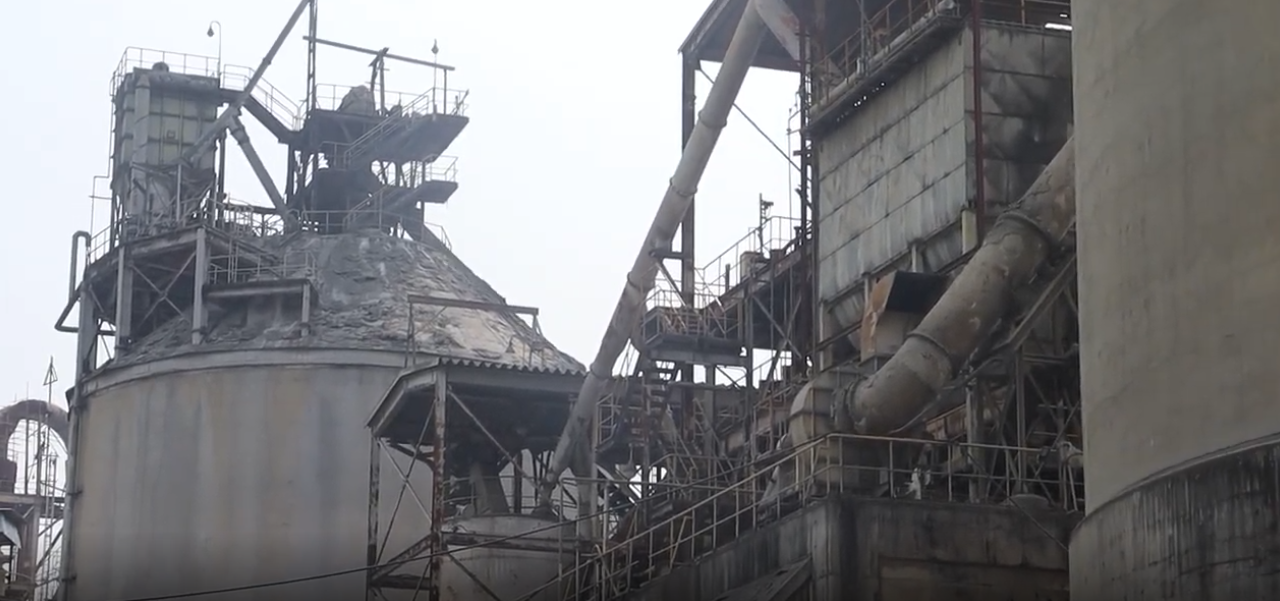
The plant of Udayapur Cement Industries. Photo: Sarokar
Looking at the international scenario, Norway generated electricity by building reservoirs, and its industries flourished. In doing so, Norway worked with a state monopoly and decades of stable policies—things that do not yet exist in Nepal. Vietnam developed export-oriented industries by using coal and gas thermal plants as a baseline. We have water, but we do not have places to hold the water.
The only major answer to this problem is the Budhigandaki Reservoir Hydropower Project (capacity 1,200 megawatts). The government has labeled it a project of national pride. Yet, even as decades passed, contract disputes were not resolved, environmental studies were not finalized, and financial arrangements were not made. There is a visible lack of coordination between the Ministry of Finance and the Ministry of Energy. As long as this project remains on paper, the country’s energy self-reliance will remain limited only to the four months of the monsoon.
Cheap middleman, expensive importer
While looking at the electricity export figures brings joy, the picture looks different when the entire calculation is made. Our average export rate is Rs 8.30 per unit. However, when buying electricity from India during the dry season, we have to pay Rs 10 to 12 per unit. In other words, we sell electricity cheap and buy it at a high price. This goes against the simple rules of trade.
However, a bigger problem lies elsewhere.
Let us look at the statistics of petroleum imports. In just the first eight months of the fiscal year 2024/25, diesel and petrol worth Rs 78 billion 860 million were imported. The petroleum imports for the entire year reach around Rs 102 billion to 105 billion. In comparison, electricity exports bring in only Rs 17 billion annually. Doing a direct math, we can sustain only 10% to 15% of the petroleum bill by selling electricity. The rest has to be spent from foreign exchange reserves.
The growing import of EVs offered hope. Importing 13,604 EVs in a single year is no small feat. Yet, petroleum consumption increased by 6% in that same year. Why? Because EVs are on the streets of Kathmandu, and in the villages, lights are still powered by diesel generators. Charging infrastructure outside of Kathmandu is extremely weak. Until the country develops large-scale electricity-consuming industries such as fertilizer production, hydrogen production, and data centers, and extends EV charging infrastructure to rural areas, we cannot escape this vicious cycle of selling cheap electricity and buying expensive oil.
Risks of hydropower debt
The total loans extended by banks and financial institutions to Nepal’s hydropower sector have reached Rs 448 billion. According to data from Nepal Rastra Bank for the fiscal year 2024/25, this constitutes about 8% of total bank loans. Investing in energy infrastructure is not wrong in itself. However, for this investment to yield returns, industries must buy electricity. Unless industries buy electricity, the income of projects decreases, paying back loans becomes difficult, and problems arise in banks.
Initial signs of this have begun to surface. The Non-Performing Loan (NPL) rate for hydropower has already crossed 2%, which stood at 1.2% in the previous year. If this trend continues and the NPL reaches 5% to 6%, the banking system itself could be shaken. Banks will fear extending credit, investment will stall, and the cycle of the economy will halt. What is further worrying is that due to changes in the ‘Take and Pay’ policy, PPA agreements for projects totaling 12,889 megawatts have fallen into limbo. New investment is at a standstill.
The example of Sri Lanka is relevant here. The beginning of Sri Lanka’s energy debt crisis occurred under similar circumstances. Infrastructure was built there using loans, but industrial demand did not increase, and returns did not materialize. Although Nepal’s situation is not yet that fragile, the directions are beginning to align. The triangle of declining utilization capacity, rising NPLs, and policy confusion is flashing a warning sign that must be paid attention to right now. The Rs 448 billion debt in the hydropower sector is an asset, but if electricity demand does not increase, it can turn into a burden.
Conclusion
Nepal learned how to generate electricity, but forgot who would buy that electricity. It learned how to increase production, but forgot to create industrial demand. It learned how to export, but forgot to build storage. It learned how to bring in EVs, but forgot to supply chargers. It learned how to take loans, but forgot to pave the path for returns. The summation of these five oversights is today’s paradox.
The Rs 448 billion debt in the hydropower sector is an investment, but for that investment to bear fruit, factories are required, stable policies are required, and electricity that does not decrease even in winter is required. The drop in capacity utilization to 38.7% is a sign that the country’s industry is sick. The rise in NPLs is a sign that the banking system has begun to sense danger. And the inability to reduce petroleum imports is a sign that our claim to green energy still remains only on paper.
A solution is not impossible. The Budhigandaki Reservoir Project must be completed on time. Industries must be given cheap and reliable electricity. The PPA policy must be kept stable. Transmission lines must be expanded. EV infrastructure must reach the villages. Until these actions are taken, every increased megawatt of electricity is not a matter of pride, but a warning signal. A country is built by electricity, but that electricity must burn inside factories, not merely along export wires.