Kathmandu
Tuesday, July 21, 2026






Political analyst CK Lal has said two things about Balen Shah in his recent columns that I cannot let pass.
The first remark, from a recent op-ed, describes Balen as “a riddle wrapped in a mystery inside an enigma.” I fully agree with this and will return to it later.
A second observation, from another recent op-ed, is more difficult to accept. The author contends that nowhere in Balen’s speech, attire, or demeanour is the “son of Madhes” visible, arguing instead that his identity and aspirations have been entirely subsumed into that of an “ideal Nepali” as defined by Gorkhali standards.
CK Lal spent his career arguing that political consciousness is shaped by lived experience not territorial origin or ideological purity or even class privilege. Balen’s trajectory is the proof of that argument: a Madhesi boy in Kathmandu, softening his last name, channelling years of accumulated self-consciousness into a political project that has just cracked open the most exclusionary institution – the PEON. Whether the crack holds is the question this piece cannot answer. But that Lal cannot see the disruption for what it is says something not about Balen, but about the limits of even the sharpest critics of the PEON when it arrives in an unfamiliar dress and demeanour.
Balen is harder to read than that. Whether the mystique is genuine or simply the trace of someone who has lived in rooms where he never quite fit, it has never been fully resolved. He has no manifesto, no ideological lineage, no hours of political speech, no appetite for the “daura suruwal” choreography that we mistake for seriousness. What he offers instead sits uneasily on any spectrum: the technocrat’s instinct for the concrete, a shoulder for his wealthy friends, genuine hope for the poor, a real regard for cultural preservation and occasional outbursts and lurches into crowd-pleasing nationalism that sit uneasily with all the above.
As you watch him on television, it feels like a different kind of theatre – the aura of a man perpetually on the verge. And we, it turns out, prefer the tantalising verge. The anticipation is the thing, not its resolution. His critics call this an algorithm-tuned dopamine loop.
What follows is an attempt to piece together the shards to see whether the man matches any of the versions we have projected onto him.
Intersection
Balendra Shah grew up in central Kathmandu at the intersection of the Newar milieu of Naradevi and the Madhesi Maithili roots of his family. He trained as a structural engineering and began his career in 2015. In the aftermath of the earthquake, he worked with Architecture Sans Frontières Nepal before founding his own firm in 2017.
Yet engineering did not make him visible. Nepal’s hip-hop scene did. His rap was locally grounded and socially critical, distinctly Nepali in a scene that often wasn’t, and it carried genuine poetic weight – “Hande” and the first half of “Savage” aside, which feel like the product of peer pressures rather than his own instinct.
His Facebook posts from 2012 to 2021 show an emerging artist focused on visibility and musical momentum, with almost no political content until late 2021. The political voice, when it came, did not arrive as conversion. It arrived as extension – the same engineer’s instinct to fix what is broken, the same artistic sensibility for the local, the same political anger at what was being tolerated, now aimed at city rather than the microphone.
The mayor versus the machine
In 2022, he ran as an independent candidate and, without the backing of Nepal’s dominant party structures and with comparatively modest campaign spending, won decisively as Mayor of Kathmandu.
What followed was not a conventional mayoralty and not always in the ways his supporters prefer to remember. The intentions were clear: illegal construction tackled, public land reclaimed, hospital bed quotas enforced for disadvantaged patients, public schools given real attention for perhaps the first time in decades.
But the ground resisted in ways that were not always visible from the outside. His own deputy mayor and ward members proved uncooperative, sometimes openly so. The central government withheld support. The more he threatened the machinery of traditional political practice, the harder the machinery pushed back. The strain surfaced. There were public outbursts, the anger that once felt clarifying in rap verse became harder to defend from a mayor’s office.
It was difficult not to understand their cause. It was equally difficult not to register their cost. Every leader who arrives from outside the system faces the same fork: reform it from within, be absorbed by it, or dismantle it with the intention of building something better. History offers thin comfort on all three paths. With Balen, the question remains genuinely open and that, depending on your disposition, is either the most frightening or the most interesting thing about him.
The collision
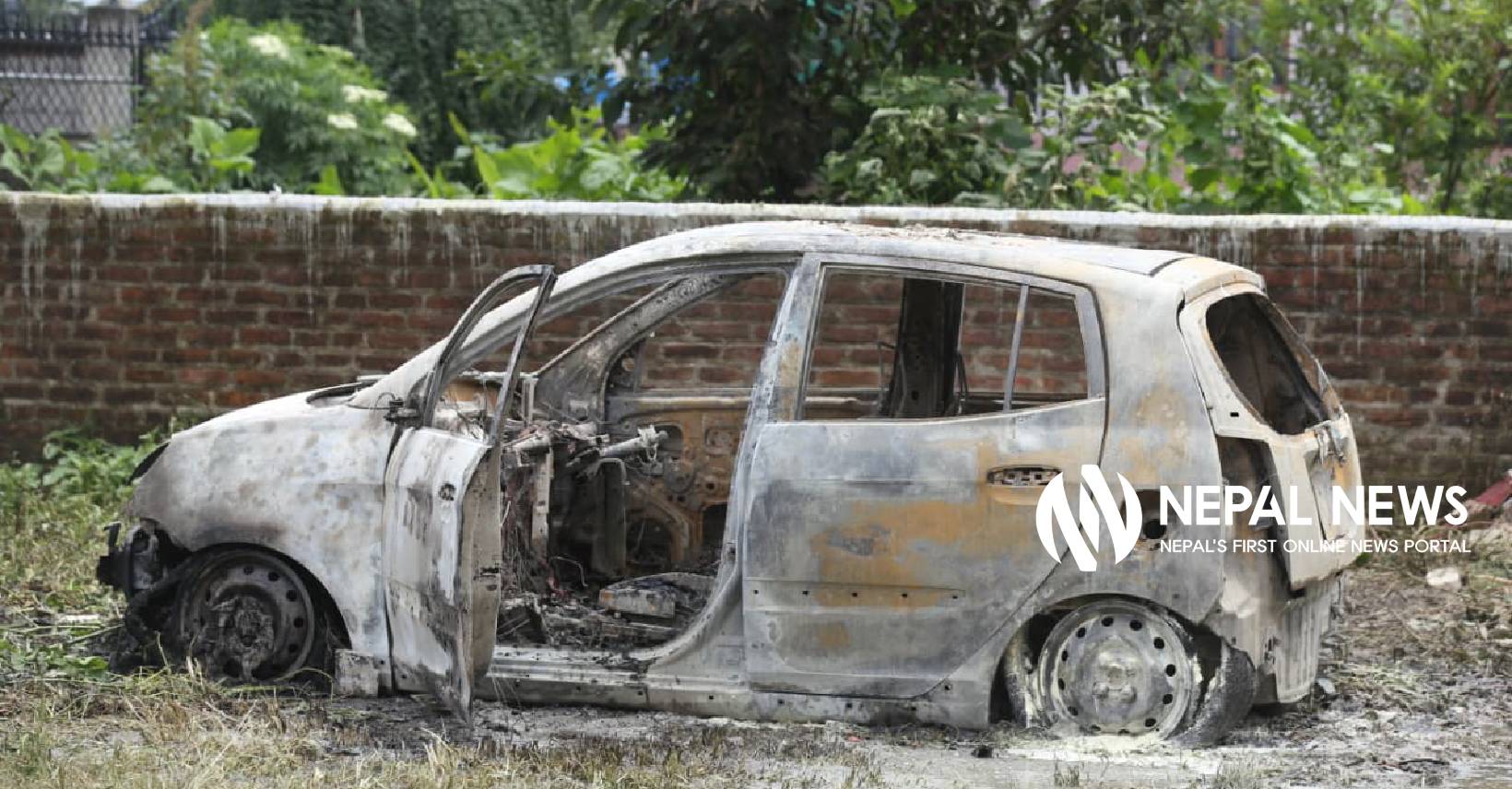
Then came the September tragedy. A peaceful Gen Z protest on September 8 descended into police violence, institutional breakdown, escalating disorder and sheer incompetence. Lives were lost, including uniformed students shot in the streets, and with them the last restraint on long‑suppressed public rage. More lives lost. Buildings burned. Institutions burned – burnt to the core of their meaning. Power crumbled overnight. The army stepped in. Discord voted. Balen to lead the country. He declined. Perhaps he wanted an electoral mandate. He instead supported Sushila Karki as the PM. Elections were announced. He stayed out of campaign mode. His dad was dying, and grief has a way of making the noise of politics feel very far away.
What followed was not simple. Whether the September uprising was entirely spontaneous or whether, as some have suggested, it was an opening that organised forces moved quickly to shape. The question has not been settled and may never be. The outcome feels too hopeful to interrogate.
The gamble
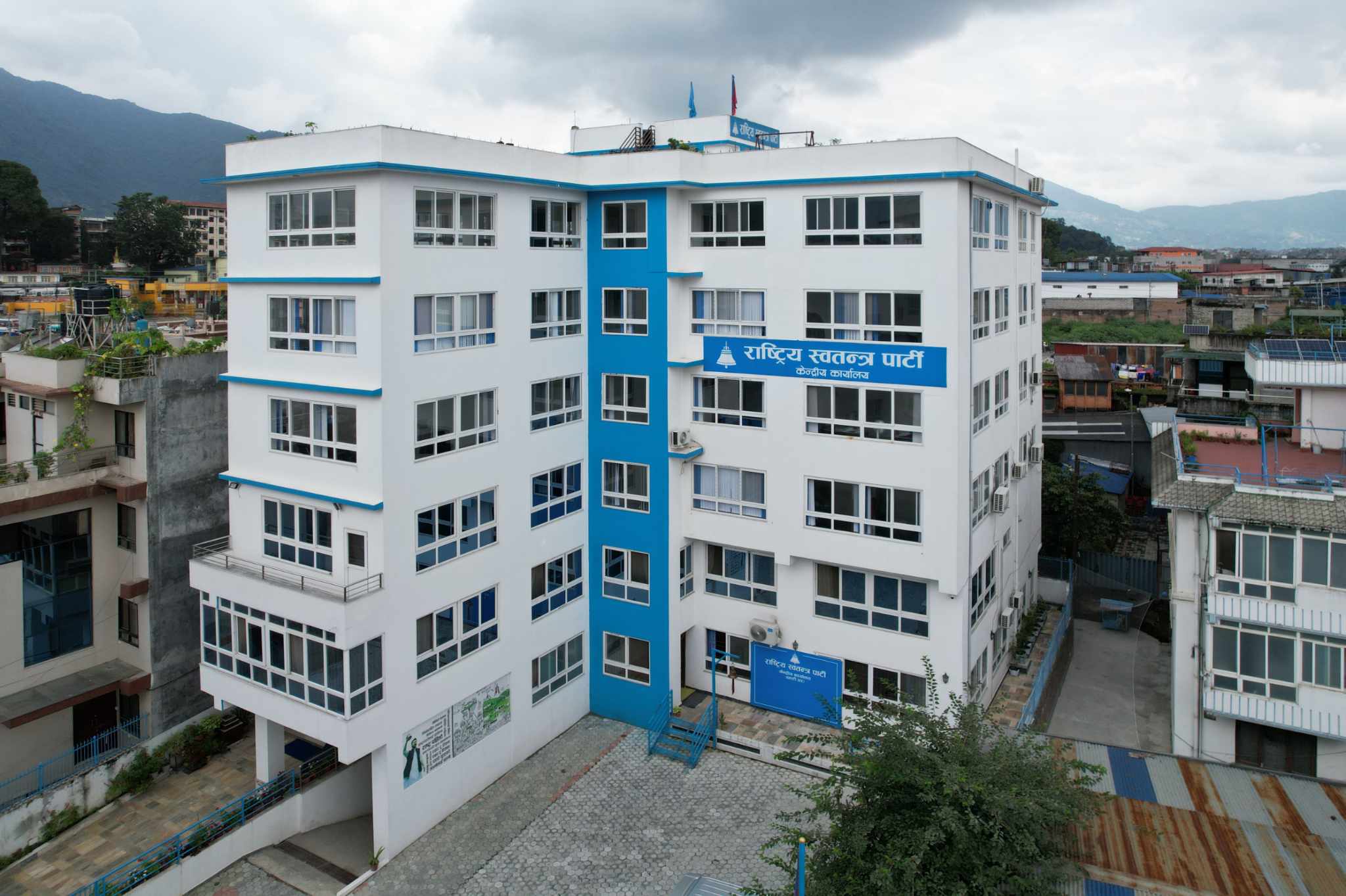
What finally pushed him into national politics is hard to pin down. UML’s decision to renominate KP Oli, combined with mounting pressure from youth groups and civil society, likely tipped the balance. He joined the RSP and decided to contest directly against Oli in Jhapa-5. Political pundits called it reckless.
On the campaign trail his strategy echoed his mayoral run: direct conversation, relentless positivity, refusal to resemble the old guard. He distilled his politics into a single sentence: “The poor must have free healthcare and education; the wealthy must be free to do business.” A liberal democratic instinct stated with genuine clarity.
He won with a historic margin. Not narrowly, not controversially. By nearly fifty thousand votes.
The mystery
The symbols have accumulated: his clothing, his silences, his occasional outbursts. Together they have produced a myth now integral to his appeal – one he depends on as much as his audience does. Beneath it lies a more complicated figure, pulled between reclusive poetic instincts, the performative edge of hip-hop, and a genuine impulse to fix what others tolerate. When he ran for mayor in 2022, he forecast his exact vote count: 90,835. He pulled the figure from thin air. Irony, impulse, bravado, mystery – with Balen, it is usually all of the above.
Since becoming mayor in 2022, he has avoided traditional media interviews, and his public speeches offer little purchase on his deeper political thinking.
What exists are fragments – social media posts, memes, shorts – a political profile shaped by likes and reactions rather than argument. The pundits find this maddening. They want to dress him in a recognisable mold: populist, disruptor, technocrat, demagogue.
The truth is less obliging. The evidence cuts every way. His anti-establishment instinct can resemble populism, yet it is often directed toward outcomes rather than applause. Popularity matters to him, as it does to any artist, but it does not seem to organise his decisions. At times, his rhetoric edges toward an unhelpful nationalism – Facebook posts on border disputes. But his cabinet, the most diverse in Nepal’s history, is the clearest evidence of inclusive instincts.
The promise
More worrying is the environment we have created for him. The rockstar devotion of his most fervent supporters cannot be healthy for any leader still finding his balance. And at a population scale, something more complicated is happening: an entire nation projecting its best self onto one man, willing us into prosperity without asking what the rest of us might need to reckon with first. And when our projection strains under the weight of reality, what follows? Disillusion, apathy, anger, another search for a saviour.
And yet. This feels like the most hopeful moment in the history of this country. Balen is the plant found at the nursery – the one you carry home carefully, tend with more attention than you planned to give, and wait. Hope, in this sense, is not blind. It is patient, provisional. To remain positive while resisting devotion may be the only honest position available.
I will end this piece with the final irony worth naming and it applies to an entire generation of Nepal’s most serious political minds – mostly men who eat Montesquieu for breakfast and Rousseau for dinner, who can trace the pathology of Nepal’s elite capture through five constitutional orders, they are visibly in shock. The capture was always supposed to fall to something they recognised. It fell instead to a street rapper in sunglasses and a party founded by a bombastic television journalist. History, as usual, did not ask permission. And whatever comes next, whether Balen holds, bends, or is absorbed, is unlikely to look anything like what the pundits are predicting either.
(Gautam is a PhD holder in Chemistry with extensive professional experience spanning environmental forensics, knowledge management, and public service, bringing a multidisciplinary approach to research and societal impact.)