Kathmandu
Wednesday, July 8, 2026





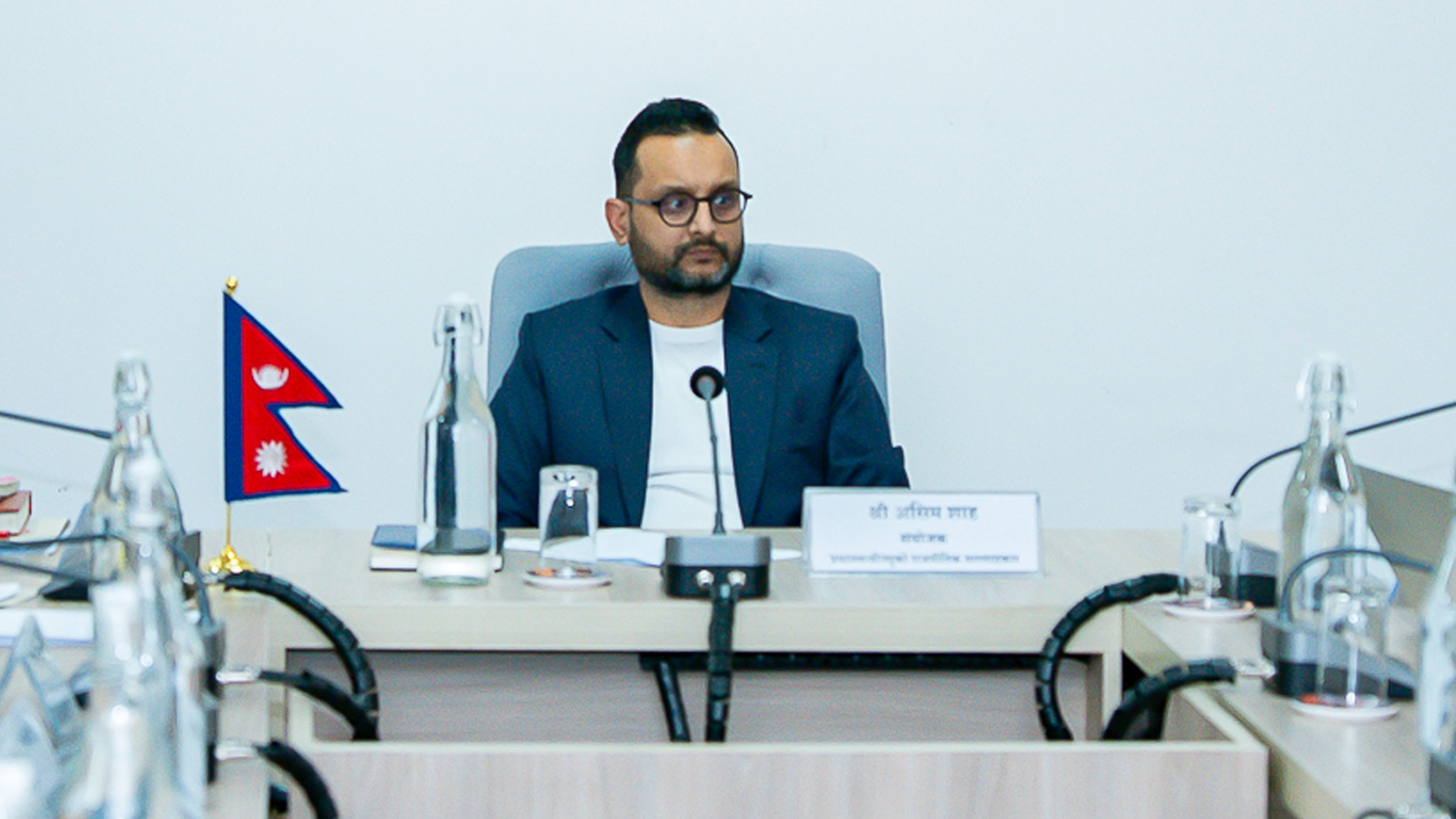
KATHMANDU: The task force formed under the coordination of Asim Shah, political advisor to Prime Minister Balendra Shah, to prepare a discussion paper on constitution amendment has reached the final stage of report writing.
The task force is finalizing its preparations to submit the report to Prime Minister Shah within the second extension deadline granted by the government.
However, despite maximum flexibility shown by the task force coordinator, representatives of the opposition political parties—who had been participating in the drafting process until the very end—have irresponsibly exited by submitting a formal letter of withdrawal, according to Sah’s secretariat.
“They had been formally and continuously participating on behalf of their respective parties since the first meeting of the task force, presenting their opinions and suggestions. Not only that, they were also present during the task force’s discussions with various stakeholders,” states a press note issued by Shah’s secretariat.
According to Shah, after participating in the task force for 83 days, the Nepali Communist Party (NCP), Janata Samajbadi Party (JSP), and Loktantrik Samajbadi Party (LSP) abruptly and collectively sent a letter on July 6, informing that they could no longer participate in the task force meetings on behalf of their parties.
Task force coordinator Shah mentioned that no opposition had been raised regarding the preparation of the discussion paper during the 83 days since the task force’s formation.
“Protesting at the final stage of report preparation seems to be a strategy to make the task force fail,” Shah said. “They left the task force at the last hour out of fear that if the suggestions received over the last three months from experts and stakeholders within the country and abroad were included in the discussion paper, the government’s popularity would rise.”
According to Shah, the NCP, LSP, and JSP demanded that the government make a commitment not to alter the preamble and fundamental values of the Constitution while preparing the discussion paper, and to clarify exactly which issues need amendment and for what reasons.
Shah counter-claimed that the Constitution itself defines its core values, and as coordinator, he has repeatedly committed not to touch those fundamental constitutional values while preparing the amendment discussion paper.
Mohan Lal Acharya, a parliamentarian and member of the task force, stated that the parties were merely trying to court unnecessary media attention and displayed irresponsibility at a crucial time when the amendment paper needed to be finalized.
Furthermore, the exiting parties have demanded that the government call an all-party meeting of leaders represented in the Federal Parliament to build a national consensus on the drafting of the discussion paper.
On the other hand, Pushkar Sapkota, Law Secretary at the Office of the Prime Minister and Council of Ministers, noted that all political parties represented in parliament had been continuously involved in the task force to prepare the discussion paper based on their very own demands.
He stated, “The discussion paper being prepared by the task force will not disrupt constitutional supremacy; rather, it will further strengthen it. Therefore, the parties do not need to harbor suspicions regarding the task force’s work.”
In addition to the parties represented in parliament, other political parties and government law secretaries are also participating in the task force.
“At a time when work is being carried out through highly democratic, lawful, open, transparent, and fair debates and discussions, it is irrelevant for the parties to suddenly submit a letter and exit the task force. Backing out from the process of drafting a discussion paper to amend a dynamic and living document like the Constitution sends a negative message to the public and could trigger public disillusionment toward political parties,” says Liladhar Subedi, member-secretary of the task force and joint secretary at the Office of the Prime Minister and Council of Ministers.
According to the coordinator of the task force, Shah, even though these parties demonstrated irresponsibility by leaving at the final hour, preparations are underway to complete the discussion paper and submit it to the Council of Ministers within the designated timeframe.
So far, the task force has collected suggestions by holding discussions with various sectors, including constitutional experts, legal professionals, politicians, professionals, civil society, women’s rights activists, former attorneys general, and former administrators.
Similarly, the task force has also collected feedback from 44,700 citizens living within the country and abroad via online platforms. Not only that, the task force has also studied the reports of various committees of the Constituent Assembly.