Kathmandu
Tuesday, July 7, 2026





Three years after charges were filed, the Kathmandu District Court has convicted former deputy prime minister Top Bahadur Rayamajhi, former home minister Bal Krishna Khand and most other defendants in one of Nepal's biggest corruption scandals. This explainer unpacks how the scam operated, who was involved, why some defendants were acquitted, and what happens before sentencing on July 13.
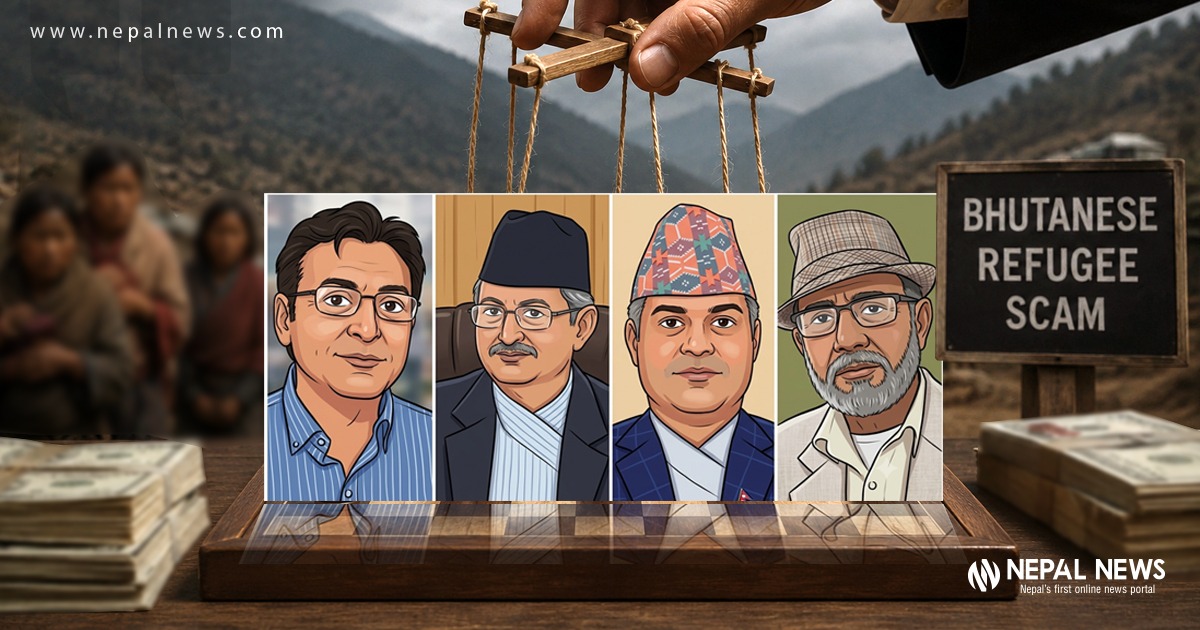
KATHMANDU: Three years after prosecutors filed charges, the Kathmandu District Court on Tuesday convicted the majority of defendants in Nepal’s largest documented corruption case, the fake Bhutanese refugee scam.
Judge Tej Bahadur Khadka’s bench found former deputy prime minister Top Bahadur Rayamajhi, former home minister Bal Krishna Khand, former home secretary Tek Narayan Pandey and more than a dozen others guilty of organized crime, fraud and crimes against the state, while acquitting seven defendants for lack of sufficient evidence. Sentencing has been fixed for July 13, 2026.
What exactly did the Kathmandu District Court decide in the fake Bhutanese refugee scam case and what happens next?
On Tuesday, the Kathmandu District Court, led by Judge Tej Bahadur Khadka, delivered its historic verdict in the high-profile fake Bhutanese refugee scam case. Concluding a trial that began in May 2023, the bench convicted the vast majority of the defendants on charges spanning fraud, organized crime, and crimes against the state, while completely clearing seven individuals due to insufficient evidence.
The court dealt its harshest rulings to several high-profile politicians, officials, and core ringleaders, treating their actions as integrated offenses that severely damaged Nepal’s national image. Those convicted of organized crime and crimes against the state include former Deputy Prime Minister Top Bahadur Rayamajhi, former Home Secretary Tek Narayan Pandey, security advisor Indrajit Rai, former lawmaker Ang Tawa Sherpa, along with core racketeers Keshav Prasad Dulal, Sanu Bhandari, Sandesh Sharma, Govinda Kumar Chaudhary, and Sagar Rai.
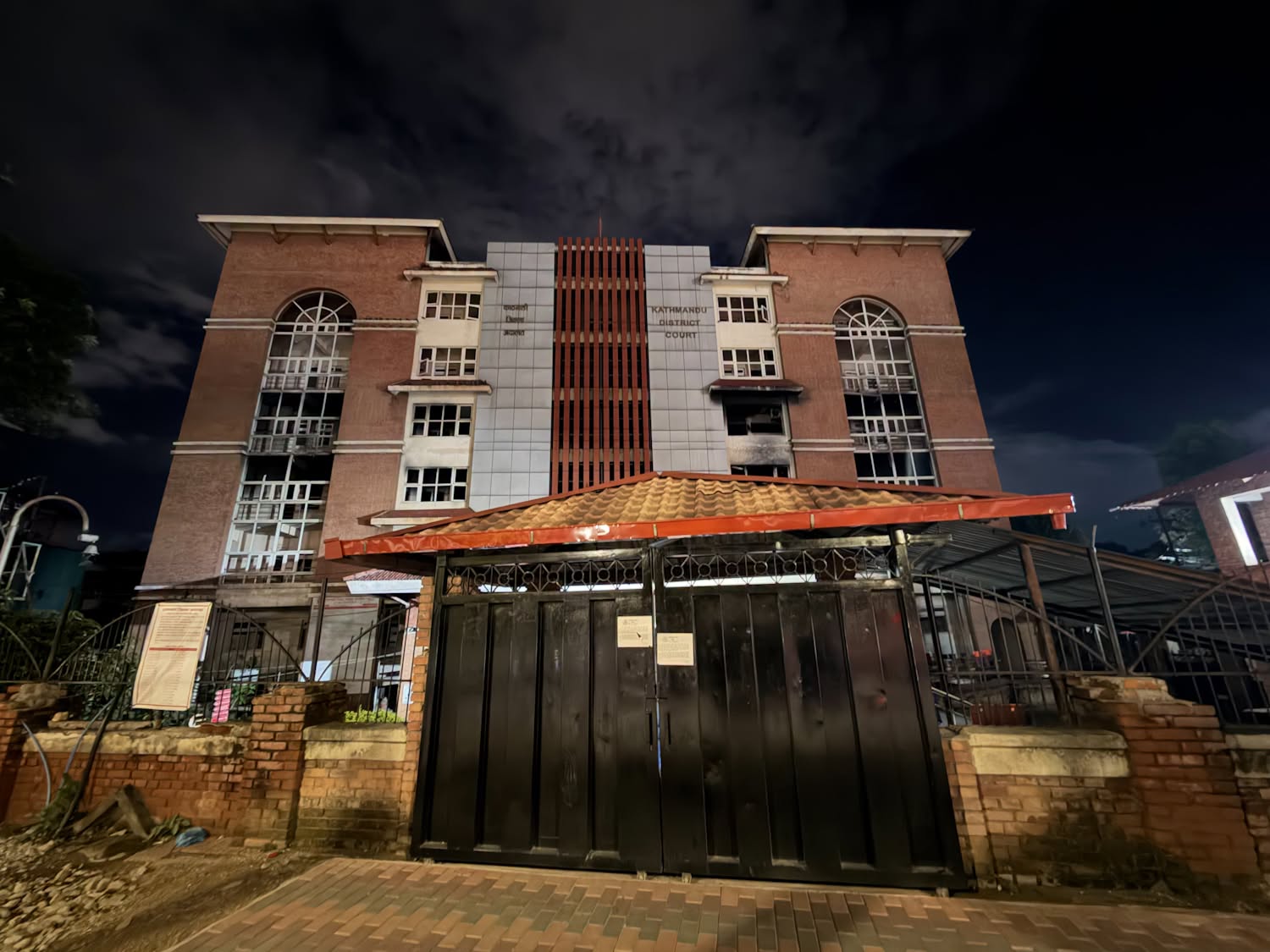
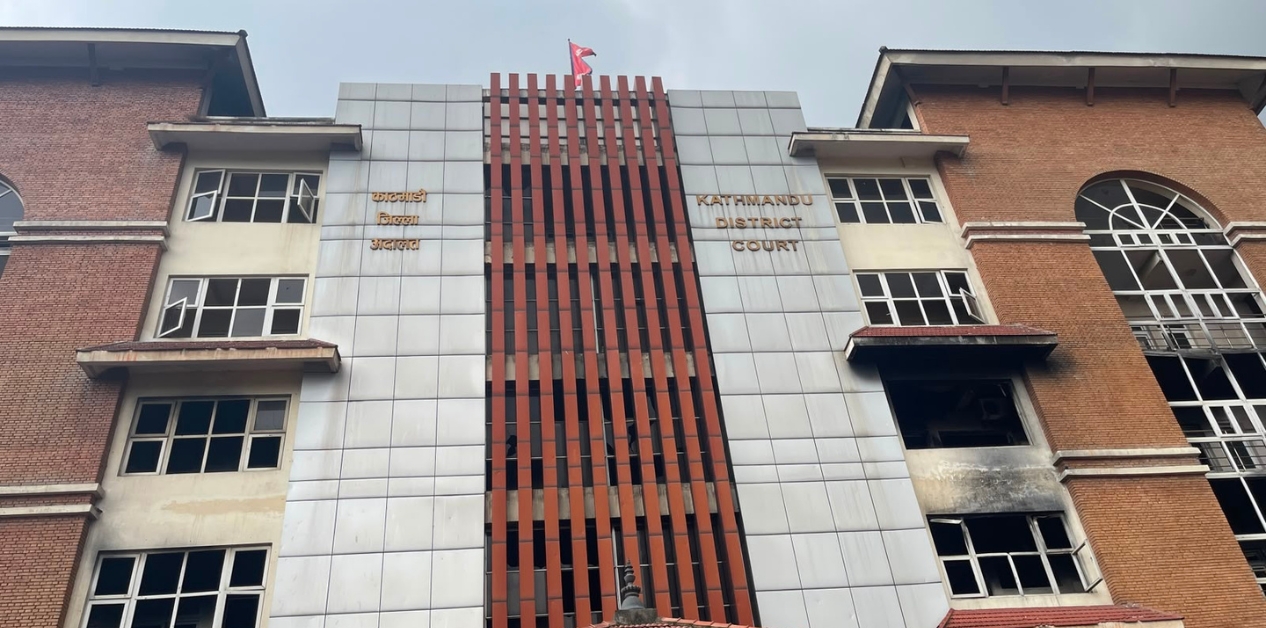
Kathmandu District Court
A second group was found guilty of cheating and organized crime, largely acting as accomplices. This includes former Home Minister Bal Krishna Khand, Bhutanese refugee leader Tek Nath Rijal, Shamsher Miya, Narendra K.C., Hari Bhakta Maharjan, and Niranjan Kumar Kharel, while Bechan Jha was found guilty strictly of fraud.
Conversely, the court fully acquitted Sandeep Rayamajhi, Pratik Thapa, Ram Sharan K.C., Tanka Kumar Gurung, Keshav Tuladhar, Ashish Budhathoki, and Laxmi Maharjan, giving them a clean chit on all charges after prosecutors failed to link them to the core criminal operation.
As Nepal’s criminal procedure rules separate the determination of guilt from the determination of punishment for serious offenses, the court did not immediately announce prison terms or fines. Instead, the same bench has scheduled a follow-up hearing for July 13, 2026, where individual prison sentences and financial penalties for each convicted person will be officially decided.
What is the fake Bhutanese refugee scam in simple terms?
At its core, this was a large-scale fraud in which a network of middlemen, working with sympathetic officials inside the state apparatus, persuaded hundreds of ordinary Nepali citizens to pay enormous sums of money in exchange for a promise that they would be resettled in the United States or other Western countries as Bhutanese refugees.
Nepal had for decades hosted genuine Bhutanese refugees, mostly ethnic Nepali-speaking Lhotshampas expelled from Bhutan, and a large-scale international resettlement programme relocated the vast majority of them abroad between 2007 and 2016. Once that programme wound down, a government task force was formed to identify any remaining unregistered refugees who might still qualify.
According to prosecutors, the racket obtained access to this task force’s internal report and secretly inserted fake names, effectively manufacturing paperwork that made ordinary Nepali citizens with no connection to Bhutan appear to be legitimate long-overlooked refugees.
Victims paid enormous amounts of money, believing they were purchasing a legal pathway to a new life abroad, when in reality no such resettlement opportunity existed for them at all.
How did investigators say the fraud mechanically worked?
Investigators built their case around a government-appointed task force that had been formed under a joint secretary to review the situation of Bhutanese nationals still living in refugee camps in eastern Nepal after the formal third-country resettlement programme had effectively ended. That task force compiled an internal list of a few hundred genuinely unregistered refugees and submitted it through official channels.
Prosecutors allege that members of the racket, working with sympathetic bureaucrats who had access to the original document, secretly created supplementary pages or altered schedules within that report and inserted the names, photographs and personal details of paying clients who had no real refugee background whatsoever. These fabricated entries were then used to support applications, biometric registrations and other paperwork that outwardly resembled a legitimate refugee resettlement case file.
As the scheme borrowed the appearance of a real state process rather than inventing one from nothing, it was able to convince victims and for a period even some officials, that the process was genuine, which is part of why prosecutors treated the case as touching on crimes against the state rather than simple private fraud.
How much money was involved and how many people were affected?
Court filings from the original charge sheet put the scale of the fraud at roughly Rs 288 million collected from at least 115 identified victims, with individual payments ranging from around Rs 150,000 at the low end to nearly Rs 4.8 million from a single victim at the high end. Investigators have said repeatedly that this figure almost certainly understates the true scale of the racket, since it only reflects victims who came forward, filed formal complaints and were included in the initial prosecution.
Some reporting during the early phase of the scandal suggested that as many as 800 or more people may have been targeted or included in the fabricated lists over the several years the scheme is believed to have operated, with total sums allegedly running into the billions of rupees once every affected household and payment is accounted for.
As supplementary charges were filed later against additional defendants as more victims and evidence surfaced, the financial scope of the case as formally charged has grown somewhat since the original May 2023 filing, though the court’s Tuesday verdict deals only with the defendants named across those filings.
Which senior figures were found guilty as principal perpetrators rather than accomplices?
The court’s verdict draws a clear legal distinction between defendants convicted as principal, primary offenders and those convicted merely as accomplices, a distinction that Nepali criminal law refers to using the term “matiyar” for the latter category.
Among those held to be central architects and executors of the scheme, convicted jointly of organized crime and crimes against the state, are former deputy prime minister and senior CPN (UML) leader Top Bahadur Rayamajhi, former home secretary Tek Narayan Pandey, and Indrajit Rai, who had served as a security adviser to the former home minister Ram Bahadur Thapa ‘Badal.’
Alongside these more senior names, several alleged frontline operators of the racket were also convicted as principal offenders, including Keshav Prasad Dulal and Sanu Bhandari, who investigators long described as the scheme’s original ringleaders, as well as Sandesh Sharma, Sagar Rai, Govinda Kumar Chaudhary, who is also known by the alias Bikram, and former Nepali Congress lawmaker Ang Tawa Sherpa.
These individuals now face the most serious end of the sentencing range when punishment is determined later this month, since their convictions combine organized crime with the more grave offence of crimes against the state.
Who was convicted only as an accomplice, and what does that distinction mean for Bal Krishna Khand?
A separate set of defendants was convicted specifically as accomplices, meaning the court found they knowingly assisted the scheme without being identified as its principal planners or direct executors. This is the category into which former home minister Bal Krishna Khand’s conviction falls under the crimes against the state charge, alongside long-time Bhutanese refugee leader Tek Nath Rijal.
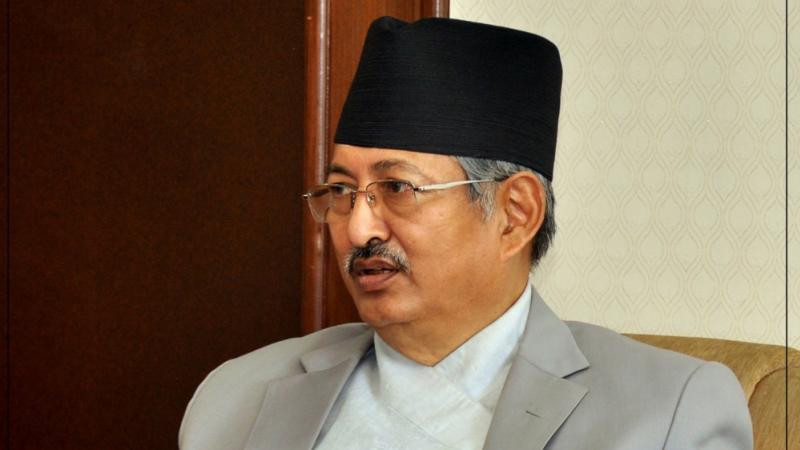
Former Home Minister Bal Krishna Khand
Several other defendants were convicted as accomplices specifically under the fraud and organised crime charge rather than the state crime charge, including Narendra KC, who served as personal secretary to Khand during his time as home minister, Shamsher Miya, a former chairperson of the Home Ministry’s Hajj Committee, Hari Bhakta Maharjan, and Niranjan Kumar Kharel, who was arrested only in a later phase of the investigation.
Bechan Jha, a businessman arrested separately in mid-2024 and linked to allegations involving other prominent political figures, was convicted only on the narrower fraud charge.
Accomplice convictions generally carry lighter sentencing ranges than principal convictions in Nepali criminal law, so this distinction is expected to significantly shape how harshly each individual is punished at the July 13 hearing.
Who was acquitted and on what grounds?
The court cleared seven defendants entirely, ruling that the evidence presented against them did not meet the threshold required for conviction on any of the charges they faced. Those acquitted were Sandip Rayamajhi, the son of former deputy prime minister Top Bahadur Rayamajhi, Pratik Thapa, son of former home minister Ram Bahadur Thapa, Ram Sharan KC, Tanka Kumar Gurung, Laxmi Maharjan, Keshav Tuladhar and Ashish Budhathoki.
Several of these defendants had already been granted bail at earlier stages of the proceedings, well before Tuesday’s verdict, which in hindsight may have reflected the relatively weaker evidentiary record against them compared with the core group of convicted defendants.
The acquittal of the sons of two politically prominent men, Rayamajhi and Thapa, is likely to draw particular public attention, since both had featured heavily in early media coverage of the scandal precisely because of their family connections, even though the court ultimately found the evidence did not establish their personal criminal responsibility beyond reasonable doubt.
What specific roles did the convicted accomplices play, according to the court’s stated reasoning?
Several details of the court’s reasoning regarding individual accomplices have already emerged. In the case of Shamsher Miya, the court reportedly found that although he did not personally profit financially from the scheme, he provided a government-facility vehicle to defendant Sandesh Sharma, which helped create a false impression among the public that Sharma was a legitimate government official, thereby facilitating the fraud indirectly.
Hari Bhakta Maharjan was found to have provided bank accounts belonging to his wife and to an employee of a cooperative to help the racket transfer and launder the money collected from victims.
Niranjan Kumar Kharel was found to have exploited a false impression that he was a security official, using that pretext to personally receive victims’ payments and pass them along to the scheme’s principal organisers, and to accompany victims to locations where their biometric details were fraudulently registered.
These accounts illustrate how the network relied on borrowed credibility, whether through official-looking vehicles, bank accounts belonging to trusted third parties, or the appearance of security authority, to keep victims convinced they were dealing with a legitimate state process.
How and when did the scandal first come to public attention?
The scheme began to unravel gradually rather than all at once. A first wave of victim complaints was lodged at the Kathmandu Valley Crime Investigation Office around June 2022, naming Keshav Dulal and Tanka Gurung as the ringleaders behind a promise to send victims to America as Bhutanese refugees. However, the office initially showed little urgency, and it was only after a change in leadership at that office in early 2023, when then Superintendent of Police Manoj KC took charge, that the investigation gathered real momentum.
KC’s team began covertly monitoring the alleged ringleaders and moved to arrest them on March 26, 2023, deliberately choosing a date that coincided with a leadership vacuum at Nepal Police headquarters.
That arrest triggered a rapid chain of further arrests through April and May 2023 as the detained suspects began implicating more senior figures, including former home secretary Tek Narayan Pandey, security adviser Indrajit Rai, and eventually former home minister Bal Krishna Khand and former deputy prime minister Top Bahadur Rayamajhi, whose arrest on May 14, 2023, after more than ten days evading police, marked the point at which the scandal became a genuinely national story implicating leaders of Nepal’s largest political parties.
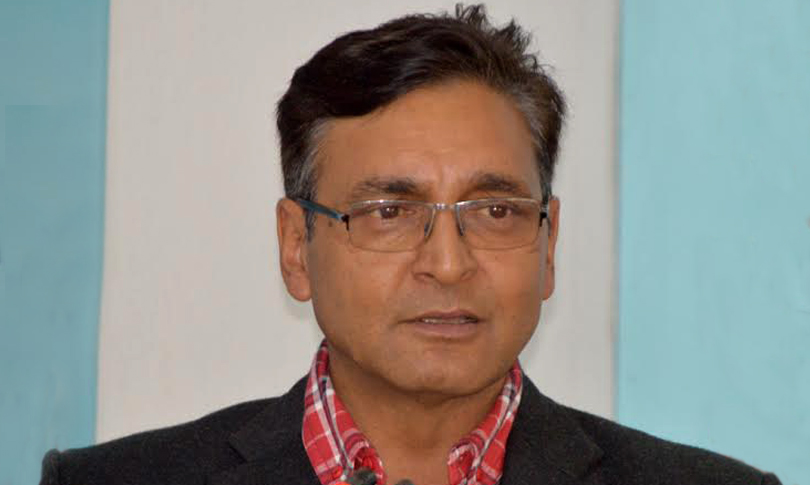
Former Deputy Prime Minister Top Bahadur Rayamajhi
What role has Arzu Rana Deuba, wife of former prime minister Sher Bahadur Deuba, played in this case?
Arzu Rana Deuba, a Nepali Congress leader and a former foreign minister has repeatedly been named in connection with the scandal without ever being formally charged as a defendant.
The allegations against her stem primarily from an audio recording that surfaced publicly in 2023, in which an unidentified speaker described in Nepali claims that Rs 25 million had reportedly been delivered to her as part of the scheme’s payments, alongside a separate claim involving Rs 60 million said to have gone to Bal Krishna Khand.
Rana Deuba has consistently and forcefully denied any involvement, describing the recording as fabricated and fake, and she filed a formal complaint with Nepal Police’s Cyber Bureau seeking an investigation into its authenticity and pursued defamation proceedings against media outlets that aired it. She had also addressed the allegations directly in previous House, framing the accusations as a politically motivated attempt to discredit a woman pursuing an independent political career.

Deuba couple. File photo
Some suspects have named her and other influential figures during the course of the investigation, based on reported audio recordings and statements, but many of those names, including hers, were not included in the final charge sheet that went to trial.
As a result, Tuesday’s verdict does not include any finding regarding her, since she was never a defendant in the proceedings that concluded today.
What was Manju Khand’s alleged connection to the case?
Manju Khand, wife of former home minister Bal Krishna Khand and herself a former Nepali Congress lawmaker, was named in the same audio recording that implicated Arzu Rana Deuba, with the anonymous speaker claiming that a large sum, reportedly around Rs 60 million attributed to her husband, was said to have been physically delivered to their home.
In the tense early weeks of the scandal in 2023, reporting at the time described her as having become difficult to reach amid growing public speculation about her possible implication, even as her husband was already in judicial custody.
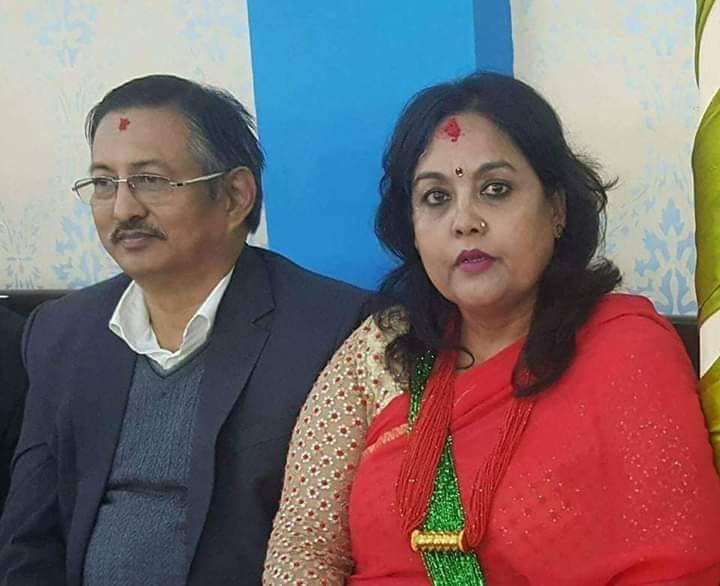
Former Home Mminister Bal Krishna Khand and his wife Manju Khand
Khand’s office and associates have consistently rejected any suggestion that she had knowledge of or involvement in the scheme, describing the circulating audio as fabricated and unrelated to her. Like Rana Deuba, Manju Khand was never formally charged as a defendant in the case, and her name does not appear anywhere among either the convicted or the acquitted individuals named in Tuesday’s verdict, meaning the allegations against her remain, from a strictly legal standpoint, unresolved and untested in court.
What was then-Inspector General of Police Basanta Kunwar’s connection to the case, and why were police officers transferred?
Before the scandal became public knowledge, questions were later raised about the conduct of Basanta Bahadur Kunwar, who went on to serve as Nepal’s Inspector General of Police from March 2023 until his mandatory retirement in March 2025. Investigative reporting alleged that while Kunwar headed the Kathmandu Valley Crime Investigation Office in 2022, prior to his elevation as IGP, he showed little enthusiasm for pursuing the initial 2022 complaints against the racket and allegedly played a role in the swift release, without proper custody records, of two early suspects shortly after their arrest.
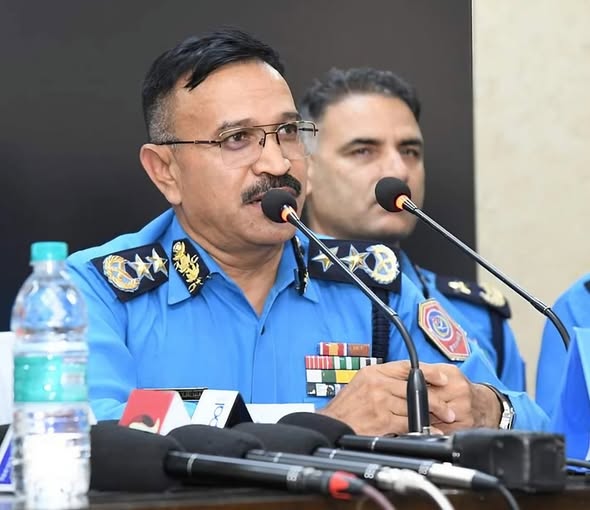
Then-Inspector General of Police Basanta Kunwar
Text messages surfaced during the investigation that reportedly showed then-home secretary Tek Narayan Pandey coordinating between the racket’s members and Kunwar regarding financial arrangements.
Separately, several changes in leadership at the Crime Investigation Office coincided with shifts in how aggressively the case was pursued: an earlier chief was replaced after showing limited interest, and it was only the arrival of Superintendent Manoj KC in January 2023 that the case gained real momentum, with KC timing the key arrests to fall just before Kunwar’s formal elevation to IGP.
Kunwar himself was never named as a formal defendant in the charge sheet, and his conduct as alleged in these reports has not been the subject of the same judicial proceedings that concluded on Tuesday.
Why did it take more than three years for the trial to reach a verdict?
The case was filed on May 24, 2023, but spent the vast majority of the following three years mired in preliminary and procedural stages rather than substantive trial hearings. Since the original filing, the case appeared on the court’s docket dozens of times, with proceedings largely limited to detention hearings, procedural motions and appeals over custody orders rather than the core trial itself.
Multiple defendants challenged their pretrial detention all the way up through the Patan High Court and the Supreme Court, generating extended legal battles over bail that consumed much of 2023 and 2024 without the substantive case advancing meaningfully.
Two supplementary charge sheets were also filed as investigators identified additional suspects and gathered further evidence, most notably the arrest of businessman Bechan Jha in mid-2024 and a renewed push by the Central Investigation Bureau in late 2025 that brought in further defendants such as Niranjan Kumar Kharel.
Only in January 2026 did substantive hearings genuinely begin, and it was not until June 10, 2026, that the court formally moved the case into what Nepali courts call continuous hearing, a status that obliges the bench to take up the matter at every sitting until a verdict is reached, finally producing Tuesday’s ruling roughly four weeks later.
What impact did the September 2025 fire have on the case?
A significant complication arose on September 9, 2025, when arson connected to that period’s Gen Z-led unrest damaged the Kathmandu District Court along with case files held there and at related government offices. The detention period of the accused was prolonged as a direct consequence of the case files being burnt during the unrest, since key evidentiary and procedural documents needed to be located before proceedings could meaningfully continue.

Youth protesting in front of the Parliament building on the first day of the Gen Z protest on September 8, 2025. Photo: Bikram Rai/NepalNews
Court officials later confirmed that staff worked to reconstruct the record by retrieving duplicate copies and related materials from other institutions that had been involved in the case, including the Ministry of Home Affairs and the Government Attorney’s Office, since those bodies retained parallel copies of many of the same filings, charge sheets and evidentiary submissions.
This recovery effort took time and represented one of several factors, alongside the earlier custody appeals, that pushed the trial’s substantive hearings back into early 2026 rather than allowing them to proceed on an earlier schedule, even though the core evidence and charges themselves were not lost, only temporarily difficult to access in their original form.
What happens between now and the July 13 sentencing hearing?
With guilt now formally established for the majority of defendants, the case moves into the sentencing phase, which under Nepal’s National Criminal Procedure Code is treated as a distinct stage requiring its own dedicated hearing when the underlying offences are serious enough to carry lengthy prison terms, as organised crime and crimes against the state both do.
Ahead of July 13 hearing, both the Kathmandu District Government Attorney’s Office and defence lawyers representing the convicted individuals are expected to prepare and submit arguments and reports addressing appropriate sentencing, including any mitigating or aggravating circumstances specific to each defendant.
The court is expected to hand down individualised prison terms and financial fines for each convicted person on that date, distinguishing between those convicted as principal offenders under the combined organised crime and crimes against the state charge, who face the harshest potential sentences, and those convicted only as accomplices under the narrower fraud or organised crime charges, whose sentencing range is comparatively lower.
Any of the convicted defendants will retain the right to appeal the verdict, sentence, or both to the Patan High Court, meaning Tuesday’s ruling, while a major milestone, is unlikely to represent the absolute final word on individual criminal liability in the case.
What is the broader historical background of Bhutanese refugees in Nepal that this scam exploited?
The scam derived its entire pretext from a very real and long-running humanitarian situation. Beginning in the late 1980s and early 1990s, Bhutan’s government pursued policies widely described as targeting its ethnic Nepali-speaking Lhotshampa population, including restrictive citizenship rules and cultural assimilation requirements, which led well over 100,000 people to flee into Nepal, mostly through India.
For close to two decades, these refugees lived in a network of camps administered with support from the UNHCR in the eastern districts of Jhapa and Morang, while repeated rounds of bilateral verification talks between Nepal and Bhutan produced little in the way of a return solution.
Beginning around 2007, a coalition of Western nations led by the United States launched a large-scale third-country resettlement programme that eventually relocated the overwhelming majority of camp residents to the US, Australia, Canada, several European countries and elsewhere, effectively winding down by around 2016.
It was the leftover administrative question of a small number of genuinely unregistered refugees who wanted to be included even after the formal programme closed that produced the 2019 government task force whose paperwork the racket is accused of exploiting to manufacture entirely fictitious refugee identities for paying Nepali clients who had no actual connection to Bhutan.
Why is this case considered so politically significant in Nepal?
Few corruption cases in Nepal’s recent history have implicated figures as senior, and as spread across the political spectrum, as this one. The defendants include a former deputy prime minister from the CPN (UML), a former home minister from the Nepali Congress, and a former security adviser connected to another former home minister, meaning virtually every major political force in the country has had a senior figure or close associate drawn into the case at some point.
This cross-party breadth made the scandal a focal point for broader public anger over impunity among Nepal’s political elite, particularly because early media coverage documented what appeared to be preferential treatment of some detained defendants and a marked reluctance by investigators to pursue politically influential figures such as Arzu Rana Deuba and Manju Khand with the same vigour applied to lower-level operators.
The case has repeatedly resurfaced as a touchstone in Nepali public discourse whenever broader questions of corruption and accountability are debated, and the eventual verdict is likely to be read by many Nepalis less as a narrow legal outcome and more as a test of whether senior politicians can genuinely be held to the same legal standard as ordinary citizens.
Are any suspects still absconding, and could further charges emerge from this case?
Not every individual originally implicated in the investigation has faced trial or conviction. Some of the roughly 30 individuals named across the original and supplementary charge sheets remained at large for extended periods, with several arrested only much later, such as Bechan Jha in mid-2024 and Niranjan Kumar Kharel during a renewed Central Investigation Bureau push in late 2025, while reports at various points indicated that a handful of others tied to the case were still evading arrest as recently as the past year.
Beyond the formally charged defendants, investigators have at different times gathered evidence or statements implicating additional influential figures who were never added to the charge sheet at all, including allegations touching figures such as Arzu Rana Deuba and others named informally during witness statements but not carried forward into formal prosecution.
Whether Tuesday’s verdict, and the scrutiny it is likely to generate once the full sentencing details are public, prompts prosecutors to reopen questions about these untried allegations remains an open question, particularly given recurring public and media pressure for a broader reckoning that reaches beyond the defendants who were actually put on trial in this first, though evidently not final, chapter of the case.
![Rally organized at Ratnapark to mark former King Gyanendra’s 80th birthday [Photo Feature]](https://english.nepalnews.com/wp-content/uploads/2026/07/Rajabadi-Gynendra-Shah-Birthday-7-768x512-1.jpg)