Kathmandu
Tuesday, July 7, 2026





As extreme heat intensifies with climate change, millions of Nepal's informal workers—from construction laborers to street vendors—are risking their health and livelihoods in the absence of workplace protections, heat action plans, and social security.
KATHMANDU: Ran Bahadur Rana of Palpa has been working as a construction laborer in Kathmandu for the past two decades. Infrastructure construction work, such as building houses and bridges, must be done outdoors under the open sky all day long. Even when the sweltering heat feels suffocating, one must engage in the work to earn a living. During his long journey in construction labor, one thing he has starkly noticed is that it has started becoming excessively hot during the summer season in recent years.
He mentions that having to work while being baked under the scorching sun causes distress and impacts his health. “The heat is indeed excessive. My head hurts and I feel dizzy while working,” he says. “It feels as though my body has become weak and unhealthy.”
Due to climate change, everyone in all regions is experiencing more heat during the summer season compared to previous years. In the Terai-Madhesh, daily life becomes even more distressed due to the heat and hot winds. However, amid this rising heat, informal sector workers like Ran Bahadur are squeezed even further. Obligated to work without minimum amenities and, in some cases, without basic safety standards, they are also bearing the brunt of the weather.
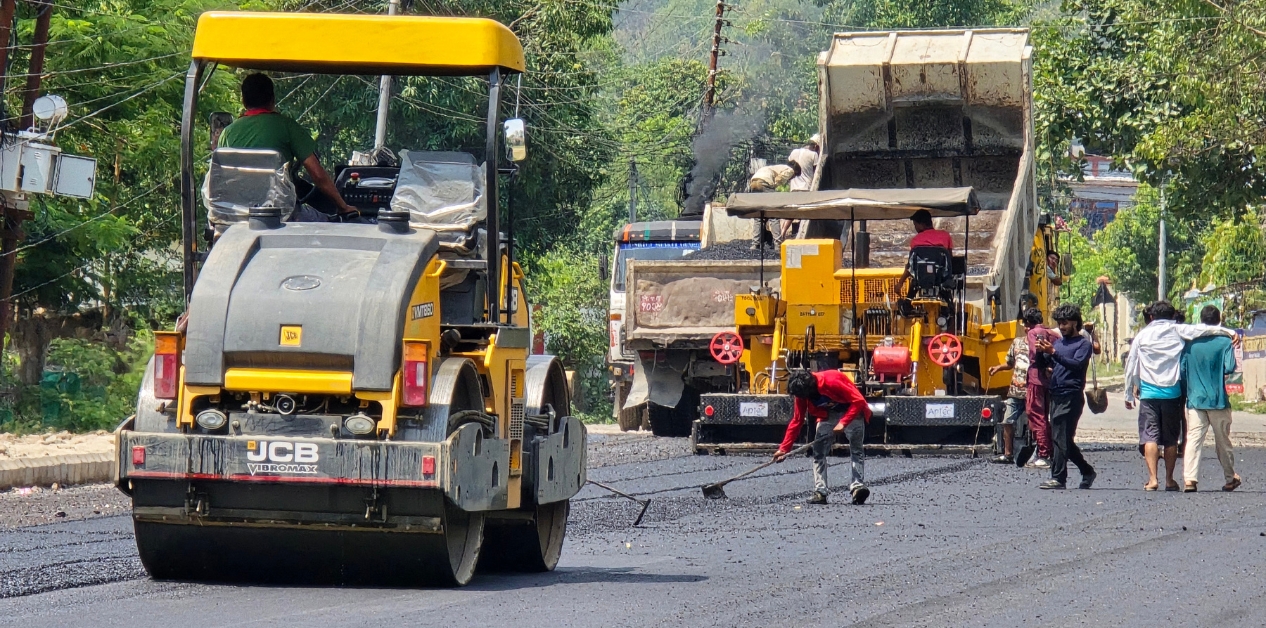
Workers working on the road. Photo: RSS
A study has revealed facts regarding the high risk of extreme heat under which informal sector workers are forced to work. A report prepared by an organization named Peoples Courage International (PCI), based on a survey of informal sector workers in five cities of South and Southeast Asia—Dhaka in Bangladesh, Quezon City in the Philippines, Delhi in India, Jakarta in Indonesia, and Kathmandu in Nepal—states that this community is at risk from extreme heat. The report suggests that separate policies should be formulated regarding extreme heat and informal workers.
The misery of hot days
For the past few years, heat has been increasing during the summer season in Nepal. According to meteorologists, a condition where the temperature is much higher than normal is called extreme heat. A day with excessive heat is called a hot day. The National Disaster Risk Reduction and Management Authority defines a heatwave (‘Hitwave’ or ‘Loo’) as a condition where a region experiences hot days continuously for three days or more. A ‘Loo’ is considered to be active if the maximum temperature at the same weather monitoring station remains above 40°C for three consecutive days.
According to the 2025 annual report of the Department of Hydrology and Meteorology, 22 days were recorded as excessively hot days throughout 2025 in Nepal. In that year, from March to June, the maximum temperature reached above 40°C at many temperature monitoring stations in the Terai. Similarly, prior to that, in 2024, the number of excessively hot days was 50.
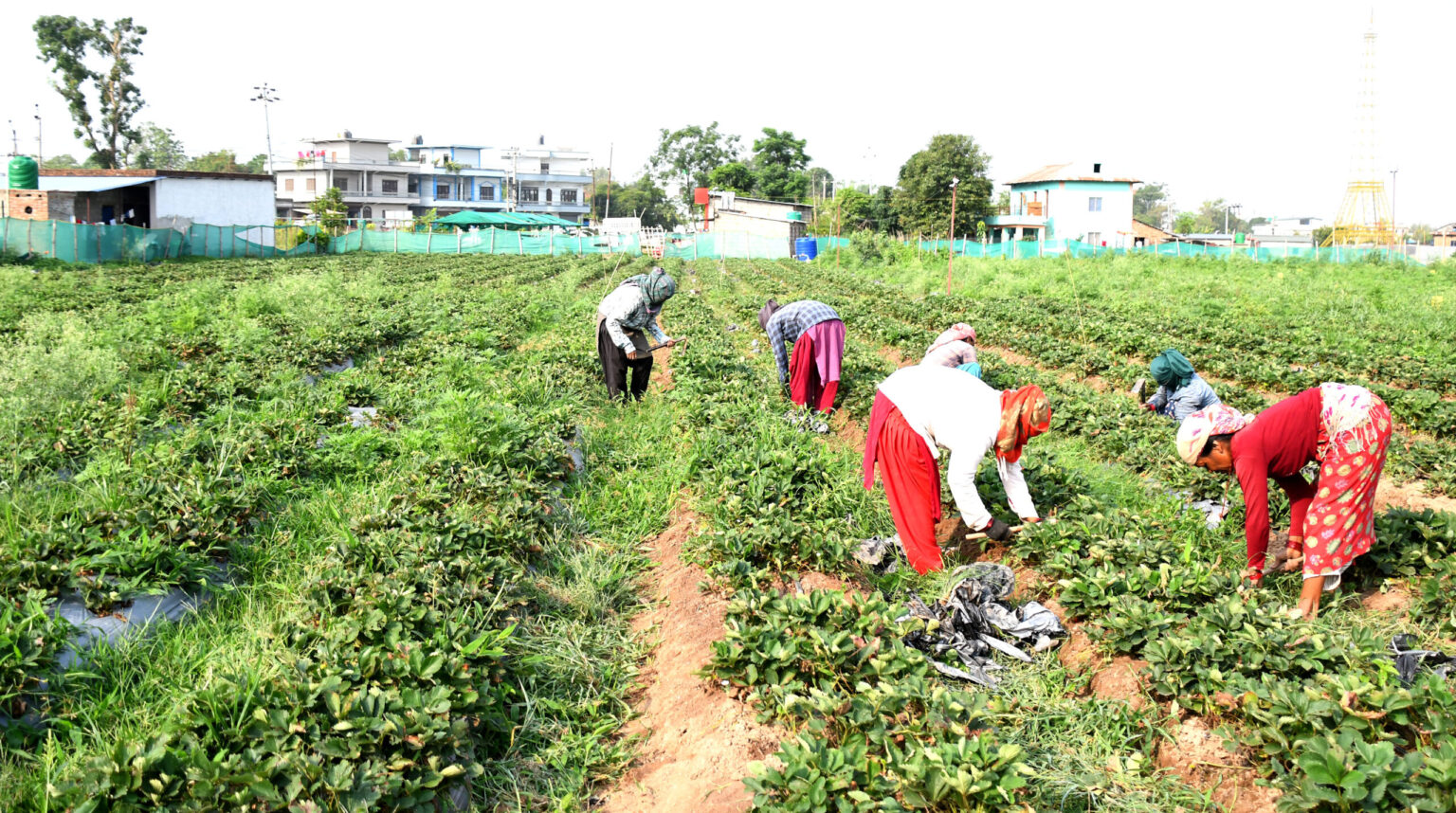
Workers wedding grass at a commercially operated strawberry cultivation located at Ghorahi Sub-Metropolitan City-14, Dang. Photo: Kuldeep Neupane/RSS
Global temperatures are rising due to factors like environmental pollution, weather abnormalities, and climate change. For the past decade in Nepal, the impact of hot winds has been falling upon everything from public health, agriculture, and the environment to employment. Due to hot winds and sweltering heat, women, children, and senior citizens, along with informal sector workers who work in an open environment, are facing greater hardships.
Particularly, rising temperatures caused by human activities that assault nature and pollute the environment are becoming a matter of global concern. International organizations, such as the Intergovernmental Panel on Climate Change (IPCC) and the United Nations body for weather and climate, the World Meteorological Organization, have pointed out that developed nations’ excessive use of fossil fuels during industrialization has caused high emissions of greenhouse gases, trapping heat within the Earth’s atmosphere and causing temperatures to rise.
Pratima Shrestha, who works as an expert in climate change, extreme weather events, and land use at the Food and Agriculture Organization of the United Nations (FAO) Nepal, states that heat has been increasing globally since 1950, and projections that heat would increase annually were made a very long time ago.
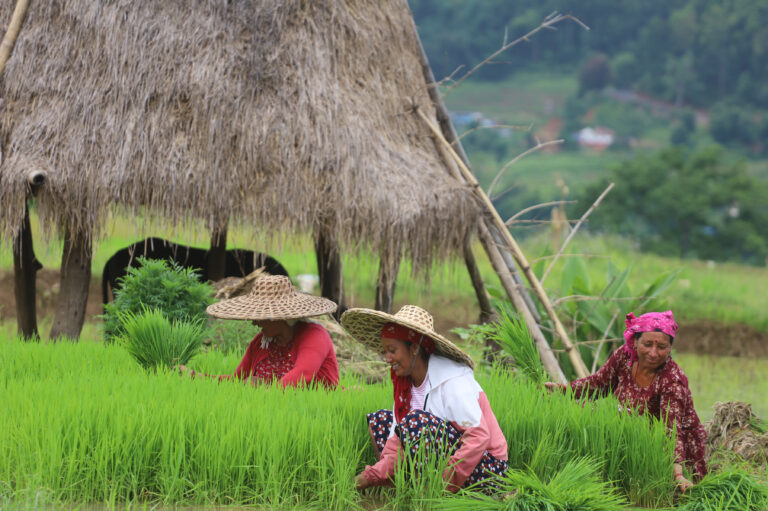
Farmers pulling rice seedlings from a seedbed for transplantation at Dobhan Danda in Madhya Nepal Municipality Ward No. 6, Lamjung. Photo: RSS
The Paris Agreement on climate change, signed by 195 countries in 2015, committed to preventing the average temperature from rising by more than 1.5°C. However, by September 2024, the temperature rise had already crossed this threshold. The year 2024 has been recorded as the hottest year in history. According to the World Meteorological Organization, extreme heat has been setting new records every year in the past decade. It is projected that in the future, there will be 60 days of extreme heat in a year.
In Nepal, temperatures exceeding 40°C have been recorded for the past 5–6 consecutive years, particularly in the western Terai. Only last May, news appeared in the media that eight security personnel fainted during training at the Armed Police Force Revenue Customs and Industrial Training Academy located in Tikapur, Kailali. Similarly, schools were closed after extreme heat increased in various places of the Terai.
Multidimensional impacts
Extreme heat triggers multidimensional impacts, including extreme weather events. According to the IPCC, when the temperature increases by one degree, rainfall increases by seven percent. FAO climate change expert Shrestha states that this weather pattern is seen because the capacity to absorb moisture in the air increases when the temperature rises. “This increases the possibility of torrential cloudbursts, which leads to an increase in incidents of floods and landslides,” she says.
Extreme heat also increases dryness. Droughts occur, affecting agricultural production. The ecosystem is impacted as rainfall becomes too high in some places and too low in others. When there is extreme heat, lakes and ponds dry up, and the risk of forest fires increases.
Heat affects everything from the daily routines of life to health itself. While heat causes effects like dizziness and fainting, it can also affect reproductive health.
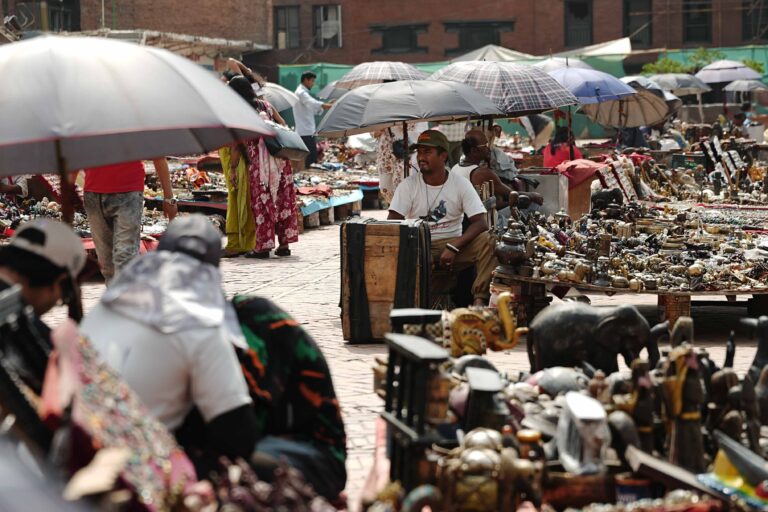
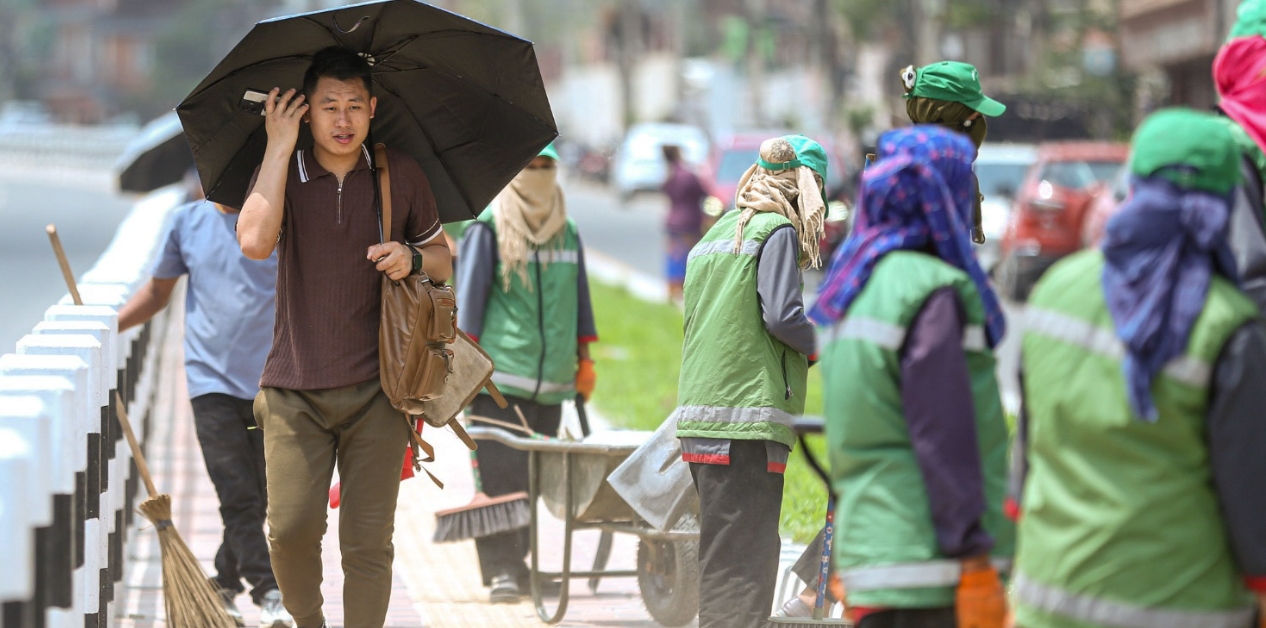
Merchants holding umbrellas in Basantapur, Kathmandu.
Shrestha states that although heat has made daily life difficult for everyone, it has had a major impact particularly in the Terai region. “Extreme heat has severely affected low-income people in the Terai who must work in the sun, such as daily wage laborers, rickshaw pullers, and farmers,” she says. According to her, students are also facing the misery of heat because the physical infrastructure of schools is not air-conditioned and lacks adequate water and fan arrangements.
The inflow of internal migration
The PCI report states that climate-induced factors, including extreme heat, have increased internal migration in South and Southeast Asia, disproportionately affecting those migrants.
Amina Kidwai, lead researcher at PCI, states that although economic reasons like a lack of employment opportunities and low wages are prominent in causing internal migration, climate change plays an indirect role in all of them. “Most people who migrate internally were involved in agriculture in their homelands; when there is no production, they migrate in search of a livelihood,” she says. “Low productivity in agriculture is often caused by extreme weather events.”
Ran Bahadur of Palpa is an example of this very trend. He mentions that he entered Kathmandu two decades ago after it became difficult to sustain his life through farming in his village. “When farming does not succeed due to irrigation problems, storms, and hailstorms, one cannot feed the family. After that, to earn a bit of money, one must either enter a city or head abroad,” he says.
People who have thus become internal migrants often engage in informal sector work after entering the city to find employment. This includes work in the construction sector, domestic work, driving taxis, and waste management. Kidwai states that extreme heat is one of the major challenges faced by this group, which serves as the backbone for keeping the urban economy and the city’s daily routine moving.
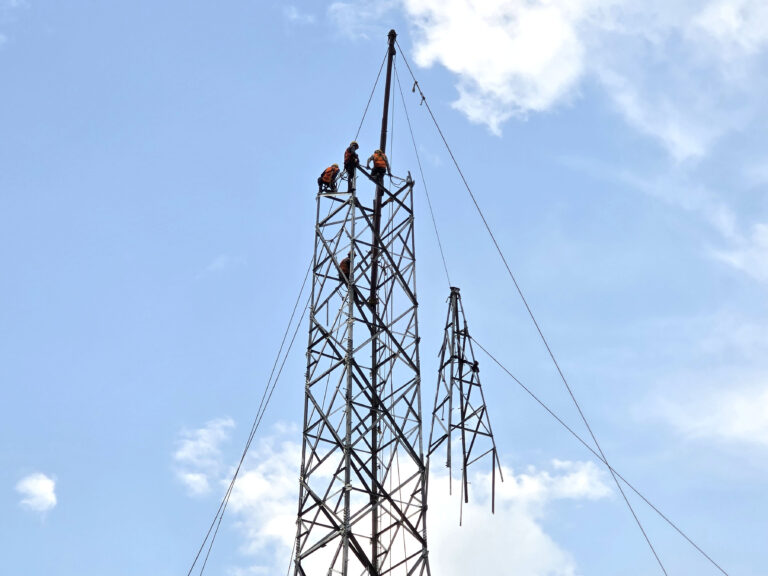
Workers erecting an electricity tower in Sunpur, located at Ghorahi Sub-Metropolitan City-4, Dang. Photo: RSS
In recent years, ‘Urban Heat Islands’ have been increasing in cities. This means the temperature of densely populated urban areas is higher than that of the surrounding land. Cities become hotter than surrounding areas due to human activities and urban structures. Because of this, informal sector workers are squeezed in the sweltering heat.
In Nepal, 86 percent of employed people, meaning more than 4.4 million people, work in the informal sector. This includes construction workers, domestic workers, porters, street vendors, etc. In Kathmandu alone, an estimated 600,000–700,000 people work in the informal sector.
According to Kidwai, not only is the workplace of informal sector workers uncomfortable, but their residential areas are equally difficult. There is usually no ventilation—meaning space for air to circulate—in their residential areas. “Construction workers have to work under the blazing sun, and even if they work indoors, it can be crowded in places like factories,” she says. “Workers are at risk due to a lack of access to even basic facilities like water.”
Ignoring the ‘Silent Killer’
Although policies and preparedness plans are formulated in Nepal to mitigate damage from natural disasters like floods and landslides, extreme heat has not been recognized or addressed as a disaster. So far, the government has been issuing notices regarding ‘Loo’—meaning heatwaves—but has not addressed continuous extreme heat.
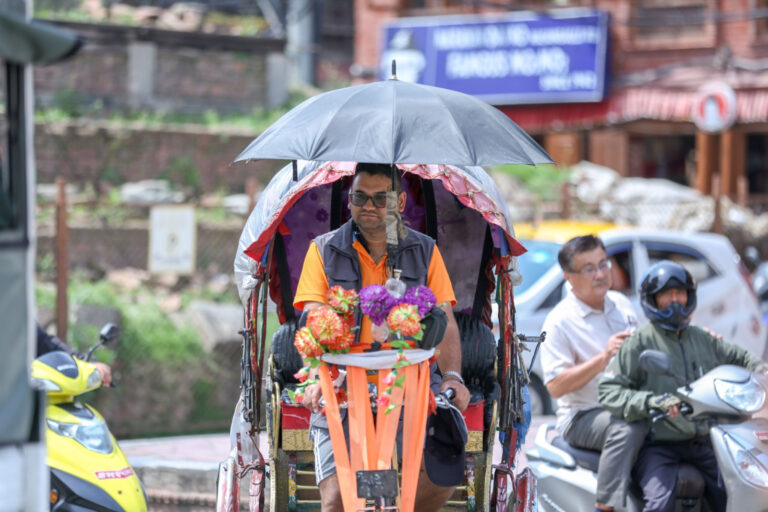
A rickshaw puller.
FAO climate expert Shrestha states that extreme heat is a ‘silent killer’—meaning a risk of a quiet nature. “Because it impacts invisibly, it does not draw attention compared to disasters like floods and landslides. Since this issue has been raised over the past four to five years, discussions are now taking place regarding the need to recognize it as a disaster in Nepal,” she says.
If this happens, financial commitments can be made for heat action plans, and a system for health recovery can be established.
Among the cities surveyed by PCI, none except Delhi have action plans regarding extreme heat. Other countries formulate and implement emergency plans when heatwaves occur, but they have not addressed continuous extreme heat. Most of these policies do not address informal workers separately.
Kidwai, the lead researcher at PCI, states that it is an irony that informal sector workers—who play a massive role in constructing cities and keeping their daily routines running—are ignored in policy discussions. “Whether they work indoors or outdoors, they are the most vulnerable when looking at their workplace and housing conditions. However, there is less understanding of this matter and fewer policies related to it,” she says. “Unless this community, which is facing the maximum impact from the heat, is addressed separately in terms of policy, their problem cannot be solved.”
Policy recommendations
Adaptation measures during heat can be expensive for informal sector workers. Since clean drinking water is generally not available for free even in their residential areas, it adds a financial burden to the workers. Kidwai states that arrangements must be made for workers to have access to basic amenities without additional expenses, and the government, private sector, and philanthropists must support this.
Shrestha, on the other hand, is of the opinion that green spaces should be created to reduce the ‘Urban Heat Island’ effect of the entire city in order to provide relief to workers from intense heat. “When comparing the temperature under a tree and elsewhere, the temperature under a tree is found to be five degrees lower. Therefore, trees should be planted to increase greenery in places that experience high heat,” she says. “To maintain moisture, ponds should be dug and small pits should be made for water recharge. The action plans of existing community forests should be implemented and renewed. Ecotourism should be developed.” She suggests that all sectors must move forward in an integrated manner to achieve these tasks.
The PCI report shows that internal migrants often face difficulties in obtaining treatment and taking rest when health problems arise. Speaking of Ran Bahadur Rana, he mentions that he does not seek treatment when health problems occur due to the heat. “Health problems do arise when the heat is excessive, but we do not speak up or get checked unless it becomes very severe. Since we do not have health insurance and treatment expenses are expensive, it is a habit to simply tolerate minor problems,” he says. He states that the government should provide them with free health check-up facilities from time to time.
PCI recommends that measures to control the impact of heat on workers’ health should be integrated into existing social security policies.