Kathmandu
Tuesday, July 7, 2026





The story of one of Atharai's principal Limbu clans is intertwined with the lifelong efforts of Bhagiraj Ingnam, whose search for forgotten manuscripts and royal seals is helping reconstruct the documentary history of eastern Nepal.
KATHMANDU: The Ingnams are one of the eight main Limbu sub-clans of Atharai Thum in eastern Nepal. Their ancient Mangenayak (ancestral seat of power) is Kheklasebung. This area is located in the former Iwa Village Development Committee, currently Ward Number 4 of Atharai Rural Municipality in Tehrathum District.
There are various lineages among the Limbus. Out of these, the Ingnams belong to the Papohang lineage. The Papo lineage is also spread across Panchthar. However, only the Ingnams reside in the Atharai region. The other Papos have spread towards Panchthar. Among the Papos, those who spread toward Panchthar belong to the lineage of the eldest brother, while the Ingnams residing in Tehrathum belong to the lineage of the youngest brother.
When these two brothers separated, the elder brother, Muda Thaplaso Papo, told his younger brother, Mundang Awaso Papo, that he was quite clever (‘batho’). In this sense, they were called ‘Ingnam’ in the Limbu language, and over time, they became established under this name or surname. The Papohang descendants who spread toward Panchthar eventually became known as Tumbapo, Lawati, Tumrok, Angdembe, Kugektamba, Ingwaba, Serma, Kurumbang, Sambahamphe, and others.
Among these Ingnams residing in the Atharai region, Iwahang was the eldest son and Takohang was the youngest son of Merokahang, who belonged to the 26th generation. Since the eldest son was implicated in a criminal case, he moved to Budhimorang and Phaksib in Chaubise, Dhankuta. Because they came from Iwa, some of them were called Iwahang, while those living in Budhimorang are still known by the Ingnam surname.
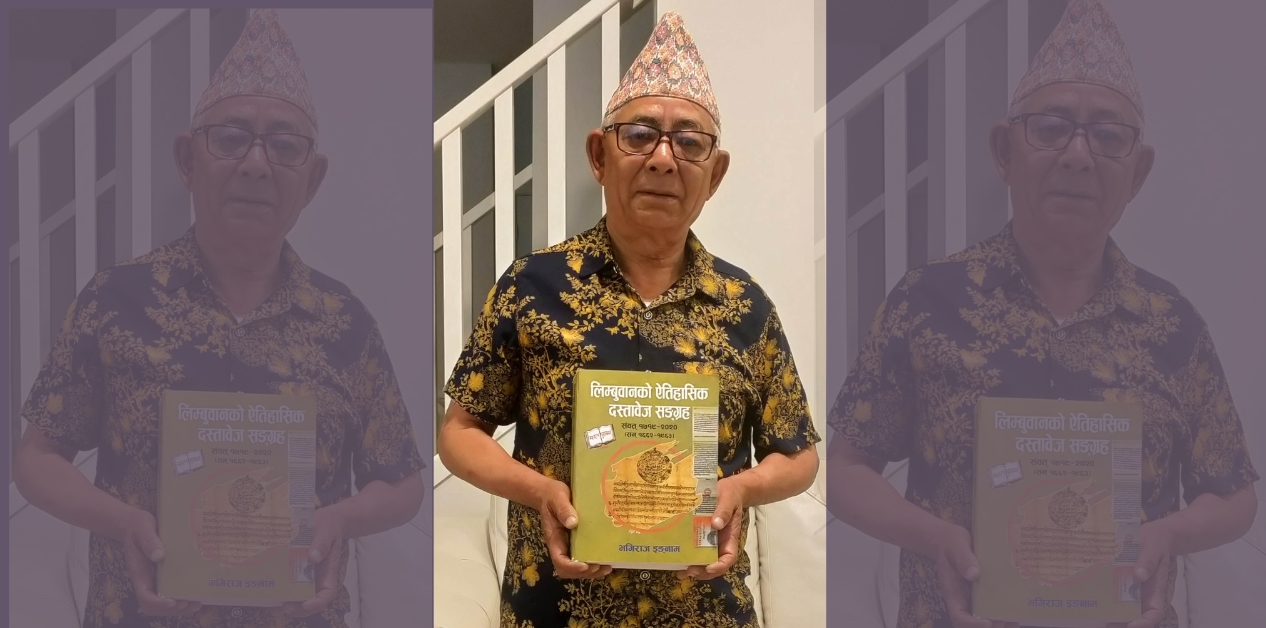
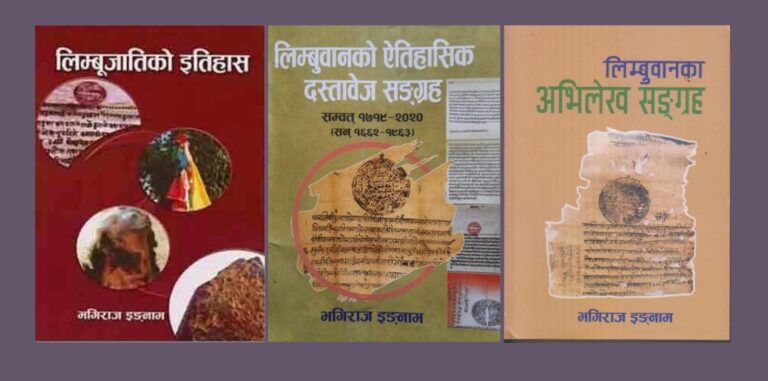
During the reign of Prithvi Narayan Shah, on July 26, 1774, Jang Rai was one of the three Limbu Subbas who received a Royal Seal, and he belonged to this very Ingnam surname. Upholding the honor and integrity of the Ingnams, former administrator Bhagiraj Ingnam rose to the rank of Joint Secretary and even served as the Chief District Officer of Dhankuta District. He brought glory not only to his name and lineage but to the entire Limbu community by receiving the prestigious Madan Puraskar of 2021 for his book Limbuwanko Aitihasik Dastabez Sangraha (1662–1963).
An arduous journey
The present we live in is the foundation of the future, while history is the foundation of the present. To have a proper discussion or reflection on the present, it is essential to look back at history. And that very present determines the future. Therefore, history is necessary for the future.
History is an important academic discipline that instills patriotism and introduces society. However, despite being so important, this discipline remains neglected.
In Nepal, most people living a retired life enjoy time with their families, pass the time playing cards, indulge in pleasures, sing hymns, or go on pilgrimages. But Bhagiraj Ingnam dedicated his retired life to academic work, and that too in the field of history—which is as arduous as climbing a rocky mountain.
History is a discipline written on the basis of evidence. Any document with a clear date serves as an authentic source of history. Gathering such evidence is the main struggle when entering the field of history.
An administrative seal (Syahamohar) from the Sen era regarding his own ancestors, which Ingnam discovered from a clan relative in Dhankuta.
At one time, Iman Singh Chemjong similarly visited house after house in Limbu settlements searching for historical evidence. However, because those who possessed historical documents lacked historical awareness, many did not show the papers they had. Therefore, the history written by Chemjong is authentically incomplete, deficient, and unclear. While his exploration is important and commendable, it is also misleading in several aspects. The present generation bears the academic responsibility to complete the work left undone by Chemjong, along with clearing the web of confusion created by his writing.
The former administrator Ingnam knew exactly where records were securely kept in government offices. He also knew which language to use to request the departmental heads in charge of record preservation to allow reading and transcribing them.
To read historical documents in government archives or to obtain photocopies of them, a specific process must be completed. Since Ingnam was a former administrator, he also possessed the skill to interact amicably with the departmental heads of government agencies. Yet, he recalls experiences where some officials hesitated, nearly driving him to despair.
He was even more disheartened when his own community relatives refused to show him documents. Some even demanded back papers that had already been photocopied. Despite facing such challenges, he did not lose heart. He visited settlement after settlement in the Limbu-populated regions. Wherever he received information about historical documents, he traveled there, spent a long time explaining the importance of history, and only then received permission to read and photograph those papers.
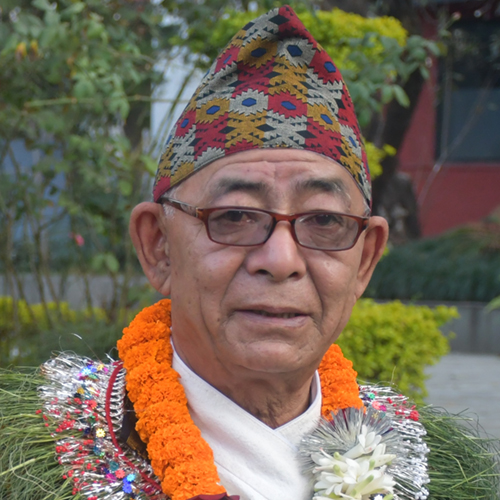
Bhagiraj Ingnam. Photo Source: Madan Puraskar Guthi
After enduring so much hardship, a massive volume of historical sources was compiled. Some of these papers were covered in soot, some were eaten by termites, and others were old and fragile. The language and sentiments within those papers required historical interpretation. Through day and night of reading and writing for this noble pursuit, Limbuwanko Aitihasik Dastabez Sangraha (1662–1963) was prepared.
Another height
The journey of many people ends after achieving a certain height. However, Ingnam wished to climb to another height. The search for historical documents continued. Following the success of his first work, he gathered plenty of well-wishers. Some brought and handed over the documents they possessed, while others provided information about where such documents could be found. When he requested documents with his usual humble nature, people did not refuse him as they had before.
In terms of quantity, a volume as massive as the previous one was prepared, but qualitatively, it was different and much stronger than the first. When the later collection of Limbuwan archives was published, he was capable of including significantly more Sen-era Syahamohars, missing original documents of King Prithvi Narayan Shah, and even inscriptions from the Lichchhavi and Shah eras.
His eyes fell upon the material published by Indraji. After that, by dedicating himself to the study of history, Baburam Acharya became the Itihas Shiromani (Jewel of History).
He was promoted to Joint Secretary around the time he was working on a Nepal Academy project alongside historian Sher Bahadur Ingnam regarding the origin of the Subbangi system in Tehrathum district. After that, when he became the Chief District Officer and went to run the administration of Dhankuta, he directed his extra attention and sight toward historical sources there as well. He went for field studies to as many places as possible. As a result, upon his retirement, the history of the Limbu community was published. This book reflects the historical materials he searched for and investigated during his time administering Dhankuta.
Ingnam has finished analyzing the historical documents of Majh Kirat. This book is forthcoming.
In Nepal, scholars like the Itihas Samshodhana-Mandal, Yogi Naraharinath, and Dhanavajra Vajracharya made things easier for students of history by searching for and interpreting historical materials. Indian scholar Bhagwan Lal Indraji did a great favor by collecting Lichchhavi-era inscriptions. When Kharidar Baburam Acharya went to Manikarnika Ghat in Kashi to immerse his father’s ashes, he stepped into a library during his spare time and flipped through a book. His eyes fell upon the material published by Indraji. After that, by dedicating himself to the study of history, Baburam Acharya became the Itihas Shiromani (Jewel of History).
If other communities were to emulate how historical assets of Nepal were acquired through Ingnam’s complete devotion to collecting historical papers—rather than just covering the conceptual framework of Limbu history—Nepali history would become much richer. While searching, when he discovered a 1757 Syahamohar of King Kamadatta Sen of Vijayapur at the house of his own clan relatives in Budhimorang, Dhankuta, he unexpectedly found an occasion for self-pride.
In Nepal, the Limbus are a historically rich community. However, the problem is that the history of the Limbus has become somewhat distorted due to the writings of foreign authors like Hamilton and Vansittart, who previously wrote based simply on notes of what someone said without examining documents. By relying on them, plenty of errors are also found in the writings of Iman Singh Chemjong. As thoughts have been formed based on belief in such errors, it is proving very difficult for the current generation to erase them.
For instance, Chemjong wrote that King Kamadatta Sen of Vijayapur became king in 1761. The 1757 Syahamohar of King Kamadatta Sen himself, discovered by Ingnam, refutes Chemjong’s writing. Furthermore, a 1751 Syahamohar held by the Angdembe Limbus proves that he became king ten years prior to the year written by Chemjong.
It is absolutely necessary to reinterpret Limbu history by standing on the foundation of the historical materials gathered and brought to light by Ingnam, alongside the Mundhum-compliant interpretations carried out by Mundhum expert Bairagi Kaila and Arjun Babu Mabuhang.