Kathmandu
Tuesday, July 7, 2026





An obscure clause in the RSP’s new statute could make a party chairman more powerful than a prime minister-and shift the real centre of executive authority. Across seven decades, Nepal’s biggest governments have repeatedly succumbed to the same force: internal power struggles.
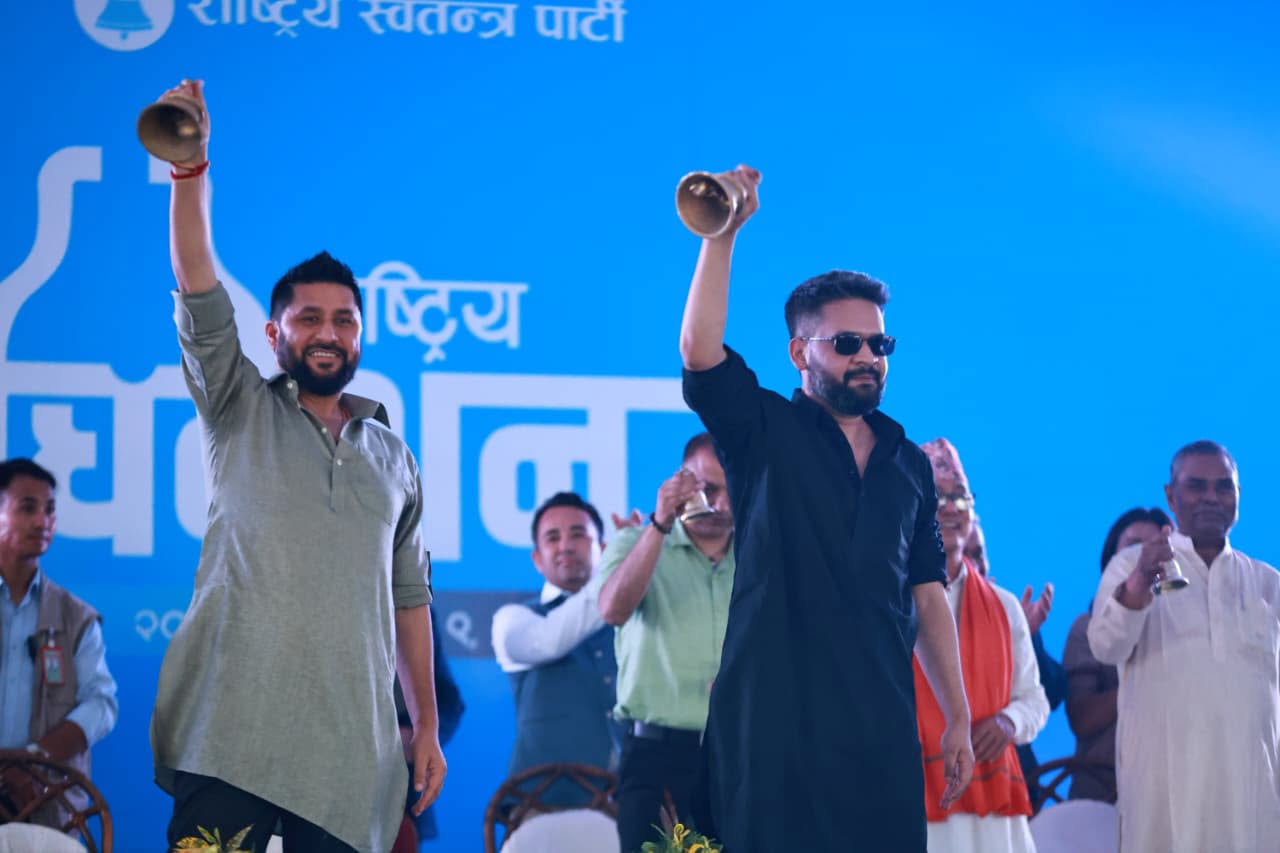
KATHMANDU: The most revealing political developments are often buried not in speeches or parliamentary debates, but in the fine print of party statute . That appears to be the case with Nepal’s governing Rastriya Swatantra Party (RSP), whose recently amended party statute contains a provision that could fundamentally alter the balance of power between the party chairman and a sitting prime minister.
The amendment, unveiled by former party general secretary Mukul Dhakal, grants the party chairman sweeping authority over the parliamentary leadership. Under the revised statute, if the parliamentary party leader fails to comply with the chairman’s “policy directives,” the leadership position is deemed automatically vacant.
In constitutional terms, that is no ordinary disciplinary measure. It creates a direct chain of command from the party chairman to the office of the prime minister itself.
A constitutional domino effect
Nepal’s Constitution requires the prime minister to be the leader of the parliamentary party commanding a majority in the House of Representatives.
If Prime Minister Balendra Shah were removed as RSP parliamentary leader under the party statute, he would simultaneously lose the constitutional qualification required to remain prime minister. The office would not necessarily fall because of a parliamentary defeat or a vote of no confidence, but because of an internal party decision.
In effect, the amended statute creates a mechanism through which the party chairman could trigger a change of government without first confronting Parliament.
Party discipline-or concentration of power?
Political parties routinely require internal discipline. Westminster-style democracies depend heavily on unified parliamentary parties.
The RSP amendment, however, appears to go considerably further. The statute states that when the chairman is not himself the parliamentary leader, he possesses authority to issue policy directives that parliamentary members-including the parliamentary party leader-are obliged to follow. Failure to comply constitutes grounds for automatic removal from leadership.
That effectively elevates the chairman from political leader to constitutional gatekeeper.
Critics are likely to argue that the provision transforms the prime minister into a politically subordinate figure whose tenure ultimately depends not on Parliament but on the confidence of a single party leader.
Constitutional ambiguity
Nepal’s constitutional framework requires the prime minister to remain parliamentary party leader. If that leadership changes, the constitutional basis for remaining prime minister disappears. Yet another legal question remains unresolved.
Nepal’s Political Parties Act provides that parliamentary leaders are elected according to each party’s own statute. That gives party constitutions substantial legal authority over parliamentary leadership, but it does not explicitly address whether removal can occur solely through a chairman’s directive rather than through a parliamentary majority. That ambiguity could become fertile ground for constitutional litigation should the provision ever be invoked.
Warning signs inside government
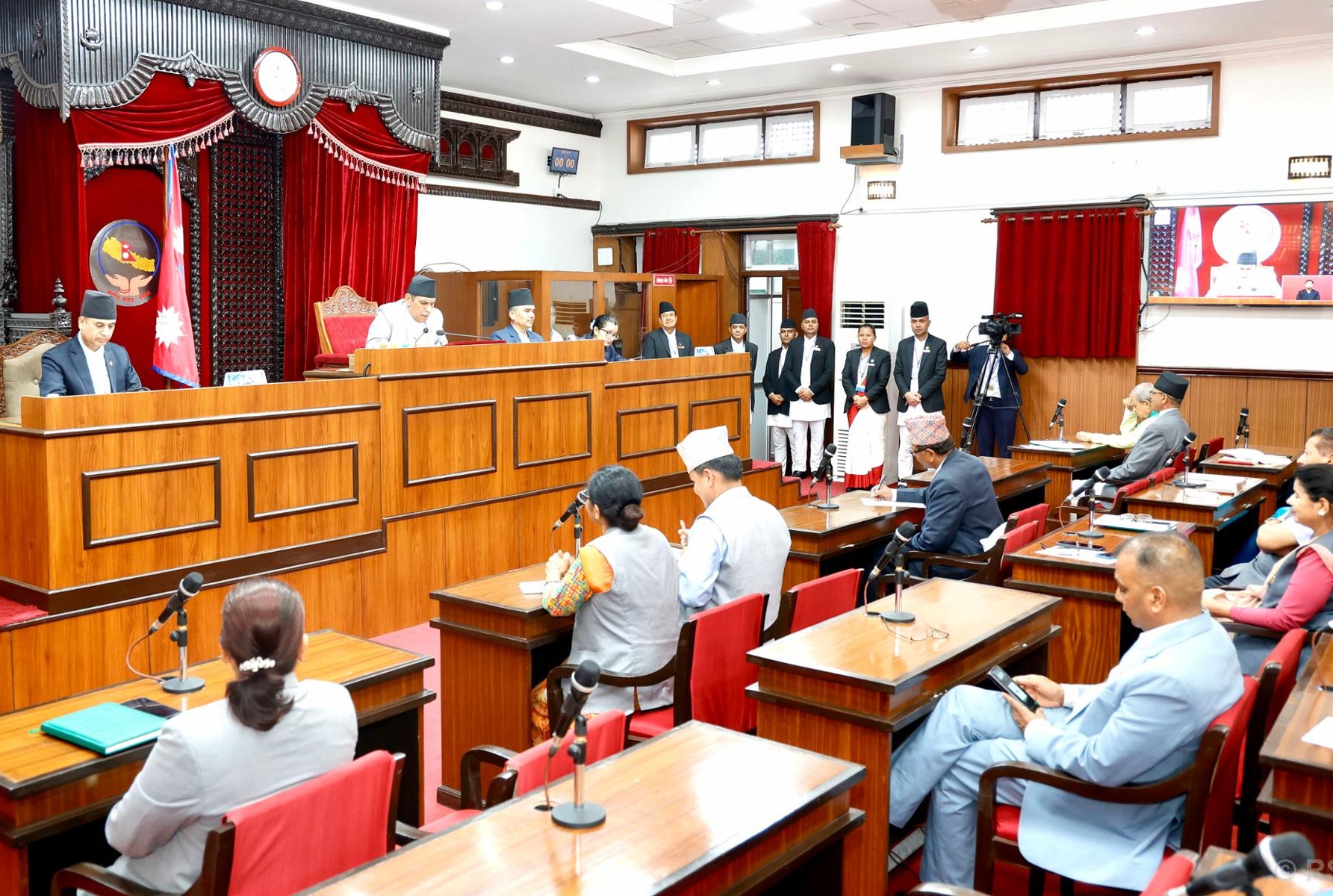
The legal amendment has acquired immediate political relevance because it coincides with unusually public signs of dissent within the governing party. On Monday, RSP lawmakers openly criticised the government inside Parliament.
MP Ramesh Prasain demanded answers from Home Minister Sudhan Gurung over the government’s response to the deadly Karnali Highway accident, questioning whether rescue efforts reflected official negligence.
In effect, the amended statute creates a mechanism through which the party chairman could trigger a change of government without first confronting Parliament.
Later, RSP chief whip Krantishikha Dhital criticised the government’s handling of landless settlers displaced from riverbanks, arguing that the administration had failed to uphold both the party’s manifesto and the principles of a compassionate state. She described the episode as exposing “state weakness and incompetence.”
Separately, Speaker Dol Prasad Aryal instructed the government to respond formally to issues raised by lawmakers-his first such ruling against the government since taking office. Individually, these events may appear routine. Collectively, they suggest a governing party increasingly willing to publicly challenge its own administration.
The politics behind the paperwork
The statute contains another notable innovation: a formal “Right to Recall” mechanism allowing the party to withdraw support from elected representatives deemed to have violated party commitments or public expectations.
Taken together, the recall provision and the chairman’s authority over parliamentary leadership significantly strengthen central party control over elected officeholders.
Supporters may view the changes as ensuring ideological consistency and accountability. Critics are likely to see them as concentrating unprecedented authority in the hands of the party chairman.
An emerging fault line
RSP insiders have quietly spoken of growing political distance between party chairman Rabi Lamichhane and Prime Minister Balendra Shah following the party’s general convention in Chitwan.
Monday’s parliamentary interventions-and the previously unnoticed constitutional amendment-appear to reinforce that perception.
Whether the clause is ever exercised may prove less important than the political leverage it creates. By embedding executive authority within party rules rather than parliamentary procedure, the RSP has introduced a constitutional pressure point that could reshape the relationship between party leadership and government.
In Westminster democracies, prime ministers are expected to answer to Parliament. Under the RSP’s revised statute, the more immediate question may become whether they first answer to their party chairman.
The next battle is within
The first national convention of the Rastriya Swatantra Party (RSP) is being presented as a celebration of an extraordinary political ascent. In reality, it is something far more consequential. It is the moment when Nepal’s most successful anti-establishment movement confronts the oldest dilemma in democratic politics: whether a party built on charismatic personalities can become a durable institution before those personalities begin competing for power.
Few political movements in Nepal have risen as quickly as the RSP. Founded in 2022 by television journalist Rabi Lamichhane, the party was widely dismissed as a protest vehicle built around celebrity appeal. Four years later, it leads the government, commands one of the strongest electoral mandates in modern Nepal wirh almost two third parliamentary majority and has displaced parties that dominated politics for decades.
But electoral revolutions rarely end political competition. They merely change its direction. The RSP’s next battle is unlikely to be against the Nepali Congress, Nepali Communist Party or the CPN-UML. It is increasingly likely to be about the balance of power between the two men who made its victory possible: party chairman Rabi Lamichhane and Prime Minister Balendra “Balen” Shah.
That balance may ultimately determine not only the future of the RSP but also Nepal’s political stability. Their alliance was born out of necessity rather than ideology. In the final week of December 2025, after marathon negotiations stretching into the early hours of the morning, Lamichhane and Balen signed a seven-point agreement that fundamentally reshaped Nepal’s opposition politics.
The arrangement was deceptively simple. Lamichhane would remain party chairman and command the organisation. Balen would become parliamentary leader and the party’s prime ministerial candidate should the RSP secure a parliamentary majority.
It was an elegant political bargain because each possessed what the other lacked. Lamichhane had the party machine, national organisation and political infrastructure. Balen possessed something no party can manufacture: an independent national popularity and digital wave that transcended partisan loyalties. His appeal rested not on ideology but on a carefully cultivated digital image of administrative competence, institutional discipline and an uncompromising willingness to confront entrenched interests.
Together, they became politically irresistible. Separately, each becomes considerably weaker.
That is precisely why an immediate confrontation remains improbable. Lamichhane cannot easily challenge the man who helped transform the RSP from an insurgent party into a governing force. Balen cannot realistically govern without the organisational machinery controlled by Lamichhane. Millions of supporters voted not simply for one leader or the other but for the partnership itself.
The coalition that brought the RSP to power is built on complementarity. Yet political necessity has a remarkably short shelf life. Power changes incentives.
Movements united by opposition frequently fragment once they inherit government. During campaigns, political energy is directed against external opponents. Once victory arrives, competition shifts inward-to cabinet positions, policy priorities, party appointments, succession plans and ultimately the question of who truly leads.
The RSP has now entered precisely that phase. The first national convention is therefore less about ideology than about control. Lamichhane now start to consolidate the power grip on his hand.
Thousands of delegates have gathered not merely to debate policy but to determine who will dominate the party’s expanding organisational structure. Unlike the party’s formative years, when survival was its overriding concern, today’s struggle concerns access to power.
That transition matters. And now Lamichhane legally in upper hand and can pose challenges to Shah at any time. Political parties often become most vulnerable not before victory but immediately afterwards.
The revised party statute reflects this changing reality. By empowering the chairman to nominate 51 members of the central committee and significantly strengthening the authority of the party leadership, the amendments consolidate organisational power around Lamichhane.
Supporters describe the changes as necessary for maintaining unity inside a rapidly expanding movement. Critics see the familiar architecture of centralised leadership.
History offers little comfort for reformist parties that travel this path. Around the world, insurgent political movements have repeatedly promised internal democracy only to become increasingly personalised once power arrives. Institutions gradually yield to individuals. Collective leadership gives way to political centralisation.
The RSP now confronts exactly that temptation. The relationship between Lamichhane and Balen illustrates two fundamentally different theories of leadership.
Lamichhane is a political communicator. His authority was forged through television, public confrontation and the ability to channel public frustration into political mobilisation. His instinct is to build legitimacy through persuasion, visibility and emotional connection.
Balen represents a different political tradition. His authority derives from execution rather than communication. An engineer by training and an independent by political origin, he built his reputation through digital wave including administrative intervention, regulatory enforcement and visible governance. He speaks less, but governs more visibly.
One excels at winning public attention.The other at projecting administrative authority. During elections, those differences reinforced one another. Inside government, they could become sources of friction.
Governments rarely reward the qualities that win elections. Campaigns thrive on clarity; governing demands compromise. Protest rewards confrontation; administration rewards negotiation. Political popularity often requires symbolic decisions, while effective governance frequently requires unpopular ones.
Reconciling those competing imperatives will become increasingly difficult as the RSP moves deeper into government.
The party’s own power-sharing arrangement may intensify the challenge. A powerful party chairman alongside an equally popular prime minister creates two competing centres of legitimacy. One derives authority from the party. The other from government and public popularity.
Such arrangements rarely remain stable indefinitely. If disagreements emerge over economic policy, cabinet appointments, governance strategy or future electoral leadership, institutional competition could rapidly become personal rivalry.
That risk should not be exaggerated. Nor should it be ignored. At present, both leaders still need each other. Lamichhane remains indispensable to the organisation. Balen remains indispensable to its public appeal. Neither can easily replace the other.
But politics has a habit of turning successful partnerships into succession battles. For Lamichhane, the convention is likely to strengthen his grip on the party. Whether it strengthens the RSP itself is the more consequential question.
Ultimately, the future of Nepal’s newest governing party will depend less on its electoral strength than on its ability to institutionalise power before personal ambition overtakes organisational discipline.
If Lamichhane and Balen succeed in preserving their partnership while building durable institutions, the RSP could permanently reshape Nepal’s political order. If they fail, the consequences will extend far beyond internal party politics.
A split between the movement’s two most powerful figures could fracture the governing coalition, divide the country’s largest new political force and reopen the cycle of instability that has repeatedly frustrated Nepal’s democratic evolution.
The greatest challenge facing the RSP is therefore no longer winning elections. It is preventing tomorrow’s rivals from destroying today’s revolution.
When power turns inward
Nepal’s political history reveals a recurring pattern: its strongest governments have rarely been defeated by the opposition. They have been undone by battles within.
Whether it was B.P. versus Matrika Prasad Koirala, Krishna Prasad Bhattarai versus Girija Prasad Koirala, Girija Prasad Koirala versus Sher Bahadur Deuba, or K.P. Sharma Oli versus Pushpa Kamal Dahal, the underlying conflict remained strikingly similar. Personality eclipsed institutions, while party authority collided with executive power.
The disputes were rarely ideological. They revolved around a single question: Who truly governs-the party or the prime minister? When that question went unanswered, governments became battlegrounds rather than governing bodies.
The consequences were profound. Parliamentary majorities collapsed, parties fractured, parliament was dissolved, constitutional crises deepened and, in one case, democracy itself was suspended. Mandates that promised stability instead produced instability because rival leaders treated electoral victories as instruments of personal authority rather than public responsibility.
The communist super-majority of 2018 offered the latest example. The merger of UML and the Maoist Centre created Nepal’s most powerful ruling party in decades, yet the arrangement failed to reconcile control of the government with control of the party. The Oli–Prachanda rivalry paralysed governance, split the party and ultimately dissolved Parliament, wasting a near two-thirds mandate.
The pattern stretches back much further. B.P. Koirala’s overwhelming electoral victory in 1959 could not survive King Mahendra’s refusal to cede political supremacy. In the 1950s, the rivalry between B.P. and Matrika Prasad Koirala established the enduring tension between party leadership and executive authority. During the 1990s, personal feuds inside the Nepali Congress repeatedly destroyed two parliamentary majorities and fragmented the country’s largest democratic party.
Across seven decades, the names have changed, but the script has not. Nepal’s biggest political failures have stemmed less from weak mandates than from weak institutions and competing power centres. When leaders place faction above function and personal ambition above institutional discipline, even the strongest governments become fragile.
The lesson is enduring: in Nepal, elections can deliver commanding majorities, but only institutions-not personalities-can deliver political stability.