Kathmandu
Tuesday, July 7, 2026





Thousands were displaced after the Kathmandu Valley eviction drive. While the government has begun issuing land ownership certificates, hundreds of families remain in temporary shelters as Nepal struggles to resolve one of its oldest social and governance challenges
KATHMANDU: Since April 2026, Nepal’s government has demolished riverbank informal settlements across Kathmandu Valley, moved roughly 2,600 displaced people through Dasharath Stadium and into seven temporary holding centres, and faced a Supreme Court order demanding due process and basic services for those affected.
More than two months later, hundreds of families remain in shelters with no permanent housing, even as the government began issuing the country’s first land ownership certificates to landless households in Bardiya in early July and reports 1.2 million outstanding applications nationwide.
What is the current, most up to date status of Nepal’s landless settlers crisis as of this week?
As of early July 2026, the acute phase of the Kathmandu Valley eviction drive has ended but its aftermath is still unresolved. Roughly 1,488 people from 388 households remain spread across seven government holding centres in Kathmandu, Bhaktapur and Kavrepalanchok districts, with repeated deadlines to vacate those centres pushed back after residents said they could not find or afford rental housing.
Meanwhile the government has pivoted toward a national land ownership drive, having formed a new Land Management Committee to replace the previous commission and beginning to issue titles, starting with 29 households in Bardiya district in early July.
Land Minister Pratibha Rawal told the National Assembly this week that some 1.2 million landless and squatter applications are pending nationwide, with Rs 613 million allocated for the effort in the current fiscal year.
The picture, in short, is one of a highly visible capital city crisis winding down operationally while the underlying national problem, decades in the making, is only beginning a fresh and still fragile attempt at resolution.
What exactly happened during the Kathmandu eviction drive in April 2026?
Acting on a directive from Prime Minister Balendra Shah security forces including Nepal Police, the Armed Police Force and metropolitan police moved into the Thapathali, Gairigaun and Manohara riverbank settlements before dawn on April 25, 2026, with bulldozers demolishing homes built over years by daily wage labourers and displaced migrants.
Most residents had already removed belongings the previous evening after notices set a short vacate deadline, and the operation itself was reported to proceed without major clashes, a marked contrast to a violent 2022 attempt at the same Thapathali site when Shah was still Kathmandu’s mayor.
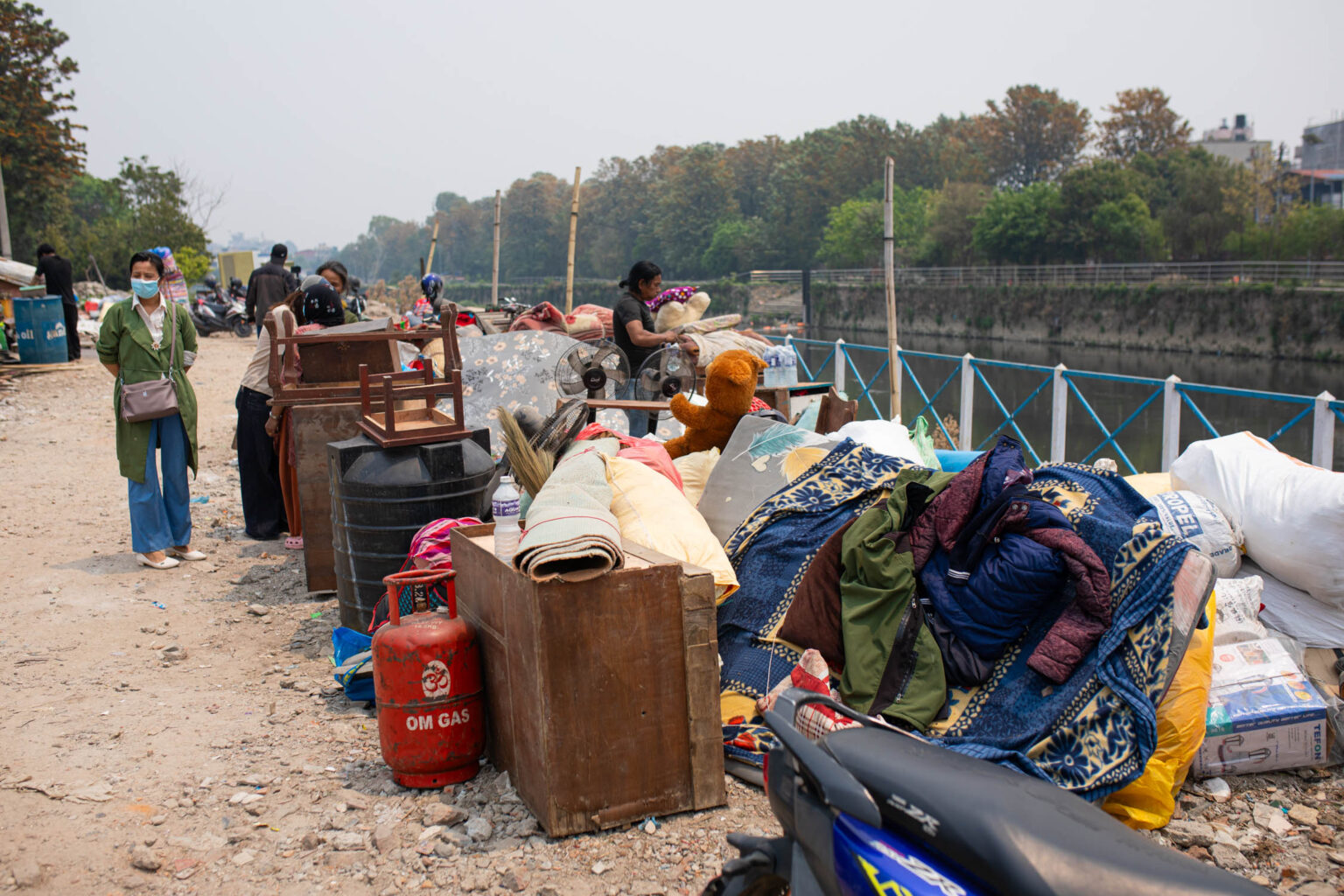
Arranging belongings after a bulldozer was run through the landless people settlement at Thapathali. Photo courtesy: Nepal Photo Library
Displaced families were bussed to Dasharath Stadium for registration before being moved to temporary sites including hotels, a Kirtipur ashram and government training centres. Officials described the drive as humanitarian in intent, with belongings stored separately for later collection, though residents described the day itself as traumatic, watching homes they had built over decades reduced to rubble within hours, with only bedding and clothing allowed to travel with them to shelter.
Why did the government proceed with the eviction even as a court case was pending against it?
This is one of the more legally awkward aspects of how the episode unfolded. A writ petition challenging the planned eviction was filed at the Supreme Court on April 24, the day before bulldozers arrived, arguing the decision was unlawful because it was taken without consulting affected families or ensuring safe relocation.
A single bench issued a show cause order on April 27, two days after the demolition had already begun, directing the government to submit a written explanation rather than immediately halting the operation, since no interim order had been granted at that point.
This meant the core Thapathali, Gairigaun and Manohara clearances went ahead essentially before the judiciary had a chance to weigh in decisively, and it was only a subsequent writ, filed by a different set of petitioners in early May, that produced a more forceful Supreme Court interim order on May 8 explicitly barring further evictions without due process, by which point the initial wave of demolitions was already complete.
What did the Supreme Court ultimately order regarding the evictions and the government’s obligations?
The Supreme Court’s May 8 interim order, issued by a joint bench of Justices Kumar Regmi and Nityananda Pandey, directed that any further removal of squatters or informal settlers must strictly follow legal procedure, explicitly citing the risk of irreparable harm to constitutional rights including education, health and housing, and warning of a possible humanitarian crisis if evictions proceeded without safeguards.
The bench also referenced concerns raised separately by the National Human Rights Commission about gaps in the protection of squatters’ basic needs.
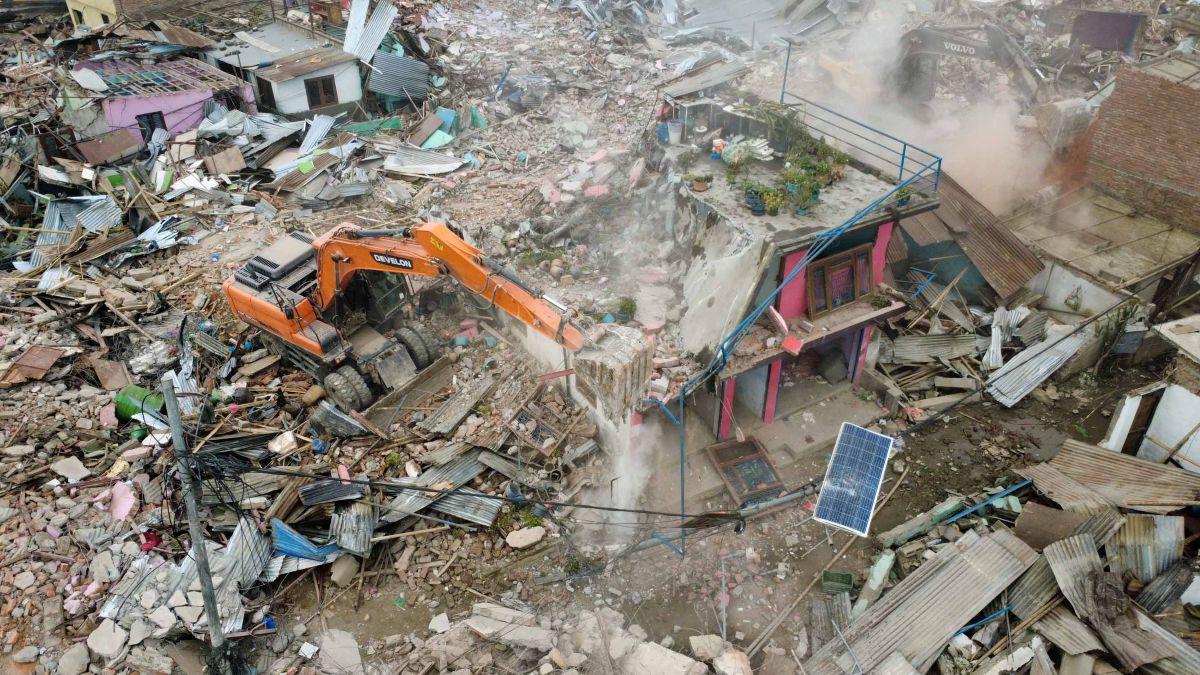
Manohara. File photo
Beyond simply pausing further clearances, the order instructed the government to make concrete arrangements for housing, education, health services and food support specifically for those who had already been displaced by that point, a directive that effectively obligated authorities to properly care for the very families whose eviction the same government had just carried out weeks earlier.
The court also fast tracked the matter, ordering that once written responses were filed, the case should be listed for hearing within 15 days rather than left pending indefinitely.
How many families were ultimately displaced, and where exactly are they living now?
Official figures have shifted over the weeks as verification proceeded, but the most consistent recent count from the High Powered Committee for Integrated Development of Bagmati Civilisation puts 1,488 people from 388 households across seven institutional holding centres, out of roughly 2,608 displaced individuals recorded overall including those who found other arrangements on their own.
The seven centres and their approximate populations are a lodge in Balaju housing 294 people from 87 households, the Radha Soami Satsang Beas facility in Kirtipur with 277 people from 65 households, the Nepal Electricity Authority training centre in Kharipati, Bhaktapur with 355 people from 99 households, an agricultural training centre in Bode, Bhaktapur with 115 people from 24 households, a water supply training centre in Nagarkot with 80 people from 21 households, a Nepal Red Cross Society facility in Banepa with 195 people from 45 households, and the Ichangunarayan Housing Project in Kathmandu with 172 people from 47 households, the same long empty apartment complex built after the failed 2012 Thapathali resettlement attempt.
What is daily life actually like inside these holding centres right now?
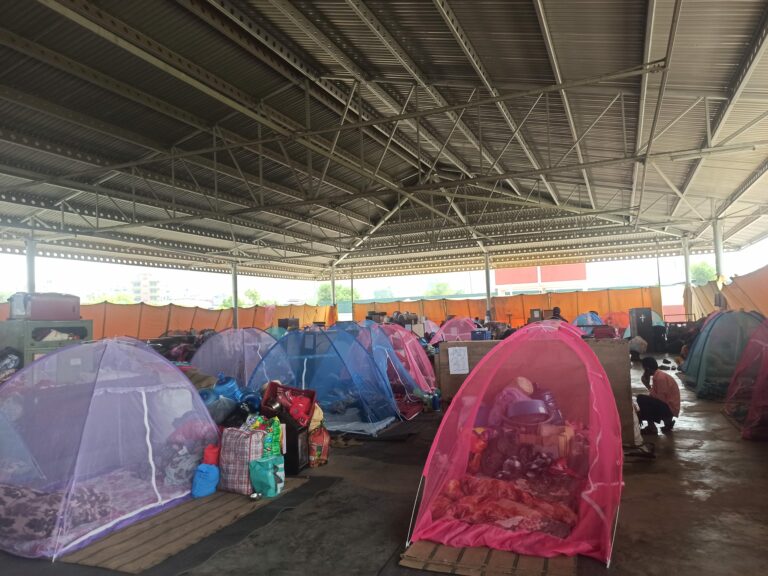
Conditions described by residents and volunteers paint a picture of prolonged, uncomfortable limbo rather than functioning temporary shelter. At the Radhaswami holding centre in Kirtipur, heavy monsoon rainfall flooded tents in late June, affecting 167 people across 67 families who were sleeping on the ground, among them a postpartum mother and four infants under one year old, in a site situated on a Bishnumati River floodplain that itself floods regularly.
Families at other centres have reported going an entire day without food when meals failed to arrive, inadequate food quality and quantity for elderly residents and young children, overcrowding, and delayed relief payments. Residents at multiple centres say government representatives visiting to collect information often cannot themselves say what happens next, deepening anxiety.
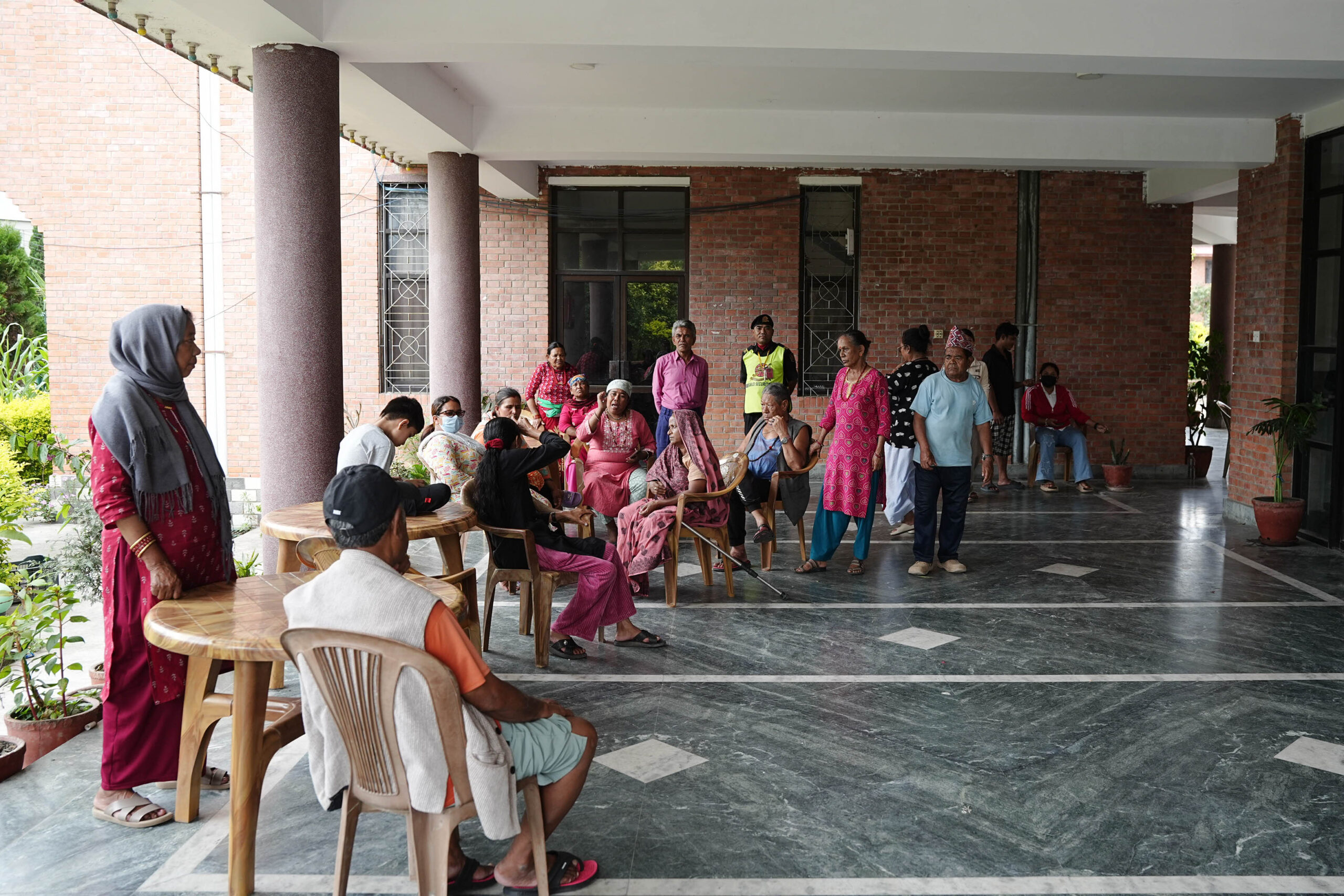
Displaced landless settlers at holding center
Children’s education has also suffered, with one mother reporting that officials asked whether her children would go to hostels but then followed up with nothing for over two weeks, leading her daughter to say she no longer wanted to study, a small but telling sign of how prolonged displacement is eroding morale beyond the immediate loss of housing.
Why have the holding centre vacate deadlines been extended so many times, and what does that pattern reveal?
The pattern of repeated extension is itself one of the more revealing details of how this rehabilitation effort has actually functioned. An original deadline of June 26 to vacate all holding centres was pushed back to July 3 after residents said the timeframe was too short to secure rental housing even with government relief money in hand.
At the Nagarjun holding centre specifically, an initial deadline of June 26 was extended to July 3 after the same complaint, and displaced families reported that government representatives visiting on June 23 offered a flat Rs 25,000 per family to leave, which residents interpreted as pressure to disperse rather than a genuine housing solution.
HPCIDBC executive chair Anand Singh Bhat has defended the closures by saying holding centres were only ever meant to be temporary and could not operate indefinitely, while simultaneously acknowledging that a firm permanent land distribution timeline, originally projected at three months, could still be adjusted.
The repeated extensions suggest a government caught between wanting to visibly wind down a politically costly holding operation and the practical reality that verified permanent alternatives were nowhere near ready.
What specific hardships have families said the government’s response has caused or failed to address?
Beyond the flooding and food problems already described, families have detailed a consistent set of grievances centred on the mismatch between the Rs 15,000 monthly rental allowance and actual Kathmandu Valley rents, which residents say commonly run Rs 25,000 to 30,000 for a modest flat, making the government’s own suggested solution mathematically unworkable for most displaced households.
Residents also describe discrimination in the private rental market itself, saying landlords ask about caste, employment status and appearance before refusing to rent to anyone identified as a former squatter, closing off the very option the government is directing them toward.
A woman displaced from Thapathali described losing her informal domestic work when her settlement was demolished, leaving her unable to answer landlords’ questions about employment at all.
Families with medical needs, such as one woman whose adult daughter has serious liver complications requiring ongoing treatment, say the disruption of settled life around hospitals and support networks has compounded existing health burdens, while families with school age children report anxiety over interrupted education and unclear promises about hostel placement that have not materialised.
What financial relief has the government actually provided, and is it considered adequate?
The government’s relief package for verified displaced families consists of a one time payment of Rs 25,000 plus a monthly rental support payment of Rs 15,000 for up to three months, transferred directly into recipients’ bank accounts rather than distributed in cash, part of an effort toward transparency in the disbursement process.
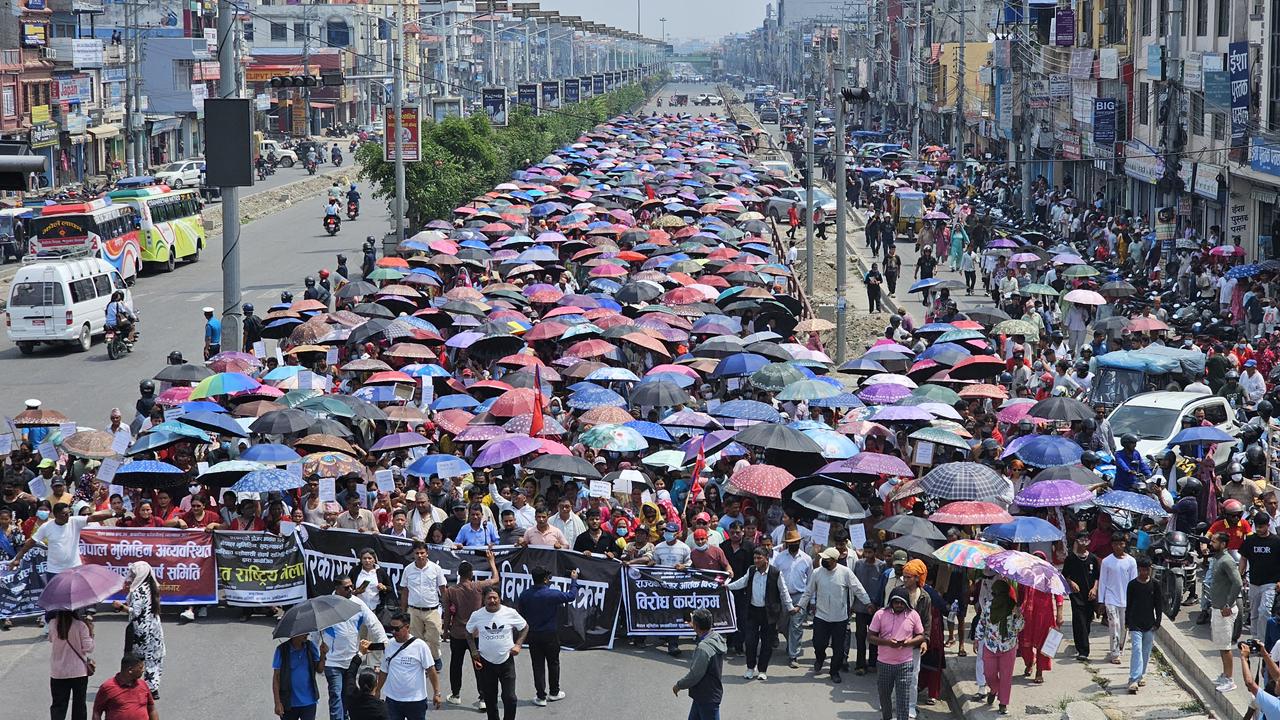
Landless settlers communities stage a protest in Butwal on Sunday. Photo: CP Khanal
Families and advocates have consistently argued this package falls well short of covering actual costs, both because Kathmandu Valley rents frequently exceed the monthly support figure and because the three month cutoff assumes a permanent housing solution will be ready by then, an assumption that recent history has not borne out given the repeated extensions already described.
Officials including personal secretaries to the infrastructure development minister have said the ministry is separately working on housing designs and land allocation plans meant to follow the initial relief period, and that digital profiles combining health, economic, demographic and biometric data are being built to cross check against land records and identify which households genuinely qualify for the more substantial permanent rehabilitation that is meant to follow the temporary payments.
What is the status of the promised permanent land ownership certificates, and has distribution actually started?
Distribution has begun, though on a small and geographically limited scale relative to the scale of national demand. Land Minister Pratibha Rawal launched the first phase in Bardiya district in early July, personally handing over certificates to 29 households, including two landless Dalit families and 27 landless settler households who had lived in the area for roughly 15 years, a district chosen specifically because earlier land commissions had already completed much of the underlying verification groundwork there.
The certificates, known locally as lalpurja, represent the first tangible legal land titles issued under the new government’s approach, and officials say the campaign will expand gradually nationwide from this starting point.
Rawal told parliament this week that the ministry has already entered 1.248 million people into a new digital database, compared with roughly 1.12 million recorded under previous governments, and that Rs 613 million has been budgeted for the effort. She also acknowledged bluntly that only about 9,000 people out of 1.2 million applications received over three decades have so far actually received ownership certificates, calling the historical record shameful.
How is the government now trying to distinguish “genuine” settlers from other occupants, and what problems does this process create?
The verification effort has become a major bottleneck and a source of friction wherever it has been rolled out, both in Kathmandu and in provincial cities watching the capital’s approach with alarm. In Biratnagar, for instance, the Chief District Officer described examining family histories going back up to three generations and even checking bank balances to distinguish genuine landless households from those who may have acquired land elsewhere while maintaining squatter status for other reasons.
In the Kathmandu Valley specifically, only around 20 percent of the roughly 4,000 riverbank families identified by a government study have so far been verified as genuinely landless under the strict legal definition, with the remaining 80 percent classified as unorganized settlers who may hold land elsewhere or simply lack formal verification yet.
This ambiguity cuts both ways politically: officials risk bypassing genuinely landless families in favour of those with better documentation or connections, while critics of the settlements risk using the unverified majority figure to delegitimize the entire displaced population, including the roughly one in five who are unquestionably eligible for constitutional protection and relief.
What criticisms have human rights organizations and legal experts raised about how displaced families were treated?
The criticism has been sustained and sharply worded from multiple directions. Amnesty International Nepal’s director said publicly that evicting families without prior verification, meaningful consultation or guaranteed alternative housing reflected a dangerous erosion of lawful governance and risked turning a governance challenge into a preventable human rights crisis.
Rights activist called the government’s approach illegal and arbitrary, arguing that removing citizens from their homes based on a home minister’s directive alone, without following established legal procedure, contradicted democratic norms, and specifically criticized the sequence of evicting first and verifying who counted as a genuine squatter only afterward.
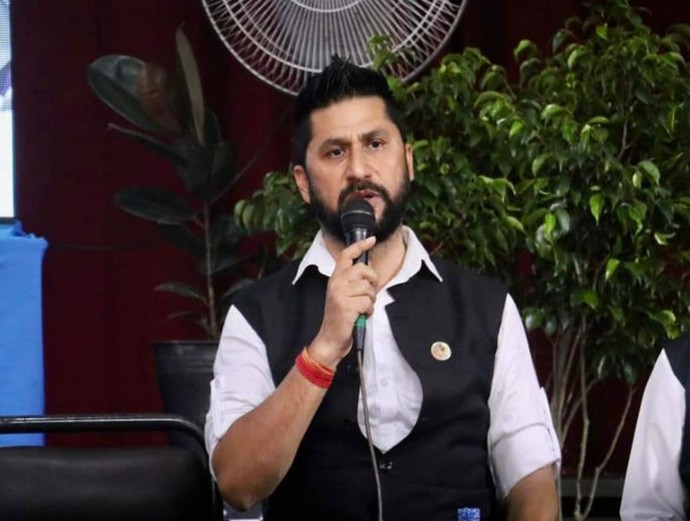
The National Human Rights Commission separately pressed the government for updates on implementing its own prior recommendations and Supreme Court orders regarding identification of genuine settlers, adequate shelter, and restraint in the use of force during clearance operations, while Gen Z activists pointed to earlier public statements by RSP chair Rabi Lamichhane, who had once said he would stand in front of bulldozers to block demolition, as evidence of a reversal once the party held governing power.
How has Prime Minister Balen Shah defended the pace and manner of the government’s response?
Shah has consistently framed the slow rehabilitation timeline as an unavoidable consequence of the problem’s depth rather than a failure of political will. Addressing Parliament on May 31, he defended the pace of the process directly, saying a problem left unresolved for 35 years could not be fixed quickly and that the government would take as long as necessary rather than rush a solution.
He has also drawn a distinction between Kathmandu Valley riverbank settlers, whom he has described as a different category requiring different handling, and landless populations elsewhere in the country, saying the government intends to separate encroachers from genuine squatters as it proceeds.

Prime Minister Balendra (Balen) Shah addressing the House on May 31, 2026. Photo: Nepal Photo Library
Before the April operation, Shah wrote publicly that the government had not forgotten commitments made during the election campaign, in the party’s manifesto, and in its 100 point governance plan, and that internal preparations were underway to fulfil those specific promises, positioning the eviction and subsequent rehabilitation effort as delivery on a prior mandate rather than an improvised crackdown, even as he acknowledged the process would proceed without applying force and with attention to humanitarian concerns.
Did the Kathmandu eviction drive trigger similar fears or actions in other parts of Nepal?
Yes, and the ripple effect illustrates how a single high profile operation in the capital reshaped expectations nationwide almost immediately. In Biratnagar, residents of dense riverside settlements along the Singhiya river, home to more than 2,000 squatter families across areas like Paropakar Ghat and Ganga Tol, reported losing sleep after watching footage of the Kathmandu demolitions, with one 66 year old resident who had lived on the riverbank for over three decades saying he now constantly anticipates bulldozers arriving without warning.
Local authorities in Morang district responded by accelerating their own identification of genuine versus fake squatters, issuing initial notices to remove dozens of structures in areas like Letang, and instructing all local government units to assist with squatter identification, mirroring the verification language used in the capital.
Land rights activists estimate more than 7,000 squatter families live on government owned land within Biratnagar Metropolitan City alone, with district officials suggesting the true countywide figure, including private land, could exceed 10,000 families, meaning the anxiety triggered by Kathmandu’s example is spreading across a genuinely large and previously under scrutinized population.
What longer term structural reforms has the government announced to address the problem beyond the immediate Kathmandu crisis?
The most significant structural change has been dissolving the previous, twenty second Land Problem Settlement Commission and replacing it with a new Land Management Committee under the Ministry of Land Management, Cooperatives, Federal Affairs and General Administration, explicitly tasked with resolving issues involving landless Dalits, landless settlers and unplanned settlement residents as part of the government’s broader 100 day and subsequent governance agenda.
Structurally, the ministry has introduced district level committees chaired by chief district officers to handle landless case management locally rather than centrally, launched a mobile application called Mero Kitta enabling online map printing and field book uploads with thousands of institutional users already registered, and built a new digital database that has already recorded more entries than under any previous government’s system.
Finance Minister Swarnim Wagle pledged in the fiscal year 2026 to 2027 budget presented on May 29 to complete management of landless Dalits, squatters and informal settlers within the coming fiscal year, a considerably more ambitious and specific commitment than any prior government has attached to this file, though the credibility of that timeline will depend heavily on whether early execution problems in Kathmandu are resolved before the effort scales nationwide.
Why has Nepal struggled with landlessness for so long, and what are the deeper historical roots of the crisis?
The roots trace back more than two centuries to feudal era land governance that treated land as a tool of political patronage rather than an economic resource to be equitably distributed.
Under the Rana oligarchy and earlier monarchical rule, fertile land in the Terai and hills was granted to court favourites, military commanders, religious institutions and upper caste elites through birta and jagir grants that came bundled with the labour of families already farming that land without formal title.
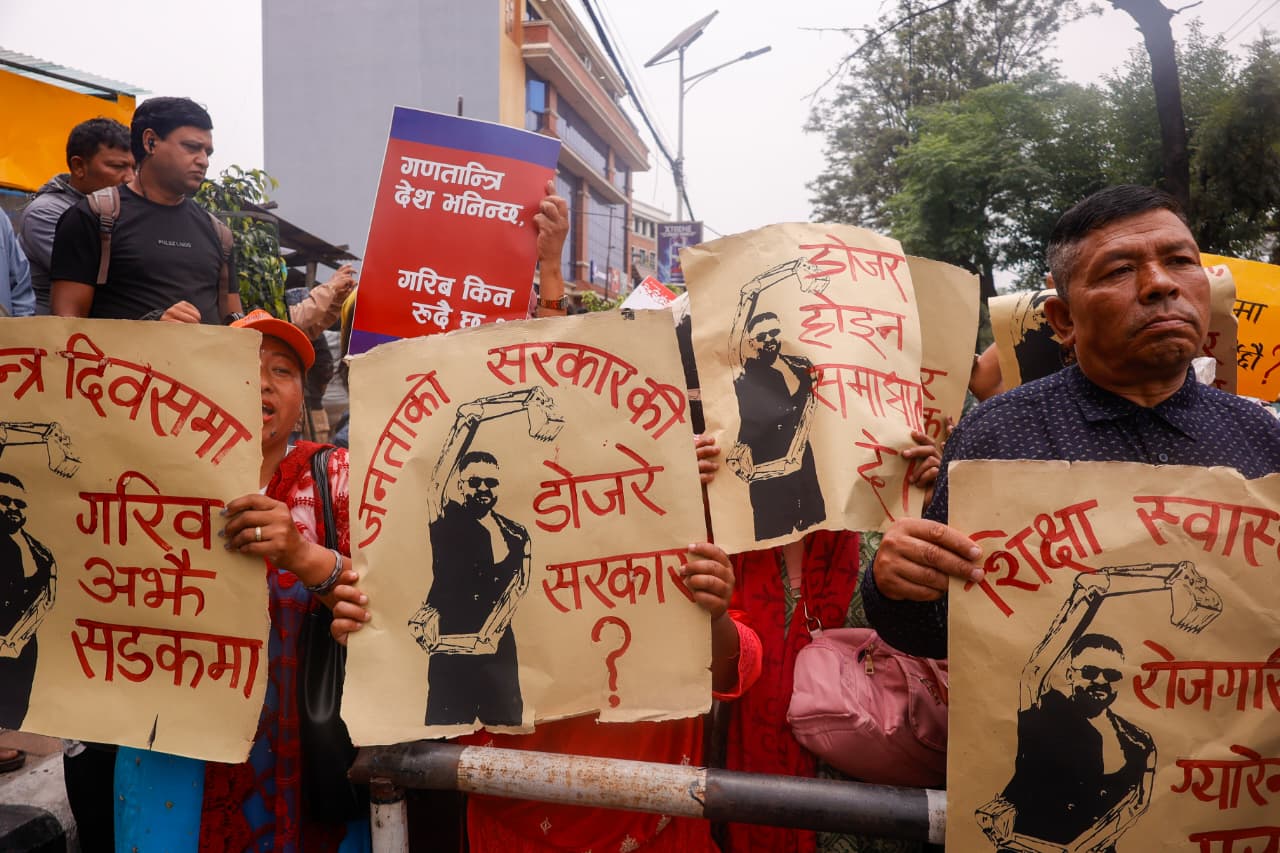
When malaria was eradicated from the Terai in the 1950s and 1960s, waves of hill migrants moved in and formally registered land that indigenous Tharu farmers had cultivated for generations, sometimes securing the thumbprints of illiterate farmers on documents whose contents those farmers could not read.
By the early 2000s this history had produced stark concentration, with the wealthiest five percent of the population controlling 37 percent of arable land while the poorest 47 percent shared just 15 percent between them, a documented outcome of discriminatory administration maintained continuously across every political system Nepal has had, monarchy, panchayat, multiparty democracy and republic alike.
Who are Nepal’s most vulnerable landless groups, and how have past liberation promises to them failed in practice?
Three bonded labour systems illustrate the pattern most starkly. The Kamaiya system, hereditary bonded labour among Tharu families in five western districts, was formally abolished in July 2000 after mass protests, freeing over 30,000 families, yet as of 2024, the twenty fourth anniversary of that liberation, 2,375 of 27,570 registered Kamaiya families still had no land at all, and many who did receive plots got flood prone or otherwise unproductive land.
The Haliya system, its hill counterpart in far western districts, was abolished in September 2008, but government rehabilitation reportedly reached less than five percent of the roughly 20,000 freed families, many of whom continued working for former landlords for lack of any alternative.
The Haruwa Charuwa system in the eastern Terai has never even received a formal government liberation announcement, despite an ILO study finding forced labour conditions affecting roughly 12 percent of households in the twelve most affected districts, making these communities arguably the most invisible layer of Nepal’s bonded and landless population, present in the data but absent from any dedicated policy response.
Why have more than twenty government commissions failed to resolve Nepal’s landlessness problem over the decades?
Nepal has formed 22 commissions, committees and land reform bodies since 1952, and the pattern of failure across nearly all of them has been remarkably consistent regardless of which party held power.
Each time a new government takes office, it dissolves the sitting commission and forms a fresh one staffed with its own loyalists, a cycle that destroys institutional memory, verification progress and public trust with every transition.
The KP Sharma Oli government formed a commission in March 2020, only for the subsequent Deuba government to dissolve it roughly eighteen months later even while a Supreme Court challenge to that dissolution remained pending, and a dedicated anti fraud software system one commission had built to cross check applications against national land records was simply abandoned by its successor.
Commissions have also historically prioritized distributing land to politically connected applicants over verified genuine landless households, and the most recent, twenty second commission’s term expired in September 2024 without completing distribution, leaving preparations for a twenty third body still underway as the current government took office and began the process described throughout this explainer.
What does Nepali law and the constitution actually promise the landless, and where does the gap between promise and practice lie?
On paper, Nepal’s legal framework is genuinely progressive by regional standards. The 2015 Constitution’s Article 37 guarantees every citizen the right to appropriate housing and prohibits eviction from one’s residence except in strict accordance with law, Article 16 guarantees the right to live with dignity, and Article 40 specifically mandates the state provide housing and land to landless Dalits at least once.
The Land Act of 1964, amended as recently as 2021, provides the statutory distribution framework, and a 2024 Supreme Court order explicitly conditioned any riverside informal settler evacuation in Kathmandu on the government first providing proper housing to genuinely landless families.
The gap between this legal framework and lived outcomes is not, on the evidence assembled here, primarily a gap in legal authority or available tools, since courts, statutes and constitutional text all point the same direction. It is a gap in sustained political will and institutional continuity across the many government transitions that have interrupted implementation.
Given everything above, is Balen Shah’s government actually positioned to deliver a fair resolution, or is this crisis likely to repeat the pattern of the past?
The honest answer, based on the record assembled here, is genuinely mixed. On the encouraging side, Shah personally understands the federal and local coordination failures that doomed his own 2022 eviction attempt as mayor, his government has for the first time dissolved and replaced the standing land commission with a new committee carrying a specific budget and digital verification infrastructure, and actual land certificates have begun reaching real households in Bardiya rather than remaining a perpetual promise.
On the concerning side, the sequence of events in Kathmandu this year, eviction first, court challenge and show cause order after the fact, holding centre deadlines repeatedly missed and extended, verified permanent housing still not delivered more than two months on, and a self acknowledged historical distribution rate of roughly 9,000 certificates against 1.2 million applications, all suggest the execution gap that has defeated 22 previous commissions has not yet been closed, only relocated from the countryside to a single, highly visible capital city operation.
Whether the national rollout beginning in Bardiya sustains its pace once it reaches politically harder terrain, both geographically and administratively, remains the genuine open question this explainer leaves unresolved.