Kathmandu
Tuesday, July 28, 2026





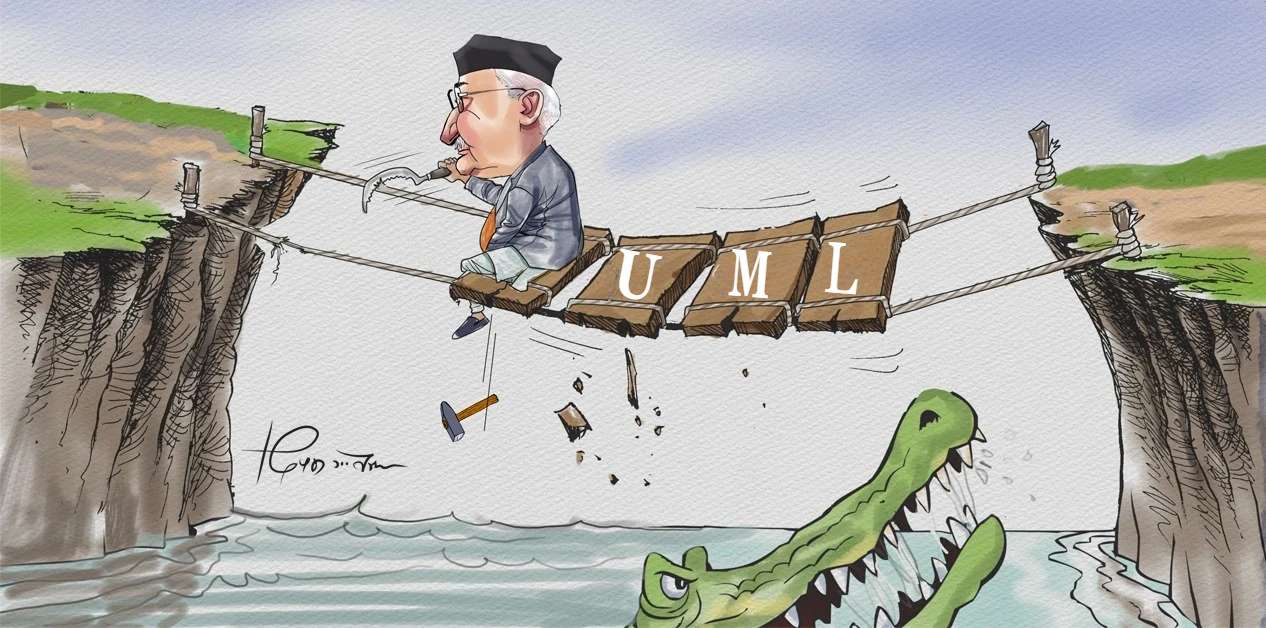
As CPN (UML) suffers one of the worst electoral setbacks in its history, voices across the party, from former vice chairmen to district leaders, are calling on KP Sharma Oli to resign and allow a leadership reset
KATHMANDU: “If you ask a child, they might say they want to be the Prime Minister. They might even say the President. But that does not mean the child will actually become one,” Communist Party of Nepal (Unified Marxist–Leninist) Chairman KP Sharma Oli said on February 23 during an election rally in Damak, mocking his competitor Balendra Shah (Balen).
Oli added that Shah simply declared himself as such, suggesting that many people viewed his candidacy as little more than a joke.
Throughout the election campaign, Oli did not give much importance to Shah’s candidacy. Since 1991, he had been a six-time winner from the Damak-centered constituency in Jhapa. Except for the 2008 Constituent Assembly election, he had been elected continuously from the area.
However, in the Jhapa 5 contest this time, Oli was defeated by roughly 50,000 votes by Shah, the very candidate he had dismissed before the election. As a result, the outcome of the March 5 House of Representatives election has triggered calls for a serious review of the CPN (UML)’s leadership and policies.
The party had entered the election projecting Chairman KP Sharma Oli as its prime ministerial candidate, claiming it would secure a majority. But voters did not only reject Oli. Most CPN (UML) candidates in the first-past-the-post (FPTP) or direct election category were defeated by wide margins.
In fact, much of the party’s top leadership suffered defeat in this election. Out of the 19 office bearers in the party, 10 contested the direct election. All of them lost, including three vice chairs, the general secretary, two deputy general secretaries, and five secretaries.
Following the unexpected defeat, voices have emerged within the party demanding that Chairman Oli step down, taking moral responsibility for the result.
Former CPN (UML) Vice Chairman Surendra Pandey says minor reforms will not be enough after such a setback.
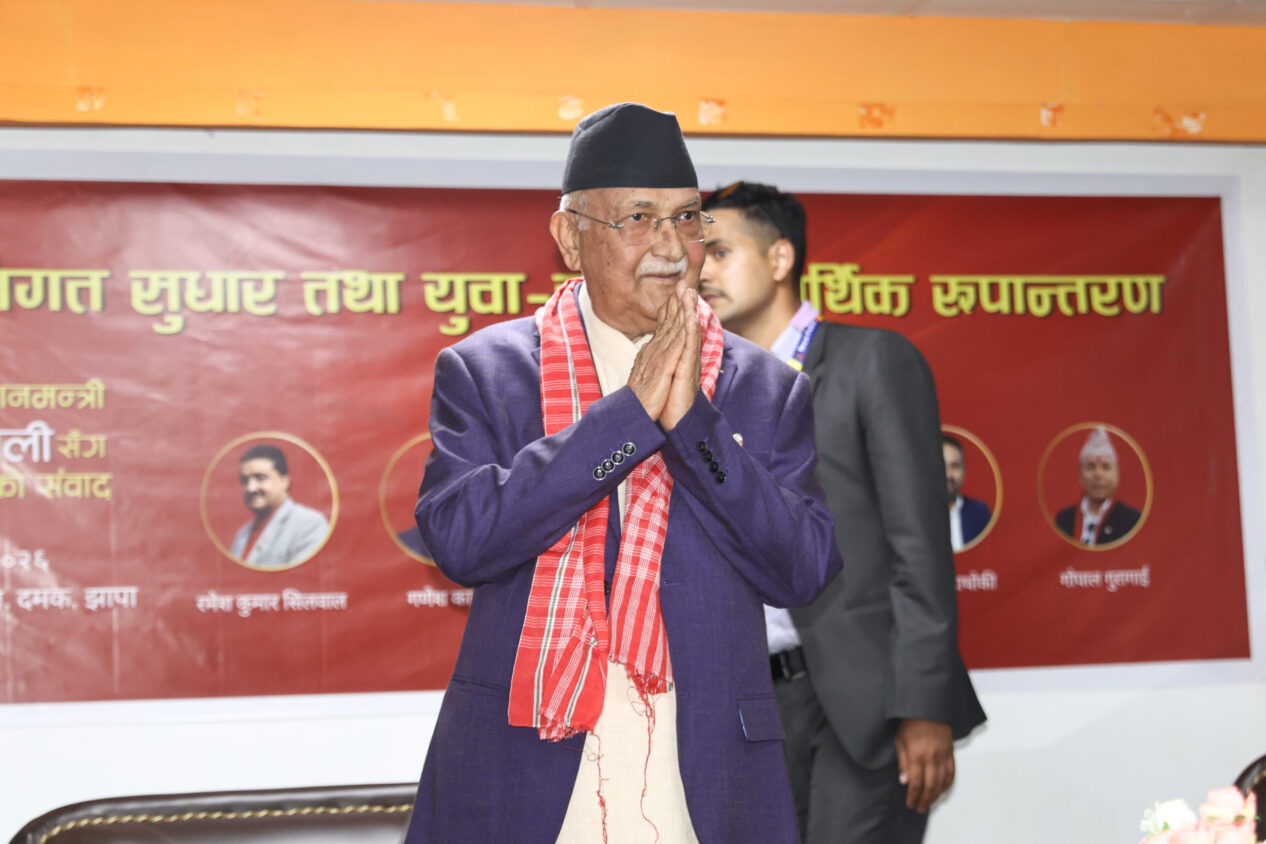
Chairman of CPN (UML), KP Sharma Oli. Photo courtesy: Nepal Photo Library
“The entire party needs a comprehensive review,” Pandey said. “This is not a moment for small reforms. The party needs a major operation. The central leadership must lead this process. Meetings may be held and decisions taken. But if the leadership fails to act, the situation may arise where those at the grassroots will have to take steps themselves.”
A similar episode occurred after the 2008 Constituent Assembly election, when Madhav Kumar Nepal, then the party’s general secretary, resigned from his post, taking moral responsibility for the party’s defeat.
At that time, the party did not have the multi-position leadership structure it has today. The general secretary was effectively the supreme authority within the party.
This time’s results have revived memories of that resignation, as the current outcome is widely seen as the worst electoral result in the party’s history.
According to Pandey, the election has demonstrated that voters no longer trust the party’s leadership.
“The entire leadership of the party has been defeated,” he said. “The people did not trust the leadership. The leadership must take moral responsibility. According to the principle of People’s Multi Party Democracy, a leader is someone trusted by the people and endorsed by party workers. The election results did not reflect that.”
Pandey had previously stated that Oli should step down as chairman if he lost in Jhapa-5. He is known as one of Oli’s prominent critics within the party.
A similar episode occurred after the 2008 Constituent Assembly election, when Madhav Kumar Nepal, then the party’s general secretary, resigned from his post, taking moral responsibility for the party’s defeat.
According to results available as of Monday morning, the CPN (UML) appears weak in both the direct and proportional representation systems.
The party fielded candidates in 164 direct seats for the House of Representatives but has won only eight seats so far and is leading in one additional constituency.
In the proportional representation vote, 8,173,898 ballots had been counted by 9:30 AM Monday. The CPN (UML) stood in third place with 1,126,301 votes, accounting for 13.77 percent of the counted votes.
The contrast with previous elections is stark. In the 2022 election, the party won 44 direct seats and emerged as the largest party in the proportional category, securing roughly 27 percent of the vote.
Earlier, in the 2017 House of Representatives election, the party had become the largest force in parliament with 121 seats under Oli’s leadership.
Ahead of that election, the CPN (UML) formed an electoral alliance with the CPN (Maoist Centre) at Oli’s initiative. The two parties later merged to form the Nepal Communist Party (NCP).
Following that merger and the 2017 election victory, Oli became the powerful prime minister of the then-ruling NCP.
However, the unity between the UML and Maoists eventually collapsed. Critics say Oli’s leadership style and controversial decisions contributed to the breakdown, and he ultimately failed to sustain either the government or the party unity.
In the proportional representation vote, 8,173,898 ballots had been counted by 9:30 AM Monday. The CPN (UML) stood in third place with 1,126,301 votes, accounting for 13.77 percent of the counted votes.
Amid internal party pressure, Oli dissolved parliament twice, but on both occasions the Supreme Court overturned the decisions, declaring them unconstitutional.
Despite the controversy surrounding those events, the CPN (UML) contested the 2022 general election under Oli’s leadership.
In that election, the party faced a five-party alliance consisting of the Nepali Congress, CPN (Maoist Centre), CPN (Unified Socialist), and others. While the alliance fought the election together, the CPN (UML) contested largely on its own.
Even so, the party managed to emerge as the second-largest force in parliament.
After KP Sharma Oli, who had most recently become prime minister with the support of the Nepali Congress, imposed a ban on social media, a Gen Z protest erupted against the decision on September 8, 2025. The government led by Oli suppressed the young demonstrators who had taken to the streets.
Since the events of that day, the country’s entire political landscape has shifted.
Former CPN (UML) Vice Chairman Surendra Pandey says the party should have reviewed its leadership immediately after the incidents of September 8 and 9, 2025. Because that did not happen, he argues that a serious reassessment of the leadership is now unavoidable.
“We should have reviewed that leadership right after September 8 and 9, 2025,” Pandey said. “When the leadership did not take moral responsibility for those events, questions began to be raised against us. That is what ultimately affected this election.”
Oli was prime minister when young protesters were killed during the Gen Z demonstrations on September 8, 2025. In response, protests escalated the following day, September 9, with incidents of vandalism and arson reported in several places.
After KP Sharma Oli, who had most recently become prime minister with the support of the Nepali Congress, imposed a ban on social media, a Gen Z protest erupted against the decision on September 8, 2025.
Oli resigned on September 9, 2025, and was later flown to a secure location by the army in a helicopter. At that time, voices within the party also began demanding that he step down from the leadership of the CPN (UML).
Despite these criticisms, the CPN (UML) General Convention held on December 13, 2025, elected Oli as the party’s chairman for a third term.
To make this possible, the party had earlier amended its statutes during the second Statute Convention held in Godawari, Lalitpur, from September 5 to 7, 2025, effectively overturning provisions in the party constitution.
Political analyst Jhalak Subedi argues that Oli, who ran the party largely according to his own preferences, must now accept responsibility for the current situation.
“After reaching the top leadership, Oli ran the party according to his own will and vision,” Subedi said. “He may have listened to others, but ultimately he made decisions based on what he personally preferred. He did not follow a collective decision-making process. A culture developed in which opportunities within the party depended largely on pleasing Oli.”
According to analysts, this environment also encouraged a tendency within the party not to question Oli’s mistakes, as doing so could limit political opportunities.
Oli, who was the head of government during the Gen Z protests, was again elected party chairman through the 11th General Convention of the CPN (UML). That victory further consolidated his dominance within the party.
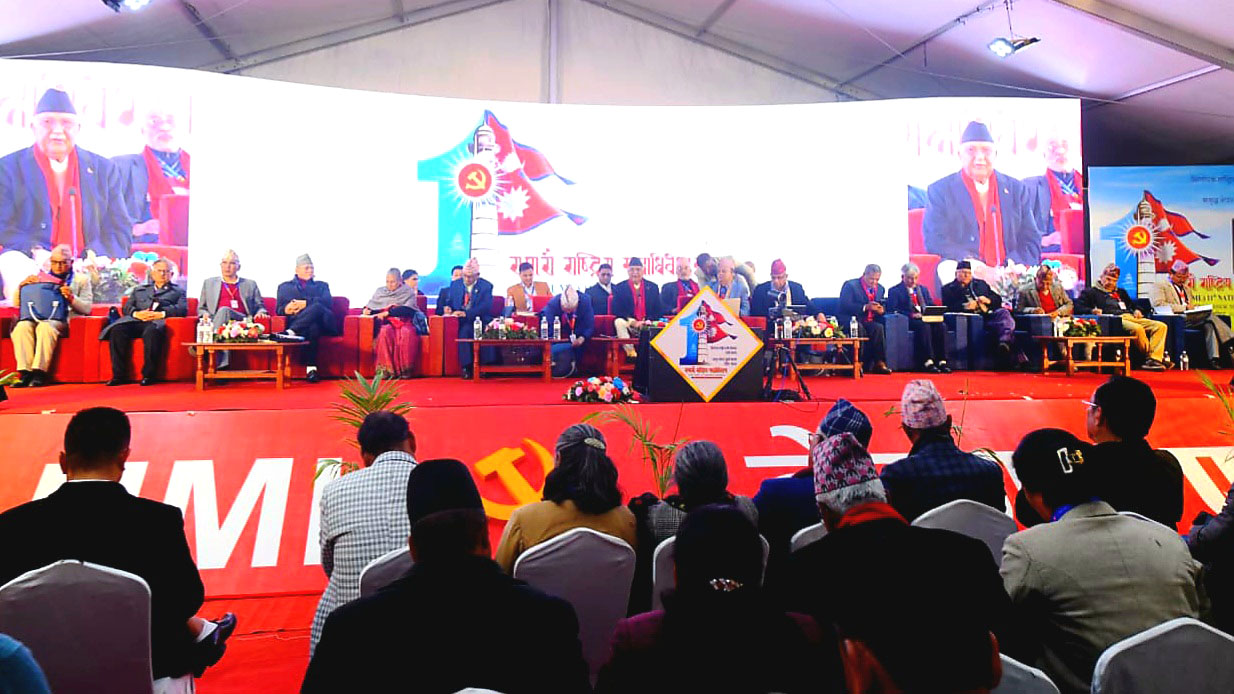
11th General Convention of the CPN (UML)
As a result, the CPN (UML) decided to present Oli as its prime ministerial candidate in the March 5 election.
During the campaign, the party largely ignored the killing of youths during the suppression of protests on September 8, 2025. Instead, it focused on the arson and violence of September 9 as its primary political issue.
This strategy, however, pushed the party onto the defensive throughout the campaign.
Unlike previous elections, the CPN (UML) did not organize large mass rallies this time. In earlier campaigns, candidates would often campaign using Chairman Oli’s photograph, presenting themselves as closely aligned with his leadership.
During the latest election campaign, however, Oli largely concentrated on his own constituency of Jhapa 5.
Even that focus could not prevent a decisive defeat. In the 2022 election, Oli had won the seat with 52,319 votes, the highest margin in the constituency’s history. This time, however, he lost by a large margin.
Nor was the setback limited to his own defeat. Across Jhapa district, the CPN (UML) failed to win any of the five parliamentary constituencies.
Historically, the Jhapa rebellion is regarded as the foundation of the party’s political movement, and Oli himself was one of the leaders associated with that uprising. Yet 54 years after the Jhapa rebellion, critics say the party now faces an existential crisis under his leadership.
The losses were not confined to Jhapa. In Rupandehi 2, a constituency the CPN (UML) had held continuously since 2008, party Vice Chairman Bishnu Prasad Paudel was also defeated.
Paudel lost to 28-year-old Rashtriya Swatantra Party candidate Sulabh Kharel by 43,689 votes.
During the vote counting, Paudel attributed the party’s poor showing to personal factors. However, after his defeat in the House of Representatives election, he stated that the party must undertake major reforms.
In a Facebook post on March 7, Paudel wrote that he would take the initiative to reorganize the party’s policies, leadership, organizational structure, and working style in line with public expectations.
“I express my commitment to seriously review the mistakes and weaknesses committed on our part in the past,” Paudel wrote. “We must transform ourselves according to public expectations and take the initiative to reorganize the policies, leadership, organization, and working style of the CPN (UML) accordingly. I will remain unwaveringly dedicated to serving the people and the nation.”
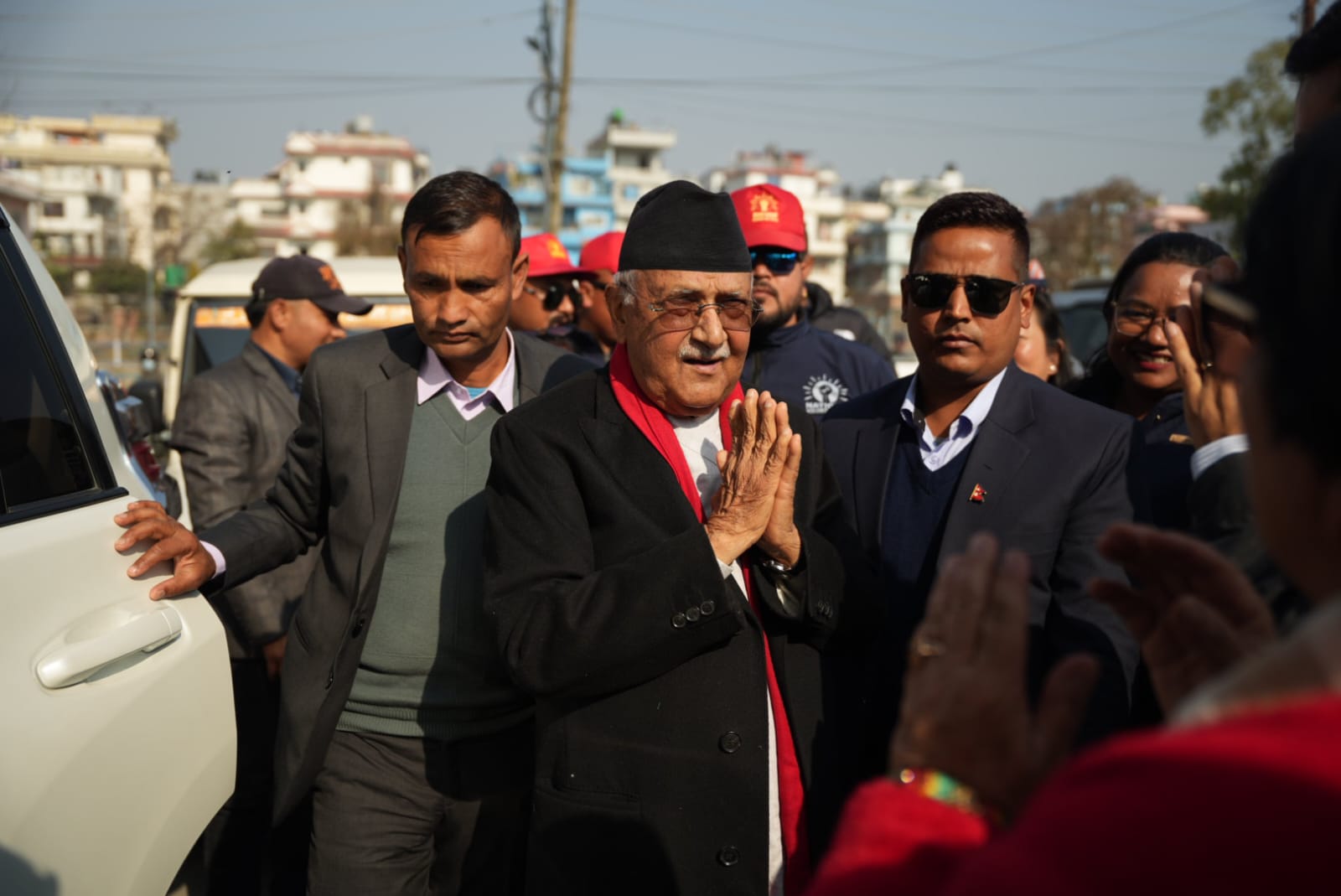
KP Sharma Oli. Photo courtesy: Nepal Photo Library
Paudel had earlier played an active role in ensuring Oli’s election as party chairman for a third term during the 11th General Convention held last December.
Grassroots unrest
Following the election results, calls for leadership change within the CPN (UML) have not been limited to the party’s top leadership. The demand has also intensified at the grassroots level.
Shridhar Pokharel, chairman of the CPN (UML) Makwanpur District Committee, announced his resignation on Sunday morning through a lengthy post on social media. In the same message, he also urged the party leadership to step down, arguing that they should respect the public mandate and take moral responsibility for the party’s poor electoral performance.
In his Facebook post, Pokharel wrote that the crisis cannot be resolved without identifying the real causes of the defeat.
“A solution to the problem cannot be found through jealousy and arrogance, expressed only in vague language without identifying the real reasons behind this result,” he wrote.
Pokharel also raised questions about the leadership of Party Chairman KP Sharma Oli and General Secretary Shankar Pokharel.
“To move the party in the right direction, everyone from the Party Chairman to the General Secretary must accept their responsibility, engage in self-reflection, and, if necessary, resign to create space for the party’s reorganization,” he said.
Pokharel is not alone in making such demands. Former student leader Prakash Paudel has also called on the leadership to resign, urging them to accept moral responsibility for the party’s electoral defeat.
In this way, the CPN (UML), which has maintained a significant presence in parliament since 1991, now appears to have reached a fragile turning point in its political history under Oli’s leadership.
Despite the scale of the setback, however, Oli has shown no sign of stepping aside to allow a leadership transition that might give the party new momentum.
Even as the party grapples with one of its most difficult electoral defeats, Oli has yet to issue an official statement on the results.
However, after losing the Jhapa 5 constituency, he posted a brief message on Facebook on March 7, congratulating his rival.
“Balen Babu (a versatile and deeply affectionate term primarily used to refer to young boys or male children), congratulations on your victory,” Oli wrote. “May your five-year term be successful and free from obstacles. Best wishes.”