Kathmandu
Tuesday, July 28, 2026





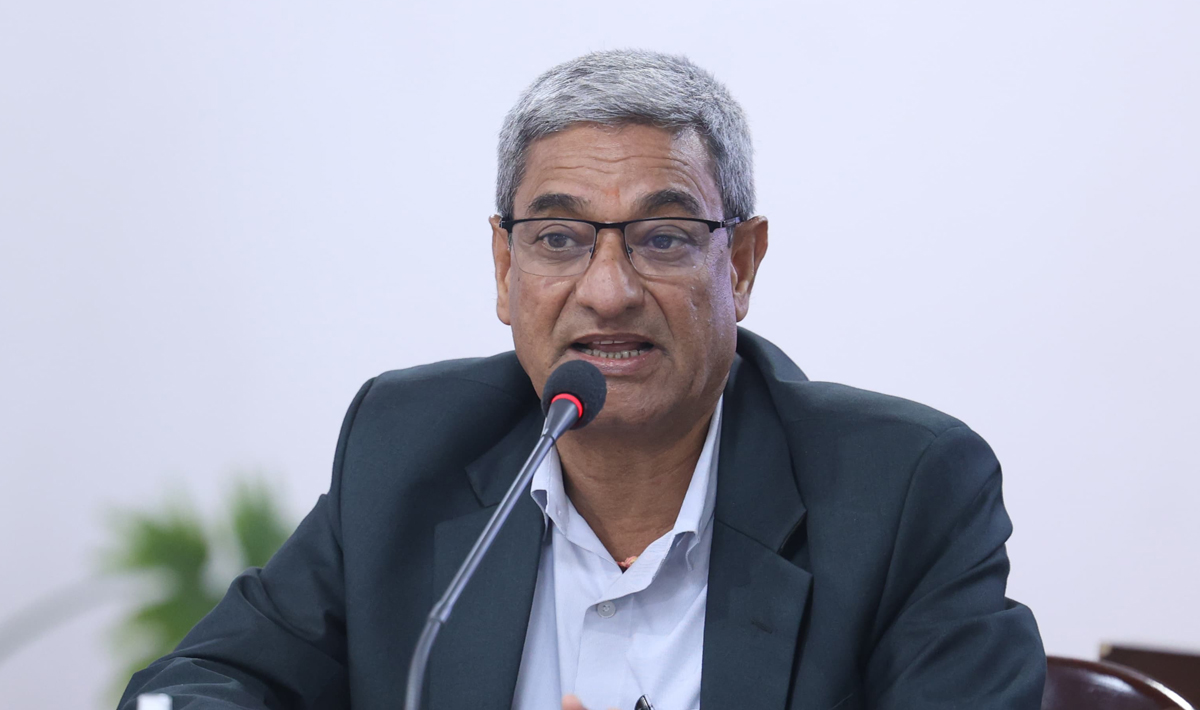
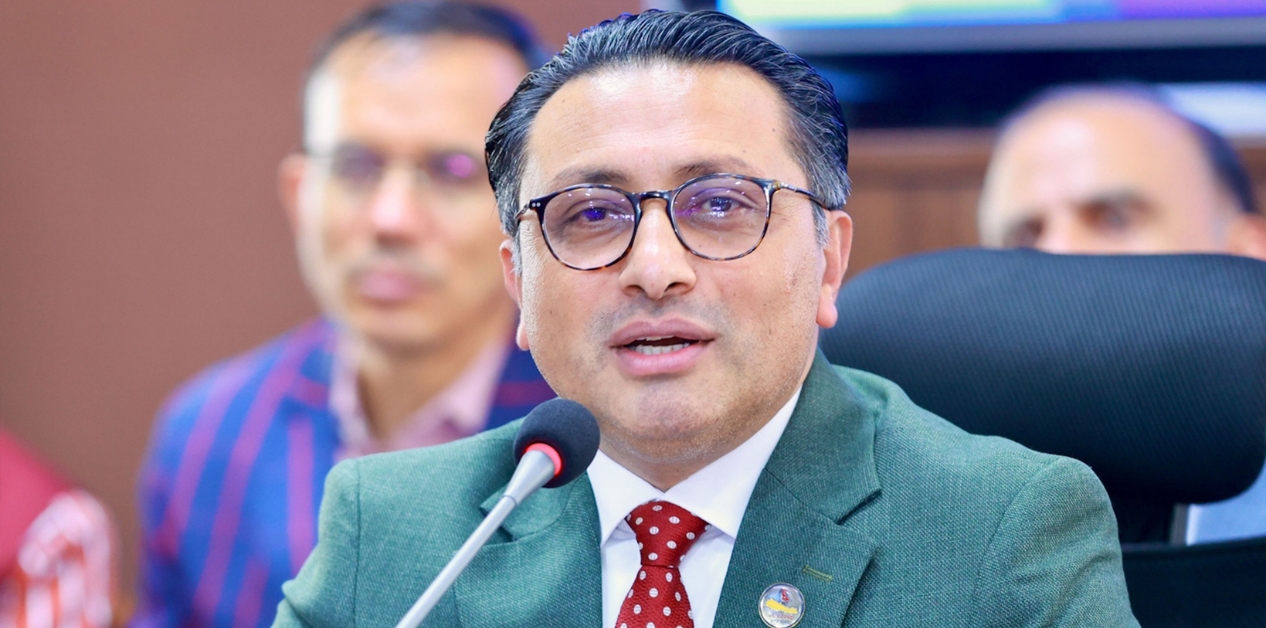
KATHMANDU: Former Home Minister Ramesh Lekhak has denied issuing any directive to police to open fire during the Gen-Z protests of September 8–9, 2025, stating that law enforcement agencies acted independently based on ground conditions.
According to the report of the high-level inquiry commission led by former high court judge Gauri Bahadur Karki, Lekhak maintained that the use of force by police does not require prior approval from the Home Minister.
“The legal framework and practical practice do not require the Inspector General of Police to take written or verbal orders from the Home Minister for the use of force. I have made this clear in my statement,” the report quotes him as saying.
Lekhak stated that once reports of casualties from police gunfire emerged, he immediately instructed officials and security agencies to prioritize rescue operations and ensure the safety of civilians.
“Upon receiving news of casualties, we held immediate discussions with Home Ministry officials and security agencies to arrange protection of life and facilitate medical treatment for the injured,” his statement reads.
At the same time, Lekhak acknowledged significant shortcomings within the state’s security and response mechanisms during the protests. He admitted failures in intelligence gathering, weak communication with youth, and inadequate preparedness.
“I have reflected on the shortcomings in the state’s security system, lack of information collection and analysis, weak communication with the youth, and inadequate preparedness,” he said.
Here is the english translation of Lekhak statement:
On Bhadra 23 and 24 (September 8 and 9, 2025), regarding the uneasy security situation observed in various parts of the country, particularly within the Kathmandu Valley, I was under a constitutional and legal obligation as the Home Minister to maintain overall peace and security. Even before the events began, I had received information through security agencies regarding increasing dissatisfaction and public anger brewing via social media and other platforms. Based on this, the Ministry of Home Affairs was continuously monitoring the situation in coordination with the Nepal Police, Armed Police Force, and the National Investigation Department. I wish to clarify that I did not issue direct orders in the field; rather, I fulfilled my responsibility by providing policy directives, coordination, and necessary facilitation at the political level.
The Government of Nepal’s Business Allocation Rules have assigned the Ministry of Home Affairs the tasks of internal security, law and order policy, standards, legislation, plan implementation, and regulation.
These functions are executed through the agencies under the Ministry in accordance with relevant laws. Reporting and directives between the administrative wing of the Ministry and the police administration also followed thematic laws, though direct contact was occasionally established as required.
Since no proposal regarding social media decisions had been tabled by the Ministry of Home Affairs to the Council of Ministers, a separate process for seeking opinions and suggestions from security agencies on this matter had been initiated. On the evening of Bhadra 22 [September 7], a meeting of the National Security Council was held at Baluwatar.
During this meeting, information was provided by all security agencies, including the National Investigation Department and Nepal Police, stating that Gen-Z youth would be protesting peacefully on Bhadra 23; no concrete information regarding potential violence was received. In my capacity as Home Minister, I had directed the Home Secretary and the heads of security agencies regarding the Bhadra 23 protests to ensure that the use of force did not lead to casualties or deaths. I instructed them to manage peace and security effectively through coordination and to remain vigilant against potential infiltration and the risks of a leaderless protest, as it was not organized by any specific political group.
On Bhadra 23 [September 8], while clashes were occurring between protesters and the police both inside and outside the Federal Parliament premises, it was my firm stance that the Federal Parliament building must be kept secure at any cost. However, I did not issue any order to use ultimate force—that is, to open fire. The use of force is a matter decided by the officers deployed on the ground based on the situational circumstances, and there is no practice of the Home Minister giving direct orders in such matters. I have clarified in my statement that because there is no legal provision or practical tradition for the Inspector General of Police (IGP) to seek written or verbal orders from the Home Minister for the use of ultimate force, no such action was taken.
As soon as I received information that the protests toward Baneshwor were becoming aggressive and violent, I informed the Right Honorable Prime Minister, the Honorable Defense Minister, and the Chief of the Army Staff of the Nepal Army. Upon receiving news that firing had occurred and individuals had been killed or injured, I immediately held discussions with officials from the Ministry of Home Affairs and security agencies to arrange for the protection of citizens’ lives and property and to prevent further casualties. I also issued directives to the administration to facilitate medical treatment for the injured.
Deeply saddened and pained by the tragic and unimaginable events of Bhadra 23, I immediately resigned from the post of Home Minister, taking moral responsibility. I have publicly stated that the demands raised by the Gen-Z generation on Bhadra 23 were fundamentally correct. However, it is my assessment that the tragic incidents resulting from infiltration into those pure intentions, and the attacks on the state’s historical and invaluable infrastructure, cannot be dismissed merely as the result of impulsive anger. I observed that the statements from Gen-Z leaders-saying, “Our movement has been successful, but it is being hijacked and made violent; friends, please return to your homes”—confirmed the fact that infiltration had occurred in the protests.
I am firm in my belief that the events of Bhadra 24 must be viewed separately from the youths’ demands, and anyone involved in criminal activities must be prosecuted according to the law. My private residences in Naikap, Kathmandu, and Mahendranagar, Kanchanpur, were entered by protesters, where vandalism, arson, and looting took place.
The new police bills regarding the Nepal Police and the Armed Police Force had been registered in Parliament and were under discussion in the State Affairs Committee. I have accepted, with self-criticism, aspects such as the weaknesses seen in the state’s security system, the lack of information collection and analysis, the weak dialogue between the state and the youth generation, and the insufficiency of prior preparation. To ensure long-term peace and security, there must be legal reforms, capacity building of security agencies, human-rights-friendly crowd management, inter-agency coordination, use of technology, and clear political-administrative accountability.