Kathmandu
Saturday, June 27, 2026






KATHMANDU: The American authorities are investigating an alleged multinational scheme that may have funneled billions of dollars’ worth of restricted Nvidia artificial intelligence (AI) chips into China through Thailand, intensifying scrutiny over how Beijing continues accessing advanced American AI technology despite export bans.
The investigation, first detailed by Bloomberg and later confirmed by Reuters, centers on Bangkok-based OBON Corp, a company linked to Thailand’s national AI ambitions, which prosecutors suspect helped route ‘Super Micro Computer’ servers containing advanced Nvidia processors into China. Chinese technology giant Alibaba Group was identified as one of several alleged end customers, though the company has strongly denied involvement.
According to United States court filings and reporting from international media outlets, the servers were allegedly shipped from the United States to Taiwan and Southeast Asia before being repackaged into unmarked boxes and smuggled into China in violation of United States export-control laws. Prosecutors claim the operation moved at least USD 2.5 billion worth of AI infrastructure, including more than USD 500 million in shipments during a six-week period in 2025.
The case stems from charges filed in March this year by the United States Department of Justice against Super Micro co-founder Yih-Shyan Liaw, sales manager Ruei-Tsang Chang, and contractor Ting-Wei Sun. Prosecutors accused the trio of orchestrating a network designed to bypass American semiconductor restrictions imposed on China in 2022.
Jensen Huang has increasingly criticized United States export controls in recent weeks, warning they are hurting American influence in artificial intelligence.
The restrictions specifically target Nvidia’s most advanced AI chips, including systems such as the H100 and H200, which are considered crucial for training large AI models, military computing, and hyperscale cloud infrastructure. Washington has argued that unrestricted Chinese access to such processors could strengthen Beijing’s military and strategic capabilities.
Nvidia said it expects all partners and distributors to comply with United States export laws. In a public statement carried by, the company said it would continue cooperating with governments to enforce regulations.
Nvidia Chief Executive Officer Jensen Huang has not publicly commented directly on the Thailand allegations, but he has increasingly criticized United States export controls in recent weeks, warning they are hurting American influence in artificial intelligence.
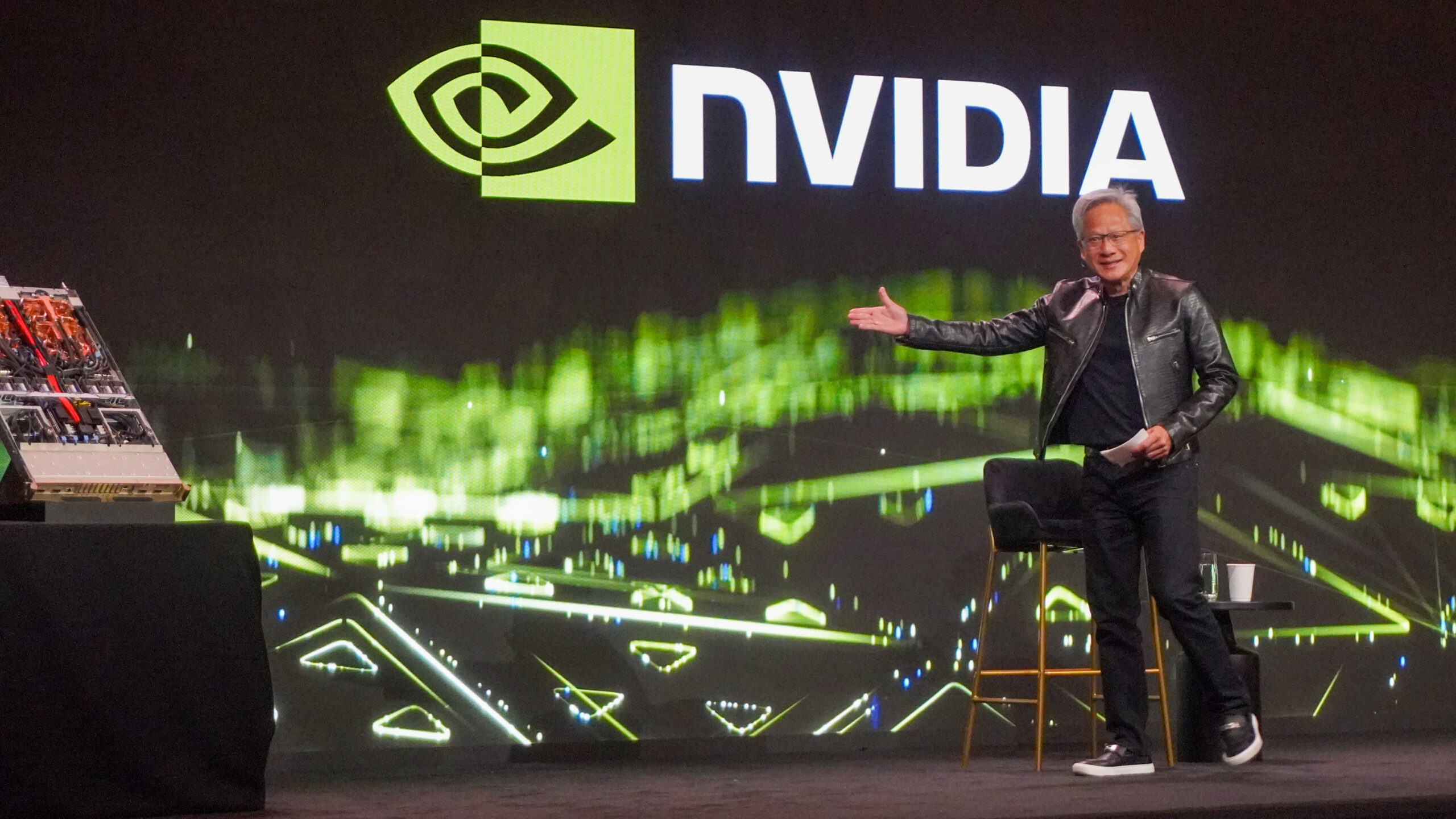
Jensen Huang. Photo courtesy: NVIDIA Newsroom
Speaking in multiple interviews and public events this month, Huang publicly said Nvidia’s China market share had fallen to “zero percent” because of restrictions and argued the policy had “largely backfired.”
Huang has repeatedly warned that forcing China away from American technology could accelerate Beijing’s domestic semiconductor industry and split the global AI ecosystem into rival blocs. In comments highlighted by several technology publications, he urged the United States to “export AI like crazy” rather than surrendering the Chinese market to competitors such as Huawei and Cambricon.
Those remarks have already triggered political backlash in Washington. In March this year two United States senators have asked Commerce Secretary Howard Lutnick to investigate whether Huang’s statements about chip diversion may have influenced government decisions on Nvidia export licenses to China.
Nvidia’s China market share had fallen to ‘zero percent’ because of restrictions and argued the policy had ‘largely backfired.’
Senior American lawmakers have meanwhile called for tighter monitoring of AI hardware shipments. House Select Committee on China Chair John Moolenaar previously argued that Beijing would “do whatever it must to catch up” with United States AI capabilities and backed legislation requiring stronger chip-tracking mechanisms.
The allegations have also increased pressure on Southeast Asian countries, especially Thailand, which has emerged as a growing AI and semiconductor logistics hub. Thai media reports identified OBON Corp as a company associated with Thailand’s ‘Siam AI Cloud’ initiative, which had publicly promoted Nvidia-powered infrastructure projects for domestic AI development.
Thai government officials have so far avoided detailed public comment. Every Thai government official declined to address anything related to this matter.
Alibaba denied all allegations tied to the probe. The company has publicly stated that it has no business relationship with Super Micro, OBON, or the brokers named in the United States indictment and said prohibited Nvidia chips “have never been used” in its data centers.
Beijing has consistently condemned United States semiconductor restrictions as an attempt to ‘weaponize’ technology and suppress China’s technological rise.
China’s Foreign Ministry has not yet issued a detailed response specifically addressing the Thailand allegations.
However, Beijing has consistently condemned United States semiconductor restrictions as an attempt to ‘weaponize’ technology and suppress China’s technological rise.
Chinese officials have repeatedly argued that Washington is politicizing trade and disrupting global supply chains through unilateral export controls.
Analysts say the investigation underscores the growing difficulty of enforcing AI chip restrictions as companies increasingly use third countries, shell firms, and cloud infrastructure to circumvent controls. Research papers and policy analysts have warned for months that Southeast Asia has become a key transshipment corridor for advanced computing hardware headed toward China.