Kathmandu
Sunday, July 12, 2026






I am in a bed at Sanjeevani Medical College in Nepalgunj. Today marks the 21st day since I sat on a fast-unto-death seeking justice in the Nirmala Kurmi murder case. Due to the haphazard administration of medicines, my body has become extremely weak and is in pain. Since the veins in my hands have shriveled and can no longer be found, saline water has begun to be administered through my feet. Since around 4 AM on Sunday, my heart has started stinging, and my eyes have stopped seeing properly. However, I am continuing my hunger strike against injustice.
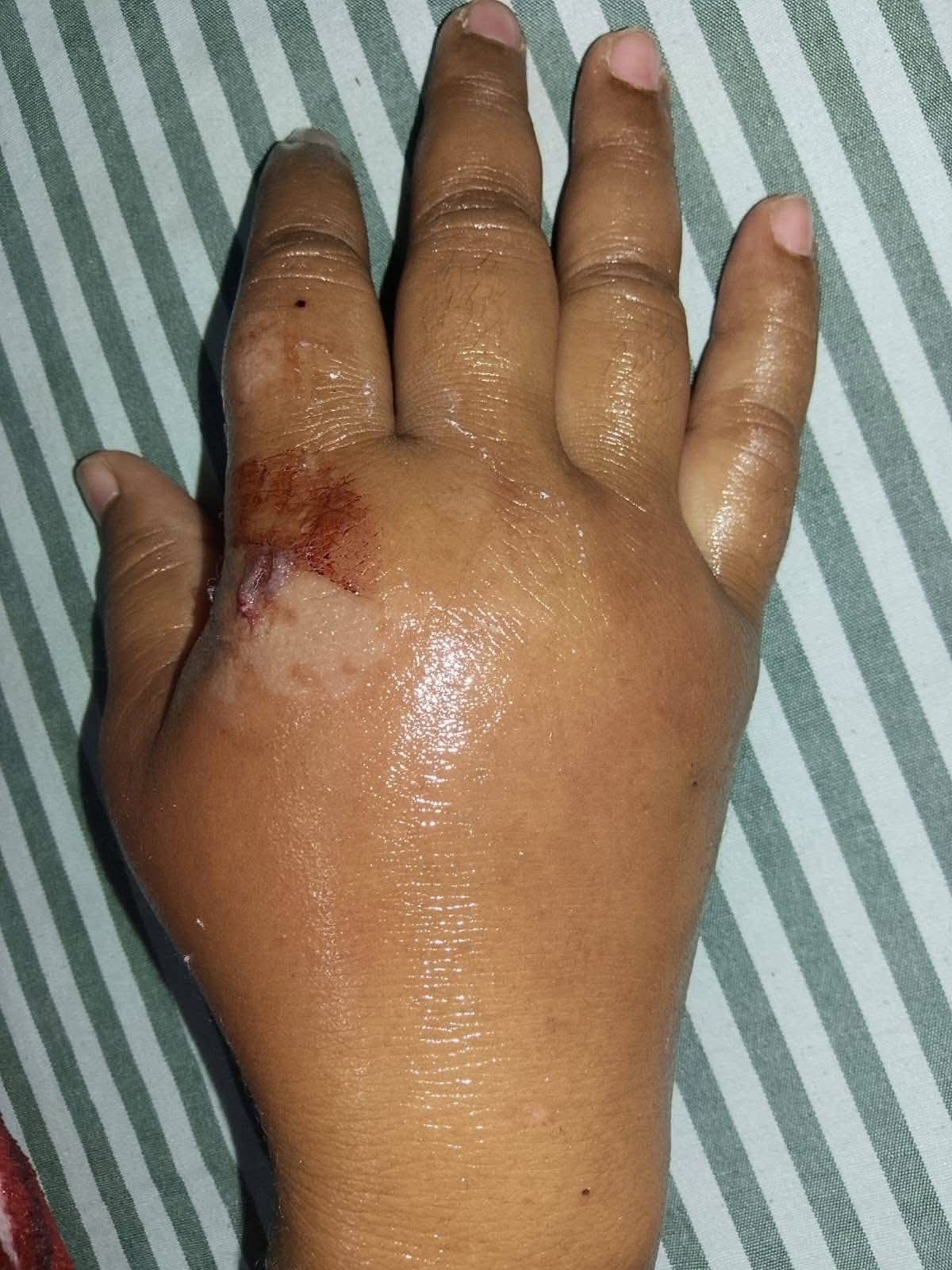
Ruby Khan’s swollen hand.
Nirmala Kurmi, a single woman from Paraspur, Nepalgunj Sub-Metropolitan City-17, Banke, was abducted and murdered in the year 2020. Following the death of her husband, Mahalu Kurmi, in 2005, various conspiracies were hatched to seize their 28,445 square meters of land. Her sons, Ram Sagar and Suresh, died mysterious deaths within a gap of 10 days in 2009. Following that, she herself was murdered. All these details were made public after the police investigation. However, the police and the Government Attorney’s Office have been procrastinating in taking the case to court and dispensing justice after the investigation. Since a heinous crime like murder has been ignored, we rights activists have been in a continuous peaceful protest.
The movement we started since October 2021 was initially centered in Nepalgunj. But when there was no hearing, we reached Kathmandu on foot. During various phases of street protests, the government has signed agreements with us five times. Most recently, when an agreement was reached with the representatives of the Ministry of Home Affairs on August 9, 2024, assurances were given for an immediate investigation and dispensation of justice. However, the intention to take the case to court was still not seen. After our continuous pursuit, the government assured us that the case would be taken to court immediately after the House of Representatives elections on March 5, 2026; that too remained limited only to words. Therefore, to create pressure, I sat on a fast-unto-death.
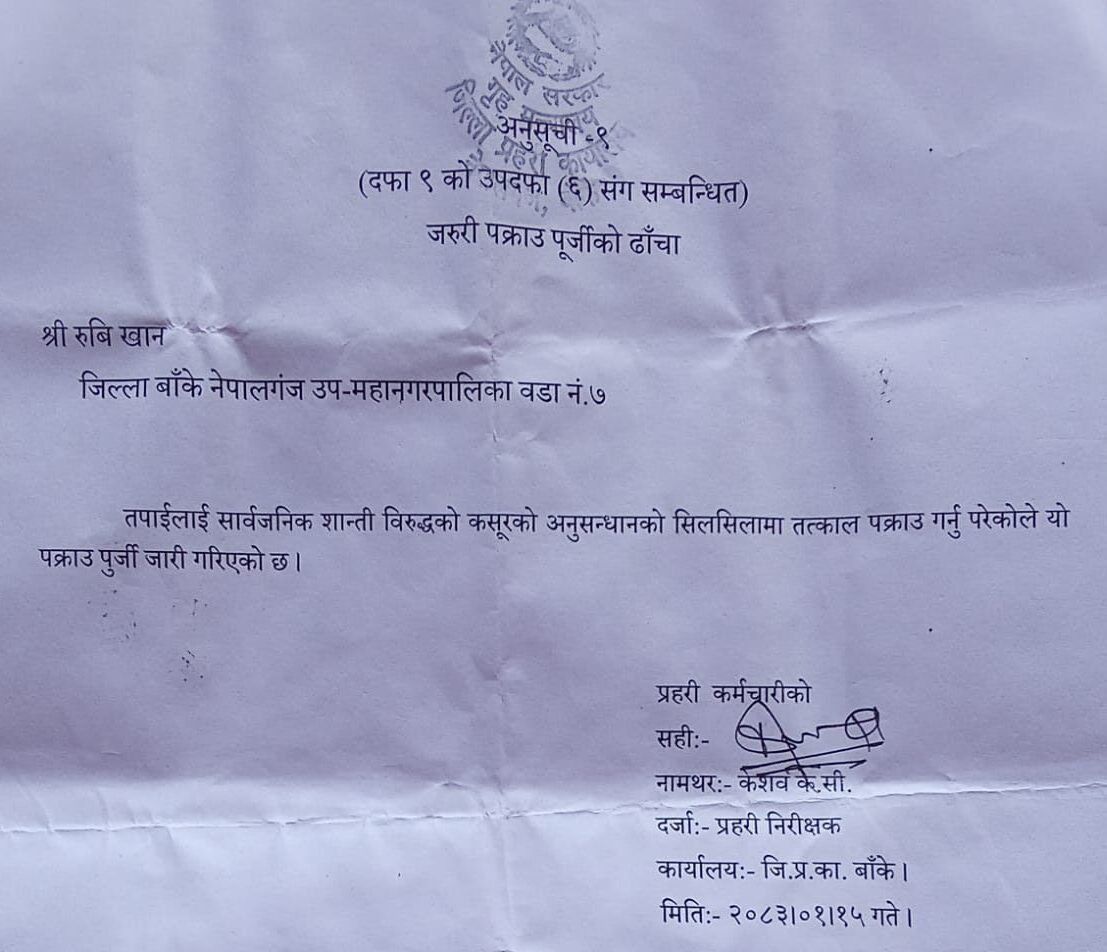
From April 25, we had started a peaceful sit-in on the premises of the District Administration Office, Banke. Around five o’clock in the evening on the third day, armed police came and dragged us away to the police office. Initially, we were all kept in the same room. After learning that we were being kept in detention, I requested them to lock up only me, since I was the leader of the movement. About an hour later, the police released the other five companions after making them sign a paper promising not to return to the sit-in. As for me, I was given an ’emergency arrest warrant’ right at the police office for investigation into an offense against public peace. Such a warrant is issued only in situations where the accused might flee immediately or destroy evidence. But how we, who were sitting in a peaceful dharna, disrupted the peace and why an offense against public peace was levied, I have not been able to understand.
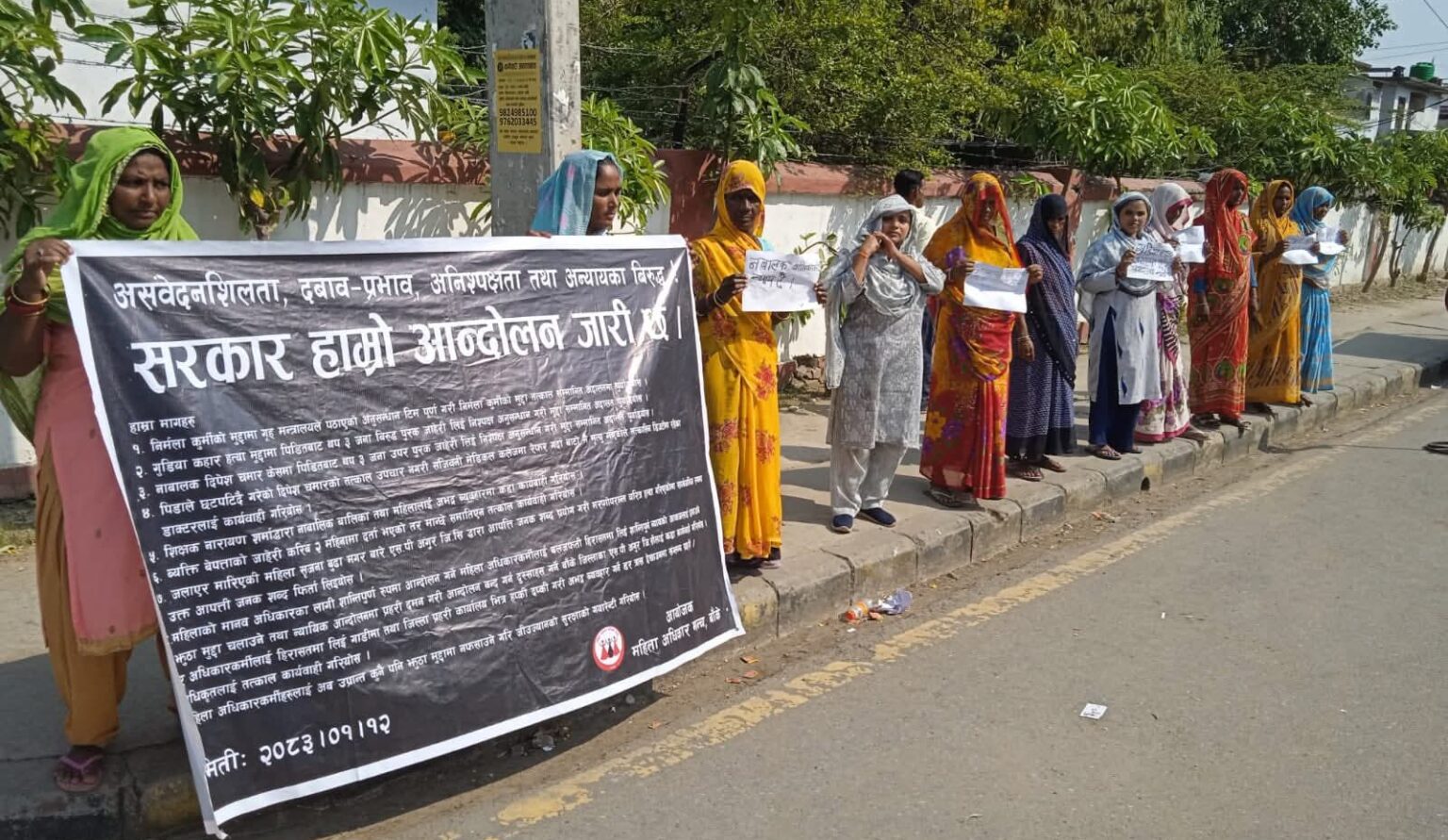
After being placed in detention, I started a fast-unto-death from April 28. From 8 AM the next morning, complications arose in my health. After that, I was taken to Bheri Hospital, and the doctors administered ‘saline’. But it became even more difficult for me. I am a person who sat on a hunger strike for 18 days at Bir Hospital in Kathmandu, and it had not been that difficult when saline was administered there. Therefore, when I requested the details of the medicine in the saline, it was not provided. Because of that, I refused to stay at Bheri Hospital. After that, remaining under police custody, I am at Sanjeevani Medical College and have continued the hunger strike.
I feel that such distress is being inflicted to prevent the movement from happening. We suspect this has been done because ‘high-profile’ individuals themselves are connected to this case. The intention seems to be that if they can catch Ruby Khan and slap a false case on her, the movement can be suppressed. But can a movement ever be stopped by pressure! After the government ignored the movement for 14 days, I called the spokesperson of the Ministry of Home Affairs, Ananda Kafle. He said, ‘Action must be taken according to the law, how can it be protests all the time?’ I asked the question, ‘Should rights activists obey the law, while the government does not have to implement the agreement reached five times according to the law?’ I have not received an answer to that to this day.
Not only that, various allegations have been hurled at me to suppress this fight for justice. They are even accusing me of ‘protesting for my own self-interest’.
In a case where a divorce had already taken place, an attempt was made to trap me and make me back down; an attempt at character assassination was made. But I am not tired, I have not lost.
This indefinite fast-unto-death is against the irresponsible attitude of politicizing incidents related to violence against women while procrastinating or delaying the flow of justice.
Our fundamental condition itself is that the demands we raised after the murder case of Nirmala Kurmi must be met.
Additionally, our demand is that the government must not file any false cases against women rights activists and must guarantee the safety of their lives and bodies.Until the demands are met, the movement will continue.
(Based on a conversation)