Kathmandu
Friday, July 3, 2026





More than half of Nepal's households took at least one trip within the country over the past year, while hundreds of thousands travelled abroad mainly for shopping, health treatment and pilgrimage, according to results the National Statistics Office released on Thursday, July 2, 2026.
KATHMANDU: The National Statistics Office (NSO) has published the results of Nepal’s first-ever Domestic Tourism Survey 2024/25, covering how Nepali households travel within the country and abroad, what they spend, and how much this activity contributes to the national economy.
The survey used a two-stage stratified sample of 5,328 households drawn from 444 enumeration areas nationwide, with a one-year reference period running from mid-September 2024 to mid-September 2025.
How much do Nepalis spend on travel and tourism in a year, in total?
The survey found that Nepali households spend a combined Rs 459.05 billion a year on tourism-related activity, covering both trips within Nepal and trips abroad. Of this, domestic overnight trips, meaning trips that involve staying away from home at least one night, account for Rs 304.44 billion, the single largest component.
Domestic same-day trips, where travellers return home the same day, account for a further Rs 90.98 billion. Outbound overnight trips by Nepalis travelling abroad account for Rs 47.97 billion, while outbound same-day trips, largely short crossings into India, account for Rs 15.67 billion.
Domestic travel therefore makes up the great majority of total tourism spending, at roughly Rs 395 billion combined, compared with about Rs 64 billion spent on trips abroad. This is the first time NSO has produced a comprehensive rupee estimate of how much Nepali households themselves spend on travel, as distinct from the more commonly cited figures on what foreign visitors spend while in Nepal.
What share of Nepali households actually travel, and how many do not?
The survey found that 3,621,000 households, or 52.4 percent of Nepal’s 6,910,000 households, took part in at least one tourism activity during the one-year reference period, and NSO has classified these as “tourist households.” The remaining 3,289,000 households, or 47.6 percent, did not take any tourism-related trip during the year.
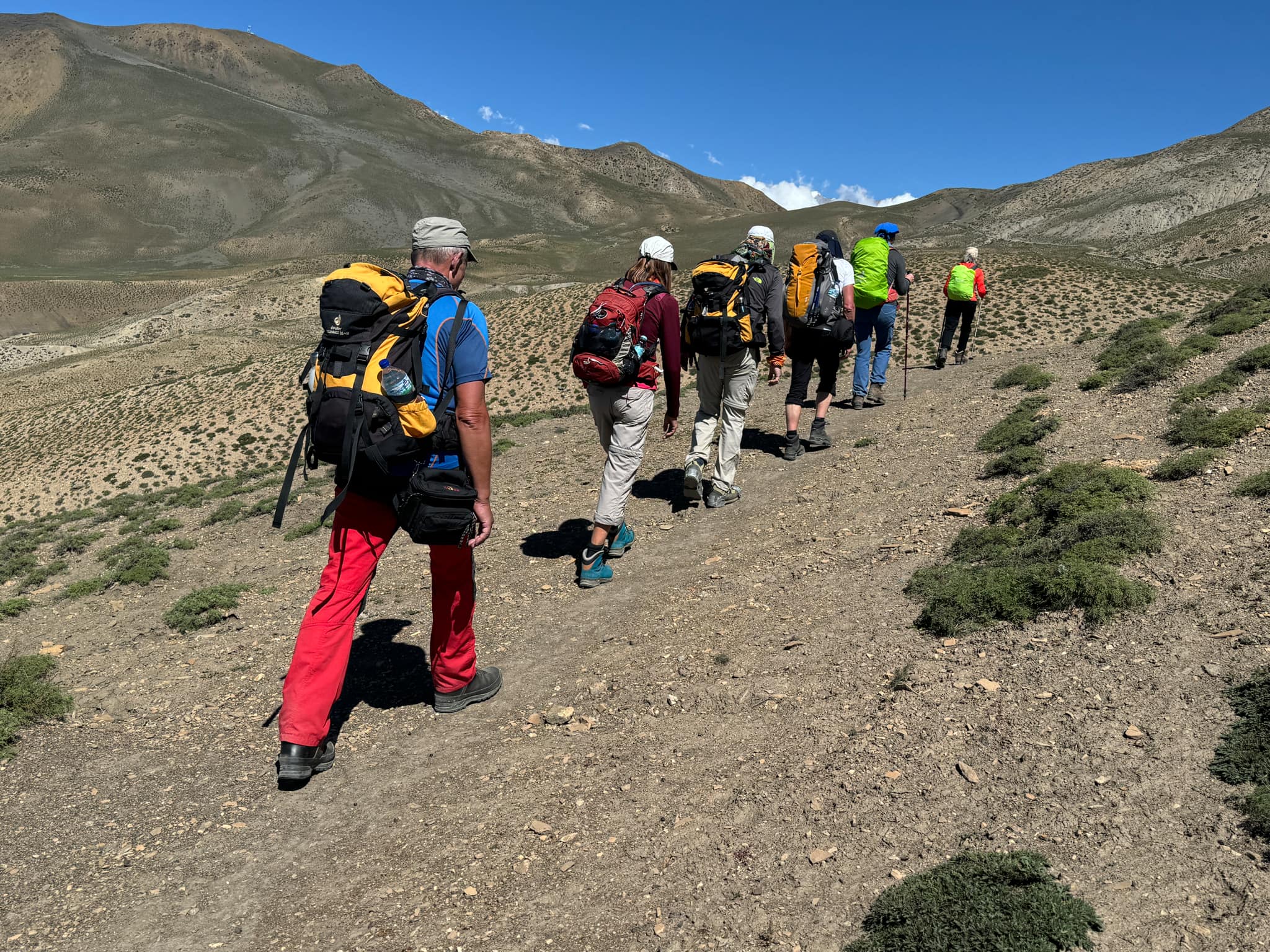
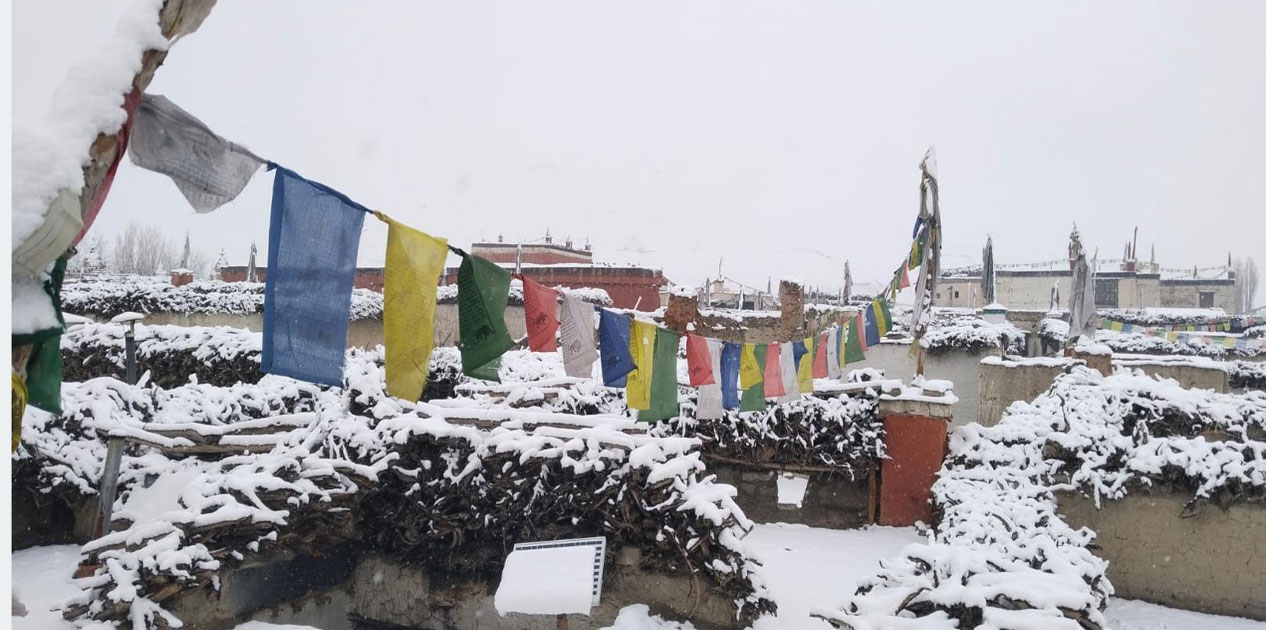
Upper Mustang/ File Photo
Put differently, out of every 1,000 households in Nepal, 523 travelled at least once while 477 did not travel at all. This shows more than half of Nepal’s households are now directly engaged in domestic tourism activity in some form.
The survey separately noted that rural tourist households tend to have a larger average family size than urban tourist households, while the general national average household size, drawn from the same reference data, stood at 3.94 members, with rural households at 4.02 members and urban households at 3.87 members.
Why do most Nepalis travel within the country without staying overnight?
For same-day domestic trips, meaning trips where travellers leave and return home on the same day, shopping is the leading purpose, accounting for 32.6 percent of such trips, the single largest share among all reasons for travel.
Health treatment and visiting friends or relatives follow as the next most common purposes, each accounting for an equal 20.1 percent share of same-day domestic trips.
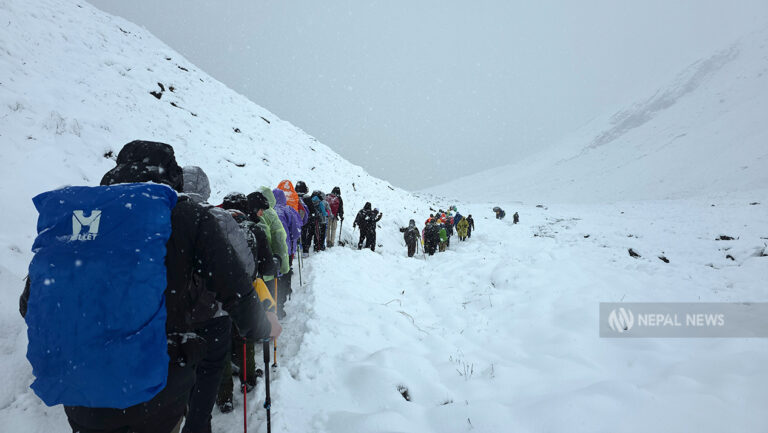
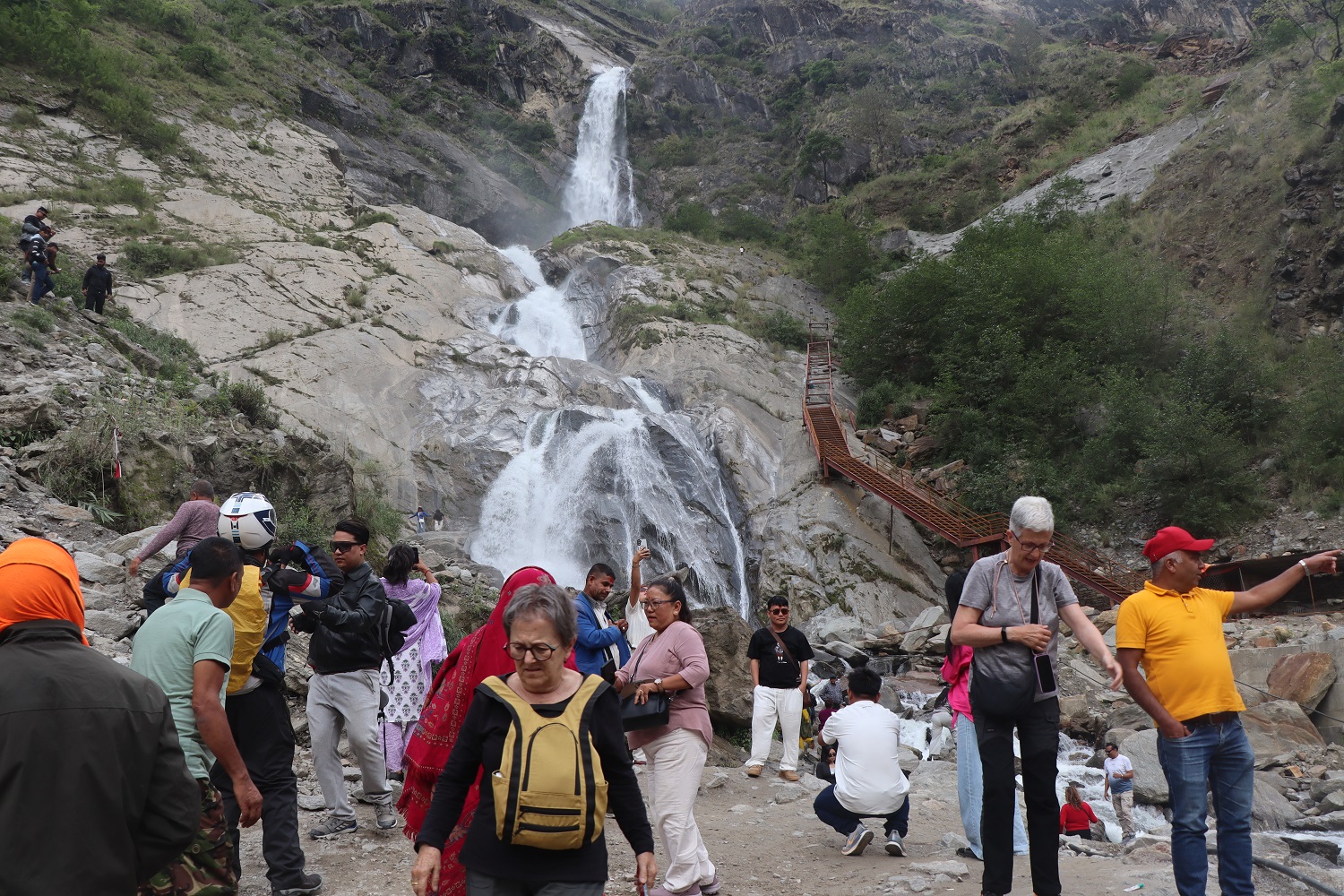
Tourists returning from Annapurna Base Camp
This pattern indicates that a large portion of Nepal’s domestic travel is driven by practical, short-distance needs, running errands, seeking medical care, or visiting nearby family, rather than leisure alone.
The survey also found that public transport is the dominant mode used for domestic tourism generally, reinforcing that most of this travel is undertaken through ordinary bus and vehicle services rather than private or chartered transport, which is consistent with the short, functional nature of same-day trips compared with longer overnight journeys undertaken for leisure or family visits.
What is the main reason Nepalis travel overnight within the country?
For overnight domestic trips, meaning journeys that involve staying away from home for one night or more, visiting friends and relatives is by far the dominant purpose, accounting for 65.5 percent of such trips, according to the survey.
NSO said this indicates that social and family ties remain the primary driving force behind domestic overnight tourism in Nepal. The average overnight domestic trip lasts 5.33 days, and the average tourist undertakes such trips 4.81 times over the course of a year.
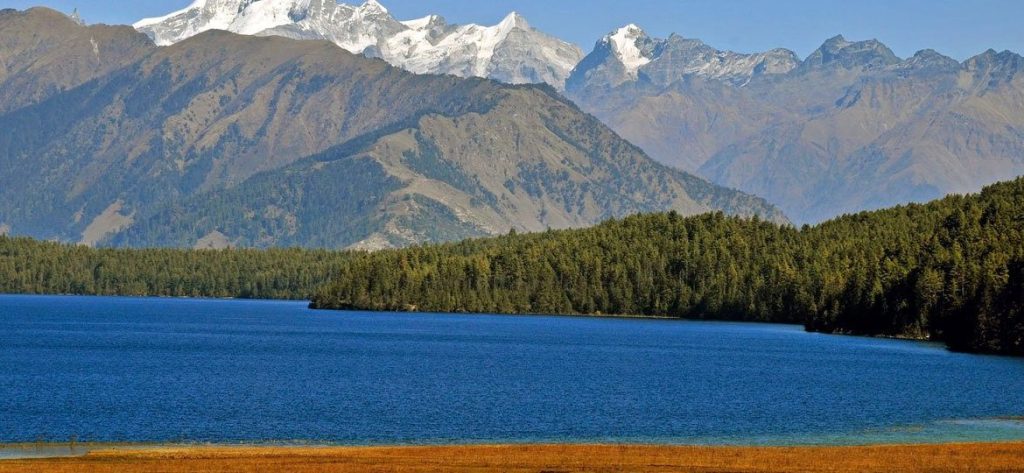
Rara Lake/ File photo
This stands in sharp contrast to same-day trips, which are dominated by shopping and health-related purposes, suggesting that Nepalis reserve longer, overnight travel primarily for reconnecting with family and social networks, while shorter same-day travel is used to meet more immediate practical needs such as errands, medical visits or quick family check-ins closer to home.
Which provinces see the longest stays and the most frequent trips?
Sudurpaschim and Madhesh provinces recorded the longest average overnight stay for domestic trips originating from those provinces, at 8.18 days each, according to the survey.
In terms of how often people travel, Gandaki Province led the country with an average of 6.26 domestic overnight trips per tourist per year, while Sudurpaschim Province recorded the lowest frequency, at just 3.32 trips per year, despite also recording the longest average stay duration.
This combination, where Sudurpaschim residents travel less often but stay away longer when they do, contrasts with Gandaki, where residents travel more frequently but were not reported with the same extended stay duration.
The survey’s provincial breakdown suggests that travel patterns vary meaningfully by region, shaped by factors such as distance to destinations, family and social networks, and the seasonal timing of trips, though the underlying survey text does not explain why these specific provincial differences occur.
How does the purpose of a trip affect how long people stay or how often they travel?
The survey found that trips undertaken for education or training purposes involve the longest average stay of any travel purpose, at 9.16 days, longer than trips for religious pilgrimage or shopping, which tend to be shorter.
In terms of frequency, business-related trips are undertaken most often, with an average of 6.9 trips per year among people who travel for business purposes, while trips for leisure and holiday purposes are undertaken less frequently, at an average of 3.02 times per year.
This pattern indicates that education and training trips, while less frequent, require longer periods away from home, whereas business travel happens repeatedly throughout the year but for shorter individual durations.
Leisure travel, meanwhile, remains comparatively occasional for most Nepali travellers, undertaken only a few times annually, reinforcing the earlier finding that family visits, rather than pure leisure, are the main driver of Nepal’s overnight domestic tourism.
Where do Nepalis most commonly travel to within the country?
According to the survey, the leading destinations for overnight domestic tourism in Nepal are Kathmandu, Pokhara in Kaski district, and Chitwan district. Among these, Kaski district emerges as the single most popular destination specifically for trips undertaken for leisure and holiday purposes, reflecting Pokhara’s established position as Nepal’s leading recreational and lakeside tourism hub.
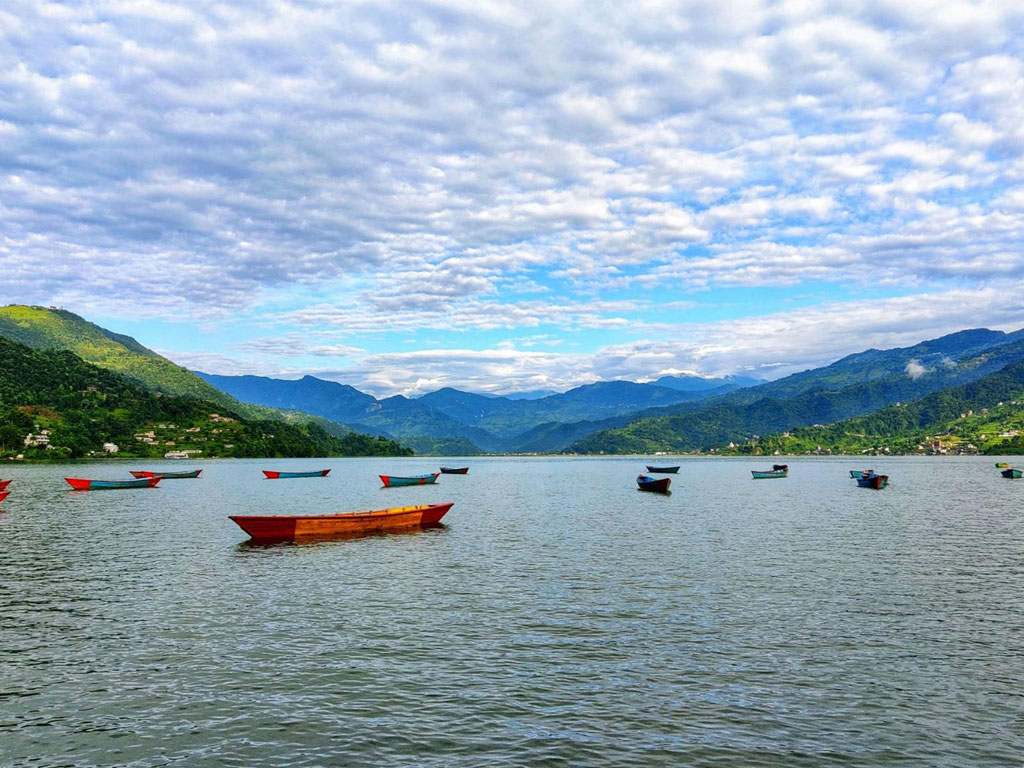
Phewa Lake/ File photo
The concentration of overnight domestic travel around these three destinations suggests that, despite Nepal’s wide geographic and cultural diversity, a relatively small number of well-connected, well-known destinations continue to draw the bulk of domestic overnight travellers, likely aided by better transport connectivity, established tourism infrastructure and accommodation options compared with more remote parts of the country.
The survey does not provide a similarly detailed destination breakdown for same-day domestic trips, which are more likely to involve travel to the nearest urban centre for shopping or health services rather than a specific named tourism destination.
Which age groups travel the most within Nepal?
The survey found that tourist households in Nepal skew notably young. Generation Z, defined in the survey as people aged 13 to 28 years, makes up the largest generational share among tourist household members, at 26.6 percent.
Generation Alpha and Generation Beta combined, covering children aged 0 to 12 years, account for 22.6 percent, while Generation Y, aged 29 to 44 years, accounts for a further 22.0 percent.
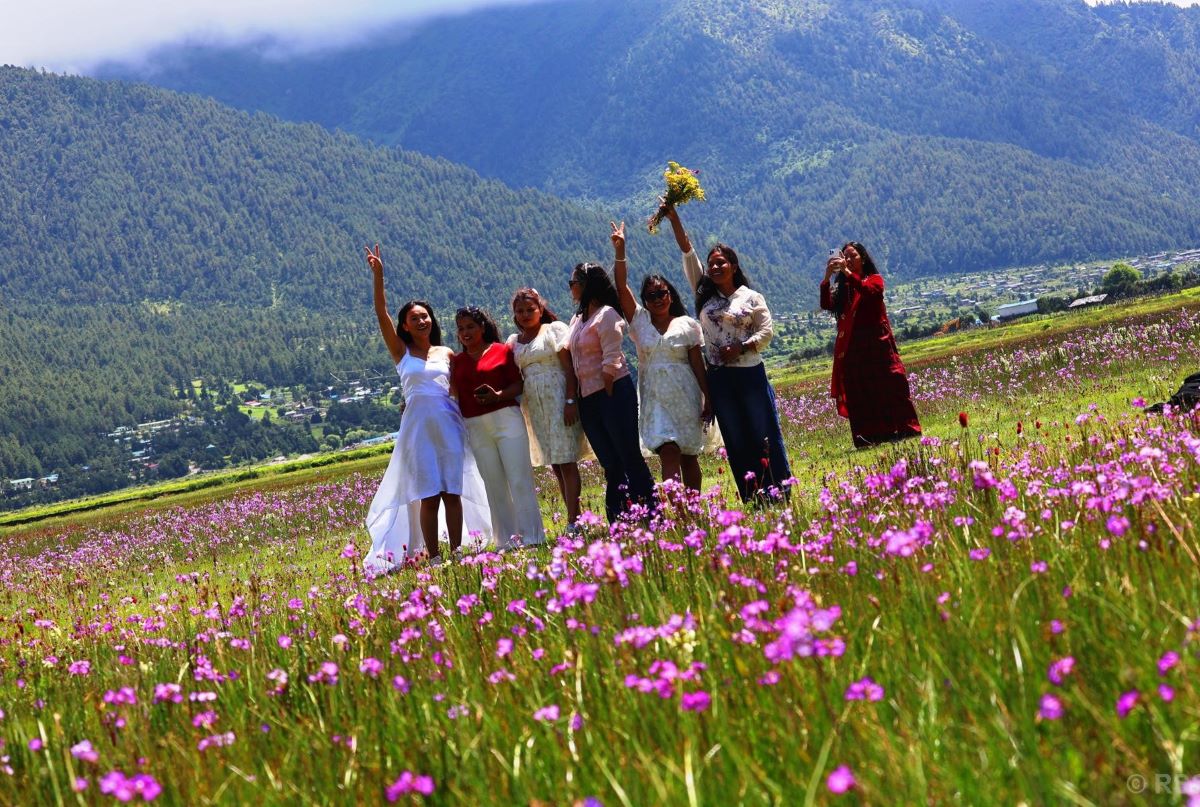
Dhorpatan / File photo
Looking at how often tourist households travel, the survey found that 33.3 percent of tourist households took exactly one trip during the year, 32.2 percent took two trips, and 34.5 percent took three or more trips, showing that a little over a third of Nepal’s travelling households are relatively frequent travellers.
The survey specifically noted that younger generations, particularly Generation Alpha and Generation Z, travel more often within the country compared with older age groups, suggesting a generational shift toward more frequent domestic travel among Nepal’s younger population.
How many Nepalis travelled abroad during the survey period, and where did they go?
During the one-year reference period, an estimated 293,000 Nepalis made same-day outbound trips, meaning they crossed the border and returned the same day, while a further 620,000 Nepalis made overnight outbound trips involving at least one night spent abroad.
For same-day outbound trips, the main destination is India, which accounts for the vast majority of such crossings, with shopping as the primary purpose, representing 63.9 percent of these trips. Provincially, Madhesh Province recorded the highest volume of same-day trips into India, consistent with its shared open border and closer proximity to Indian towns and markets.
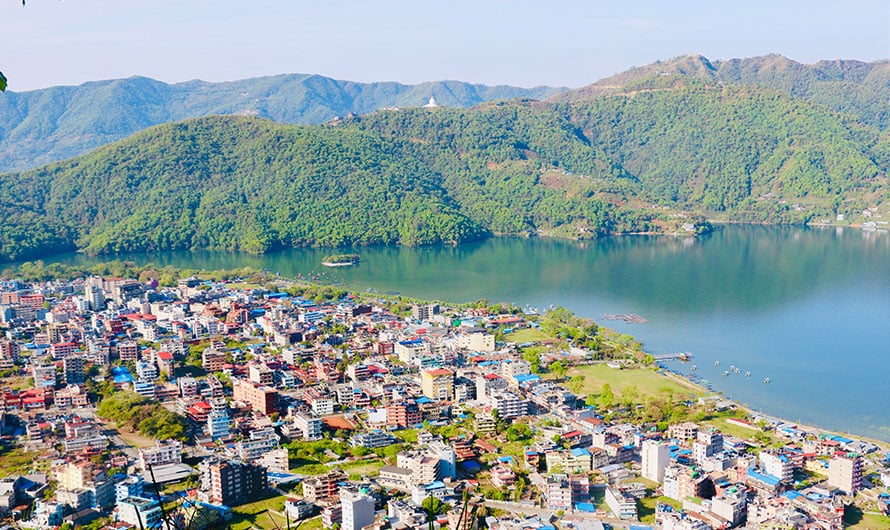
Pokhara/ File photo
The average number of participants per outbound trip is just 1.2 people, indicating that most outbound travel by Nepalis, whether same-day or overnight, tends to be undertaken individually rather than as part of larger family or group trips, a pattern that held across both the same-day and overnight outbound travel categories tracked in the survey.
What do Nepalis spend money on when they travel abroad?
For same-day outbound trips, primarily short crossings into India, shopping accounts for 70.7 percent of total spending, confirming that these brief cross-border visits are overwhelmingly focused on purchasing goods rather than any other activity.
For overnight outbound trips, which involve staying abroad for at least one night, shopping remains the leading purpose at 40.3 percent, followed by religious pilgrimage at 19.6 percent.
The survey found that outbound travel, both same-day and overnight, is heavily concentrated during the period from mid-October to mid-January, coinciding with major festival and holiday periods in Nepal when travel, shopping and pilgrimage activity typically peak.
This seasonal concentration, combined with the dominance of shopping as a purpose across nearly all outbound trip categories, indicates that cross-border retail activity, particularly into Indian towns near the open border, remains one of the most significant drivers of outbound travel spending by Nepali households, alongside religious travel undertaken during the same festival season.
What do Nepalis spend their travel money on, by category of expense?
Looking at overall tourism-related spending by category rather than by purpose of trip, shopping is the single largest expense head, accounting for 26 percent of all tourism spending by Nepali households, whether travelling domestically or abroad.
Health treatment-related travel accounts for the largest share of spending when trips are grouped by their stated purpose, at 31.78 percent of total expenditure, the highest of any purpose category. Spending on self-service, relocation and other miscellaneous purposes together made up just 0.8 percent of total tourism-related spending, the smallest recorded category.
Among transport-related spending specifically, the largest share goes toward public transport rather than private vehicles or other means, further confirming that ordinary bus and shared vehicle services remain the backbone of how most Nepalis travel, whether for short same-day errands or longer overnight family visits, rather than private cars, hired vehicles or other more costly transport options.
How much does domestic tourism contribute to Nepal’s economy?
Using the Tourism Satellite Account framework, the survey estimated that domestic tourism generated total tourism consumption worth Rs 407.17 billion during the reference year. Based on this consumption, the tourism sector is estimated to have created gross output worth Rs 331.84 billion.
After subtracting intermediate consumption, meaning the cost of goods and services used up in producing tourism-related output, worth Rs 187.34 billion, domestic tourism’s value added to the economy came to Rs 144.49 billion.
Against Nepal’s total gross domestic product of Rs 5,454 billion for fiscal year 2024/25, this means domestic tourism alone contributed 2.65 percent of national GDP, according to the survey’s calculations.
NSO’s own assessment, based on these findings, is that domestic tourism functions as a significant pillar of Nepal’s economy in its own right, separate from and in addition to the foreign exchange earnings and GDP contribution generated by international visitors travelling into Nepal.