Kathmandu
Wednesday, July 22, 2026





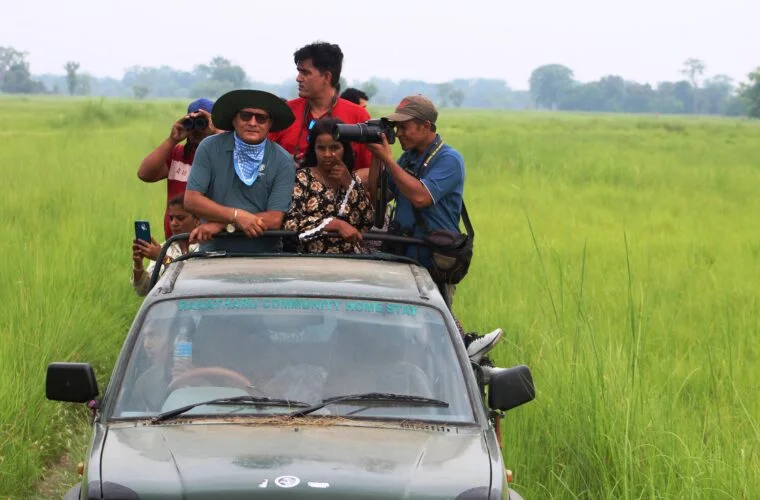
The very same Asmita Chhetri (Godar), who once winced at the word 'English' in a government school classroom, now leads foreign tourists through the dense forests of Chitwan National Park.
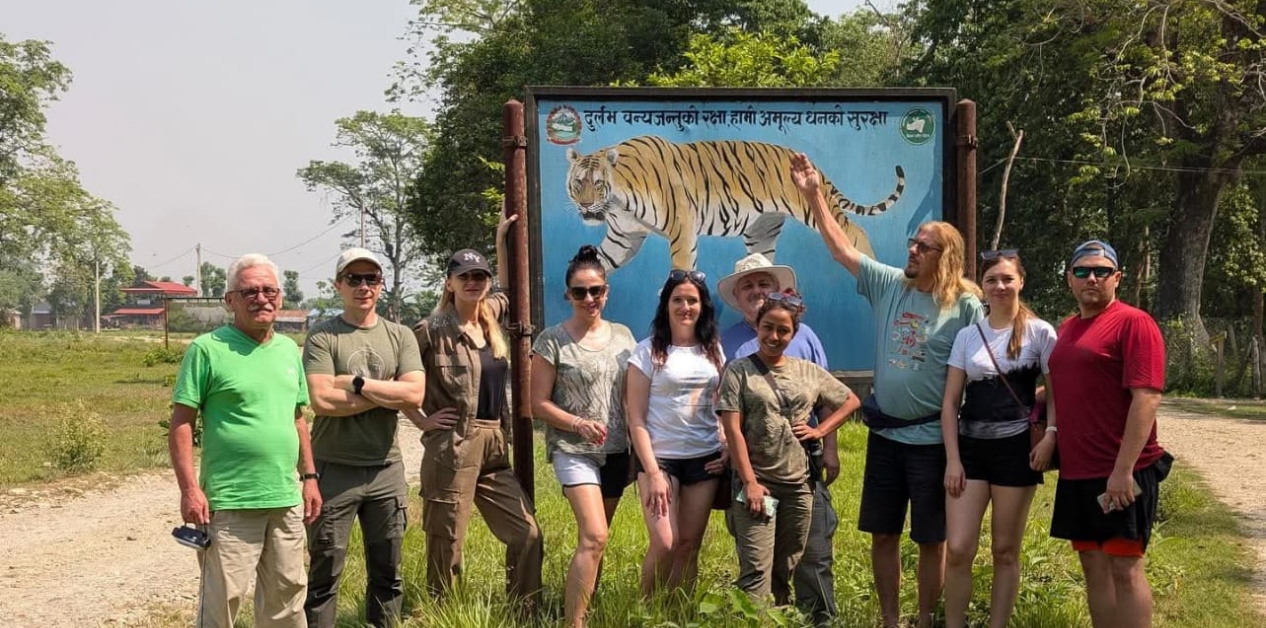
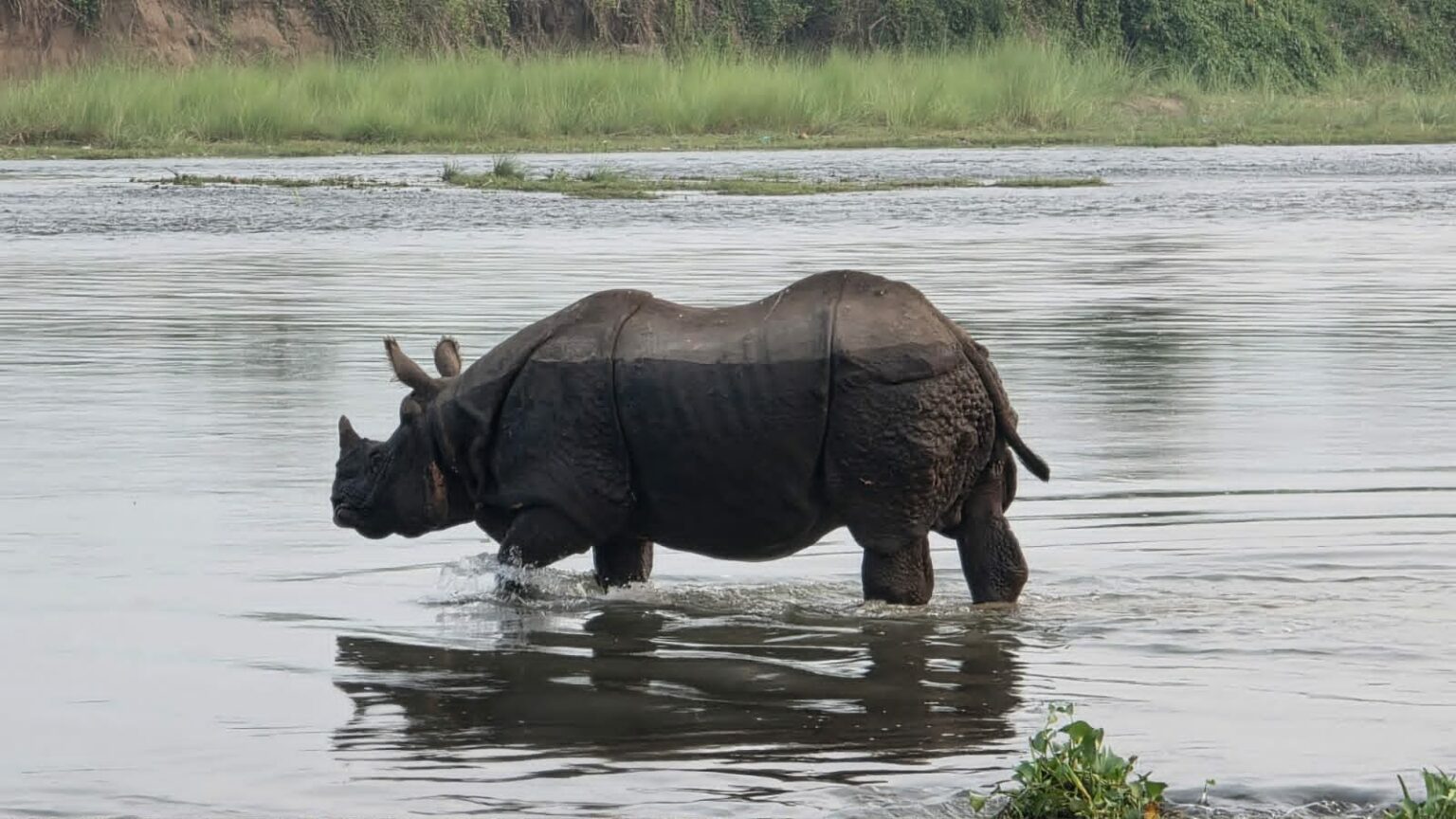
The gentle flow of the Rapti River; Gharials and Marsh Mugger crocodiles basking in the sun along its banks; a one-horned rhinoceros resting by the riverside; the chirping of birds and the rustling footsteps of various wild animals—growing up amidst the mysterious, natural fragrance of the forests and surroundings of Chitwan National Park, a young girl had never imagined that this very jungle would one day become her identity. The very same Asmita Chhetri (Godar), who once winced at the word ‘English’ in a government school classroom, now leads foreign tourists through the dense forests of Chitwan National Park.
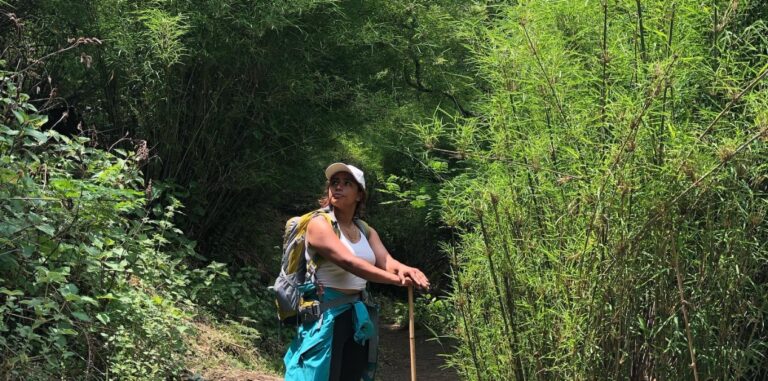
Today, not many know her as Asmita; she is widely recognized by the moniker ‘Jungle Queen’, a title affectionately bestowed upon her by tourists. One day, by the banks of the Rapti in Badreni, I sat listening to this very Jungle Queen. In the middle of our conversation, she would pull out the binoculars in her hand to gaze intently at the wildlife for a brief moment. Then, tracing their tracks, she would begin describing their habitats and dietary habits. It felt as though her demeanor had dissolved into nature, and nature into her.
Confidence born from overcoming fear
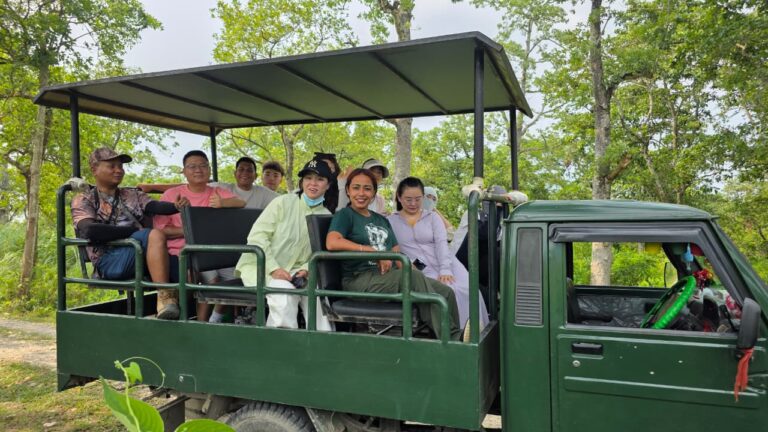
Asmita’s childhood was spent in the very soil of Sauraha. Near her home lay the Baghmara Buffer Zone Community Forest, where queues of domestic and international tourists constantly gathered for elephant rides and wildlife viewing. She observed these scenes almost every single day from up close. Somewhere deep down, a dream of becoming a nature guide and showing tourists around began to sprout in her heart. However, seeing guides speak fluent English with tourists made her feel that this job was not meant for her.
“Having studied in a government school, it was only when I reached the 5th grade that I learned to say ‘My name is Asmita,'” she recalls, looking back at the past. “I was always haunted by the fear that one had to be exceptionally talented to become a guide, and that one needed to know an immense amount of English.”
After completing her 12th grade, an opportunity arrived that helped her chase her dream. A group from the Netherlands came to provide nature guide training specifically for women. Her mind was filled with hesitation—could a girl really venture into the jungle? Yet, she gathered her courage. Asmita, who initially used to just nod her head because she couldn’t understand the accent of foreign guests, gradually realized that language is merely a medium.
“When words fail, a heart connection begins,” she says. “In the beginning, even when I explained things through gestures, the guests could feel nature. That is exactly what taught me—success is achieved only after you face your fear.”
A high-stakes profession
As alluring as the profession of a nature guide appears, it is equally perilous. Asmita has crossed paths with various dangerous wild animals in the jungle on numerous occasions. An incident that occurred near Shankharghat inside the national park two years ago remains vivid in her mind.
She was on a ‘jungle walk’ with two foreign tourists. It was nearly 6 PM. Suddenly, a Royal Bengal Tiger appeared right in front of them. She instantly read the terror on the faces of the tourists with her. However, without panicking, she took control of the situation.
“If we had run away in fear at that moment, the tiger would have certainly attacked us,” she recalls the terror-filled moment. “We locked eyes with the tiger and stood perfectly still. The tiger crouched down on all four legs just like a cat, and after a while, walked away on its own.”
Countless such experiences have brought her even closer to nature. She believes that understanding the movements and behavior of animals in the wild is the greatest safety measure.
The identity of ‘Jungle Queen’
‘Jungle Queen’ is not a name she chose for herself. Rather, it is the respect she has earned.
“When I walked ahead in the jungle leading fit and well-built foreign tourists, they would be astonished by my courage,” she says with a smile. “They were the ones who used to say, ‘You are the Jungle Queen!'”
Later, as she kept hearing this title from many tourists, she adopted it as her handle on social media as well. Today, most people know her by this name, and she is both happy and content with the identity earned through her dedication.
In Nepali society, the mindset that girls are unfit for jungle work still persists. Initially, some people even looked down on them, dismissing their pursuit as a fleeting whim that would last only a few days. However, Asmita and other active female guides like her have shattered this misconception.
While immersing herself in her work as a nature guide, Asmita is equally passionate about capturing her encounters with the forest through photos and videos. Every day, she updates people on the tourism atmosphere of Sauraha through these visual stories. Working primarily as a freelancer, social media has also helped her promote her business.
Alongside this, she enthusiastically studies the habitats, behaviors, and diets of wildlife, birds, and butterflies. As a member of the Bird Education Society, she is equally active in nature conservation.
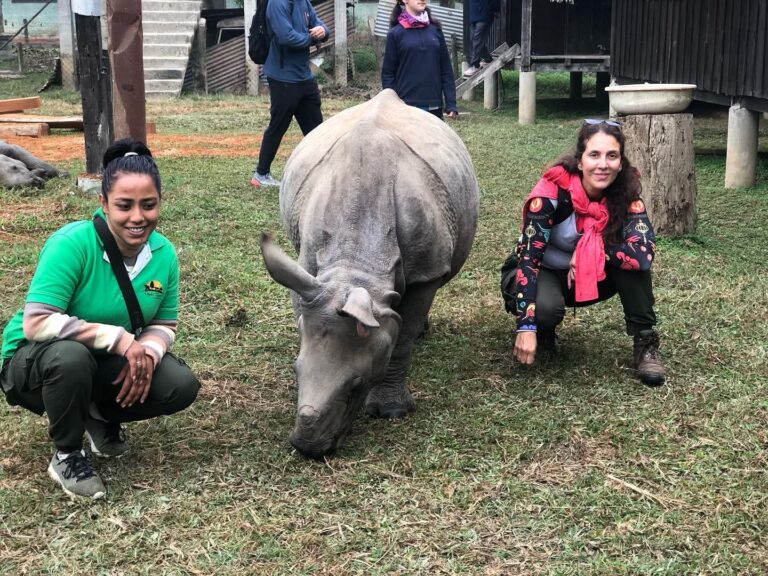
“Nature is everything to me. It gave me confidence, taught me how to speak to people, and made me financially independent,” she says.
Asmita does not wish to limit her journey to the forests of Sauraha alone. She dreams of traveling extensively to new places and exploring the wider world.
She concludes, “I want other women to look at me and step forward. Life is not meant to be spent inside a single room or within a confined boundary. It is as vast and beautiful as nature itself. We must broaden our horizons.”