Kathmandu
Tuesday, July 21, 2026






KATHMANDU: For decades, remittances have been the backbone of Nepal’s economy, underpinning household consumption, stabilizing foreign reserves, and serving as a vital poverty reduction tool. In the fiscal year 2024–25, money sent home by Nepali workers abroad accounted for an extraordinary 26.1 percent of GDP-more than the country’s entire agricultural output. Every day, roughly 2,300 Nepalis depart for foreign employment, mostly to Gulf countries, where they work in construction, hospitality, healthcare, domestic service, and even military-related roles.
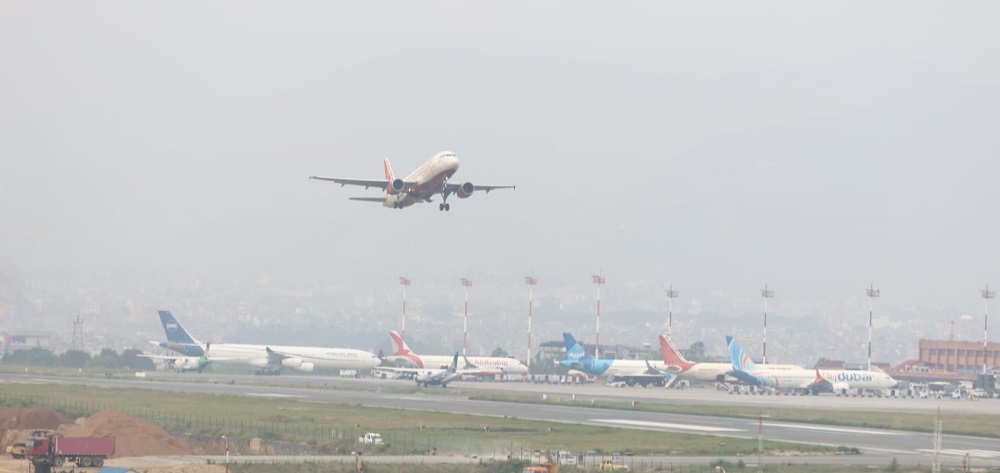
But this economic lifeline is under unprecedented threat. While strikes began Saturday, the Iranian government did not officially confirm Ayatollah Khamenei’s death until Sunday, March 1, 2026. Tehran retaliated with missile strikes across Gulf nations. Global air travel plunged into its worst disruption since Covid, as the US-Israel war with Iran forced mass flight cancellations, shut key Middle East hubs and left hundreds of thousands of passengers stranded worldwide.
War in the Middle East has entered a far more dangerous phase. Iran launched a sweeping retaliatory campaign against Israel and U.S. Khamenei’s wife, Mansoureh Khojasteh Bagherzadeh, died from injuries on March 2, 2026. Missiles and drones have since targeted Israel and Gulf states hosting American bases-including the United Arab Emirates, Qatar, Kuwait and Saudi Arabia-drawing civilian populations, including Nepali migrant workers, into the line of fire.
According to MoFA confirmed there are currently only six Nepalis residing in Iran.
Within hours of war broke out in middle east, airlines canceled flights, leaving hundreds of Nepalis stranded at Kathmandu airport. For nearly 1.9 million Nepalis (according to ministry of foreign affairs) working across the Gulf, Israel, and Iran, the danger is immediate.
As missiles fly and airspaces close, Nepal’s 1.9 million migrant workers are on the frontlines of a conflict not of their making. For a nation whose GDP and social stability depend on their labor, the government’s response will shape not only the fate of citizens abroad but the future resilience of Nepal itself.
A workforce on the frontline
The Middle East employs approximately 80 percent of Nepal’s migrant labor. In the last fiscal year alone, Nepal issued 839,266 labor permits-505,957 new and 333,309 renewals—with the majority allocated to Gulf countries: 274,590 to the UAE, 152,557 to Saudi Arabia, 140,792 to Qatar, 59,065 to Kuwait, 11,624 to Bahrain, 8,601 to Oman, and smaller numbers to Cyprus, Jordan, and Israel.
In the Gulf, Nepalis work in some of the most sensitive zones: near US military bases, critical infrastructure, and high-density residential areas. Any escalation in missile strikes threatens civilian zones, endangering the very people whose labor sustains Nepal’s economy.
Stranded in the sky and on the ground
Airspace closures have added chaos to the already tense situation. Thousands of Nepalis preparing to fly home for Nepal’s 5 March election found themselves stranded across Doha, Dubai, and Kuwait. A Qatar Airways flight from Doha took off just before airspace closure, while Air Arabia and Kuwait Airways canceled or diverted flights. For those in Dubai, initial explosions sounded like Ramadan fireworks. In Kuwait, nearly 2,000 Nepalis working at a US military base were evacuated preemptively. In Bahrain, where the US Fifth Fleet naval base was hit by two Iranian missiles, Nepalis were instructed to remain indoors.
The timing could not be worse. Nepal’s trekking and mountaineering season has just begun, and tourists moving through Gulf airports to transit to the Himalayas are facing cancellations and uncertainty. The cascading effect-on both remittances and tourism-illustrates how international conflicts can ripple quickly into Nepal’s domestic economy.
Economic consequences beyond remittances
Remittance inflows, the average monthly inflow for 2025/26 is Rs 133–180 billion; the Rs 200 Billion mark was an isolated peak reached only in October 2025, per month, are central not just for household consumption but also for national stability. More than half of these funds come from the Gulf. The disruption of workers’ mobility, loss of jobs in conflict zones, and general uncertainty threaten to slow this vital cash flow.
Fuel imports represent another layer of vulnerability. Nepal imports all its diesel, petrol, LPG, and aviation fuel from India, which sources most of it from Gulf countries. Any blockade or spike in petroleum prices caused by the conflict-particularly through the strategic Strait of Hormuz could trigger inflation, disrupt transportation, and stall domestic energy supply. Petroleum alone constitutes 25 percent of Nepal’s import value, more than the country earns from all exports combined.
The broader geopolitical impact is significant. China, dependent on Iranian oil for refineries, may face price shocks. Regional instability could cascade through South Asia, indirectly affecting Nepal’s trade, remittances, and energy security.
Human stories amid the crisis
The war is more than numbers; it is a human crisis. Thousands of Nepalis are trapped far from home, uncertain about their next meal, paycheck, or safe passage. In Israel, an estimated 6,5000 Nepali caregivers and healthcare workers, mostly women, face heightened risk. In Gulf construction sites and domestic households, workers are caught between escalating attacks and economic pressure.
The psychological toll is profound. Families back in Nepal worry about children, aging parents, and household survival. Anxiety spreads through communities reliant on the steady hum of remittance cash. The impact is already visible. Household consumption will fall. Savings will dwindle. The confidence of workers abroad is shaken.
Nepal’s strategic imperative
The stakes are immense. Gulf states alone host nearly 900,000 Nepali workers across Saudi Arabia, UAE, and Qatar. Hundreds of thousands more reside in Kuwait, Oman, and Bahrain. Remittance flows from these workers total more than USD 3 billion annually, funds that support education, healthcare, and household expenses back home.
Nepal’s government must act decisively. Protecting 1.9 million citizens abroad is a fundamental duty. Ministries must coordinate closely with embassies, host nations, and regional partners. Evacuations, contingency shelters, and communication networks are not optional—they are essential lifelines. The resilience of the nation now depends on the state’s capacity to respond swiftly to a volatile international conflict.
The Middle East will continue to be a hotbed of geopolitical tension. How governments there act will determine the trajectory of this conflict. But Nepal cannot leave its citizens to chance. Immediate steps—from crisis cells and embassy coordination to evacuation plans and worker advisories—are crucial. Delay could cost both lives and livelihoods.
Awash with cash but starved of investment
An economy that exports labour instead of goods rarely achieves lasting prosperity. Nepal’s macroeconomic indicators illustrate a familiar paradox. The balance of payments is comfortable, foreign-exchange reserves cover more than a year of imports, and inflation is contained. Yet growth has stalled at 3–4 percent, far below what is needed to absorb new workers. The trade deficit remains heavily import-driven, foreign direct investment is negligible by regional standards, and domestic production capacity is weak.
Economic research suggests that even 7-10 percent growth would require investment of 25-35 percent of GDP each year, particularly in infrastructure, energy and manufacturing. For Nepal, that implies mobilising $10-15 billion annually, far beyond current public spending and private investment combined. Capital expenditure is already constrained, and foreign investors remain cautious. The gap between aspiration and feasibility is stark.
Nepalis abroad sent home $12.5billion, more than the entire government budget and exceeding the country’s investment in fixed capital. On paper, the economy seems stable: low inflation, ample bank deposits, a current account surplus, and robust foreign-exchange reserves. Streets sparkle with imported goods.
Beneath the surface, the machinery is seizing up. Gross fixed capital formation-investment in roads, factories, machinery, and power-has plunged from 33.8% of GDP in 2018-19 to 24.1% in 2024-25. Nominal GDP rose 58%, from Rs3.86 trillion to Rs6.11 trillion ($42bn), but fixed investment increased a mere 12.6%, from Rs1.3 trillion to Rs1.47 trillion. For every Rs100 of additional output, barely Rs7 went into productive assets, down from Rs20 in 2017-18. Nepal consumes much but builds little.
The composition of investment tells its own story. Private hydropower development has held up-bank credit expanded 26% to Rs463bn over 18 months-but the benefits concentrate among a few developers, with little spillover. Elsewhere, investment is flat: manufacturing stagnates, commercial construction slows, and government capital expenditure has nearly halved, from 7.8% to 3.6% of GDP since 2017-18. Bureaucratic bottlenecks, land disputes, and coalition politics leave funds unspent. Meanwhile, debt service has surged from Rs118bn in 2019-20 to Rs320bn in 2024-25, surpassing capital spending by Rs97bn. Nepal spends more servicing old debt than building new assets.
Domestic savings have collapsed. The share of GDP set aside has fallen from 15.3% in 2018-19 to 5.2% in 2024-25, absolute savings dropping from Rs590bn to Rs403bn despite rapid growth. Remittances inflate gross national savings to 36% of GDP, but most of this is consumed on housing, motorcycles, weddings, or invested in non-productive land. Foreign direct investment has all but vanished: Rs 8.17 billion ($52m) in 2024-25, or 0.12% of GDP, among the lowest in Asia. Investors cite policy inconsistency, land acquisition hurdles, and regulatory gaps—but the deeper problem is structural. Without public infrastructure investment or a functioning enabling environment, private capital stays away.
Even the investment that occurs is inefficient. The incremental capital-output ratio—how much capital is needed to generate one unit of growth-stood at 12.3 in 2023-24, the National Statistics Office data for 2024–25 indicates an ICOR of 5.2, reflecting slightly better investment efficiency than the analysis suggests, far above developing-economy benchmarks. Nepal invests less and gets less return per rupee.
To restore 2018-19 levels of fixed capital formation, Nepal would need Rs500bn annually, exceeding the government capital budget and total FDI for the past decade. Short of a surge in domestic savings or unprecedented external capital inflows, the likely path is continued reliance on remittances. Consumption will remain buoyant, the current account healthy, but productive investment will drift lower, leaving the economy capable of 3–4% growth, insufficient to absorb hundreds of thousands of young workers entering the labor market each year. They will, as before, look abroad.
Nepal’s trade numbers confirm a structural failure, not a temporary imbalance. The country exports people and imports almost everything else-including basic food-despite abundant arable land. Remittances sustain consumption, not production, recycling foreign-earned income straight back into imports.
In the first seven months of the current fiscal year, foreign trade reached Rs1.29 trillion, with a deficit exceeding Rs955 billion. Imports stood at Rs1.12 trillion, exports at just Rs168 billion. Trade with India alone produced a Rs491 billion deficit, underscoring Nepal’s dependence on a single supplier for essential goods. Imports are now running more than six times exports, a ratio that no manufacturing economy can survive indefinitely.
Remittances mask the damage. They finance consumption and inflate foreign-exchange reserves-Rs3.2 trillion at the central bank-but do not translate into productive capacity. Nepal does not lack money; it lacks incentives, policy coherence, and domestic production. Human capital is exported, land lies underused, and basic goods are imported at scale.
This is not integration into global trade. It is economic outsourcing. As long as remittances substitute for production, Nepal’s trade deficit will remain large, growth shallow, and resilience fragile.