Kathmandu
Thursday, June 18, 2026





Across these 16 constituencies, some candidates won despite their parties trailing in PR votes, while others lost even though their parties led the PR tally
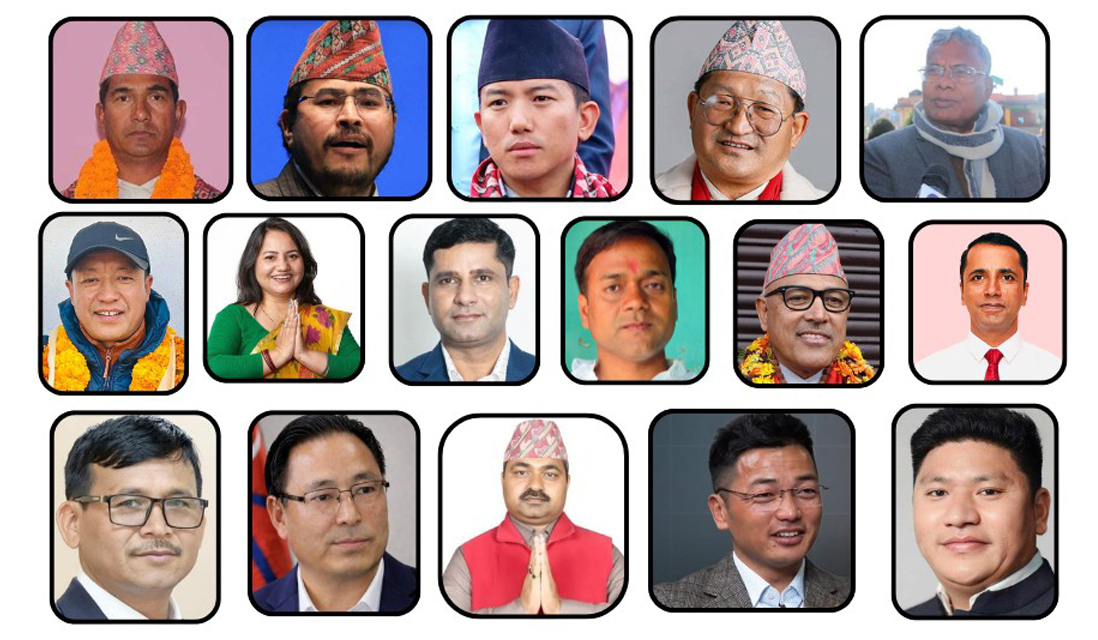
KATHMANDU: In the March 5 House of Representatives election in Sindhupalchowk constituency number 2, Yuvaraj Dulal of the Nepali Communist Party (NCP) won by defeating Nepali Congress’s Banshalal Tamang. He received 21,699 votes, defeating Tamang by a margin of 2,553 votes. Interestingly, the party that topped the proportional vote in this constituency was Rastriya Swatantra Party (RSP), which received 25,870 votes, with the Nepali Congress second and the CPN (UML) third. The NCP’s direct candidate Dulal, whose party placed fourth in the proportional vote with 12,897 votes, pulled in 8,802 additional votes beyond his party’s proportional tally to secure victory. Meanwhile, RSP candidate Jhalak Kumar Shrestha, whose party topped the proportional vote, could not even become the nearest rival. Shrestha finished fourth with 14,019 votes. He was defeated because the votes his party received in the proportional count did not translate to the direct election.
In this election, including Sindhupalchok-2, there are 16 such constituencies where a candidate from a different party won than the party that topped the proportional vote. In Panchthar, Ilam-1 and 2, Tehrathum, Sankhuwasabha, Dhanusha-1, Rautahat-2, Sindhupalchowk-2, Palpa-1, Kapilvastu-3, Banke-2, Salyan, Dailekh-1, Jumla, Dolpa, and Achham-2, the candidates of the party that topped the proportional vote were defeated in the direct election. Among them, nine are from the RSP, three from the Shram Sanskriti Party, two from the UML, and one each from the Nepali Congress and the NCP. In the constituencies where other parties topped the proportional vote, the Nepali Congress won seven seats, the UML and the NCP four each, and the RPP one.
The main reason for this appears to be the personal popularity and individual influence of candidates. Due to a candidate’s personal influence, they received more votes in the direct election than their party’s proportional tally in that constituency and won. On the other hand, in some constituencies, even though a party topped the proportional vote, its candidate received fewer votes in the direct election compared to the proportional count and was defeated.
In Ilam-1 under Koshi Province, Nepali Congress’s Niskal Rai won with 14,543 votes, defeating Shram Sanskriti Party’s Binod Nemwang Limbu by 911 votes. Nemwang received 13,632 votes. In the proportional vote, however, Shram Sanskriti topped this constituency with 16,550 votes. But their candidate was defeated because 2,918 fewer votes came in the direct election compared to the proportional count.Bimal Gadal of the RSP, which placed second in the proportional vote with 13,796 votes, finished fourth in the direct election with only 9,160 votes.
The main reason for this appears to be the personal popularity and individual influence of candidates. Due to a candidate’s personal influence, they received more votes in the direct election than their party’s proportional tally in that constituency and won
In the hilly district of Tehrathum in Koshi Province, the UML topped the proportional vote with 10,016 votes. But in the direct election, thee Nepali Congress’s Santosh Subba won the seat with 11,561 votes.
A similar situation played out in Ilam-2. The UML’s Suhang Nemwang won with 22,426 votes, pulling in 5,963 more votes than his party’s proportional tally. The UML had received only 16,463 votes in the proportional count in Ilam-2. The party that topped the proportional vote here was Shram Sanskriti Party with 17,482 votes. But their candidate Sudeep Rai could not even become the nearest rival, finishing third with 14,400 votes. The main contest in the direct election was between thee UML’s Nemwang and the Nepali Congress’s Bheshraj Acharya, who received 14,650 votes. The RSP received the third highest proportional votes in this constituency with 13,341.
In Panchthar, which has only one constituency, the Nepali Congress’s Narendra Kumar Kerung was elected with 17,233 votes. His nearest rival, Shram Sanskriti Party’s Hasta Raj Serma, received only 14,734 votes. Yet Shram Sanskriti had topped the proportional vote in this constituency with 18,368 votes. Serma’s direct vote tally was 3,634 less than his party’s proportional count, and he was defeated by Kerung by a margin of 2,499 votes. Meanwhile, the Nepali Congress had received only 14,100 votes in the proportional count but Kerung pulled in 3,133 more votes than his party’s proportional tally to win.
In another hilly district of Koshi Province, Tehrathum, theee UML topped the proportional vote with 10,016 votes. But the Nepali Congress’s Santosh Subba won the direct election with 11,561 votes. His nearest rival was the UML’s Bhanubhakta Dhakal. Although the UML pulled in 666 more votes than their proportional tally, Dhakal was still defeated. Meanwhile, Subba managed to attract 2,249 more votes than the Nepali Congress’s proportional count of 9,312 and was elected as a House of Representatives member.
In Rautahat-2, thee Nepali Congress’s Mohammad Firdosh Alam won with 29,528 votes. His nearest rival, NCP’s Kiran Sah, received only 18,422 votes. The RSP’s candidate, whose party topped the proportional vote in this constituency, finished third in the direct election.
In Sankhuwasabha, UML’s Arjunkumar Karki won with 15,636 votes, defeating RSP’s Mingma Sherpa by 636 votes. The RSP topped the proportional vote in this constituency with 15,343 votes, with theee UML second at 13,914. Karki pulled in 1,722 additional votes beyond his party’s proportional tally from elsewhere.
In Madhesh Province, the RSP won 30 of the 32 direct election constituencies. In Rautahat-2, the Nepali Congress’s Mohammad Firdosh Alam won with 29,528 votes. His nearest rival was NCP’s Kiran Sah, who received only 18,422 votes. The RSP’s candidate, whose party topped the proportional vote in this constituency, finished third in the direct election. In the proportional vote, the RSP received 26,143, the Nepali Congress placed second with 21,299, and the NCP finished third with 5,528 votes.
In Dhanusha-1, after RSP’s Kishori Sah ‘Kamal’ was blacklisted and his candidacy cancelled, the Election Commission issued the victory certificate to NCP’s Matrika Prasad Yadav. Votes cast for Sah have been declared void, while Yadav received 10,428 votes. Sah filed a case at the Supreme Court challenging the cancellation of his candidacy. On Thursday, the Supreme Court issued an interim order not to cancel his candidacy. In the proportional vote, the RSP topped this constituency with 41,807 votes, with the NCP second at 7,349.
In Palpa-1 of Lumbini Province, the Nepali Congress’s Sandeep Rana won with 18,336 votes. The UML had been winning continuously from this constituency since 1991. Rana defeated UML candidate and former MP Narayan Prasad Acharya by a margin of 1,517 votes. In the proportional vote, the RSP topped this constituency with 19,738 votes. However, RSP’s candidate Bimal Panta finished third with only 14,333 votes. Meanwhile, the Nepali Congress’s Rana, whose party placed third in the proportional count with 13,171 votes, pulled in 5,165 additional votes to secure victory.
The RPP, which had won seven direct seats in the 2022 House of Representatives election, could only hold onto its Jumla seat this time. The RPP’s Gyan Bahadur Shahi won with 14,816 votes. However, the party that topped the proportional vote in this constituency is the NCP.
In Kapilvastu-3, the Nepali Congress’s Abhishek Pratap Shah won with 23,535 votes, defeating nearest rival RSP’s Prakash Rajauria by a margin of 4,645 votes. Rajauria received only 18,890 votes. Yet the RSP topped the proportional vote in this constituency with 26,170 votes. Rajauria was defeated after receiving 7,280 fewer votes than his party’s proportional tally. The Nepali Congress placed second in the proportional count with 14,070 votes.
In Banke-2, UML’s Mohammad Ishtiyaq Rai was elected with 24,628 votes. He defeated nearest rival RSP’s Bibek Kumar Shrestha, who received 18,682 votes, by a margin of 5,946. However, the RSP topped the proportional vote in this constituency with 24,341 votes, while the UML placed second with 20,552.
In Dailekh-1 of Karnali Province, the RSP topped the proportional vote with 11,481 votes. Yet the RSP could not even become the main contender in the direct election. With the main competition between the Nepali Congress and the UML, the Nepali Congress’s Basana Thapa won with 12,272 votes. Thapa is the only woman directly elected from the Nepali Congress. Her nearest rival, UML’s Rabindra Raj Sharma, received 11,796 votes. The RSP’s candidate Nanda Kishor Basnet finished third with 8,151 votes. In the proportional vote, the Nepali Congress placed third with 10,718 votes and the UML placed second with 10,859.
A similar situation played out in another Karnali district, Salyan. Even though the RSP topped the proportional vote, their candidate could not be elected in the direct election. The NCP’s Ramesh Kumar Malla won the direct election in Salyan with 23,189 votes, defeating RSP’s Lalit Kumar Chand by a margin of 2,285 votes. Chand received 20,904 votes. In the proportional count, the RSP received 25,665 votes while the NCP placed second with 20,339.
The NCP’s Dhan Bahadur Budha was elected as an MP for the fourth time from Dolpa, having been elected from the district continuously since 2013. Budha’s victory was not powered solely by his party’s votes. In Dolpa, which has only one constituency, the NCP received 4,707 votes in the proportional count. Yet the party’s candidate Budha won with 6,802 votes. The party that topped the proportional vote in this constituency was the UML with 4,944 votes. The UML’s Lanka Bahadur Rokaya received 5,396 votes, pulling in 452 more than his party’s proportional tally, but it was not enough to defeat NCP’s Budha.
The RPP, which had won seven direct seats in the 2022 election, could only hold onto its Jumla seat this time. The RPP’s Gyan Bahadur Shahi won with 14,816 votes. His nearest rival, NCP’s Naresh Bhandari, received 11,635 votes. However, the party topping the proportional vote in this constituency is the NCP with 10,202 votes. The RPP, which won the direct seat, placed only third in the proportional vote with 6,552 votes. The Nepali Congress finished second with 9,360 votes.
From Achham-2, UML’s Yagya Bahadur Bogati won with 9,518 votes, defeating the Nepali Congress’s Pushpa Bahadur Shah by a margin of 472 votes. Shah had received 9,046 votes. However, in the proportional vote, the Nepali Congress topped this constituency with 9,512 votes, while the UML placed second with 8,985 votes. Bogati won by pulling in 533 more votes than his party’s proportional tally.