Kathmandu
Sunday, July 12, 2026





Khanal argues that governing will require Balen to embrace party structures and institutionalize a new political culture
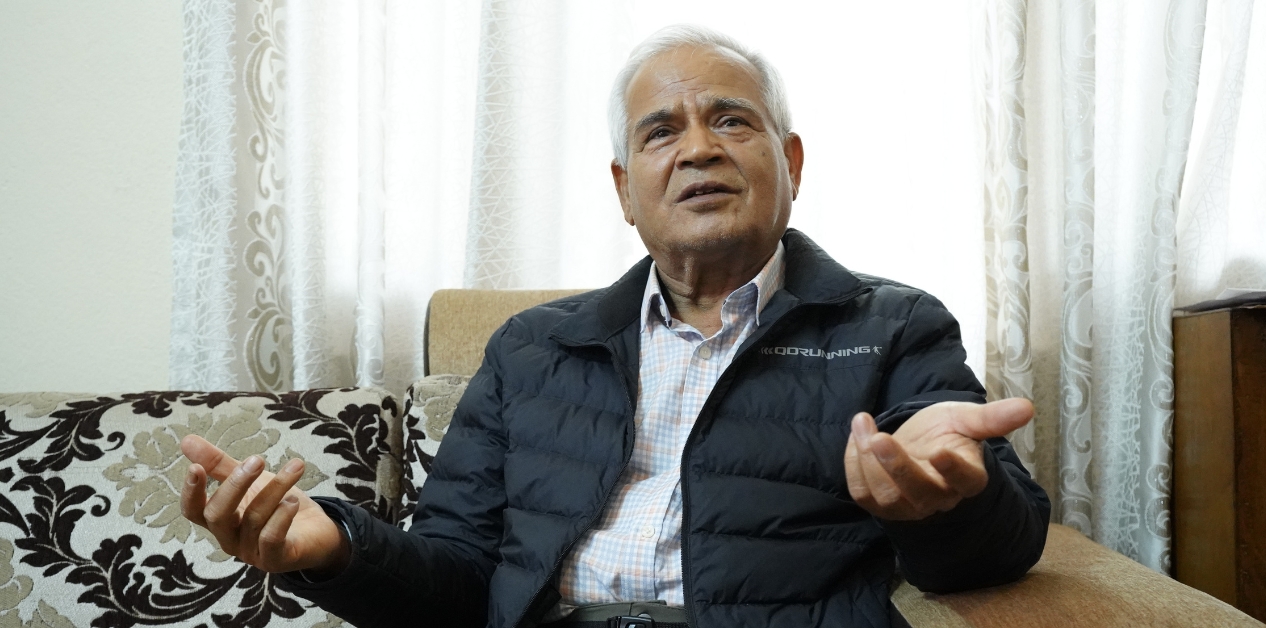
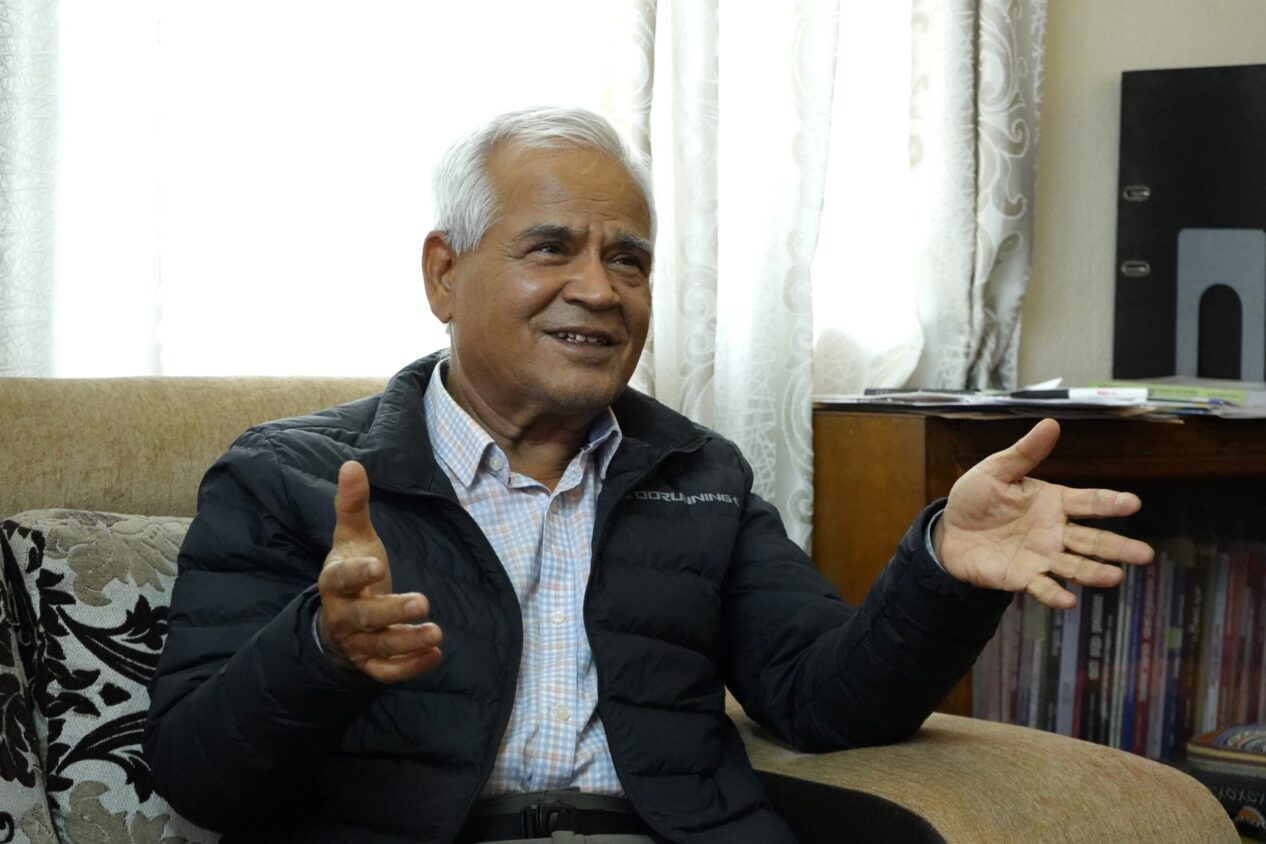
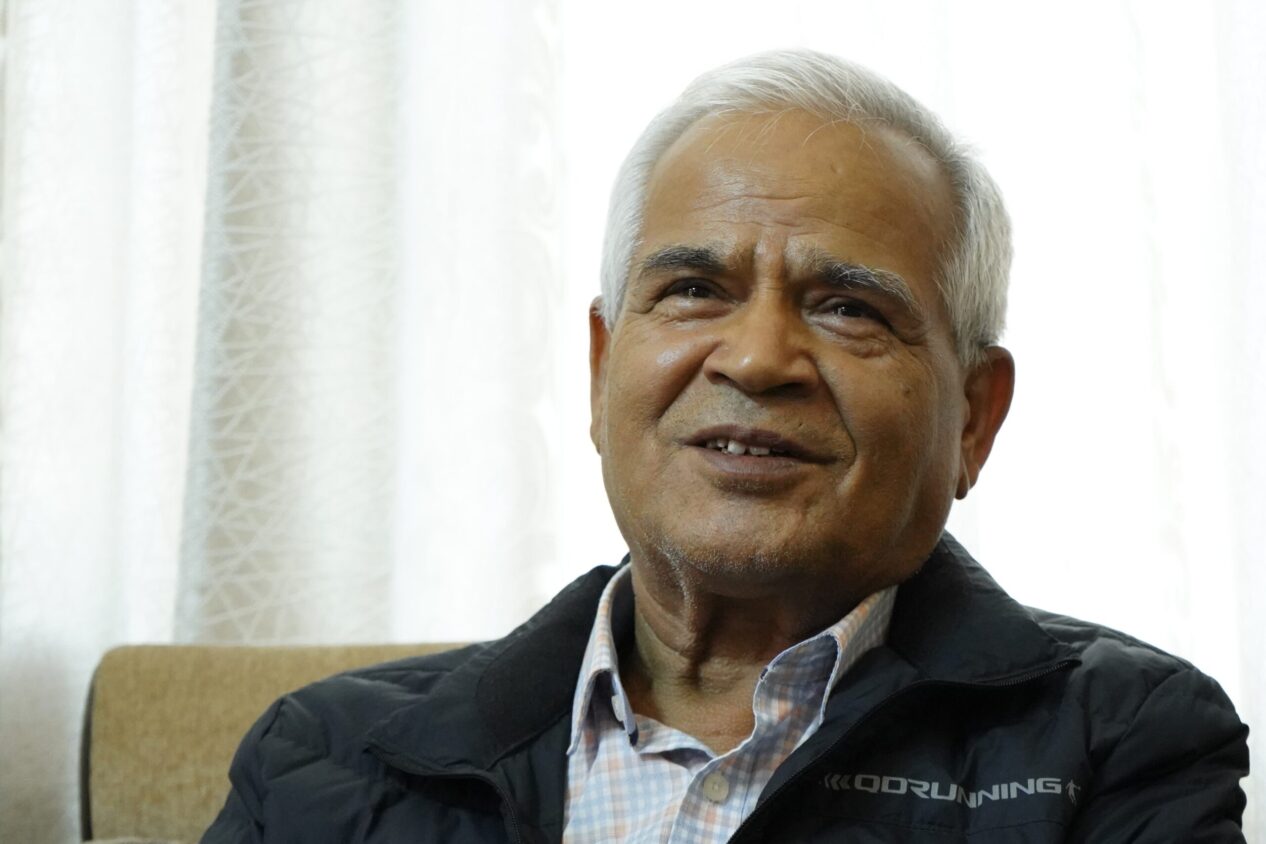
KATHMANDU: Political science professor Krishna Khanal is a prominent critical scholar who has closely observed Nepal’s political upheavals for decades. Following the 1991 general elections, he served as an advisor to Prime Minister Girija Prasad Koirala but resigned before completing his term due to differences with him. During the 2006 People’s Movement, Khanal actively joined street protests against the then king’s direct rule and in support of a federal republic. A consistent voice against misgovernance, corruption, and systemic disorder, he offers a wide-ranging analysis, from the March 5 House of Representatives election results and the rise of the Rastriya Swatantra Party (RSP) to the challenges facing the incoming Balen-led government. Presented below is an edited excerpt of the conversation held between Baburam Bishwakarma and Khanal for Nepal News on March 15:
All results of the House of Representatives elections held on March 5 have now been made public. How do you assess this outcome? Did the final results align with pre-election expectations?
It is difficult to say whose predictions proved accurate. Some may feel their expectations were fulfilled, particularly those who anticipated a sweeping surge by the Rastriya Swatantra Party (RSP). For them, the outcome may appear predictable. However, even the RSP itself likely did not foresee a victory of this magnitude. In that sense, many pre-election estimates appear to have been off the mark.
In my view, the result has placed the RSP in a position with little room for excuses. Having secured a decisive mandate, its ability to implement its agenda will now depend entirely on its own capacity. Voters are equally empowered to hold the party accountable by asking why its promises are not fulfilled. The RSP can no longer claim it lacked the opportunity to govern.
Such electoral outcomes are rare. It has been many years since Nepal witnessed a clear majority, and under a proportional system, even predicting a majority is difficult, let alone a two-thirds mandate. While the broader direction of the result was not entirely unexpected to me, the scale of the RSP’s victory certainly was. I had anticipated that the RSP would emerge as the largest party and possibly secure a majority, and that traditional forces such as the Nepali Congress, CPN (UML), and the CPN (Maoists) would fall behind, but not to this extent.
What explains the widespread public support for the RSP?
There are a few key factors. First, the election must be understood in the context of what I describe as a Gen Z rebellion. Some may call it a revolution, but I see it more as a spontaneous generational uprising rather than a structured movement, which typically involves clear planning, leadership, and defined goals. Historically, movements or revolutions that overthrow power also go on to govern, as seen after the 1951 revolution and the 1990 People’s Movement.
In contrast, following the recent Gen Z uprising, its proponents claimed victory yet did not assume power. Instead, a non-partisan, citizen-led government emerged under the leadership of Sushila Karki. This election, therefore, serves as a formal, democratic endorsement of that uprising, granting it political legitimacy. That, in itself, is its most significant achievement.
Initially, the agenda of this movement was limited to curbing corruption and reducing the influence of entrenched elites, often referred to as ‘nepo babies.’ There was no explicit demand for a change in government. However, the ruling parties were already discredited, and their leadership had become deeply unpopular, eroding their public base. In this environment, the RSP emerged as an alternative force.
The personal image of Balendra Shah, or Balen, played a crucial role in igniting nationwide momentum. Across both urban centers and remote areas, he was widely viewed as a role model. When the RSP projected him as a prime ministerial figure, that appeal expanded significantly. In contrast, the Nepali Congress, despite an active campaign led by Gagan Thapa, failed to convert its efforts into electoral gains, largely because public sentiment was not in its favor. Timing, too, worked against Thapa.
The RSP’s campaign was primarily directed against the CPN (UML) and KP Sharma Oli, while the Nepali Congress was only selectively targeted.
Even so, why did the Nepali Congress fall so far behind?
The central issue lies in weak leadership. Under Sher Bahadur Deuba, the party has come close to institutional decline. After 1990, Girija Prasad Koirala led the party for a long period. While his leadership may have weakened certain values, he did not dismantle the party’s organizational strength. Under Deuba, however, both the party’s values and credibility have significantly eroded. A political party losing its core principles is a deeply concerning development.
The situation deteriorated to the point where voters who traditionally supported democracy no longer trusted that voting for the Nepali Congress would safeguard democratic values. That trust deficit proved decisive.
That said, the party has little reason to fault Gagan Thapa’s leadership. He followed a legitimate process and performed his role effectively. However, internal power shifts during and around the convention appeared irregular, creating dissatisfaction among some factions. Even so, this dissatisfaction was not the decisive factor in the election outcome.
The situation deteriorated to the point where voters who traditionally supported democracy no longer trusted that voting for the Nepali Congress would safeguard democratic values. That trust deficit proved decisive.
Ultimately, the scale of the RSP wave overwhelmed all other factors. The margins were so large that minor vote shifts, whether due to dissatisfaction or local dynamics, had little impact on the overall result.
Why did the Nepali Congress, which was said to have been transformed by the special general convention, fail in this election?
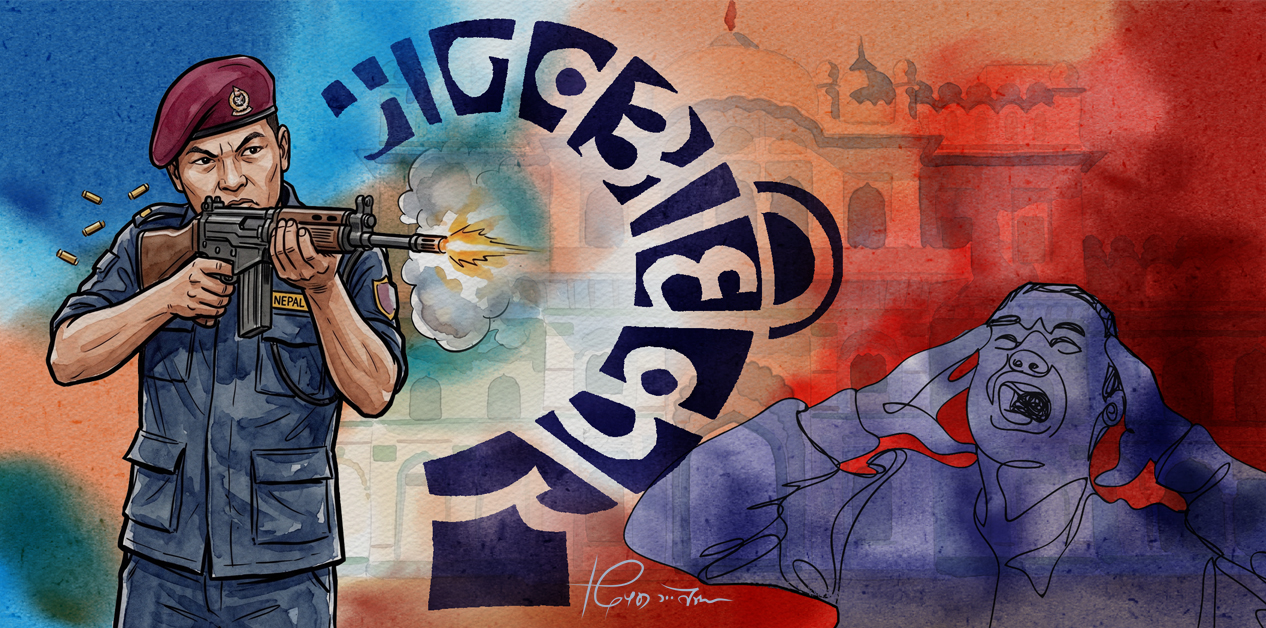
The RSP’s reactive propaganda against the Nepali Congress was not particularly visible. Rabi and Gagan might have made sarcastic remarks in a few speeches. But what alternative did the voters have? On one side there is a murderer; on the other is a country-looter. This was the propaganda used. Regardless of the truth or untruth regarding the burnt money at the Deuba residence, no one had any doubt that the Deuba couple had earned unlimited money. An image had been built that no matter how much money they have, it is not enough for them. It was often heard from people wanting to go into positions that they ask for money no matter what they do. Among the general public, it was perceived that they have indeed looted the country. In the election, the arrow of ‘murderer’ was shot toward CPN (UML), and the arrow of ‘looter’ was shot toward Nepali Congress. The arrows on both sides worked so wonderfully that both parties reached a collapsed state and were defeated.
RSP’s aim was very sharp. Old parties did not have the status to counter that. That precise arrow became extremely attractive for the voters as well. They endorsed it through their votes.
Some have also called the election result a ‘ballot revolution’; is this indeed a vote revolution?
It can be said that the Gen Z rebellion transformed into a vote revolution. However, this is not a rare election result that has never happened in the world. In the 1984 Lok Sabha elections in India, Congress-I had achieved a larger victory than this. It won almost 80 percent of the seats, and its popular vote was also around 50 percent. It was a higher popular vote than what RSP has brought now. I did observe that election result from four decades ago closely. At that time, I had already started teaching at the university.
The 1994 election in South Africa is even newer. There is a fully proportional electoral system there, where the African National Congress brought nearly a two-thirds majority. Even if it is called a ‘landslide victory’ in places with a parliamentary system, it usually doesn’t reach two-thirds. Nepal has its own history too. Even the record of the 1959 election has not been broken by RSP. Nepali Congress had only about 37.23 percent of the votes in the aspect back then.
While analyzing election results, I take the popular vote brought by the parties as the basis. Seats are technical. A popular vote shows what kind of status one has in society. Let’s look at the example of the Nepali Congress itself. A party that led such a big revolution, it had the leadership of BP. It won the election by bringing more than a two-thirds majority of seats. But the popular vote was around 36 percent. Why didn’t it reach 40 percent even when bringing that much? The competition from other parties was also tough.
In 1991 as well, Congress brought 36/37 percent of the votes. The mass base of Congress could never reach 40 percent. Congress does not seem to have made its place very deeply in society. Our electoral system, which we call ‘First Past the Post.’ In that, one can win a large number of seats with a small percentage of votes. In the past, Congress used to bring a majority with 36/37 percent of the votes. After going into the proportional system, that became a bit difficult. The election result of UML and Maoists fighting together in 2017 was also near two-thirds. Recently, when an impression was being made that our system is one where no one gets a majority, RSP bringing such a large majority made everyone feel like it was an event that had never happened.
What is the main message that this election result has given to RSP and the old parties?
We talked a lot about alternative forces in Nepal. I have also expressed my opinion on that in two or four articles. Baburam Bhattarai practiced alternative force after making the constitution. What that shows is that Nepali voters were stuck with limited options between Congress and Communists. The Communist votes were also divided among UML, Maoists, or others. But for the liberal democratic vote, there was no other strong alternative besides Congress. RPP became too traditional; after focusing on the pro-monarchy agenda now, even traditional votes could not be attracted by RPP.
People were looking for an alternative. Voters openly accepted RSP as an alternative. The main reason for RSP’s victory is the Gen Z rebellion itself. The condition of Congress-UML had deteriorated. They had no basis to refute the corruption allegations against them. Generally, a negative image was established that they are indeed corrupt.
The Communist votes were also divided among UML, Maoists, or others. But for the liberal democratic vote, there was no other strong alternative besides Congress. RPP became too traditional; after focusing on the pro-monarchy agenda now, even traditional votes could not be attracted by RPP.
The dramas that occurred in the name of opening files while RSP Chairman Rabi Lamichhane was the Home Minister also worked in this election. During travels to various places, I used to hear and see many people watching Rabi’s speeches on mobiles. They would say, “He tried to do something, so they are trying to finish him by putting him in jail.” Such a perception was scattered across the country. That vote integrated and became a vote revolution in the election. Somewhere the influence of RSP, somewhere the influence of Balen, was heard. It had not been able to manifest in an integrated way. This election gave that chance. Therefore, I consider it natural to call this a ballot revolution.
There must be other reasons as well for RSP achieving such big numbers in the election, right?
There are two or three other reasons we are not looking at. One is a reactive reason. For example, Balen’s decision to contest the election against Oli had a nationwide impact. That was not limited only to Jhapa-5. Voting for the ‘bell’ (RSP) in Darchula was considered voting against Oli. That created a certain kind of situation. Balendra was in a position to win from any of the 165 constituencies without going to Jhapa. But the decision to fight from Jhapa changed the very form of the election. It had a widespread effect on the election results of all 165 places.
In Jhapa-5, KP Sharma Oli, in the capacity of the former prime minister, asked for votes, saying, ‘Whether to vote for those who set the country on fire or vote for me, who builds the country.’ RSP posed the question among voters, “Will you vote for the murderers of Gen Z again?” The allegation that voting for UML meant voting for a murderer became nationwide. UML’s campaign became completely Oli-centric. When a party does ‘personification,’ it also gets damaged. A collapsing UML was further destroyed because of Oli. Other candidates of UML could not even campaign by taking Oli’s name. RSP, however, did the personification of Balen. That benefited it furthermore.
What challenges do you see ahead for RSP, which has won 182 seats in Parliament?
First, now RSP itself will be the recipient of all credit and blame. Balen will have to be accountable for every work done as prime minister. How his performance turns out depends a lot on the team he builds. Everyone will watch the work of Balen, who has become a nationwide craze. Everything does not change in a single day as soon as the government or leadership changes. The state of our society is the same. The infrastructure and institutions are the same. It is easy to shout slogans of good governance but very difficult to make it felt. I take good governance in a very simple sense. For example, will Prime Minister Balen be seen as a citizen like you and me tomorrow or not?
In the election, Balen stood in line and voted; he did very well. It is not possible to always stand in line like that as the Prime Minister. But even then, how does he present himself at the level of the citizen? While he was the mayor of Kathmandu Metropolitan, it was heard that there was a separate lift for him. If tomorrow everything starts becoming ‘special’ again for the Prime Minister, then that is not a sign of good governance. That creates ‘Very Important Persons’ (VIPs).
Our biggest problem itself is that those who go into power are made into a special category. The thought that those who do politics are different from common citizens is dominant. I won’t just say the Prime Minister, I won’t just say the Minister, and we don’t even meet members of parliament in public places. The society is becoming extremely ‘elite.’
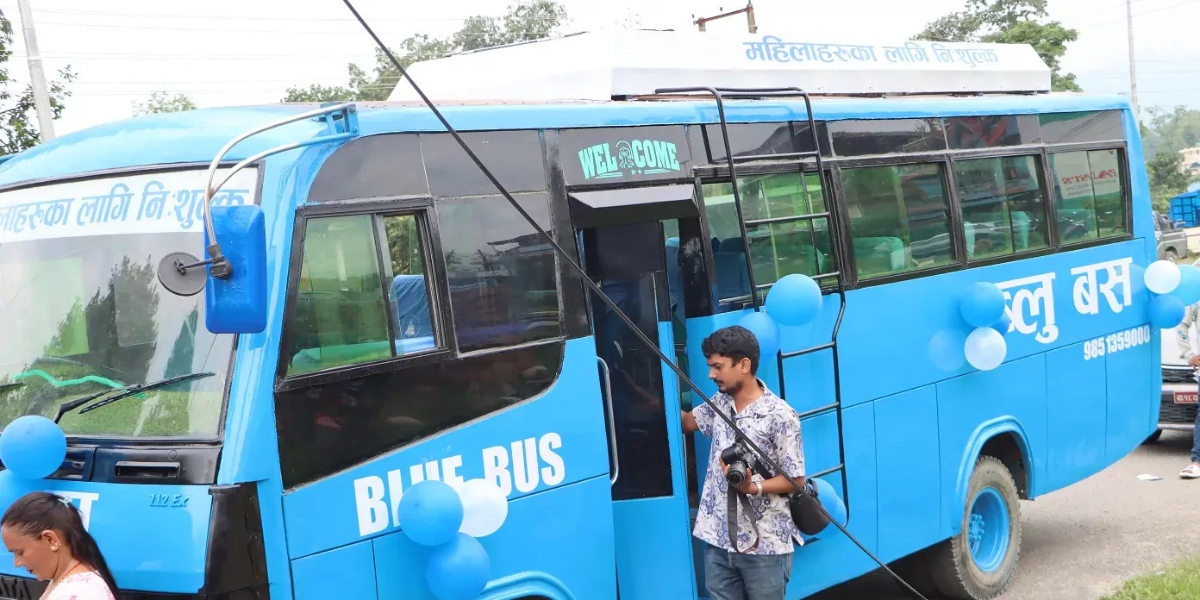
As mayor, Balen has weaknesses too. Public transport probably fell within the mayor’s area. During his three years as mayor, he was not seen working or even mentioning public transport anywhere. If everyone is zooming inside black glass in their own cars in society, what talk of democracy? Either all Nepalis must have that status. Otherwise, class discrimination in Nepal has increased frighteningly.
The well-to-do run around in private cars; there is no good arrangement of public transport for common citizens. Rather, ride-sharing has done some work. The ‘status gap’ has increased widely. Even schools are separate for different classes. Without reducing this distance, just shouting slogans of good governance won’t work.
What kind of work should the new government do so that common citizens can experience it as well?
First, an environment must be built where citizens feel a sense of equality. The infrastructure of public movement and transport must be built from the ground up. Currently, inside Kathmandu city, roads have been built by destroying footpaths. If public transport is not managed, what is the point of only expanding roads? The number of private cars increased.
I heard the potential Finance Minister Swarnim Wagle say he would remove the 300 percent customs. Our very source of revenue is customs, and that too is import-oriented. Without another source of revenue, that won’t be possible.
Saying something for popularity is one thing. That benefits the elite and the wealthy of Kathmandu. Who benefits by abolishing 300 percent customs? It benefits the elite; it doesn’t benefit others. Rather, public transport fares can be reduced. Instead, it is better to free the transport sector providing public services, including buses and taxis, from taxes. It’s fine to remove customs duties and taxes on public transport.
The infrastructure of public movement and transport must be built from the ground up. Currently, inside Kathmandu city, roads have been built by destroying footpaths. If public transport is not managed, what is the point of only expanding roads?
How much danger do you see that the hope citizens have from the new government might turn into disappointment?
If understanding and institutional processes are developed, the government remains stable. Otherwise, the old problem seen in Nepali politics might repeat. The biggest challenge for the upcoming government is the ‘hundred-day performance. ‘The media used to evaluate the 100 days of the government formed by pulling legs from ten directions. I never accepted that. But the 100-day evaluation of the new government is important.
Everything does not happen in 100 days, but it shows the way. If the government wants, it can be shown in even seven days. In the very first decision of the government, some things regarding policy intervention must be able to come. The new government must be able to show something within a week, ten days, or 100 days.
What kind of decision comes in the first cabinet after the government is formed? How does it address the people and voters? That is to be seen. Our economy is so dependent. Our economy and social matters come joined together. Pure economic decisions alone won’t work. One shouldn’t just look at America and the UK. Government policy decisions must be suitable to the economy and structure.
Second, a long-term blueprint for the government is needed. Such big political changes occurred in the country. After the 1990 People’s Movement, some economic foundations were traced. No matter how much it is criticized, the foundation of the country’s economy was laid during the 1991–1995 government of the Nepali Congress when a certain kind of economic policy base was prepared. After that, only some additions have been made to privatization and liberal economic policy.
Although many criticized, saying privatization happened under foreign influence and national assets were sold to the private sector, there has been no work to reverse it. Such a big revolution and movement occurred in 2006. Since then, the country did not get even a single finance minister worthy of taking the name. Therefore, a blueprint for the next 40/50 years is needed. Not just on paper, but a vision that can drive can be expected from this government.
The migration of young human resources is alarming; how to stop that?
Right now people say, ‘Now Nepalis don’t have to die abroad, don’t have to go abroad.’ Is that easy? Those who are going to America, Australia, and Europe out of desire are not going just because they didn’t get work or their studies were not good. Their dream itself is different. That cannot be stopped even if tried.
If children live in America, the parents’ status is considered different here. Those going to Gulf countries for foreign employment are mostly people from rural areas. They are the source of keeping our remittance and Nepal’s economy standing. There is a challenge to create alternative employment here for them. Only if employment can be created in the country will a meaning of the Gen Z rebellion remain.
Rabi-Balen are in the main leadership of RSP; will the individual clashes and conflicts between them not affect the effectiveness of the government?
In our politics, the clash of leadership was always at the center. Girija Prasad and Krishna Prasad Bhattarai (Kishun), Oli and Prachanda, and Madhav and Oli. A conflict between two people is always seen. Looking at old practice, our problem itself seems to be of individual management. The management of the leadership of big personalities within all parties became a challenge. After 1990, the management of three leaders within Congress and the management of KP Oli, Pushpa Kamal Dahal, Madhav Nepal, and Jhalanath Khanal within the Communists became the main challenge. Splits, tug-of-war, and conflict within the parties were created because of the leaders.
Now Balen Shah and Rabi Lamichhane have appeared in RSP. Balen’s craze appeared more. It is heard that full authority will be given to Balen in government formation. That is a matter of mutual understanding. Nonetheless, Balen must consult with the party’s ‘core team.’ Sometimes if conflict occurs, the first right must belong to the Prime Minister. That should not be considered wrong.
After the 1959 election, in terms of forming the government and giving tickets, BP Koirala’s priorities were different. For example, he has said in his autobiography, “I didn’t want to give a ticket to Bishwa Bandhu Thapa, but for some reason, I was forced to give the ticket.” BP wanted to make one a minister at that time but had to make another. Subarna Shamsher Rana backed another. But there was no clash of personalities between Subarna and BP Koirala.
Even now, something like this might happen between Rabi and Balen. However, neither Balen nor Rabi needs to accept everything of each other. But it is necessary to maintain mutual understanding. Just this much is not enough to take the cooperation between two leaders for the long term. Institutional decision-making processes must be developed in the party. Its tradition must be established. What happened in the Nepali Communist Party (NCP), formed by the merger of Maoists and UML yesterday? They did not seek the solution to the conflict there institutionally.
If conflict occurs regarding the Prime Minister, it should be discussed in the parliamentary party. During the NCP period, Prachanda, Madhav Nepal, and Jhalanath were involved in removing KP Oli, but they did not raise that subject in the parliamentary party. It was a bit different in Congress. A very big conflict occurred between Girija Prasad and Kishun. But Kishun knew parliamentary decorum. If some questions arise about the Prime Minister within RSP, its solution should be sought within the parliamentary party. If there are matters of party principles and thoughts, there should be discussion in the party’s central committee and other units. If they become system-centric rather than being Rabi- and Balen-centric in that way, there might not be a big problem. Nonetheless, looking at our history, there is no basis to believe that Balen and Rabi will go in an ideal way. But RSP must do a new practice to prove itself different. Only after that will it be felt that such a thing is also possible.
RSP has secured close to a two-thirds majority. The new parliament and government may now move toward constitutional amendments. In your view, what changes are necessary?
Before pursuing amendments, the constitution should first undergo a careful and comprehensive review to identify areas that require improvement. It has been a decade since its promulgation and around eight years of practical implementation, during which three elections have already been held. While revisions may be necessary, they should not be driven by the position of a single party, including the RSP, as that risks creating political conflict.
The constitution rests on four core pillars: federalism, inclusiveness, republicanism, and secularism. Weakening any one of these would undermine the entire framework. Even if Madhesh-based parties are currently underrepresented in parliament, the issues concerning Madhesh cannot be overlooked.
A more appropriate approach would be to form a joint, all-party parliamentary committee comprising members from both houses. Such a platform would allow for broader deliberation, the exchange of ideas, and consensus-building. The review process should proceed without predetermined party positions. Expert opinions can be sought, written submissions invited, and public input incorporated. Based on these, the parliamentary committee can then prioritize and advance necessary amendments in a structured and inclusive manner.
Based on the experience so far, which aspects of the constitution may require amendment?
In terms of amendments, I see a few key areas for consideration. First, local governments could be made non-partisan. Even the constitution does not require political parties to run local bodies. The example often cited is Balen himself, who governed Kathmandu Metropolitan City for three years as an independent mayor without party backing, with relatively little public dissatisfaction. In other metropolitan cities as well, mayors do not need to demonstrate a legislative majority, making the current structure resemble a presidential-style system at the local level.
Second, political parties could take on a more indirect role at the local level. During the elections, I had argued that parties should remain in the background, monitoring rather than directly fielding candidates. There is precedent for this. In past local elections in Kathmandu, independent candidates were elected while parties remained less visible. Such practices are not incompatible with a multiparty system.
Another area that warrants attention is the provincial structure. This does not imply abolishing provinces, but rather strengthening them to prevent over-centralization. Certain powers could be exercised directly at the provincial level without requiring approval from the center. The problem has not been constitutional design alone but also its implementation. Political leadership in Nepal continues to operate with a unitary mindset, which has hindered the full execution of federal provisions. Even a change in governing practices could allow the provincial system to be meaningfully tested.
At the same time, there is uncertainty over whether the new government will maintain the current power arrangements in the provinces. Despite its strong mandate at the federal level, it must still wait two more years for provincial elections. Whether the Rastriya Swatantra Party has the patience to do so remains to be seen. For now, provincial governments remain under a Congress-UML coalition, reflecting a continuation of pre-Gen Z political dynamics. Allowing provinces to function fully under constitutional provisions would, in itself, be a significant step forward, as this model has yet to be properly tested.
The RSP has also proposed a directly elected executive at the provincial level. Under such a system, the provincial head could function as an executive authority, similar to a presidential model, with leadership chosen through direct elections. Debates around the electoral system also continue to surface. For instance, under a fully proportional system, it is unlikely that prominent leaders such as Narayan Kaji Shrestha or Pushpa Kamal Dahal would face electoral defeat or need to seek safer constituencies.
A significant number of Gen Z candidates have won this election. Can this be seen as a generational handover in politics?
While a new generation has certainly entered both political parties and positions of power, it would be premature to describe this as a full generational handover. In any newly formed party, the leadership and membership tend to be younger by default. Historically, this is not unprecedented. The Nepali Congress in 1959, the CPN UML in 1991, and the Maoists in 2008 were all dominated by leaders under 40. Similarly, the rise in youth participation within the Rastriya Swatantra Party is largely a product of the recent Gen Z uprising. Even in other parties, including the RSP, younger demographics are increasingly visible.
There has been a limited attempt at generational transition within the Nepali Congress, where new leadership has emerged. However, a similar shift has not occurred within the UML. The true measure of generational change will become clearer in the next election, particularly in how much space the RSP continues to provide to emerging leaders.
This election also saw the victory of individuals from non-political backgrounds, creating the impression that non-political groups might dominate the new parliament. How do you interpret this trend?
That conclusion would be overstated. For years, the public had grown disillusioned with leaders who engaged in politics largely through theoretical discourse rather than practical engagement. This dissatisfaction has opened space for individuals from diverse professional backgrounds to enter parliament. However, this does not signal a move beyond party-based politics. The political system cannot function without parties.
For someone like Balen, whose public image was not shaped within a traditional party structure, this presents a new challenge. As he transitions into national leadership, he will need to internalize the norms of party politics and foster a new political culture within his own organization.
What must political parties like the Nepali Congress and CPN UML do to revive themselves after this setback?
Past attempts at consolidation have not yielded meaningful results. For instance, Pushpa Kamal Dahal formed the Nepal Communist Party through a merger of multiple groups before the election, yet it failed to produce lasting impact. Notably, all former prime ministers except Dahal himself were defeated.
This raises deeper questions about the relevance of political formations rooted in past ideological alignments, such as those historically influenced by the Soviet model. There may still be scope for unity among communists genuinely committed to Marxist principles, potentially leading to a clearer ideological divide within the left.
For the Nepali Congress, the challenge is particularly acute. The emergence of the RSP as a force within the framework of liberal democracy suggests the possibility of competition between two liberal currents. Such dynamics are common in established democracies, where political competition often occurs between parties representing varying shades of liberal, conservative, or social democratic ideologies. Examples can be seen in Europe, as well as in the United States, where Democrats and Republicans represent distinct yet competing political traditions within a democratic system.
What does the ‘Blue Revolution’ proposed by the Rastriya Swatantra Party signify?
The ‘Blue Revolution,’ in essence, is a revolution of opportunity rather than one born out of prolonged struggle. It did not involve significant personal risk, such as imprisonment or sustained repression. While there were isolated incidents, including those of September 8 and 9, 2025, which resulted from both state missteps and the intensity of protests, those remain separate episodes.
More broadly, the political rise of figures like Balendra Shah must be understood within what can be described as the most favorable phase of democratic practice. His emergence, like that of Rabi Lamichhane, has been enabled by the rights and freedoms guaranteed under democracy. In contrast, leaders such as Gagan Thapa had to actively struggle for democratic rights, opposing both the Panchayat system and the rule of King Gyanendra.
In that sense, a ‘ballot revolution’ is the most accessible form of political transformation. The leadership of the RSP did not emerge from prolonged ideological struggle or sacrifice. This is not to diminish their legitimacy but to distinguish the nature of their rise. Even within democratic systems, tendencies toward authoritarianism can exist, as seen during Indira Gandhi’s rule in India, which ultimately led to a mass electoral backlash. The mobilization led by Jayaprakash Narayan, for instance, culminated in a similar form of electoral upheaval.
More broadly, the political rise of figures like Balendra Shah must be understood within what can be described as the most favorable phase of democratic practice. His emergence, like that of Rabi Lamichhane, has been enabled by the rights and freedoms guaranteed under democracy.
Thus, the “Blue Revolution” can be understood as a rebellion shaped by relatively favorable and low-risk conditions. It reflects a moment where calls for national transformation are articulated within the comfort of an already established democratic framework. From this perspective, it is also a product of the democratic struggles of earlier generations. The emergence of a figure like Balen as a prospective prime minister is, in part, the outcome of those past efforts that created today’s political space.
What geopolitical challenges does the new government face?
External powers will inevitably continue to exert influence in Nepal. However, there is no need to approach this reality with a sense of inferiority. It is neither practical nor sustainable for Nepal to position itself in direct opposition to major powers such as China, India, or the United States.
At the same time, navigating relationships by clearly identifying national interests and maintaining balanced engagement can prevent these dynamics from becoming destabilizing.
The more pressing concern at present is the erosion of trust between Nepal and its international partners, particularly its neighbors. Nepali leadership has increasingly appeared dependent, often looking outward for validation or support rather than acting from a position of strategic clarity. This tendency has contributed to a perception of weakened autonomy.
A key gap lies in the lack of strong diplomatic capacity at the leadership level. Nepal has yet to consistently produce leaders with both a sound understanding of foreign policy and the skills required for effective diplomacy.
If such capacity is developed, relationships with major powers would become manageable rather than problematic, and external actors would be less of a challenge to Nepal’s sovereignty and decision-making.